Filters

22 filtered results

Clear all filters
Favorites
With answer key
Interactive

22 filtered results

Difficulty Level

Grade


Introducing our engaging and educational "Fraction Simplification Adding up to 100 Worksheets for Ages 5-7". Designed by experts, these worksheets empower young learners to master the concept of simplifying fractions in a fun and interactive way. With colorful visuals and easy-to-follow instructions, children will effortlessly grasp basic mathematical operations and fractions, boosting their skills and confidence. Perfect for classrooms and at-home practice, these worksheets provide a solid foundation in math, making learning enjoyable and effective. Join us and watch your child's mathematical abilities flourish as they advance their knowledge with ease!
Check out this FREE Trial Lesson on Adding up to 100 for age 5-7!

D

Favorites
With answer key
Interactive
  • 5-7
  • Fraction simplification
  • Adding up to 100
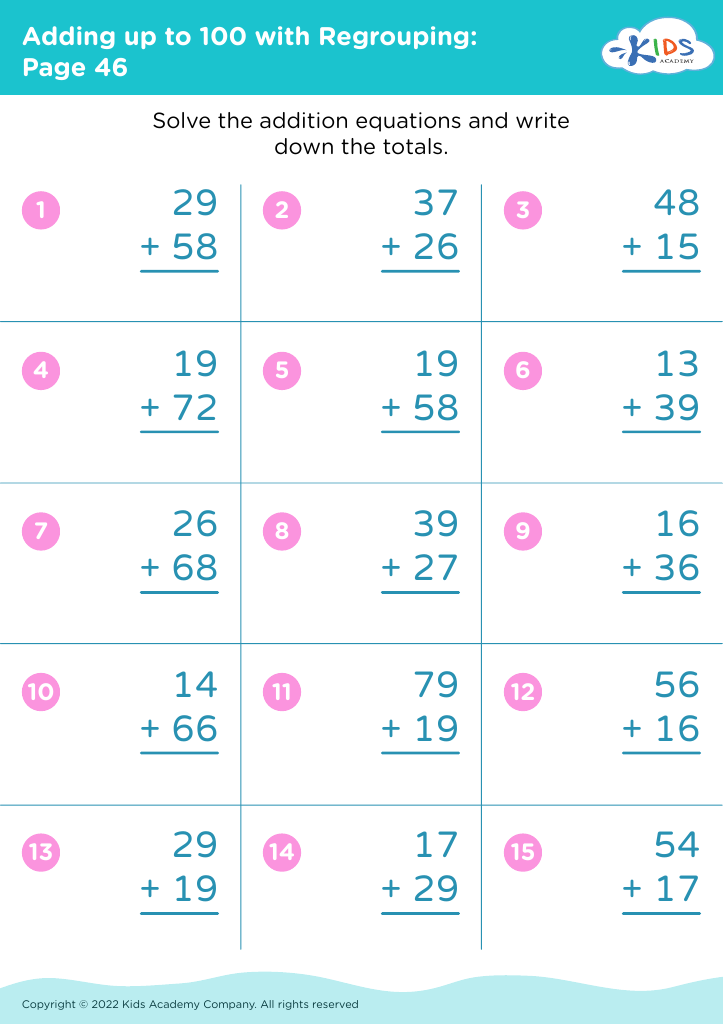
Adding up to 100 with Regrouping: Page 46
Worksheet
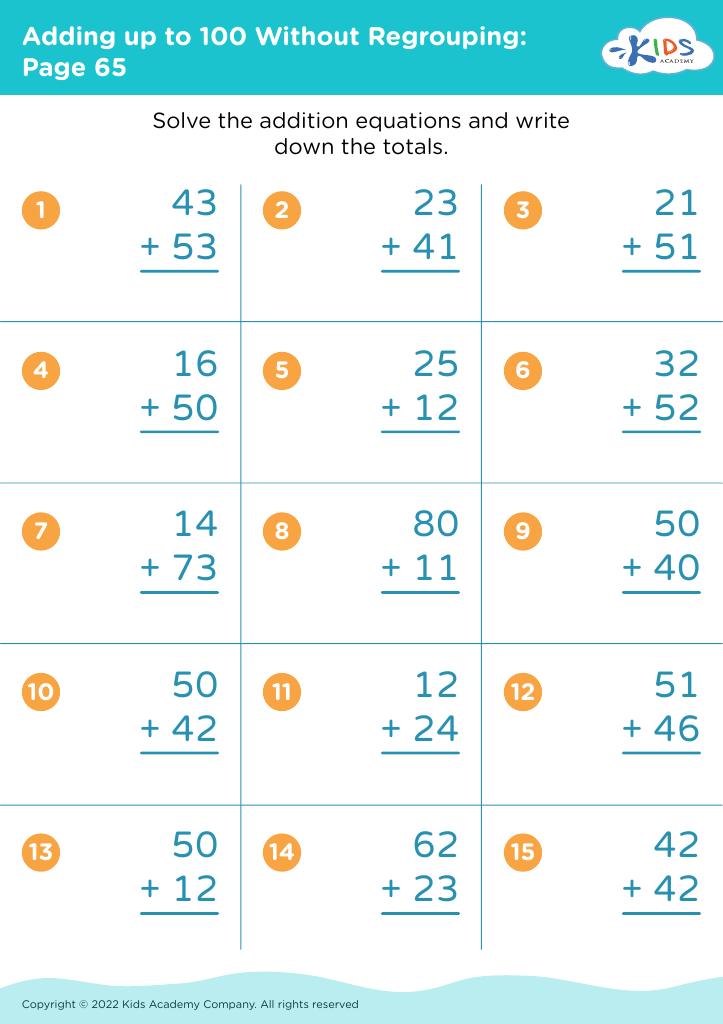
Adding up to 100 Without Regrouping: Page 65
Worksheet
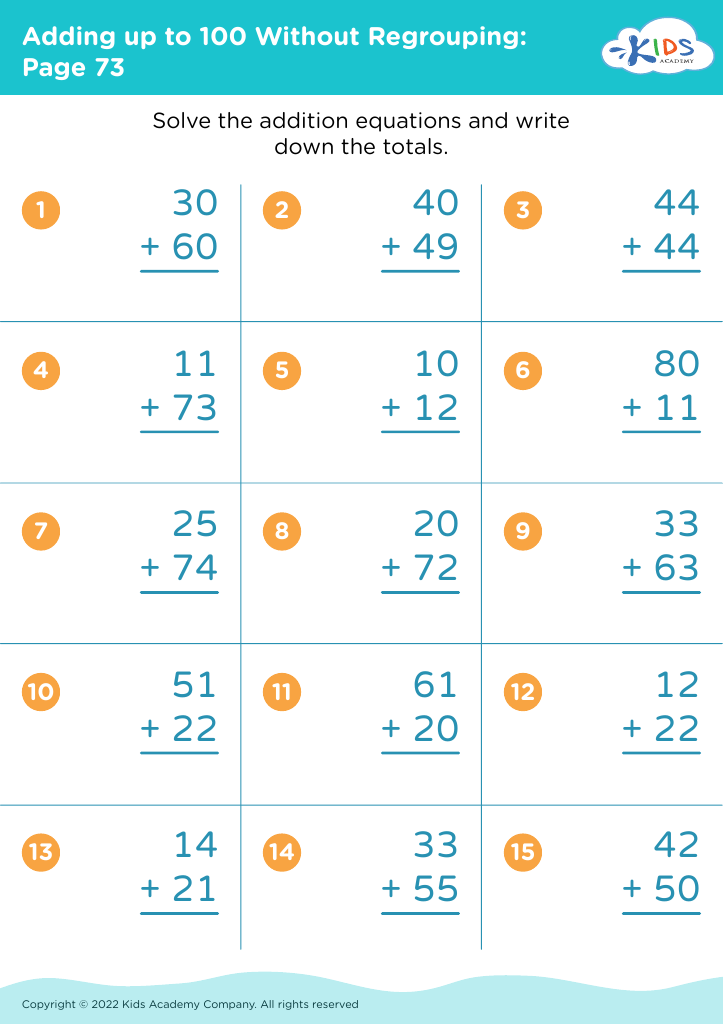
Adding up to 100 Without Regrouping: Page 73
Worksheet
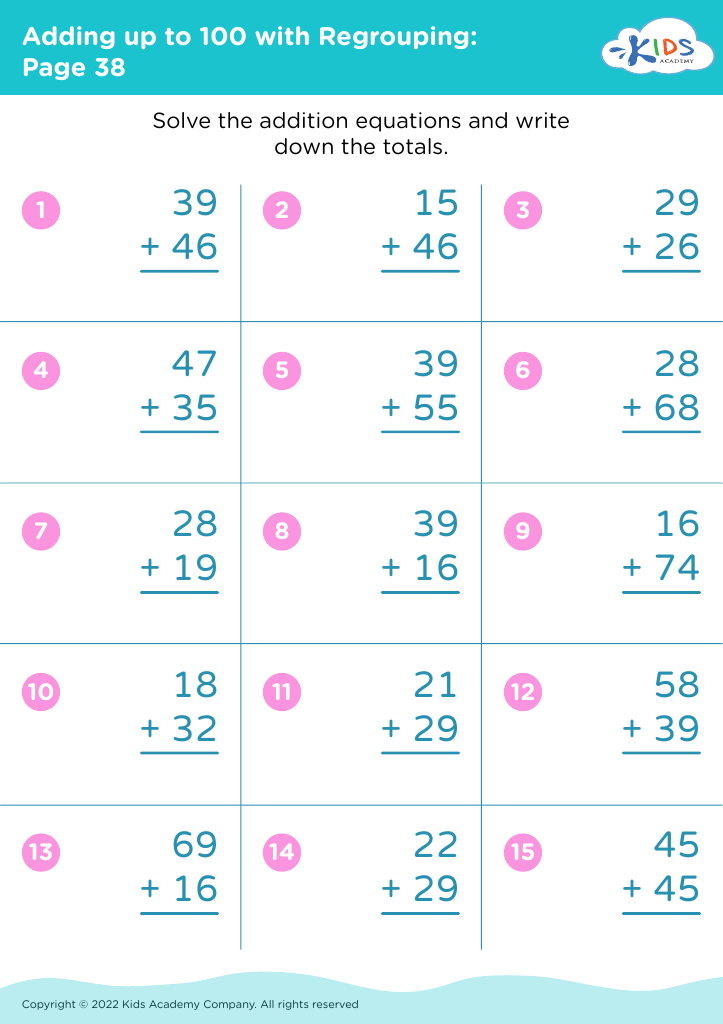
Adding up to 100 with Regrouping: Page 38
Worksheet
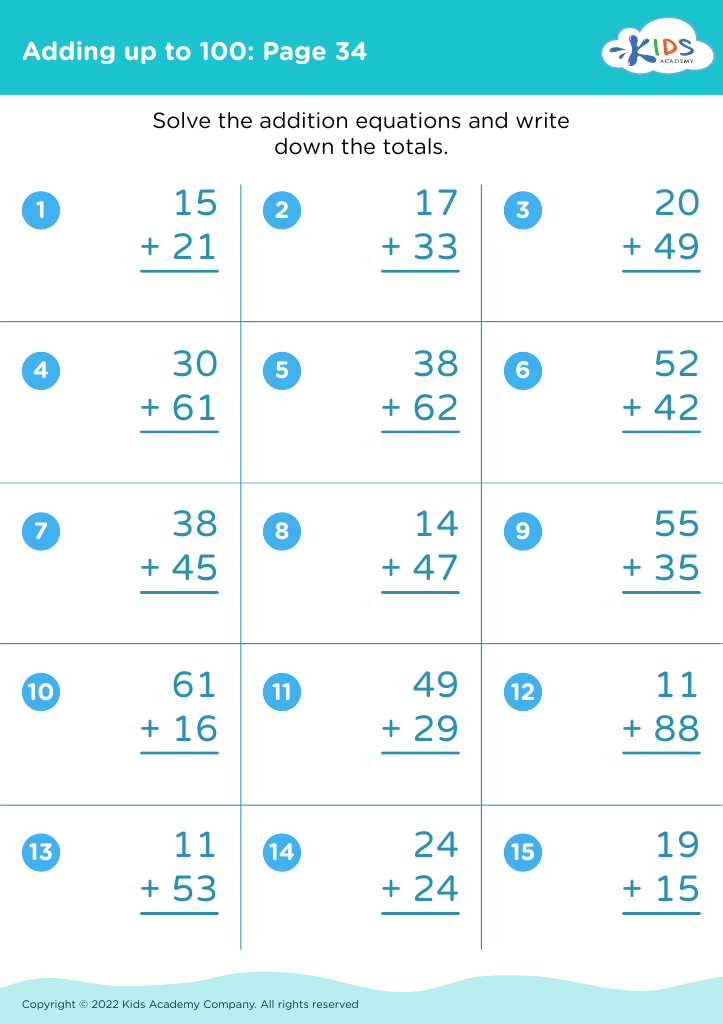
Adding up to 100: Page 34

Adding up to 100: Page 34

Adding up to 100: Page 34
Worksheet
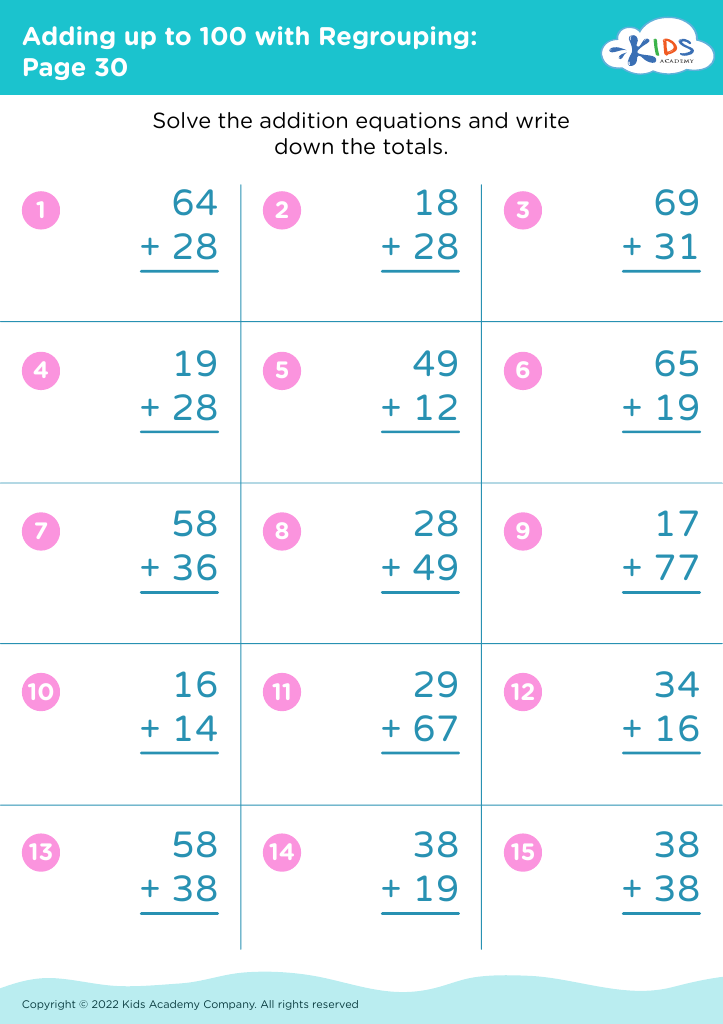
Adding up to 100 with Regrouping: Page 30
Worksheet
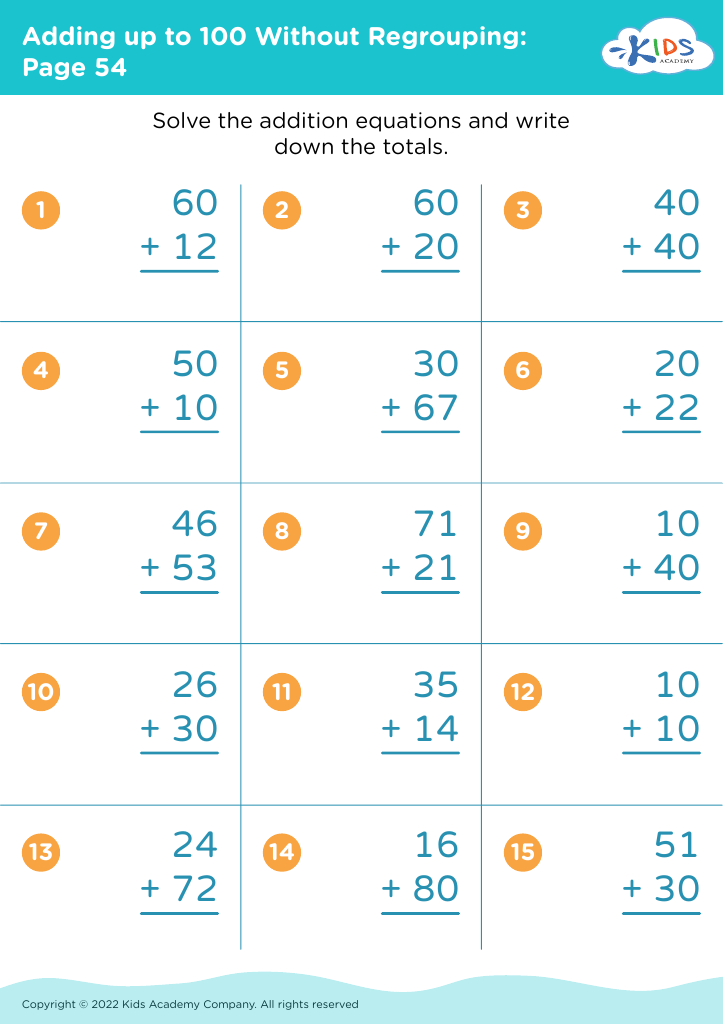
Adding up to 100 Without Regrouping: Page 54
Worksheet
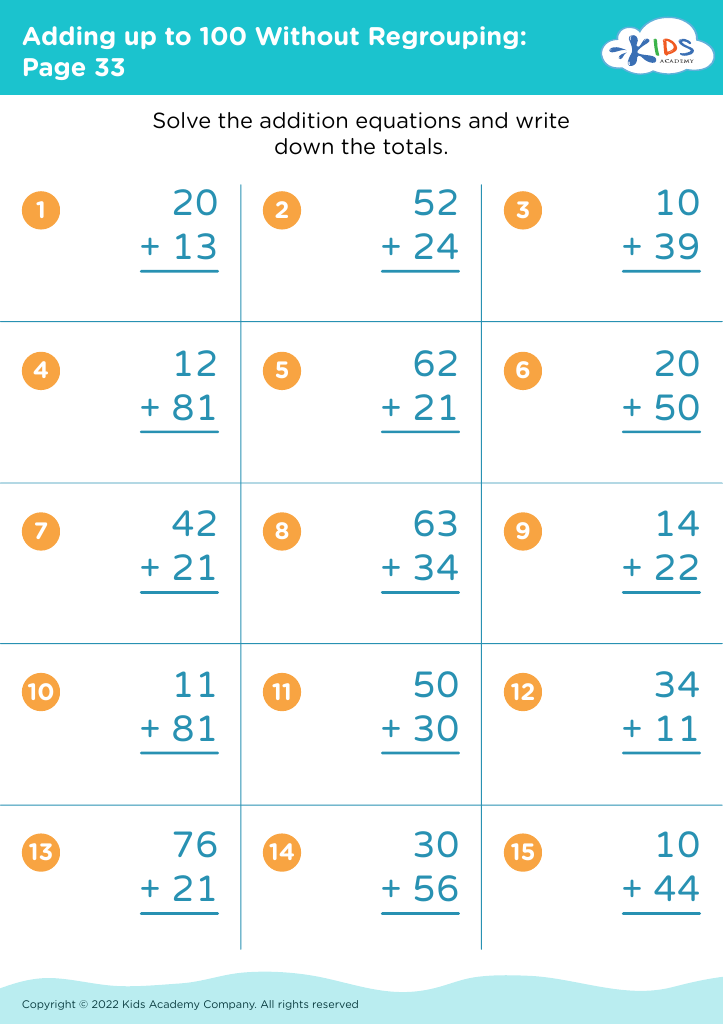
Adding up to 100 Without Regrouping: Page 33
Worksheet
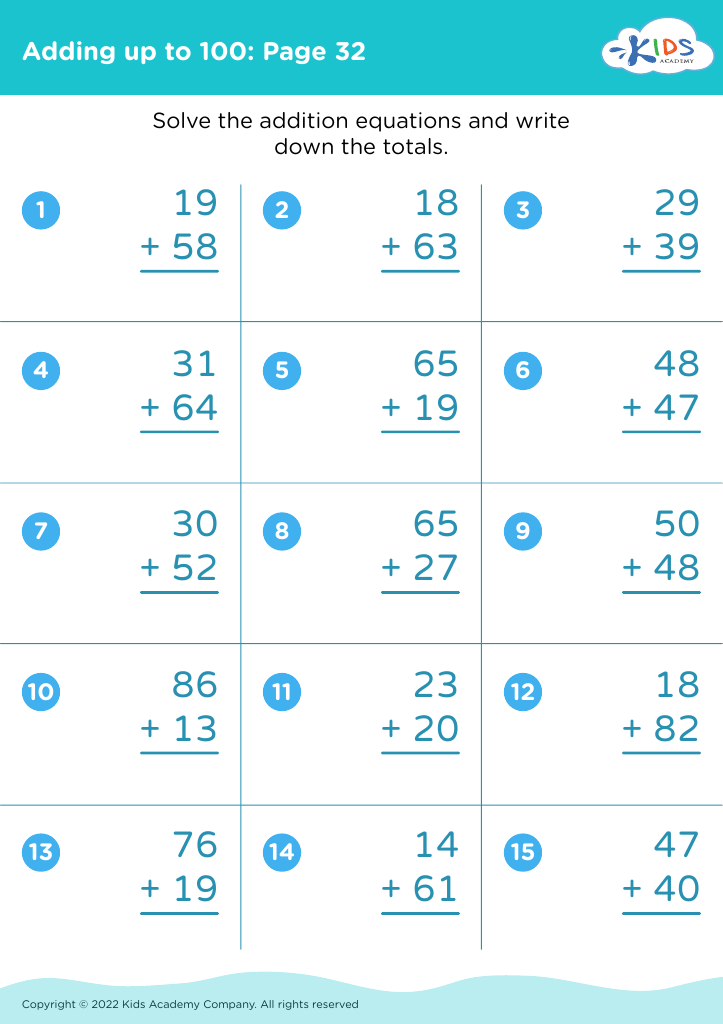
Adding up to 100: Page 32

Adding up to 100: Page 32

Adding up to 100: Page 32
Worksheet
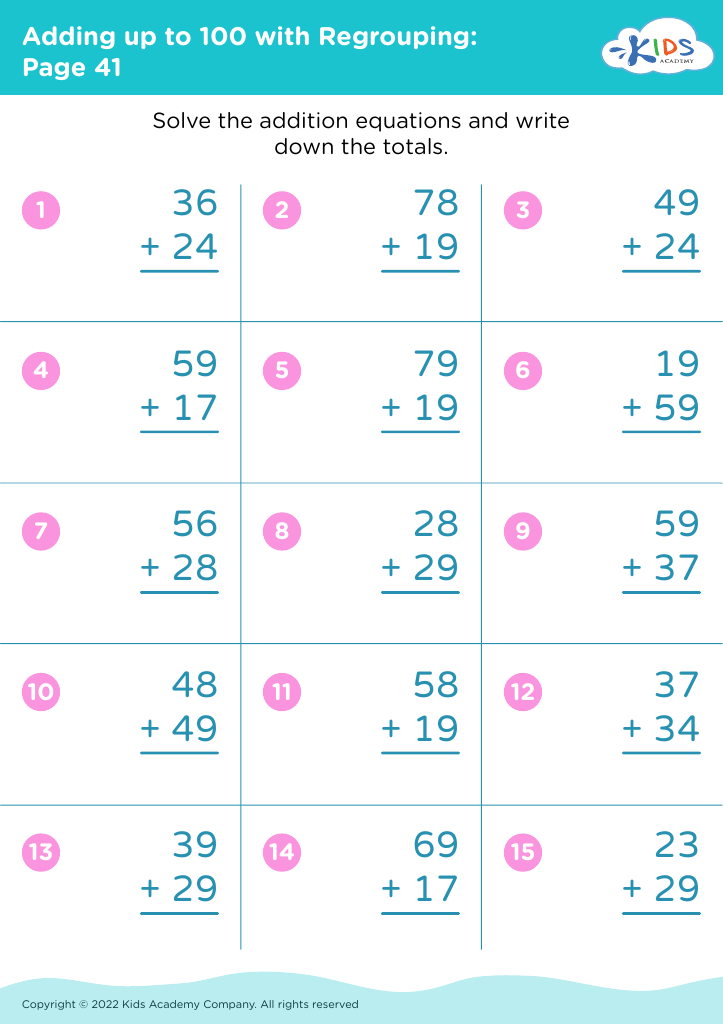
Adding up to 100 with Regrouping: Page 41
Worksheet
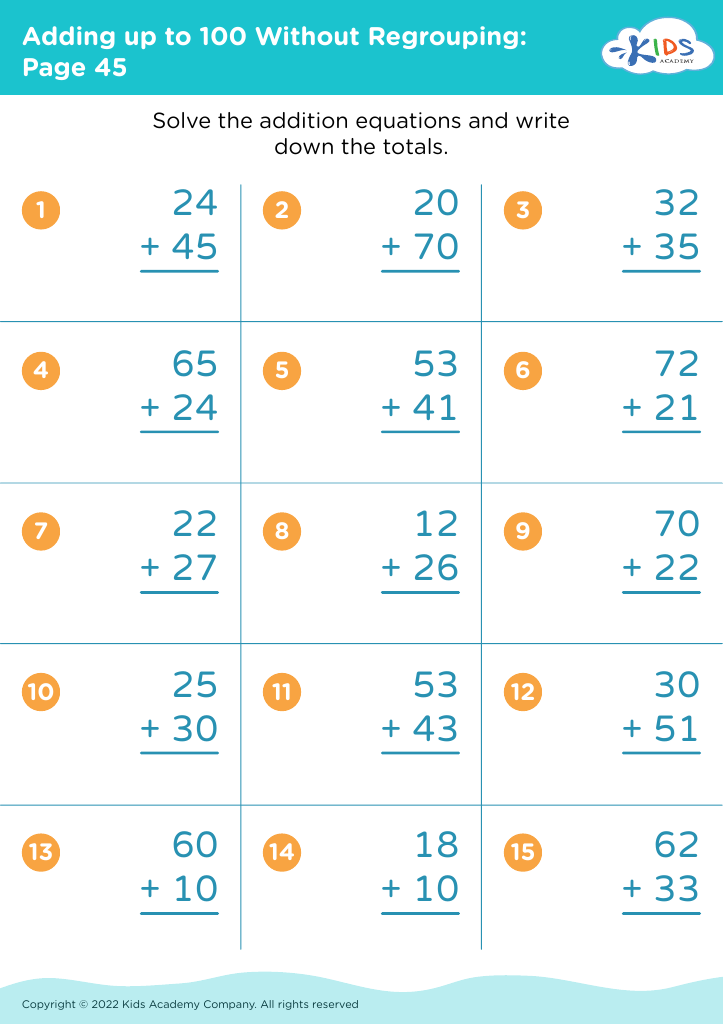
Adding up to 100 Without Regrouping: Page 45
Worksheet
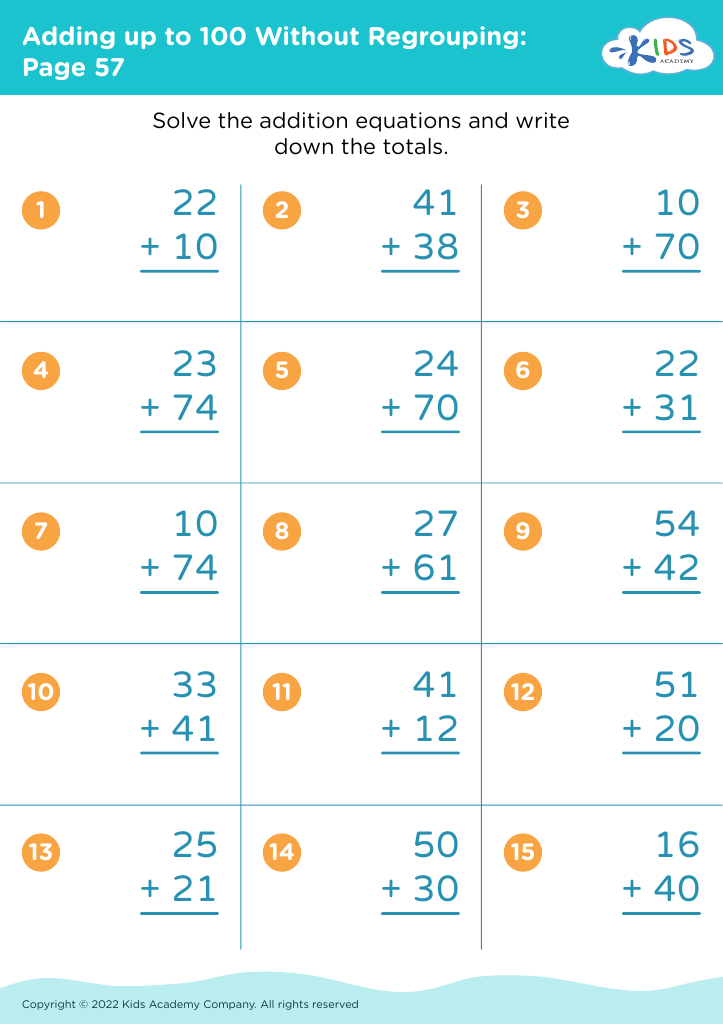
Adding up to 100 Without Regrouping: Page 57
Worksheet
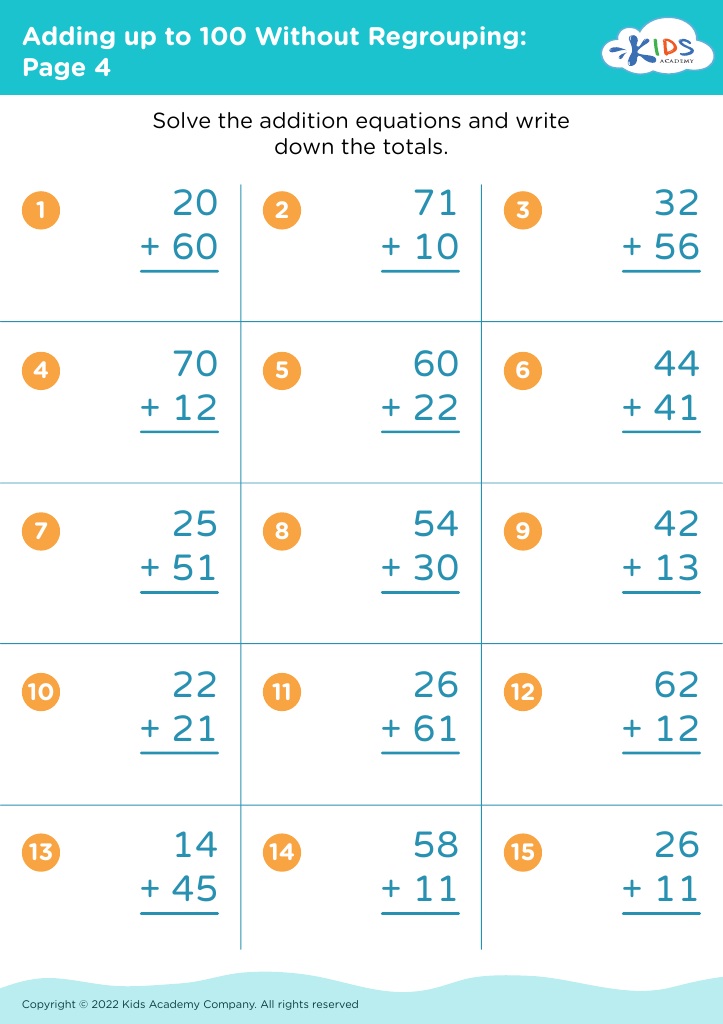
Adding up to 100 Without Regrouping: Page 4
Worksheet
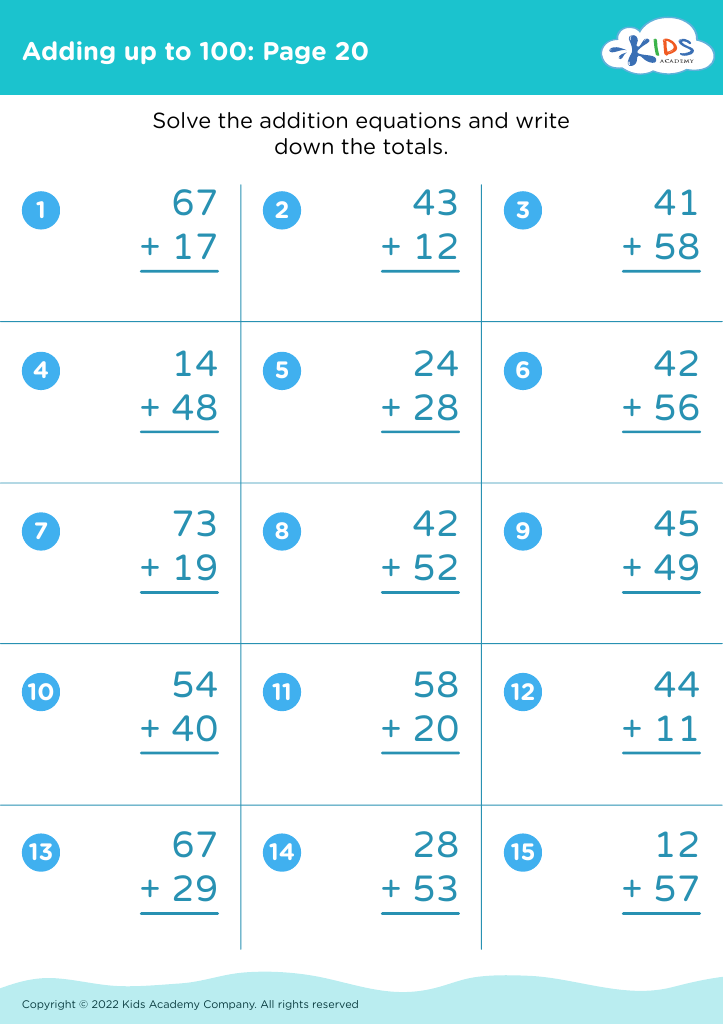
Adding up to 100: Page 20

Adding up to 100: Page 20

Adding up to 100: Page 20
Worksheet
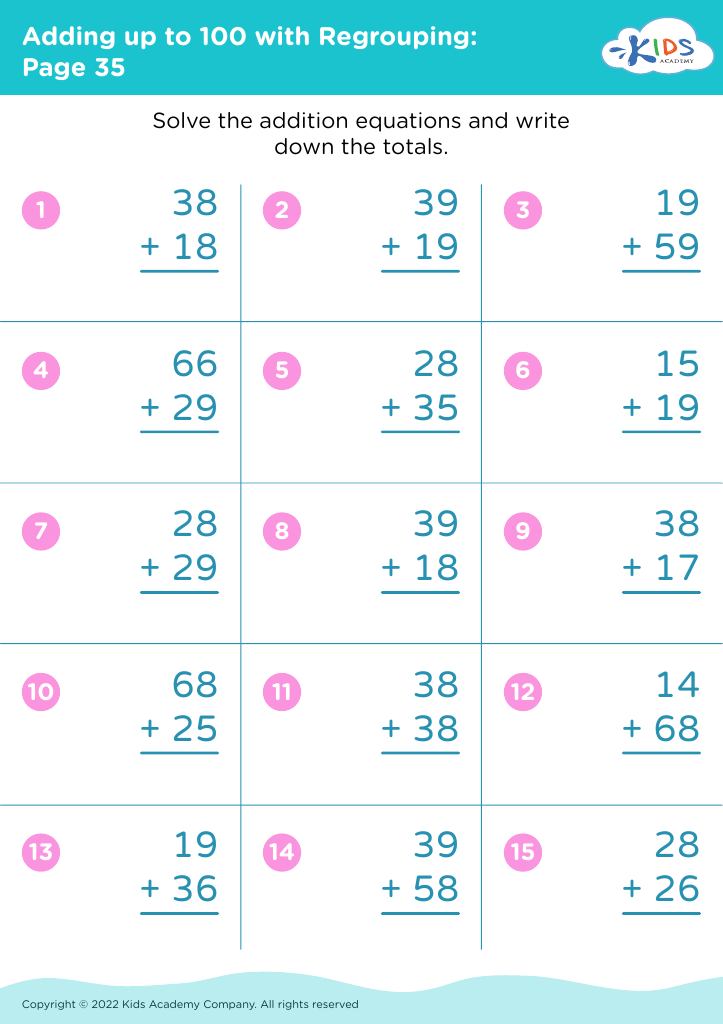
Adding up to 100 with Regrouping: Page 35
Worksheet
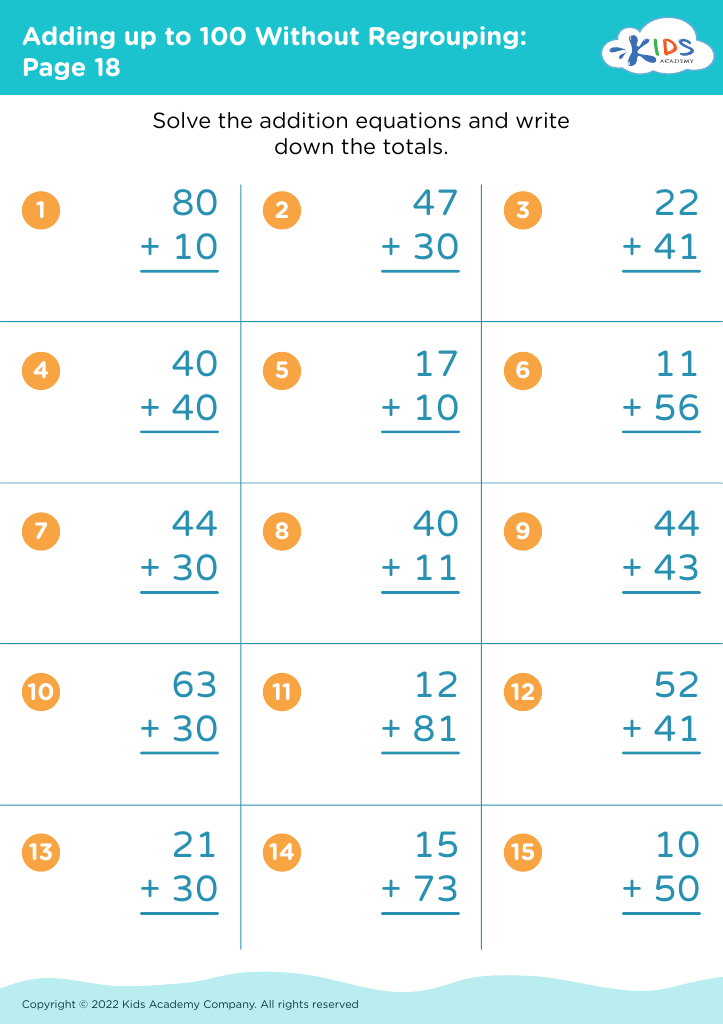
Adding up to 100 Without Regrouping: Page 18
Worksheet
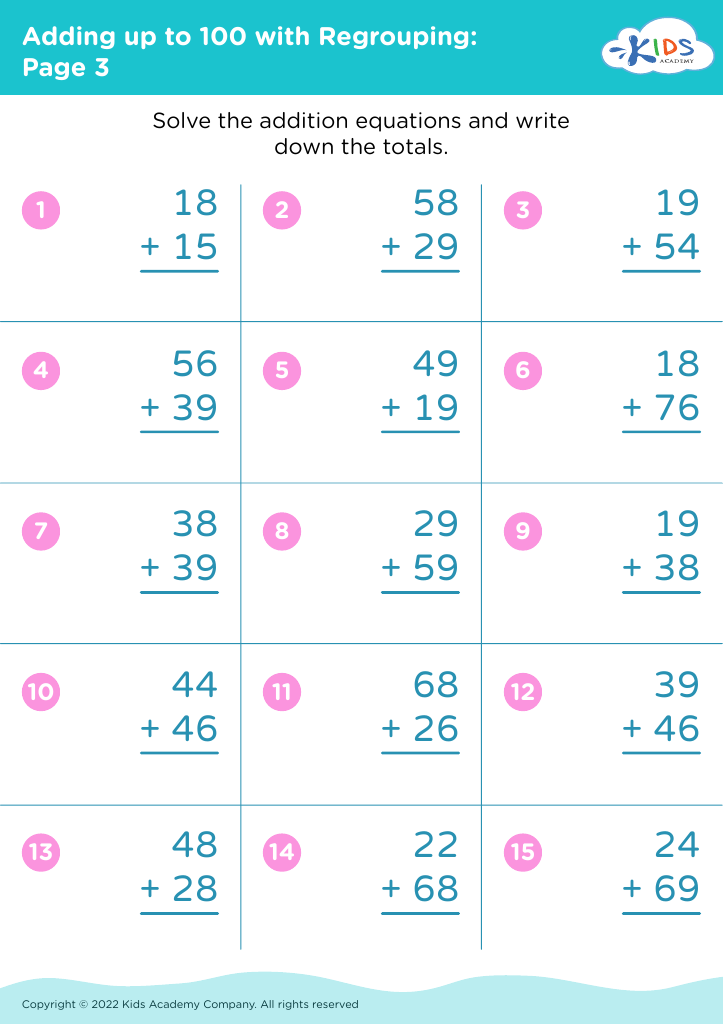
Adding up to 100 with Regrouping: Page 3
Worksheet
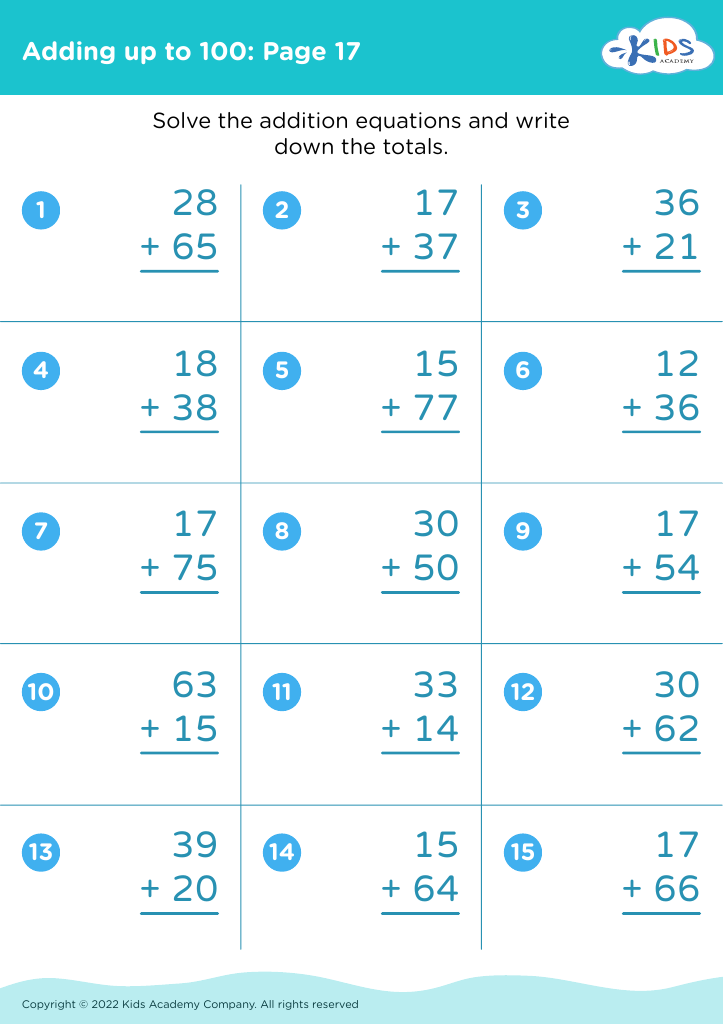
Adding up to 100: Page 17

Adding up to 100: Page 17

Adding up to 100: Page 17
Worksheet
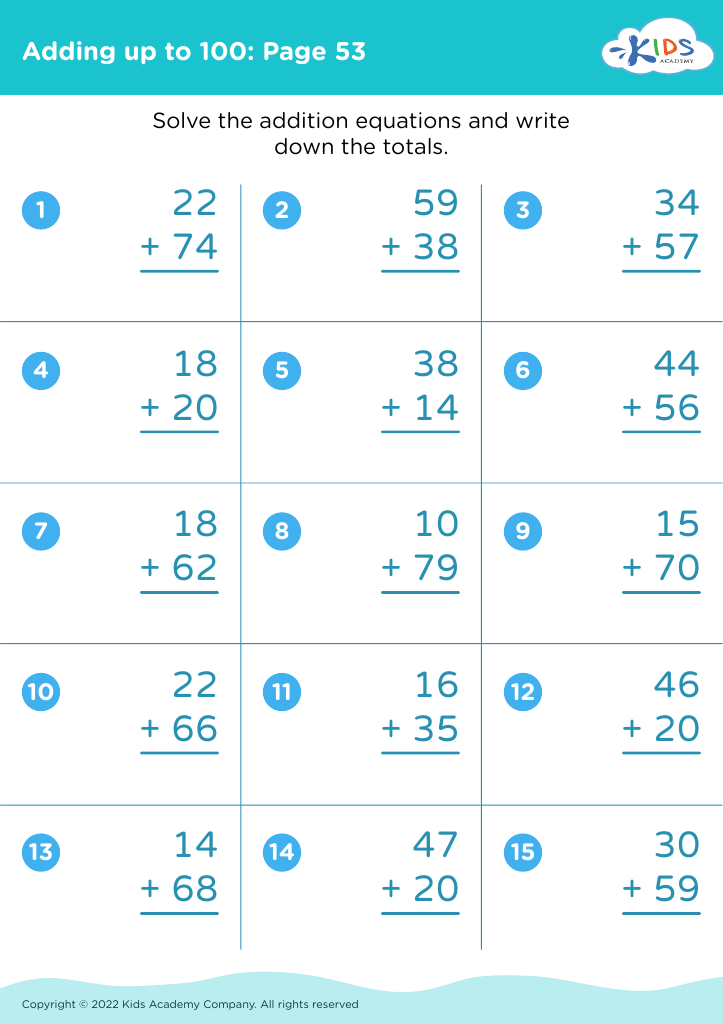
Adding up to 100: Page 53

Adding up to 100: Page 53

Adding up to 100: Page 53
Worksheet
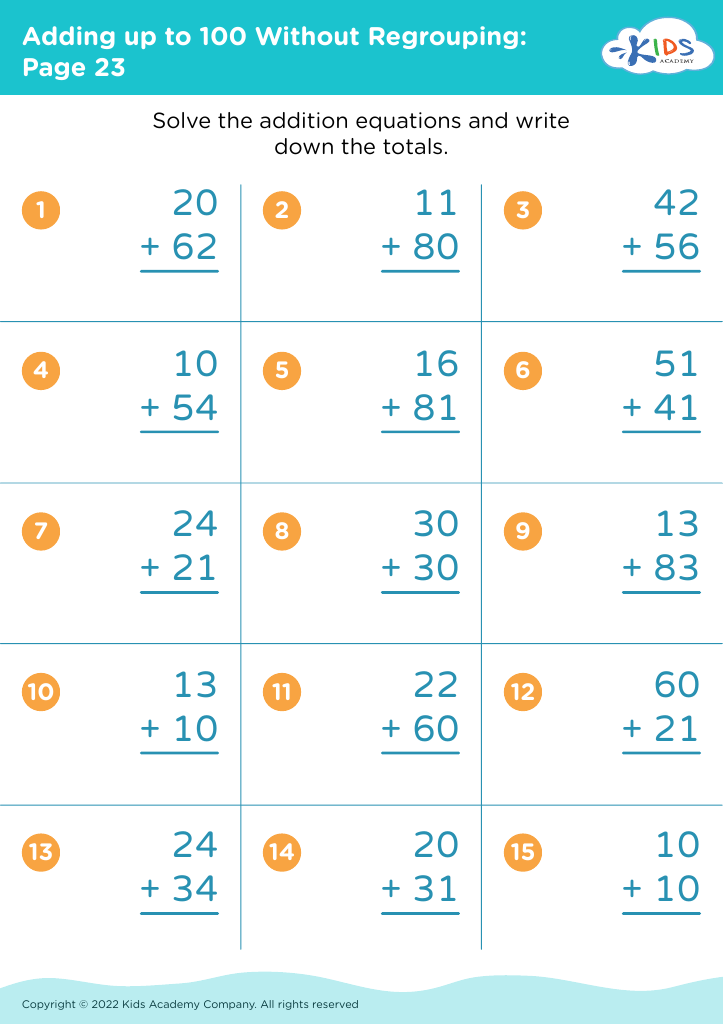
Adding up to 100 Without Regrouping: Page 23
Worksheet
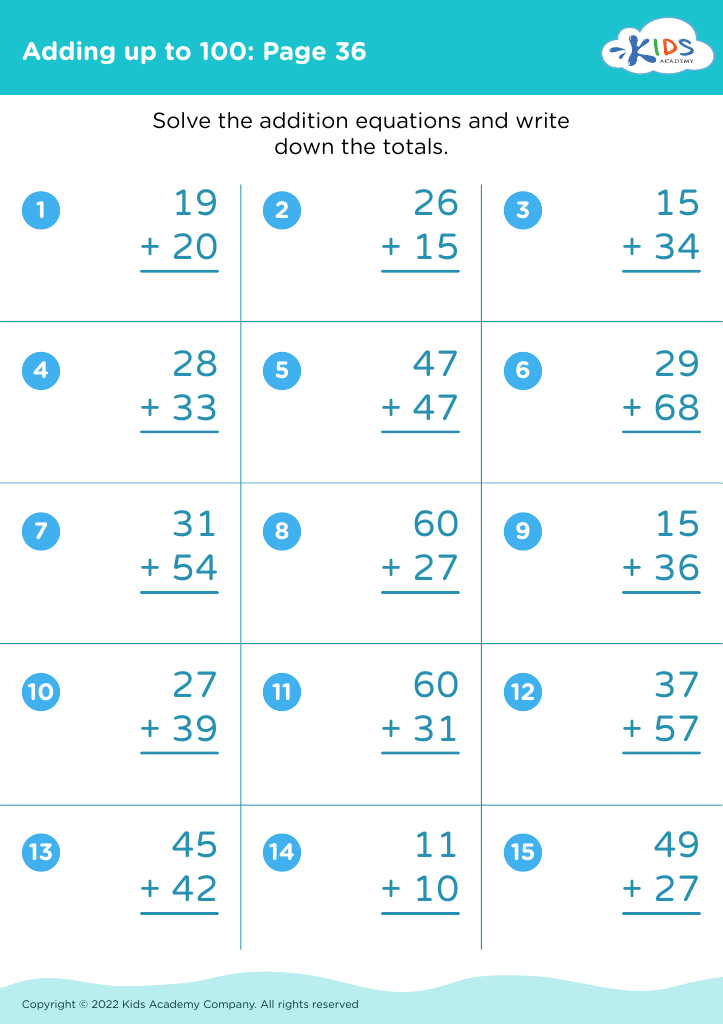
Adding up to 100: Page 36

Adding up to 100: Page 36

Adding up to 100: Page 36
Worksheet
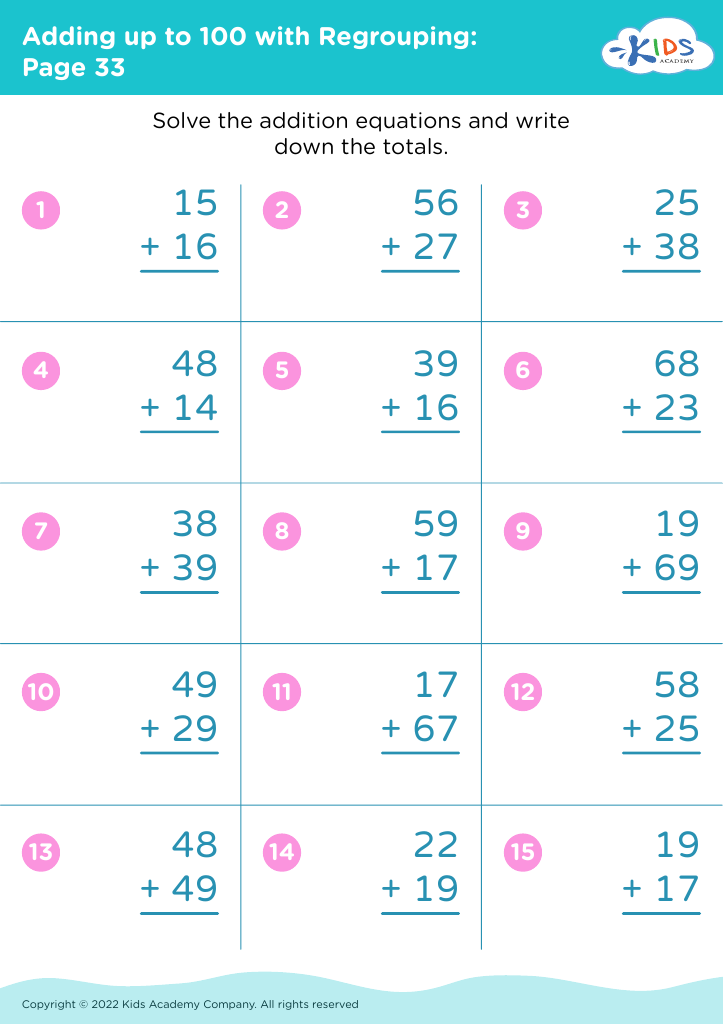
Adding up to 100 with Regrouping: Page 33
Worksheet


Teaching fraction simplification and adding up to 100 to children aged 5-7 lays a pivotal foundation for their math skills and overall cognitive development. First and foremost, learning about fractions helps young children grasp essential mathematical concepts like parts of a whole, fairness, and distribution, which are applicable in everyday life. Simplifying fractions at an early age trains them to recognize and use equivalent forms, enhancing their problem-solving skills.

Adding up to 100 strengthens their understanding of base-10 systems—a core principle of our numeral system. This understanding is crucial for more complex arithmetic operations like addition, subtraction, multiplication, and division, which they will encounter later.

Additionally, these skills foster a sense of confidence and achievement in young learners. When children can effortlessly handle these foundational aspects, they are more likely to engage positively with mathematics as they progress through school.

Moreover, integrating these concepts aids in developing fine motor skills and memory. Activities like visual fraction aids, block games, and interactive counting help improve hand-eye coordination and reinforce memory retention.

Ultimately, prioritizing these mathematical skills in early childhood education equips students with critical thinking abilities and a stronger academic background, setting them up for future success in both education and life.