Hand-eye Coordination Adding up to 100 Worksheets for Ages 5-7
3 filtered results
-
From - To
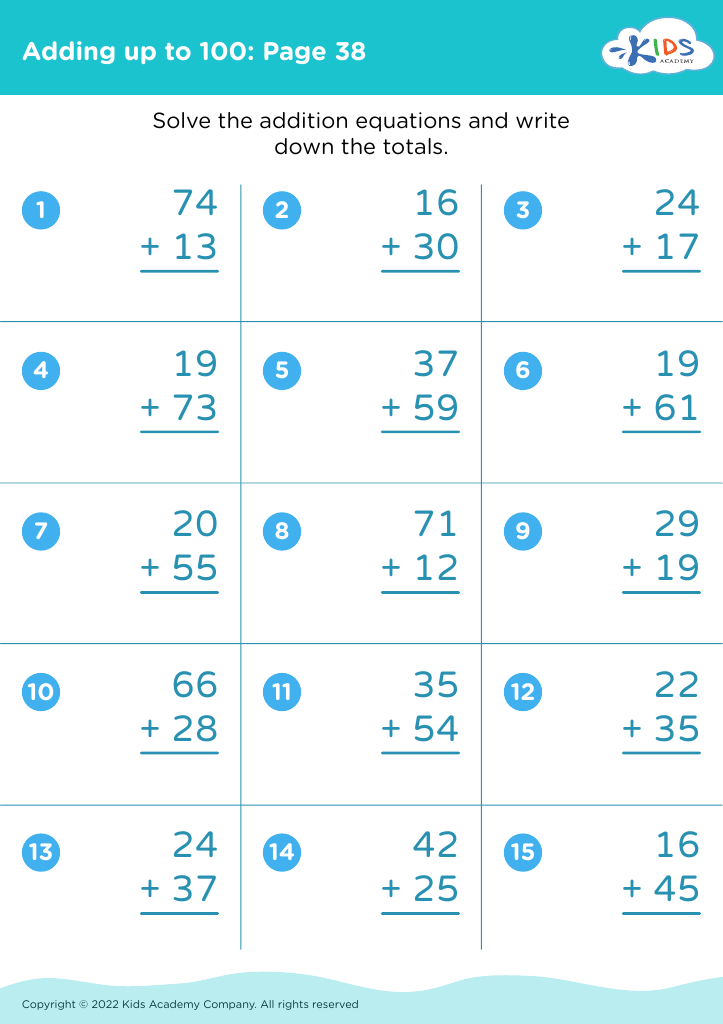
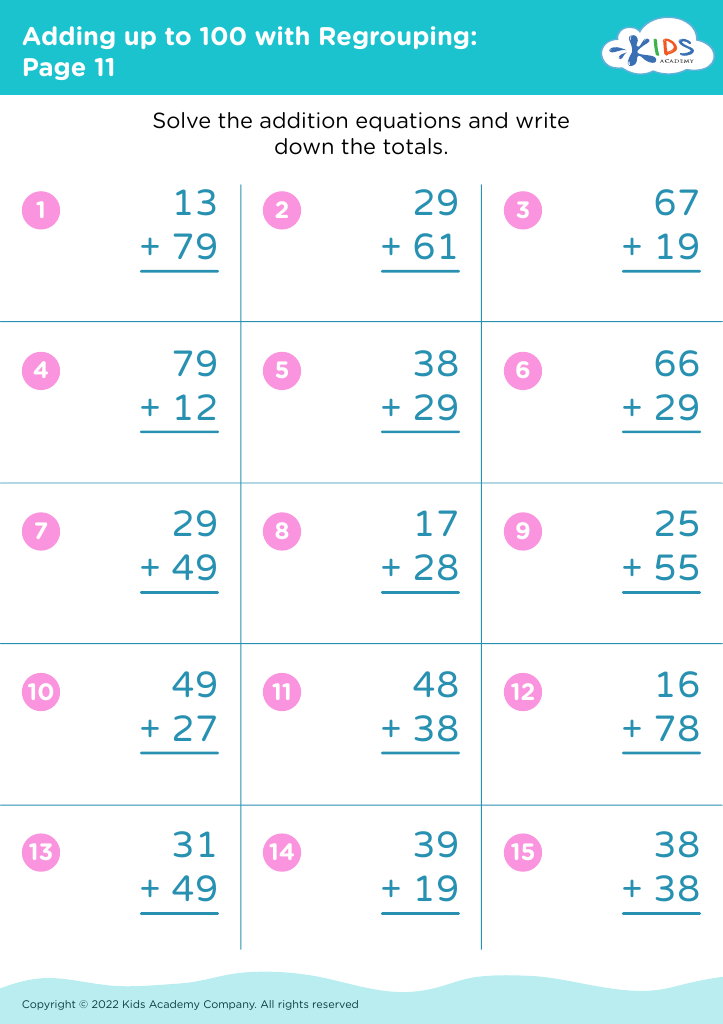
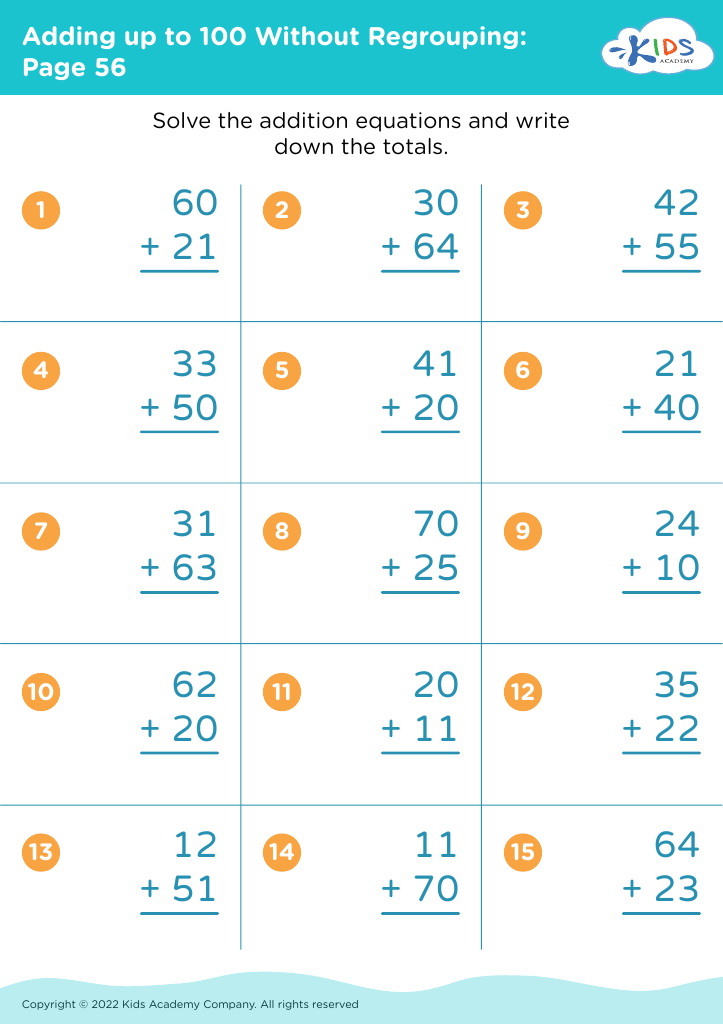
Enhance your child's developmental skills with our "Hand-eye Coordination Adding up to 100 Worksheets" designed specifically for ages 5-7. These engaging worksheets not only help young learners practice addition concepts, aiming for a sum of 100, but also focus on improving their hand-eye coordination. Each activity is thoughtfully crafted to make learning fun and interactive through colorful visuals and stimulating exercises. As children solve math problems, they simultaneously engage in fine motor activities, reinforcing their physical skills. Perfect for classroom or home use, these worksheets are an effective tool to foster both mathematical understanding and essential coordination skills in young learners.





%20(1).jpg)

Hand-eye coordination is a vital skill for children aged 5-7 as it forms the foundation for various physical and cognitive activities. As children engage in tasks that require coordinated movement, such as writing, drawing, or playing sports, they develop fine motor skills that are essential for academic success. This skill is particularly important during this developmental stage, as it helps them grasp tools like pencils or crayons effectively, enhancing their writing abilities and overall creativity.
Furthermore, hand-eye coordination promotes problem-solving skills, especially when learning concepts such as adding up to 100. By incorporating physical activities that involve counting and adding, teachers and parents can make math interactive and engaging. For instance, using manipulatives or games that require children to physically identify and combine numbers fosters a deeper understanding of mathematics.
Encouraging hand-eye coordination through playful learning not only supports academic growth but also boosts children's confidence and social skills as they participate in group activities. Parents and teachers who prioritize this skill can help lay the groundwork for future learning, ensuring that children are well-equipped for more complex academic challenges as they progress in their education. Engaging them holistically in various activities is key to their overall development.








