Identifying equivalent fractions Adding up to 100 Worksheets for Ages 5-7
5 filtered results
-
From - To
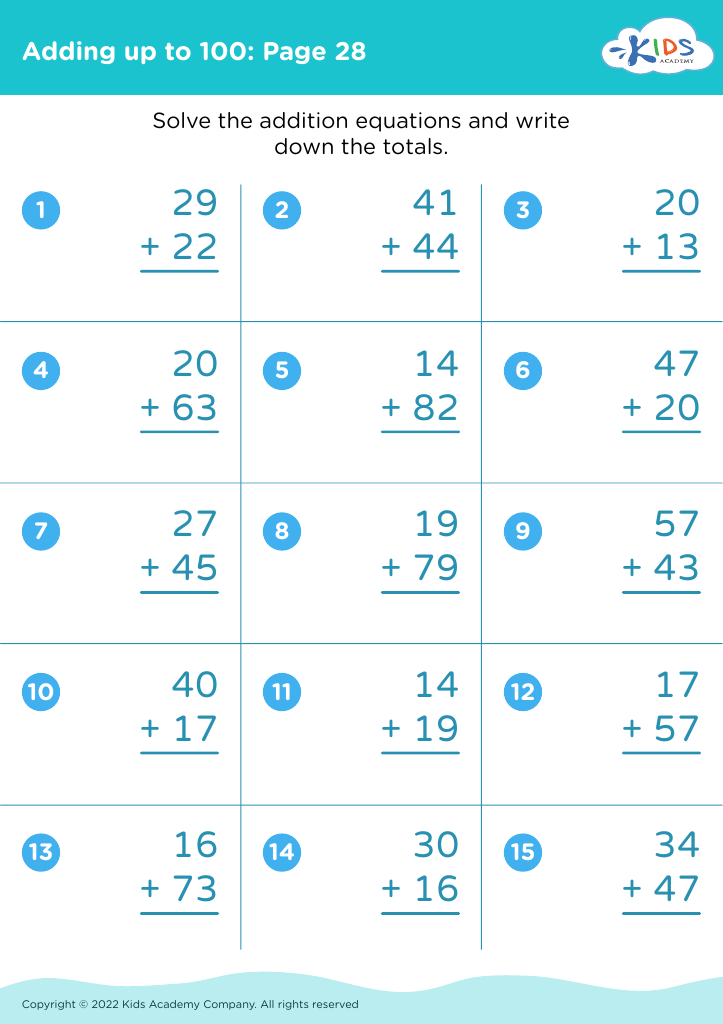
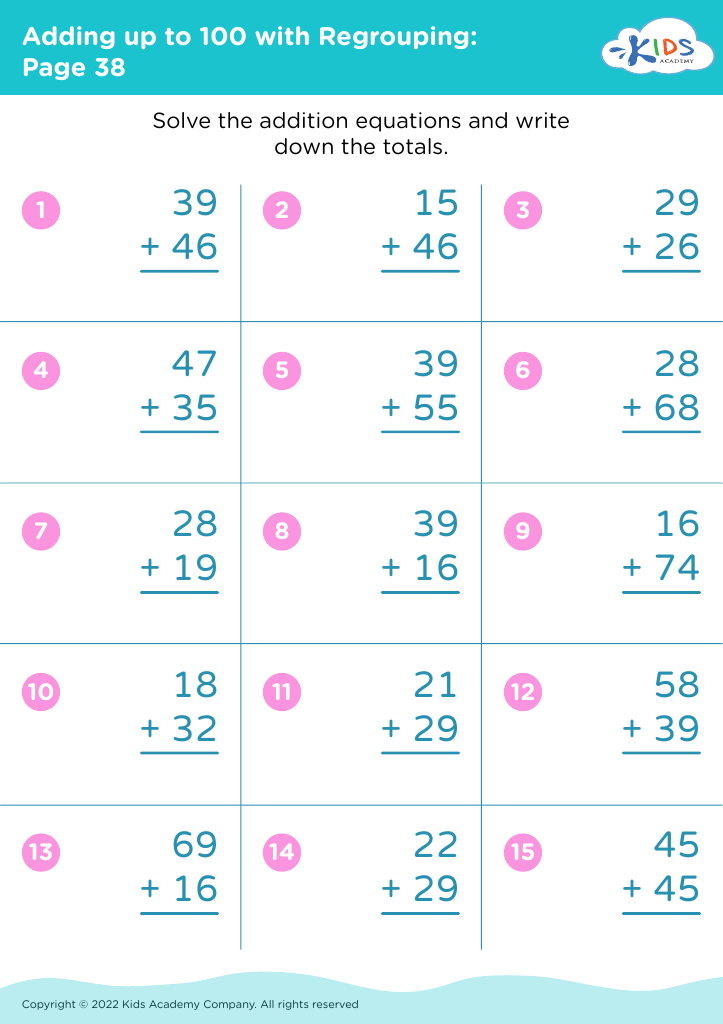
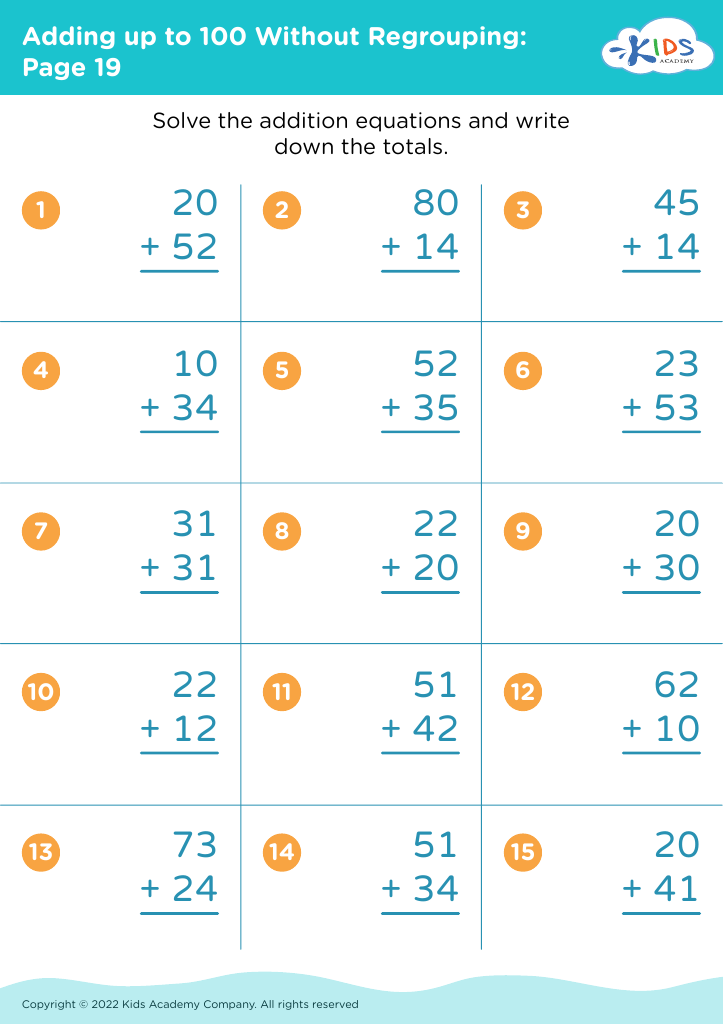
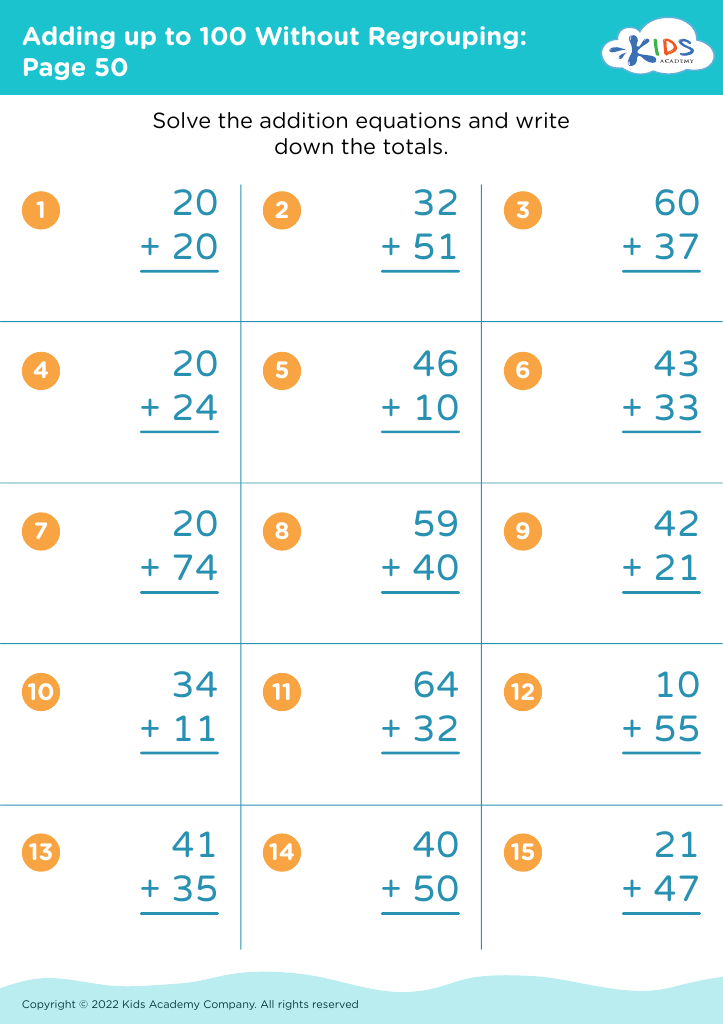
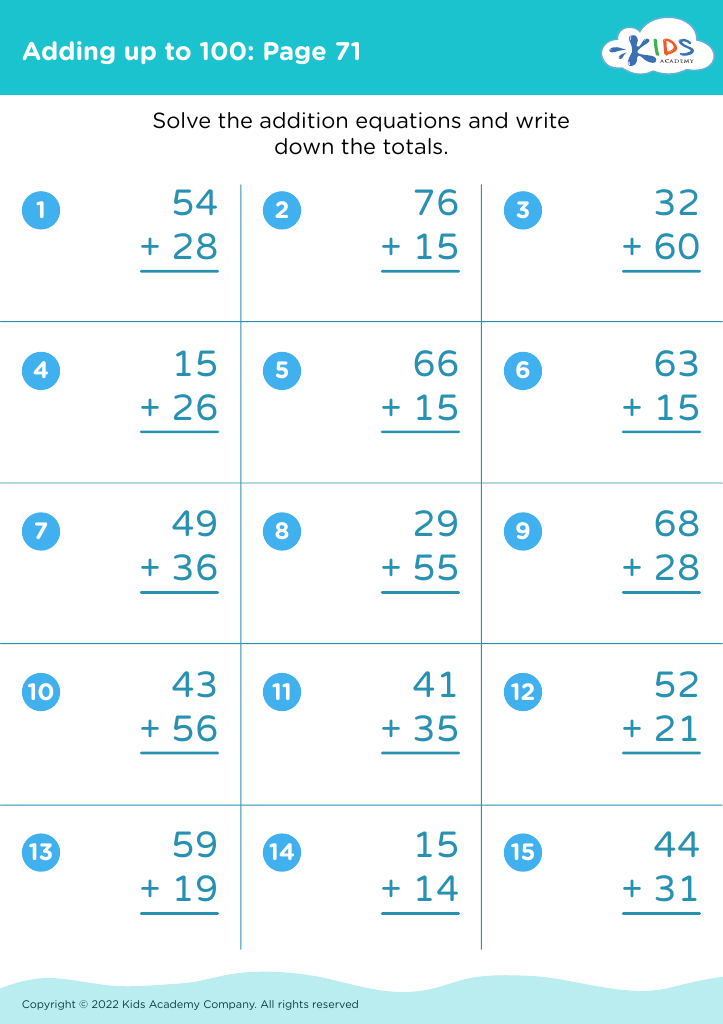
Our "Identifying Equivalent Fractions Adding up to 100 Worksheets" are curated specifically for young learners ages 5 to 7. These engaging worksheets simplify math concepts, helping children understand equivalent fractions while practicing addition skills. Designed by educational professionals, each worksheet combines colorful visuals with interactive activities to ensure a fun and effective learning experience. Your child will develop foundational math skills through exercises that encourage critical thinking and problem-solving. Ideal for both classroom and at-home practice, these worksheets will support your child's journey to math proficiency and confidence. Make learning fractions enjoyable and accessible with our expertly crafted resources.





%20(1).jpg)

Parents and teachers should prioritize identifying equivalent fractions and understanding the concept of adding up to 100 for children aged 5-7 because these foundational math skills are crucial building blocks for future academic success. At this stage, young learners are developing their number sense and ability to comprehend mathematical relationships, both of which are essential for more complex problem-solving later on.
Equivalent fractions help children grasp the idea that different fractions can express the same quantity. Recognizing that 1/2 is the same as 2/4 or 3/6 fosters a flexible understanding of numbers and proportions. This early understanding aids in real-life applications, such as measuring ingredients for recipes or dividing objects equitably among friends.
Similarly, comprehending addition up to 100 builds a robust foundation for arithmetic operations. It supports a child’s ability to perform basic calculations, understand values, and manage tasks involving measurements or quantities. Mastery of addition lays the ground for more advanced math topics like multiplication, subtraction, and eventually, complex equations.
Moreover, early proficiency in these key areas boosts children's confidence in tackling math, leading to a more positive attitude towards the subject. This encouragement is vital during the early years, fostering a mindset geared towards exploration and problem-solving across all aspects of their education.








