Problem-solving practice Adding up to 100 Worksheets for Ages 5-7
5 filtered results
-
From - To
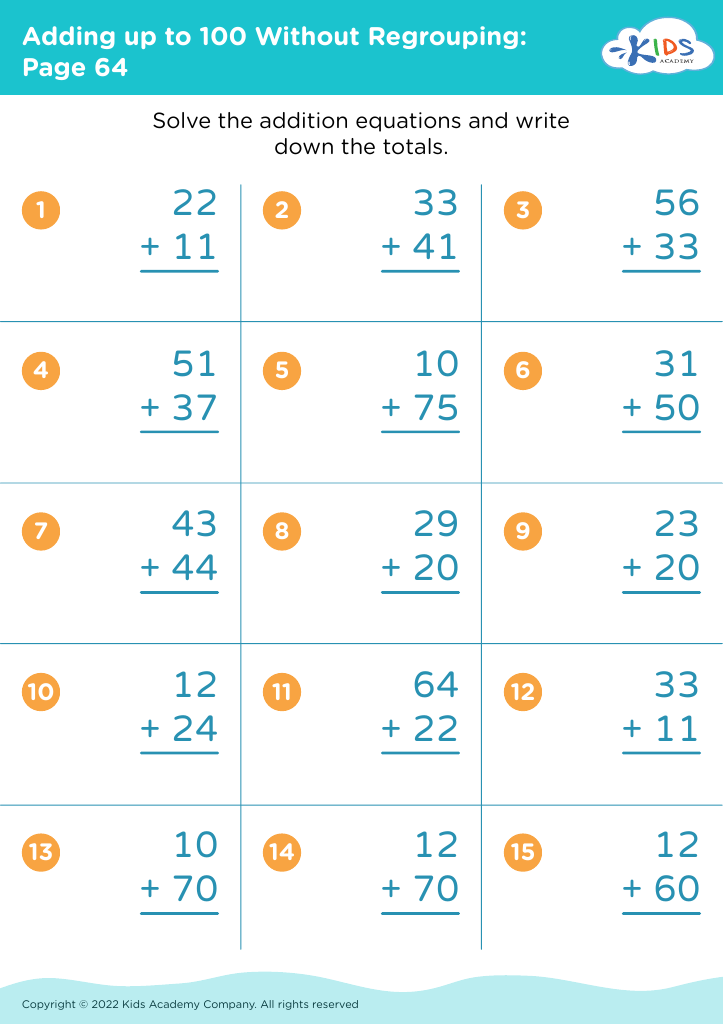
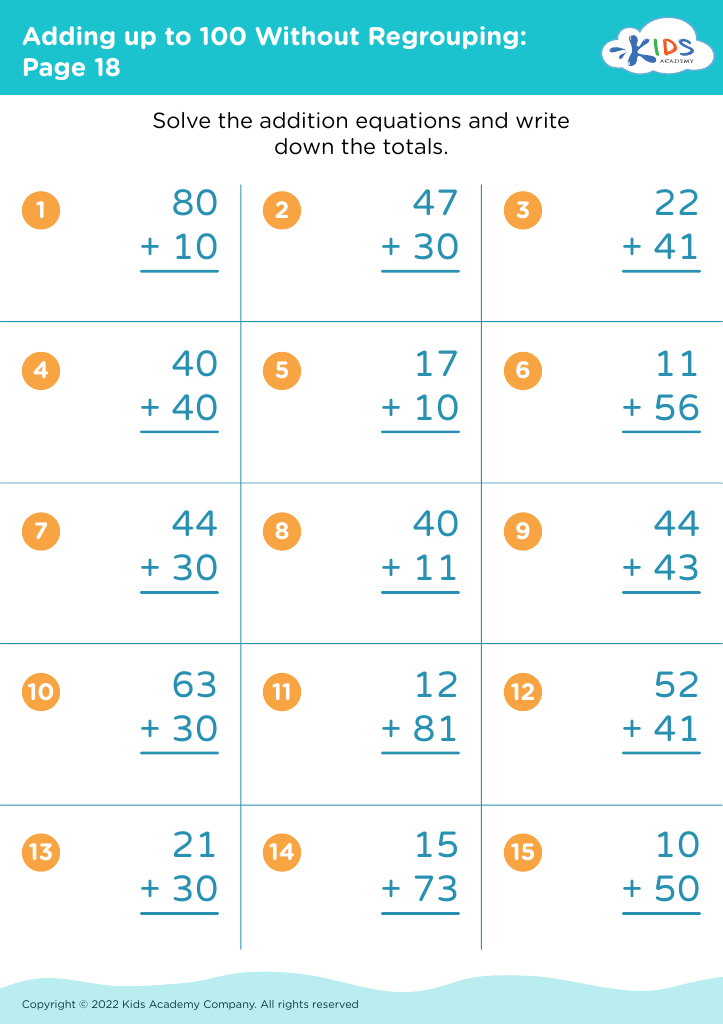
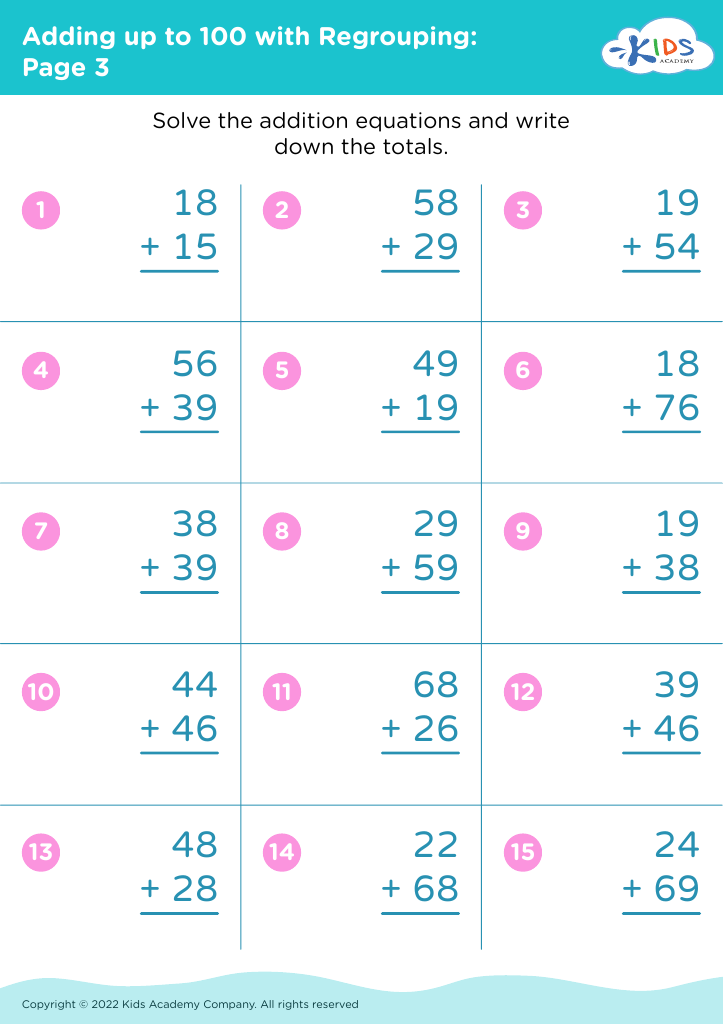
Boost your child's math skills with our "Problem-solving practice Adding up to 100 Worksheets" designed for ages 5-7. These engaging worksheets help young learners develop critical thinking and reasoning abilities while mastering addition and problem-solving techniques. Each worksheet features fun, age-appropriate scenarios that challenge children to apply their knowledge in real-life contexts. Ideal for home or classroom use, these activities foster a love for learning and enhance math fluency. With colorful visuals and clear instructions, your little ones will find the joy in tackling math problems effectively. Download our worksheets today and watch your child's confidence soar!




%20(1).jpg)




Problem-solving practice, such as adding up to 100, is crucial for children ages 5-7 because it lays a strong foundation for their mathematical understanding and critical thinking skills. During these formative years, children are developing not only their math skills but also their cognitive, social, and emotional abilities. Engaging in problem-solving activities helps children develop perseverance and a growth mindset, teaching them that challenges can be overcome through effort and strategy.
Furthermore, mastering basic addition and number concepts gives children the confidence they need as they progress in their education. It enhances their ability to grasp more advanced mathematical concepts in later grades. Additionally, problem-solving skills foster collaboration and communication among peers, as they often work together to find solutions.
By prioritizing problem-solving practice, teachers and parents can encourage a more comprehensive approach to learning that emphasizes reasoning, logic, and the importance of mistakes as teachable moments. Ultimately, cultivating these skills not only prepares children for academic success but also equips them with the problem-solving tools they'll need in everyday life, encouraging them to approach challenges with curiosity and resilience.








