Understand fractions Adding up to 100 Worksheets for Ages 5-7
5 filtered results
-
From - To
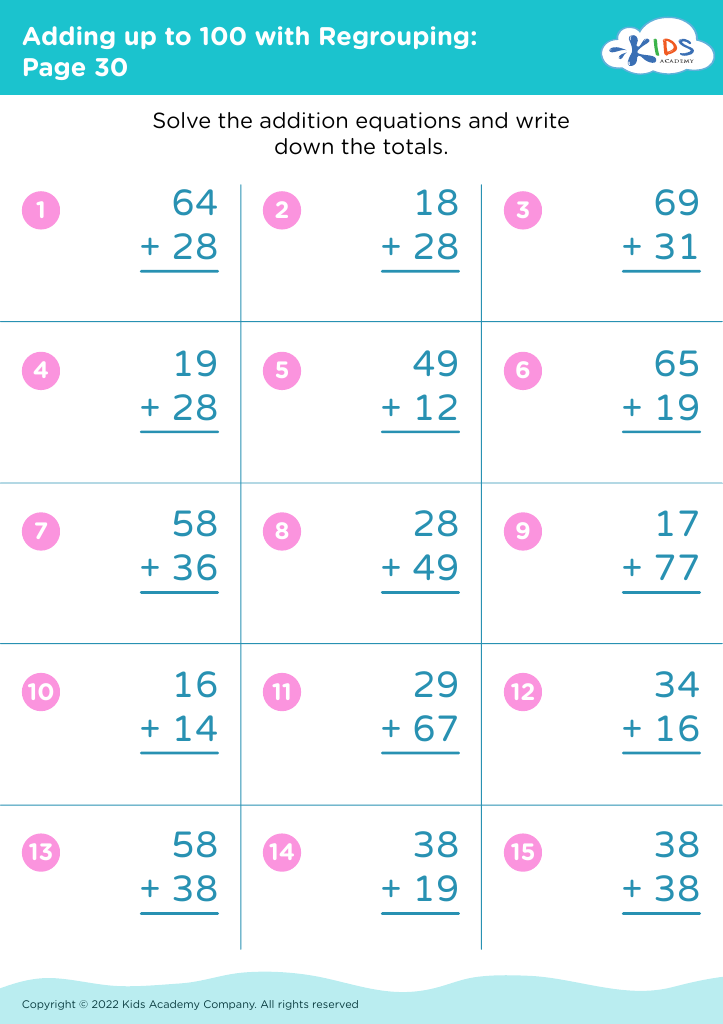
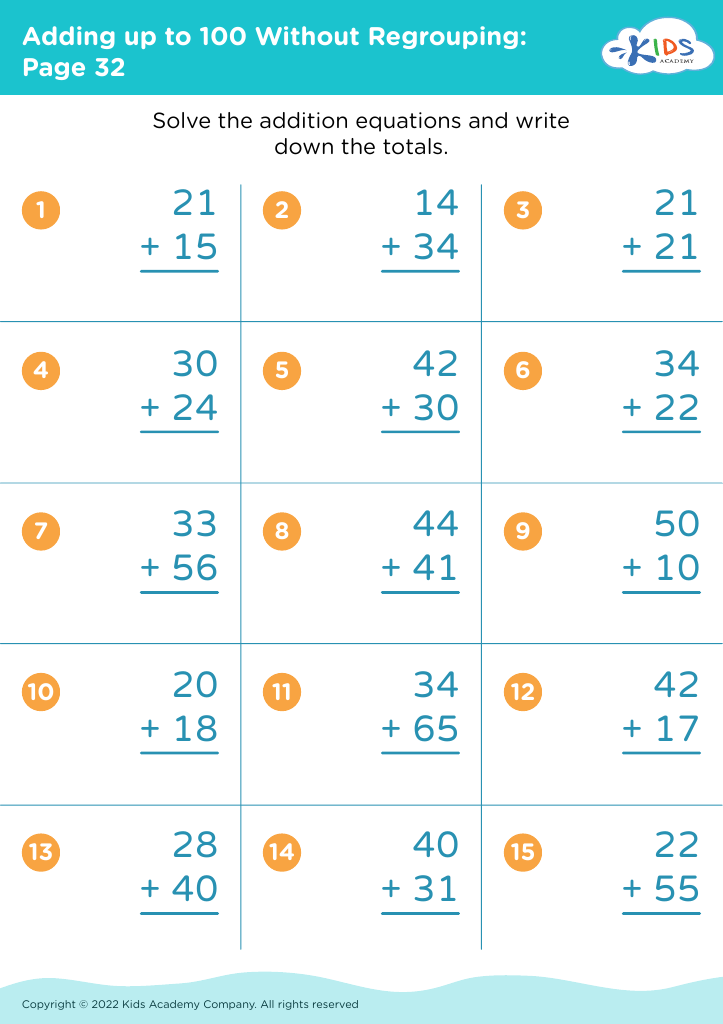
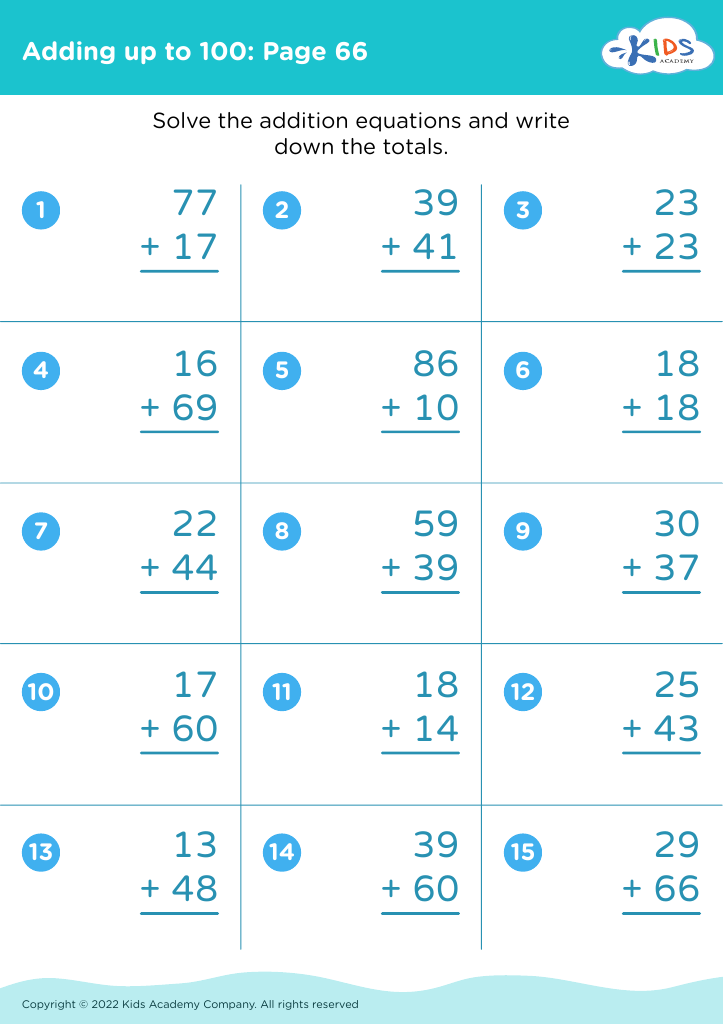
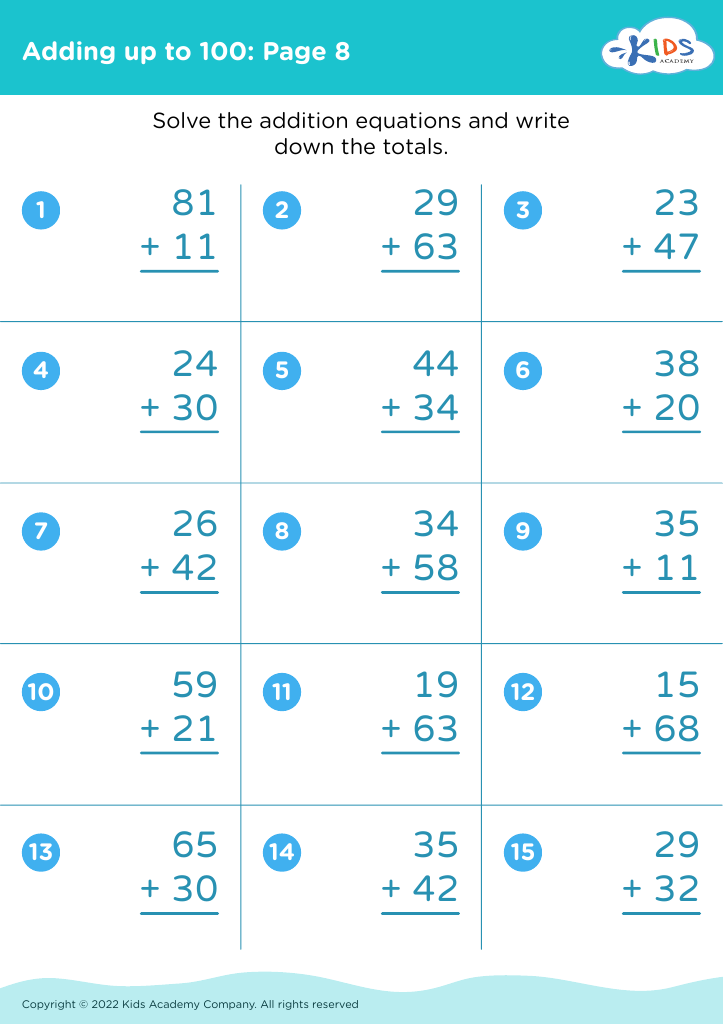
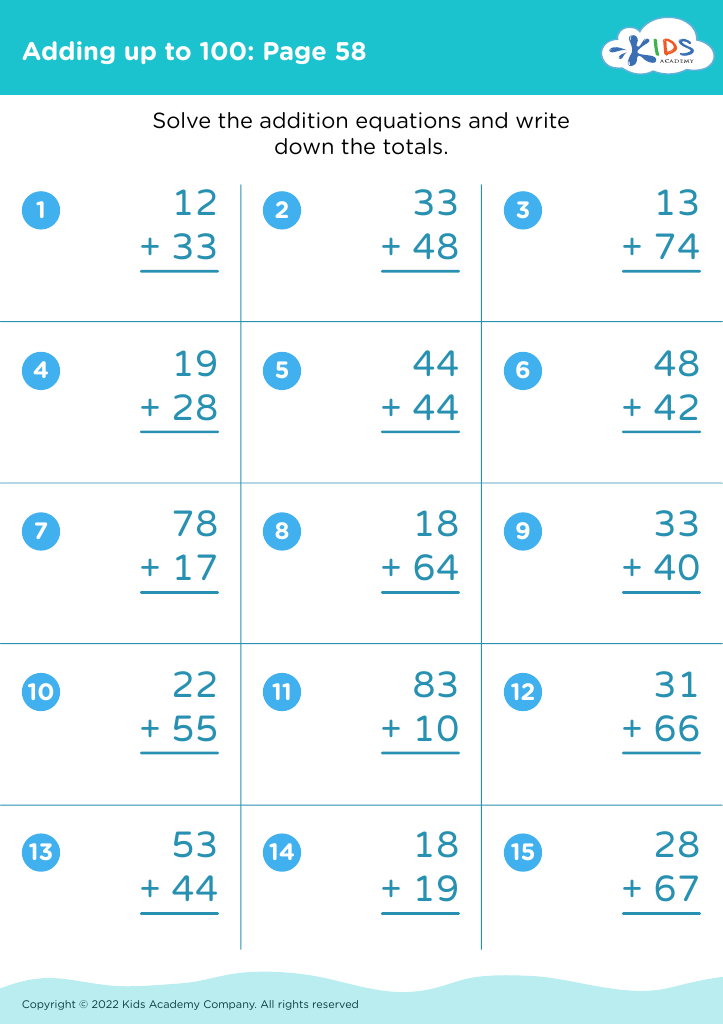
Unlock your child's potential with our "Understand Fractions Adding up to 100 Worksheets for Ages 5-7." Designed by education experts, these engaging worksheets help young learners master fundamental fraction concepts through hands-on activities. Colorful visuals and step-by-step instructions make learning fractions fun and easy. Perfect for home or classroom use, our worksheets build confidence in young mathematicians and set a solid foundation for future math success. Tailored for children aged 5-7, this resource enhances your child’s comprehension of fractions and adding numbers up to 100. Visit Kids Academy today to discover more enriching resources!


%20(1).jpg)




Understanding fractions and their ability to add up to 100 is crucial for young learners aged 5-7 as it lays a foundational stone for their future mathematical competency. By grasping these concepts early on, children develop critical numerical awareness and problem-solving skills. Fractions are integral parts of everyday life, from sharing toys equally to understanding time and money. When children learn that fractions can combine to form wholes and totals like 100, they enhance their comprehension of number relationships, addition, and subtraction, thus fostering numerical fluency.
For teachers and parents, encouraging young students to understand such concepts ensures that learners see math as a cohesive and practical subject. Integrating fraction activities in everyday situations reinforces learning and makes it enjoyable. Moreover, mastering fractions can boost a child's confidence, as it demystifies a concept often perceived as complex. This early competence prepares children for advanced mathematical tasks they will encounter in later grades, such as percentages, decimals, and more intricate problem-solving scenarios. Therefore, emphasizing the understanding of fractions and their sums equips youngsters with essential skills that support academic success and practical life functions.








