Understanding fractions Adding up to 100 Worksheets for Ages 5-7
51 filtered results
-
From - To
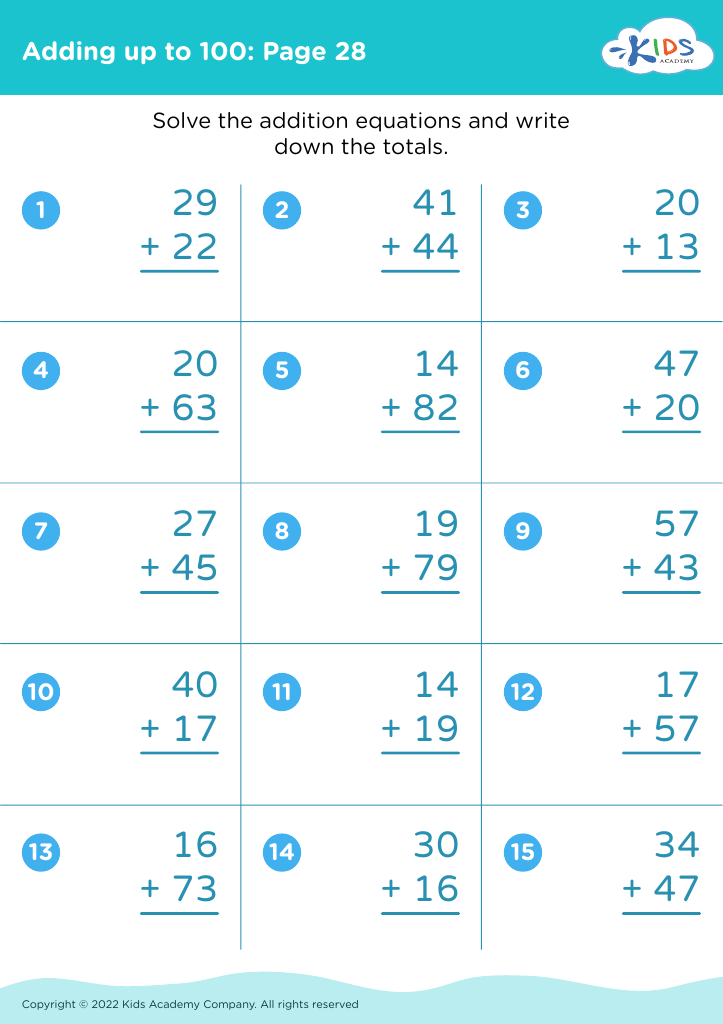
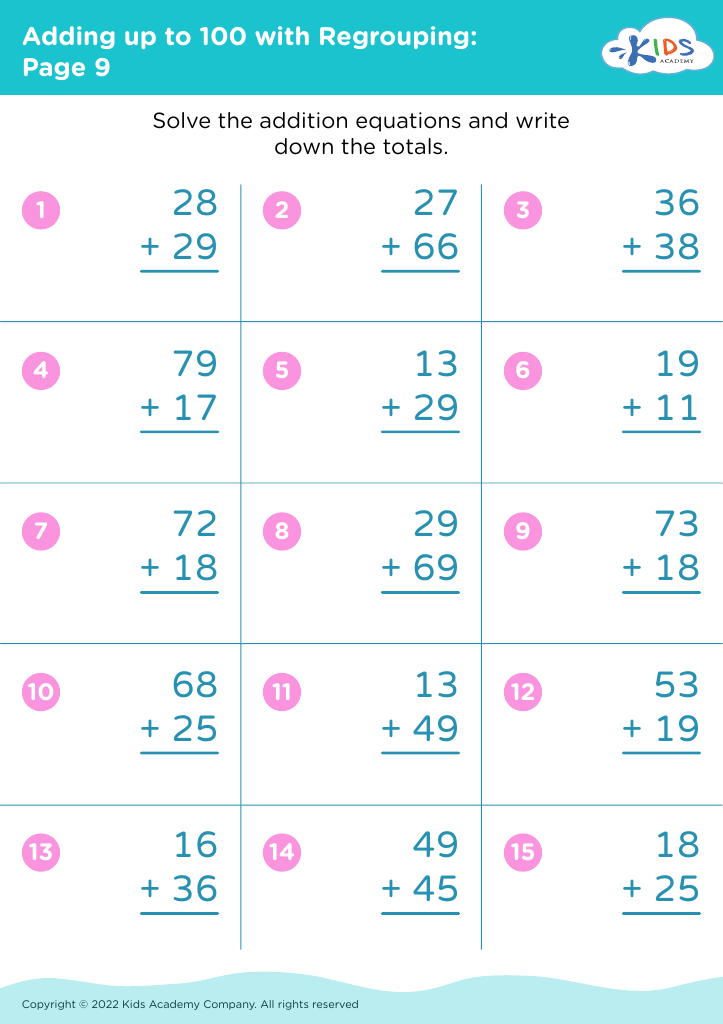
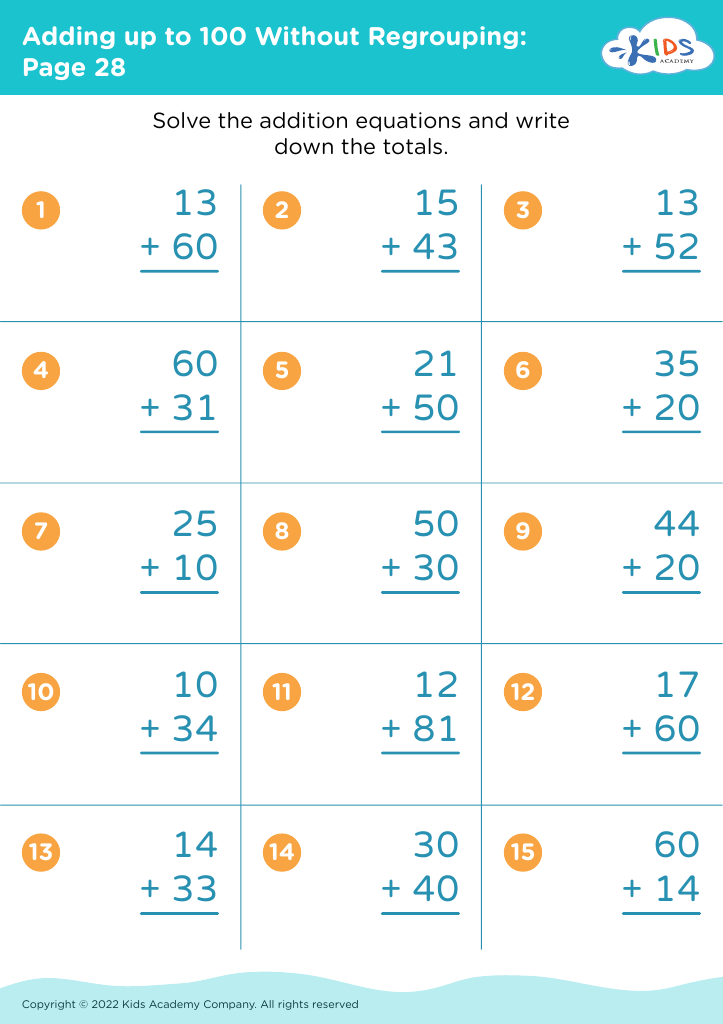
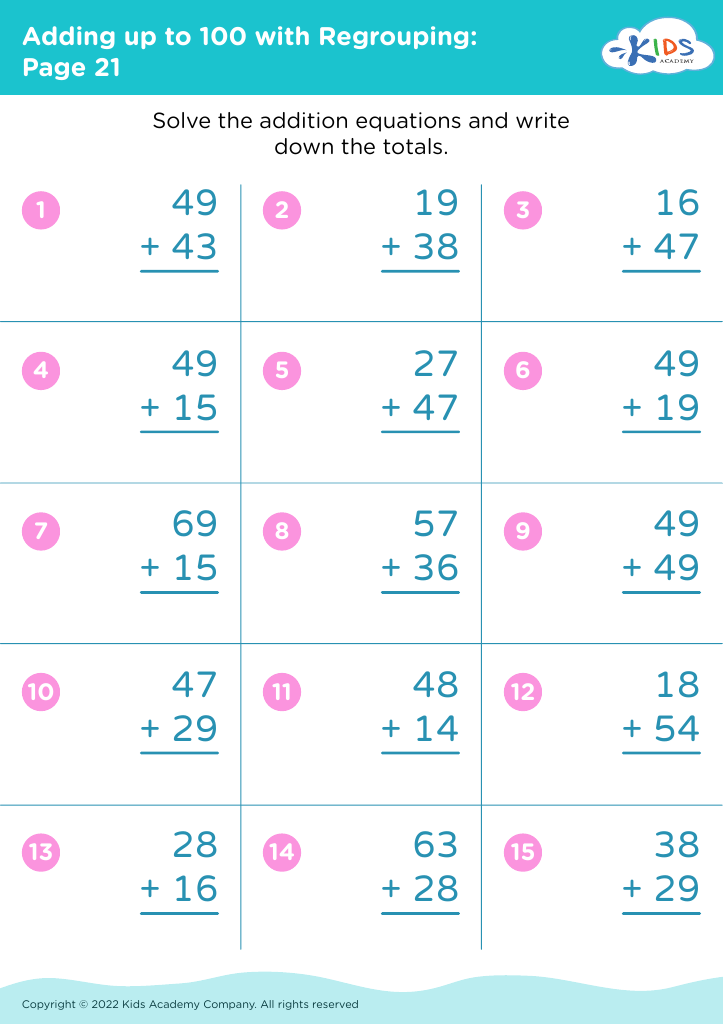
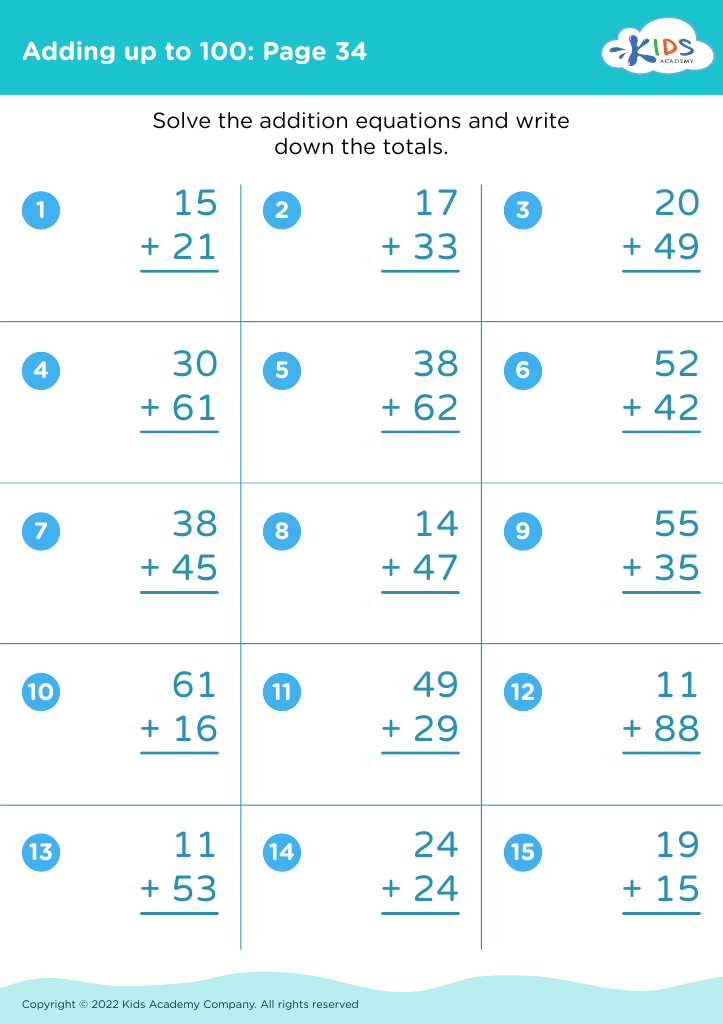
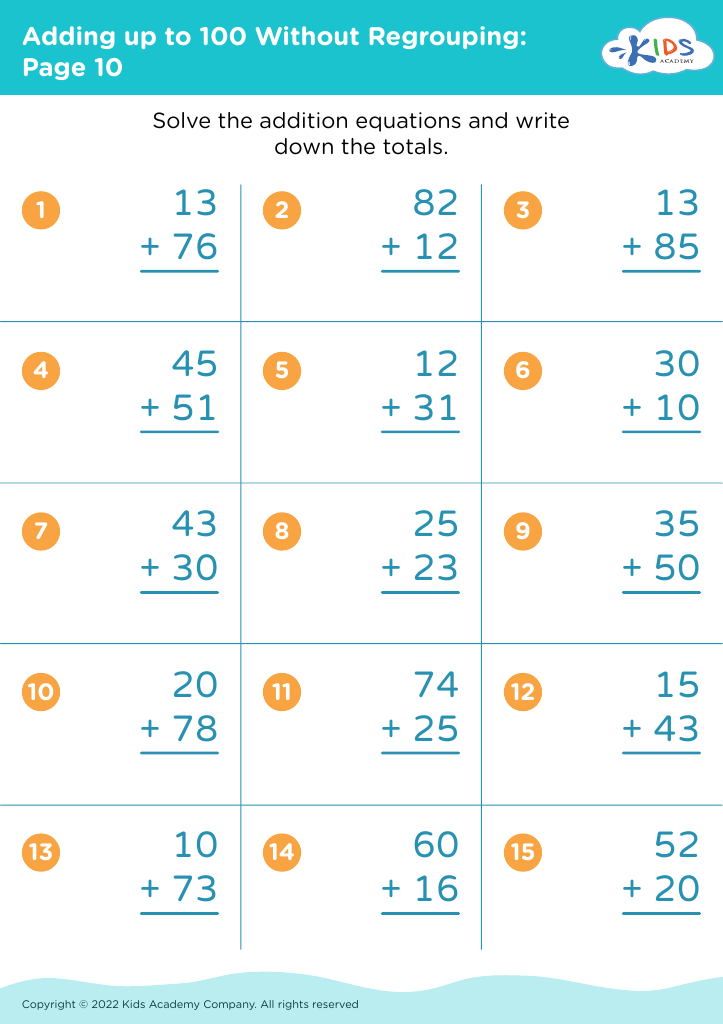
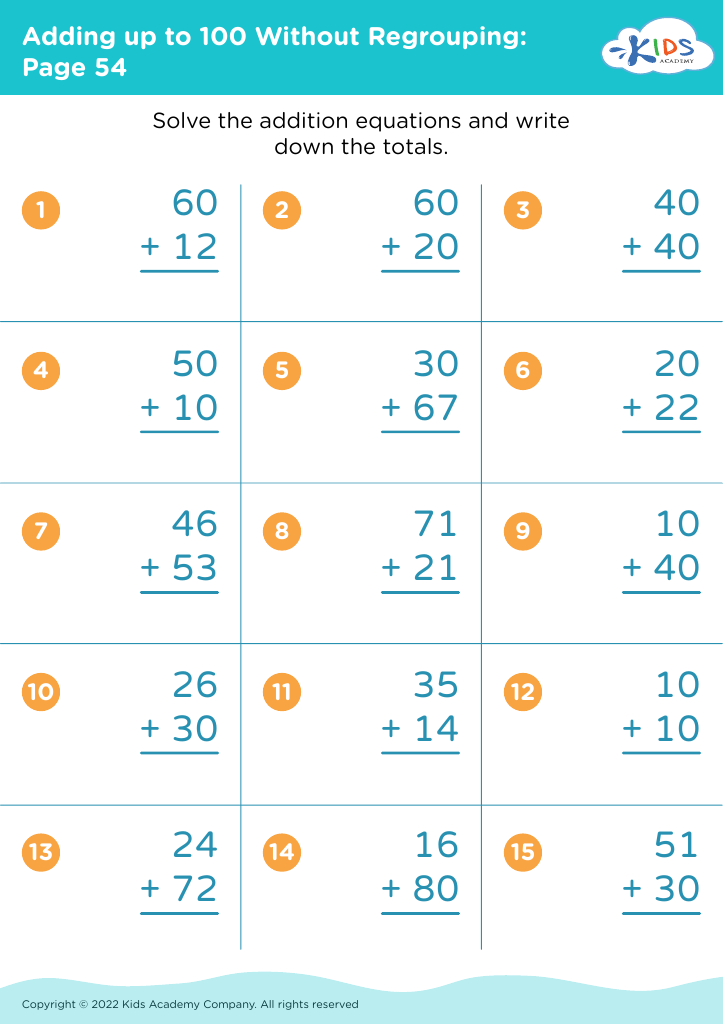
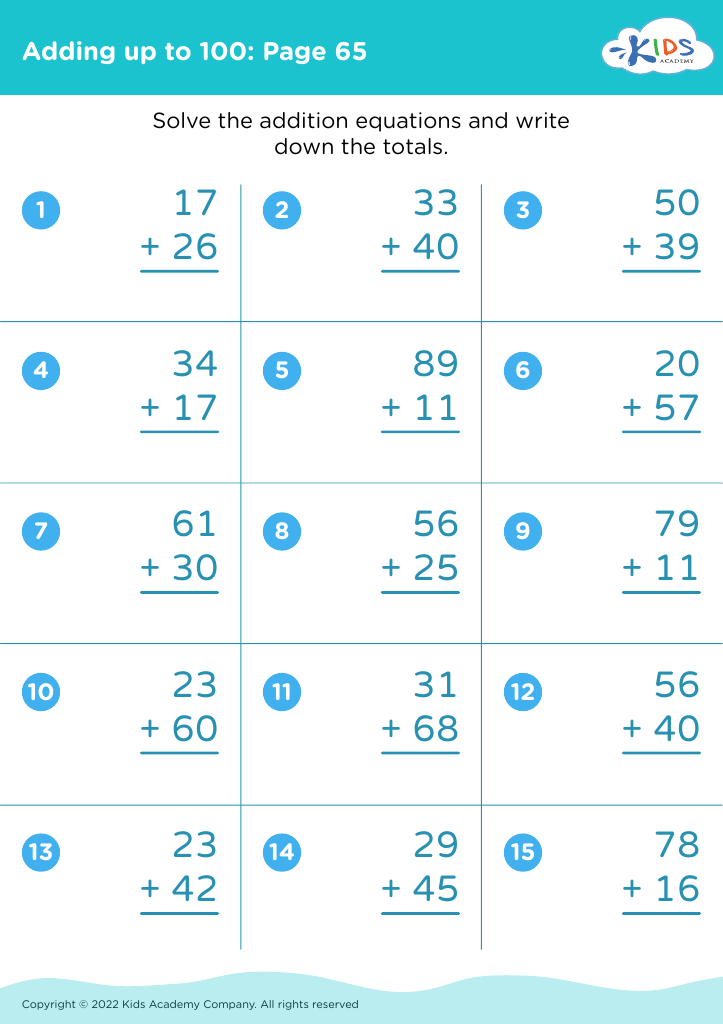
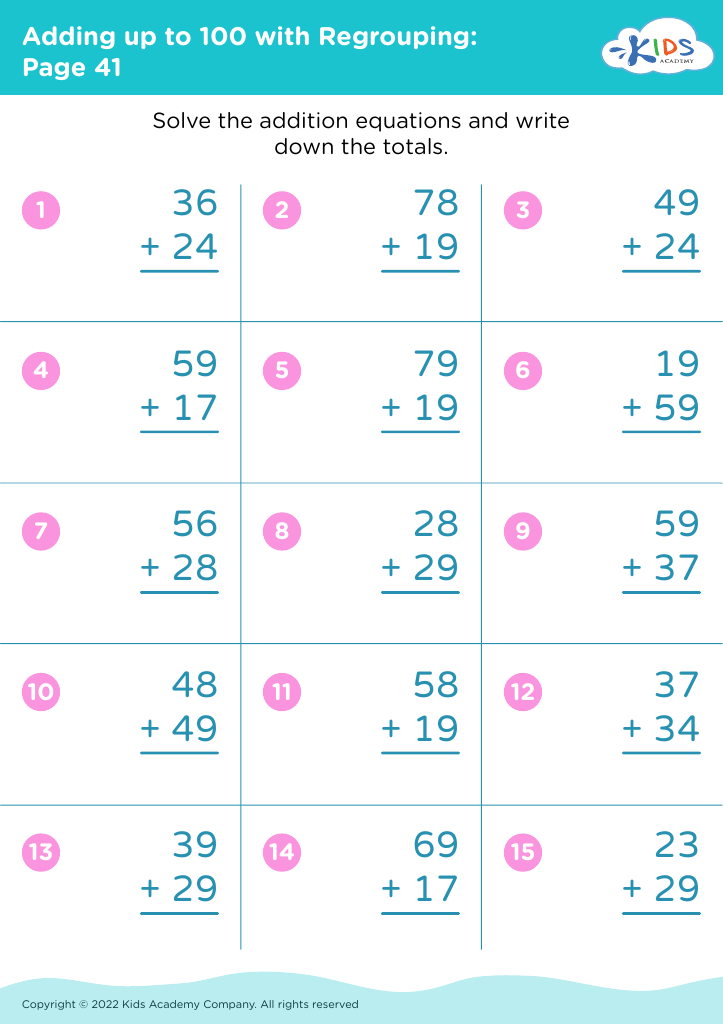
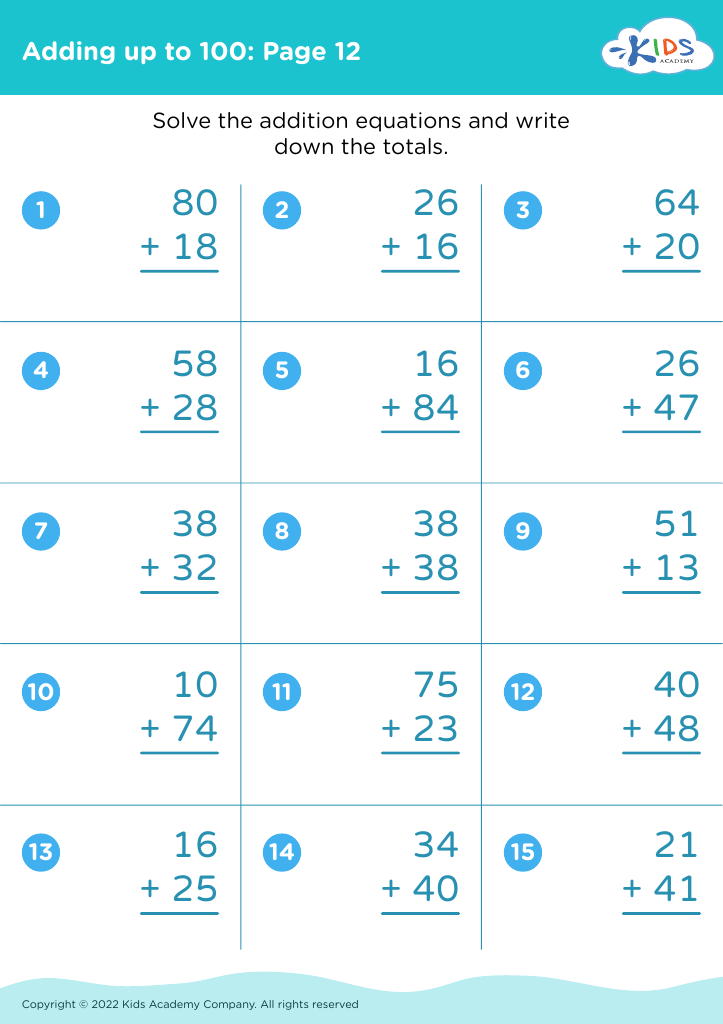
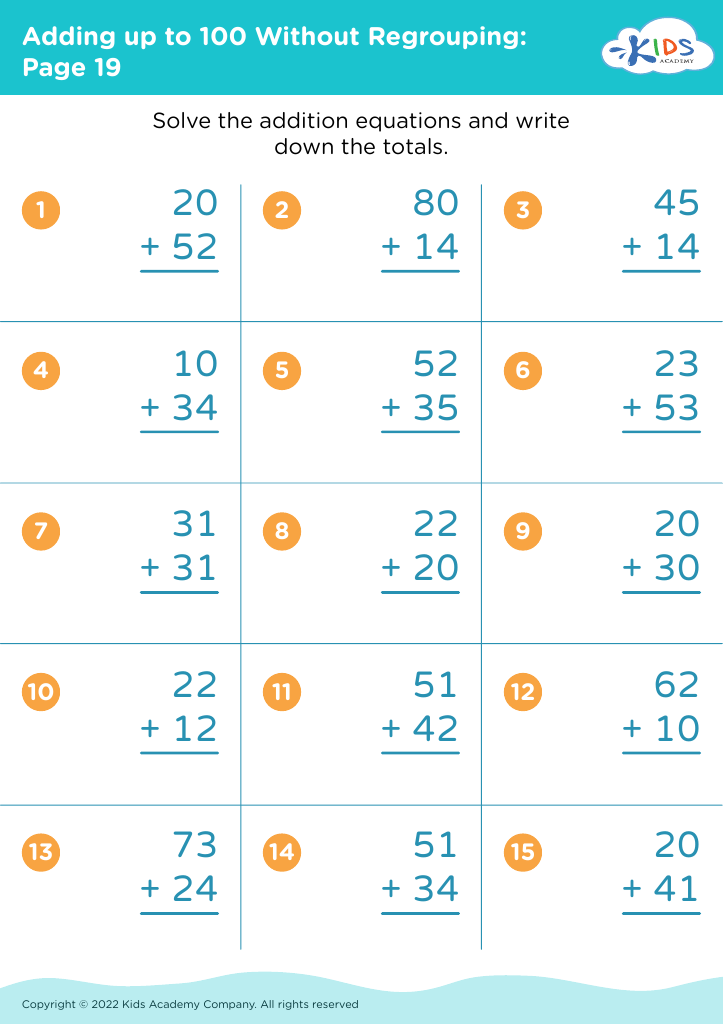
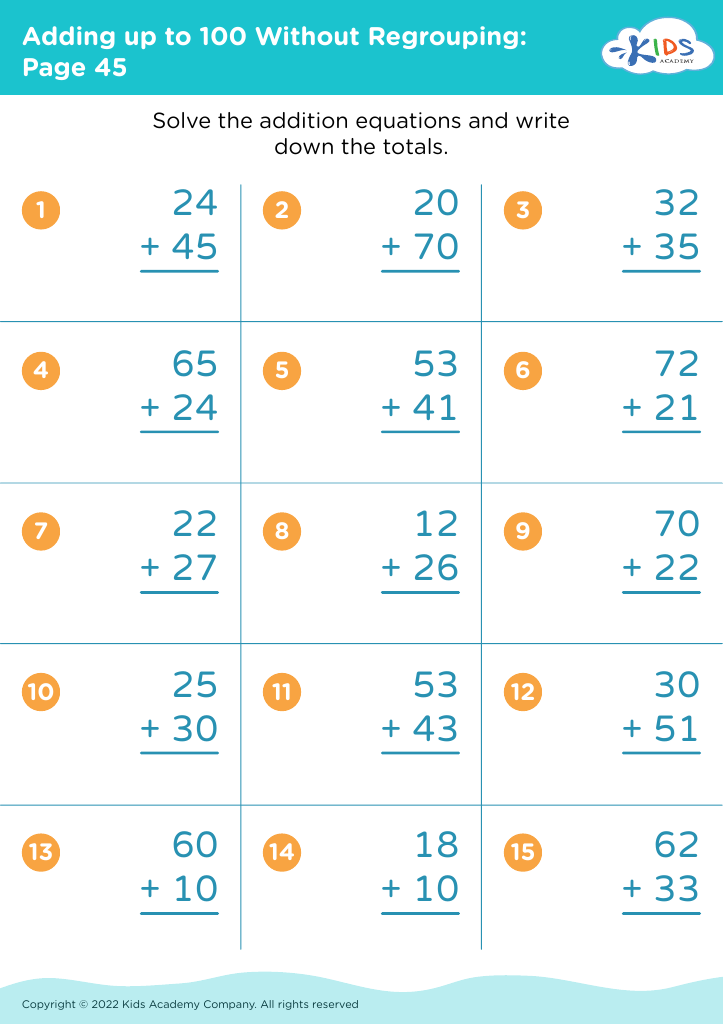
Unlock the world of fractions for your young learners with our "Understanding Fractions Adding Up to 100 Worksheets" designed specifically for ages 5-7. These engaging worksheets introduce children to basic fraction concepts through fun activities that make learning enjoyable. Your little ones will practice comparing, adding, and simplifying fractions while building essential math skills. With vibrant visuals and interactive exercises, the worksheets not only teach mathematical concepts but also foster critical thinking. Ideal for classroom or home use, these resources provide a solid foundation in math, preparing kids for future success in their educational journey. Start exploring the exciting world of fractions today!
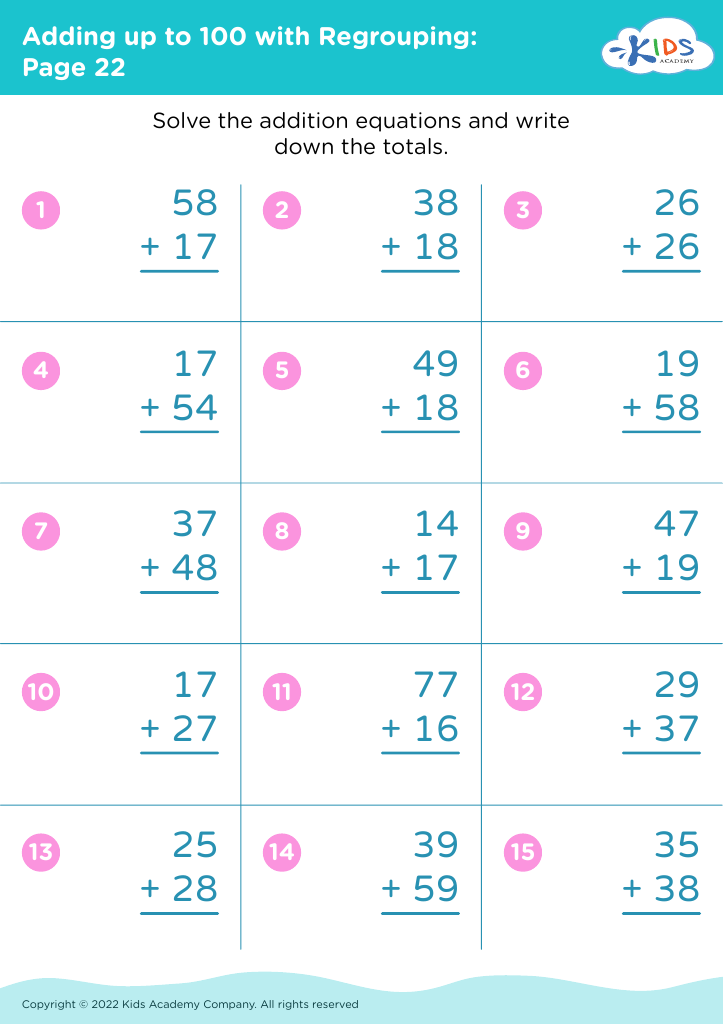
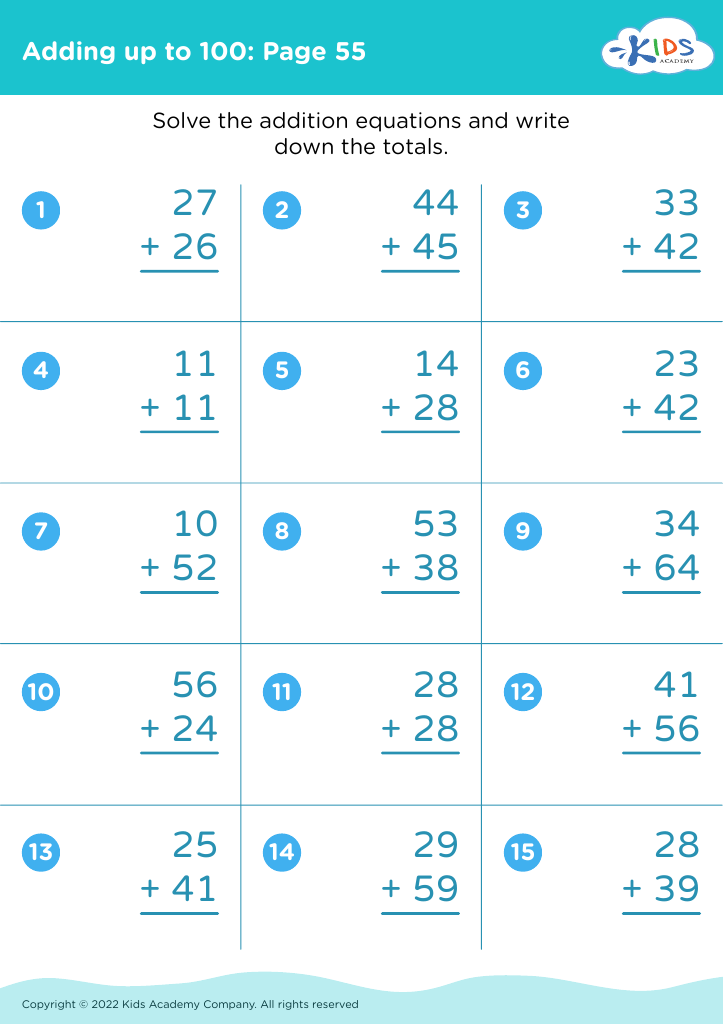
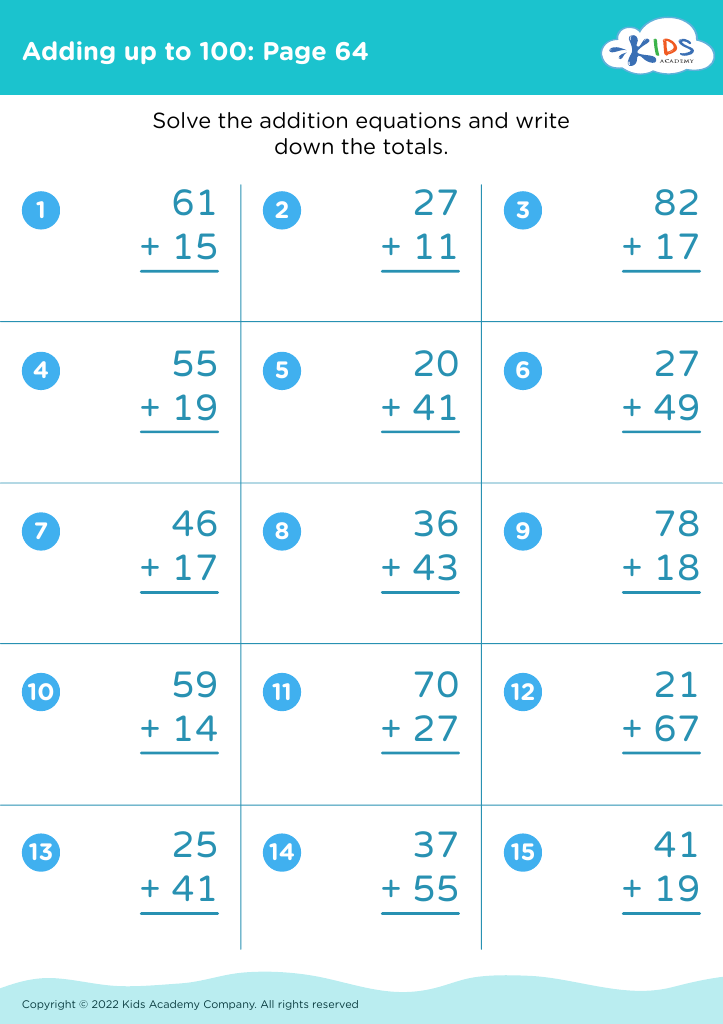
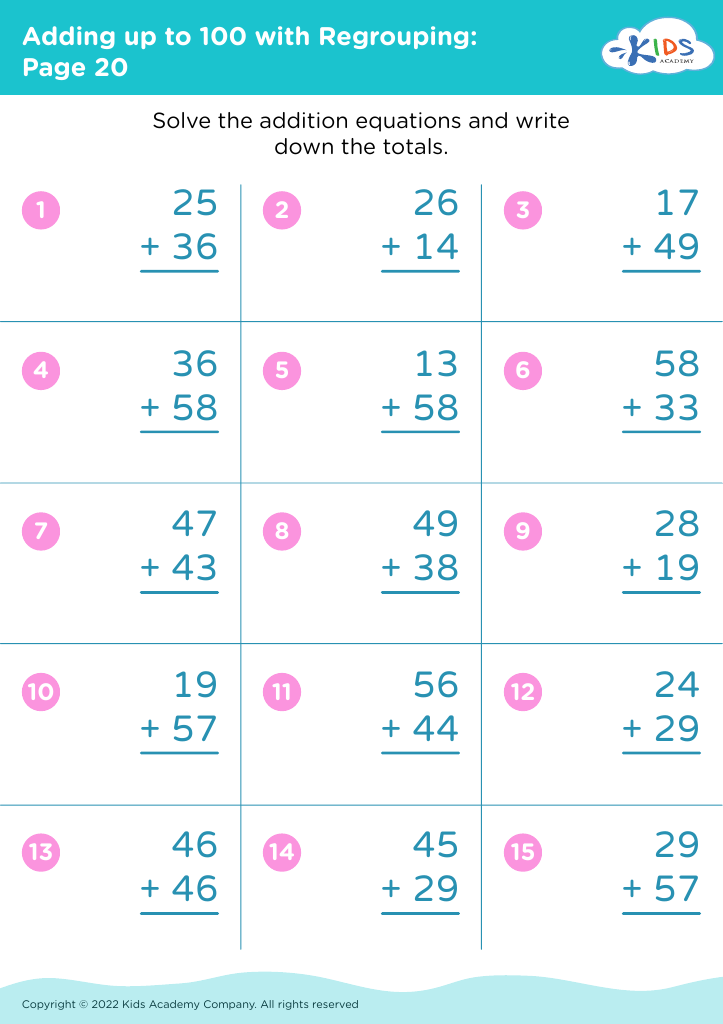
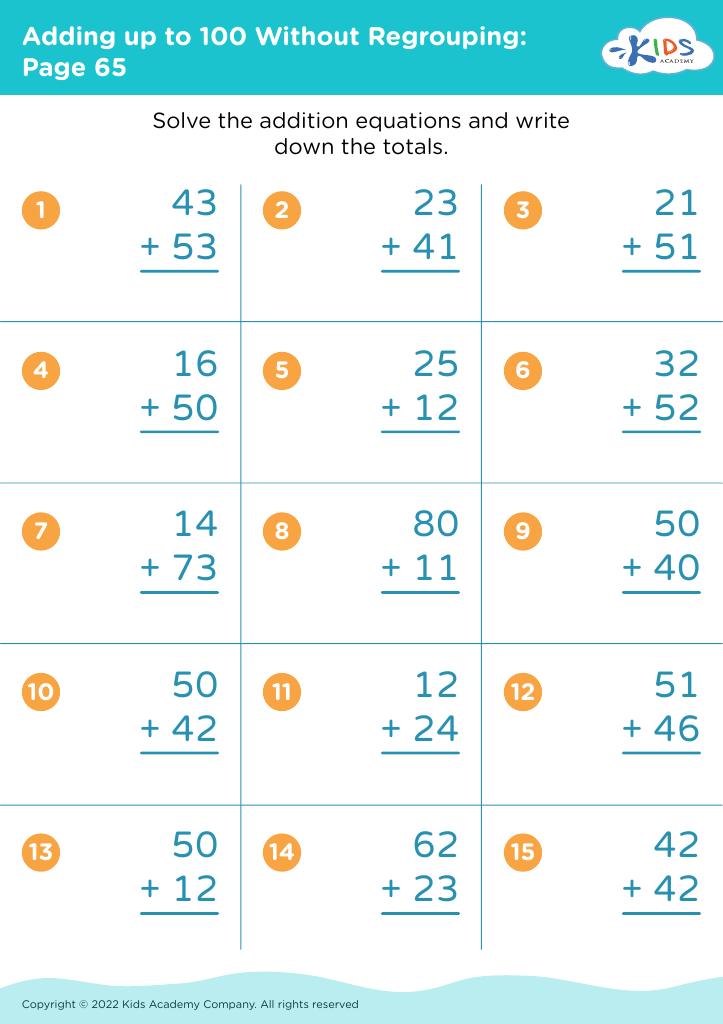
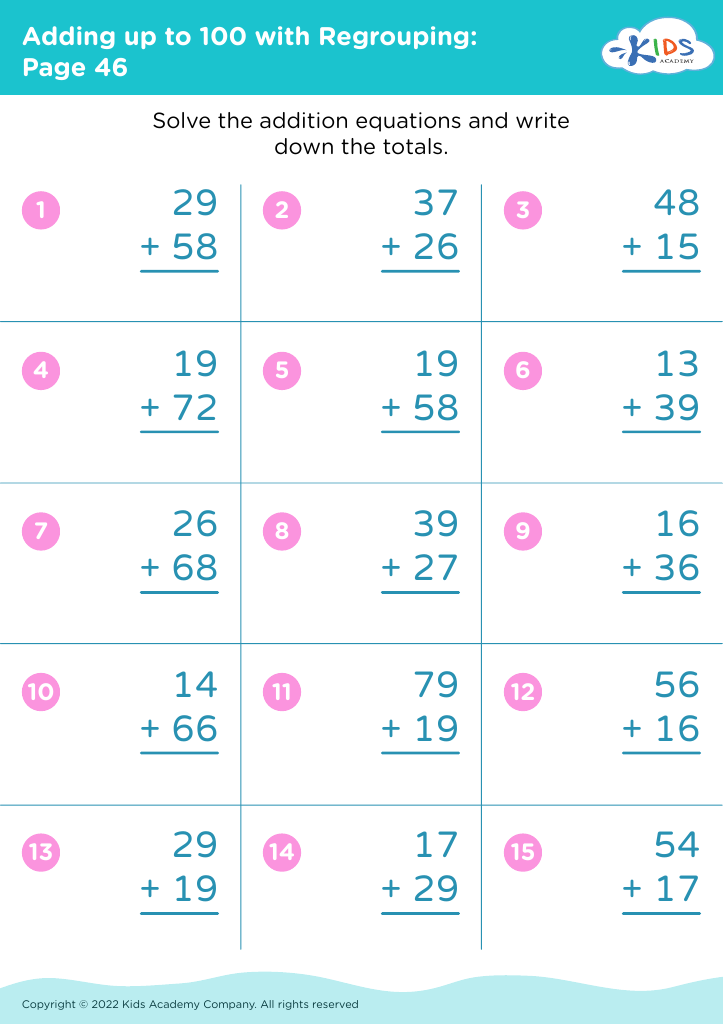
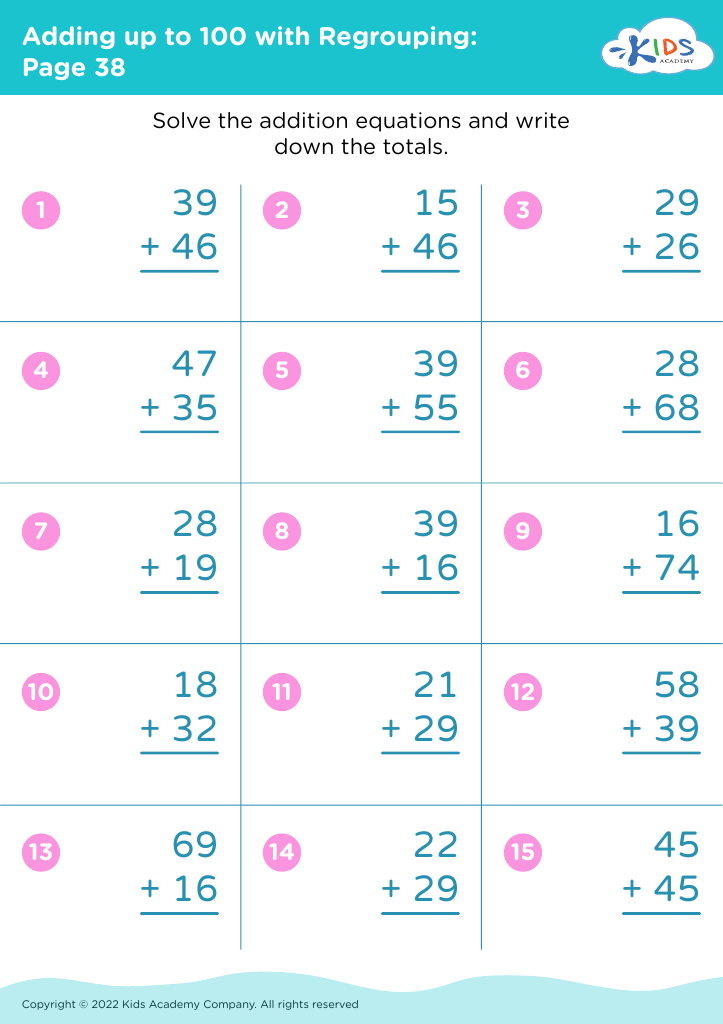
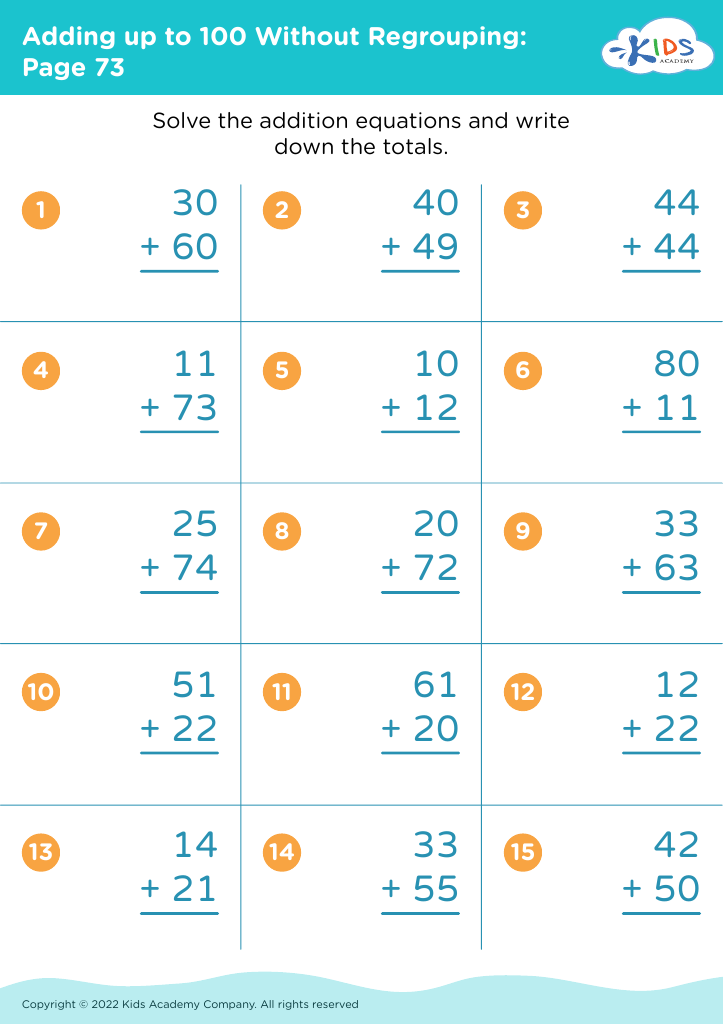
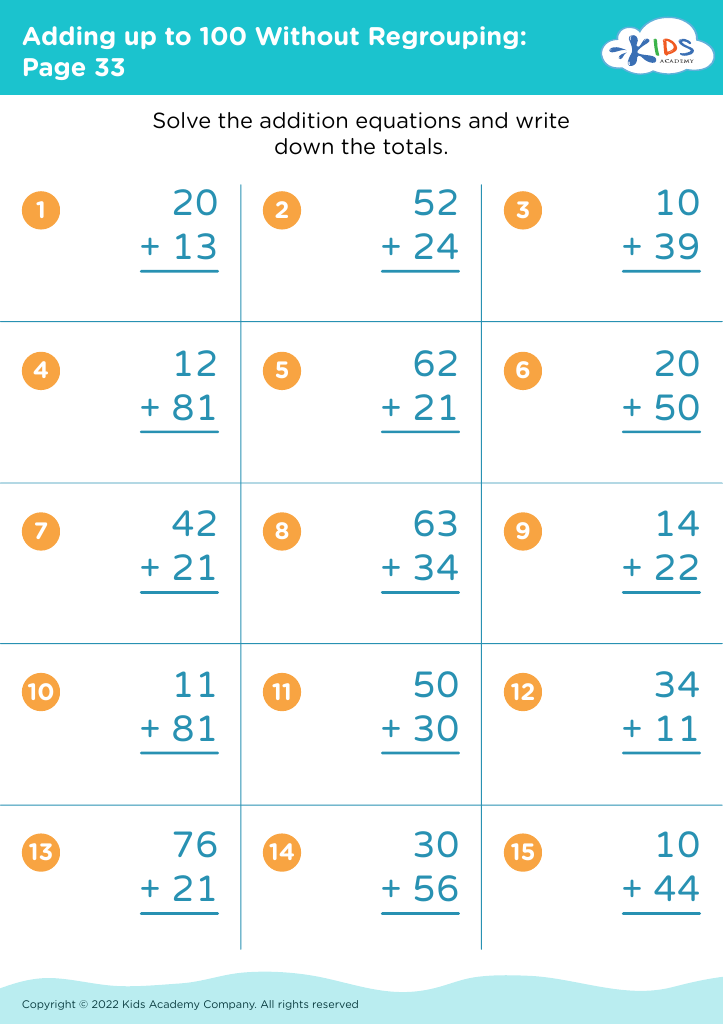
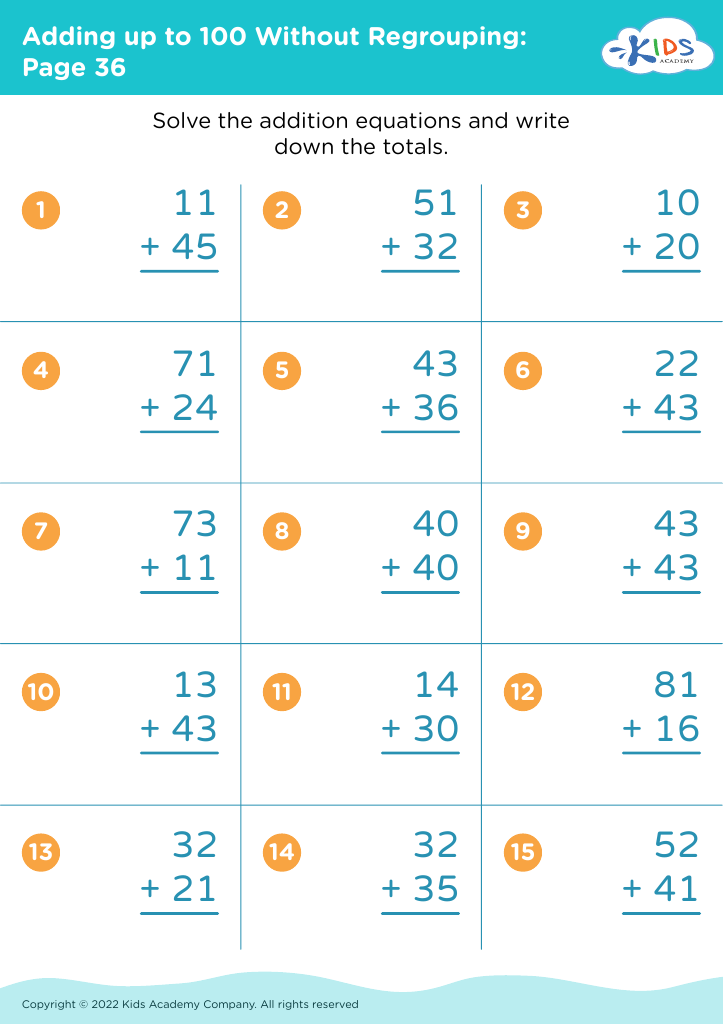
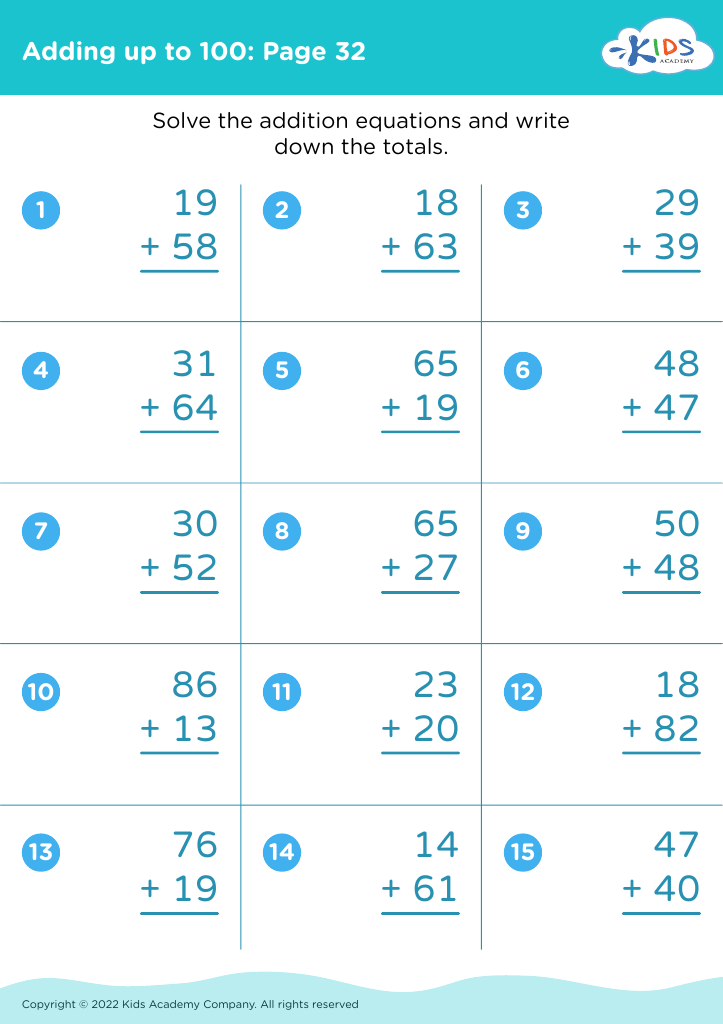
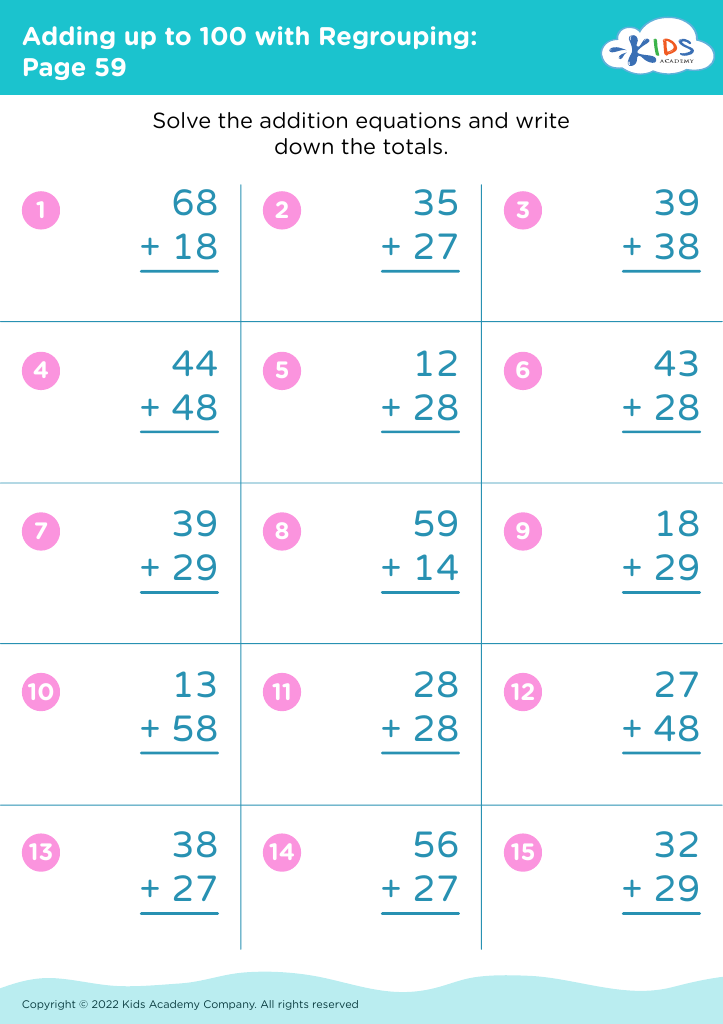






%20(1).jpg)
Understanding fractions and their relationship to a whole, such as 100, is essential for children aged 5-7 as it lays the groundwork for foundational math skills. At this age, kids are developing their number sense—an essential ability that helps them grasp various mathematical concepts later on. Learning about fractions enables children to visualize parts of a whole, enhancing their understanding of percentages, ratios, and basic arithmetic.
By introducing fractions that add up to 100, children begin to view numbers not just as isolated digits but as parts of a greater system. This comprehension can foster critical thinking skills and encourage children to explore connections between different areas of math. For example, understanding that 50% is equivalent to 50 out of 100 helps children apply this knowledge to real-world situations, such as comparing values or making decisions based on proportions.
Additionally, grasping fractions can boost children’s confidence in their mathematical abilities, reducing anxiety around numbers. Parents and teachers play a crucial role in supporting this learning by providing hands-on activities, visual aids, and engaging games that make the concept of fractions fun and relatable. Ultimately, fostering these skills now can set the stage for more complex mathematical reasoning in the future.








