Understanding Sequences Adding up to 100 Worksheets for Ages 5-7
5 filtered results
-
From - To
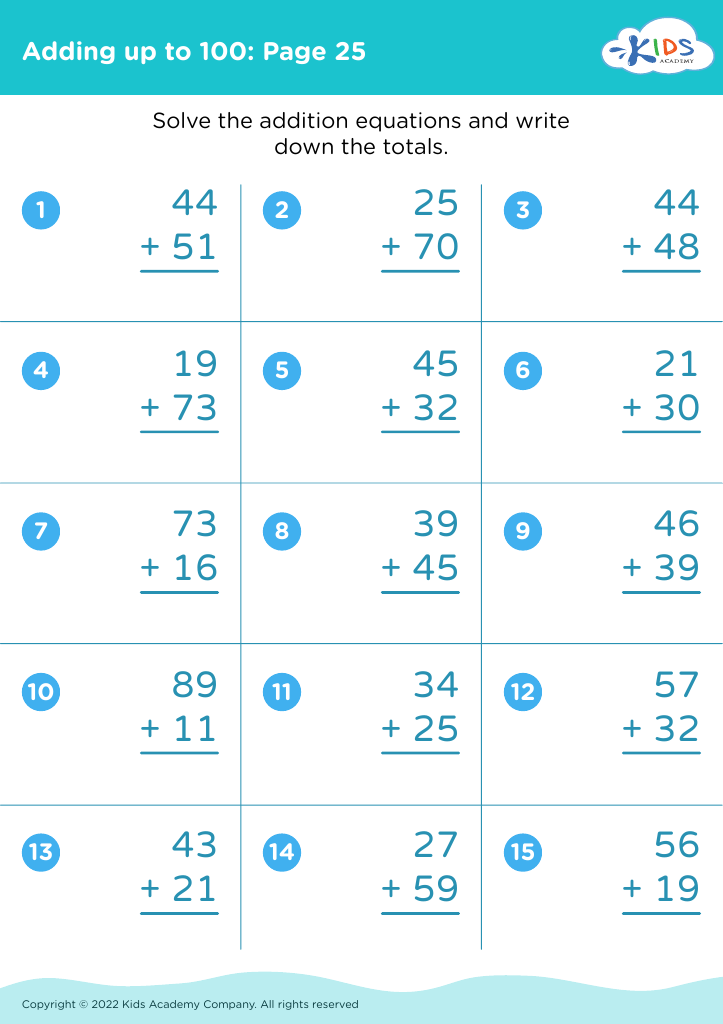
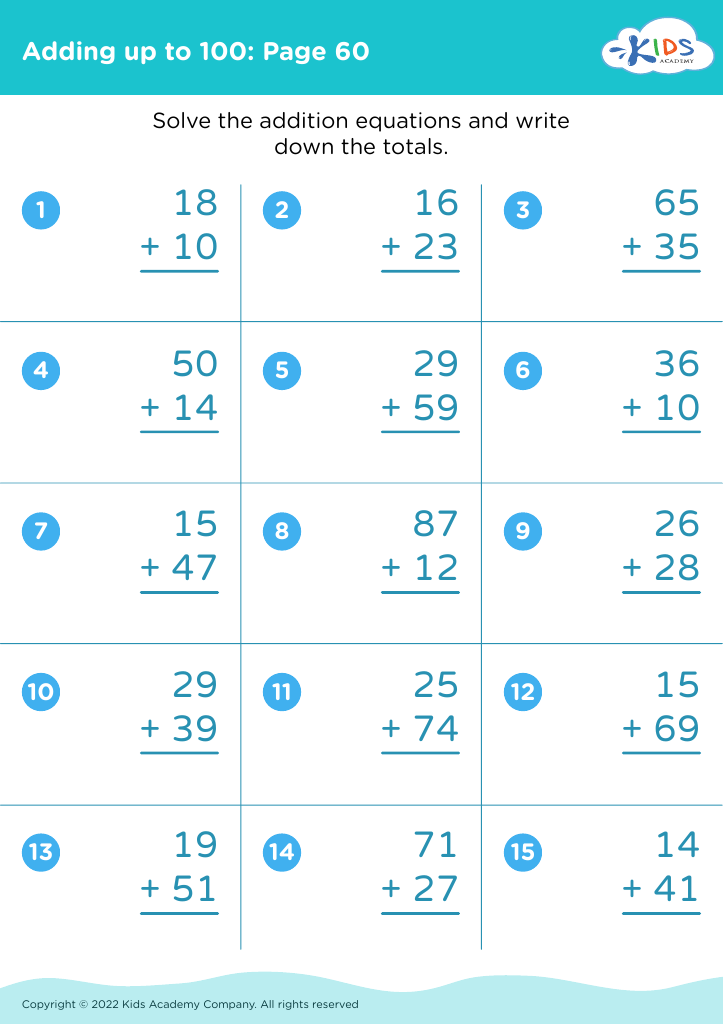
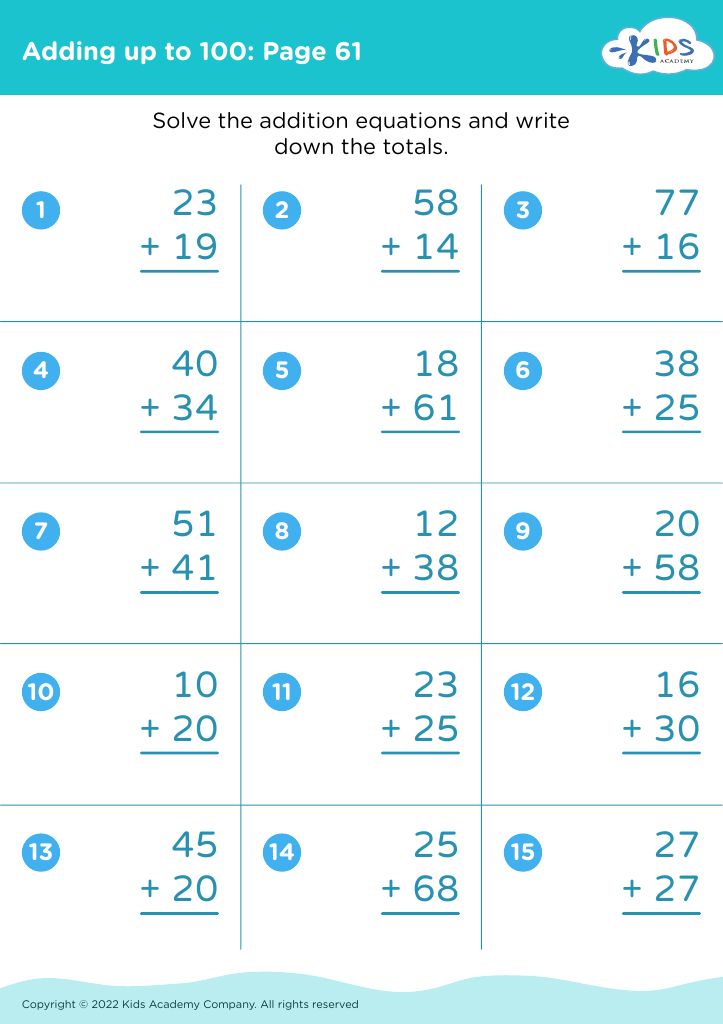
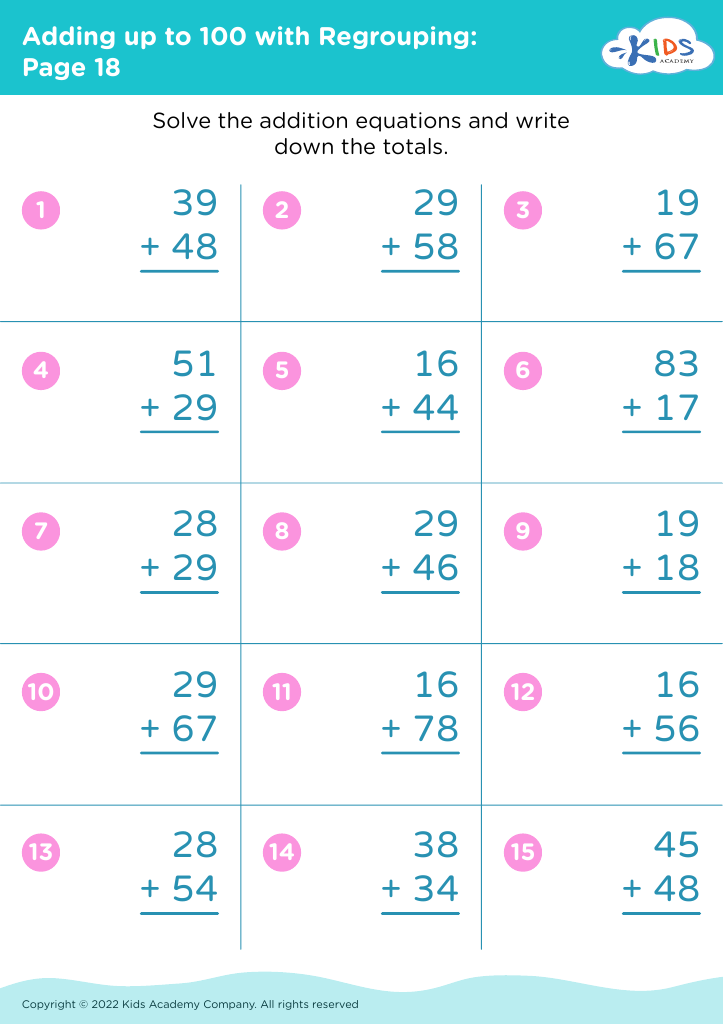
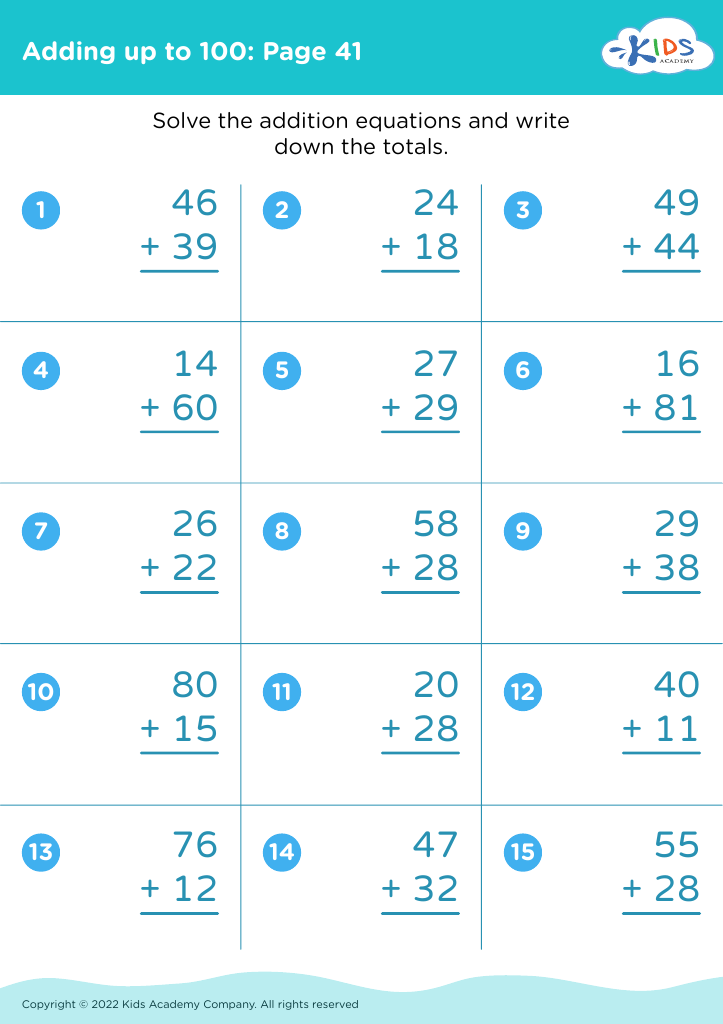
Our "Understanding Sequences Adding up to 100 Worksheets" are designed specifically for children aged 5-7 to master foundational math skills in a fun and engaging way! These worksheets help young learners grasp the concept of number sequences while confidently adding numbers up to 100. Each activity encourages pattern recognition, logical thinking, and enhanced calculation skills, essential in early math education. From counting by 2s, 5s, or 10s to identifying missing numbers in a sequence, these worksheets provide a dynamic learning experience. Perfect for both classroom and home use, set your child on the path to math success today!




%20(1).jpg)


Understanding sequences that add up to 100 can have significant educational benefits for children aged 5-7. First, exploring these sequences helps young learners grasp the fundamental concept of addition, a key aspect of early math education. By working with small numbers building up to a total, kids develop a stronger sense of number relationships and arithmetic progression.
Additionally, such exercises enhance cognitive skills like pattern recognition and logical reasoning. Recognizing sequences demands attention to detail and promotes problem-solving skills, critical for later math tasks and everyday activities.
Beyond math skills, understanding sequences fosters patience and perseverance. Since finding combinations to reach 100 can be challenging, children learn to persist, building resilience and a growth mindset that believes in effort over innate ability.
Moreover, discussing these sequences with peers or parents promotes social and verbal communication skills. Articulating thought processes strengthens understanding as children explain their methods and reasoning.
Lastly, this type of activity can be a fun, shared experience between parents and children, enhancing their bond while fostering a positive attitude toward learning. Overall, working on sequences to 100 offers multifaceted benefits, laying a solid foundation for future educational success.








