Understanding symmetry Adding up to 100 Worksheets for Ages 5-7
5 filtered results
-
From - To
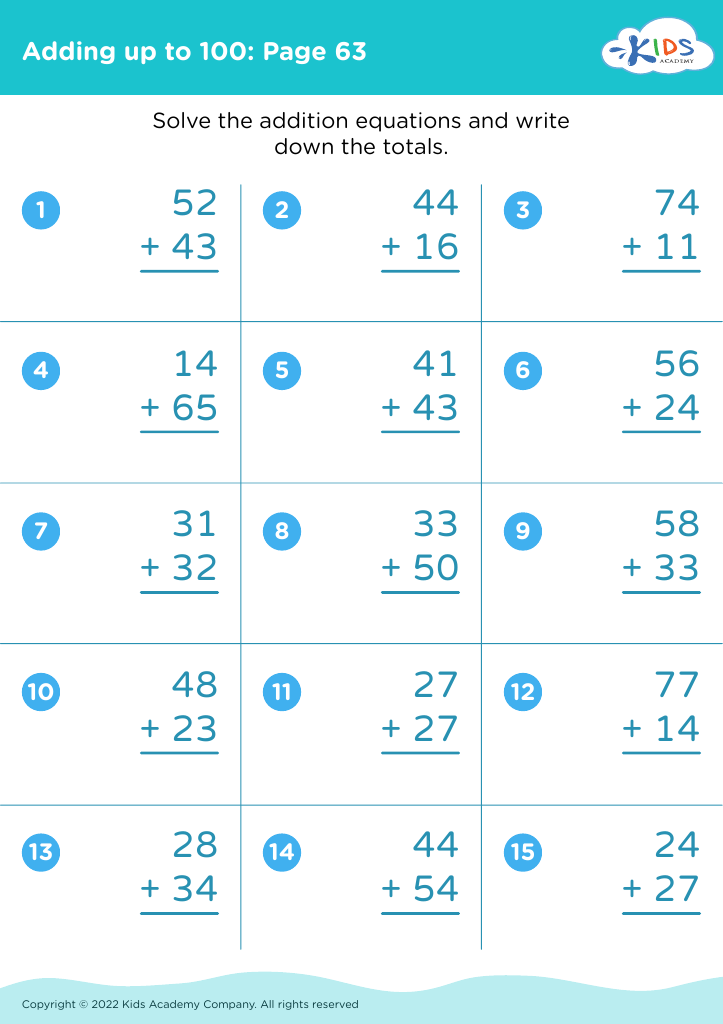
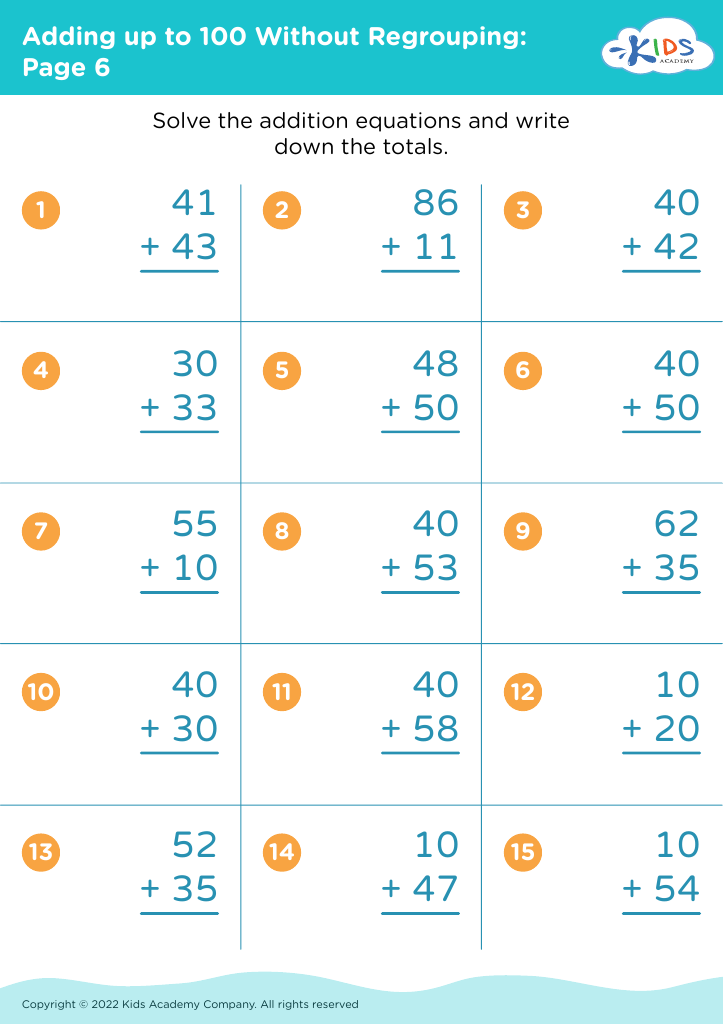
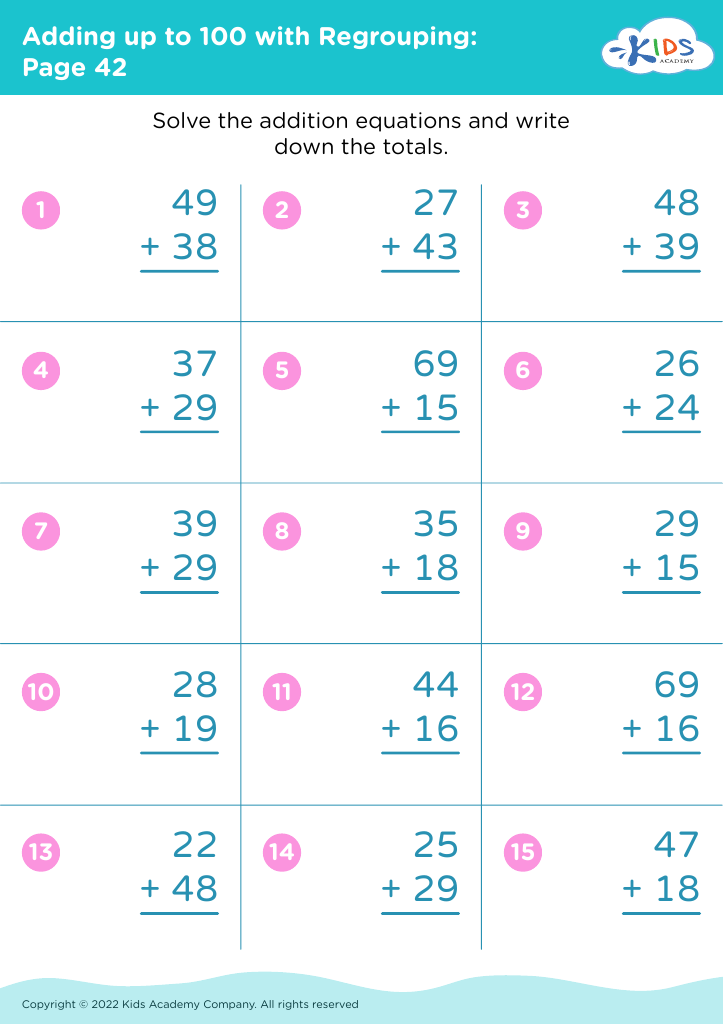
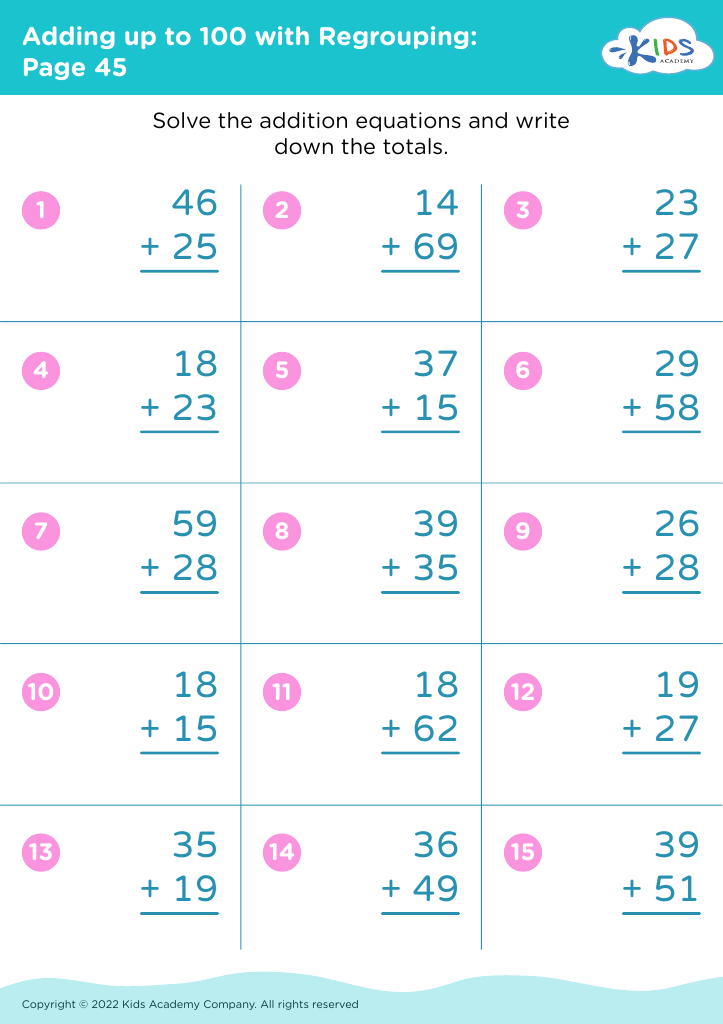
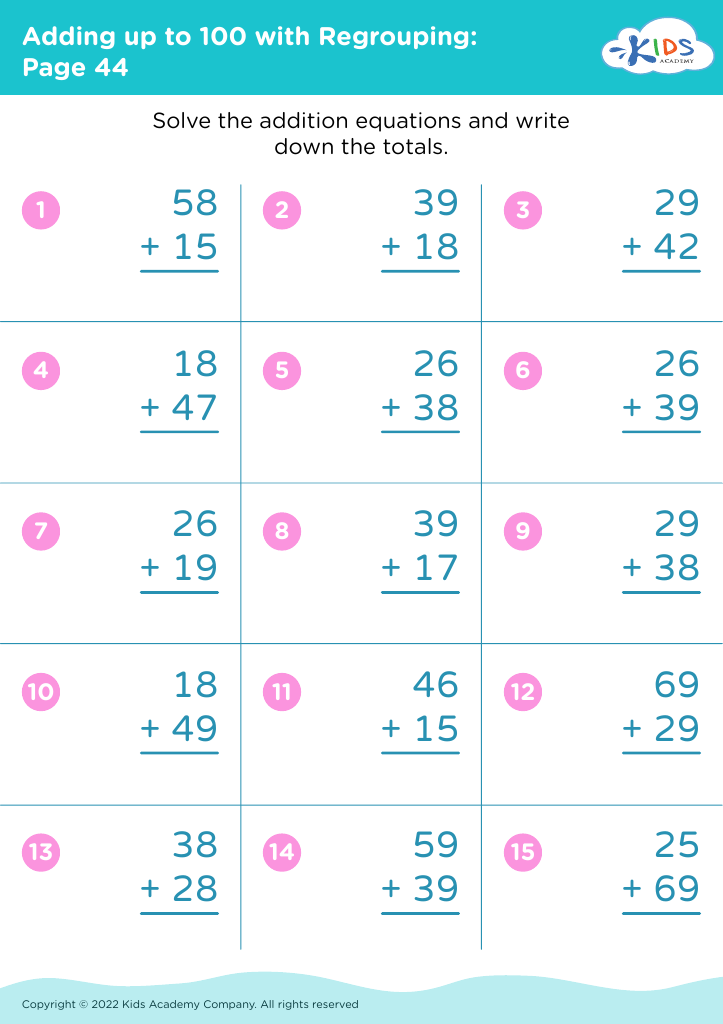
Discover the joy of learning symmetry with our "Understanding Symmetry: Adding Up to 100 Worksheets," designed specifically for children ages 5-7. These engaging worksheets help young learners grasp the concept of symmetry while practicing their addition skills up to 100. Each activity focuses on fun visuals and interactive exercises that promote critical thinking and shape recognition. Perfect for home or classroom use, these resources help children explore patterns, enhance their math abilities, and develop a strong foundational understanding of symmetry in a playful way. Download today to inspire creativity and confidence in young mathematicians!





%20(1).jpg)

Understanding symmetry and working with numbers adding up to 100 are essential skills for children ages 5-7. These concepts lay the foundation for critical thinking and problem-solving, which are vital for academic success.
Symmetry helps children develop spatial awareness and visual understanding, key elements in subjects like mathematics, art, and science. Recognizing symmetrical shapes enables them to appreciate balance and form in their environment, enhancing their creativity and perceptual skills. Symmetry also encourages logical reasoning, as children learn to identify patterns and relationships, which are foundational concepts in mathematics.
On the other hand, the ability to add numbers up to 100 strengthens basic arithmetic skills. It fosters number sense, allowing children to understand how numbers work together, perform calculations, and develop the ability to estimate and make comparisons. Mastering these skills at a young age prepares them for more complex mathematical concepts in the future.
Both symmetry and addition promote a mindset of exploration and curiosity, important traits for lifelong learning. Parents and teachers should care about these concepts because they not only excite young learners but also build essential cognitive skills crucial for future academic endeavors and everyday problem-solving. Cultivating these competencies from an early age leads to confident, competent learners.








