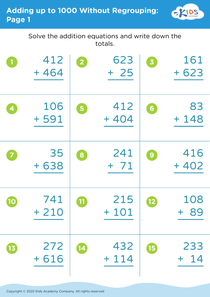
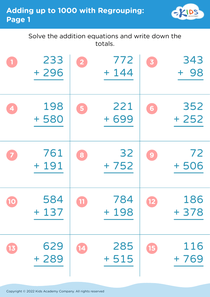
Number Recognition Adding up to 1000 Misc Worksheets for Ages 5-7
13 filtered results
-
From - To
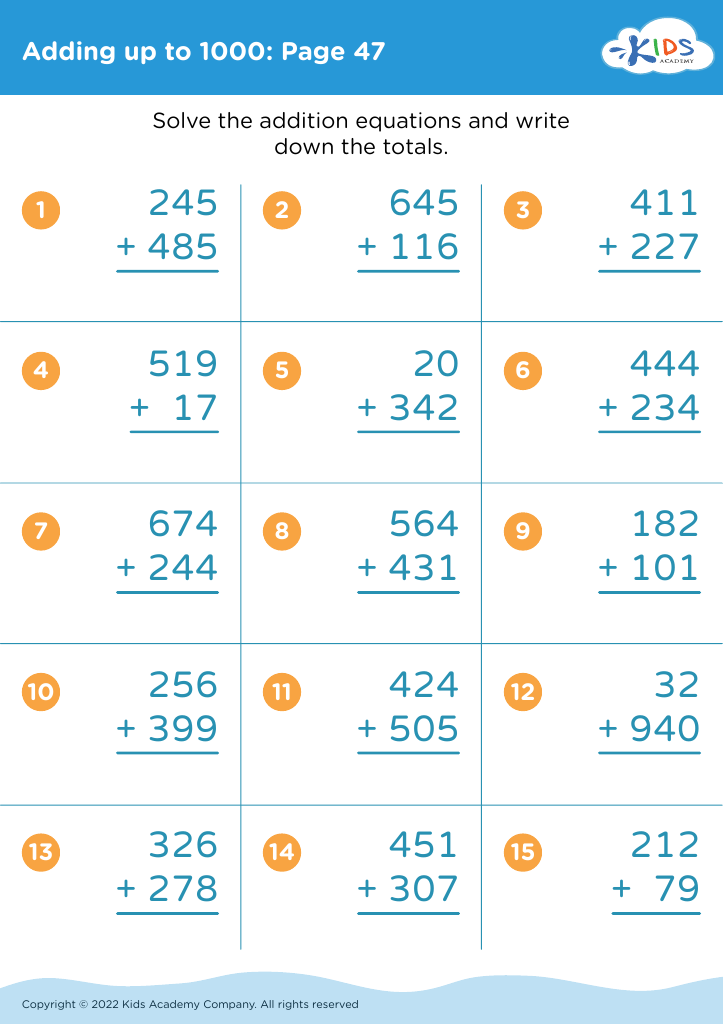
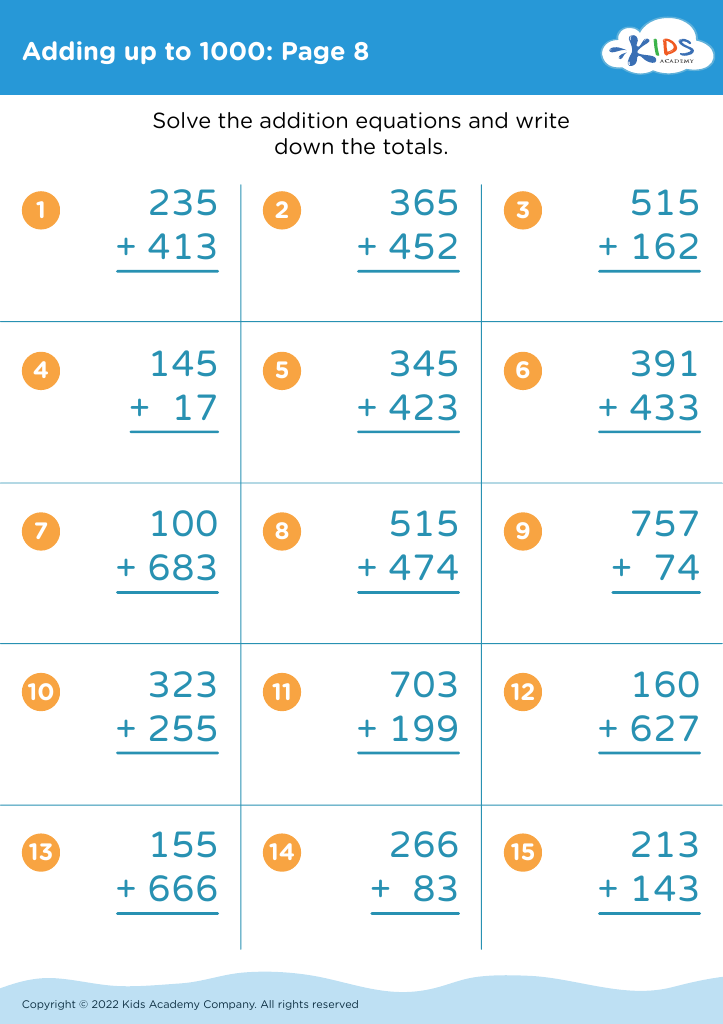
Introducing our "Number Recognition Adding up to 1000 Misc Worksheets for Ages 5-7"! Perfect for young learners, these engaging and educational worksheets are expertly designed to help kids build strong foundational skills in math. Focusing on both fun and knowledge, each worksheet enhances number recognition and adding skills up to 1000 through exciting activities. Proven to stimulate critical thinking and boost confidence, these worksheets cater to various learning styles. With colorful illustrations and easy-to-follow instructions, children will delight in every session. Ideal for classrooms and home learning alike, our worksheets make early math learning enjoyable and effective. Download now and watch your child excel!
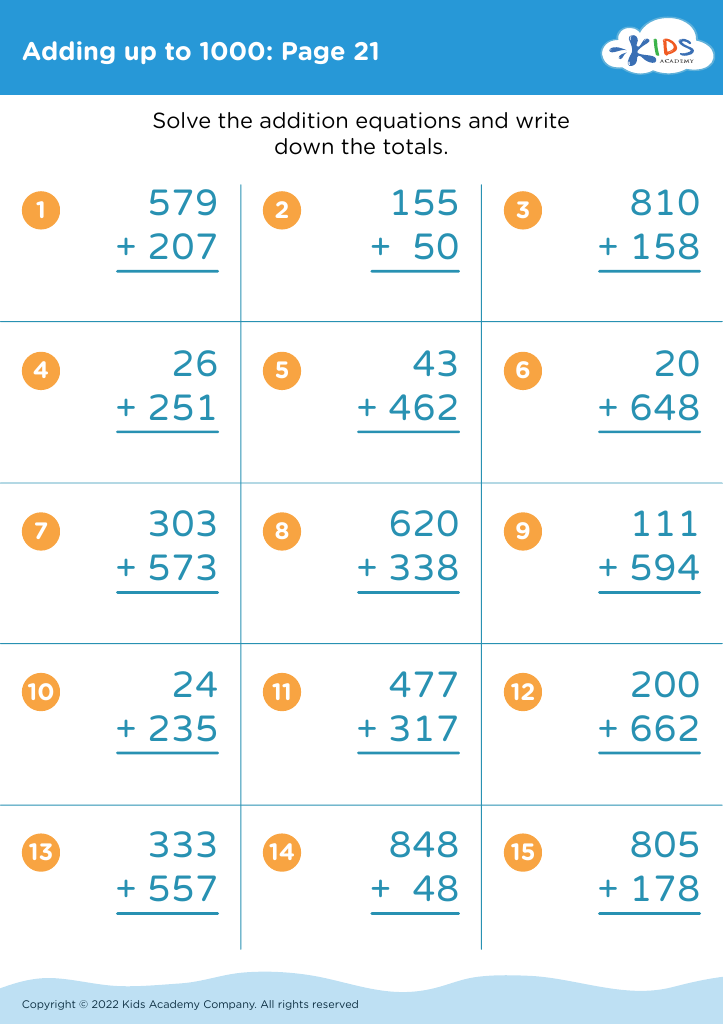
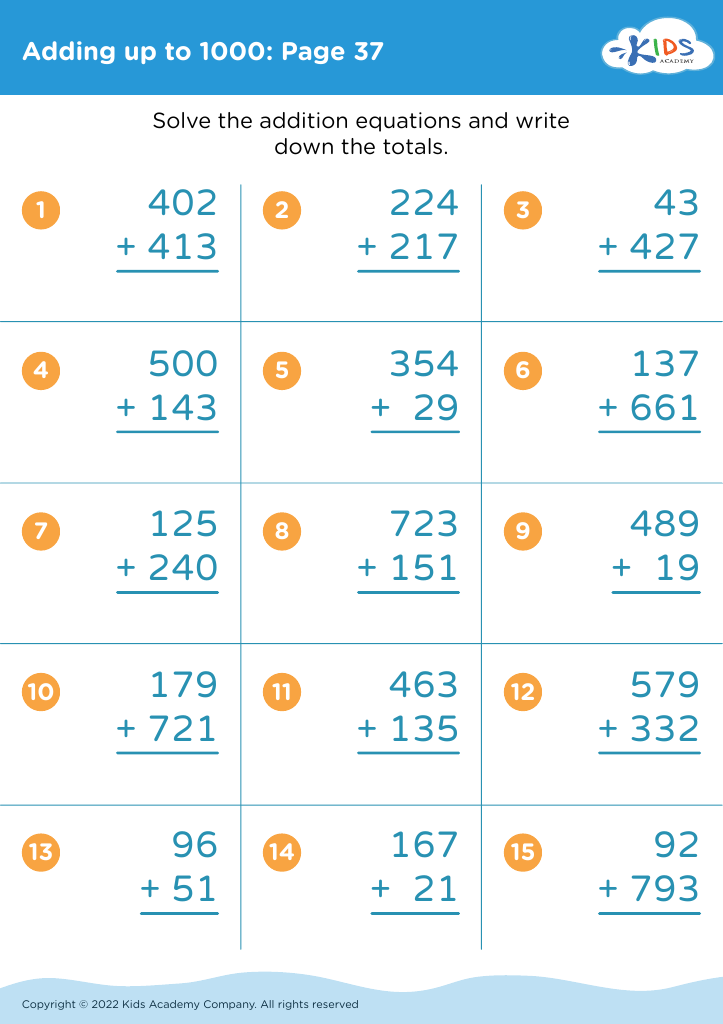
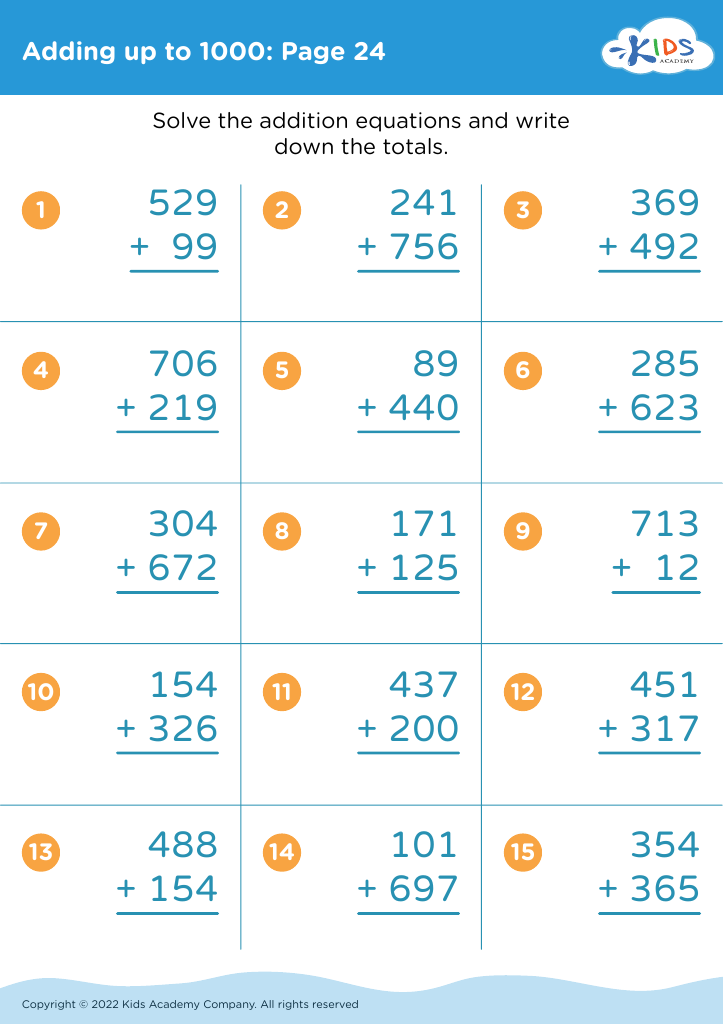
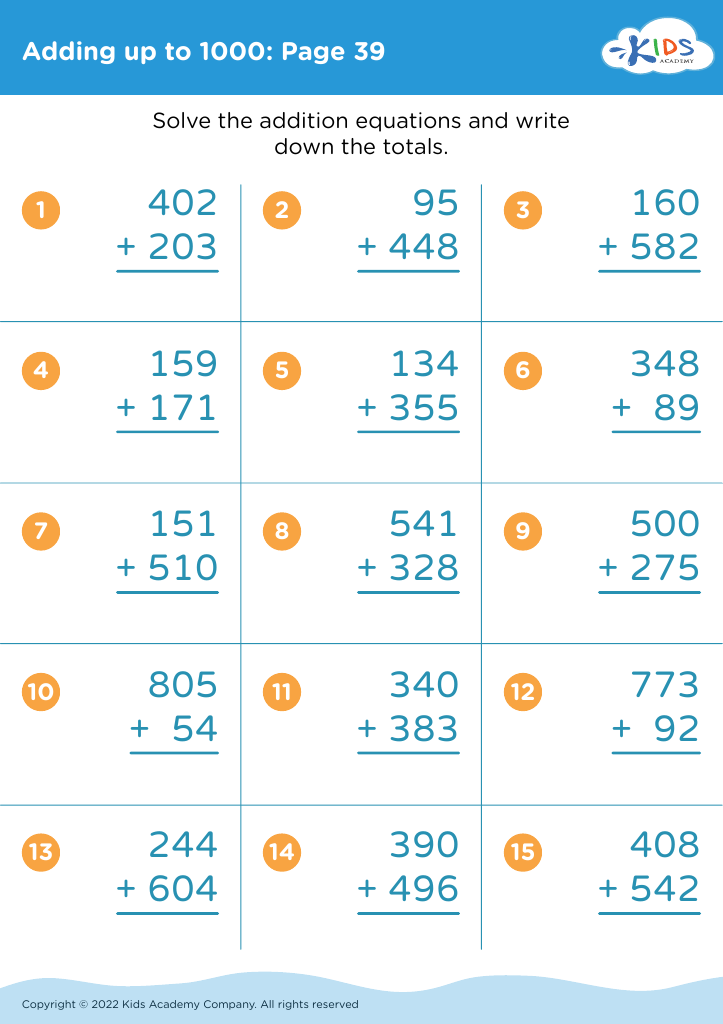
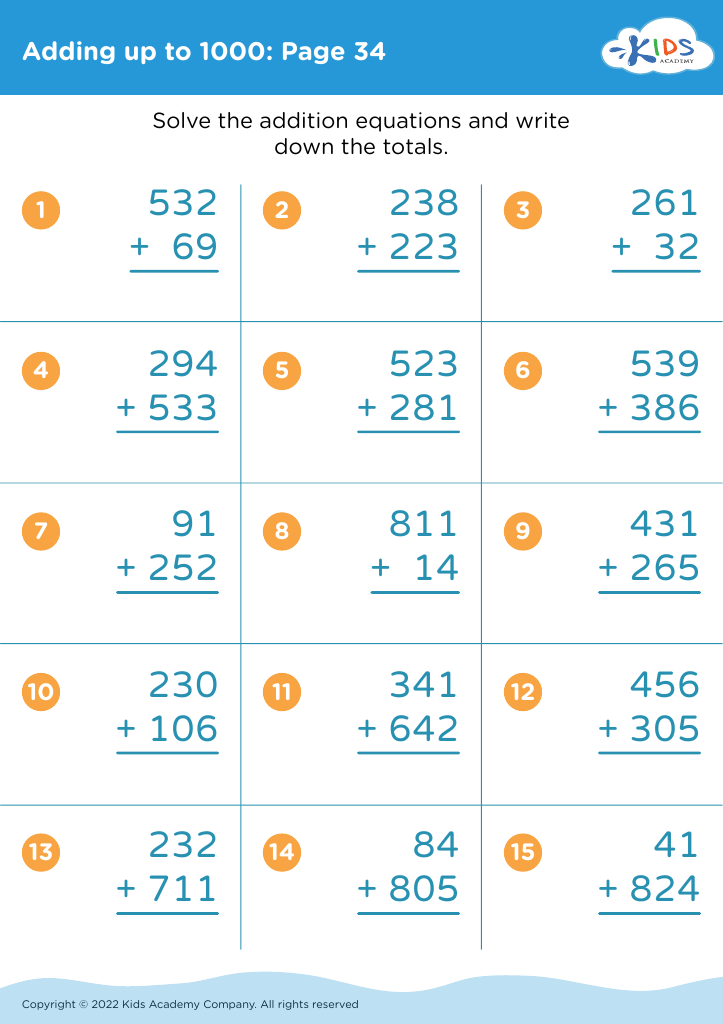
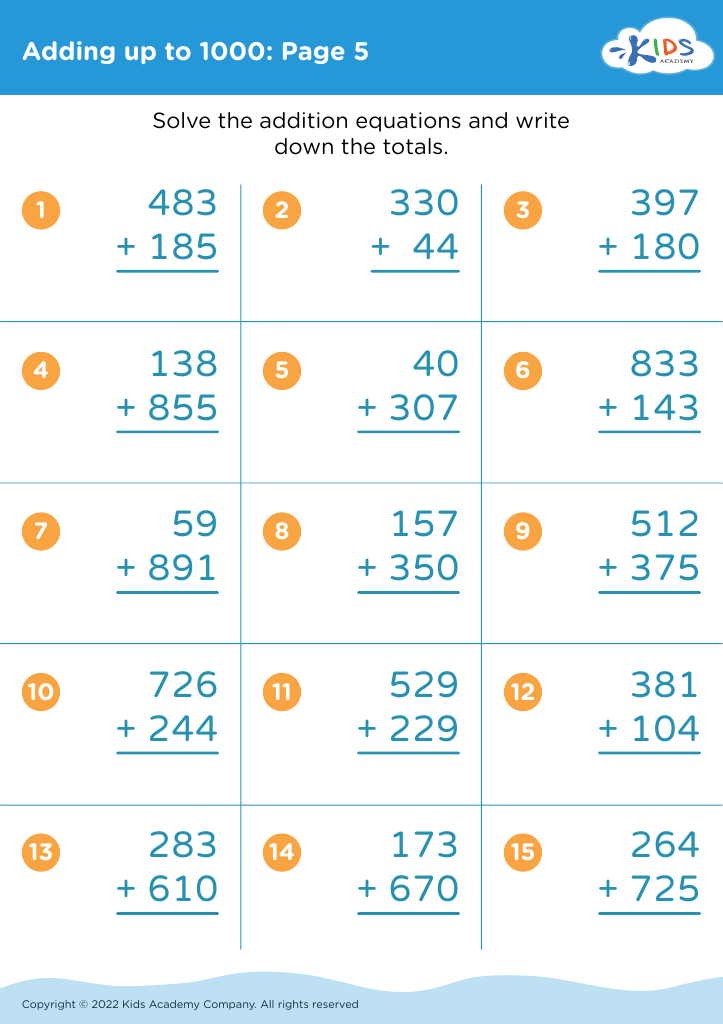
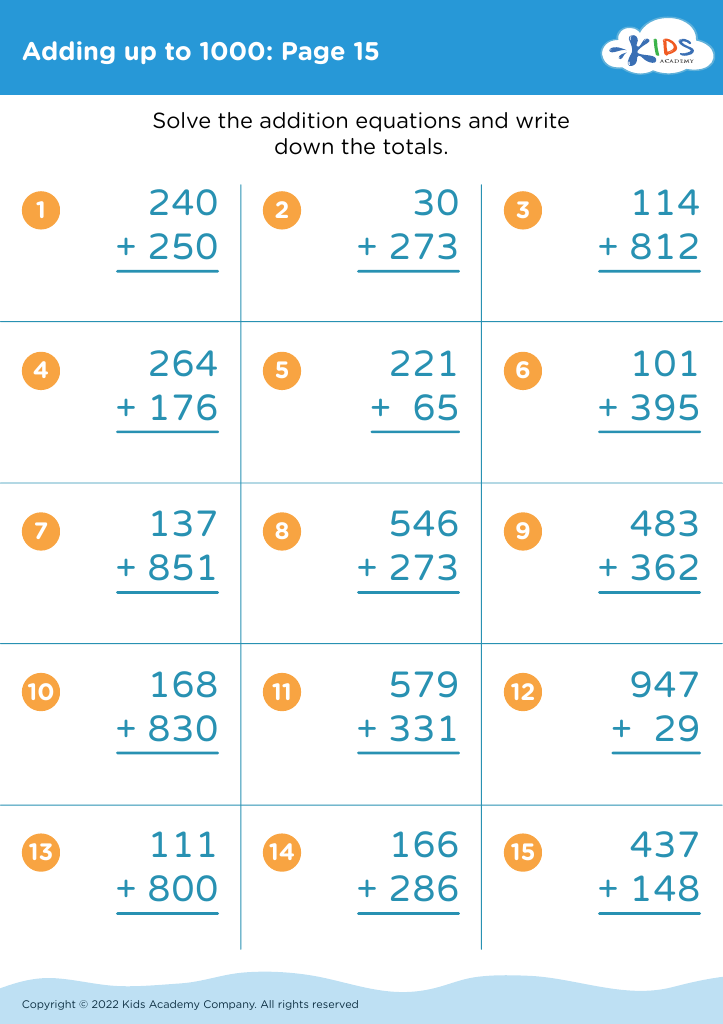
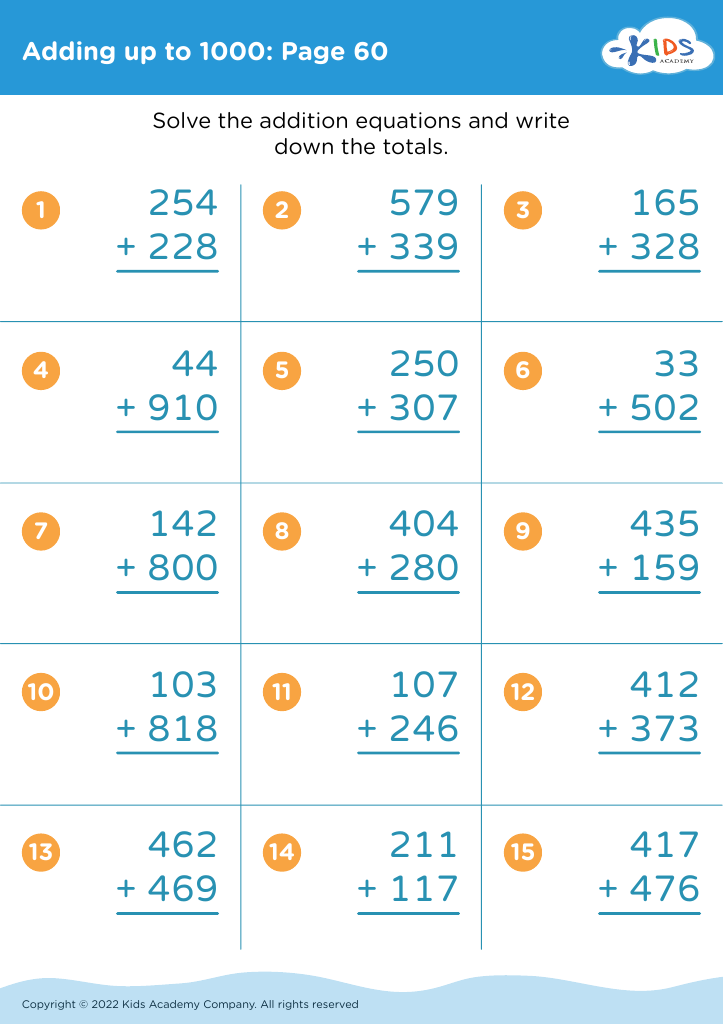
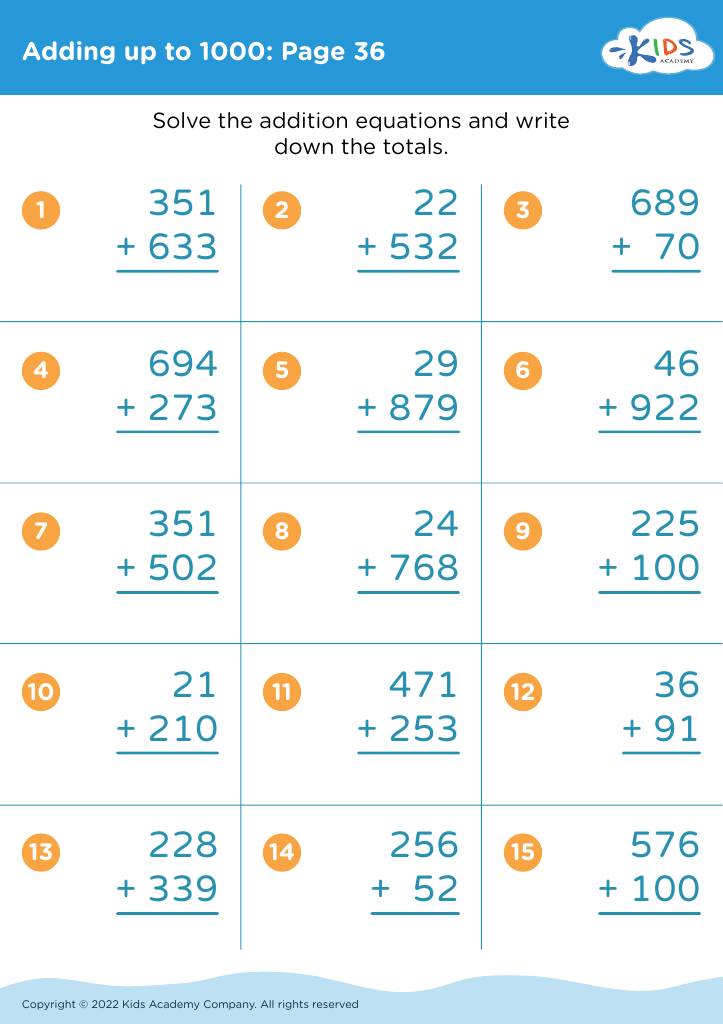
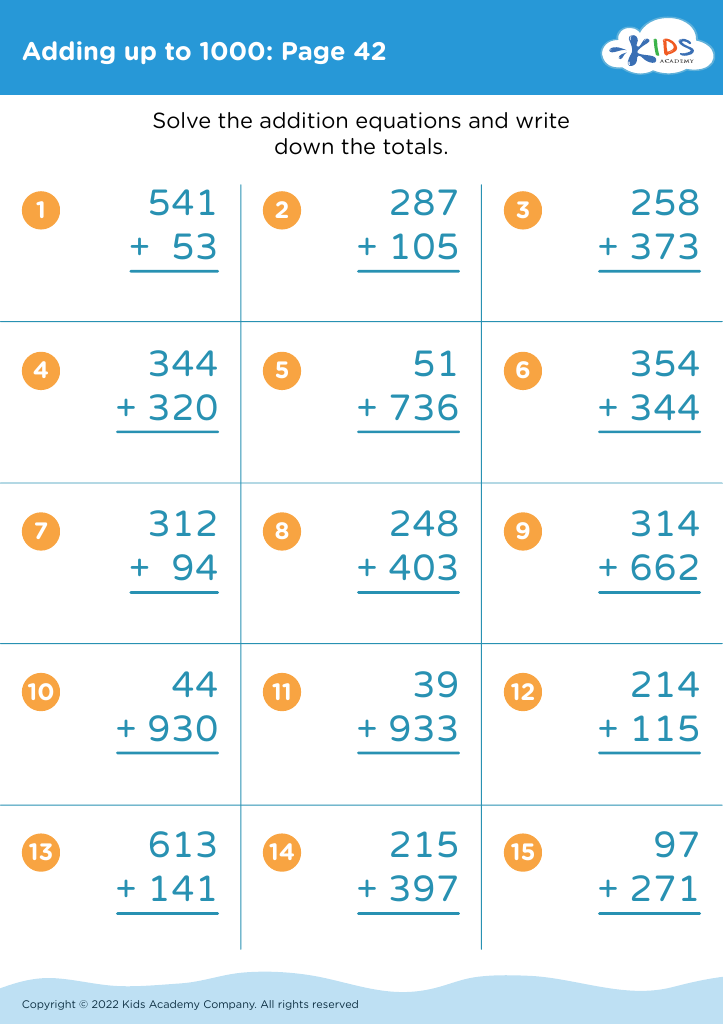
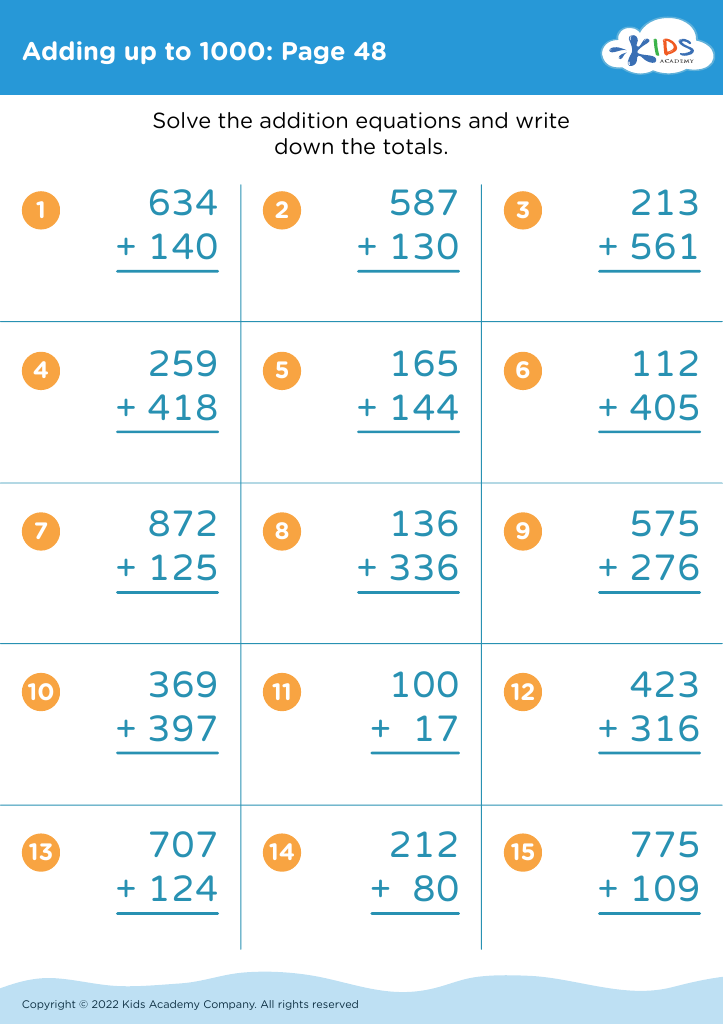


Number recognition and the ability to add up to 1000 are fundamental skills crucial for young children's mathematical development and overall cognitive growth. For children aged 5-7, this period is pivotal as they form the foundation for future learning and everyday problem-solving skills.
Firstly, recognizing numbers and understanding basic addition fosters a child's numerical fluency, enabling them to comprehend more complex mathematical concepts as they progress through school. This fluency builds confidence, reduces math anxiety, and enforces a positive attitude toward learning.
Additionally, these skills are integral to a child's ability to tackle practical tasks. For instance, they learn how to handle money, tell time, follow recipes, and interact with everyday measurements. These real-life applications of number recognition and arithmetic boost their independent living skills and overall understanding of the world around them.
Moreover, engaging with math at an early age can enhance critical thinking and logical reasoning. It encourages children to recognize patterns, make predictions, and solve problems systematically. This cognitive development benefits their success in non-math-related areas, as well.
Parents and teachers play a significant role in guiding this foundational learning. By providing supportive, fun, and engaging learning environments, they help ensure that children develop a solid mathematical grounding, confidence, and enthusiasm for lifelong learning.