Filters

232 filtered results

Clear all filters
Favorites
With answer key
Interactive

232 filtered results

Difficulty Level

Grade


Check out this FREE Trial Lesson on Adding Up to 5 for age 5-7!

Sorting Objects into 3 Categories

Favorites
With answer key
Interactive
  • 5-7
  • Counting practice
  • Adding Up to 5
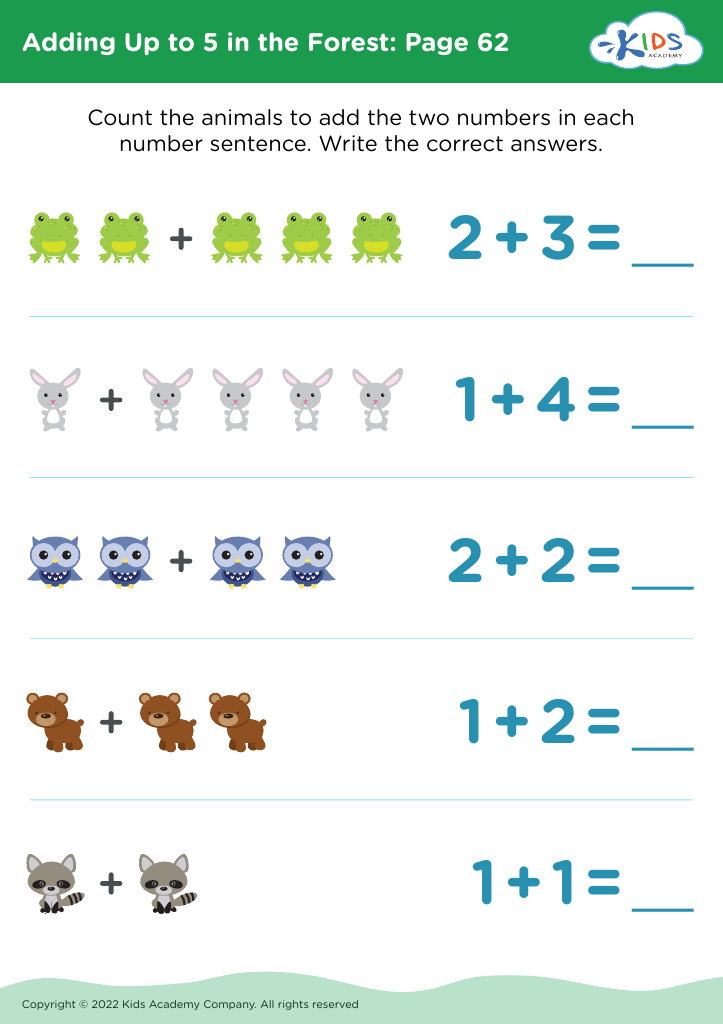
Adding Up to 5 in the Forest: Page 62
Worksheet
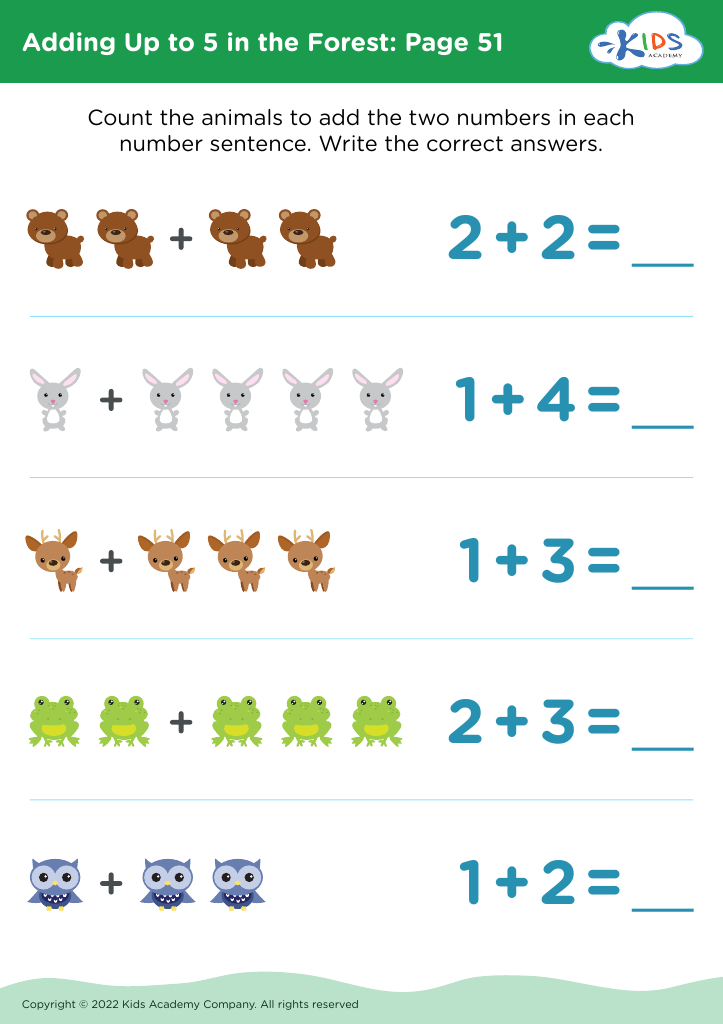
Adding Up to 5 in the Forest: Page 51
Worksheet
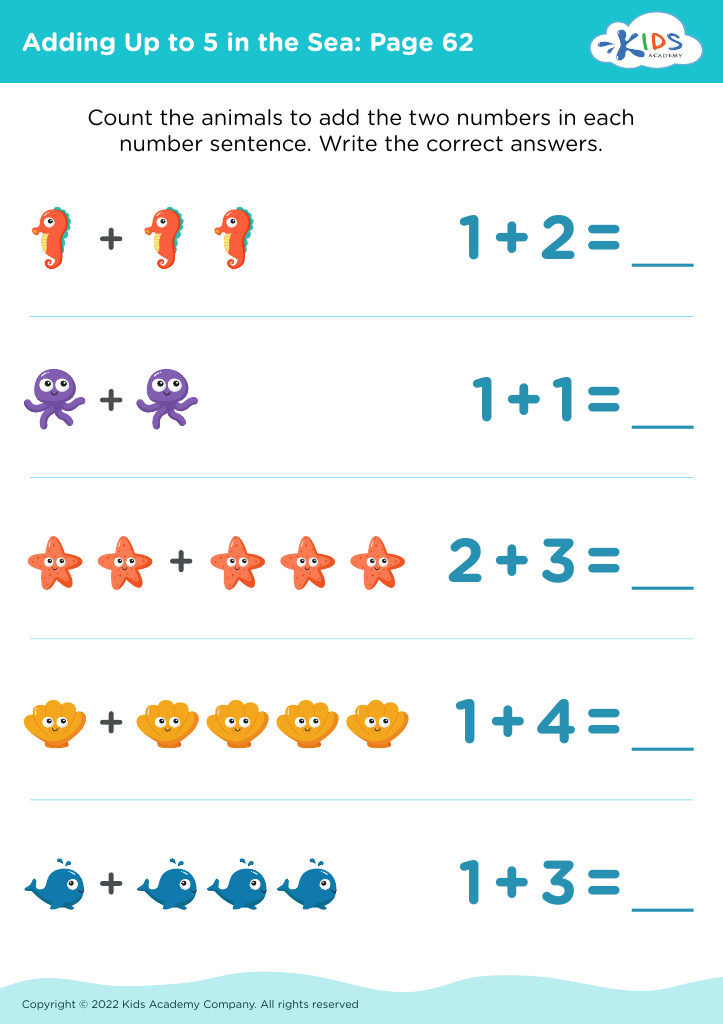
Adding Up to 5 in the Sea: Page 62
Worksheet
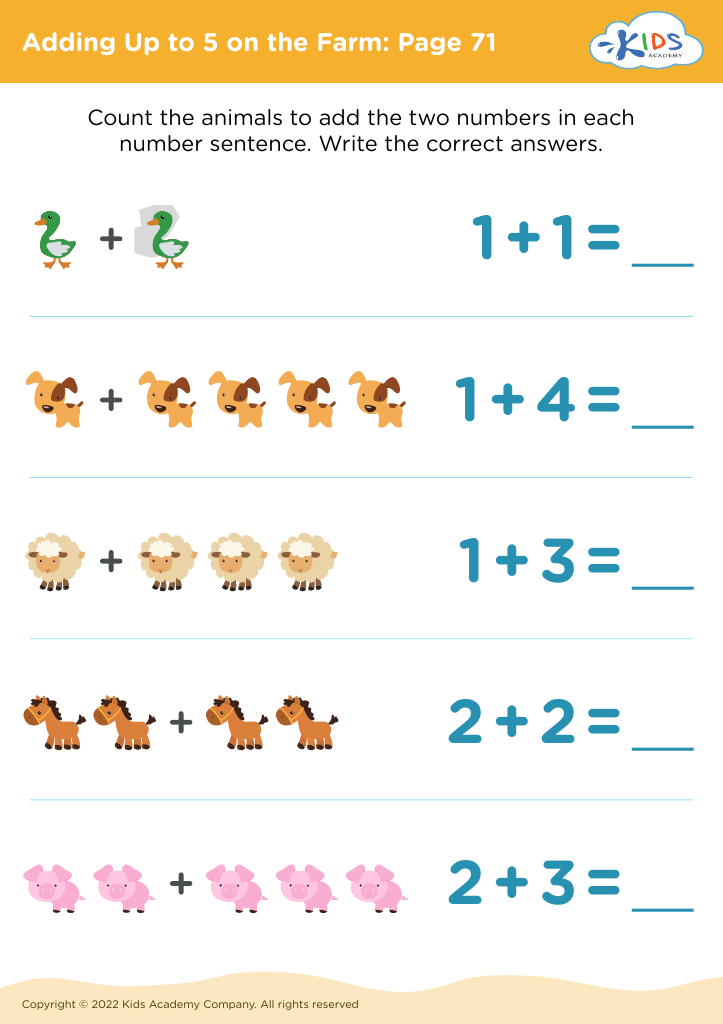
Adding Up to 5 on the Farm: Page 71
Worksheet
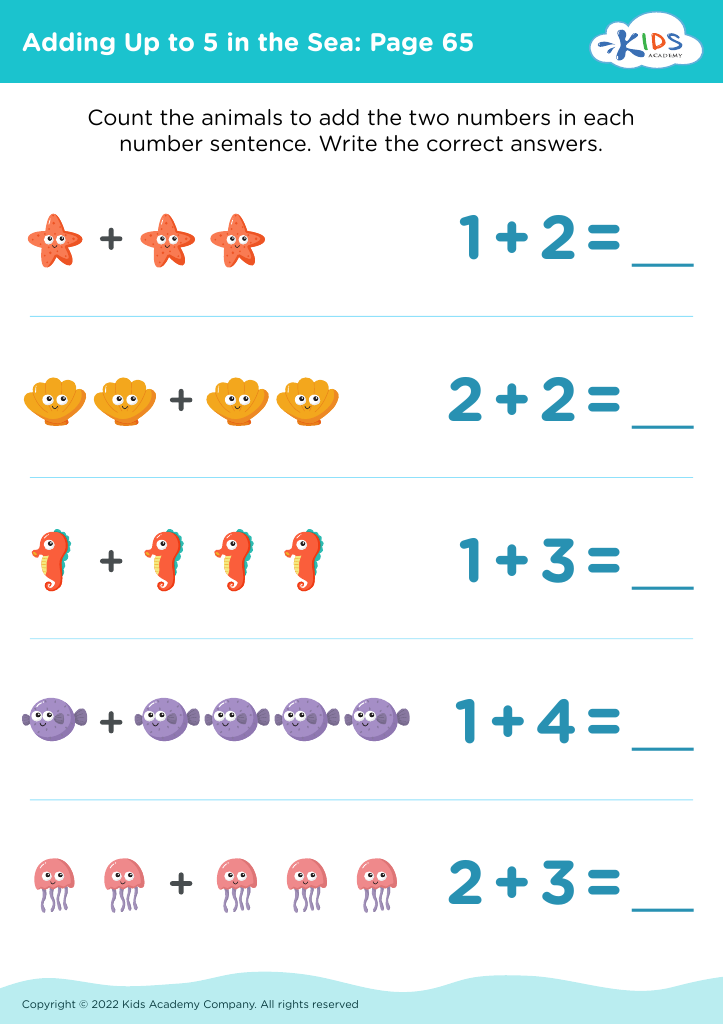
Adding Up to 5 in the Sea: Page 65
Worksheet
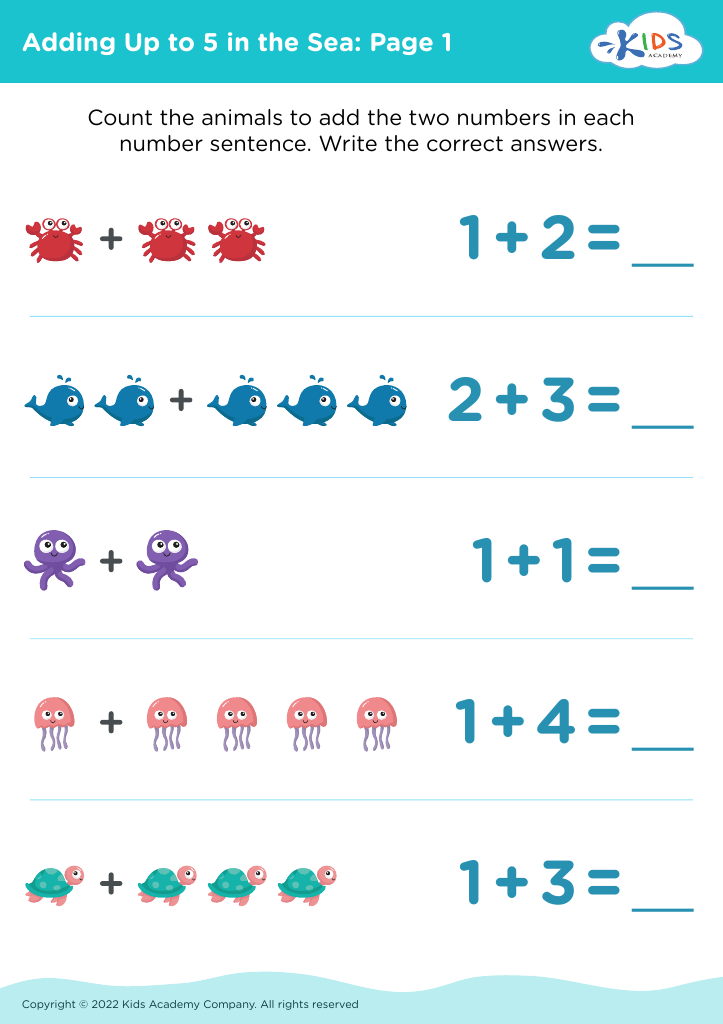
Adding Up to 5 in the Sea: Page 1

Adding Up to 5 in the Sea: Page 1

Adding Up to 5 in the Sea: Page 1
Worksheet
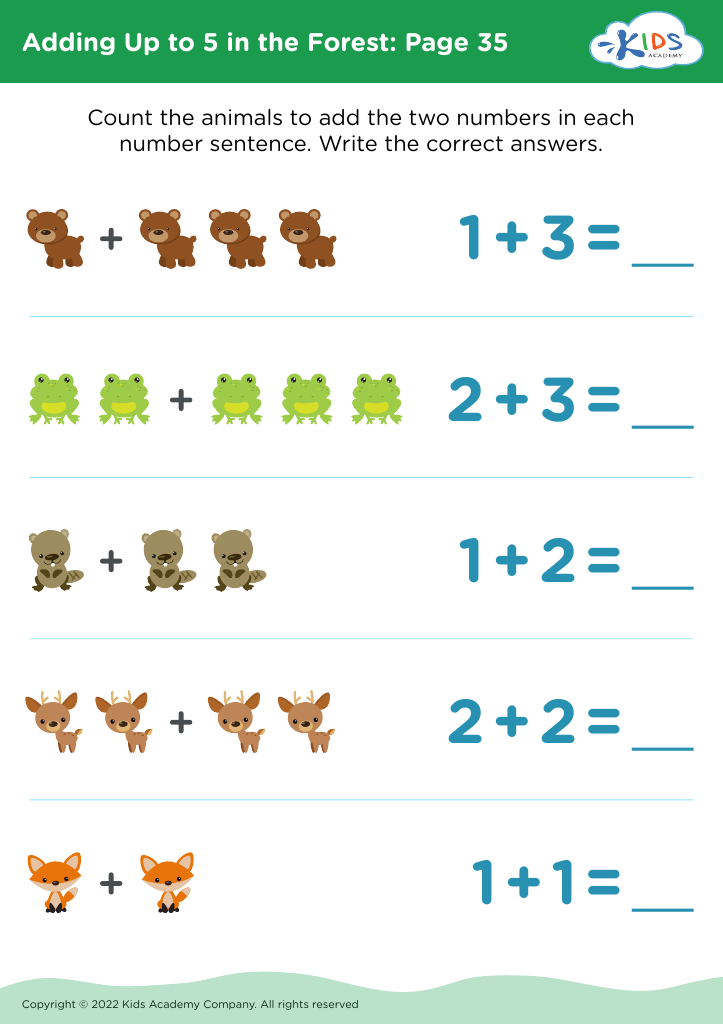
Adding Up to 5 in the Forest: Page 35
Worksheet
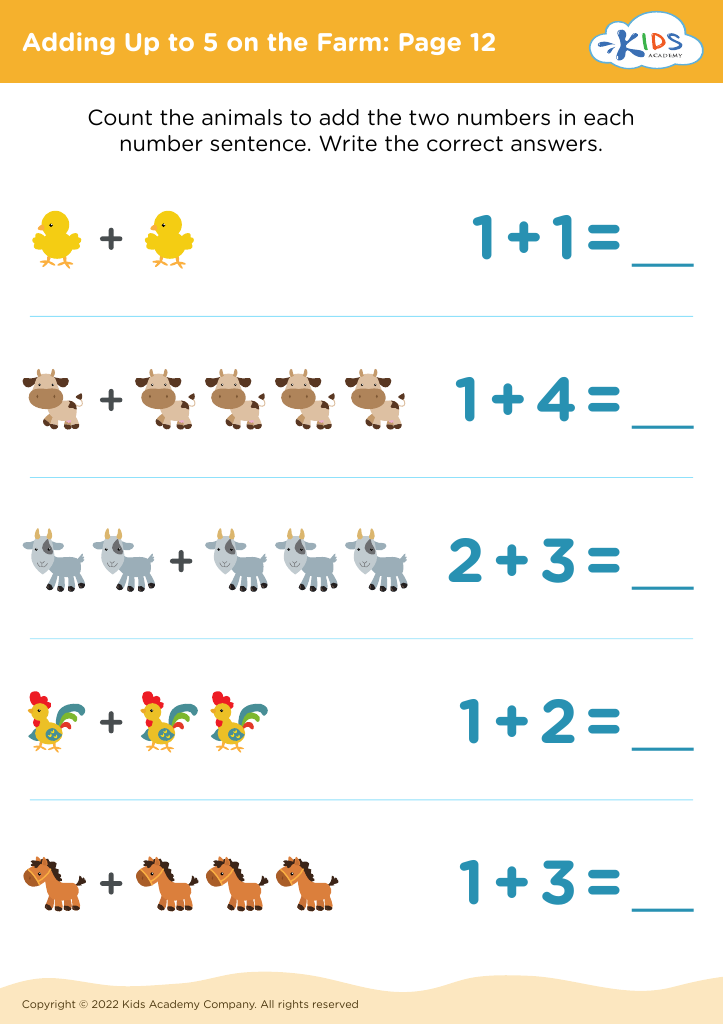
Adding Up to 5 on the Farm: Page 12
Worksheet
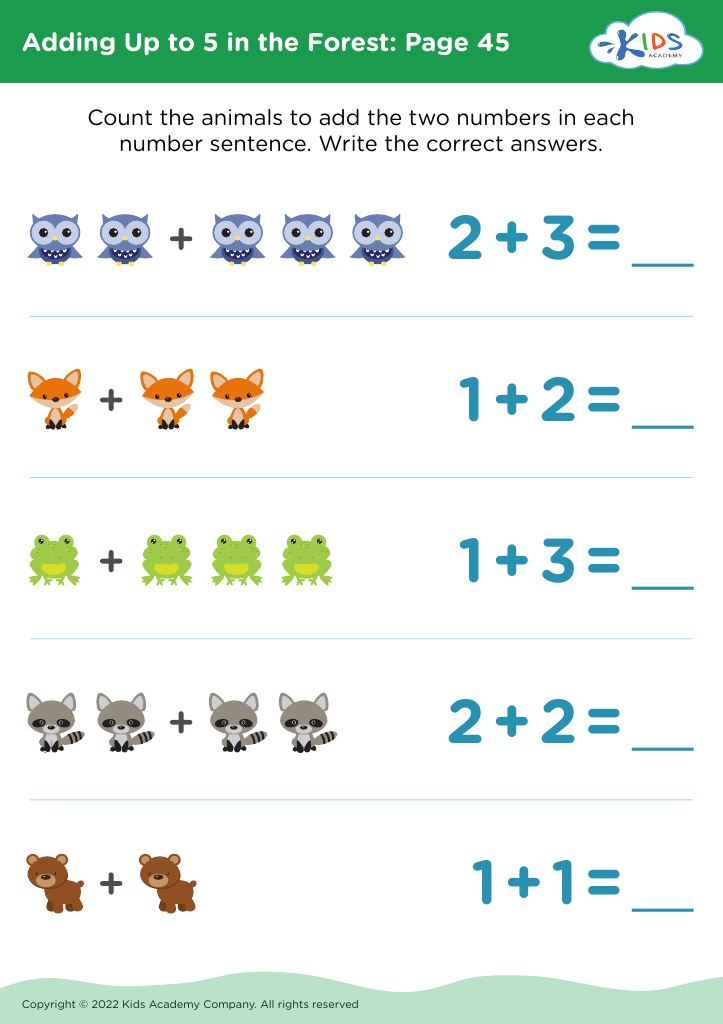
Adding Up to 5 in the Forest: Page 45
Worksheet
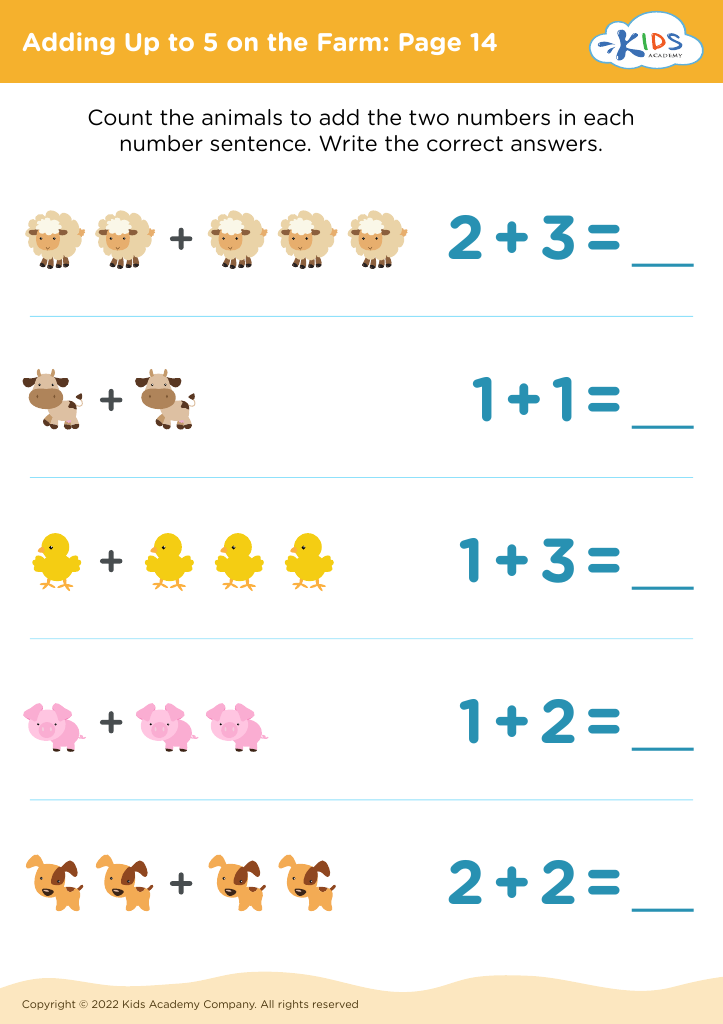
Adding Up to 5 on the Farm: Page 14
Worksheet
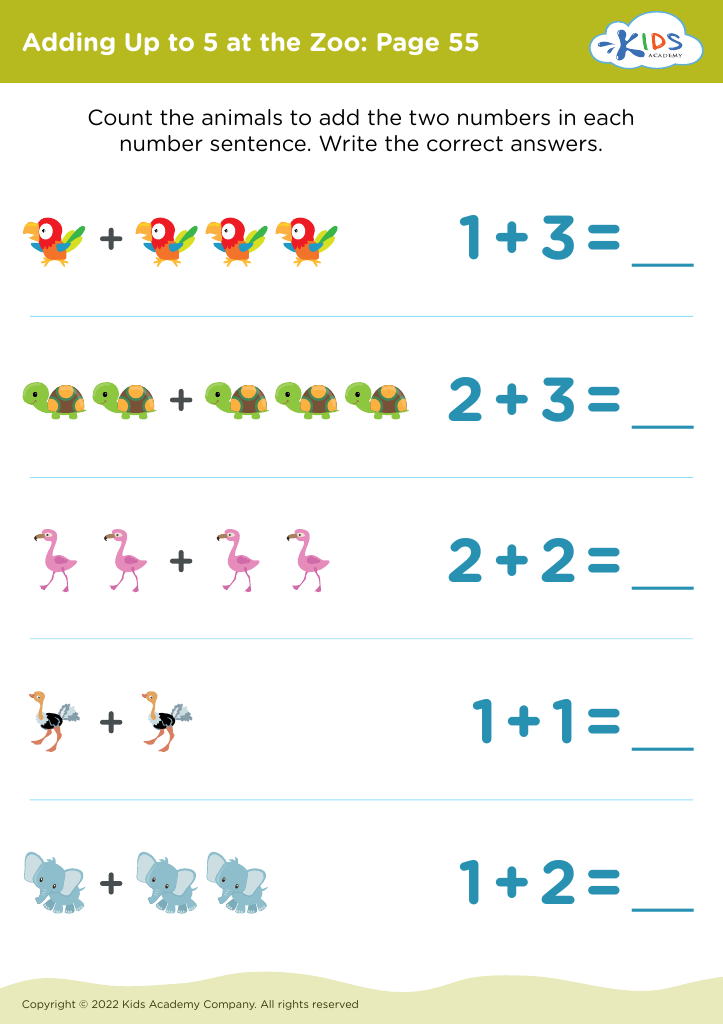
Adding Up to 5 at the Zoo: Page 55
Worksheet
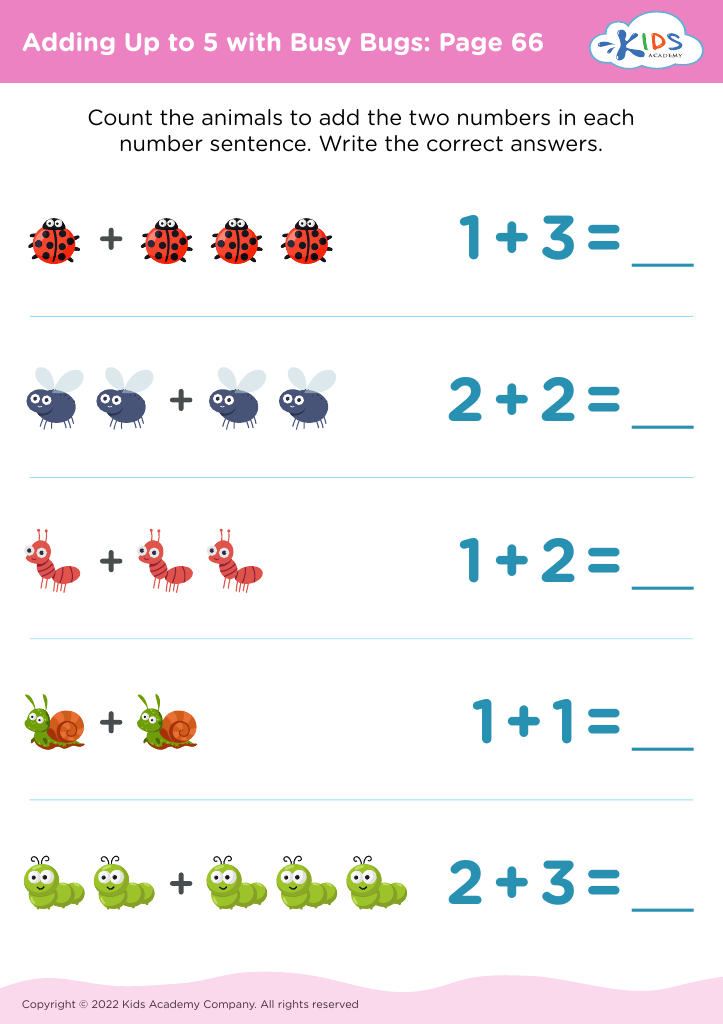
Adding Up to 5 with Busy Bugs: Page 66
Worksheet
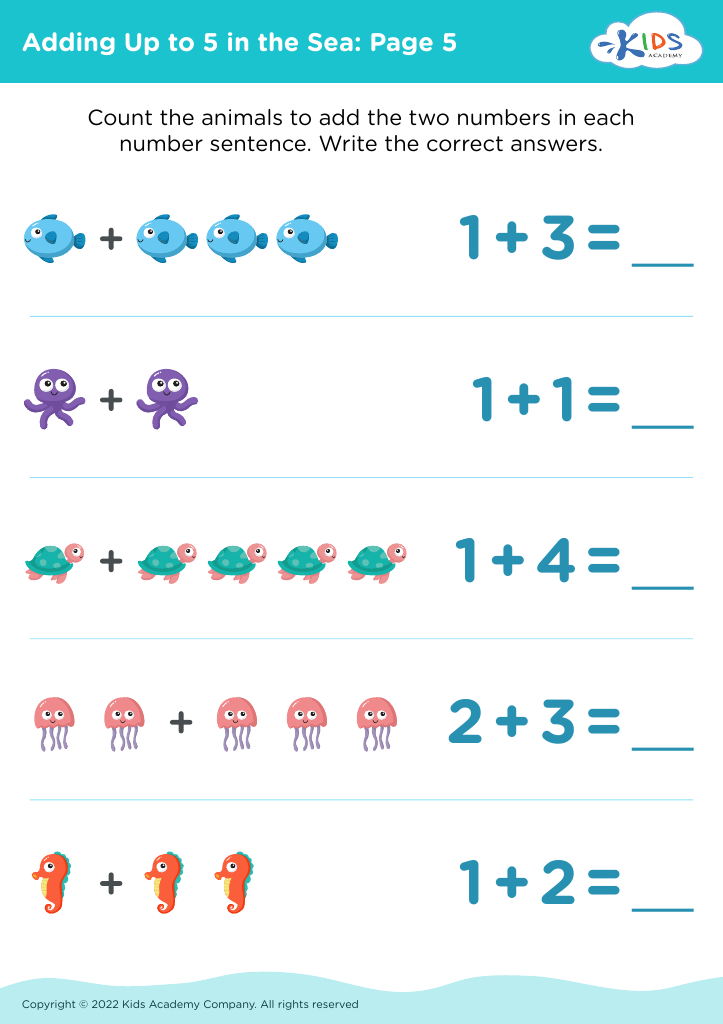
Adding Up to 5 in the Sea: Page 5

Adding Up to 5 in the Sea: Page 5

Adding Up to 5 in the Sea: Page 5
Worksheet
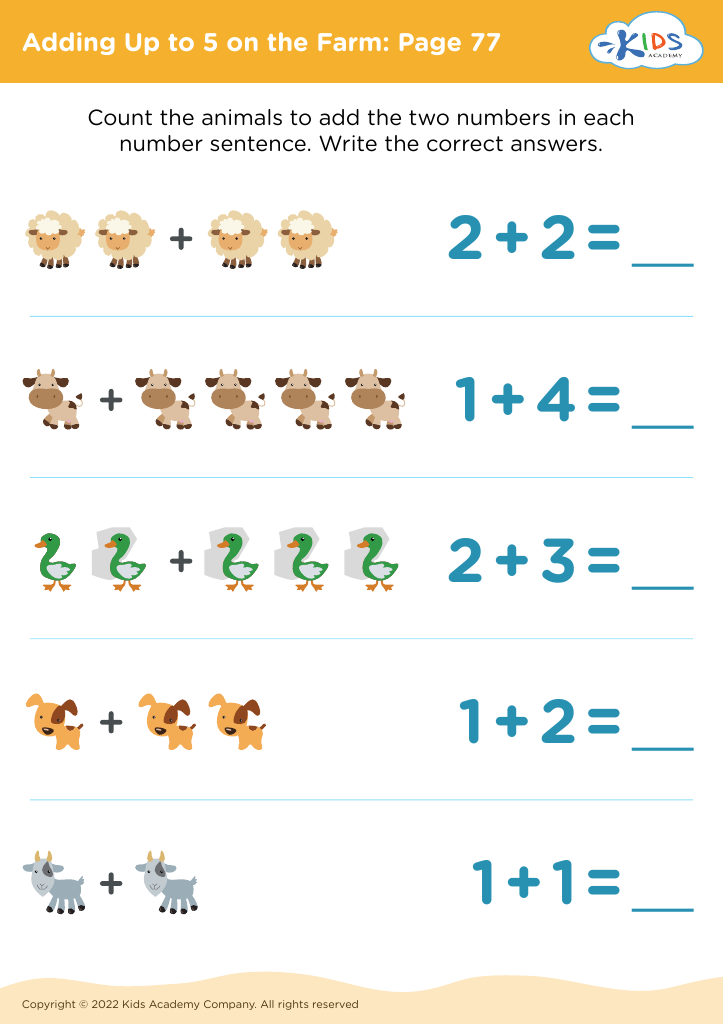
Adding Up to 5 on the Farm: Page 77
Worksheet
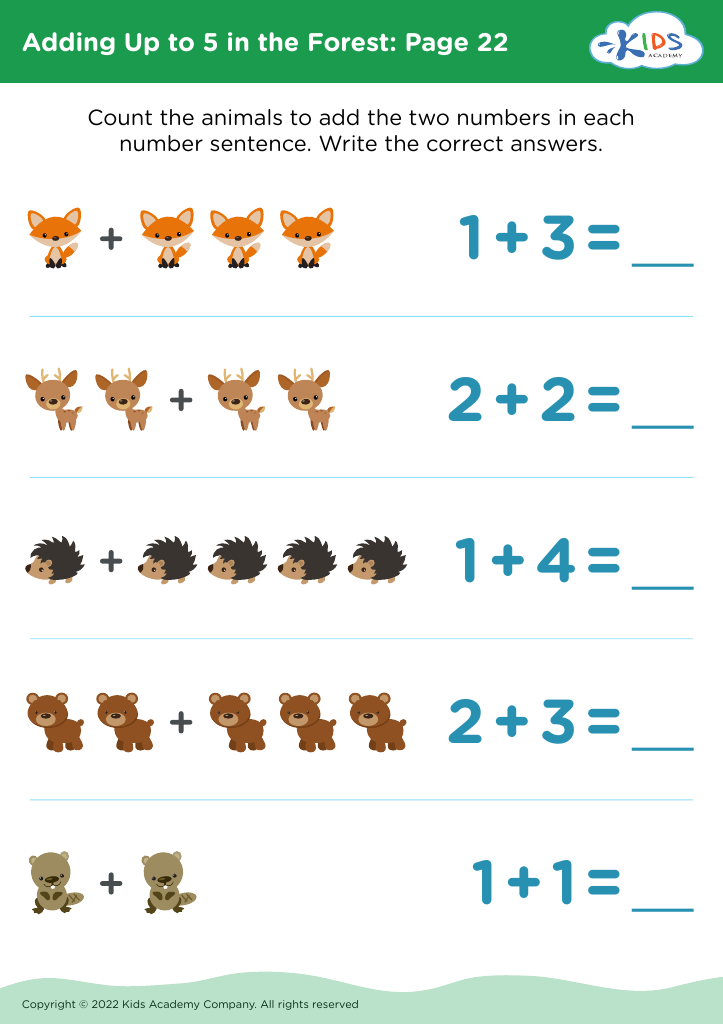
Adding Up to 5 in the Forest: Page 22
Worksheet
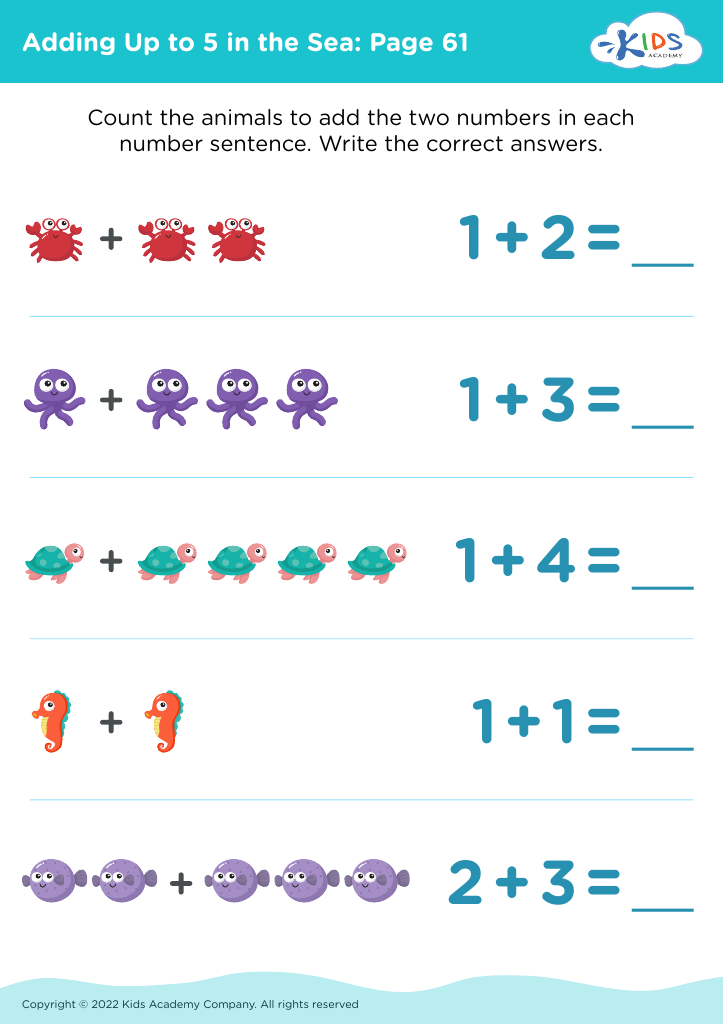
Adding Up to 5 in the Sea: Page 61
Worksheet
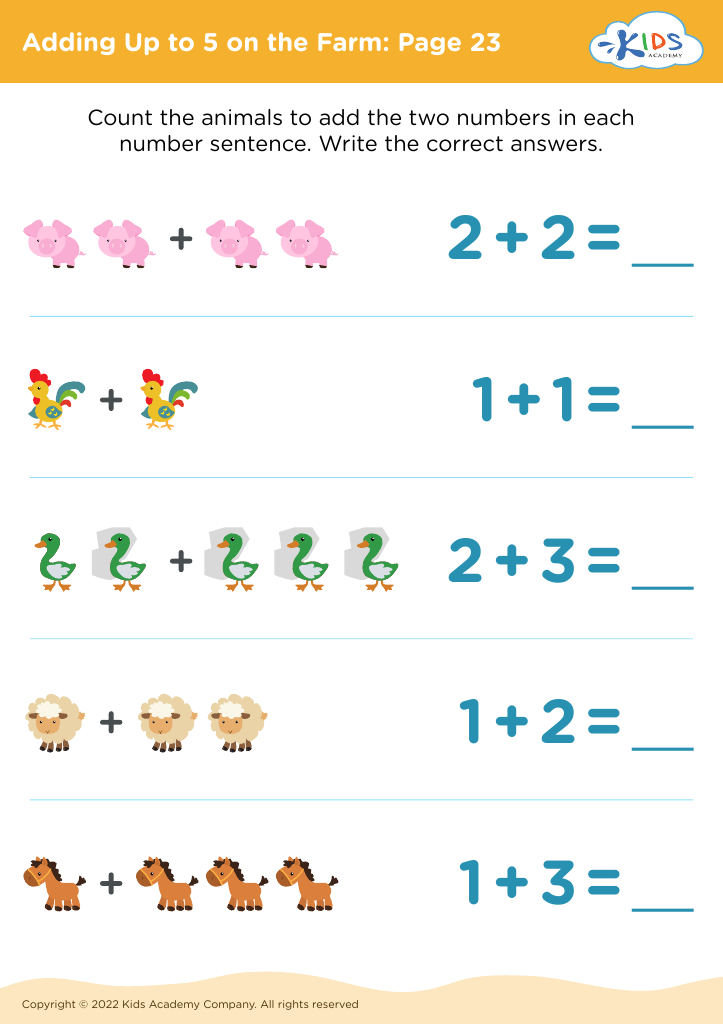
Adding Up to 5 on the Farm: Page 23
Worksheet
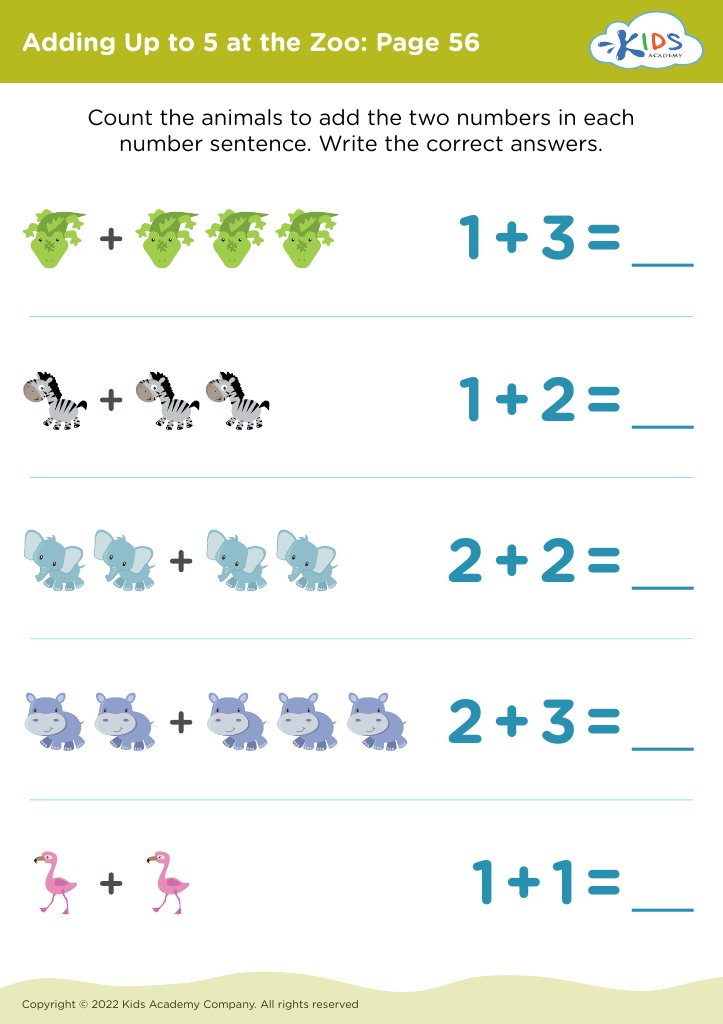
Adding Up to 5 at the Zoo: Page 56
Worksheet
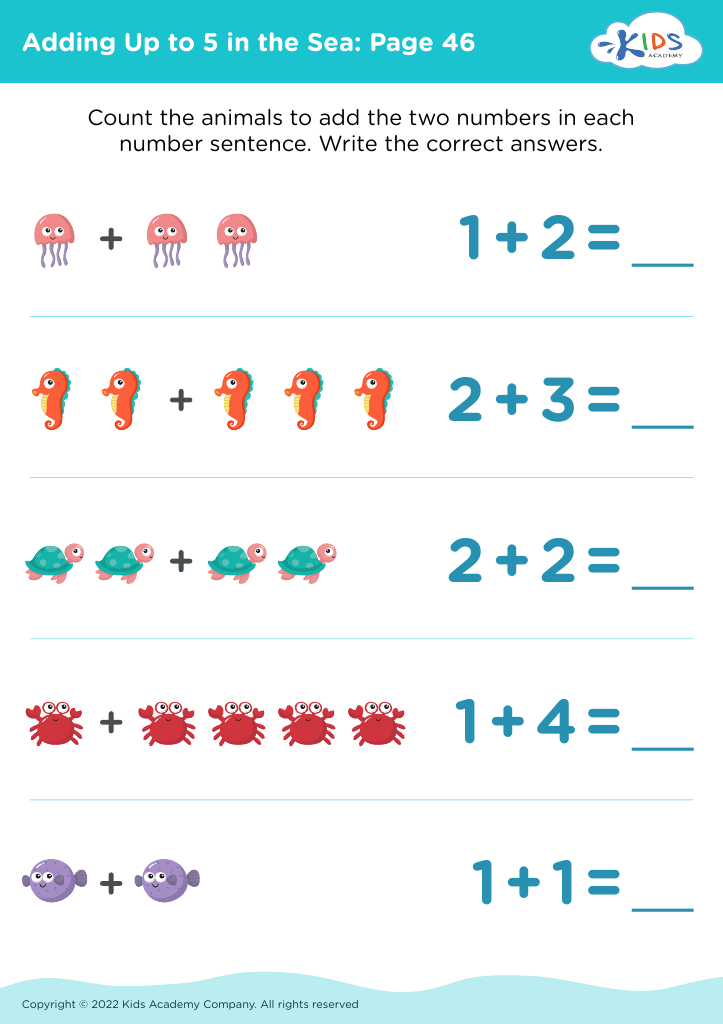
Adding Up to 5 in the Sea: Page 46
Worksheet
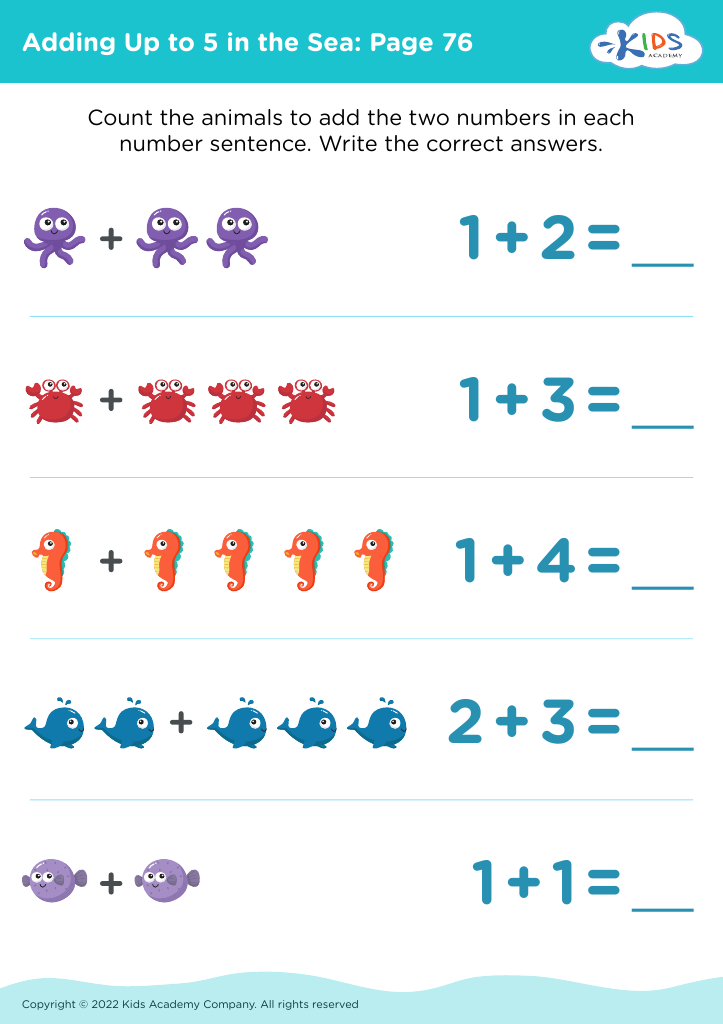
Adding Up to 5 in the Sea: Page 76
Worksheet
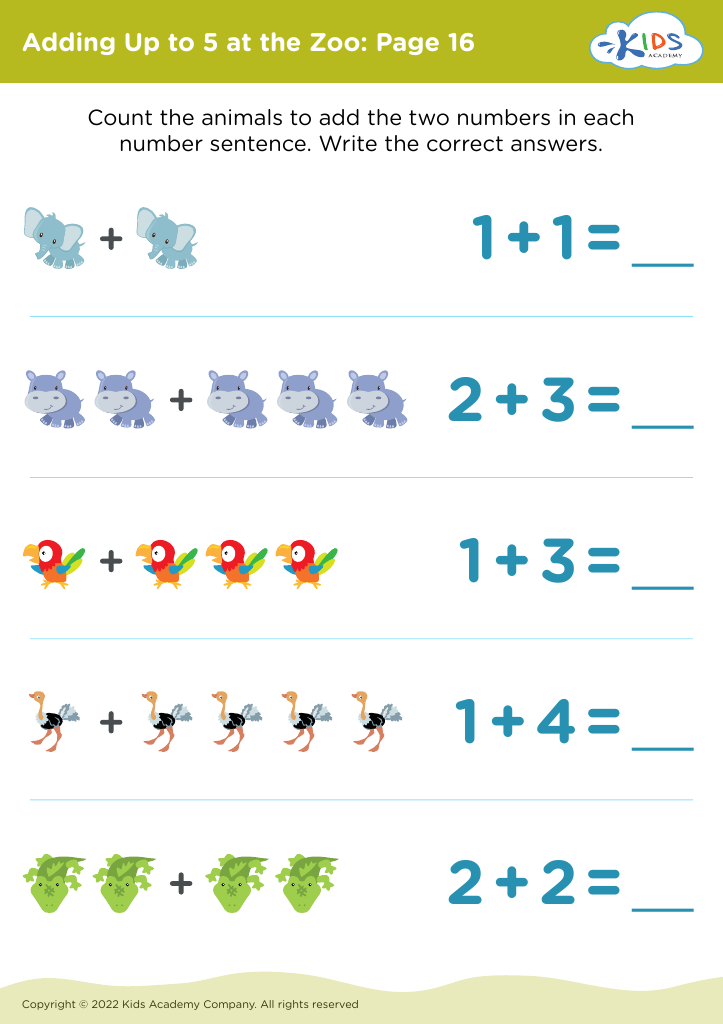
Adding Up to 5 at the Zoo: Page 16
Worksheet
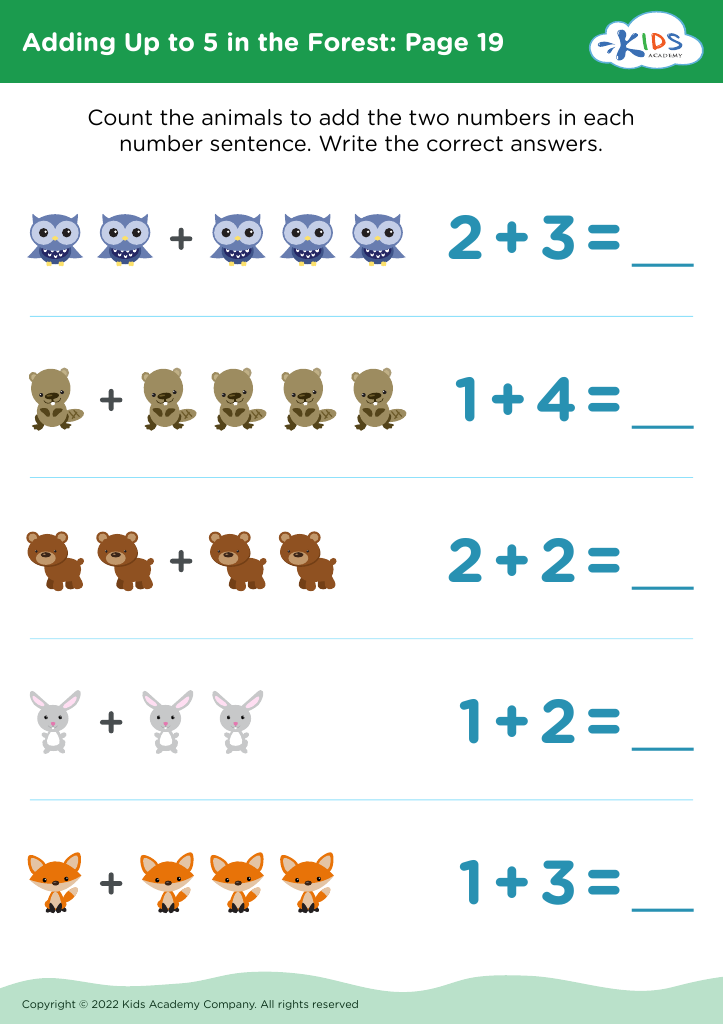
Adding Up to 5 in the Forest: Page 19
Worksheet
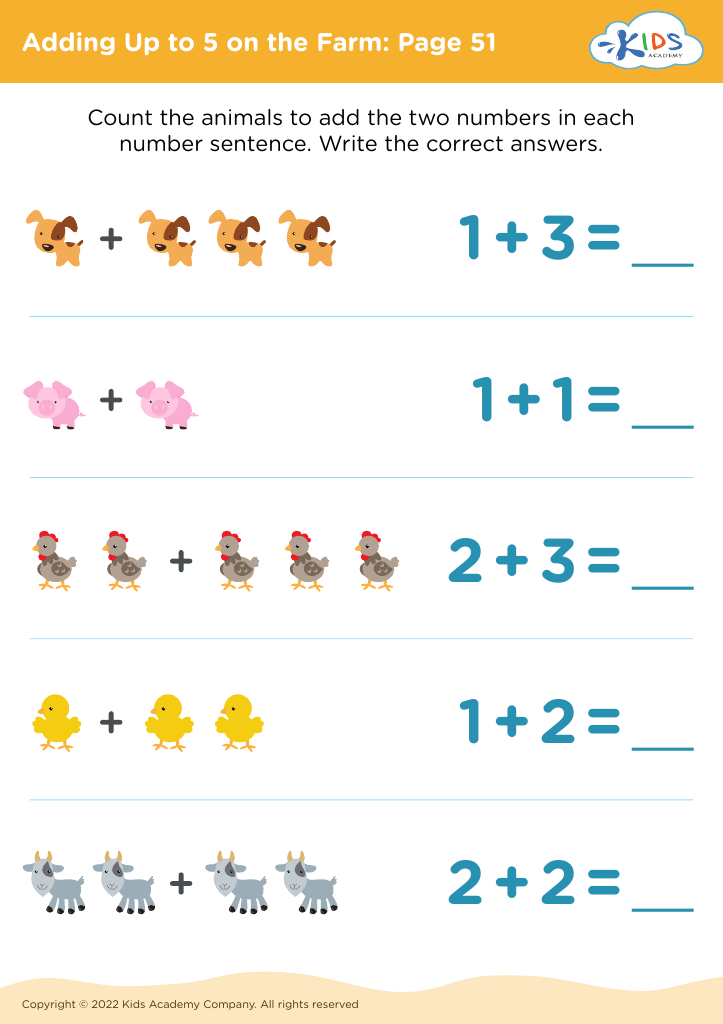
Adding Up to 5 on the Farm: Page 51
Worksheet
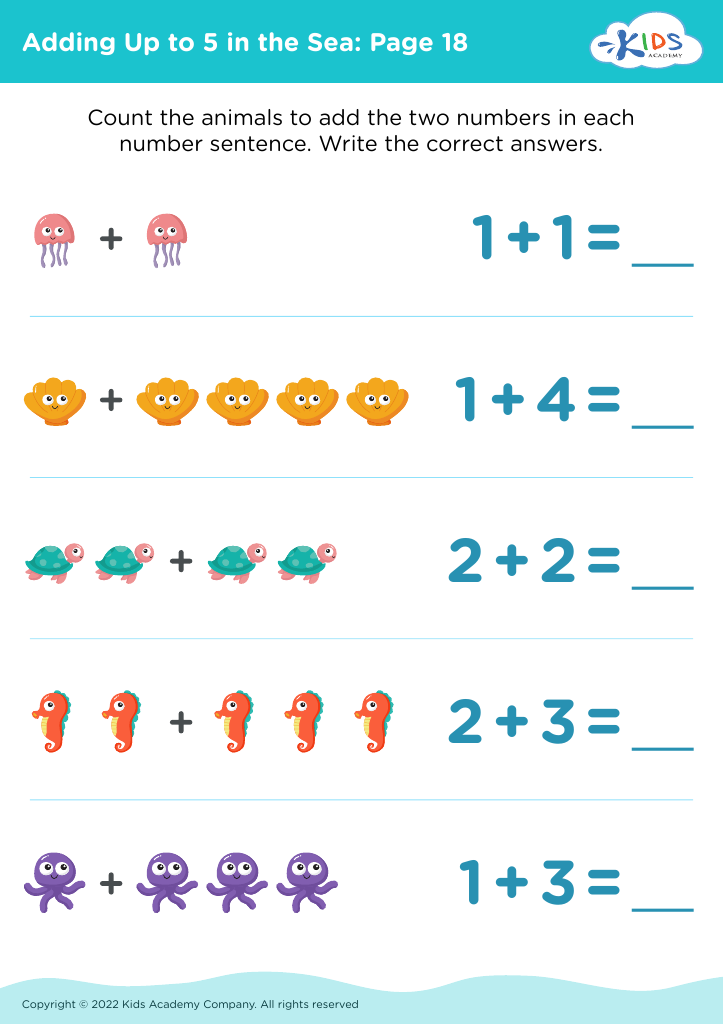
Adding Up to 5 in the Sea: Page 18
Worksheet


Counting practice and adding up to 5 is crucial for children aged 5 to 7 as it lays the foundational skills necessary for their mathematical understanding and overall cognitive development. During this developmental stage, children are incredibly receptive to learning, and engaging them in counting exercises enables them to grasp essential concepts such as number recognition, quantities, and basic addition.

When parents and teachers prioritize counting and addition up to 5, they are reinforcing children's ability to manipulate small numbers, which builds confidence in their mathematical abilities. This early practice not only improves numerical fluency but also encourages problem-solving skills and logical thinking. Additionally, it fosters a sense of achievement, motivating children to explore more advanced mathematical concepts in the future.

Moreover, counting and addition activities can be easily integrated into everyday life, such as during play, cooking, or shopping—making learning enjoyable and relevant. By supporting this practice, parents and teachers enhance children’s cognitive skills, preparing them for future mathematical challenges and instilling a positive attitude toward learning. Ultimately, such foundational activities positively impact academic performance and help shape lifelong learners who approach mathematics with eagerness and curiosity.