Fine motor skills (writing) Adding Up to 5 Worksheets for Ages 5-7 - Page 2
32 filtered results
-
From - To



.jpg)




Fine motor skills are essential for children aged 5-7 as they provide the foundation for writing, drawing, and other hand-eye coordination activities. For this age group, developing fine motor skills is not just about being able to hold a pencil or crayon effectively; it's about fostering independence, confidence, and academic success.
Writing and manipulating small objects help kids improve their dexterity, enhancing their ability to perform everyday tasks. When children can write their names, draw shapes, and eventually form letters, they are better prepared for the academic challenges ahead, including more complex writing assignments and mathematical problem-solving.
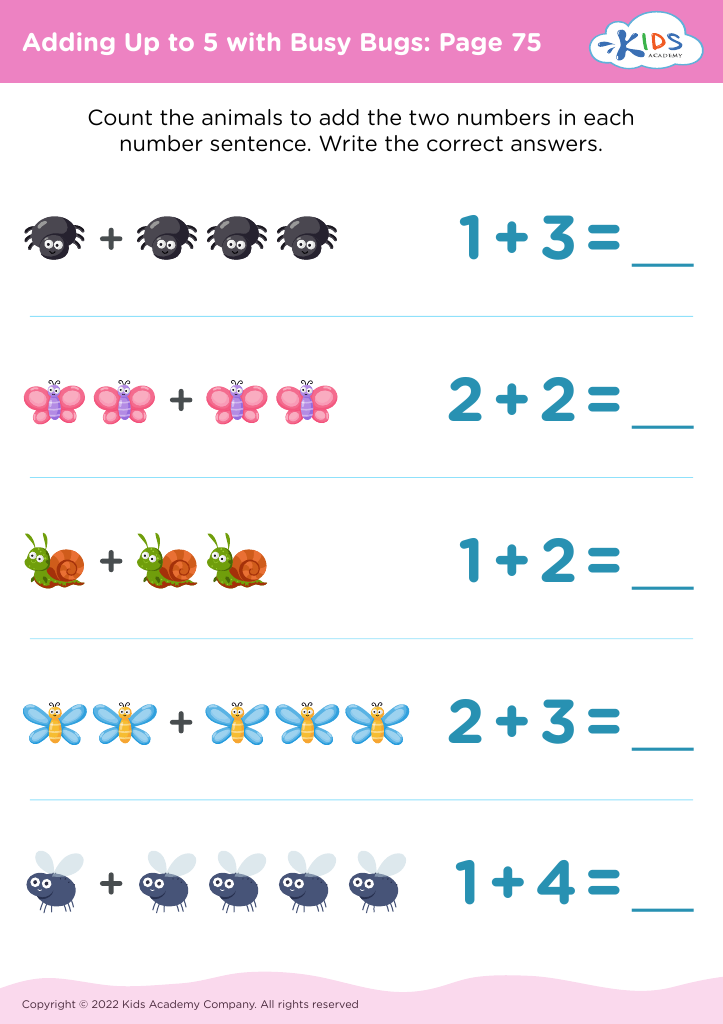
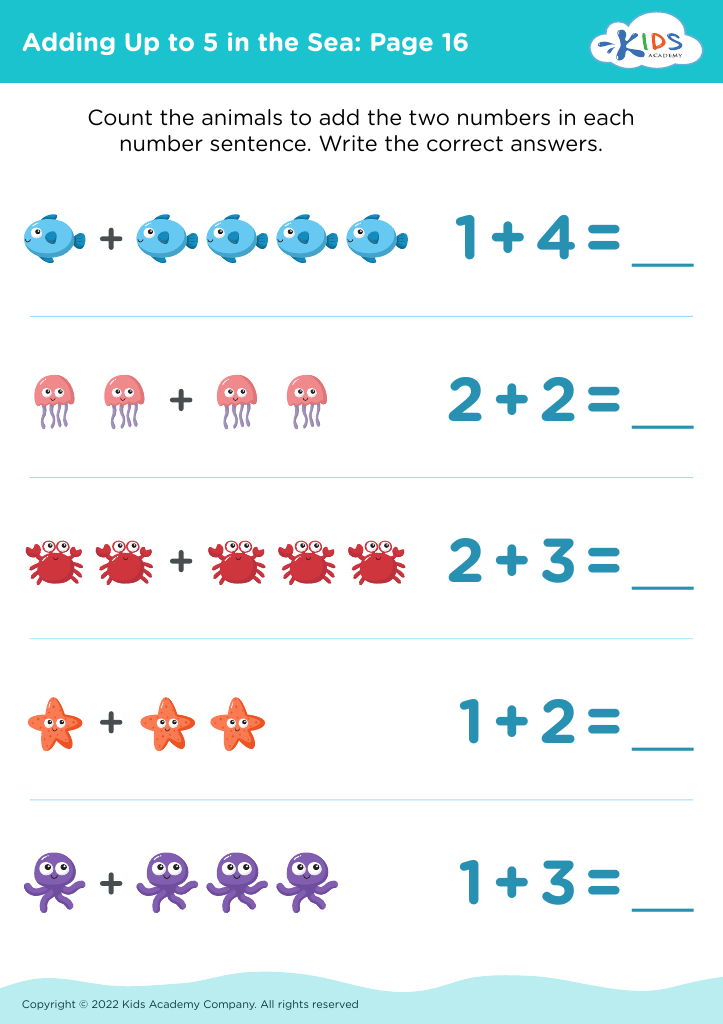
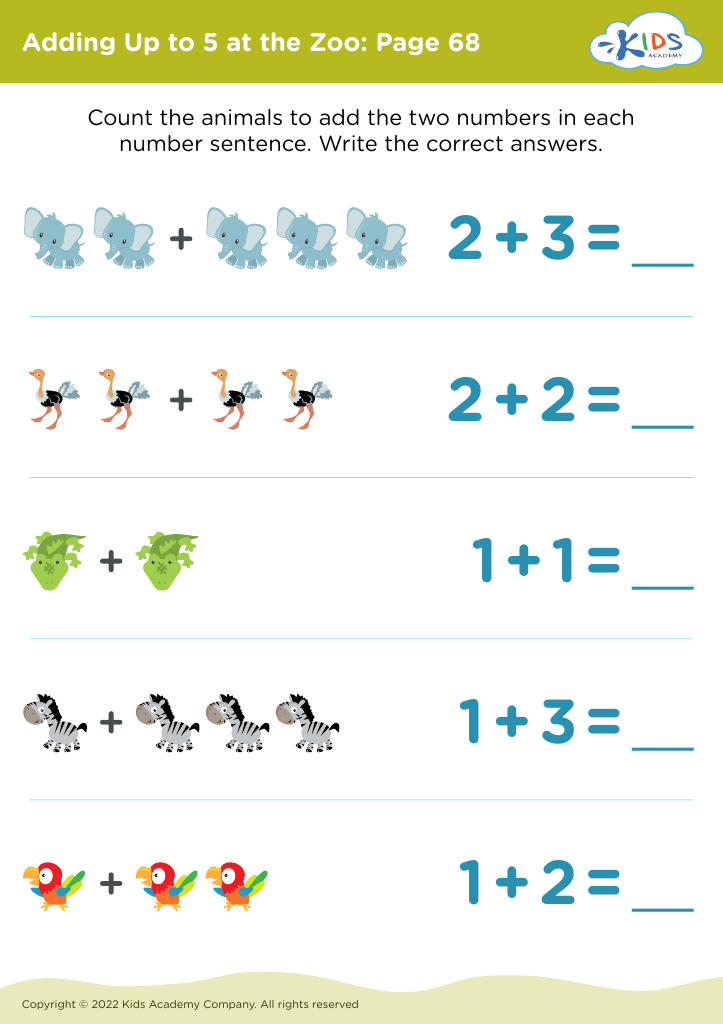
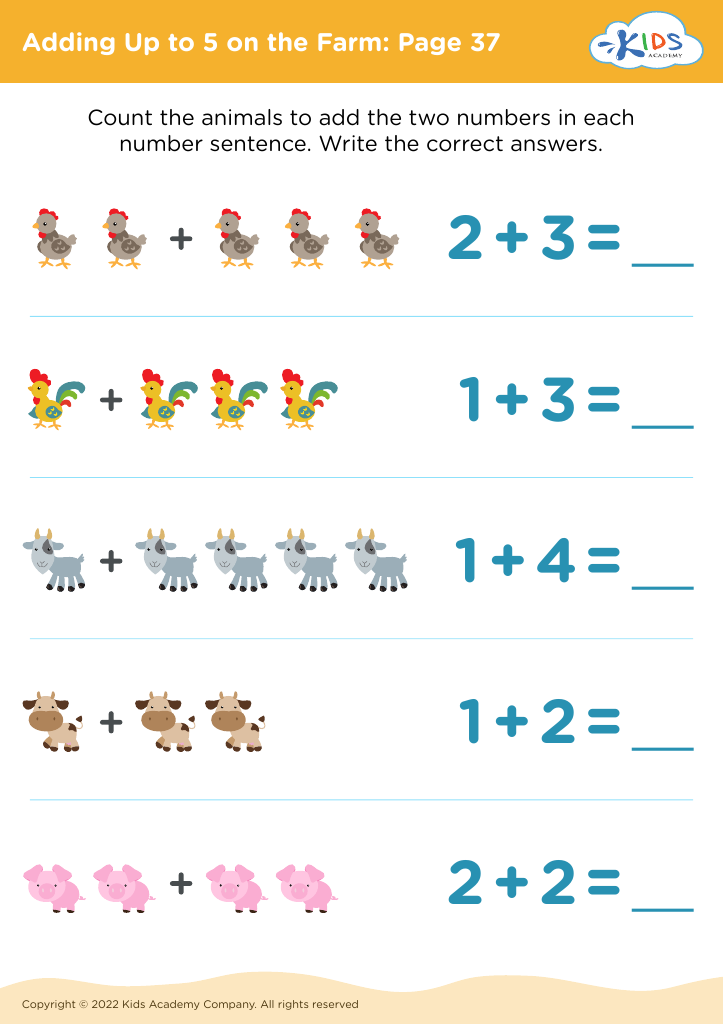
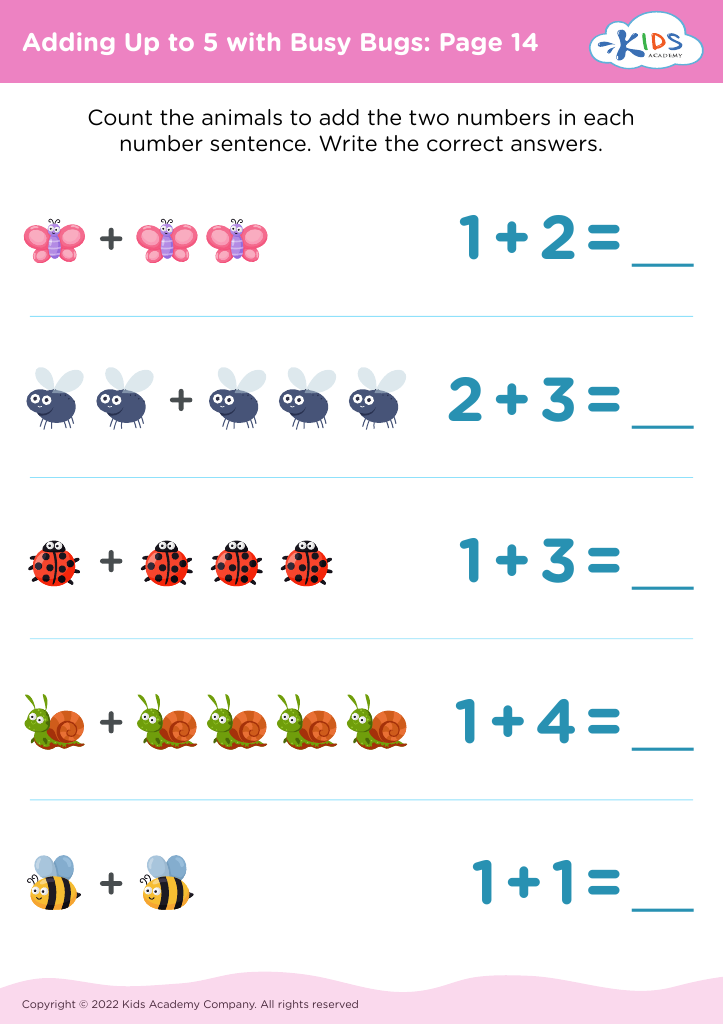
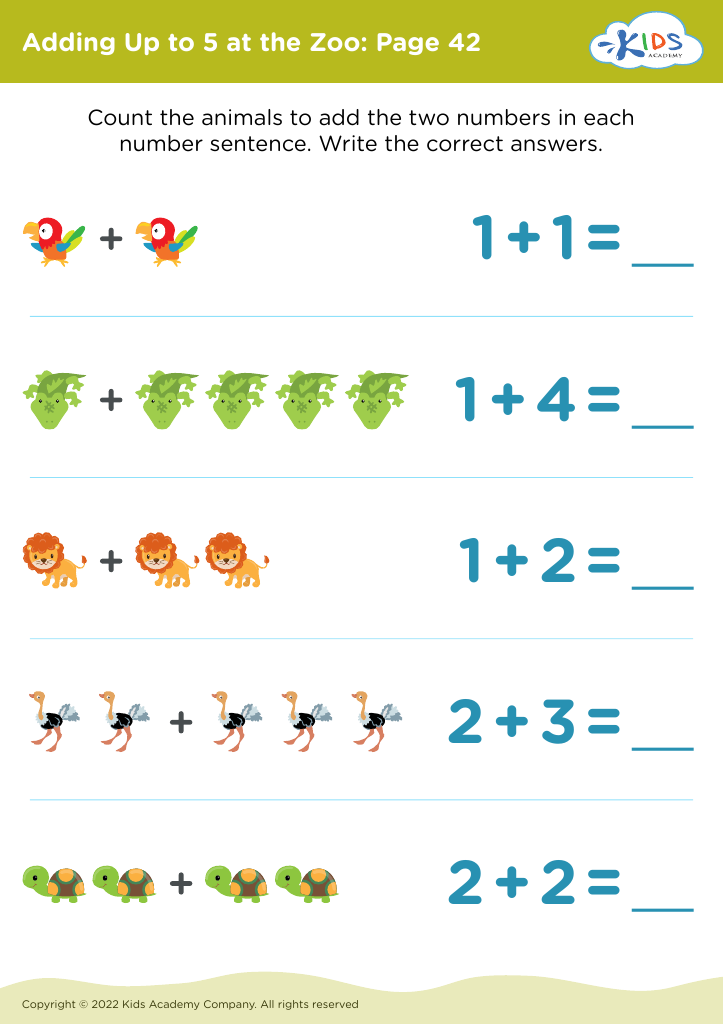
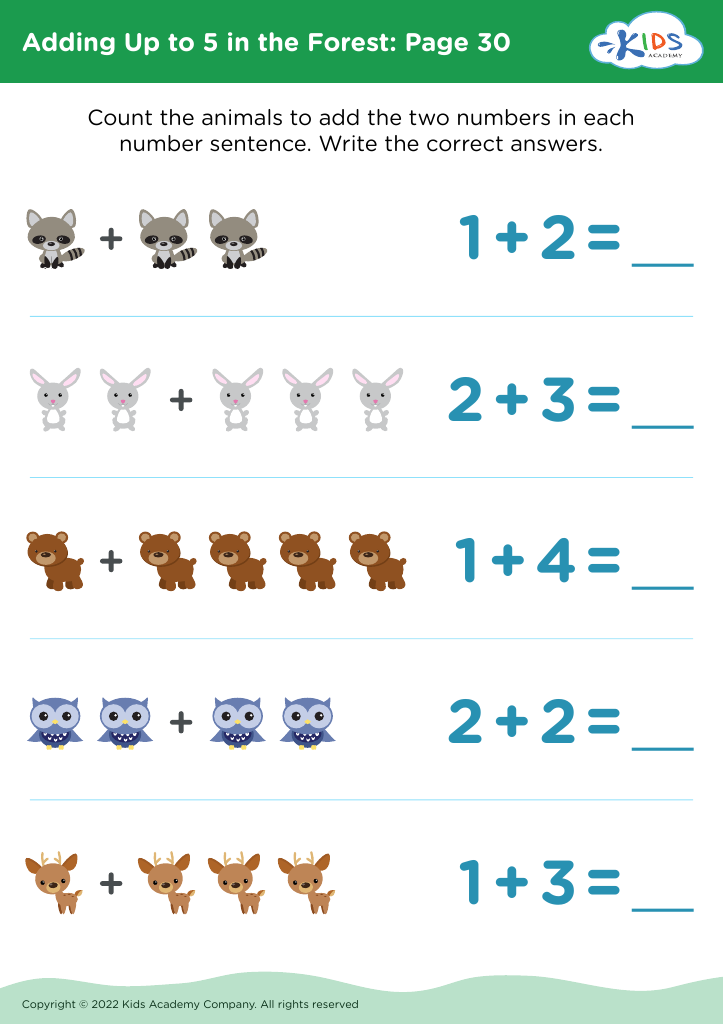
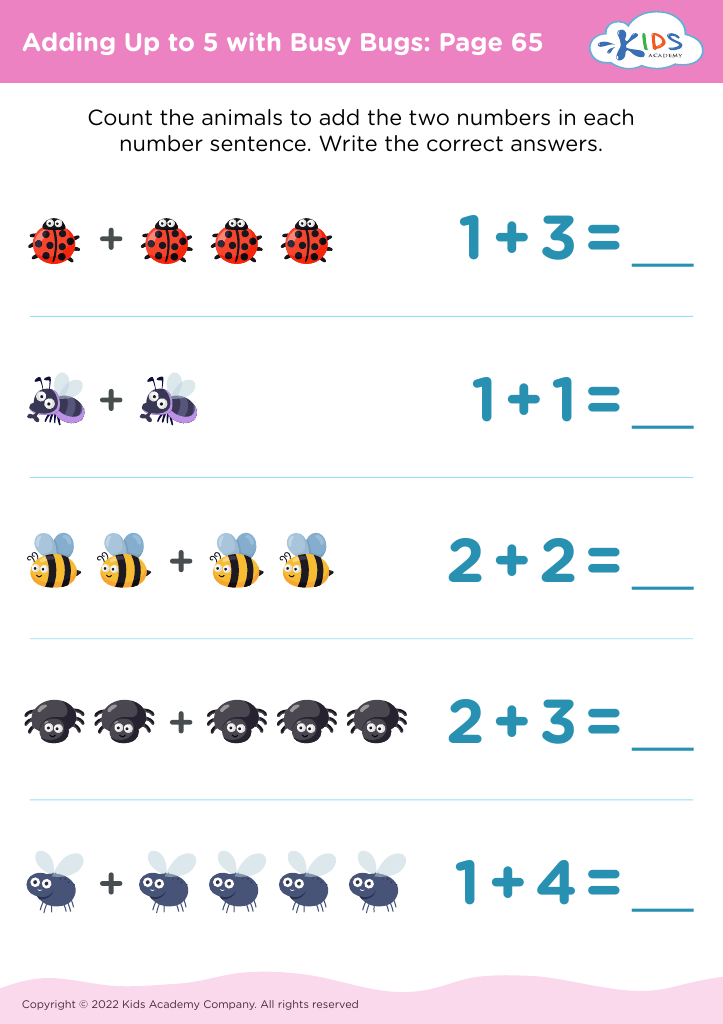
Adding up to 5 is a crucial component in early mathematics, enabling children to understand basic addition concepts and build number sense. When integrated with fine motor activities, such as using manipulatives or practicing writing numbers, children can better visualize their learning, reinforcing both mathematical and motor skills simultaneously.
By prioritizing fine motor skill development, parents and teachers not only prepare children for literacy and numeracy tasks but also promote their overall cognitive and physical development. Moreover, encouraging these skills in a fun and engaging manner helps build a positive attitude towards learning, setting the stage for lifelong success.








