Hand-eye Coordination Adding Up to 5 Worksheets for Ages 5-7
15 filtered results
-
From - To
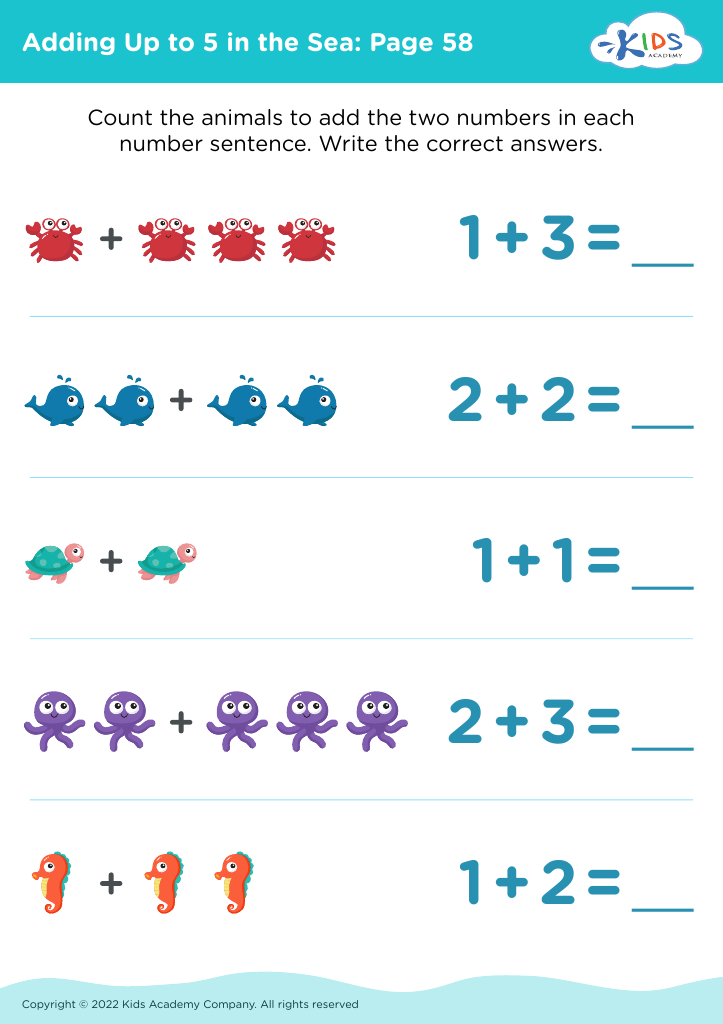
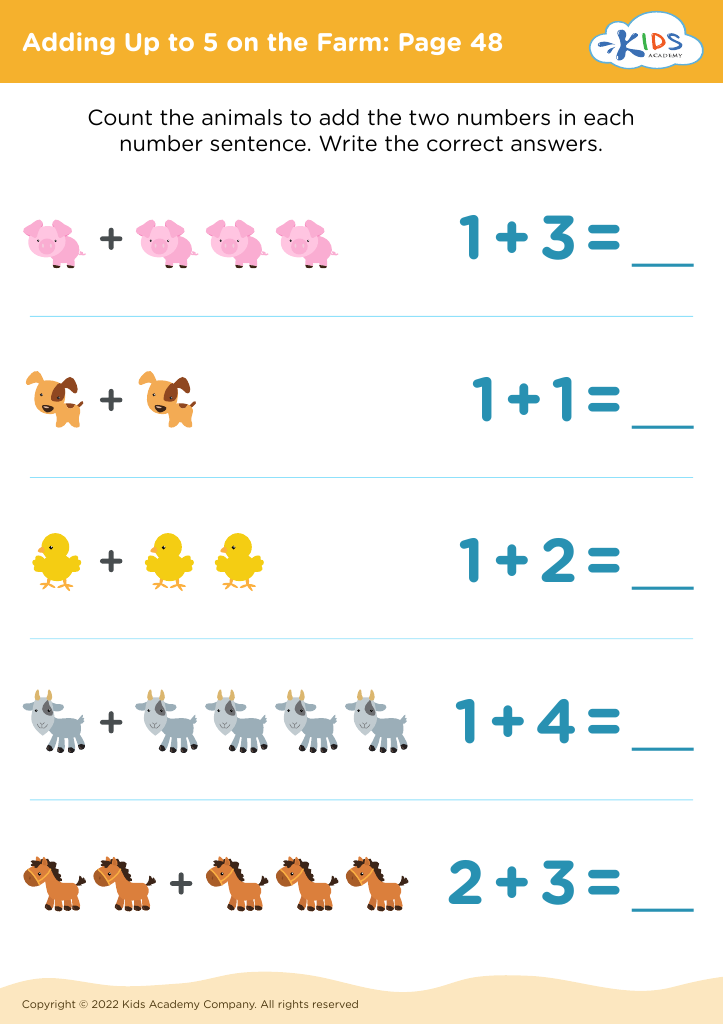
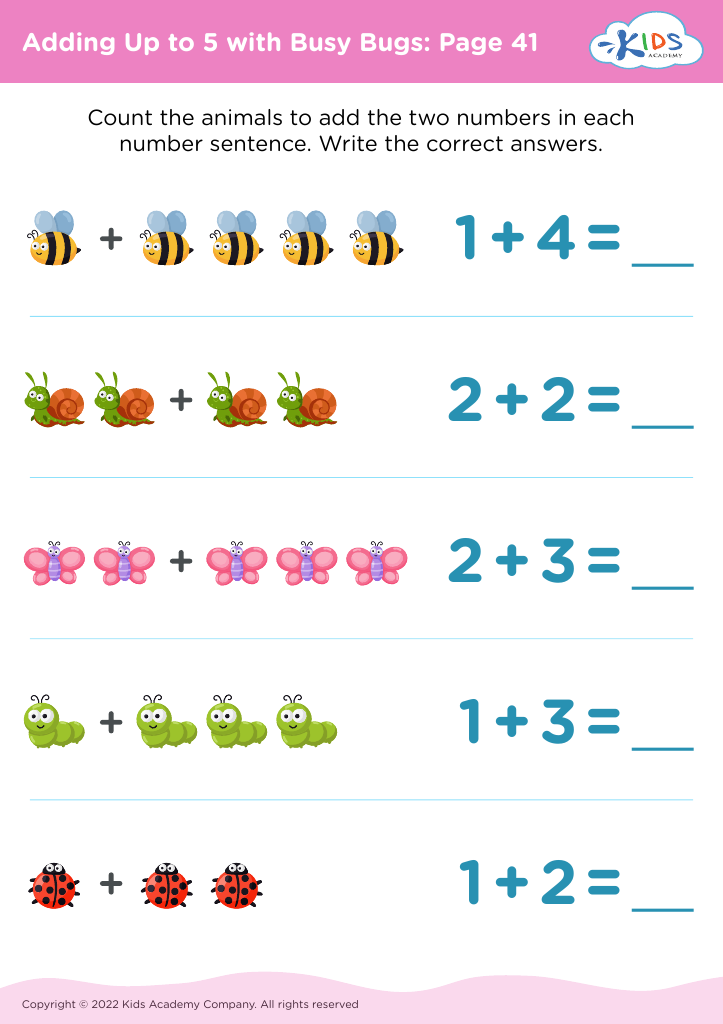
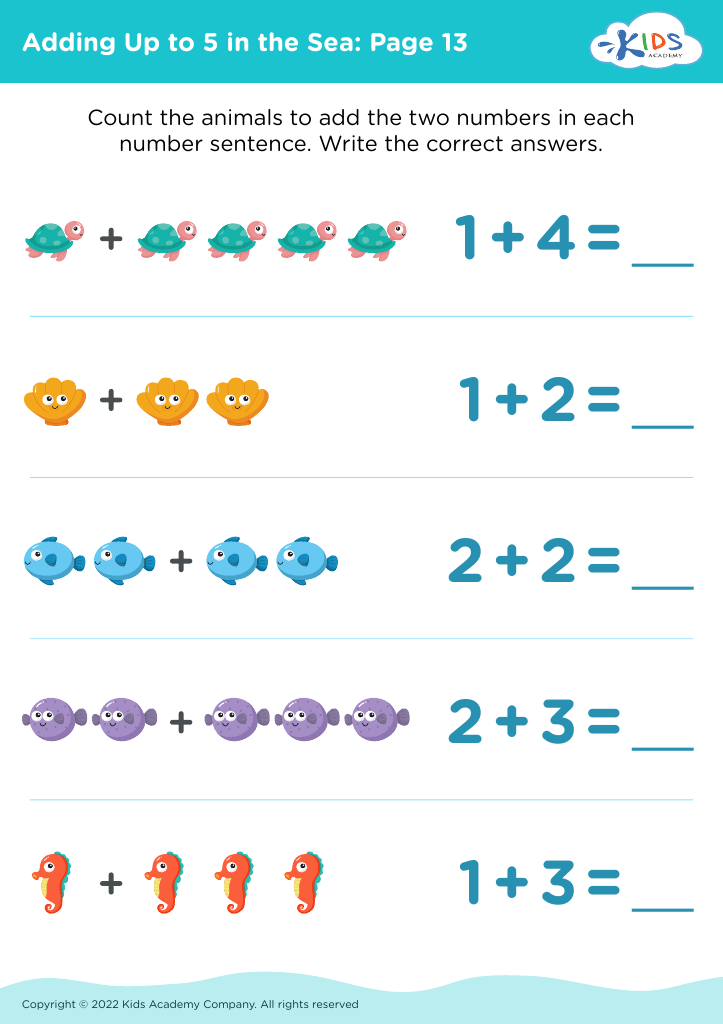
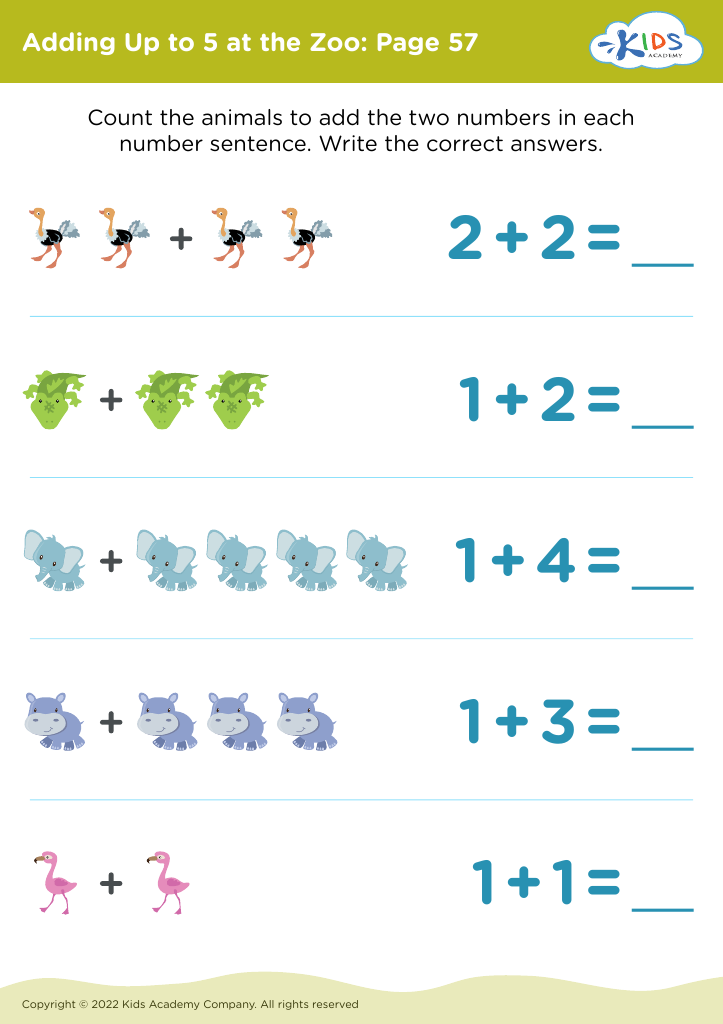
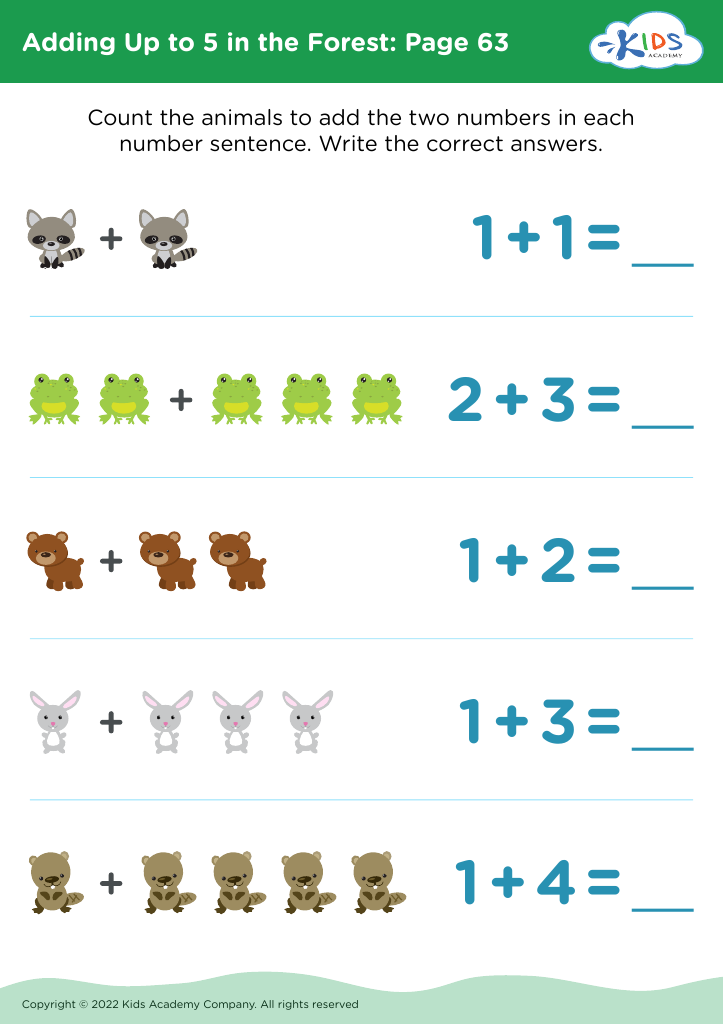
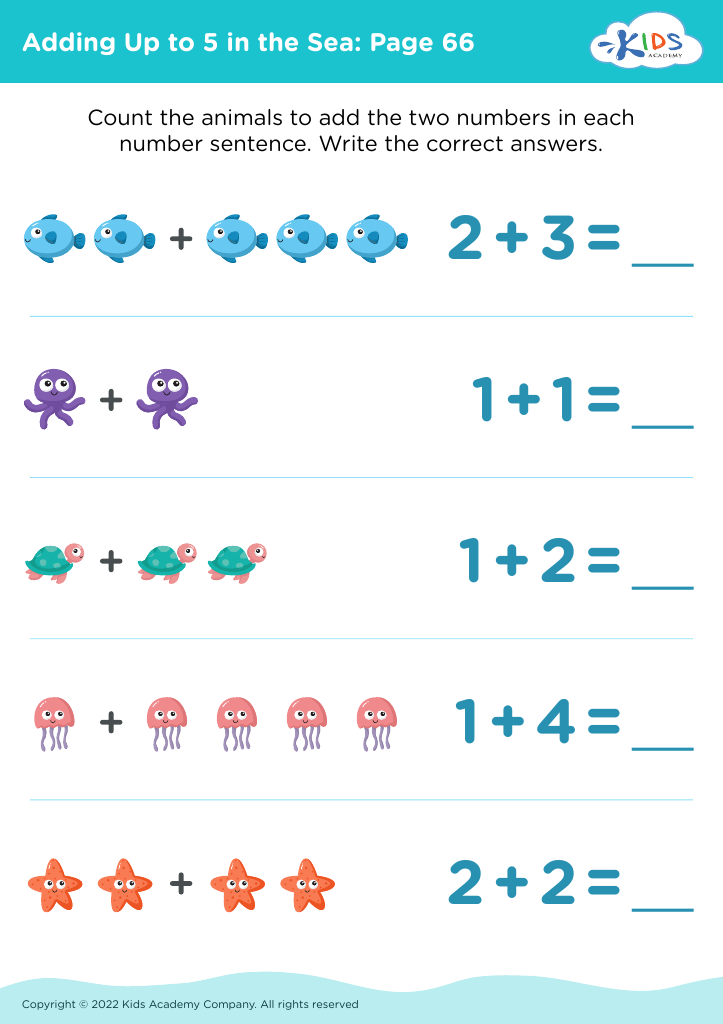
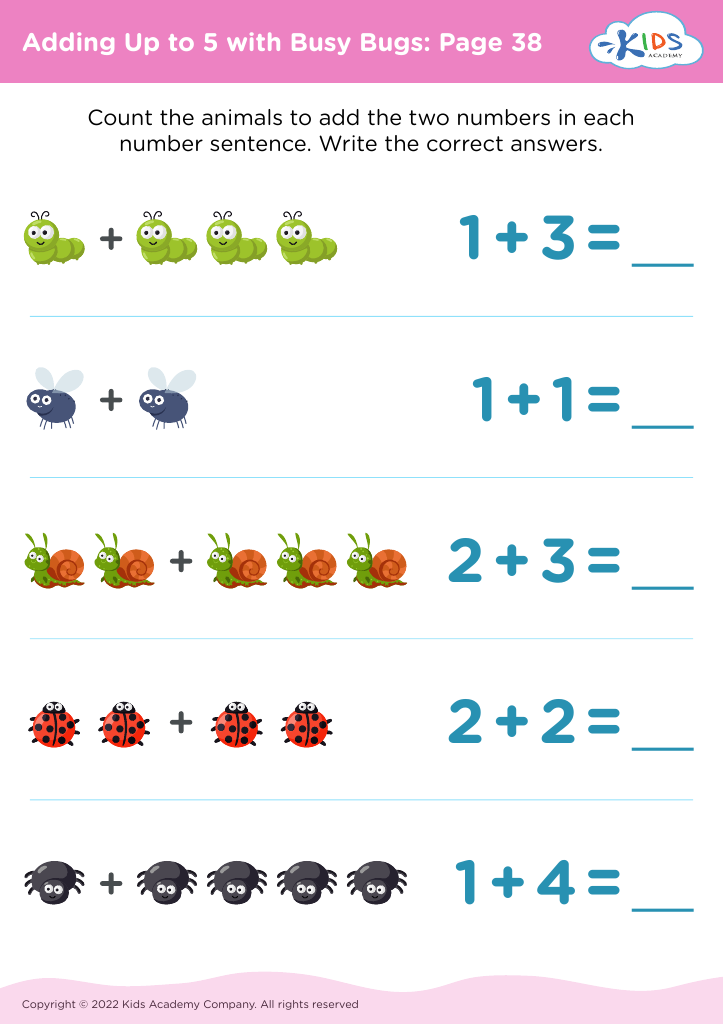
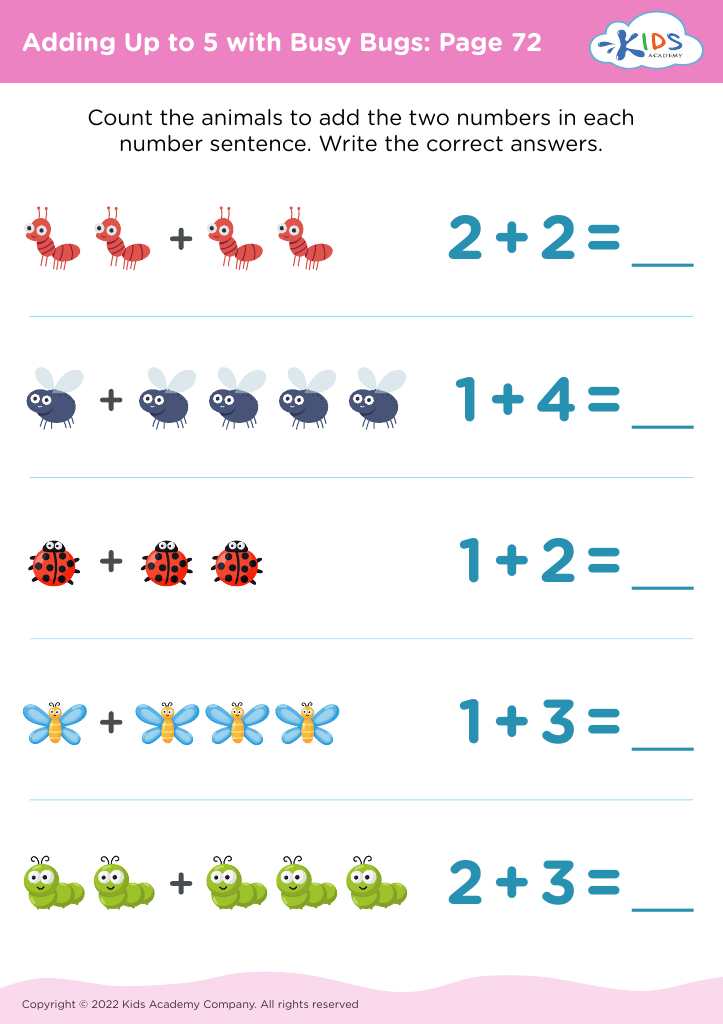
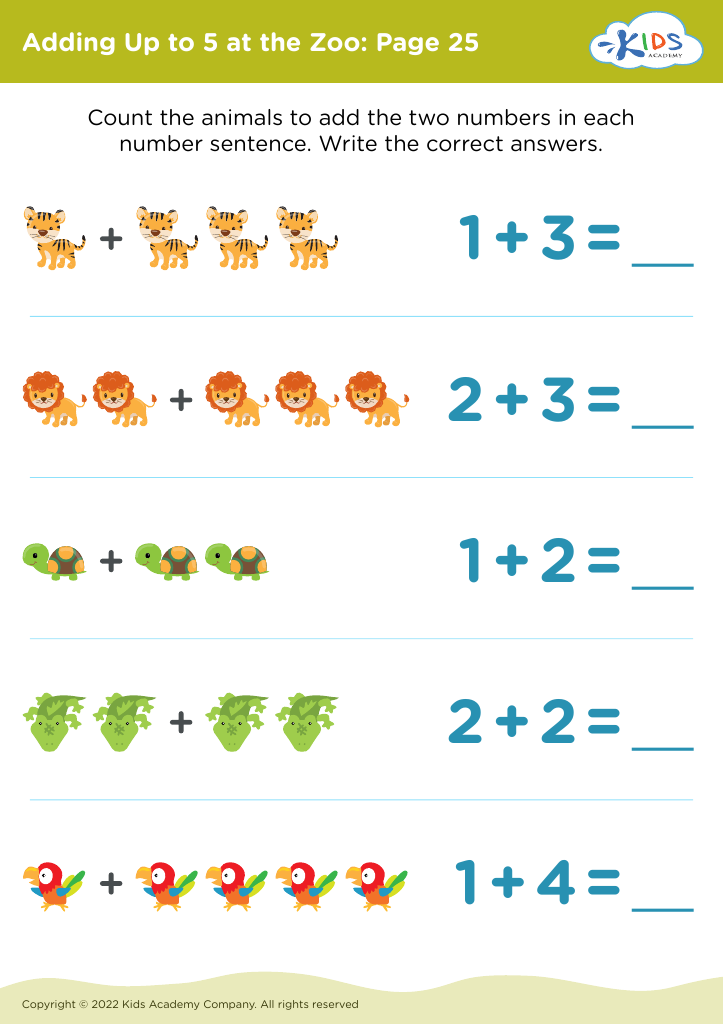
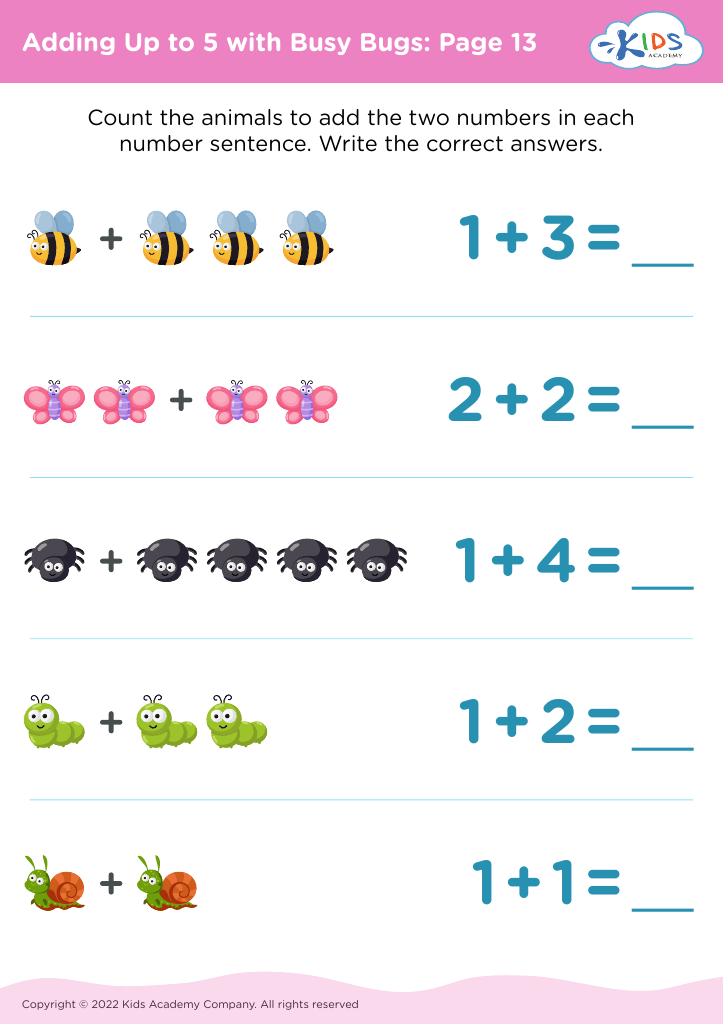
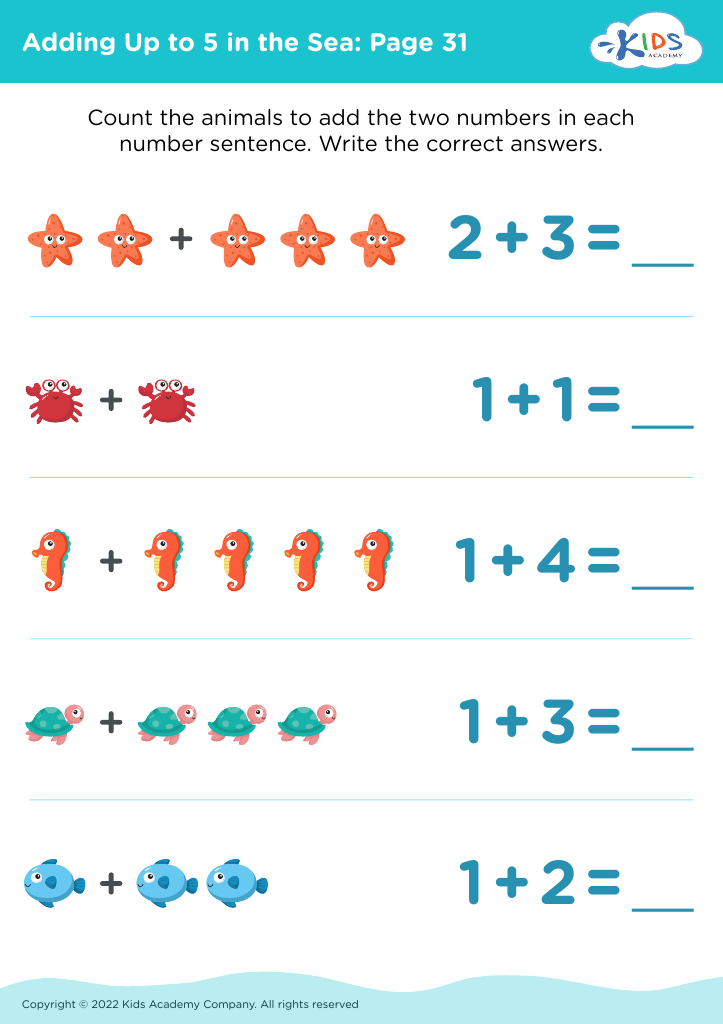
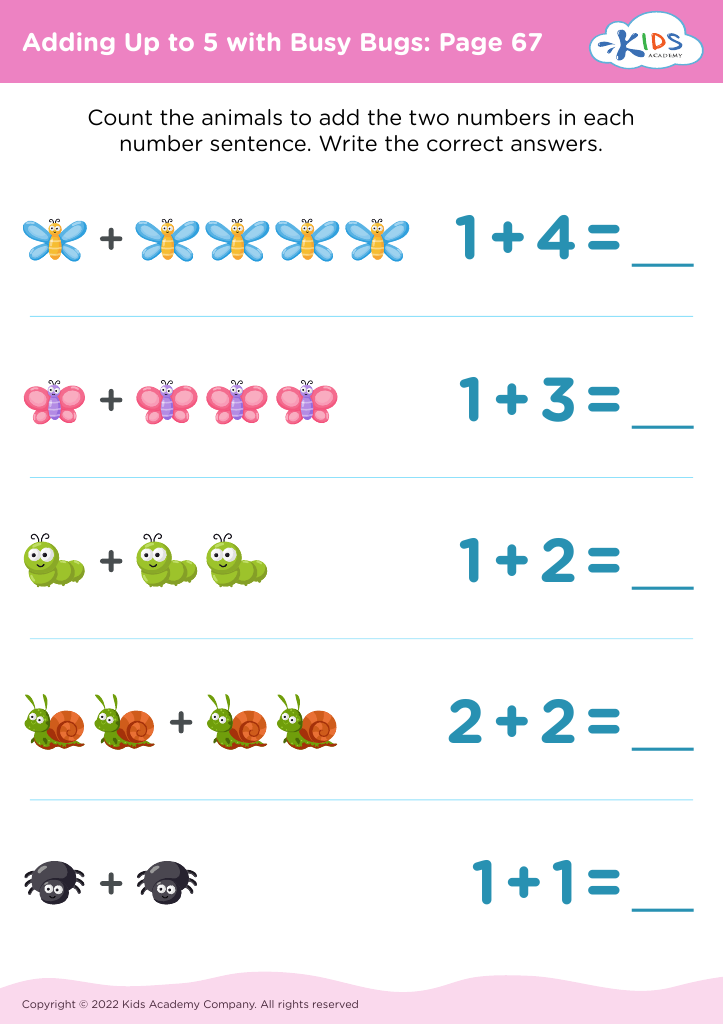
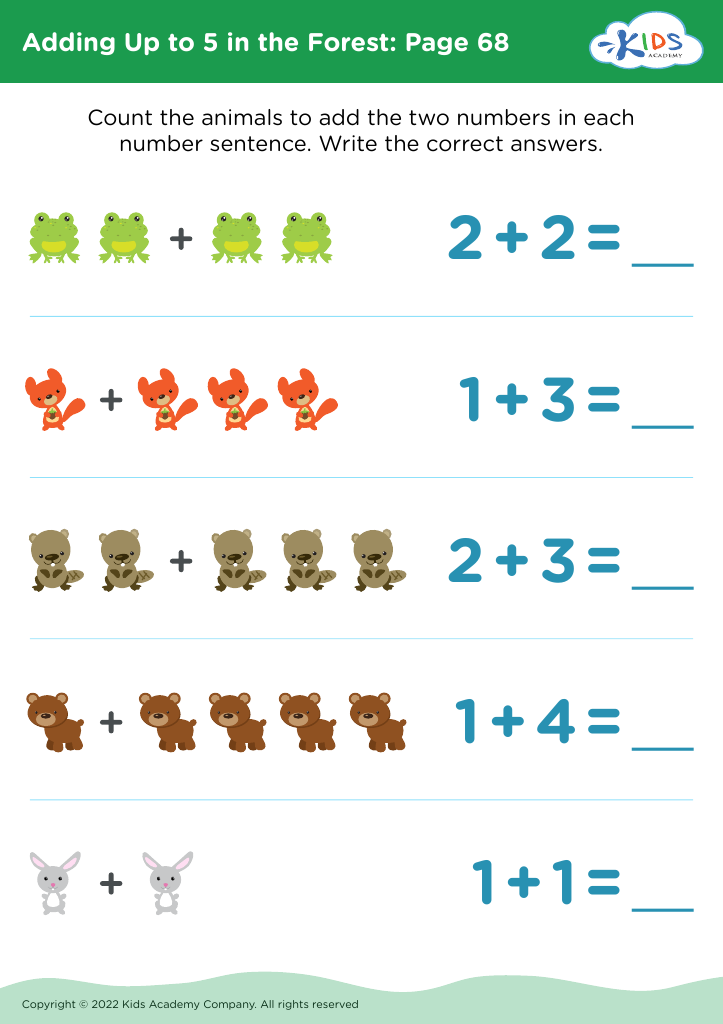
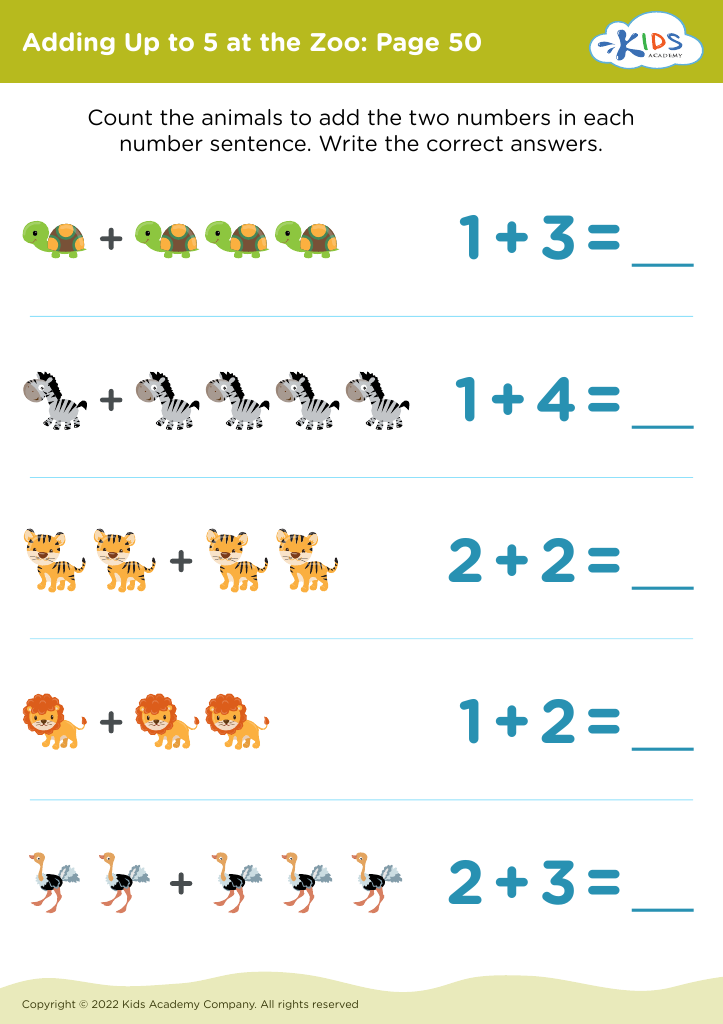
Enhance your child's math skills and hand-eye coordination with our "Adding Up to 5 Worksheets for Ages 5-7." These engaging activities are tailored to help young learners practice basic addition while simultaneously improving their hand-eye coordination. Perfect for early grade students, each worksheet combines fun illustrations with simple mathematical problems, ensuring an enjoyable and educational experience. Children will develop essential skills like counting, number recognition, and fine motor abilities. Ideal for both classroom use and at-home practice, these printable worksheets offer a comprehensive approach to early math education. Download today and support your child’s learning journey!





%20(1).jpg)


Hand-eye coordination is a crucial developmental skill that allows young children, aged 5-7, to effectively use their vision to guide their hands in tasks and play. Focusing on activities that involve adding up to 5 is essential at this age for several reasons.
Firstly, it helps in the smooth execution of basic everyday tasks such as writing, cutting shapes with scissors, or tying shoelaces. Developing hand-eye coordination through adding up to 5 builds foundational numerical understanding and fine motor skills simultaneously. When children manipulate physical objects to make simple sums, they not only practice counting and early arithmetic but also enhance their dexterity and spatial awareness.
Secondly, enhanced hand-eye coordination aids in boosting a child's confidence and independence. Completing tasks like arranging blocks to sum up numbers, drawing or coloring in response to numerical cues helps children gain a sense of accomplishment.
Lastly, these skills are foundational for academic success. The coordination developed in these formative years contributes to better handwriting and the ability to perform classroom tasks that require precise movements. Therefore, by investing time in enhancing hand-eye coordination through basic mathematical exercises, parents and teachers can lay a comprehensive groundwork for a child’s future learning and daily activities.








