Underwater animal identification Adding Up to 5 Worksheets for Ages 5-7
3 filtered results
-
From - To
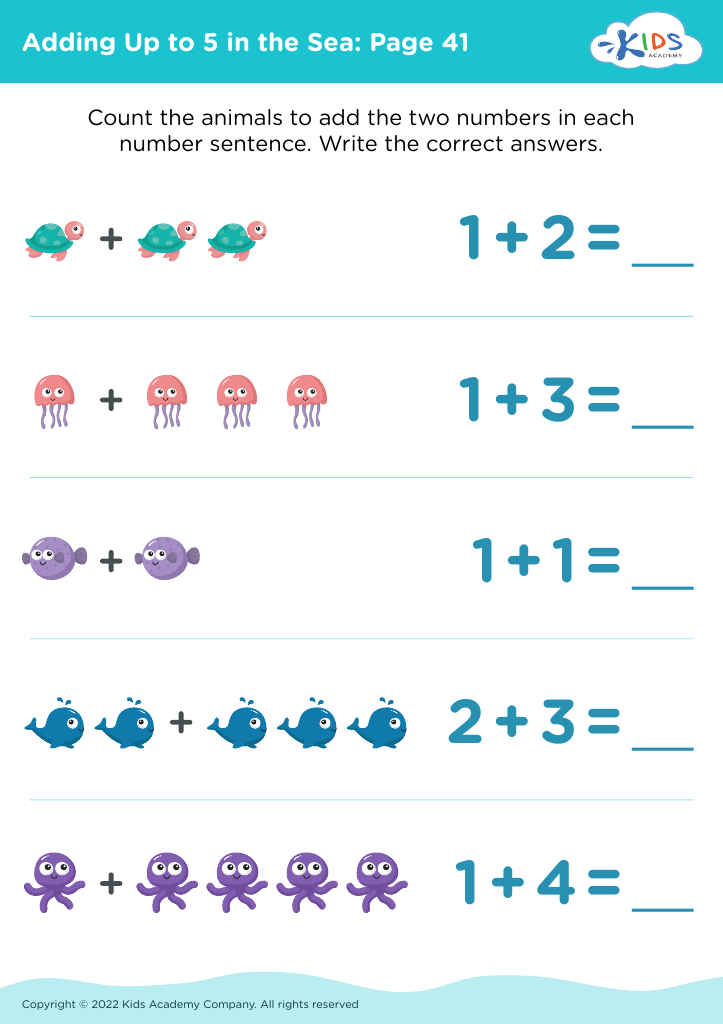
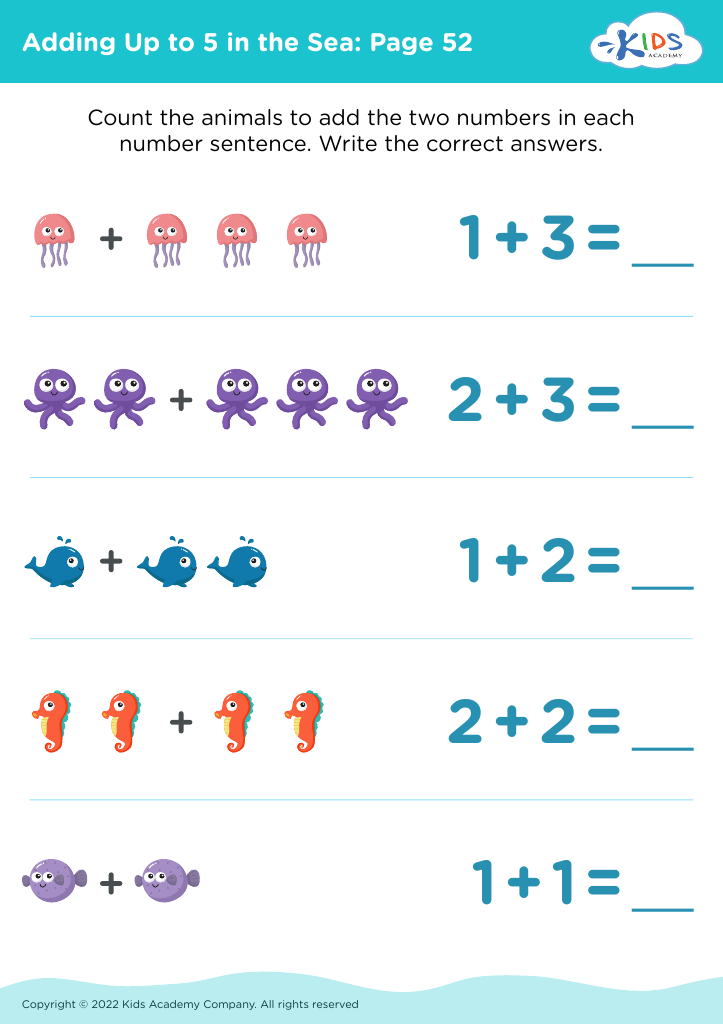
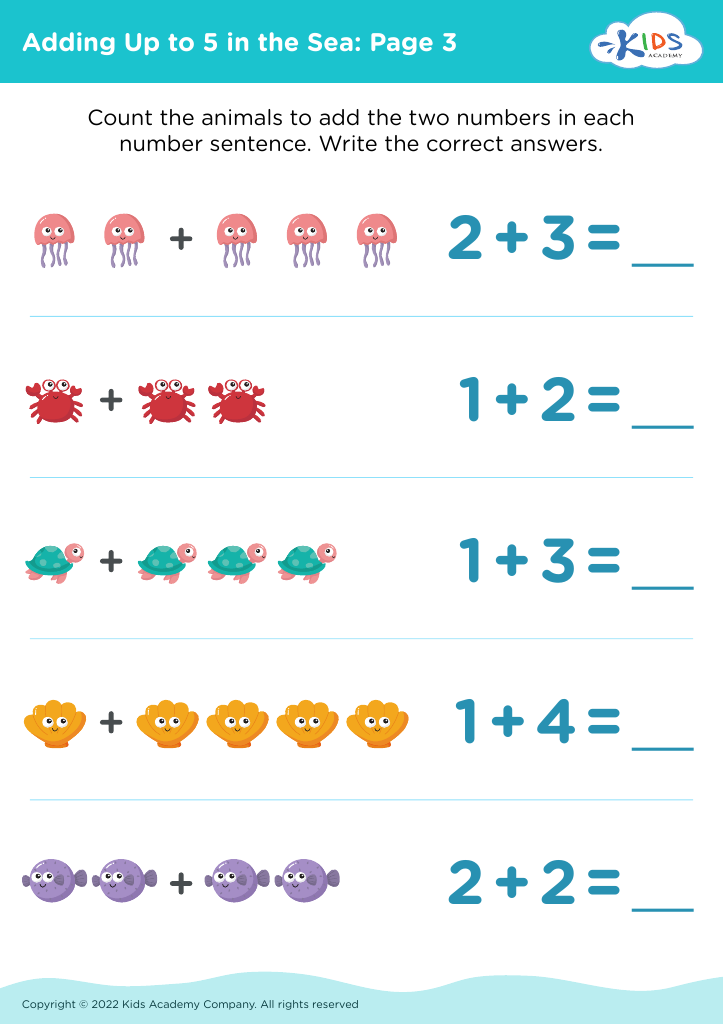
Dive into learning with our "Underwater Animal Identification Adding Up to 5 Worksheets" designed for ages 5-7! These engaging printable worksheets combine math practice with marine biology fun as children add up to 5 while identifying colorful underwater creatures. Perfect for young learners, these activities enhance counting skills and build a foundation in addition, all while introducing fascinating sea animals. Watch your little explorers grow their math competence and scientific curiosity simultaneously. Ideal for both classroom and at-home learning, these worksheets turn addition into an underwater adventure! Available now at Kids Academy, where education meets excitement.


%20(1).jpg)


.jpg)


Introducing young children, ages 5-7, to underwater animal identification games that incorporate basic addition serves multiple developmental objectives, vital for both parents and teachers to support. First and foremost, it seamlessly blends learning and play, two essential activities for young minds. By identifying different underwater animals, children enhance their cognitive recognition skills and curiosity about marine life. This can foster an early appreciation for biology and environmental science, potentially inspiring a lifelong interest in nature and conservation.
Moreover, incorporating simple addition problems into these identification activities aids in the development of foundational math skills. Children learn to count, recognize numbers, and perform basic arithmetic operations in an engaging context. This dual-focus on literacy and numeracy during a vital stage of cognitive development promotes stronger problem-solving skills and logical thinking.
Parents and teachers should also care because interactive and thematic learning activities, like underwater animal identification, are known to improve attention span, memory retention, and fine motor skills through hands-on engagement. It's a holistic educational tool that supports mental and emotional growth, making learning enjoyable and effective. Finally, as children collaborate and share discoveries, their social skills improve, setting a strong groundwork for cooperative learning in the future.








