Develop critical thinking Adding up to 50 Worksheets for Ages 5-7
3 filtered results
-
From - To
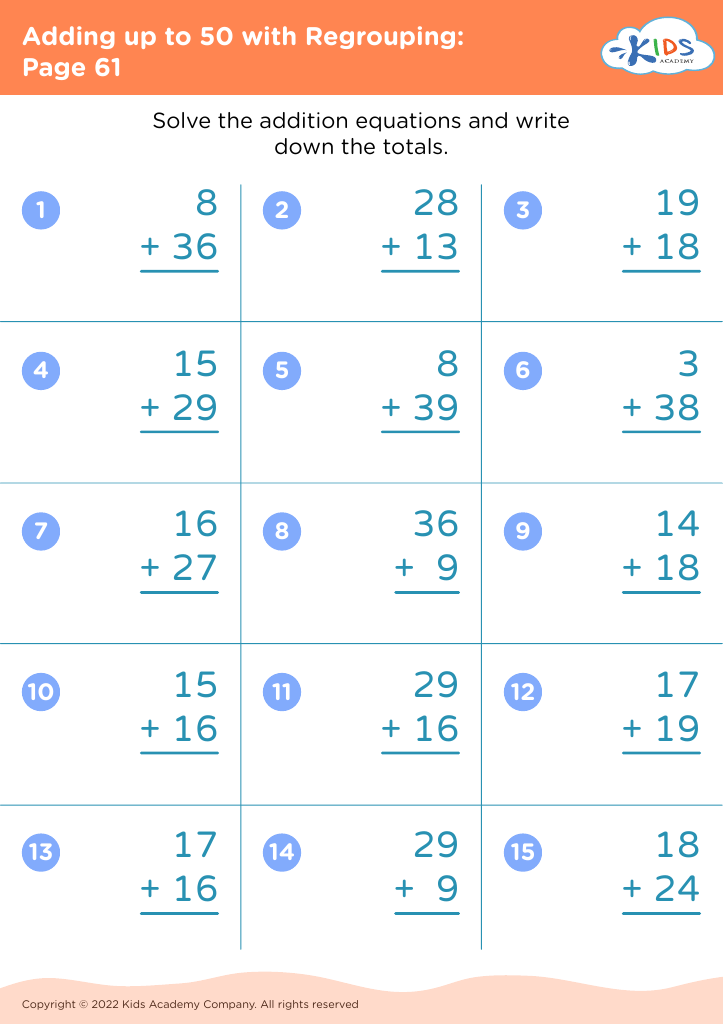
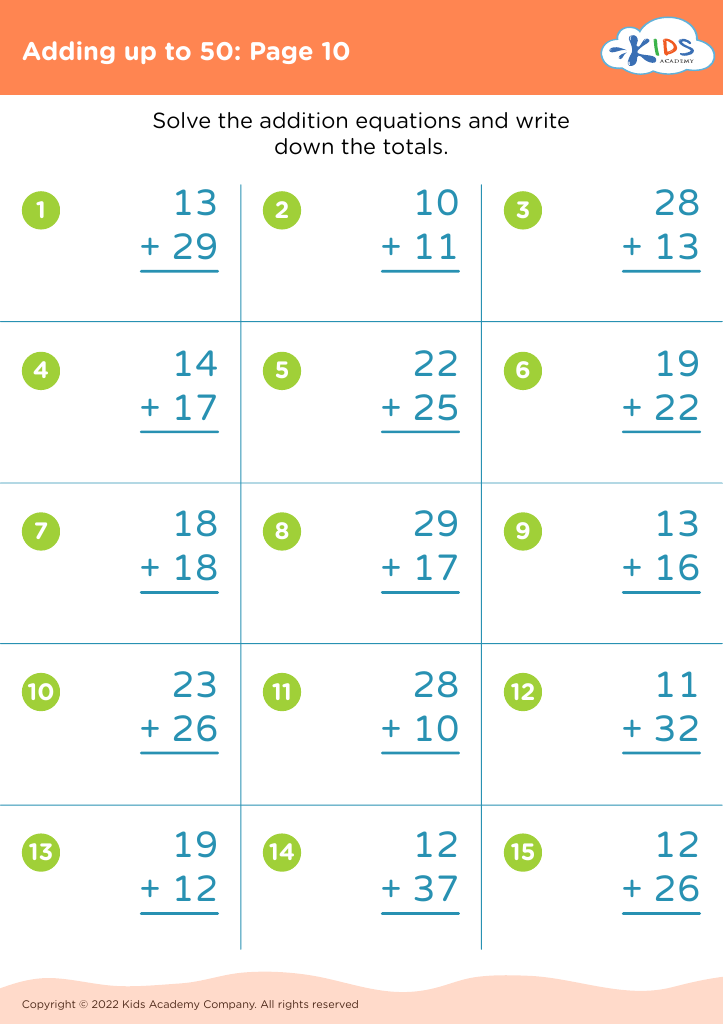
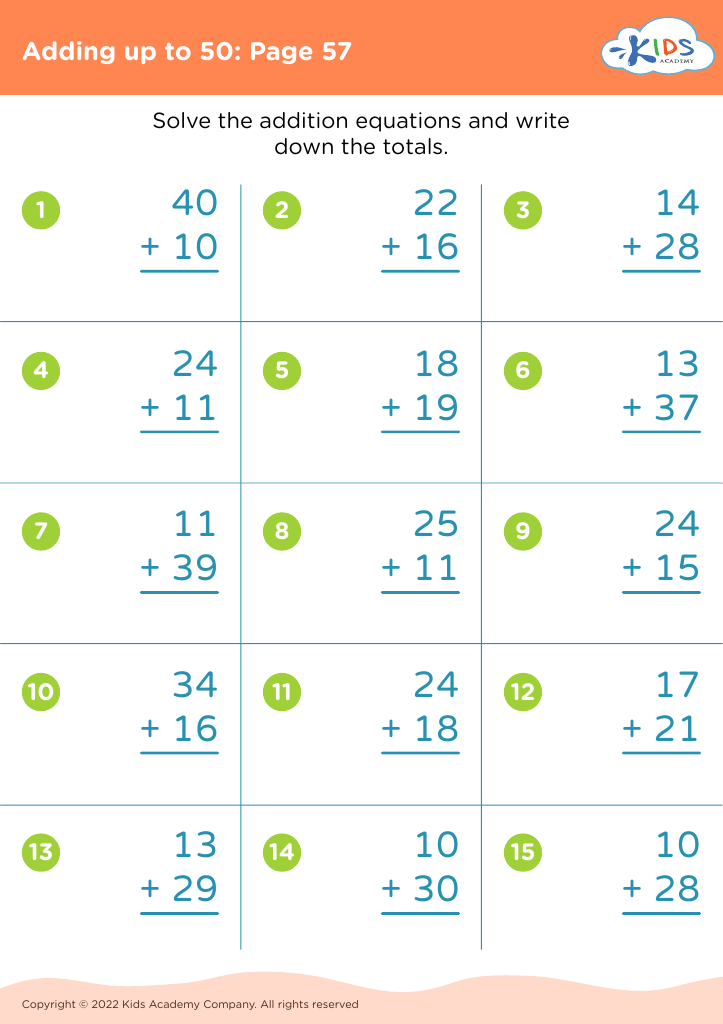
Unlock your child's potential with our "Develop Critical Thinking: Adding Up to 50 Worksheets" designed for ages 5-7! This engaging collection features 50 printable worksheets that not only enhance math skills but also foster critical thinking abilities. Each worksheet encourages learners to explore various problem-solving strategies and understand numerical relationships. With vibrant illustrations and age-appropriate challenges, these activities maintain young learners' interest while boosting their confidence in math. Ideal for the classroom or at-home learning, these worksheets are perfect for nurturing independent thinking and developing a positive attitude towards mathematics. Equip your child with essential skills for a brighter future!




Parents and teachers should prioritize developing critical thinking skills in children aged 5 to 7 for several important reasons. First, enhancing critical thinking lays the foundation for problem-solving abilities, enabling young learners to approach challenges with confidence and creativity. When children engage in activities that encourage them to ask questions, analyze information, and reach conclusions, they cultivate a sense of curiosity and initiative.
Second, critical thinking encourages independence. As children learn to assess situations and make decisions, they become more self-reliant and adept at navigating everyday life. This strengthens their ability to reason through various scenarios, helping them make informed choices.
Additionally, developing critical thinking skills in early education fosters better communication. Children learn to articulate their thoughts and ideas, leading to improved social interactions and collaboration with peers. This collaboration is crucial for teamwork in later academic and professional settings.
Lastly, nurturing these skills in young children contributes to lifelong learning. They begin to see the world as a place filled with opportunities for exploration and understanding, fostering a love for learning that lasts throughout their lives. By focusing on critical thinking, parents and teachers invest in a child's future success and adaptability in an ever-changing world.








