Understanding fractions Adding up to 50 Worksheets for Ages 5-7 - Page 2
47 filtered results
-
From - To
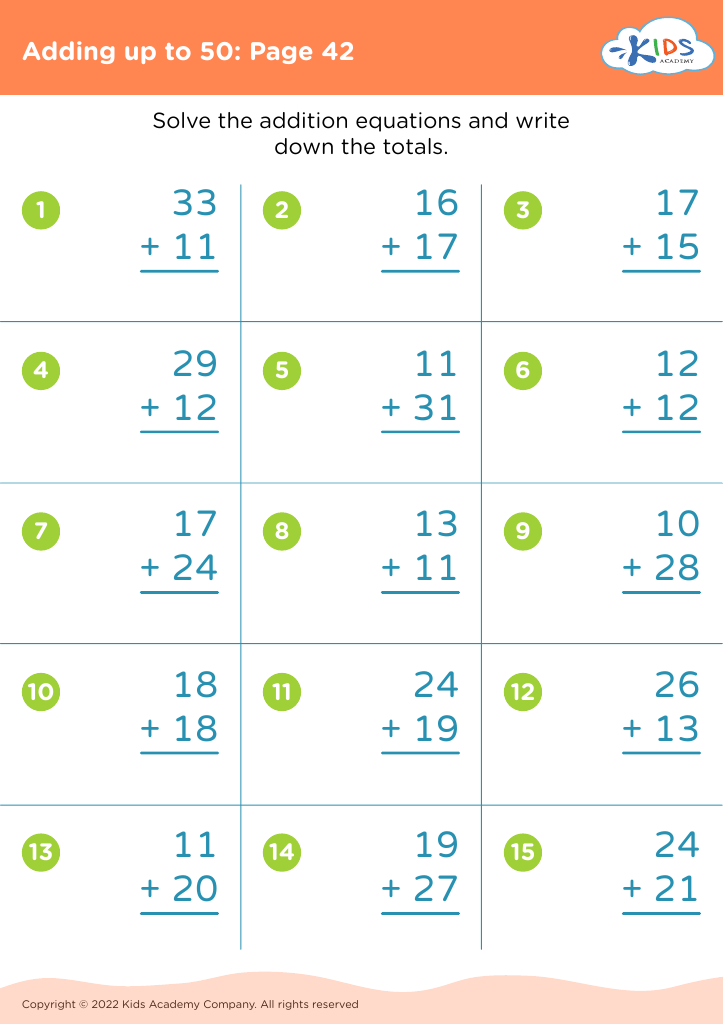
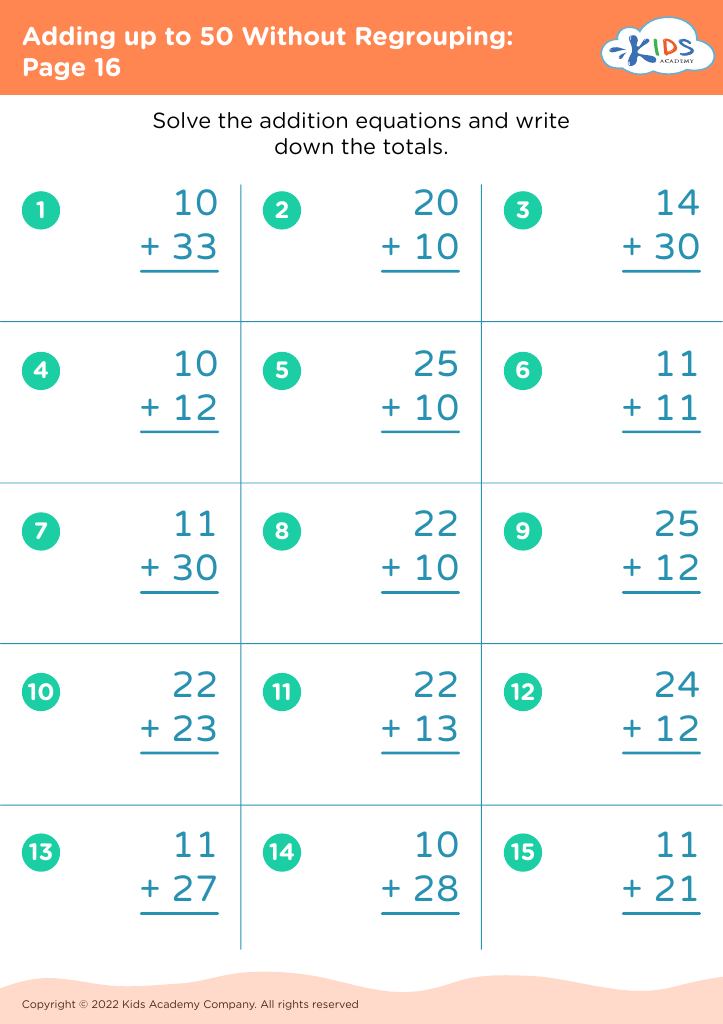
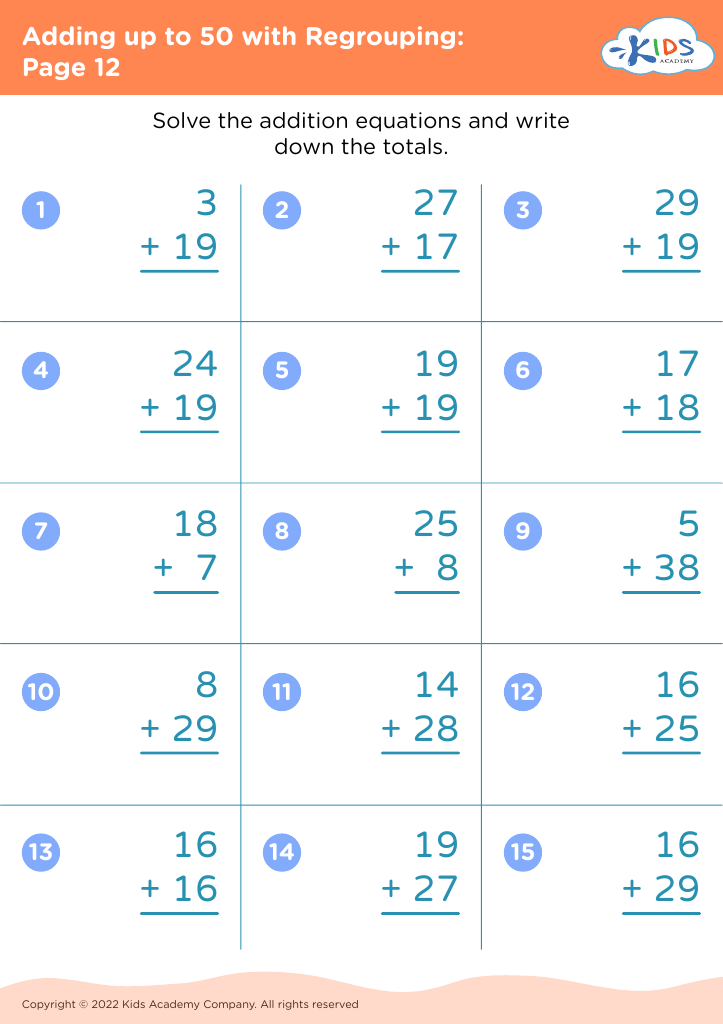
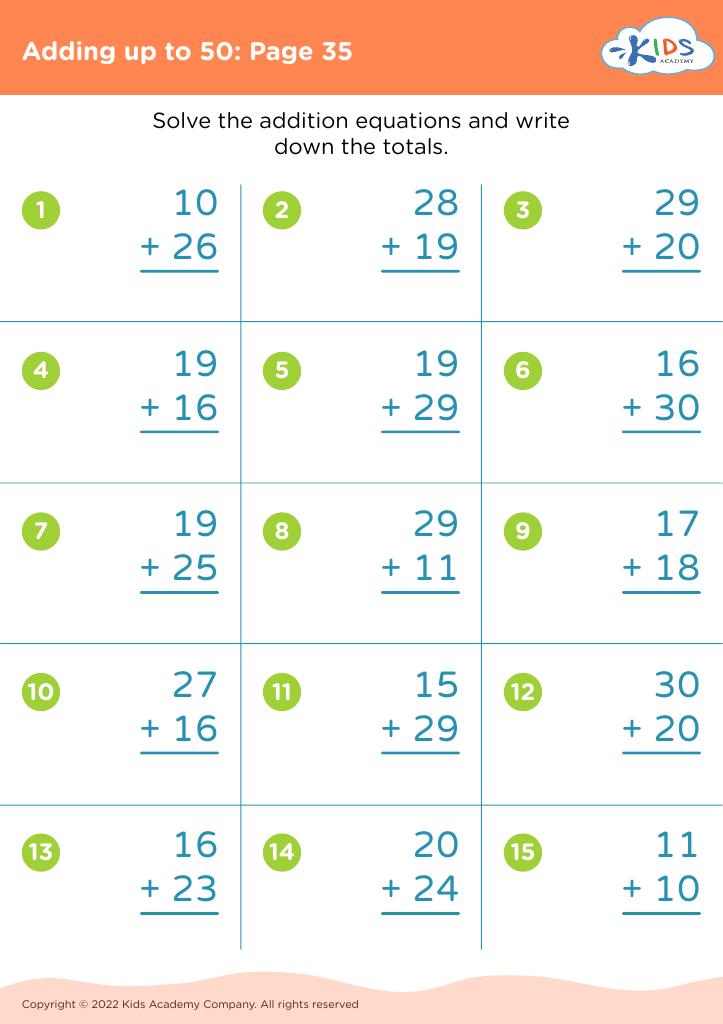
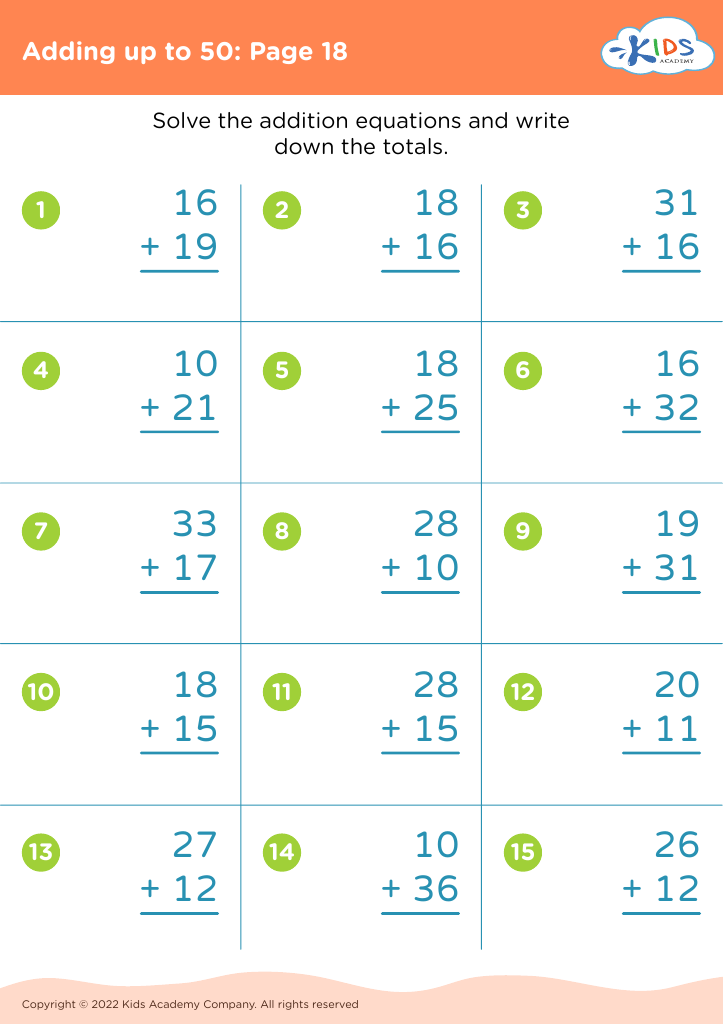
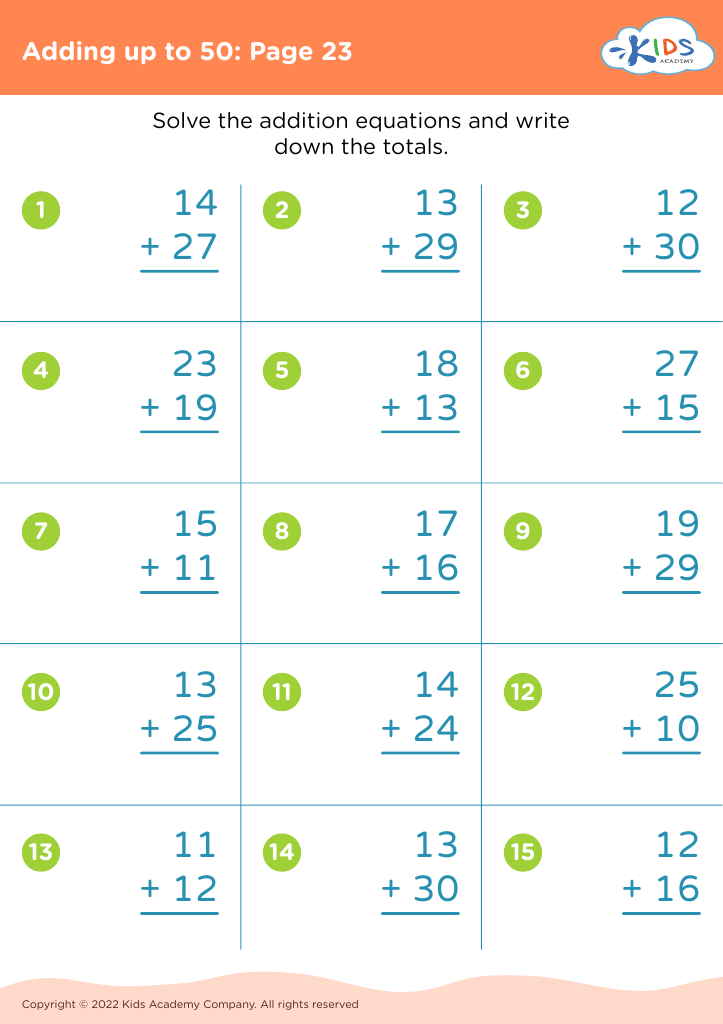
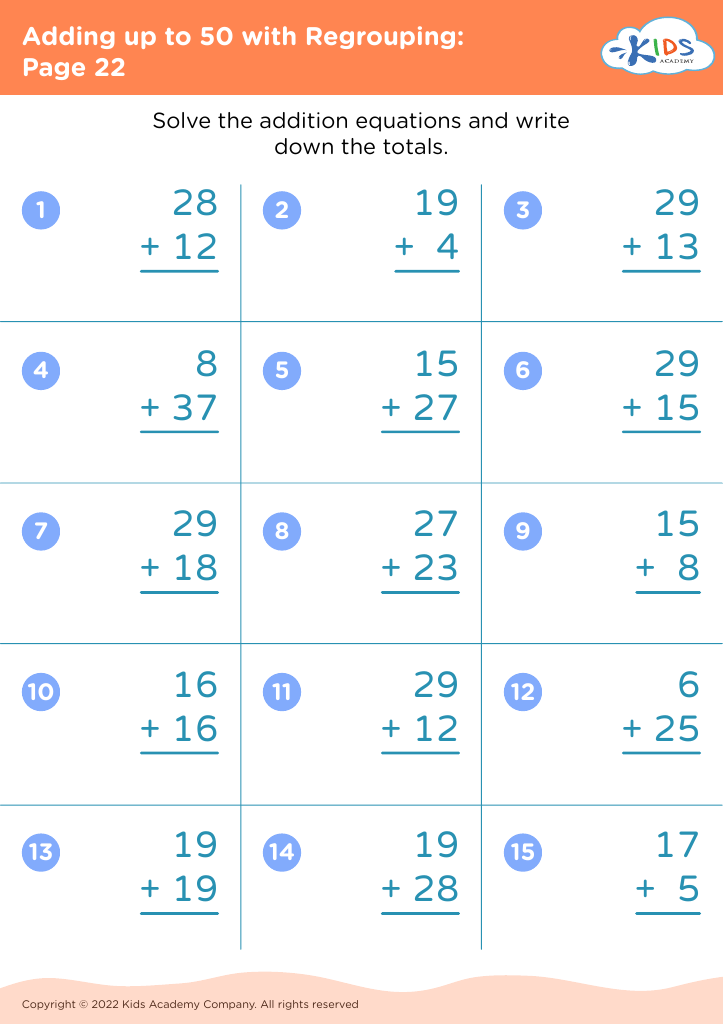
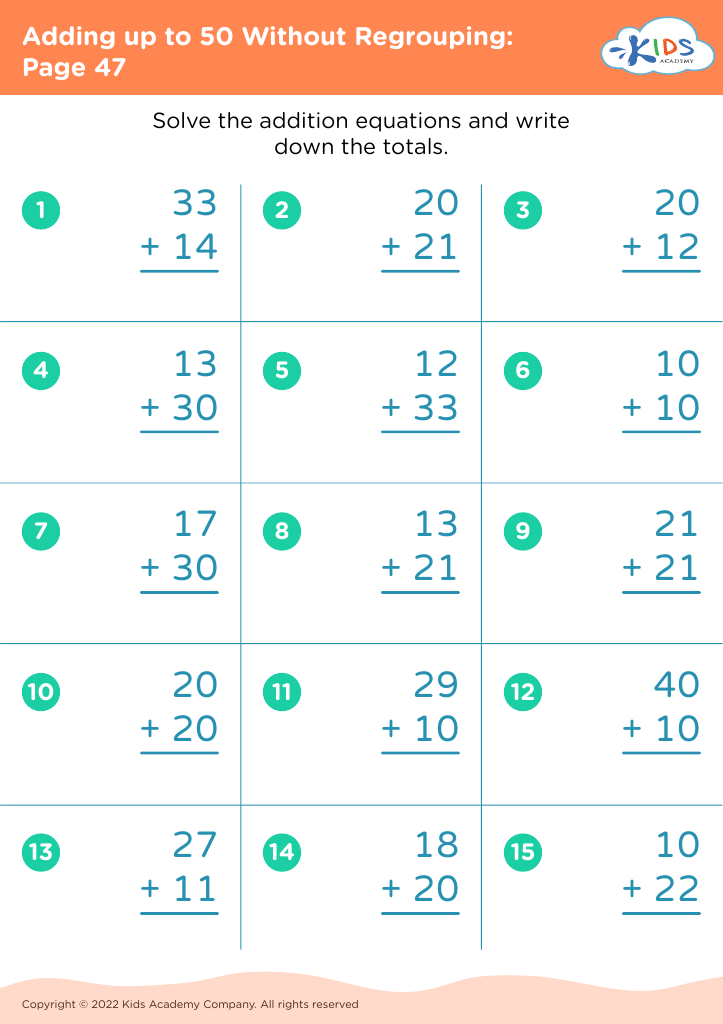
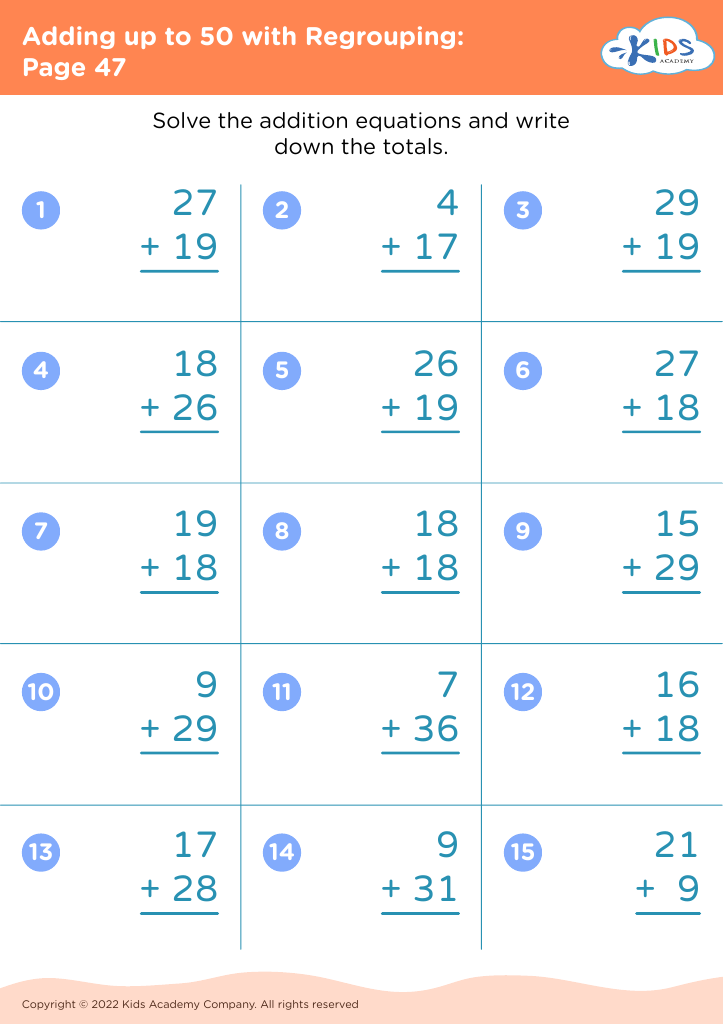
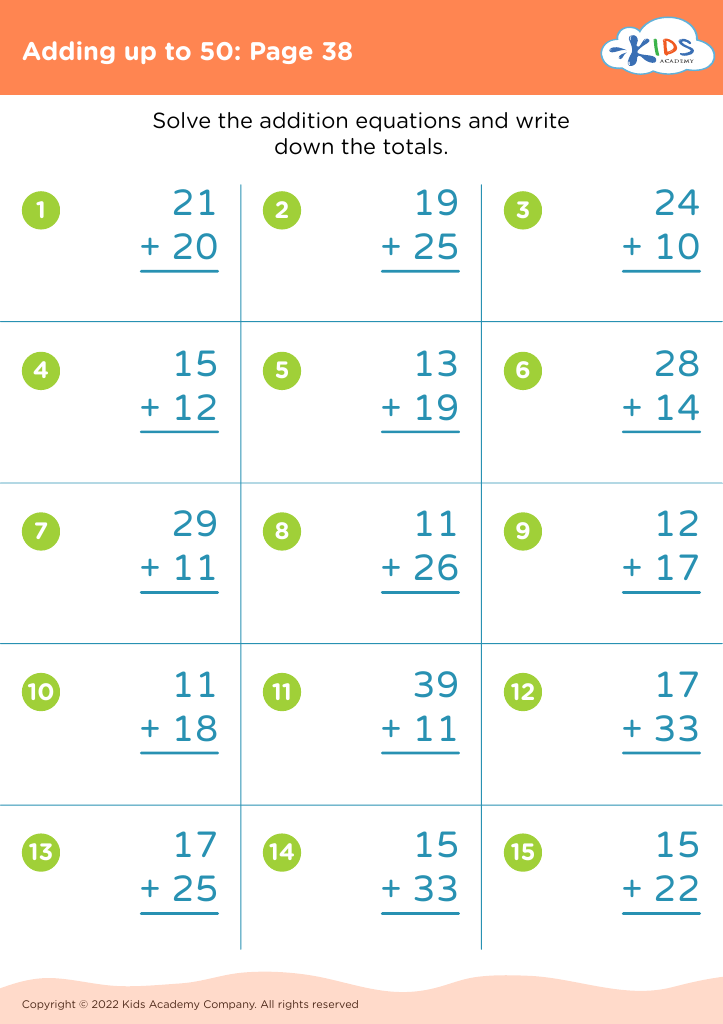
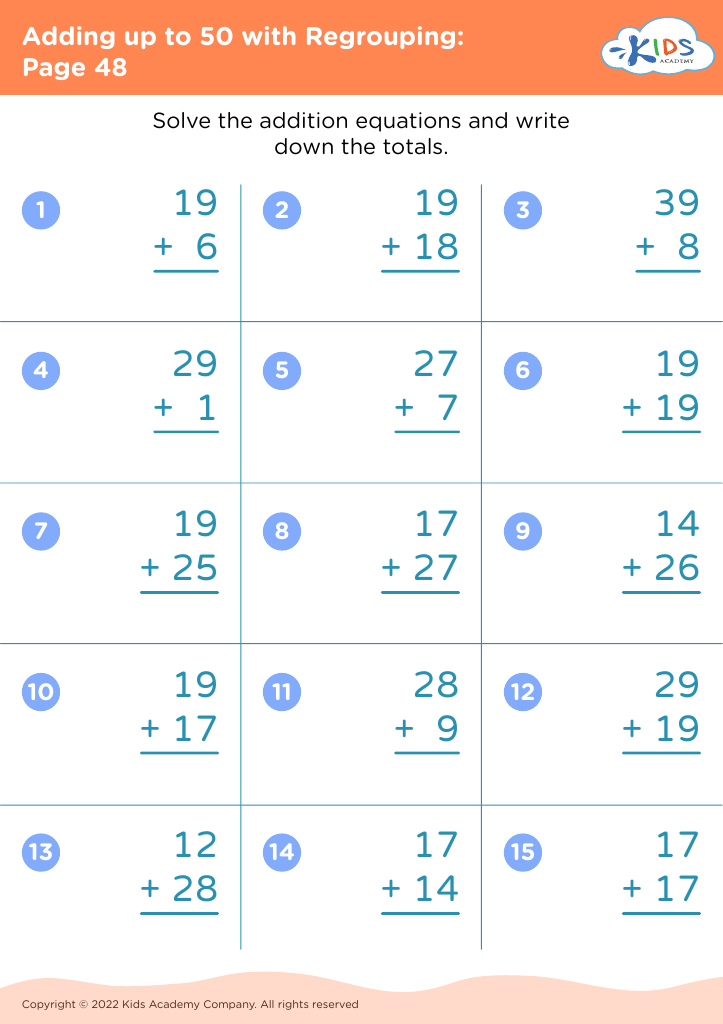
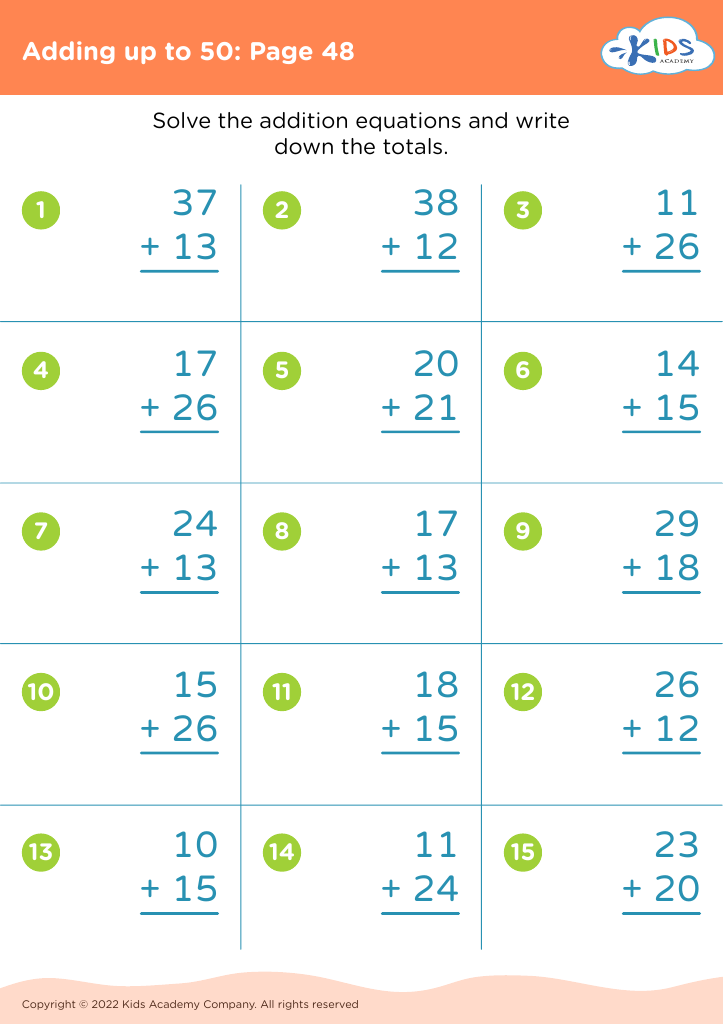
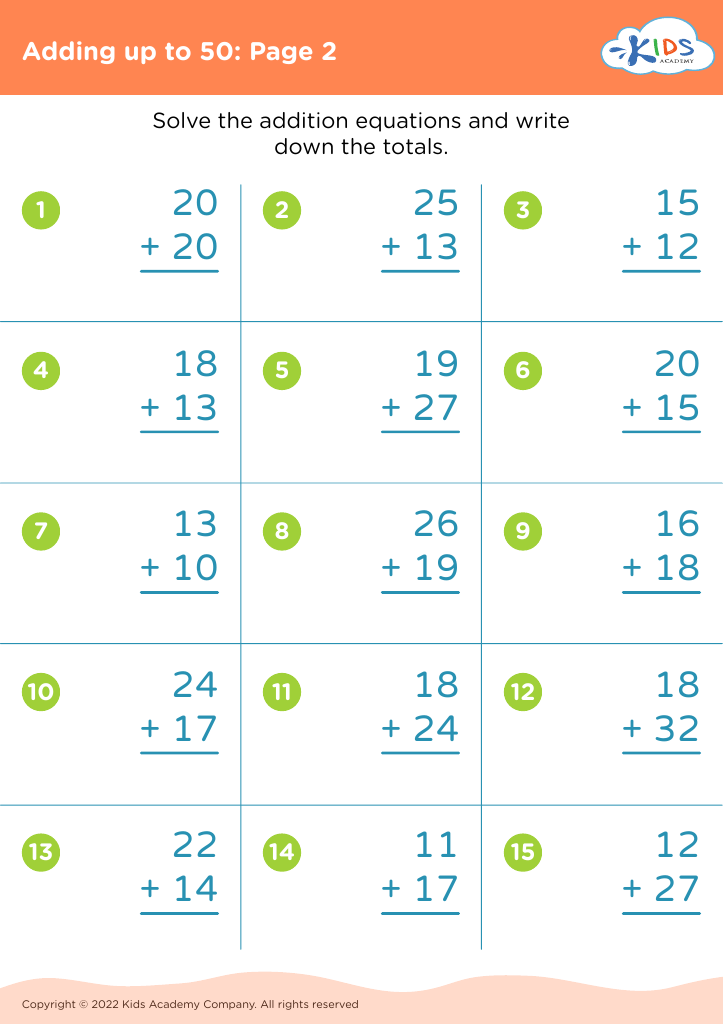
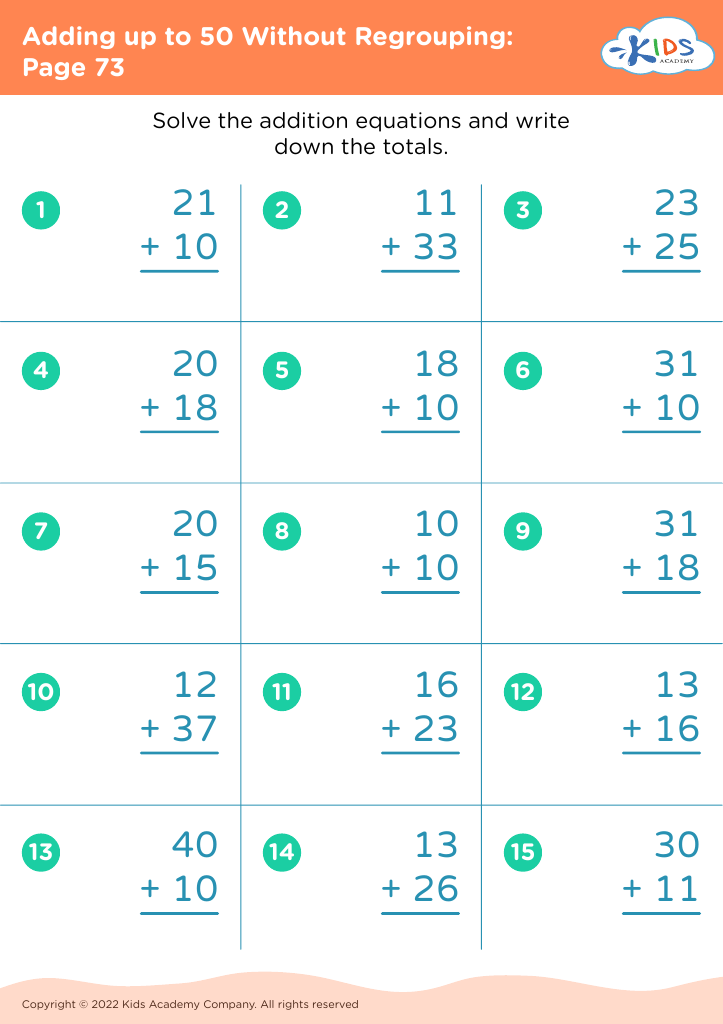
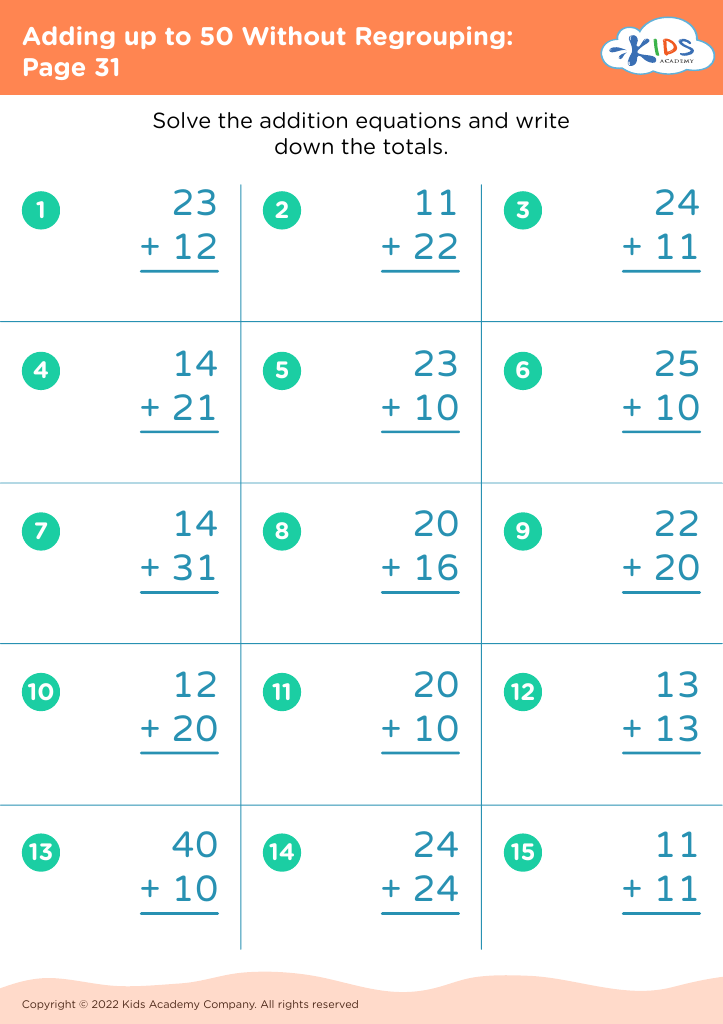
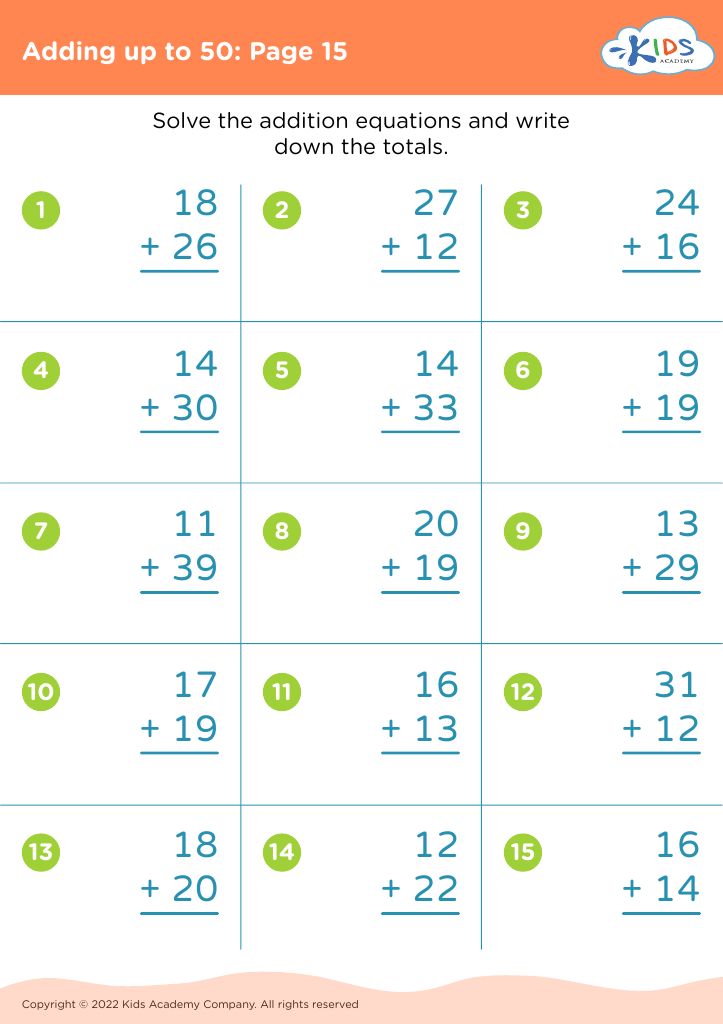
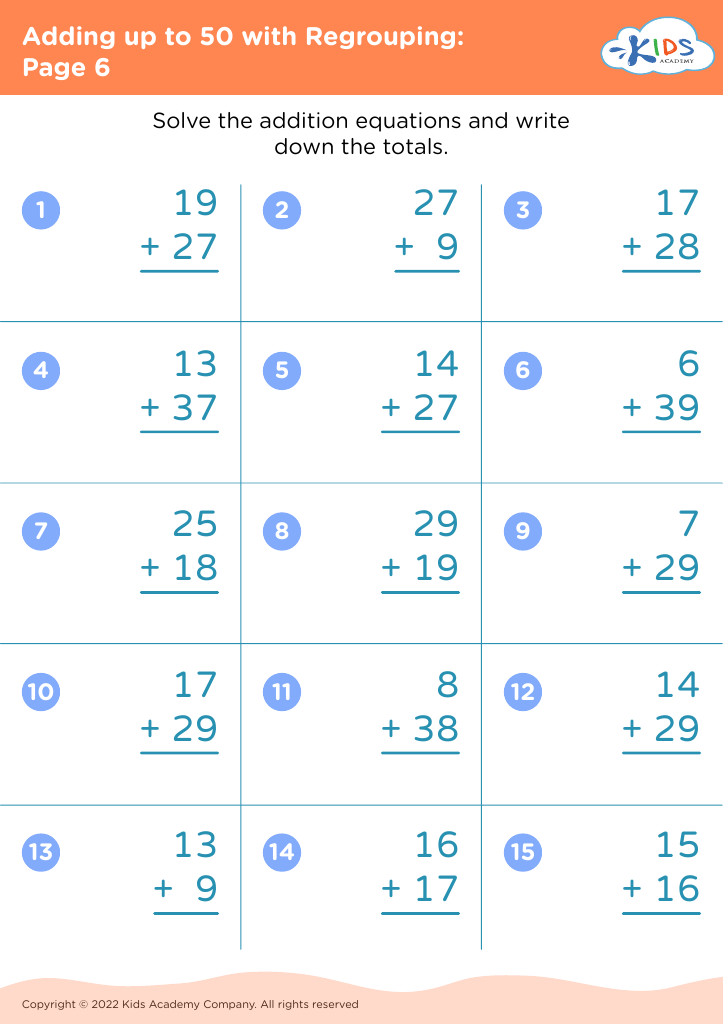
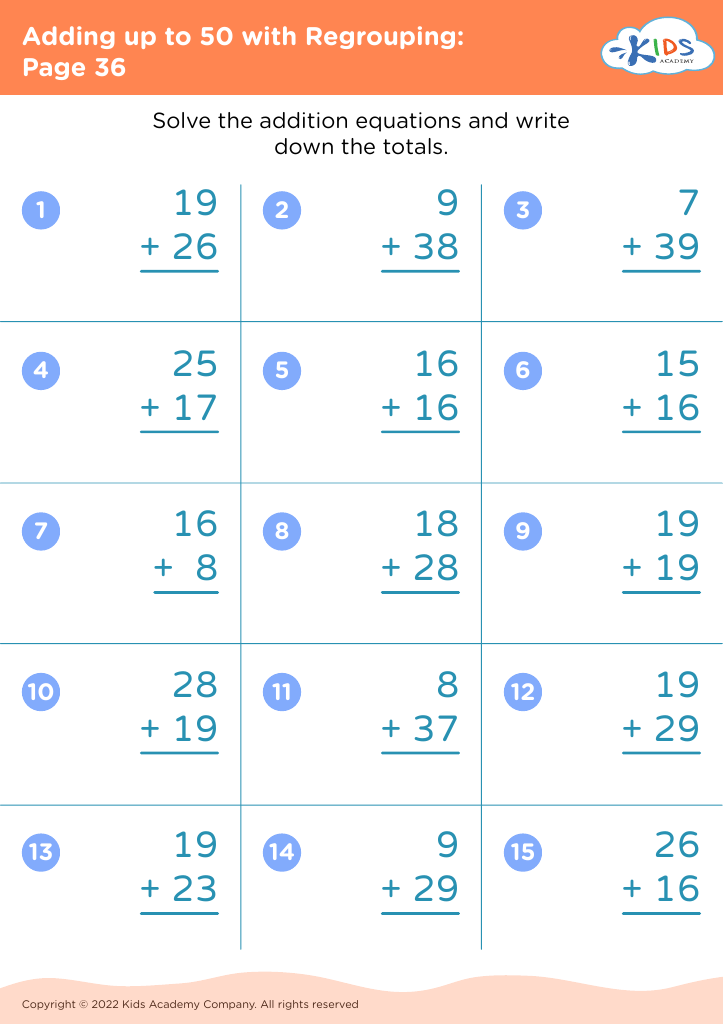
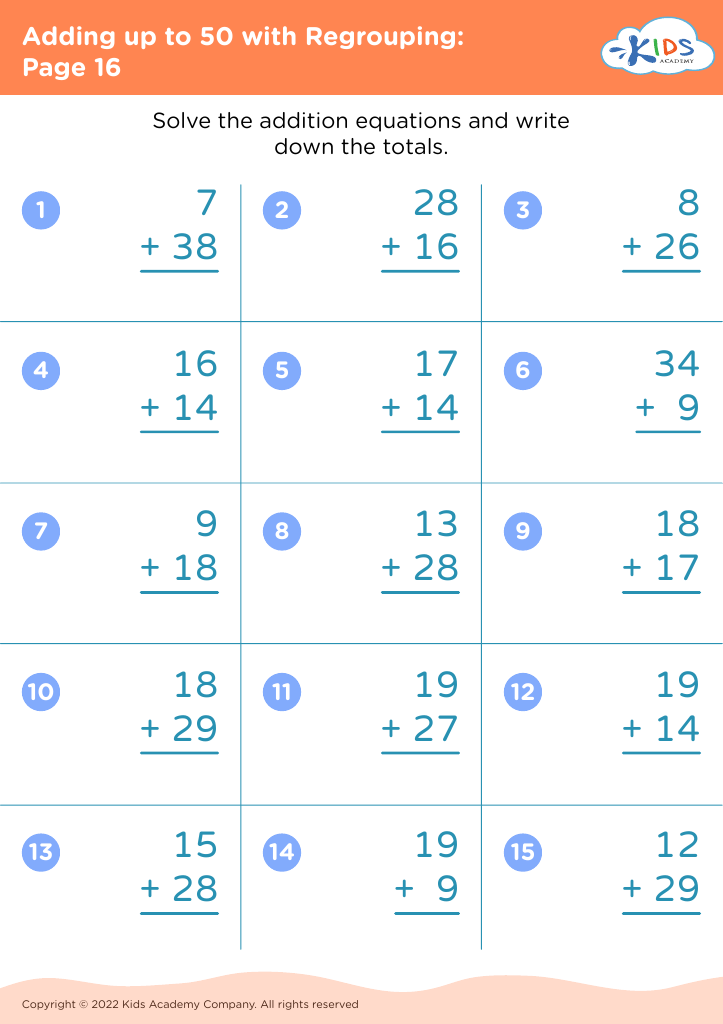
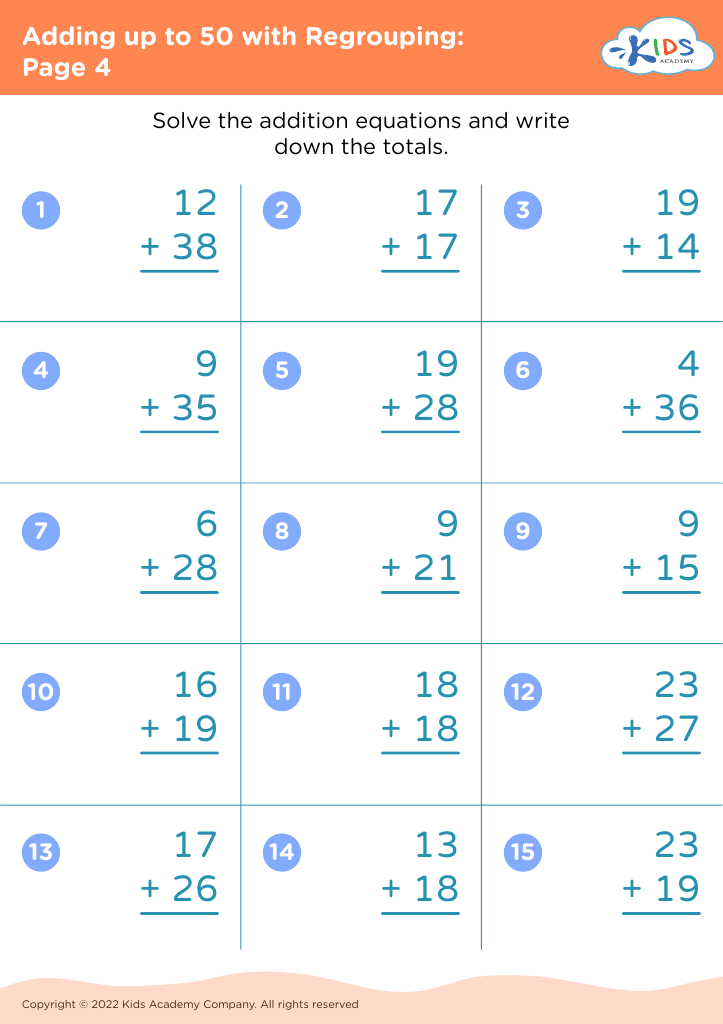
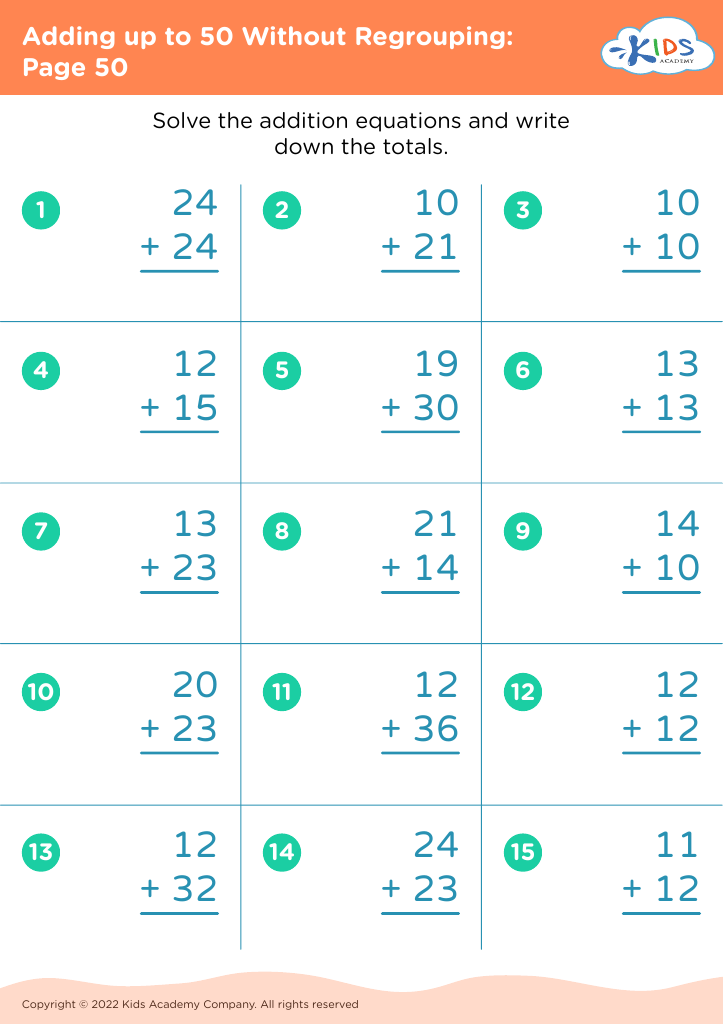
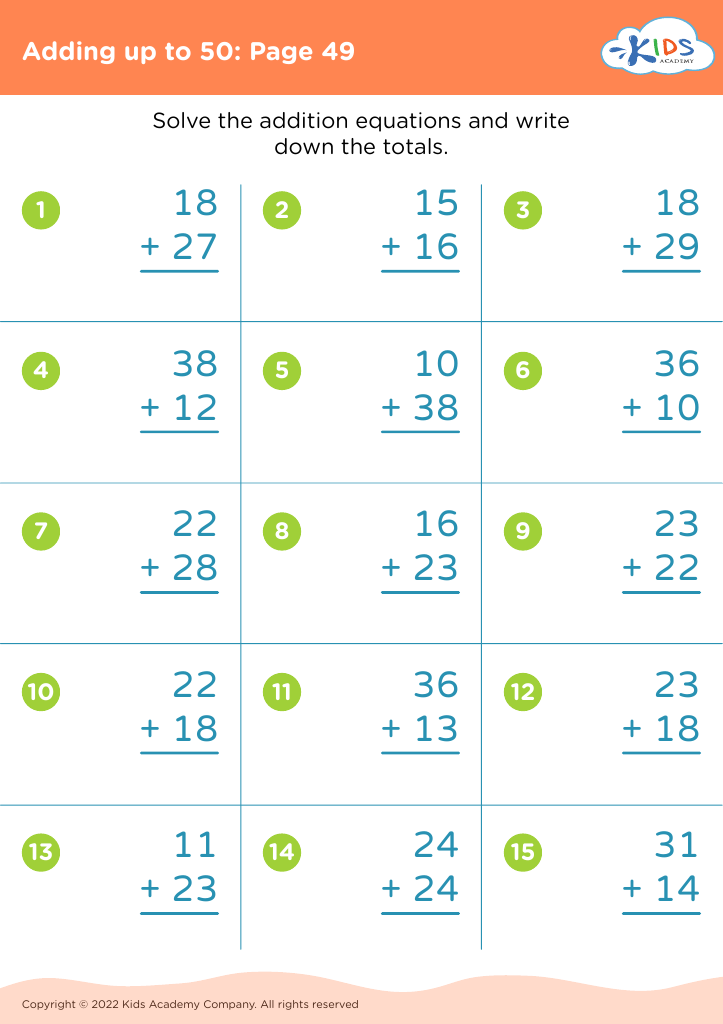
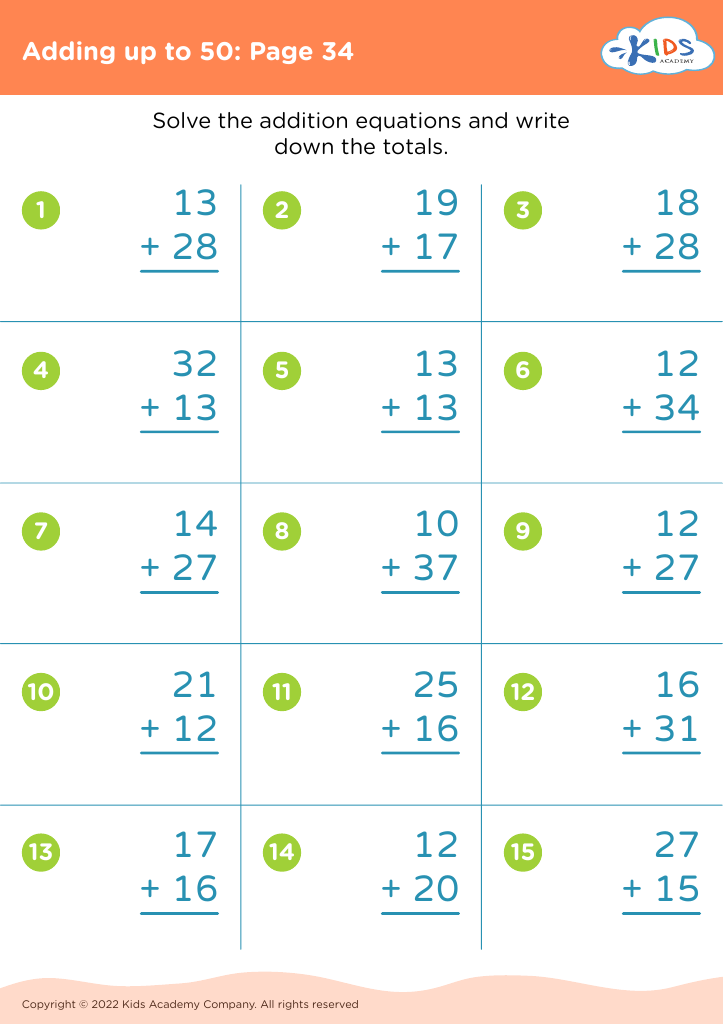




Understanding fractions and the concept of adding up to 50 are foundational skills that serve as building blocks for mathematical learning in children ages 5-7. First, mastering fractions helps children to grasp the idea of parts constituting a whole, a concept relevant in both daily life and advanced mathematics. It nurtures critical thinking as children learn to compare different fractions and understand relationships among them.
Moreover, adding up to 50 introduces children to basic addition skills, reinforcing number sense and promoting confidence in their mathematical abilities. At this age, developing these skills fosters foundational numeracy that supports later learning in math, as they transition to more complex concepts like multiplication or fractions beyond halves and quarters.
Teachers and parents play an essential role by creating engaging, hands-on activities that can make fractions and addition relatable—whether through sharing pizzas, dividing toys, or organizing groups during play. Additionally, integrating these skills in practical contexts encourages young learners to see mathematics as a vital part of life. By paying attention to these topics, adults can better support a child’s academic development, self-esteem, and problem-solving abilities—setting the stage for lifelong learning in mathematics.








