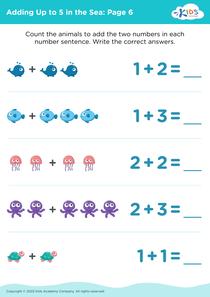
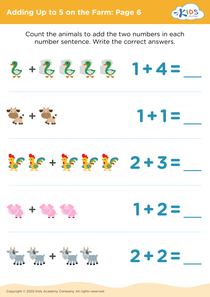
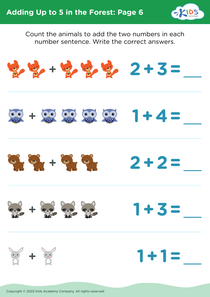
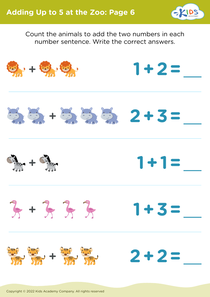
Basic Addition Skills Adding with Busy Bugs Worksheets for Ages 5-7 - Page 2
34 filtered results
-
From - To
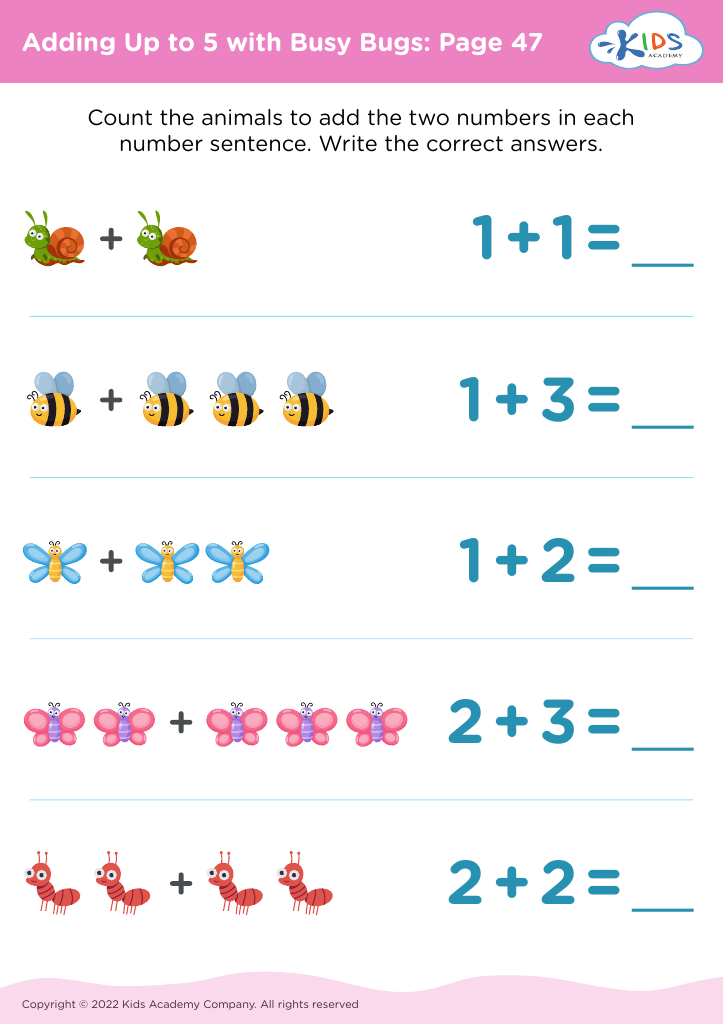
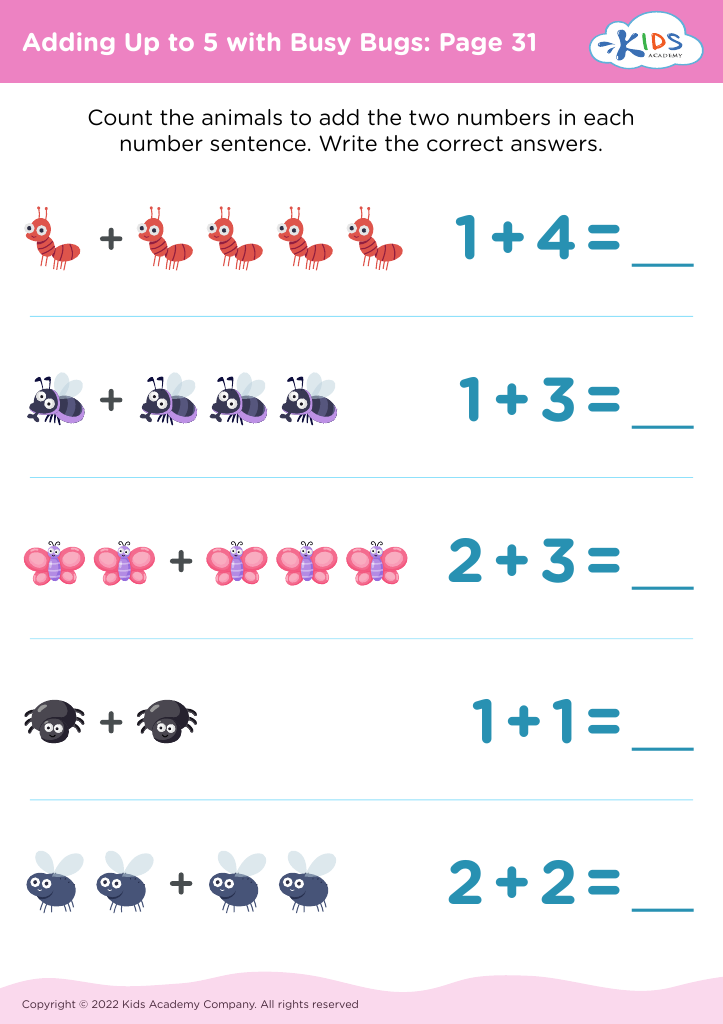
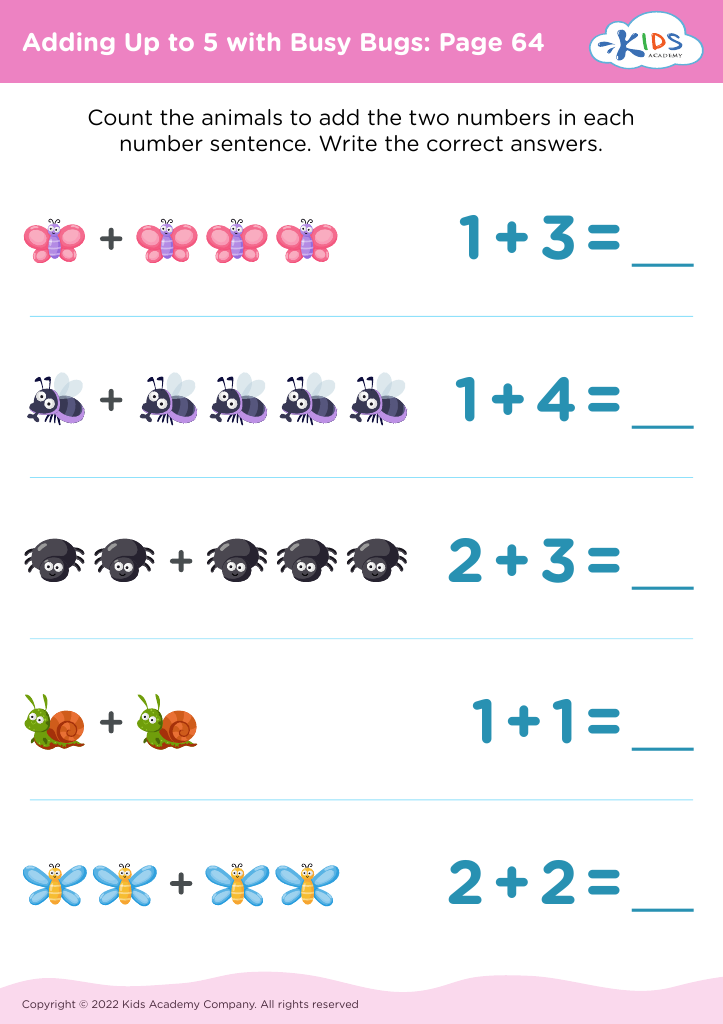
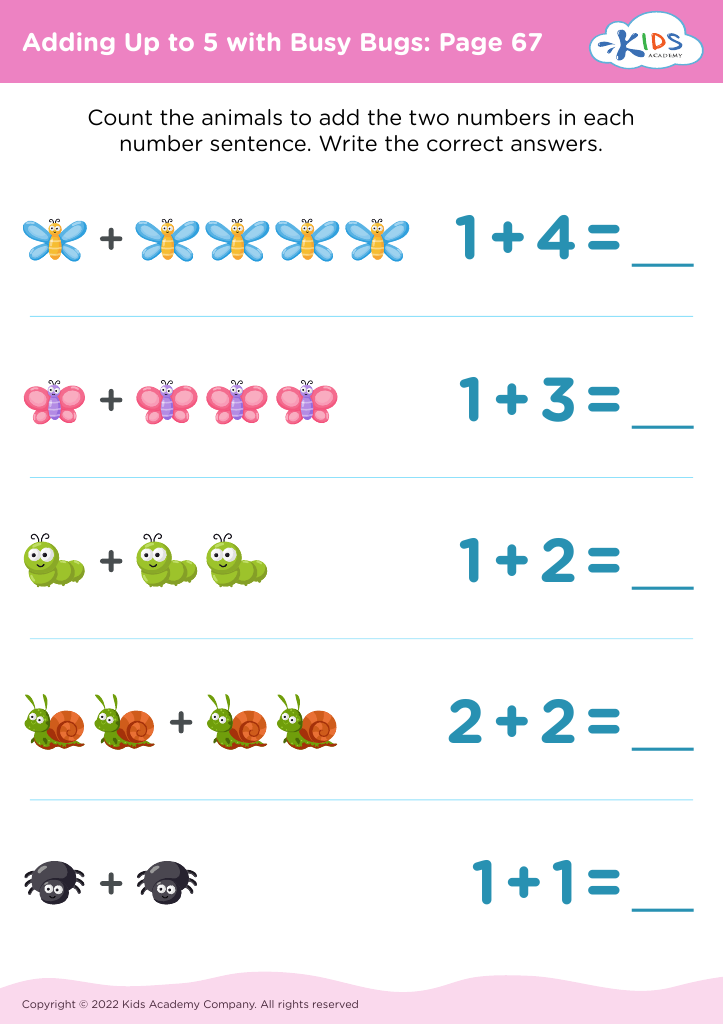
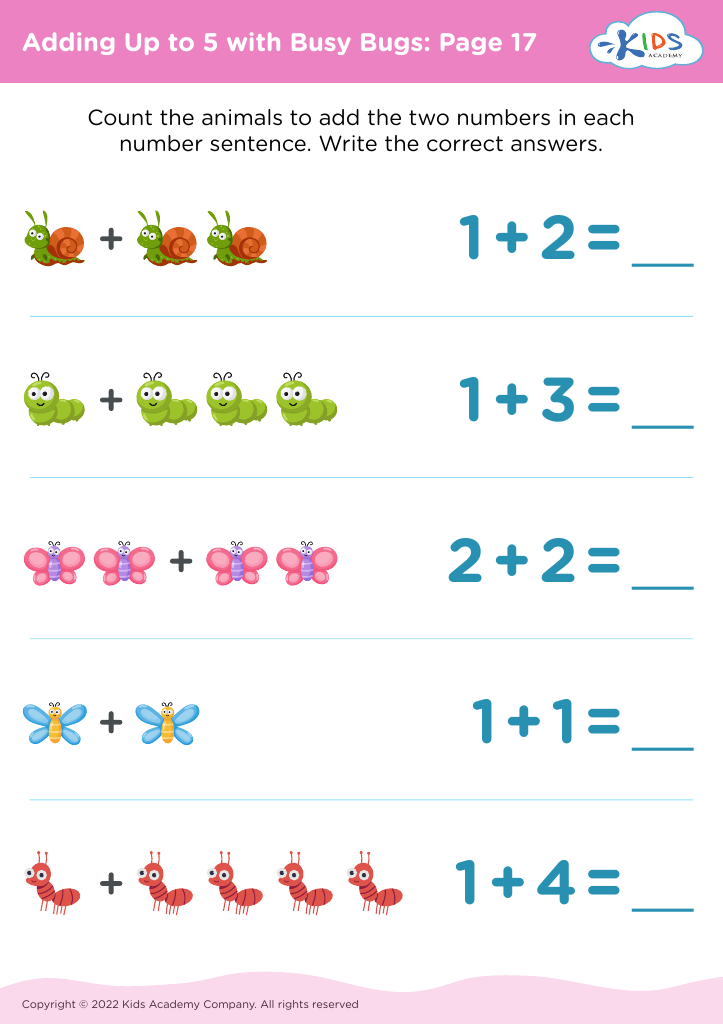
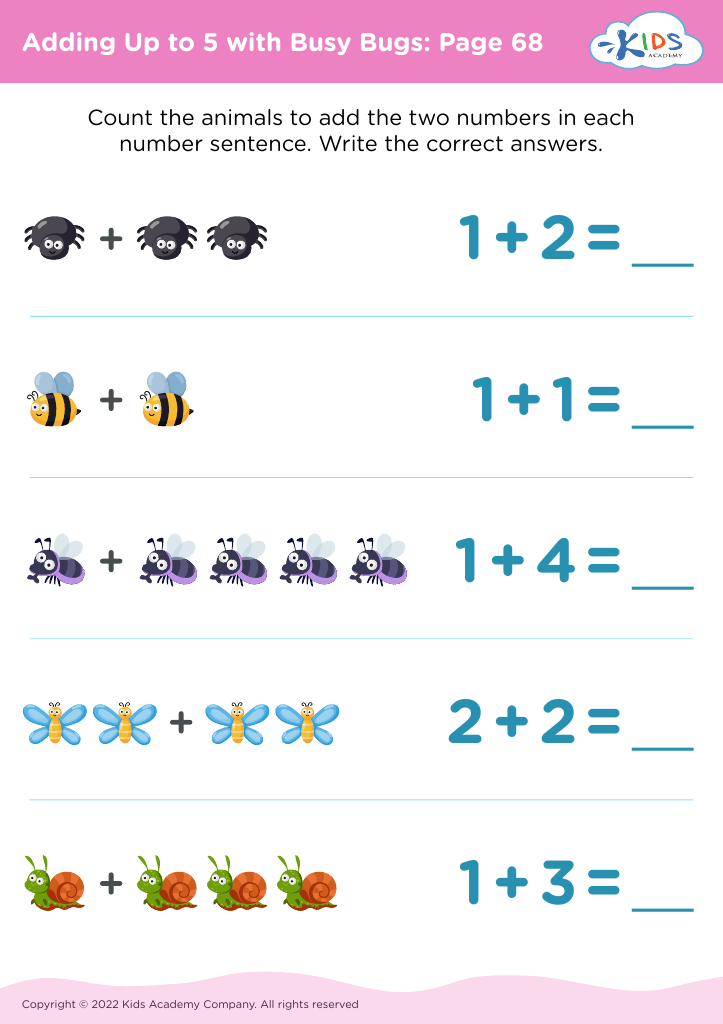
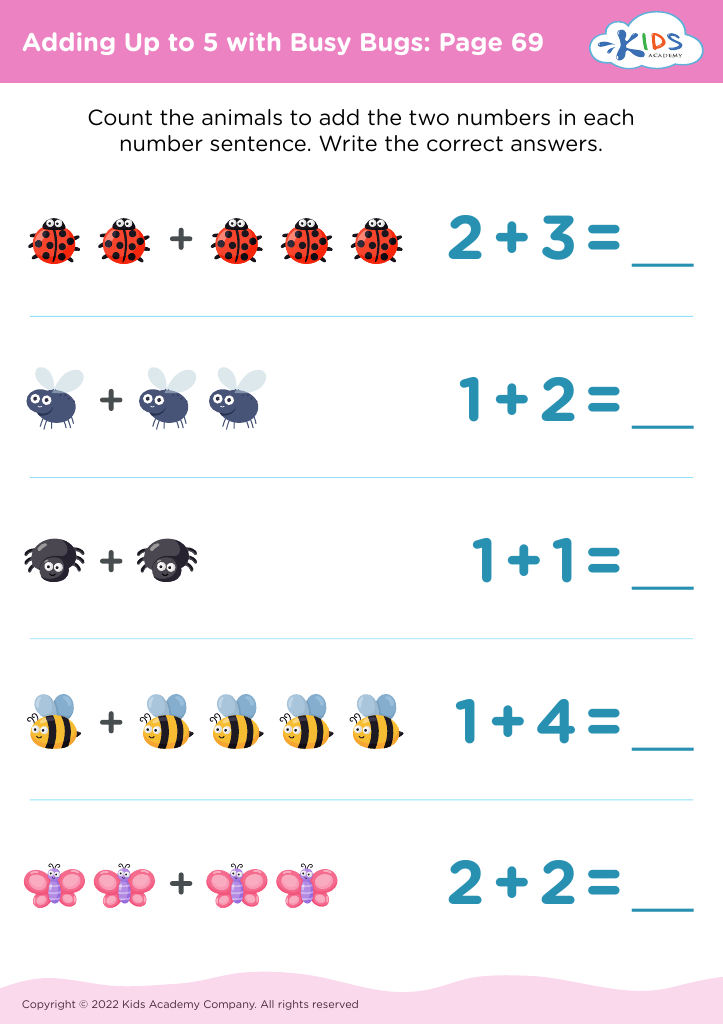
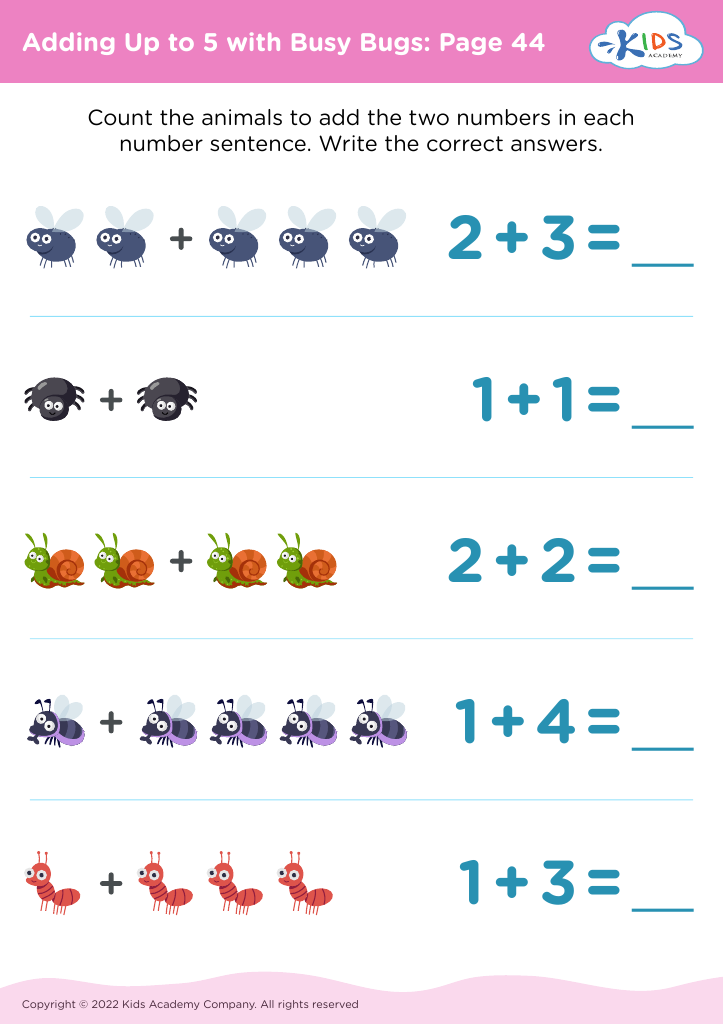
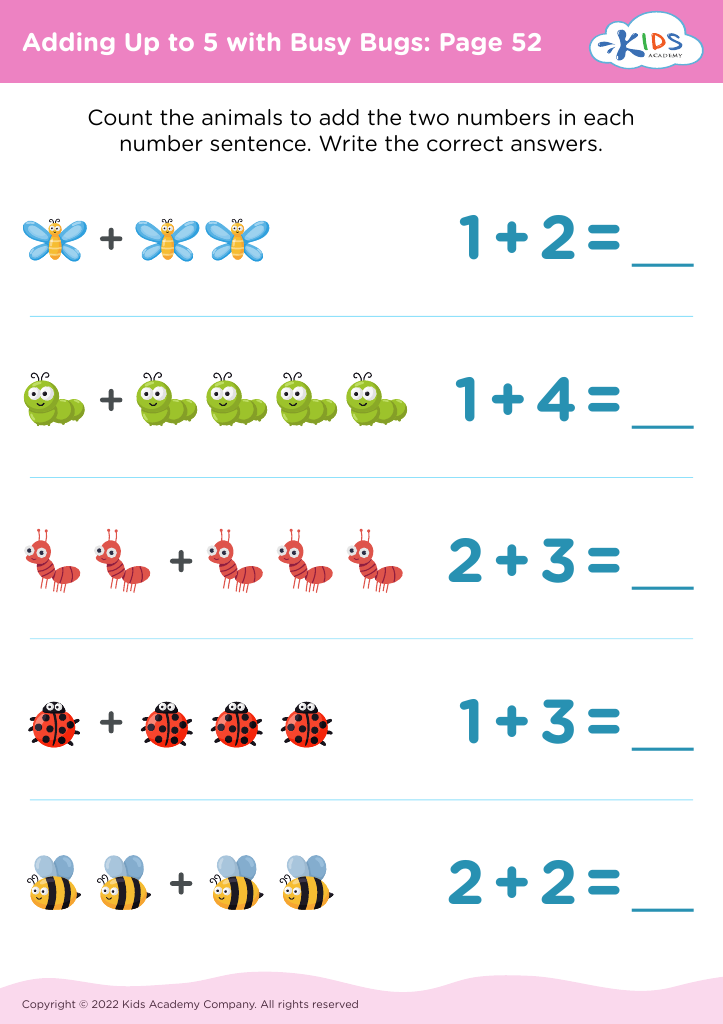
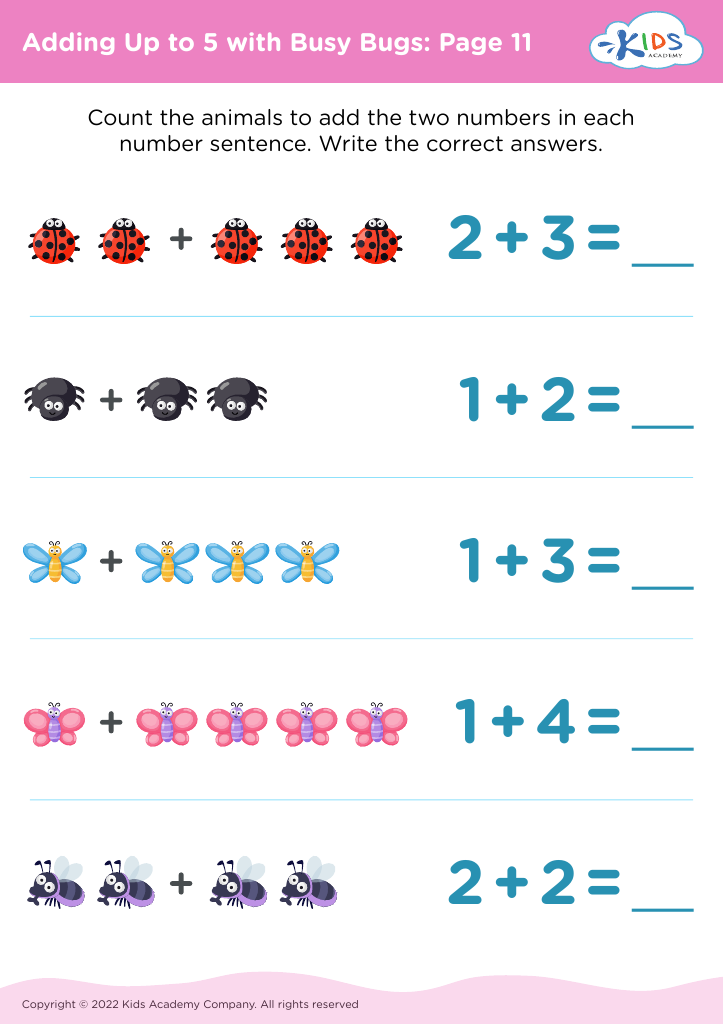



Parents and teachers should prioritize basic addition skills, such as those taught using the "Busy Bugs" approach for children aged 5-7, because these foundational skills are crucial for later mathematical understanding and problem-solving. Children at this age are naturally curious and responsive to engaging, interactive learning methods, making the use of vibrant characters like Busy Bugs an effective strategy.
Learning addition through playful and relatable scenarios fosters a positive attitude toward math, which can combat anxiety and aversion common in later grades. The incorporation of visual aids and hands-on activities through characters allows children to grasp abstract concepts in a concrete manner, enhancing retention. Additionally, these skills pave the way for more complex mathematical operations, critical thinking, and daily life applications.
Moreover, early mastery of basic addition supports cognitive development, improving focus and attention through structured play. As children achieve small milestones in their learning, they gain confidence, encouraging a lifelong love for learning. Ultimately, emphasizing basic addition skills aligns with parents' and teachers' goals of nurturing well-rounded, capable individuals ready to tackle future academic challenges. Investing in these skills at an early age lays the groundwork for children's success both in school and beyond.