Filters

157 filtered results

Clear all filters
Favorites
With answer key
Interactive

157 filtered results

Difficulty Level

Grade


Check out this FREE Trial Lesson on Addition & Subtraction for age 5-7!

Match Objects that Fit Together

Favorites
With answer key
Interactive
  • 5-7
  • Addition Practice
  • Addition & Subtraction
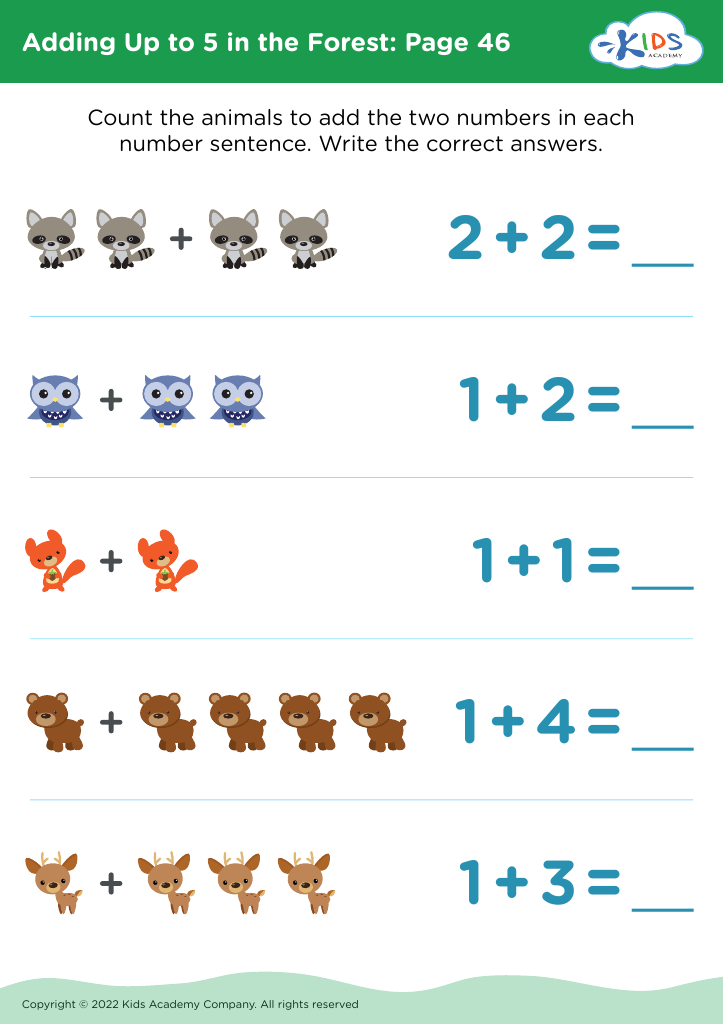
Adding Up to 5 in the Forest: Page 46
Worksheet
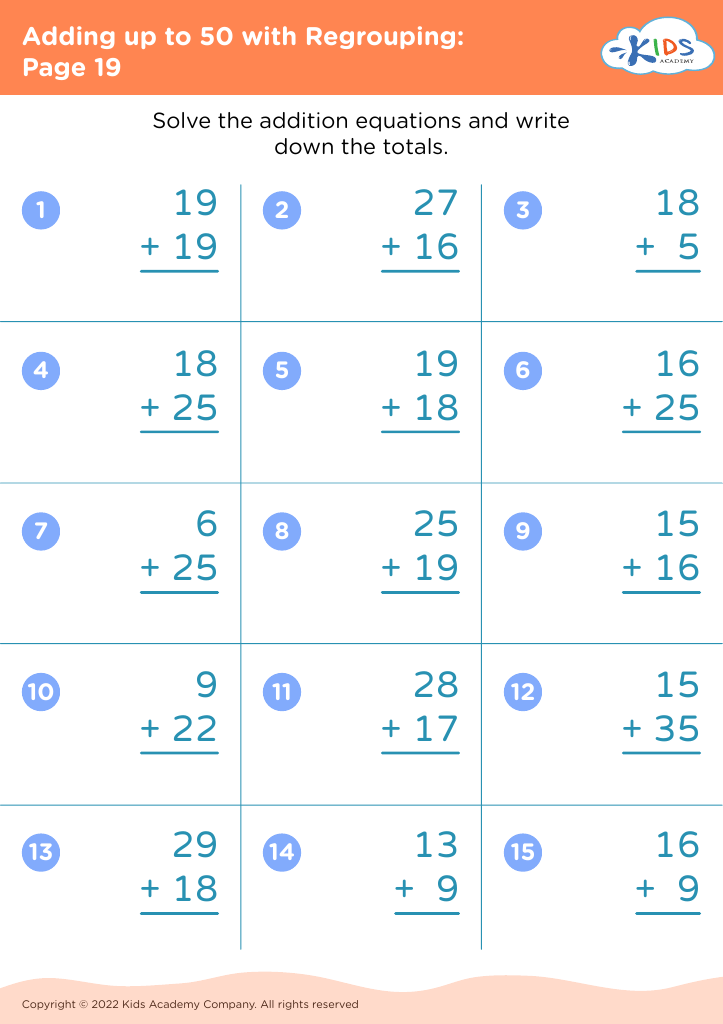
Adding up to 50 with Regrouping: Page 19
Worksheet
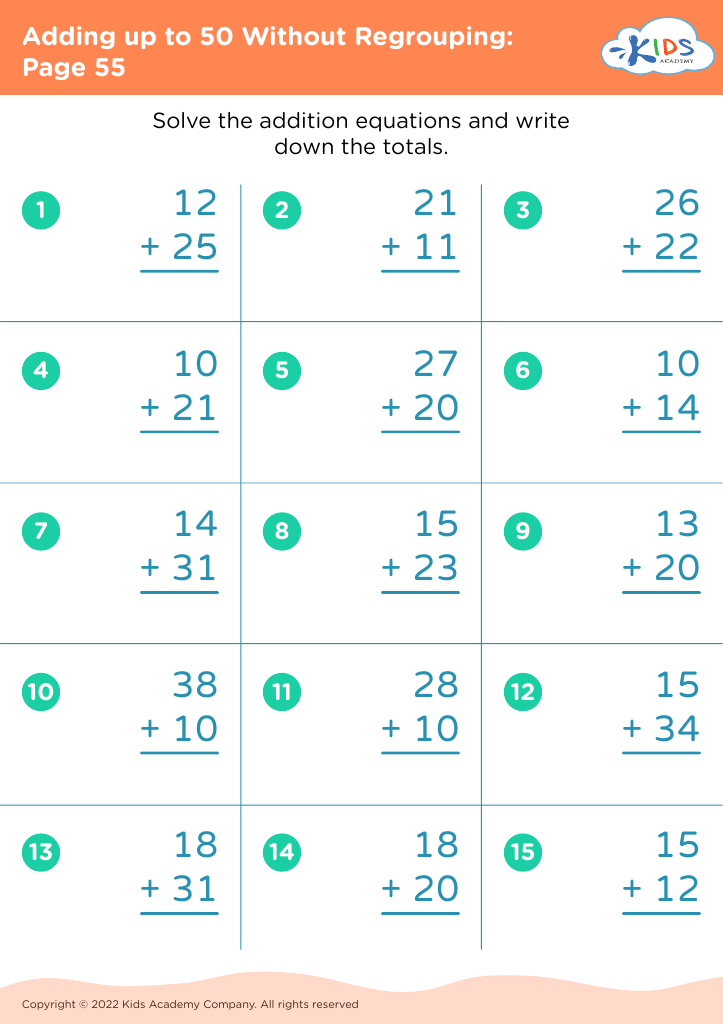
Adding up to 50 Without Regrouping: Page 55
Worksheet
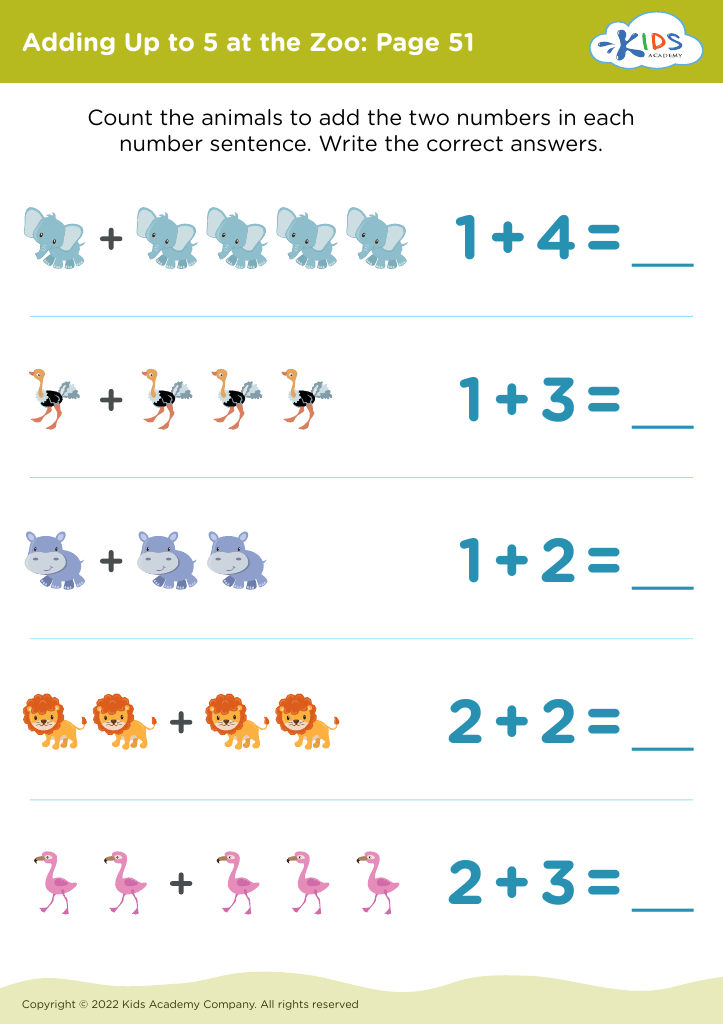
Adding Up to 5 at the Zoo: Page 51
Worksheet
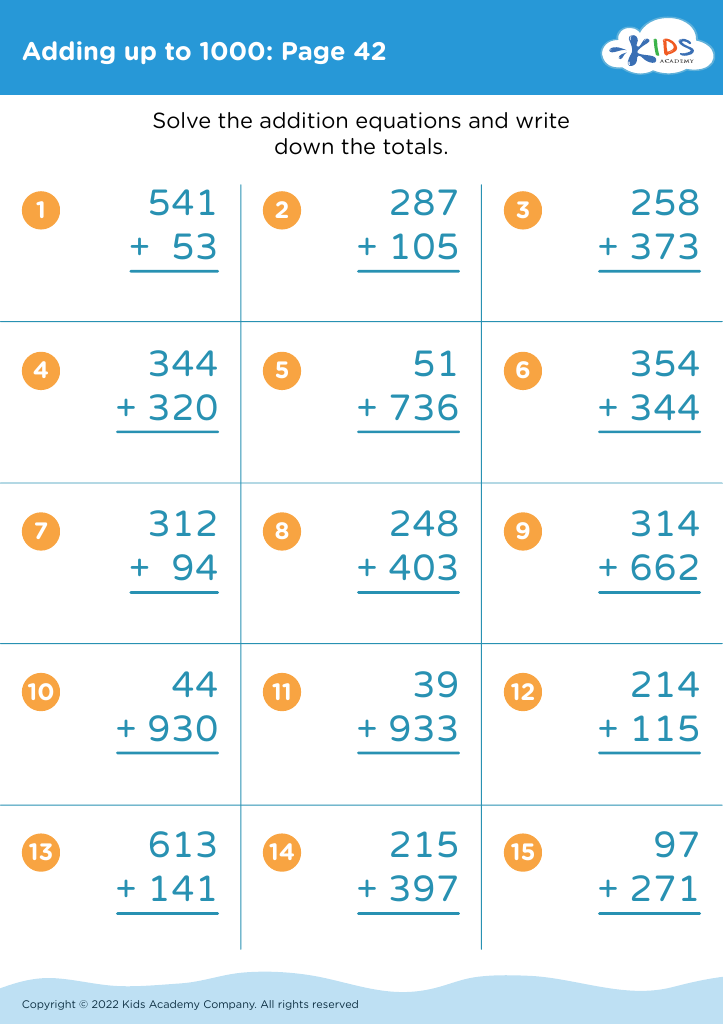
Adding up to 1000: Page 42

Adding up to 1000: Page 42

Adding up to 1000: Page 42
Worksheet
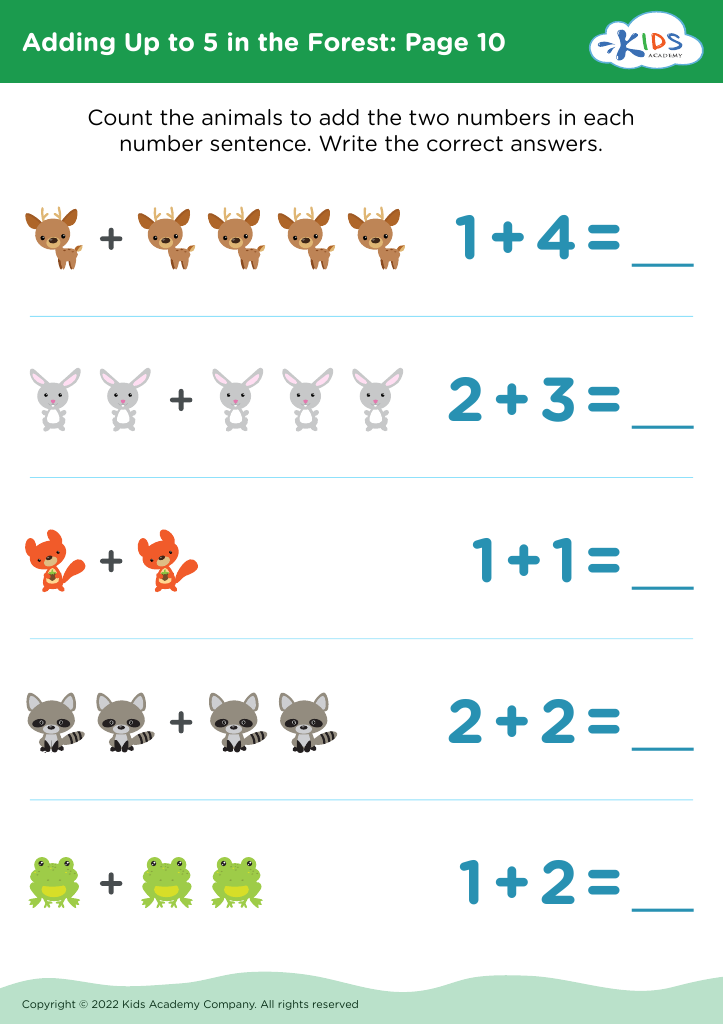
Adding Up to 5 in the Forest: Page 10
Worksheet
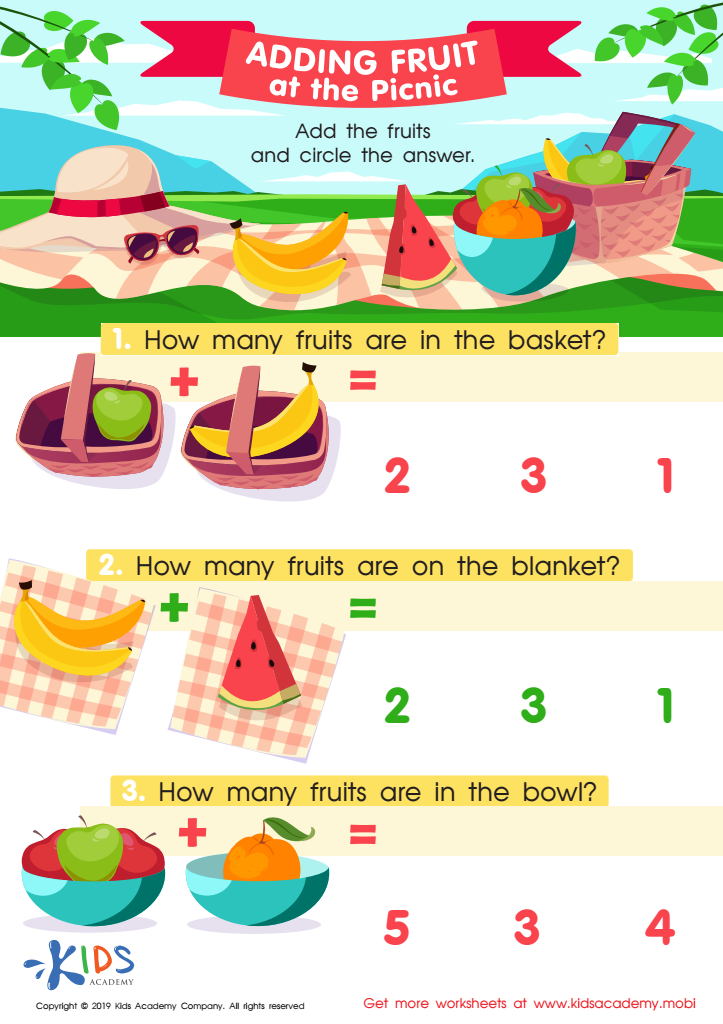
Adding Fruit at the Picnic Worksheet

Adding Fruit at the Picnic Worksheet

Picnics are a great way for the family to enjoy a fun day in the sun! Get your kids involved by having them help load the picnic basket and do this worksheet to practice their math skills while they get ready. Identify the fruits in the picture, add them up, and circle the correct answer.
Adding Fruit at the Picnic Worksheet
Worksheet
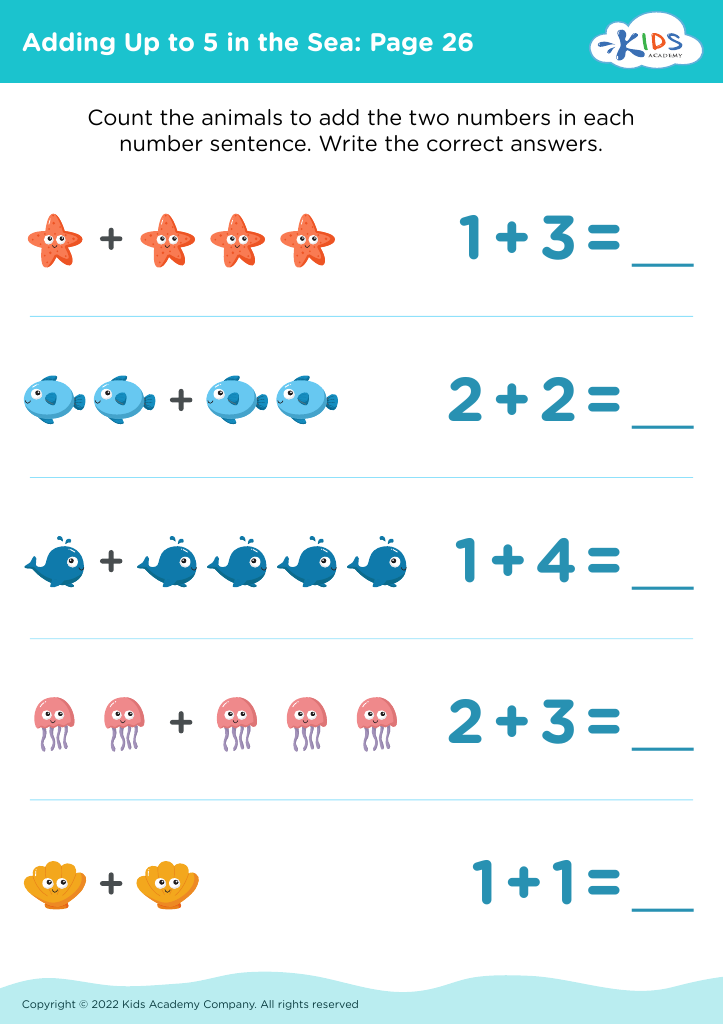
Adding Up to 5 in the Sea: Page 26
Worksheet
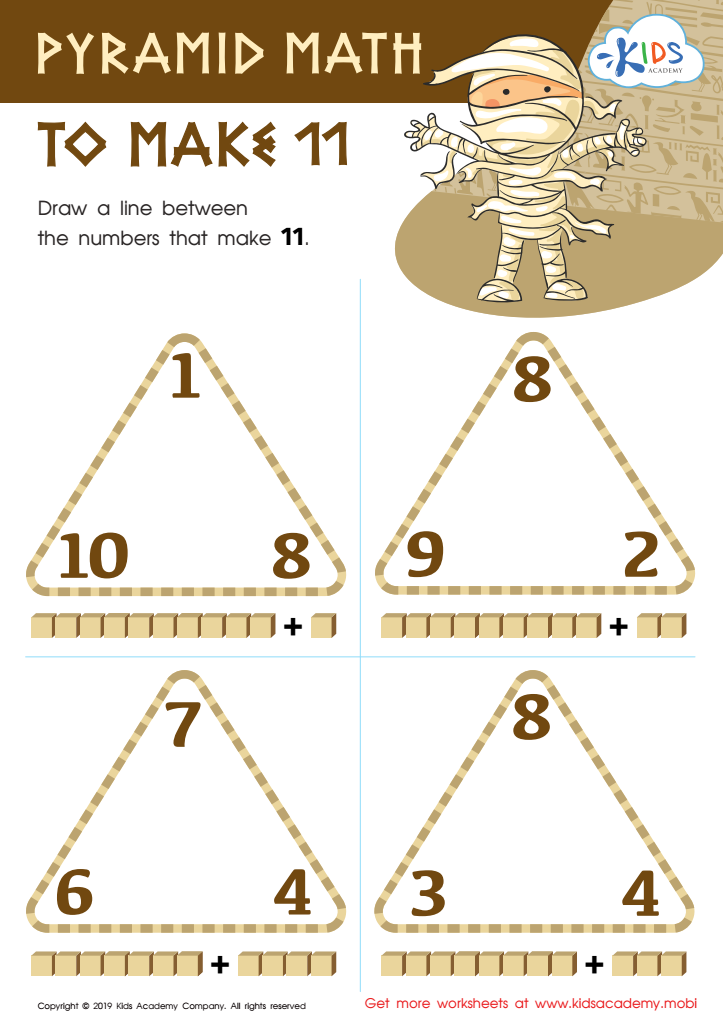
Pyramid Math to Make 11 Worksheet

Pyramid Math to Make 11 Worksheet

Have your kids look at the picture of the Egyptian pyramids and tell you what they see. Then, help them do simple math by adding up the numbers in the pyramids and connecting those that make 11. This worksheet is perfect for teaching your kids about history, mathematics, and problem-solving.
Pyramid Math to Make 11 Worksheet

Worksheet
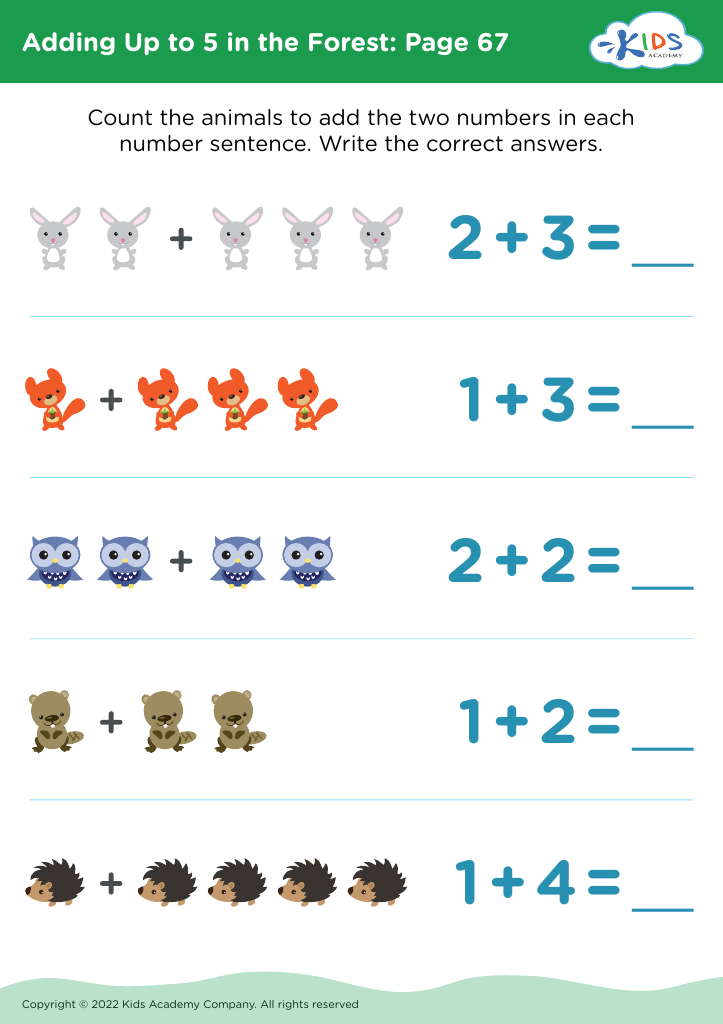
Adding Up to 5 in the Forest: Page 67
Worksheet
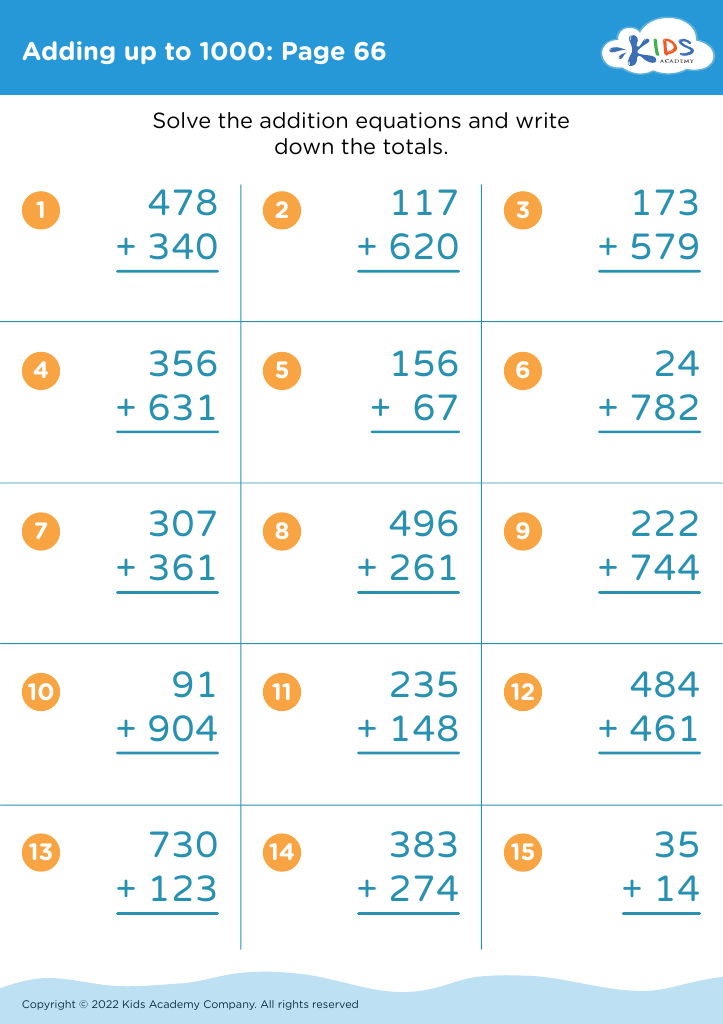
Adding up to 1000: Page 66

Adding up to 1000: Page 66

Adding up to 1000: Page 66
Worksheet
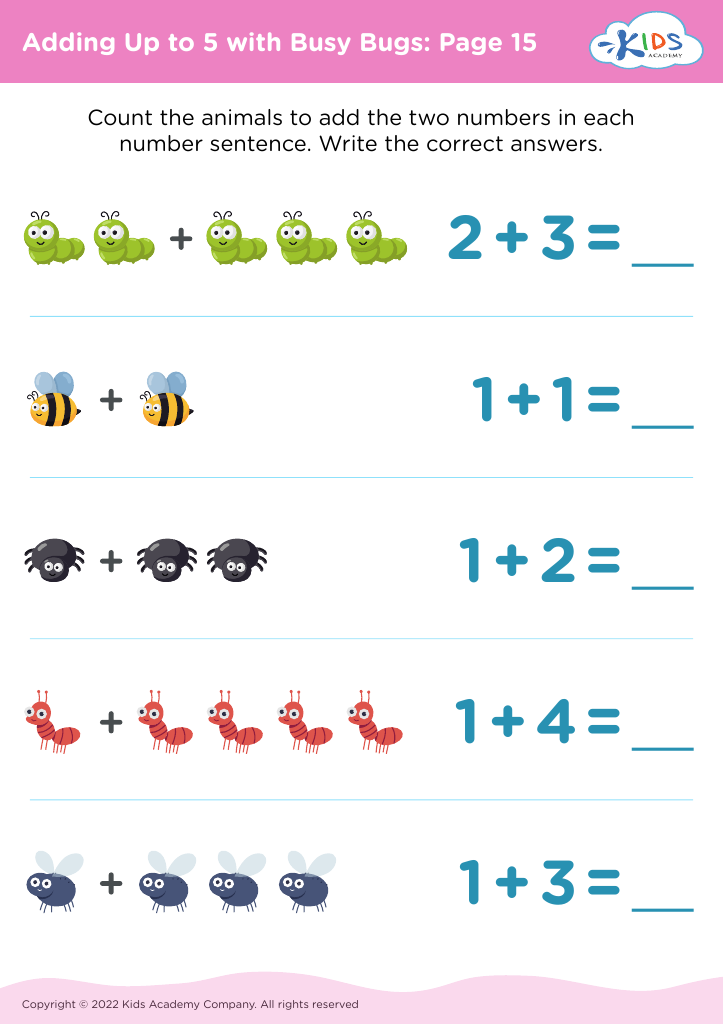
Adding Up to 5 with Busy Bugs: Page 15
Worksheet
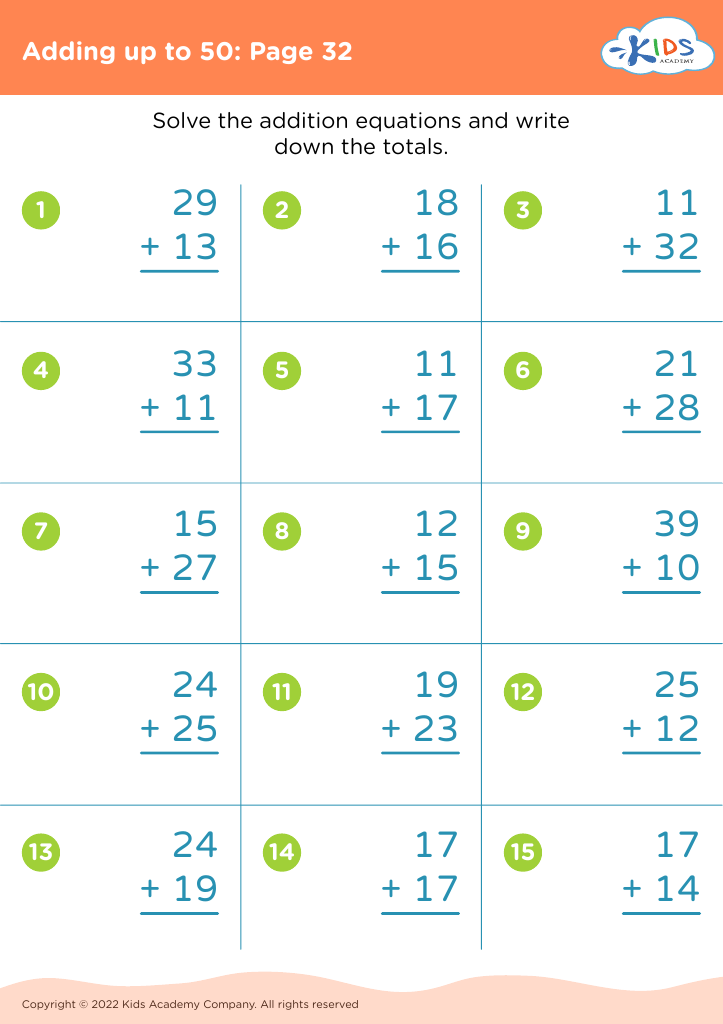
Adding up to 50: Page 32

Adding up to 50: Page 32

Adding up to 50: Page 32
Worksheet


... 6 7

Parents and teachers should care about practicing addition and subtraction for children aged 5-7 because these foundational math skills are critical for their overall academic development and future mathematical understanding. At this age, children are in a stage termed "concrete operational" by psychologist Jean Piaget, where they begin to understand logical operations and use reasoning grounded in concrete objects and experiences.

Practicing addition and subtraction enhances a child’s number sense, improving their ability to recognize numbers, understand quantities, and comprehend mathematical relationships. These skills are cumulative; early mastery can make advanced arithmetic concepts less daunting. Strong addition and subtraction abilities also support problem-solving and analytical thinking, traits valuable far beyond the math classroom.

Moreover, success in these basic operations builds mathematical confidence and a positive attitude towards learning, creating a supportive environment for educational growth. Parents and teachers modeling enthusiasm for these subjects can inspire similar attitudes in children, making learning engaging and enjoyable.

Therefore, regular practice in these areas not only prepares children for higher-level mathematics but also contributes to broader cognitive development and academic success, laying the groundwork for a lifelong positive interaction with learning and problem-solving.