Enhance vocabulary skills Addition & Subtraction Worksheets for Ages 5-7
4 filtered results
-
From - To
Boost your child's vocabulary and math skills with our engaging Addition & Subtraction Worksheets designed for ages 5-7. These interactive worksheets not only reinforce fundamental math concepts but also promote language development through visual aids and context-rich problems. As children navigate through various exercises, they’ll encounter new terms and phrases that enhance their understanding of both mathematics and everyday language. Perfect for early learners, our resources combine fun with education, making learning a delightful experience. Help your child strengthen their vocabulary and numeracy skills today with our thoughtfully crafted materials that are a stepping stone to future academic success!
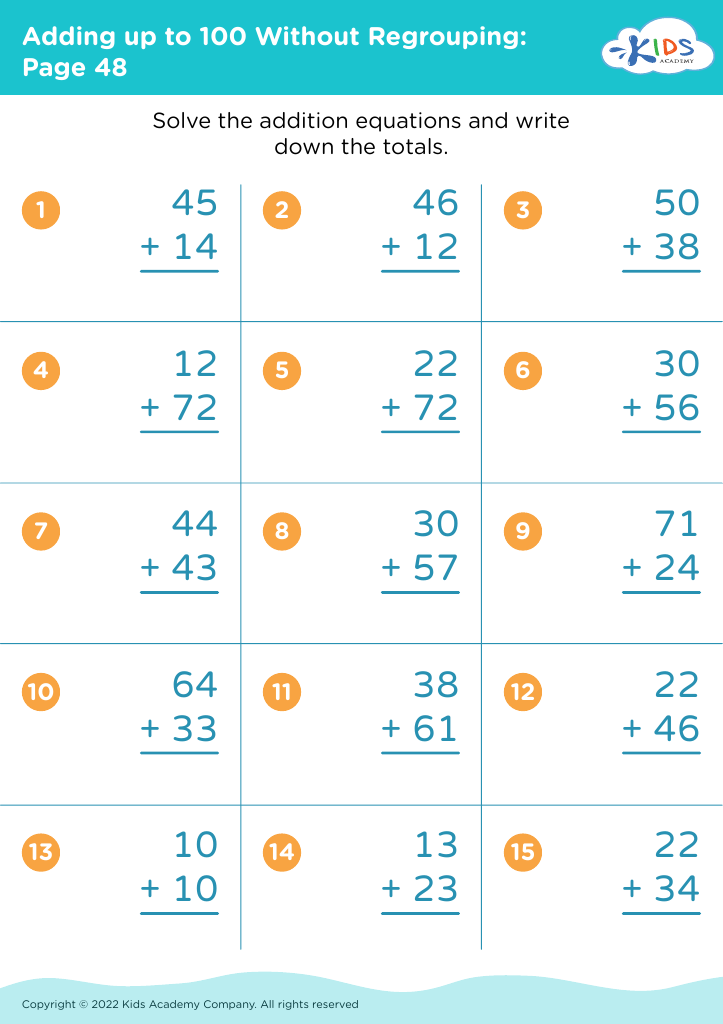
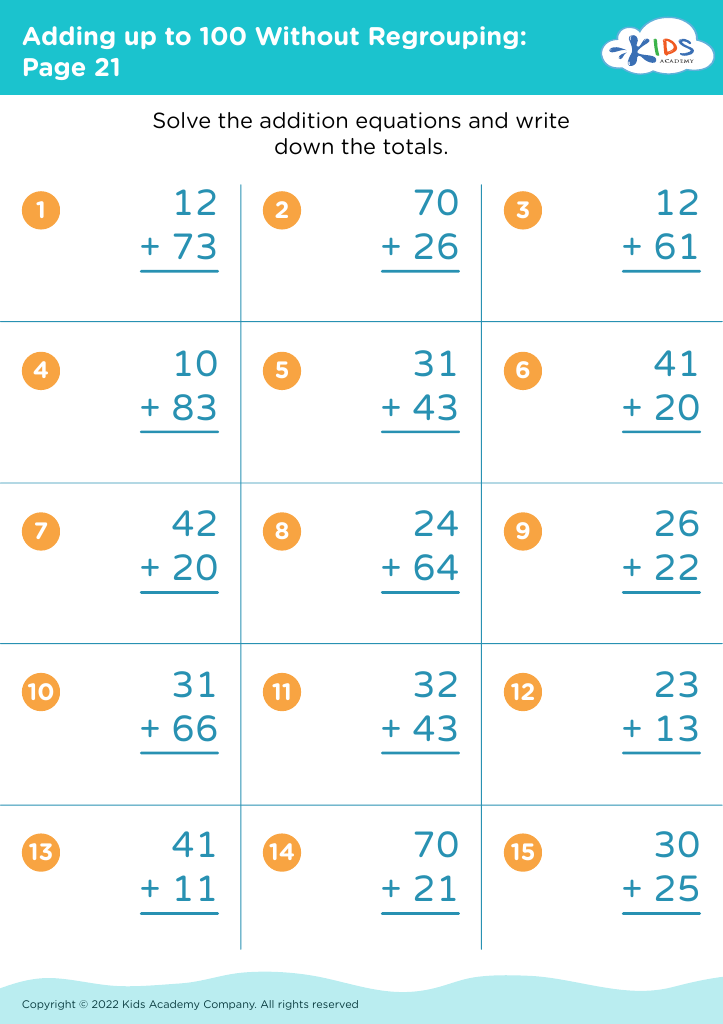
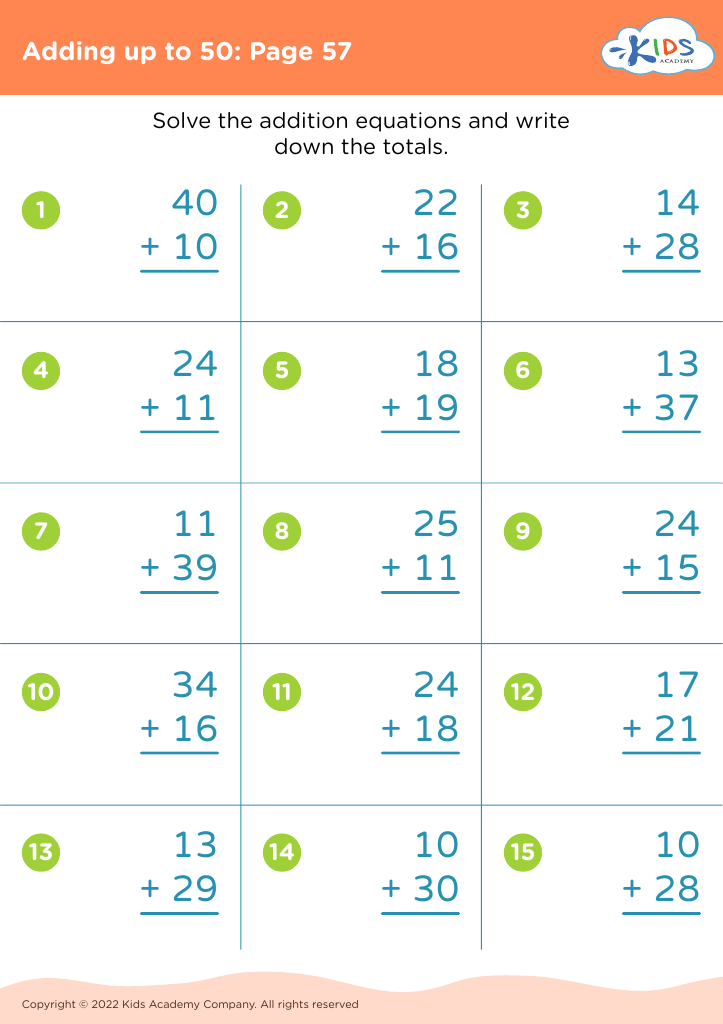
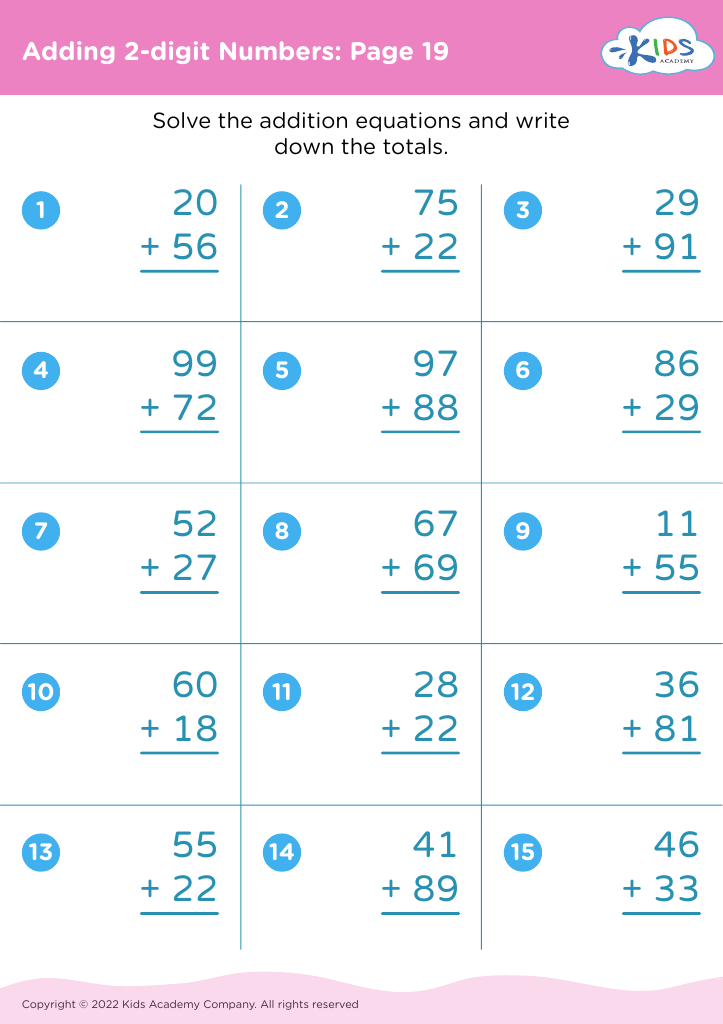








Parents and teachers should prioritize enhancing vocabulary skills in addition to mastering basic addition and subtraction for children aged 5-7 because these skills are foundational for future academic success and overall cognitive development. A strong vocabulary helps children understand mathematical language, making them more adept at grasping concepts. As they learn to describe their thought processes and problem-solving strategies, they become more engaged and confident in their mathematical abilities.
Furthermore, vocabulary development enhances children’s ability to follow instructions and seek help when needed, leading to better classroom participation and communication with peers. Engaging in discussions about numbers, quantities, and relationships expands a child's understanding of math beyond mere calculation; it fosters critical thinking and reasoning skills.
Inclusion of vocabulary in math education also supports literacy development, as many terms overlap between the two subjects. This dual approach not only reinforces learning but also makes it more enjoyable. When parents and teachers model word usage in math contexts, they help children build a robust mental framework. Ultimately, enhancing vocabulary around addition and subtraction equips young learners with the skills necessary to tackle more complex concepts in the future, paving the way for academic success across subjects.








