Environmental awareness Addition & Subtraction Worksheets for Ages 5-7
3 filtered results
-
From - To
Enhance your child’s math skills while fostering a love for the environment with our "Environmental Awareness Addition & Subtraction Worksheets for Ages 5-7." These engaging, eco-themed activities blend essential math practice with valuable lessons on environmental conservation. Children will enjoy solving problems related to recycling, wildlife, and nature while perfecting their addition and subtraction abilities. Each worksheet is designed by educational experts to be age-appropriate, ensuring that math becomes a fun, meaningful adventure. Encourage your young learner to connect numeracy with environmental stewardship, nurturing both academic ability and a caring attitude toward the planet. Empower your child with these interactive, educational worksheets today!
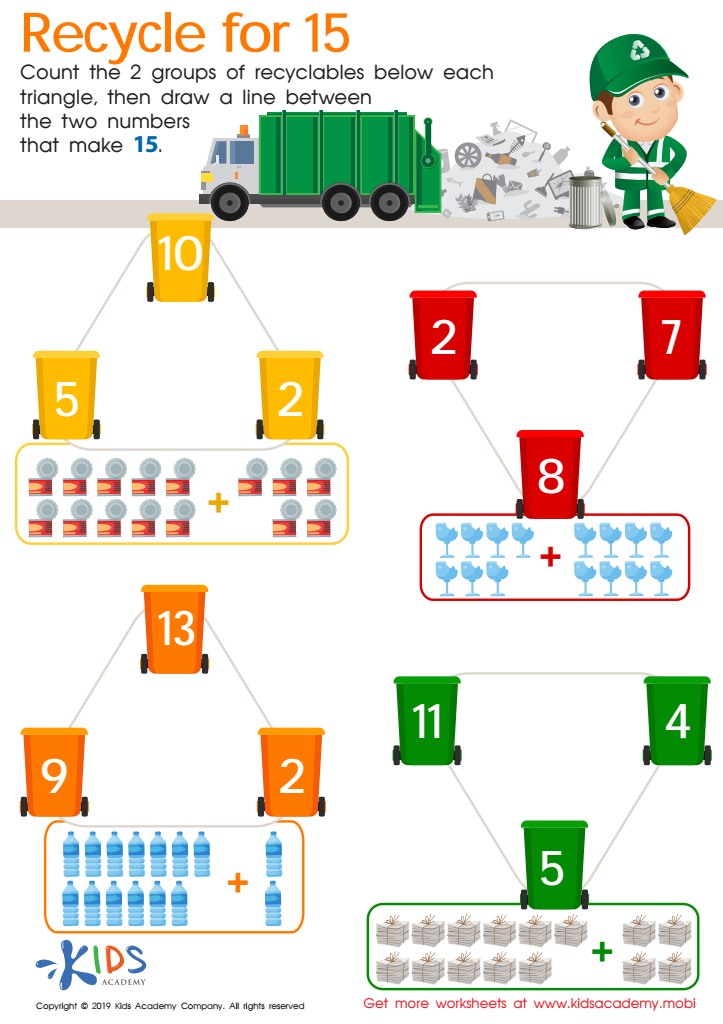
Recycle for 15 Worksheet
 Assign to My Students
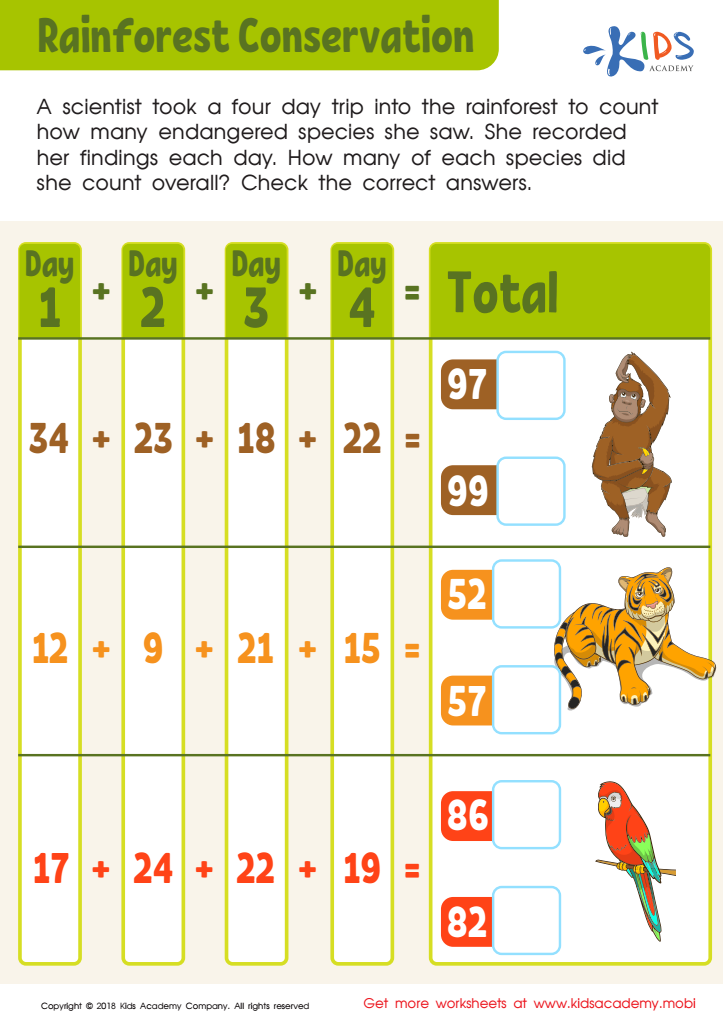
Rainforest Conservation Worksheet
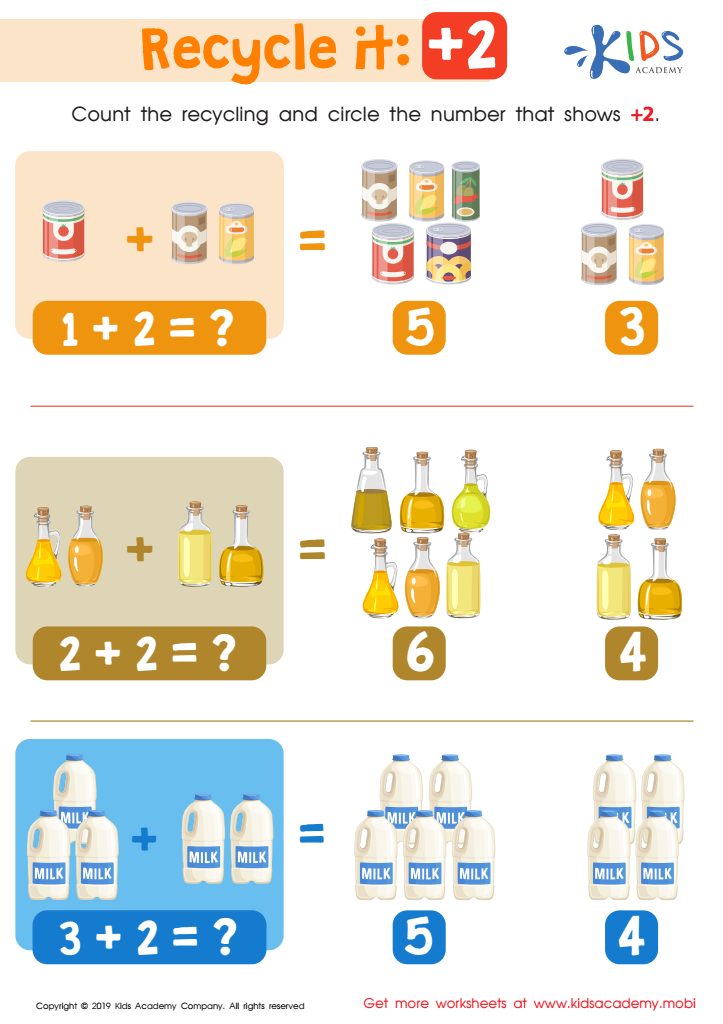
Recycle It: +2 Worksheet








Parents and teachers should care about environmental awareness in addition to foundational math skills like addition and subtraction for ages 5-7 because it cultivates well-rounded, responsible individuals. Young children absorb information rapidly, and early exposure to environmental consciousness fosters a sense of responsibility towards the planet. Teaching kids about recycling, conservation, and nature creates an early appreciation for the world around them. Incorporating these themes into lessons on addition and subtraction can make learning more relatable and engaging. For example, counting the number of recyclable items or adding the number of trees in a park connects math skills to real-world applications. This approach not only strengthens mathematical competence but also instills eco-friendly habits. Early education in environmental awareness can lead to sustainable behaviors that children carry into adulthood, multiplying their positive impact over a lifetime. Moreover, interlinking eco-consciousness with everyday subjects highlights the interconnectedness of various disciplines, making learning holistic. By merging environmental education with basic math, educators and parents equip children with the intellectual tools and moral frameworks needed for future challenges. This dual focus supports academic achievement and fosters informed, conscientious future citizens.








