Improve number recognition Addition & Subtraction Worksheets for Ages 5-7
15 filtered results
-
From - To
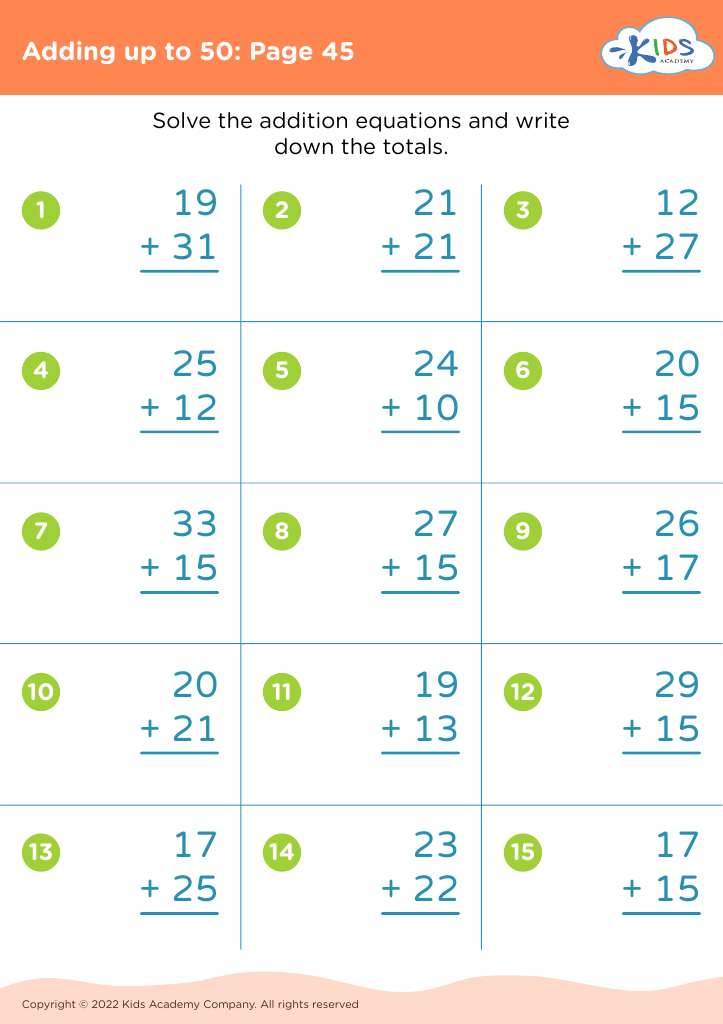
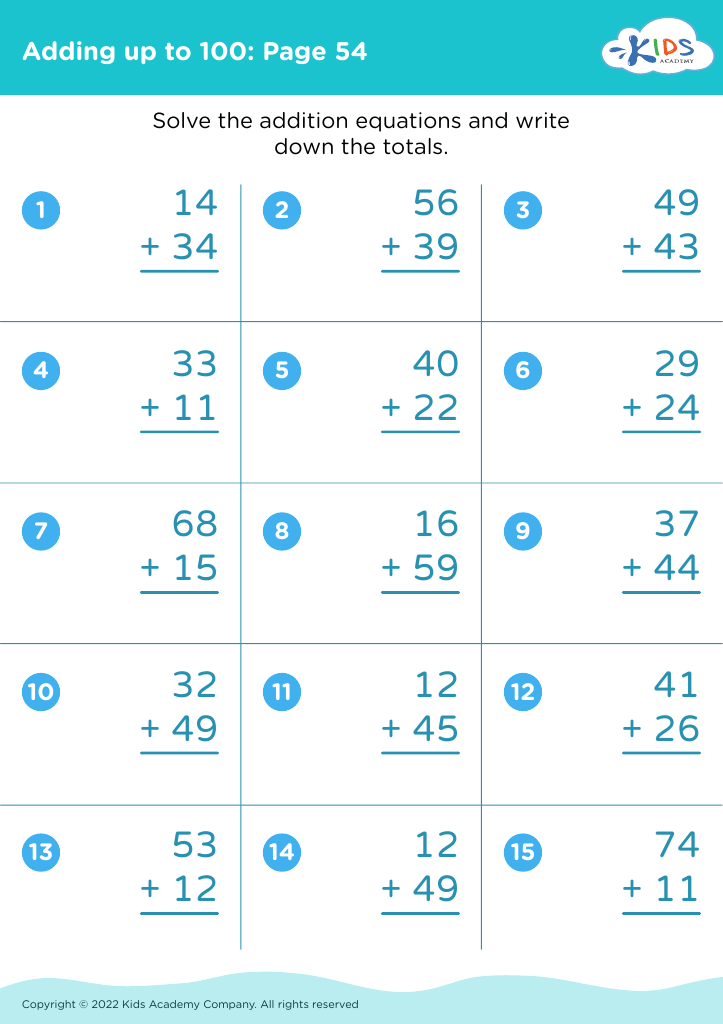
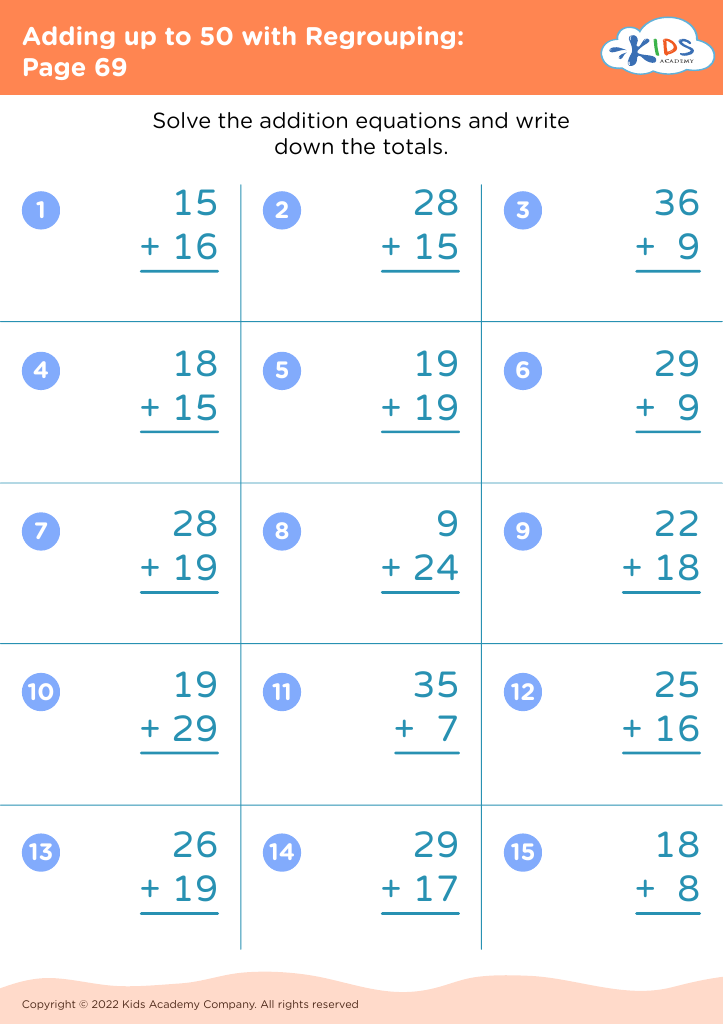
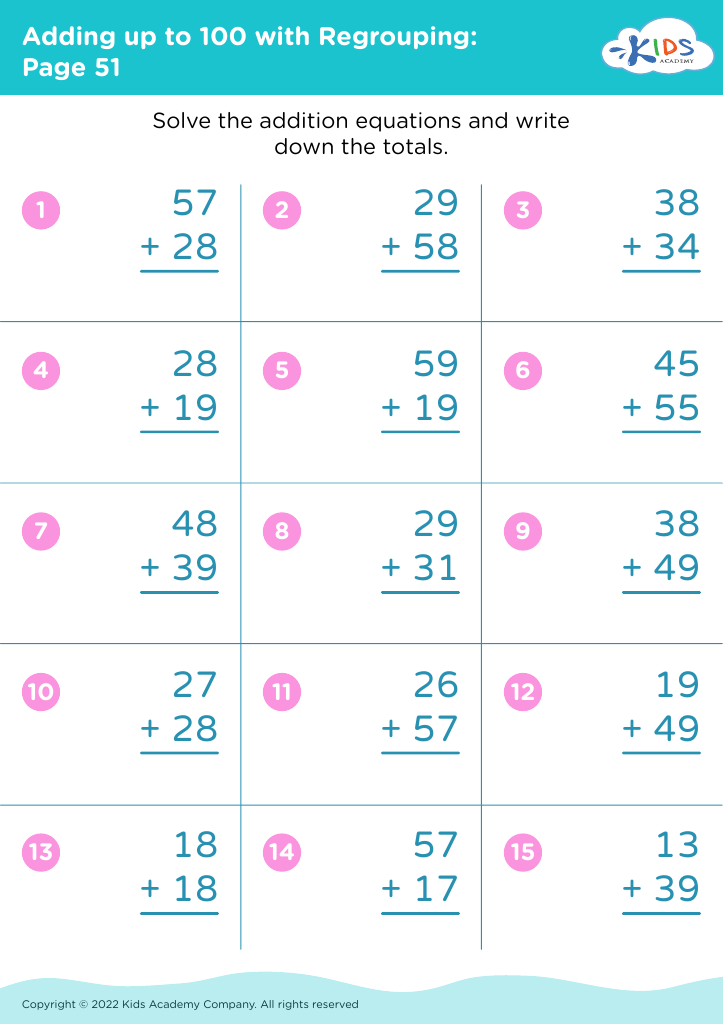
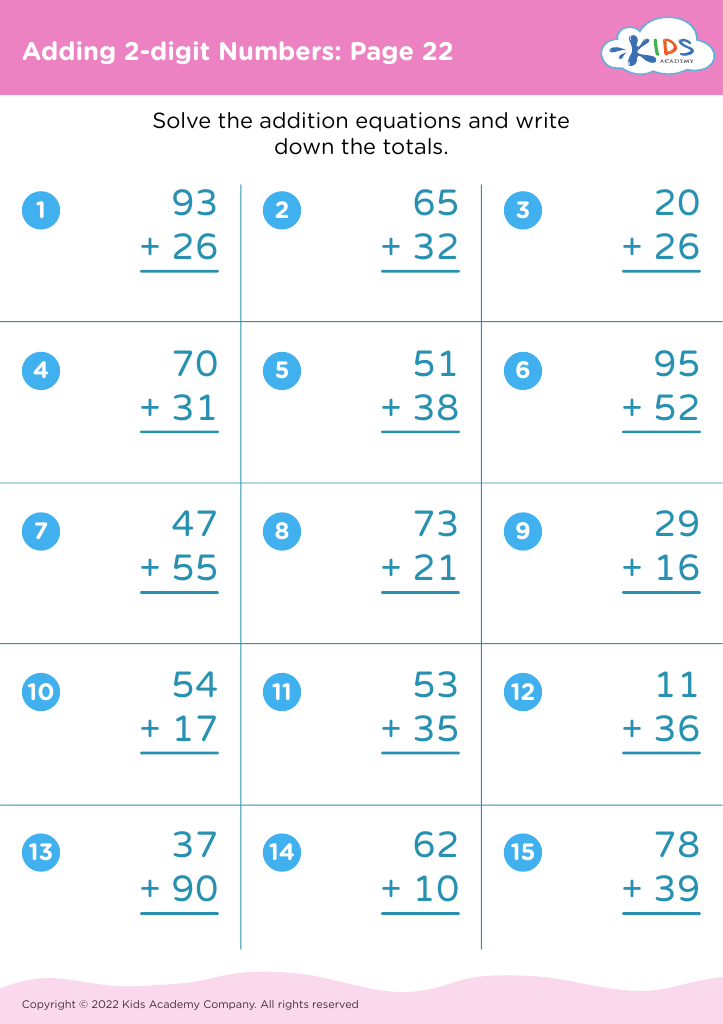
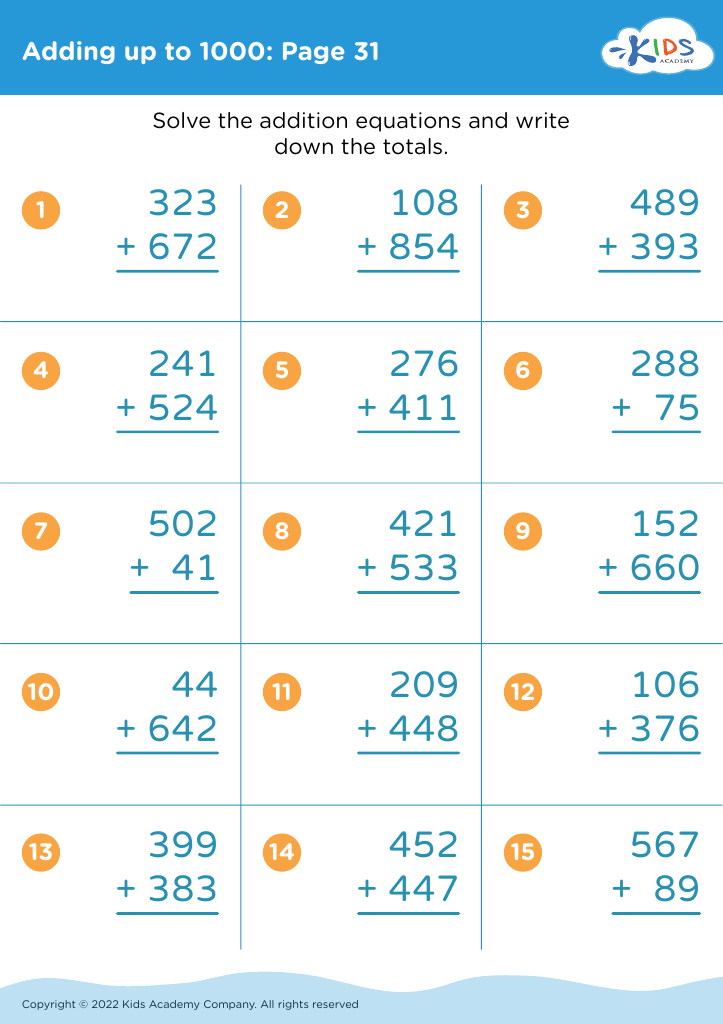
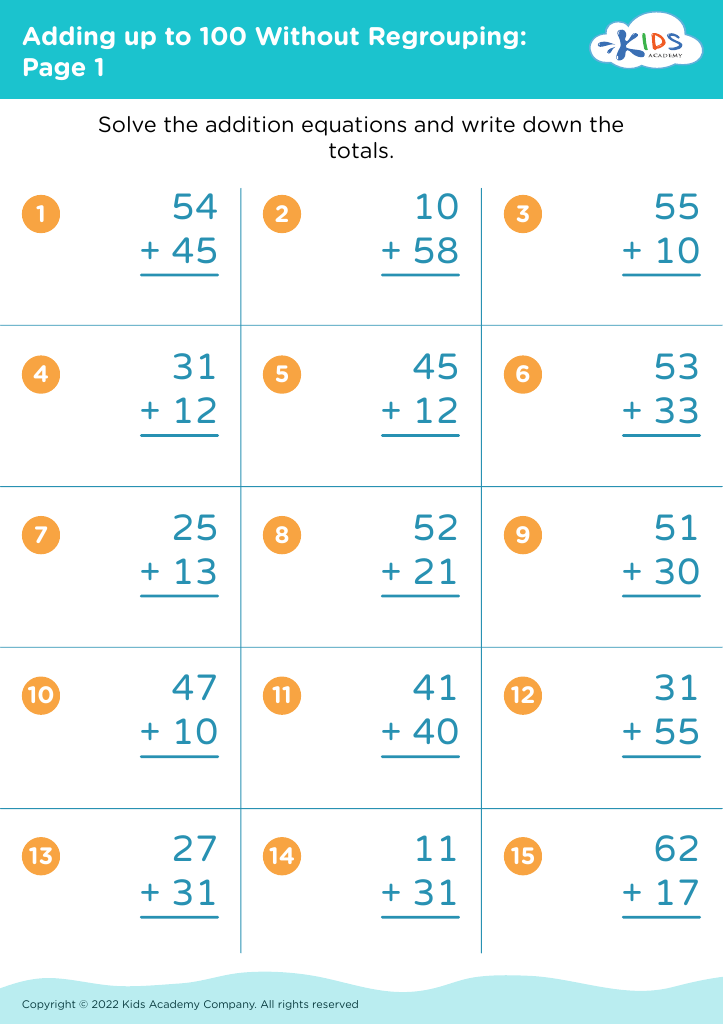
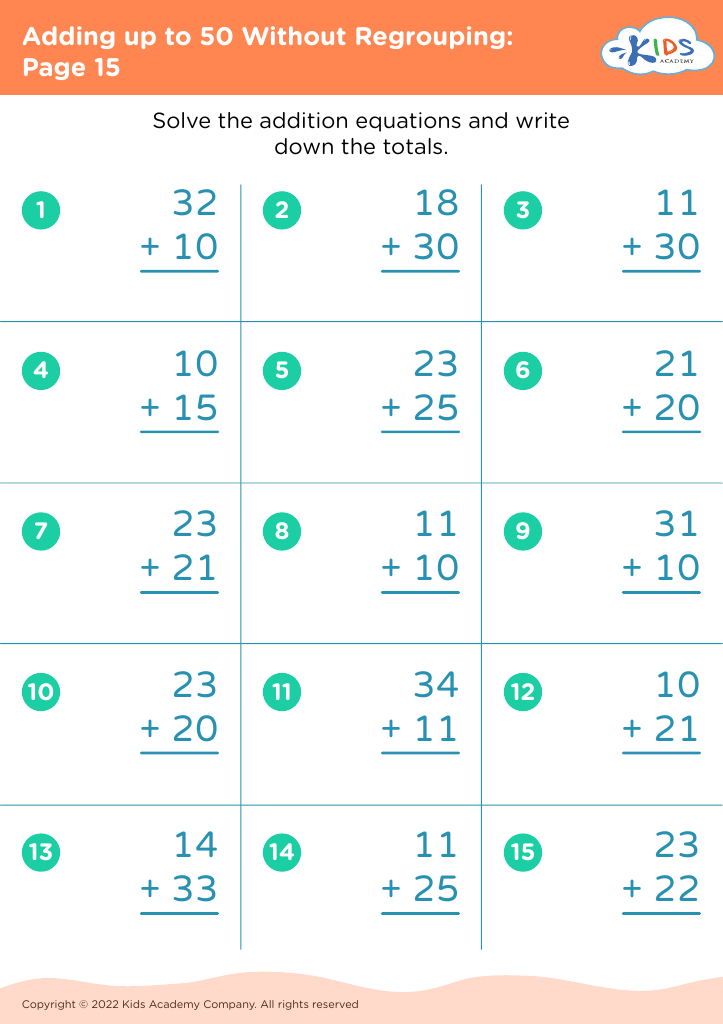
Boost your child's number recognition skills with our engaging Addition & Subtraction Worksheets designed for ages 5-7! These interactive resources focus on enhancing early math abilities through fun activities that encourage counting, comparing, and understanding numerical values. Our carefully curated worksheets not only help children master basic addition and subtraction tasks but also build confidence in their mathematical skills. Engaging illustrations and relatable scenarios make learning enjoyable, promoting active participation and retention. Perfect for homeschooling or classroom use, these worksheets offer an effective way to reinforce foundational math concepts while fostering a love for learning. Start your child's math journey today!
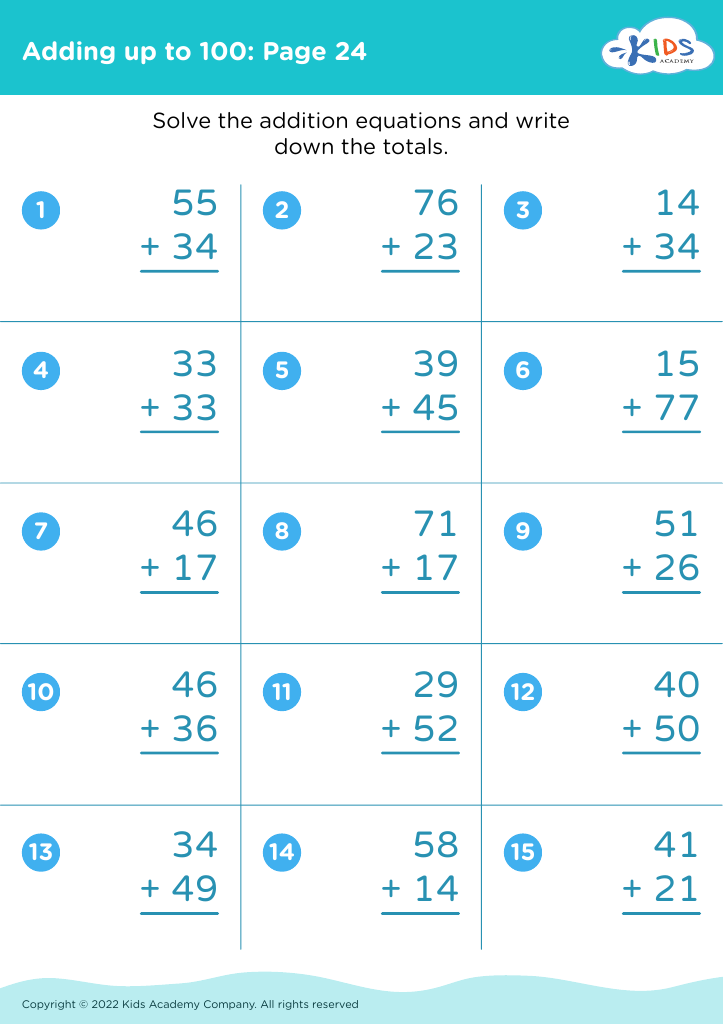
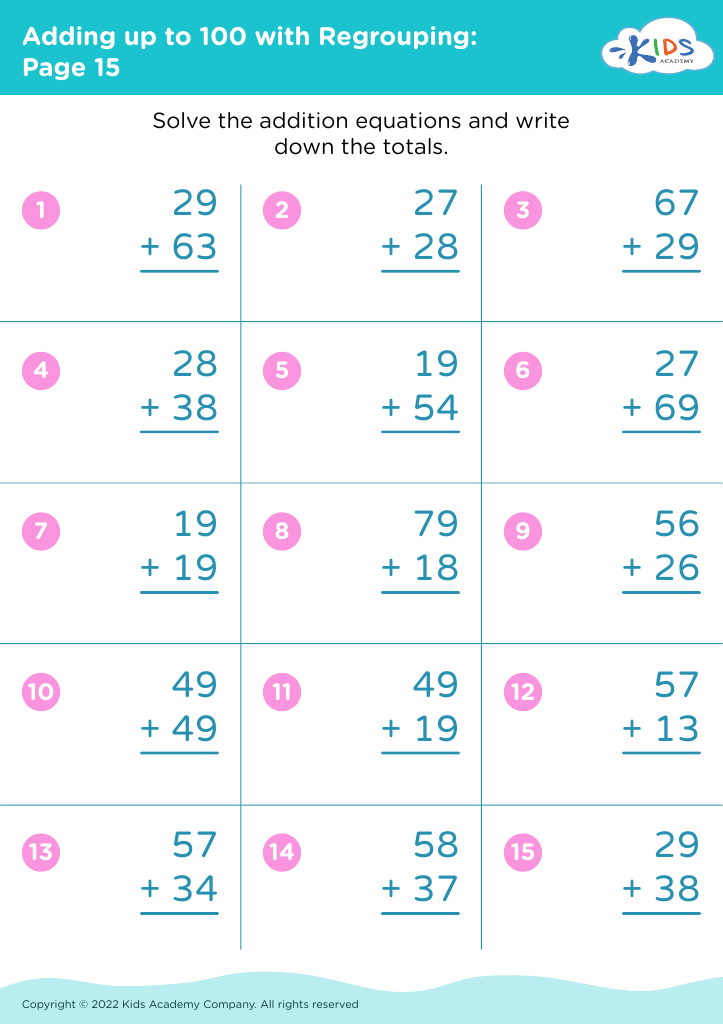
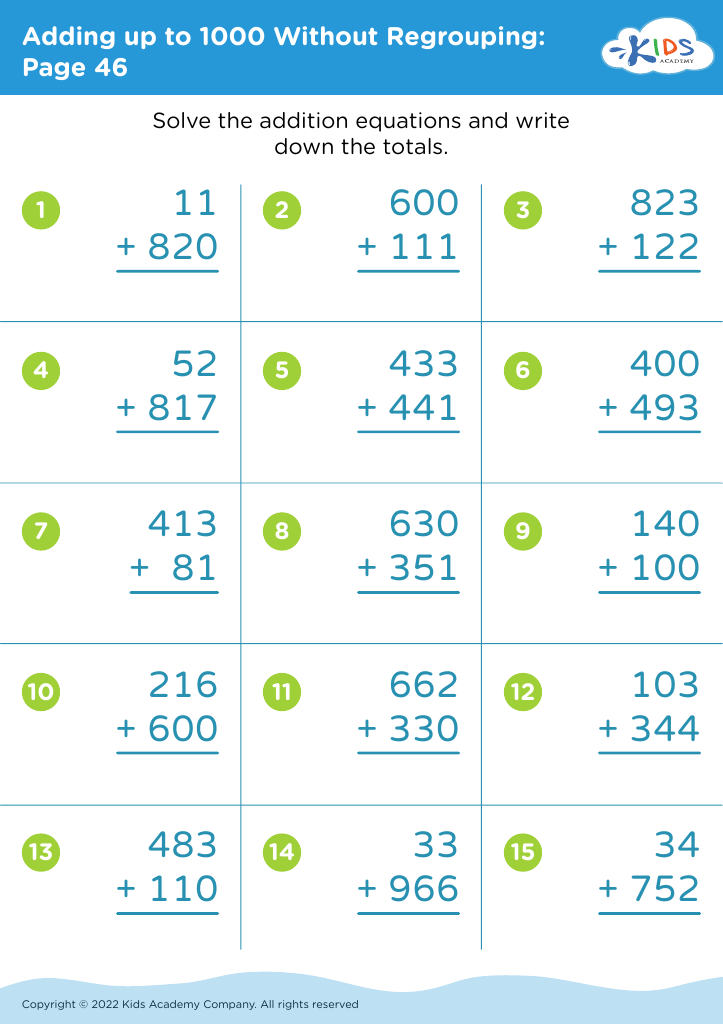
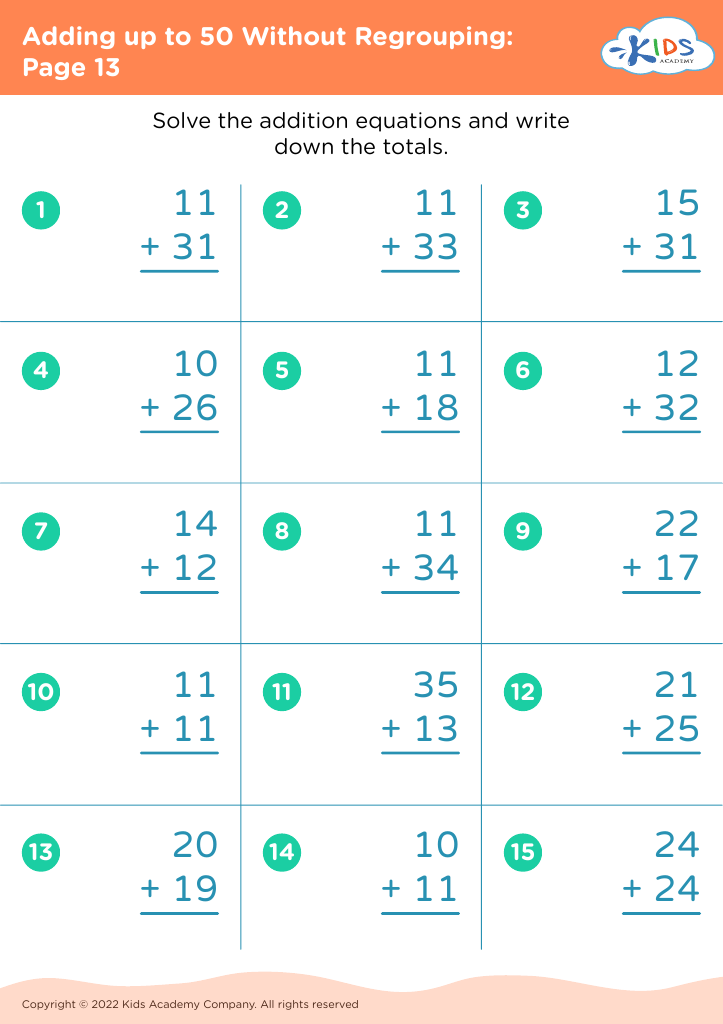
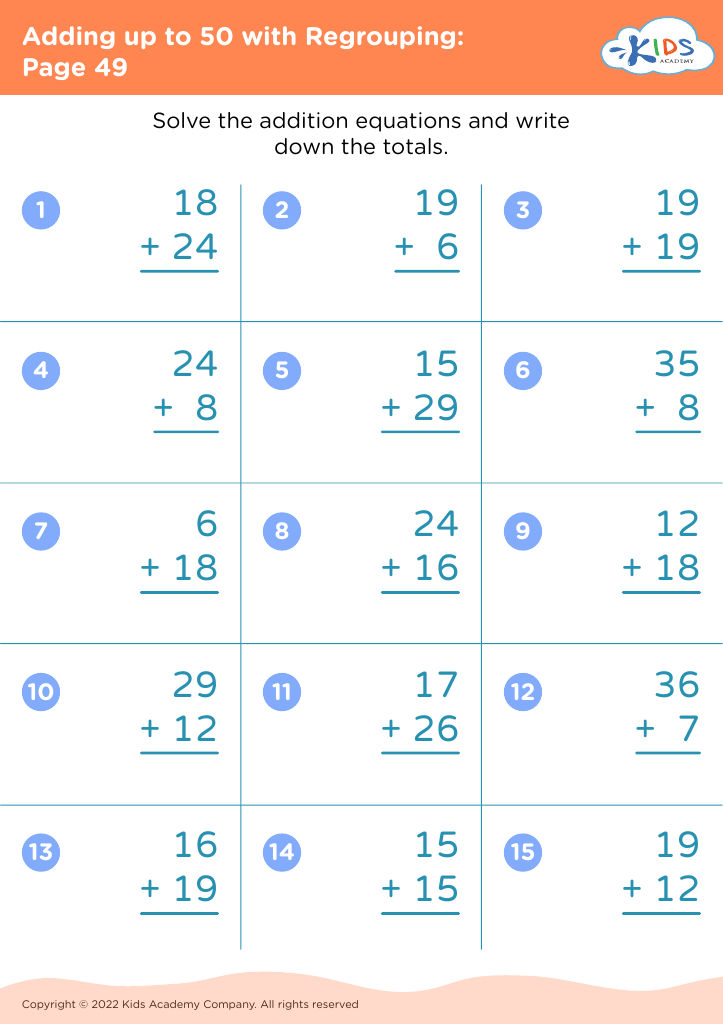
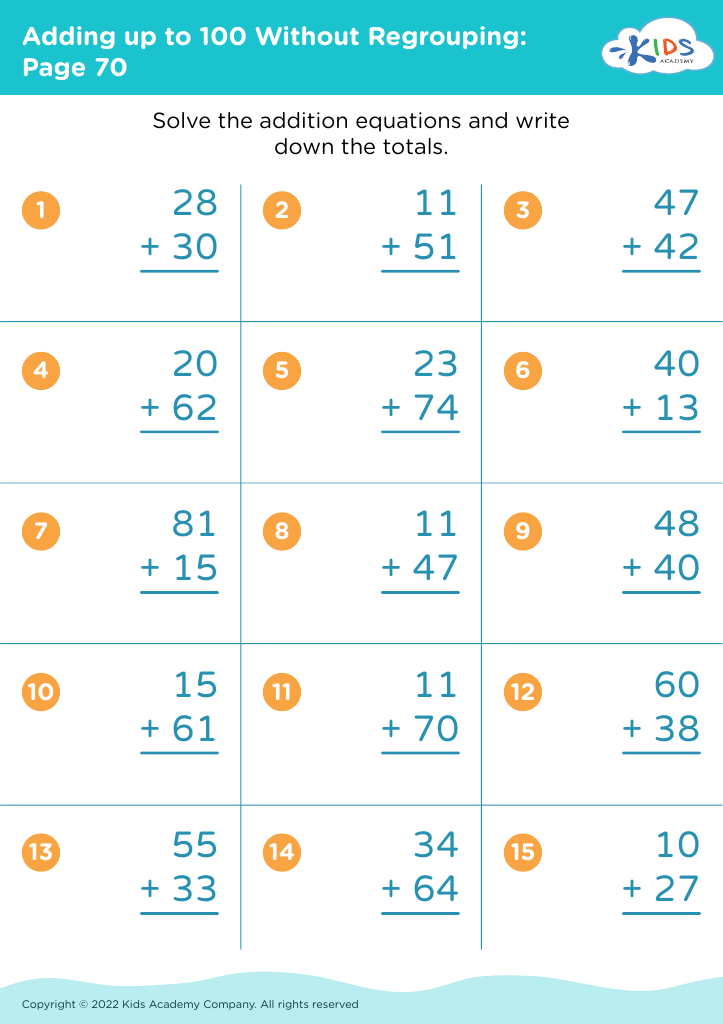
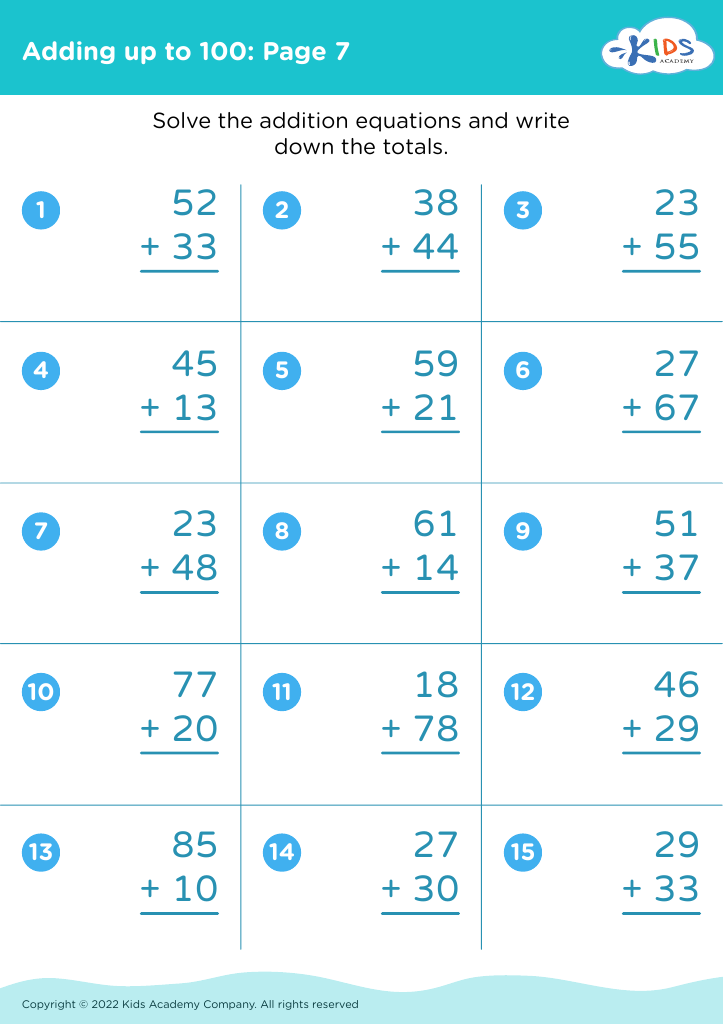








Parents and teachers play a vital role in the development of early mathematical skills, particularly in number recognition, addition, and subtraction for children aged 5-7. Mastering these fundamentals lays the groundwork for critical thinking and problem-solving skills essential for future academic success.
Number recognition is the ability to identify and understand numbers, which forms the basis for all mathematical concepts. When children can recognize numbers, they can engage in basic operations like addition and subtraction effectively. These skills are not just important in mathematics; they encompass daily life situations such as telling time, managing money, and following recipes.
Furthermore, early mastery of these concepts builds confidence and fosters a positive attitude towards learning math. Children who struggle with these basics may develop math anxiety, which can hinder their overall academic experience.
By prioritizing the improvement of number recognition and early computation skills, parents and teachers create a supportive environment where children feel equipped to tackle more complex math problems in the future. Ultimately, investing time in these key areas not only supports individual student growth but also cultivates a generation of confident thinkers and problem solvers.








