Improving counting skills Addition & Subtraction Worksheets for Ages 5-7
12 filtered results
-
From - To
Enhance your child’s counting and arithmetic abilities with our specially crafted Addition & Subtraction Worksheets for ages 5-7. These engaging activities focus on building fundamental math skills, making learning fun and effective for young learners. Each worksheet is designed to help children master basic addition and subtraction through colorful illustrations and interactive exercises. By practicing regularly, kids develop strong counting skills and gain confidence in their mathematics abilities. Perfect for both classroom and home use, these worksheets provide the essential practice needed for academic success in the early grades. Discover the joy of learning with our printable resources today!
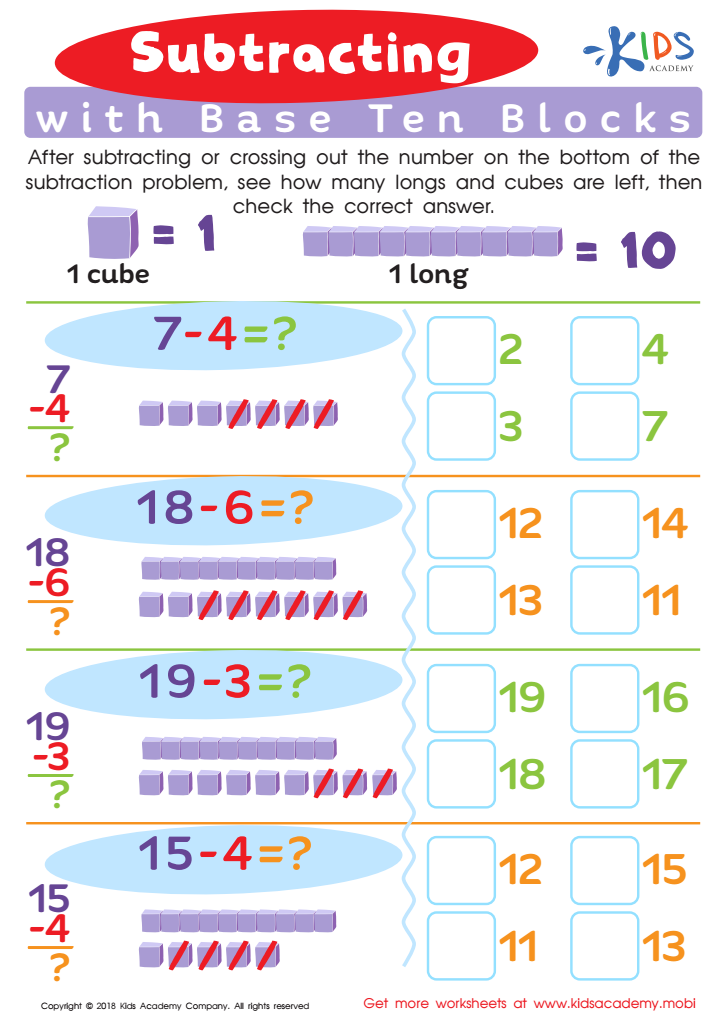
Subtracting With Base 10 Blocks Worksheet
 Assign to My Students
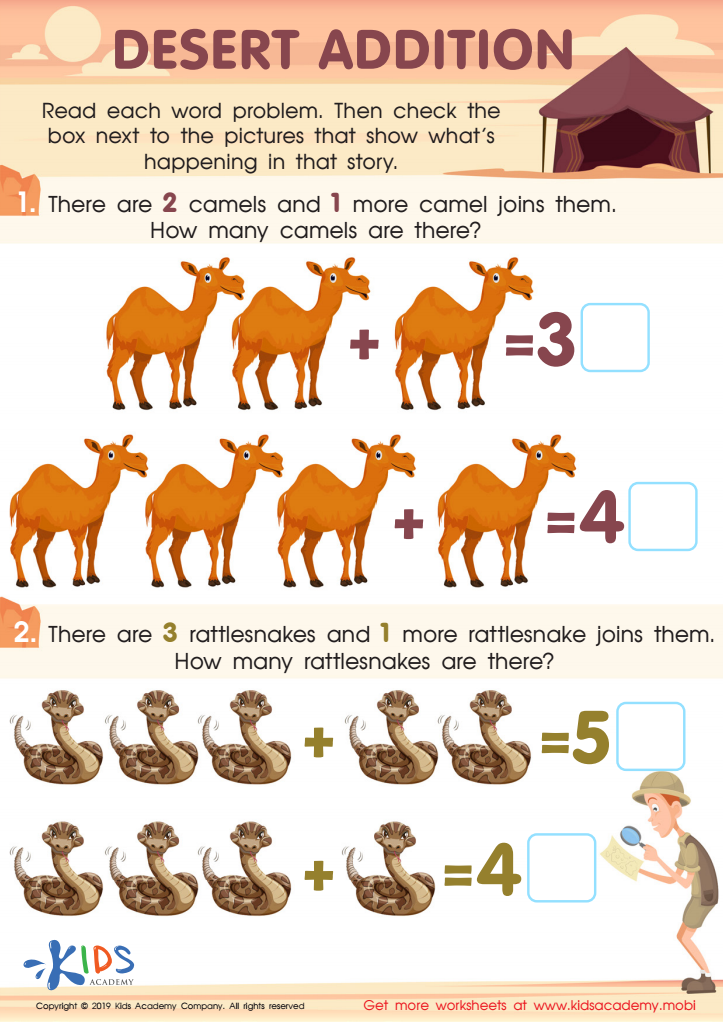
Desert Addition Worksheet
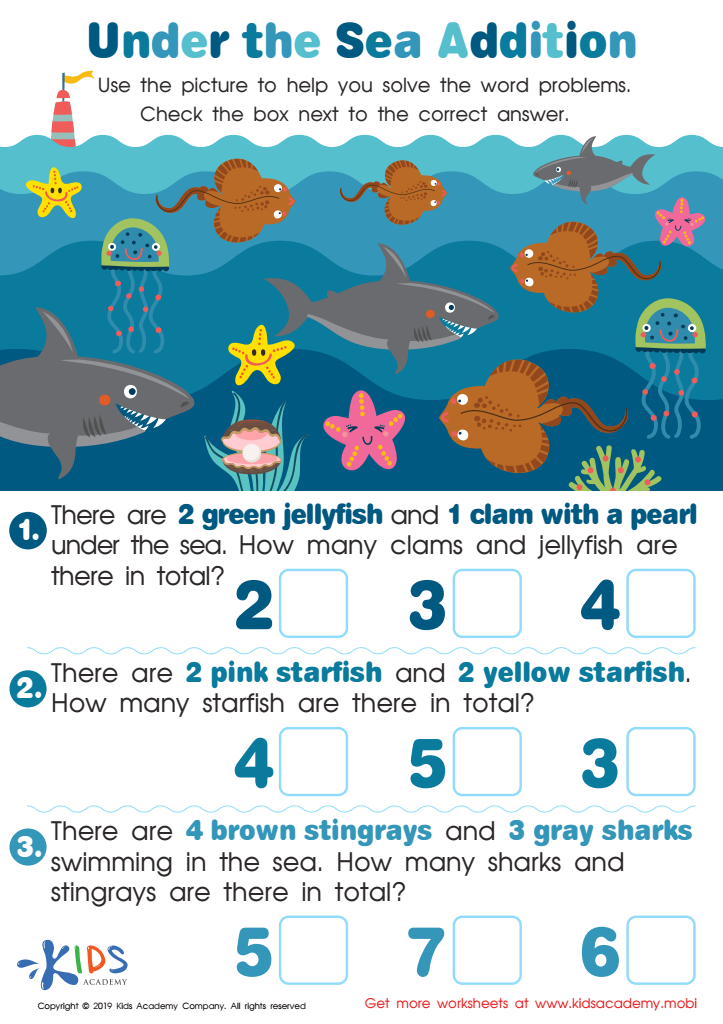
Under the Sea Addition Worksheet
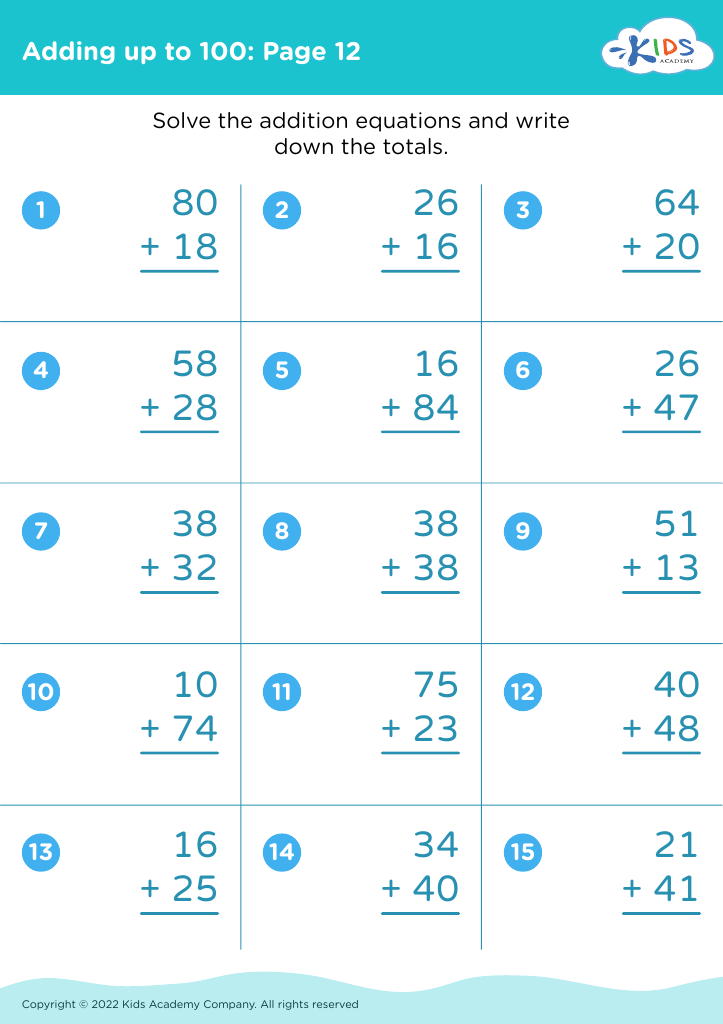
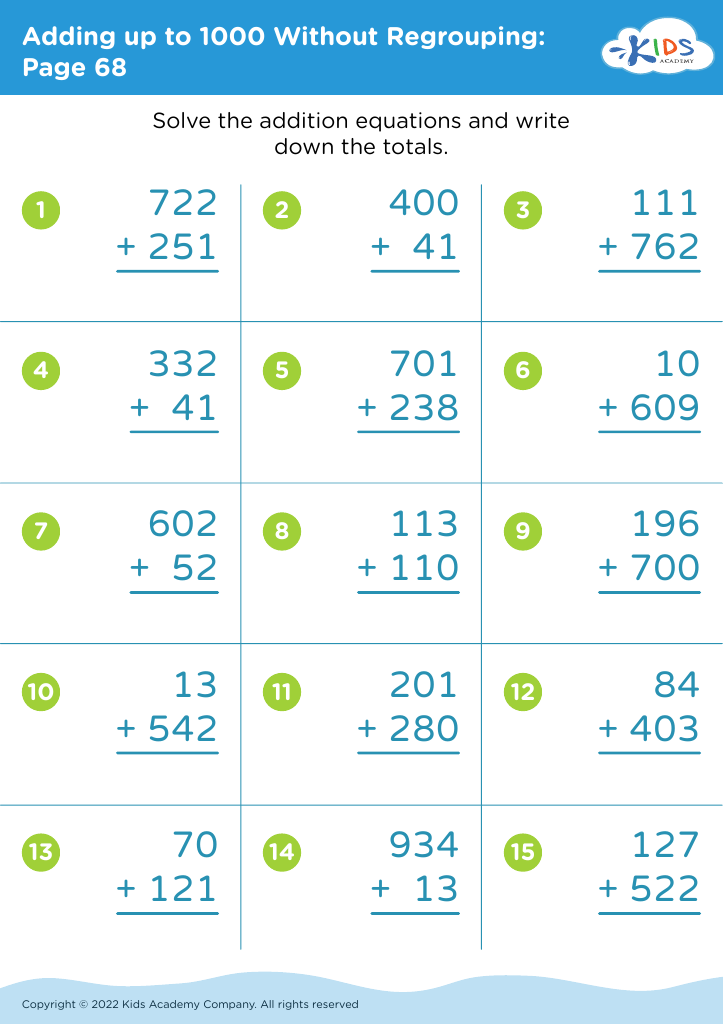
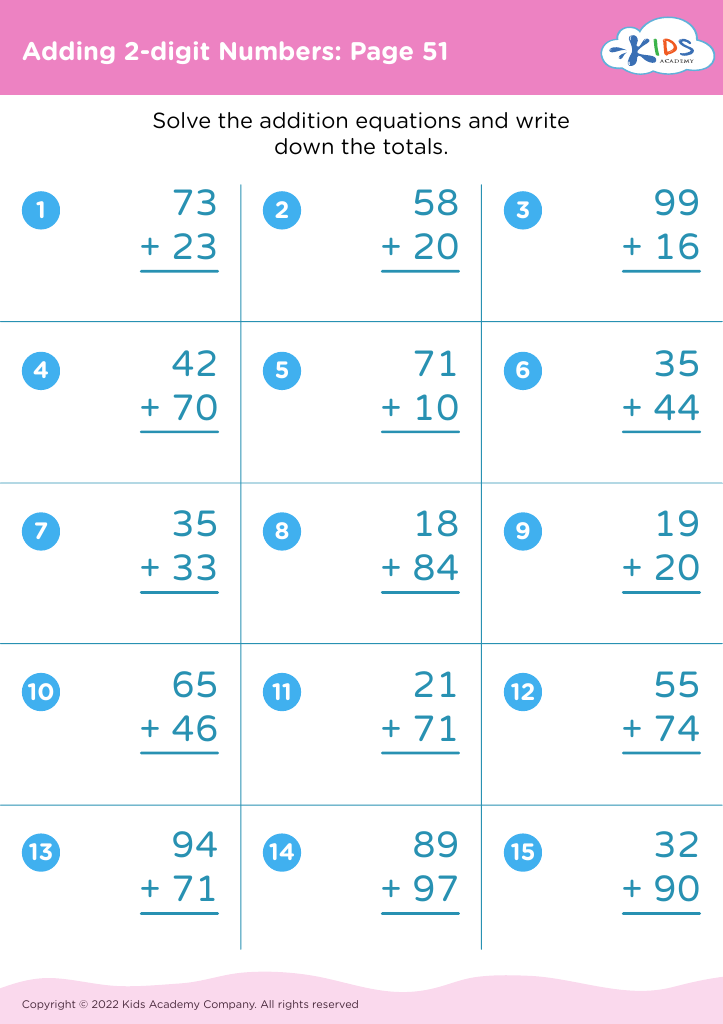
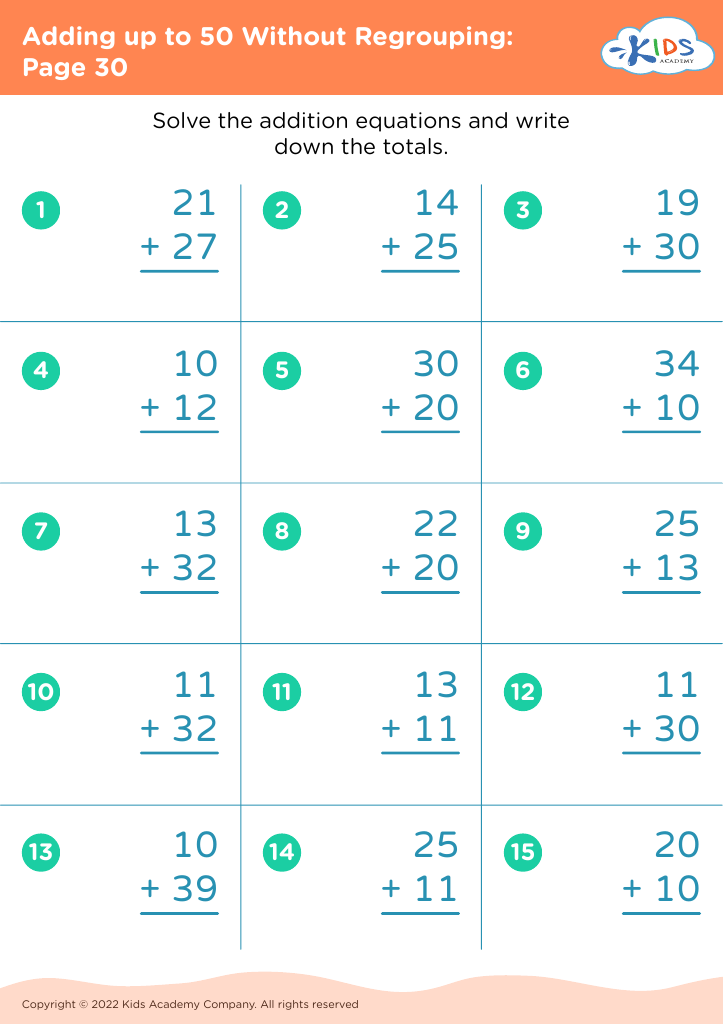








Improving counting skills, addition, and subtraction for children ages 5-7 is fundamentally important for several reasons.
First, foundational math skills like these form the bedrock of more complex mathematical concepts encountered later in schooling. A solid grasp of basic arithmetic ensures that children are well-prepared for future math learning. Kids can't progress to advanced topics without first understanding core principles.
Second, early proficiency in math boosts confidence and sets a positive trajectory in their academic journey. Struggles with fundamental math can lead to frustration, resulting in math anxiety, which unfortunately can create a long-lasting aversion to the subject.
Third, math skills are often linked to developing problem-solving abilities and logical thinking. These cognitive skills are crucial not just in academic settings, but in everyday life. For example, counting, addition, and subtraction are used in scenarios such as following recipes, telling time, or managing pocket money.
Lastly, strong arithmetic abilities have societal implications. A population proficient in basic numeracy is better equipped to make informed financial decisions, understand statistics in the news, and engage in careers in STEM fields.
Overall, prioritizing counting and arithmetic in early education equips children with essential skills that support lifelong learning and practical life situations.








