
Multiplication practice Addition & Subtraction Worksheets for Ages 5-7
9 filtered results
Difficulty Level
Grade
Age
-
From - To
Subject
Activity
Standards
Introduce your young learners to the fun world of math with our "Multiplication, Addition, & Subtraction Worksheets for Ages 5-7." Specifically designed for burgeoning mathematicians, these engaging worksheets seamlessly blend fundamental arithmetic concepts with stimulating multiplication practice. Perfectly suited for early grade students, our worksheets will bolster essential skills, enhance problem-solving abilities, and build a solid mathematical foundation. Through colorful, interactive exercises, kids will think mathematically, boost their confidence, and develop a love for learning. Ideal for both classrooms and at-home practice, these resources make mastering math enjoyable and accessible for every young learner. Start sparking math success today!
Favorites
With answer key
Interactive
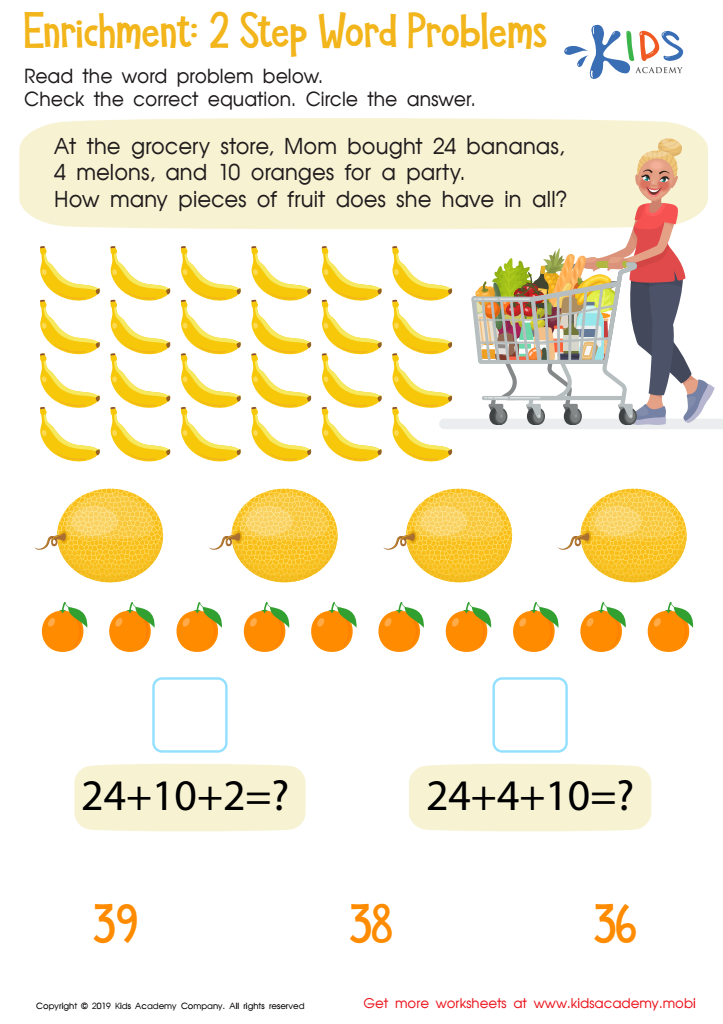
Enrichment -2 Step Word Problems Worksheet
Help your students learn math easier and faster with this colorful worksheet. Read the word problem and then guide them in checking the correct equation and finding the answer. Your students will benefit from the extra help, as they work through new concepts each day.
 Assign to My Students
Enrichment -2 Step Word Problems Worksheet
Worksheet
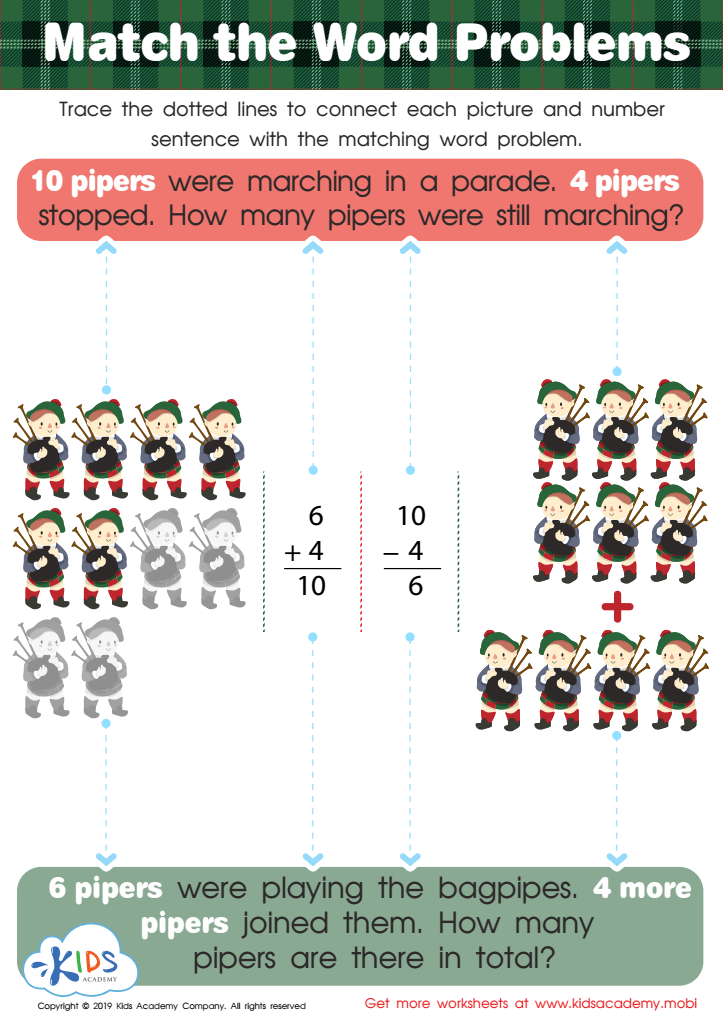
Match the Word Problems Worksheet
Read this word problem to your kids: Help them understand how it can be translated into a number problem. Trace the dotted lines to see how each picture and number sentence match the problem. With this worksheet, you can show your kids how easy it is to transform a word problem into a number problem.
Match the Word Problems Worksheet
Worksheet
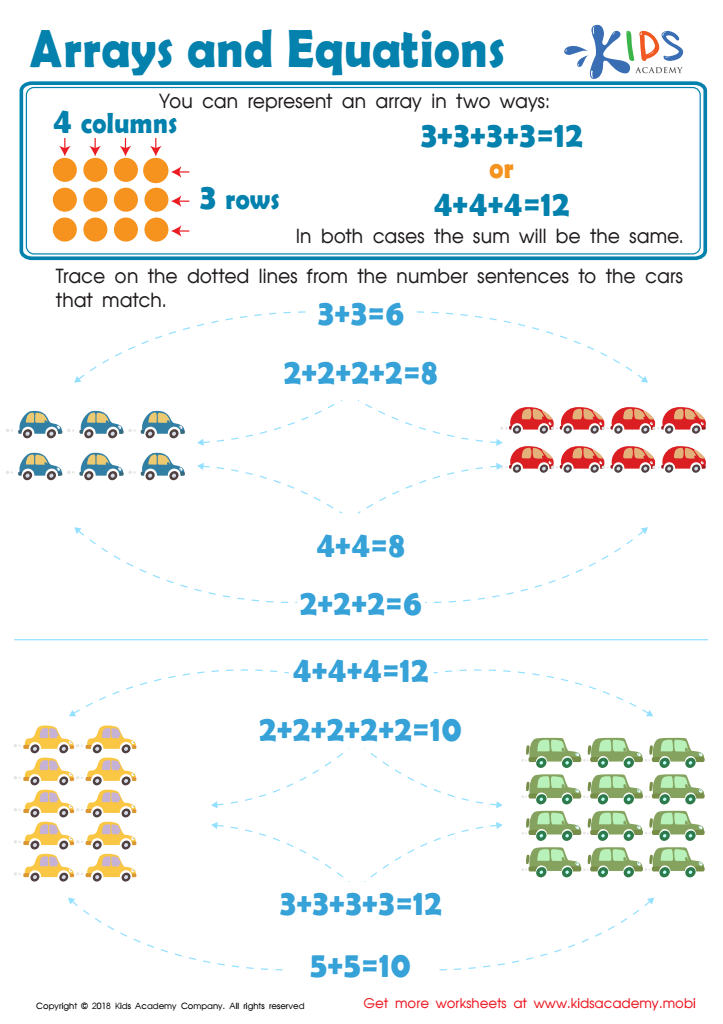
Arrays and Equations Worksheet
An array is objects, pix, or numbers organized in rows and columns. Show kids two ways to interpret this: 3 rows in 4 places = 12 and 4 columns in 3 places = 12. Help your child trace the number sentences to the matching cars. All equations always add up to the same amount.
Arrays and Equations Worksheet
Worksheet
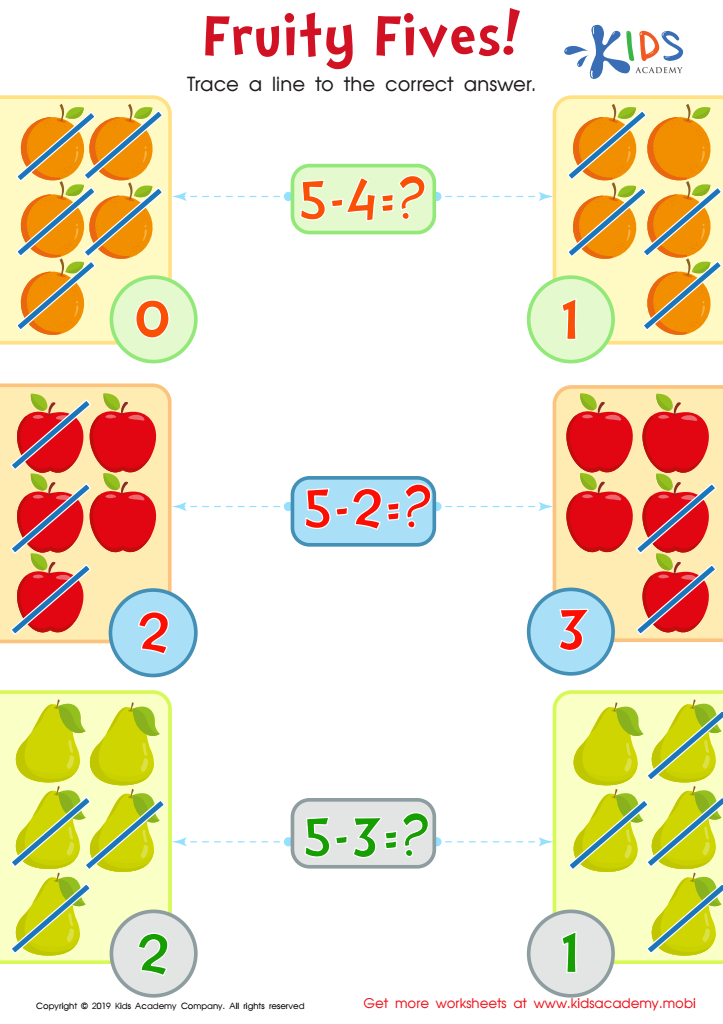
Fruity Fives! Worksheet
This tracing sheet has three equations for your kids to solve. Make learning fun with colorful objects and text! They may need help, so be prepared to assist them. Help them solve the equations and trace a line to the correct answer.
Fruity Fives! Worksheet
Worksheet
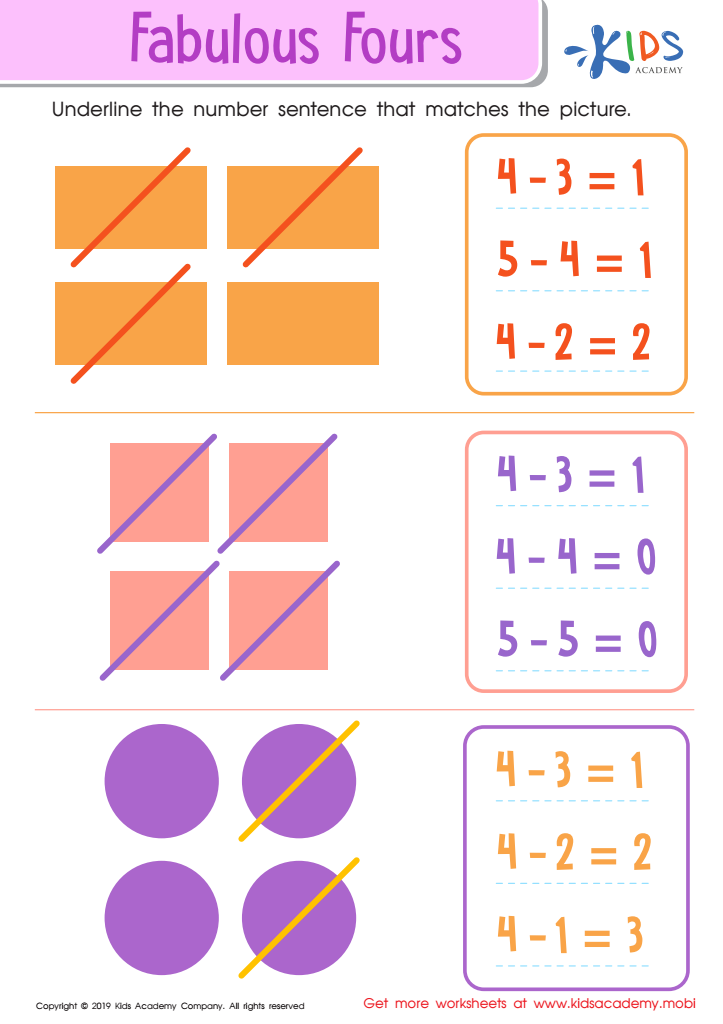
Fabulous Fours Worksheet
Mastering basic math like addition and subtraction is essential for your kids. Use fun exercises and tests to evaluate their understanding of equations. Challenge them with this worksheet - have them count the objects in each picture, then trace a line to the pictures which show the equation 3-2.
Fabulous Fours Worksheet
Worksheet
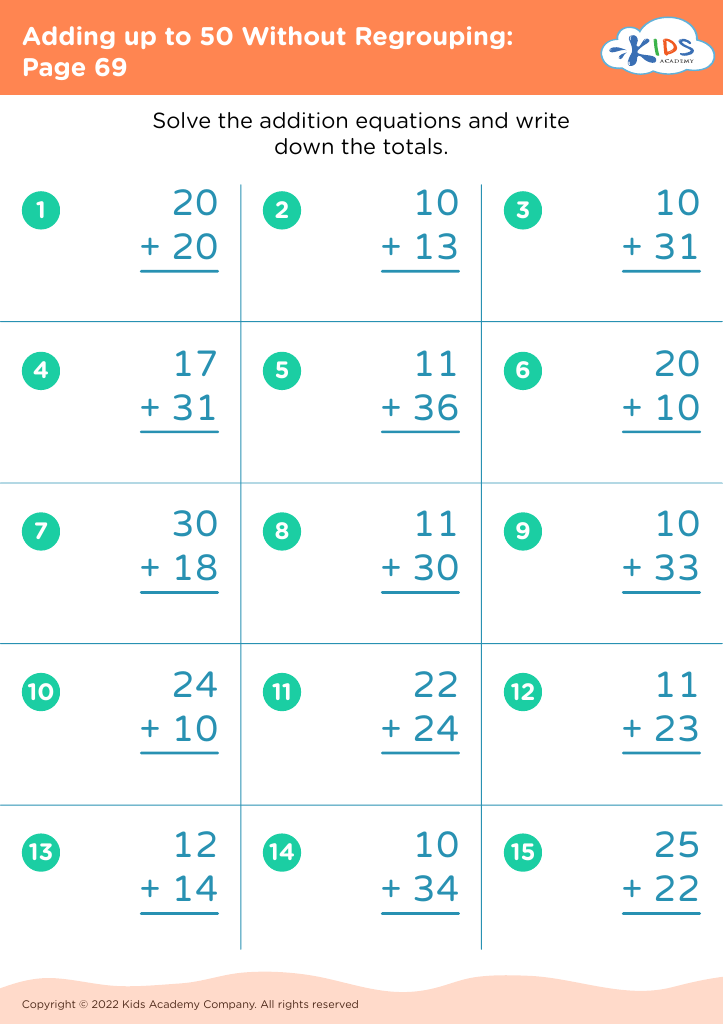
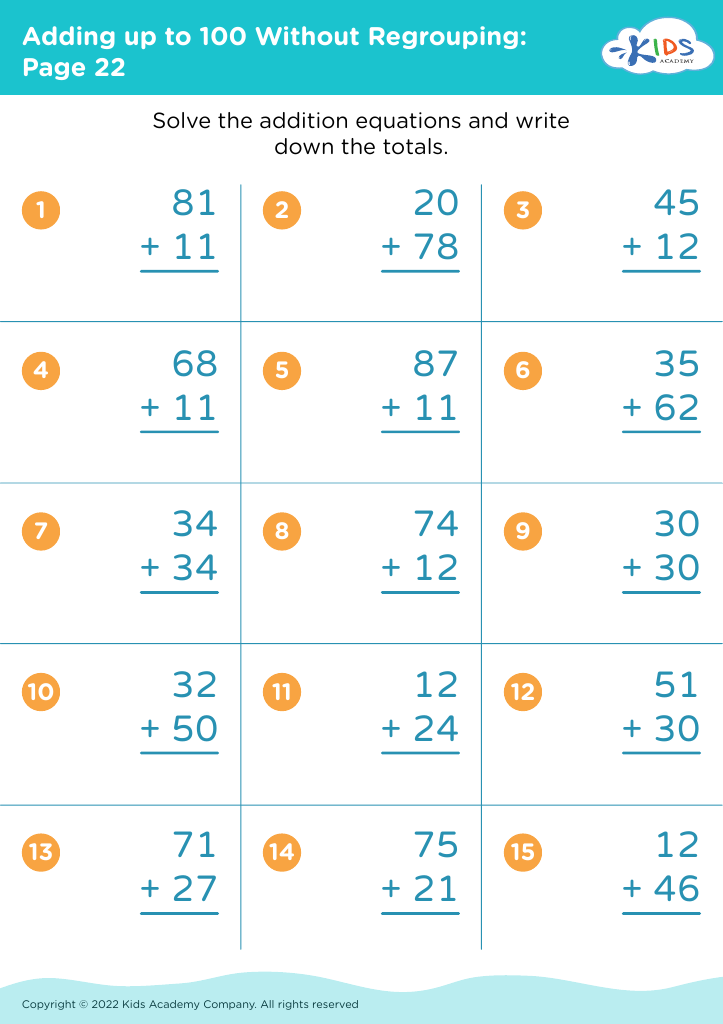
Twos at the Zoo Worksheet
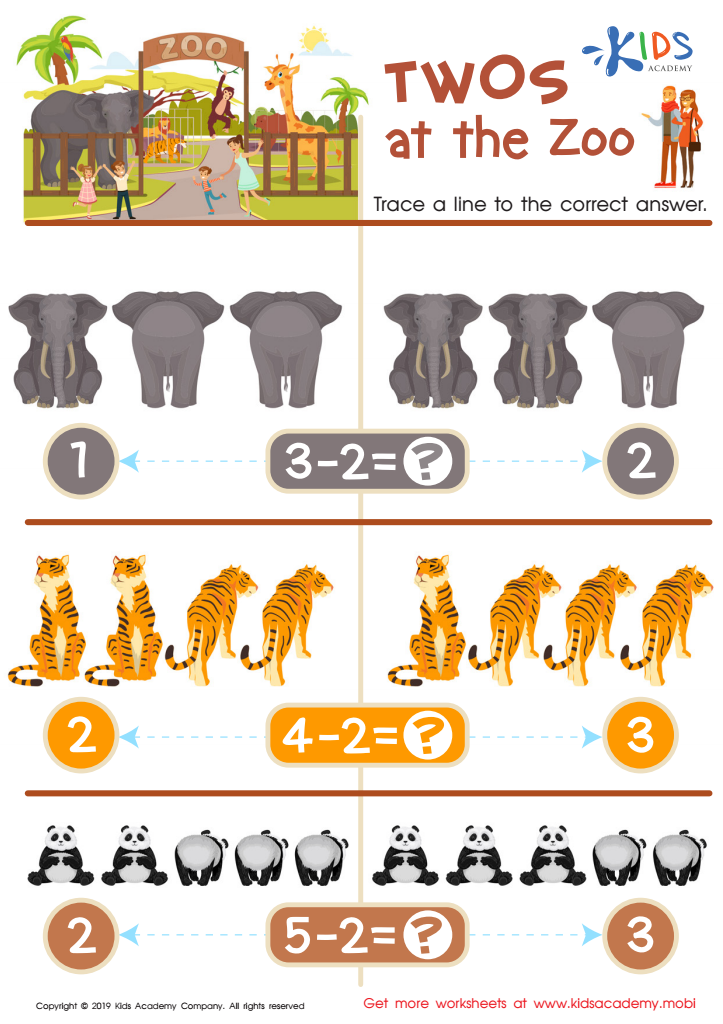
At the zoo, your kids can have fun with animals. Ask them to name their favorite ones and identify them in the printout. Count animals in each group together, then help your kids solve the equations and trace a line to the answer. It's an enjoyable way to combine learning and exploration!
Twos at the Zoo Worksheet
Worksheet
Join Kids Academy for Free
Who is primarily going to use this learning content?








Parents and teachers should prioritize multiplication, addition, and subtraction practice for ages 5-7 because foundational arithmetic skills are crucial for children's cognitive and academic development. At this stage, children are developing their number sense, which forms the bedrock for more advanced mathematical concepts they will encounter later on.
First, learning addition and subtraction sharpens children's problem-solving abilities. These operations teach children to break down problems and to rebuild them, two essential skills for critical thinking. Multiplication, although typically introduced a bit later, starts conceptually with the idea of repeated addition, helping kids understand grouping and patterns.
Practicing these skills also aids in the development of cognitive functions like memory, attention, and logical reasoning. Consistent practice through fun, interactive methods — such as counting games, visual aids, or manipulatives — can bolster a child's confidence and decrease math anxiety.
Moreover, proficiency in these areas supports academic achievement across subjects. Many everyday activities—such as handling money or sharing objects—require a basic grasp of these operations. Finally, early success in math can cultivate a positive attitude toward learning and encourage a lifelong appreciation of the subject. Hence, prioritizing these fundamental arithmetic practices sets the stage for long-term academic growth and everyday competence.








