Pattern recognition Addition & Subtraction Worksheets for Ages 5-7
9 filtered results
-
From - To
Unlock your child's math potential with our engaging Pattern Recognition Addition and Subtraction Worksheets designed specifically for ages 5-7. These worksheets promote critical thinking skills while helping young learners identify and create patterns in math problems. By combining addition and subtraction concepts with pattern recognition, children develop a deeper understanding of relationships between numbers. They’ll enhance their problem-solving abilities in a fun, interactive way! Perfect for classroom use or at-home practice, our resources support foundational math skills essential for future success. Explore our collection and witness your little ones thrive as they master patterns in math effortlessly!
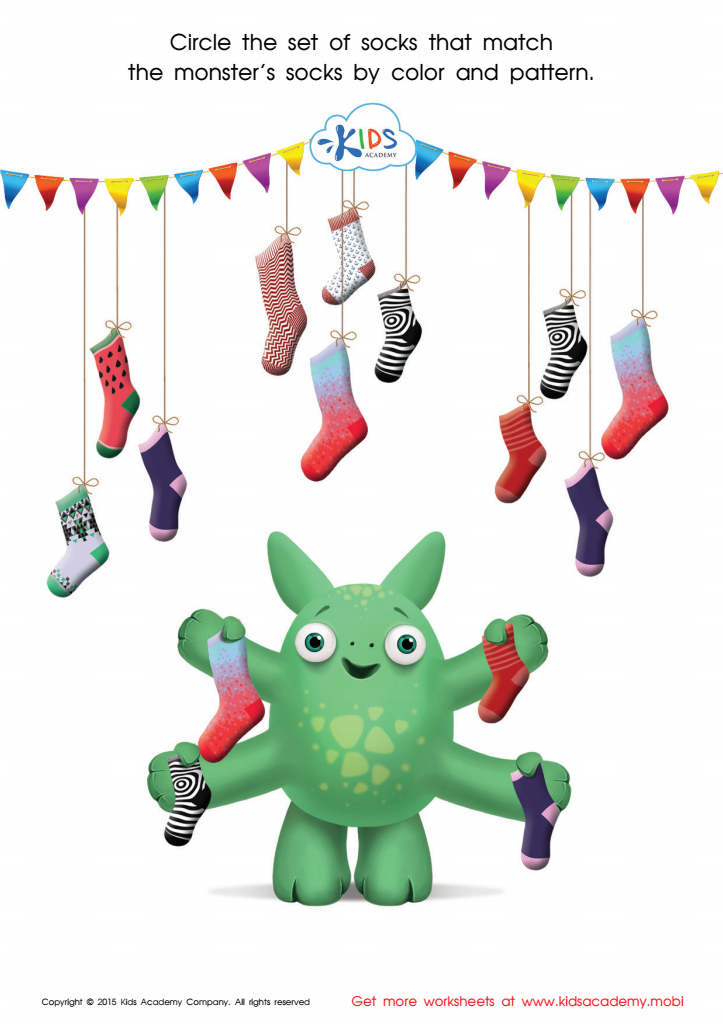
Sort the Monster's Socks Worksheet
 Assign to My Students
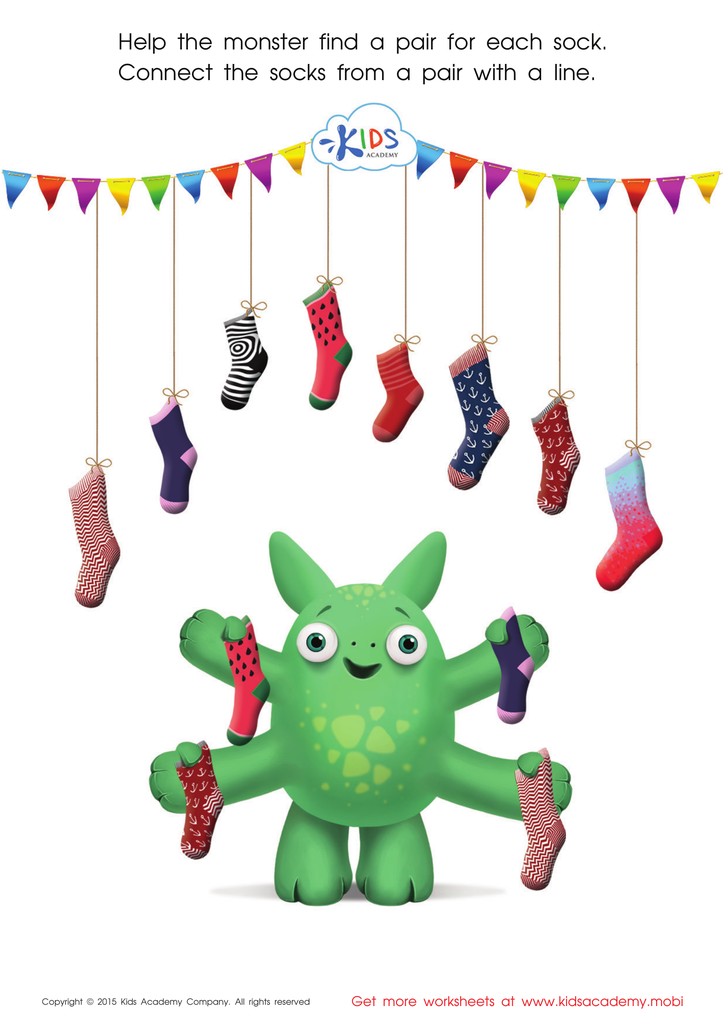
Math Matching Game: Monsterв's Socks Worksheet
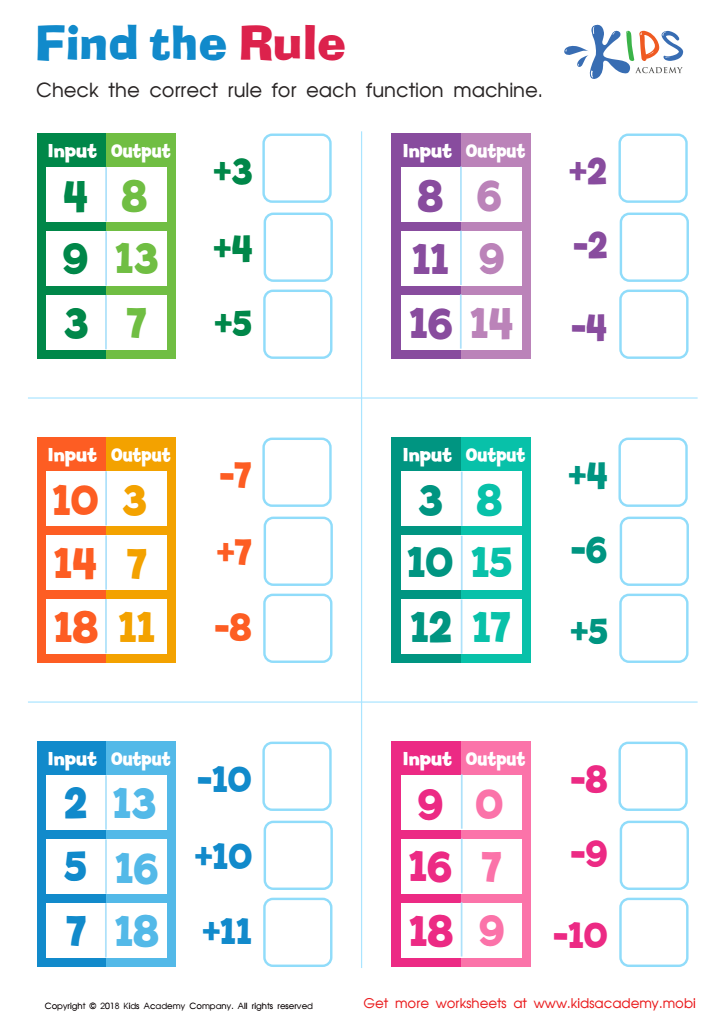
Find the Rule Worksheet
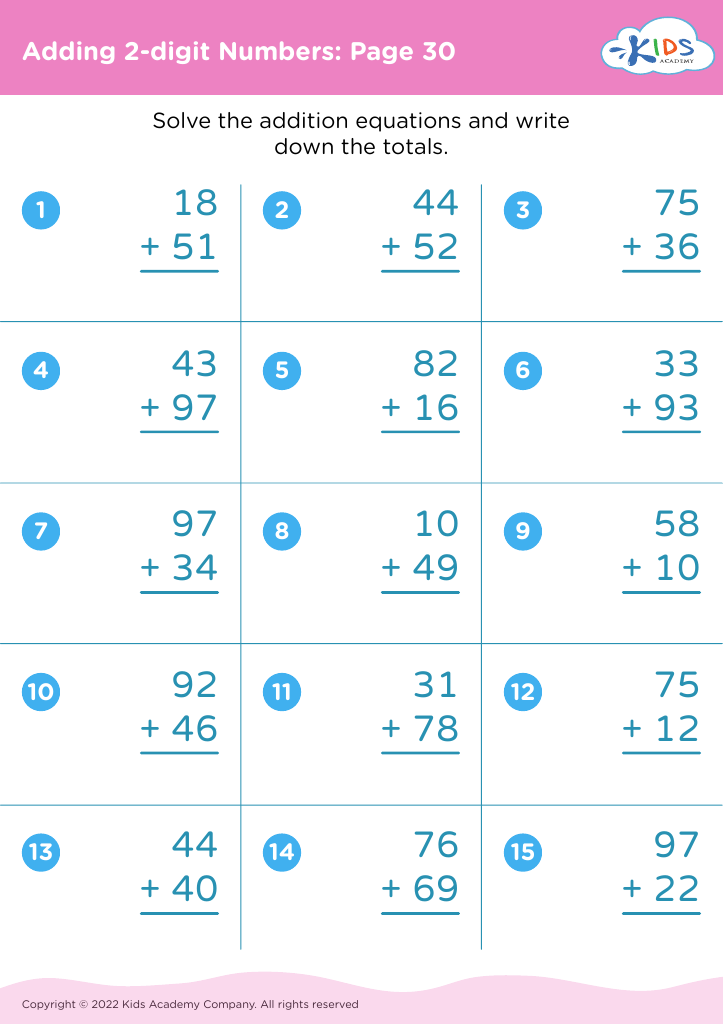
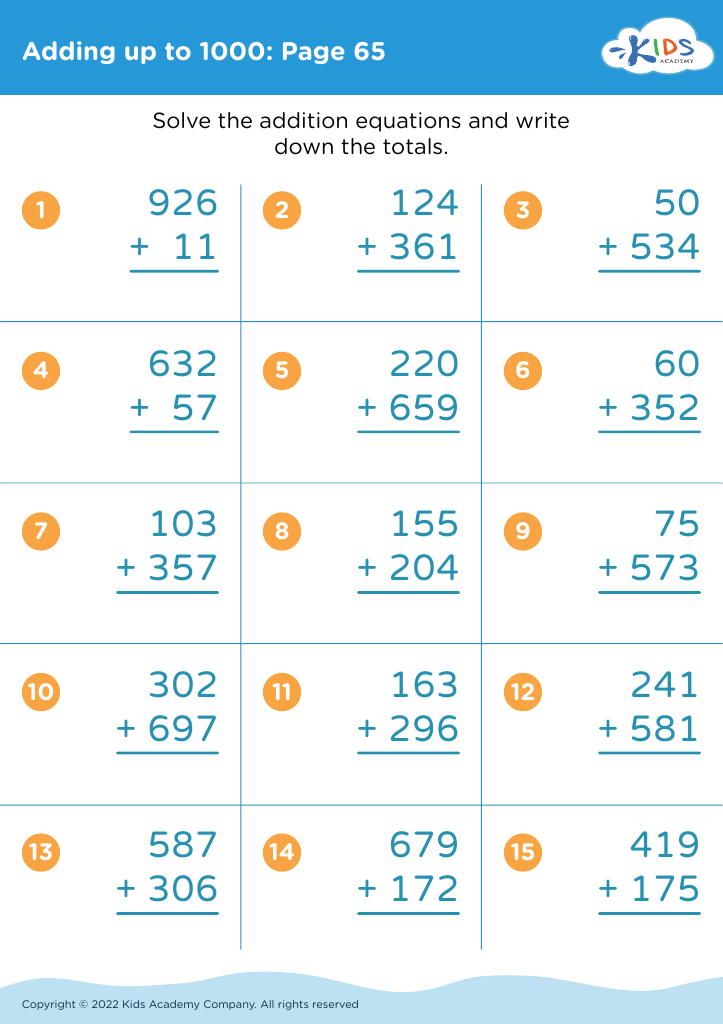
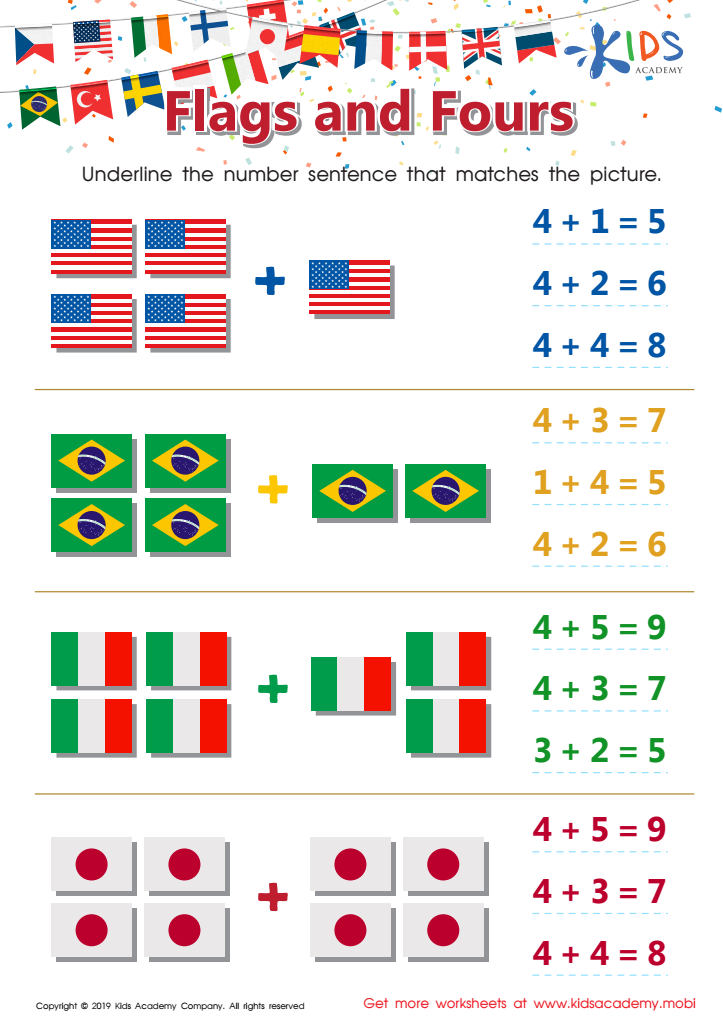
Flags and Fours Worksheet
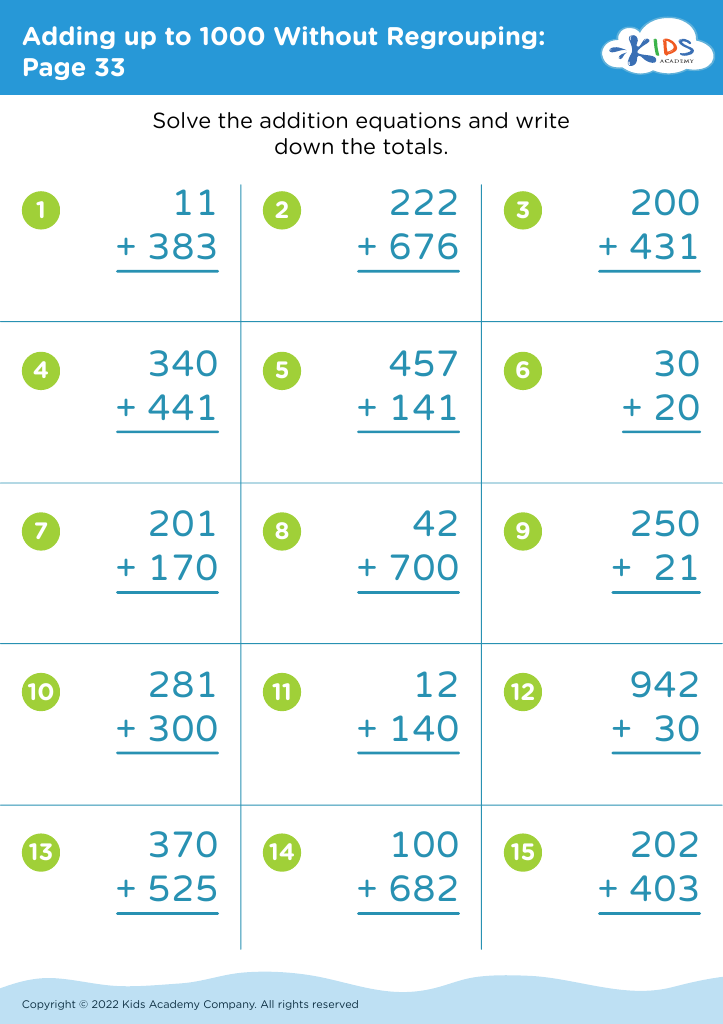








Parents and teachers should prioritize teaching pattern recognition in addition and subtraction for children aged 5-7 because it lays the foundation for essential mathematical skills. At this young age, children develop cognitive abilities that enable them to identify relationships and structure in numbers, which is crucial for later math proficiency. Recognizing patterns helps children understand how numbers interact, making concepts such as addition and subtraction more intuitive and relatable.
Moreover, pattern recognition enhances critical thinking and problem-solving abilities. When children identify patterns in number sequences or equate relationships, they are more equipped to tackle complex math problems as they progress in their education. This skill also fosters confidence, as students who grasp basic patterns are less likely to feel overwhelmed by basic mathematical operations.
Furthermore, pattern recognition is not just confined to mathematics; it encourages a broader understanding of patterns in various life areas, thereby promoting overall cognitive development. By focusing on patterns, parents and teachers can cultivate a love for learning and foster a curious mindset that encourages exploration and inquiry in children. Ultimately, teaching pattern recognition in basic math equips young learners with skills that will serve them well throughout their educational journeys and beyond.








