Recognize patterns Addition & Subtraction Worksheets for Ages 5-7
11 filtered results
-
From - To
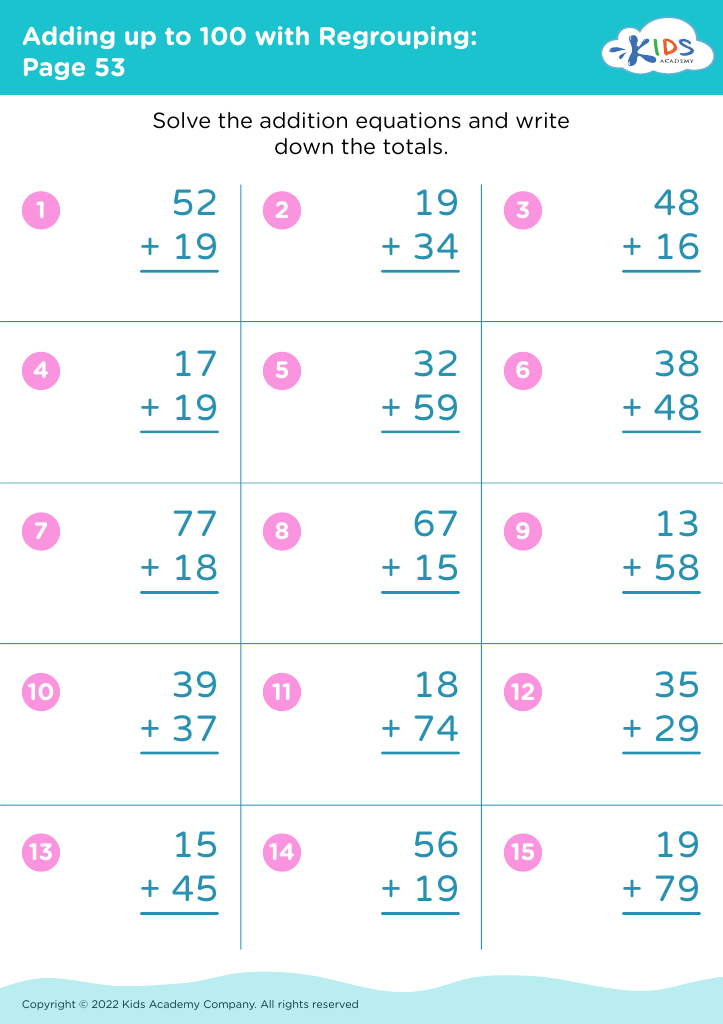
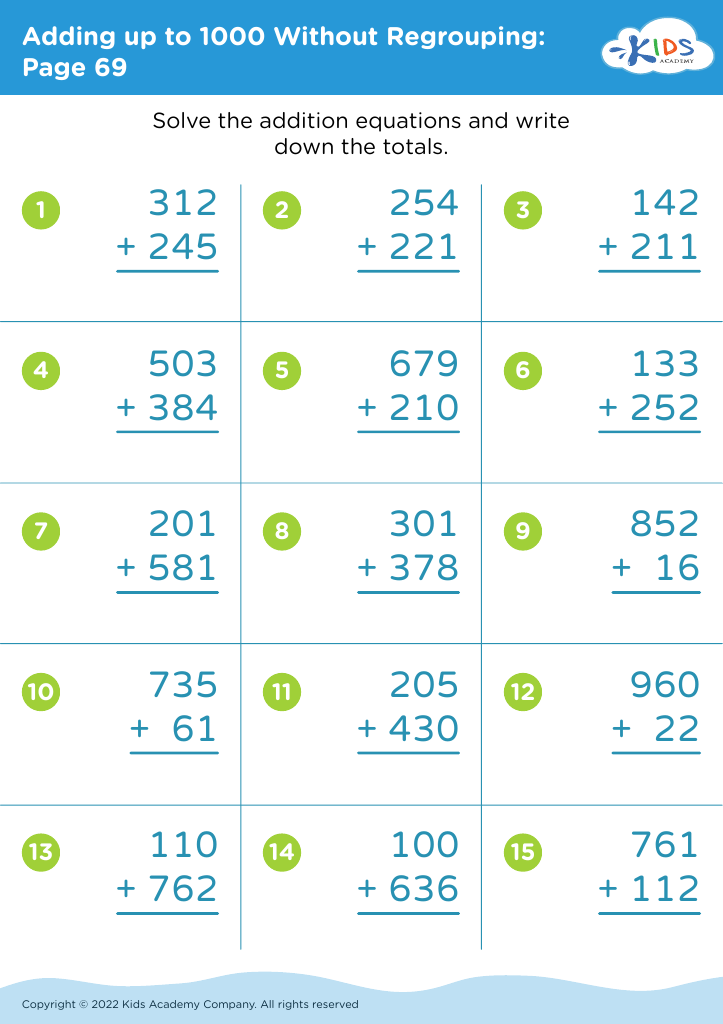
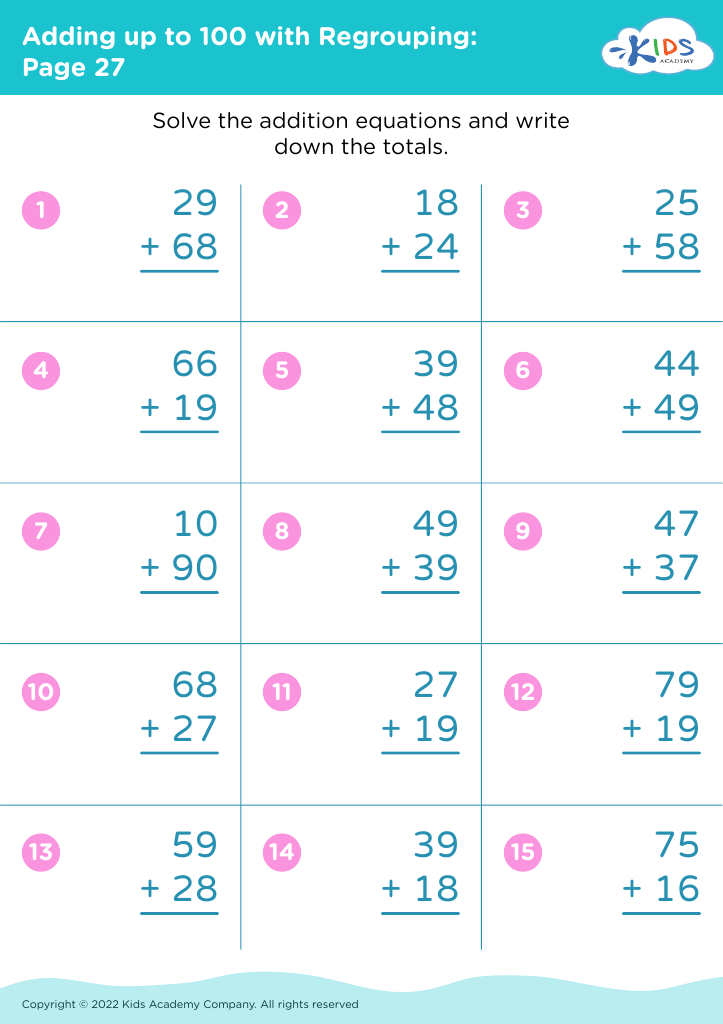
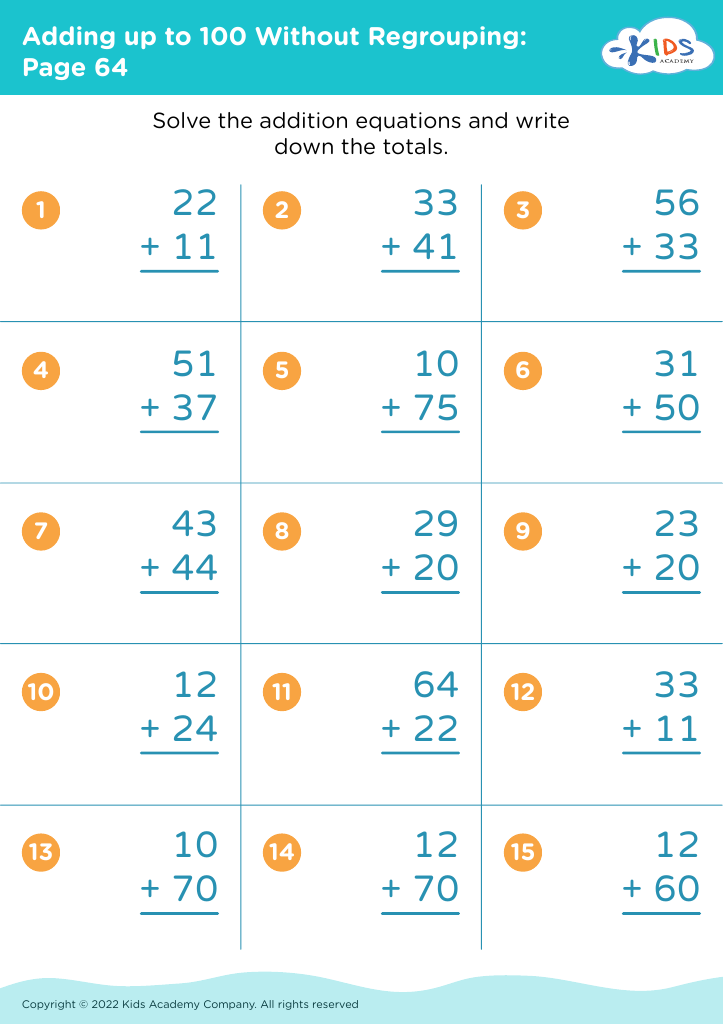
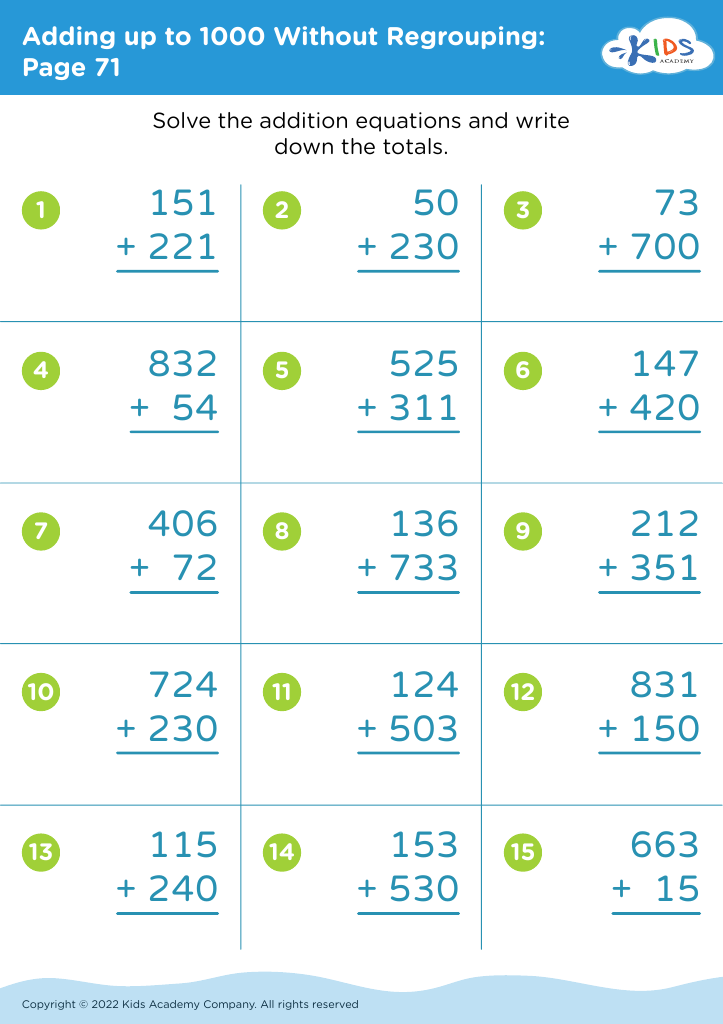
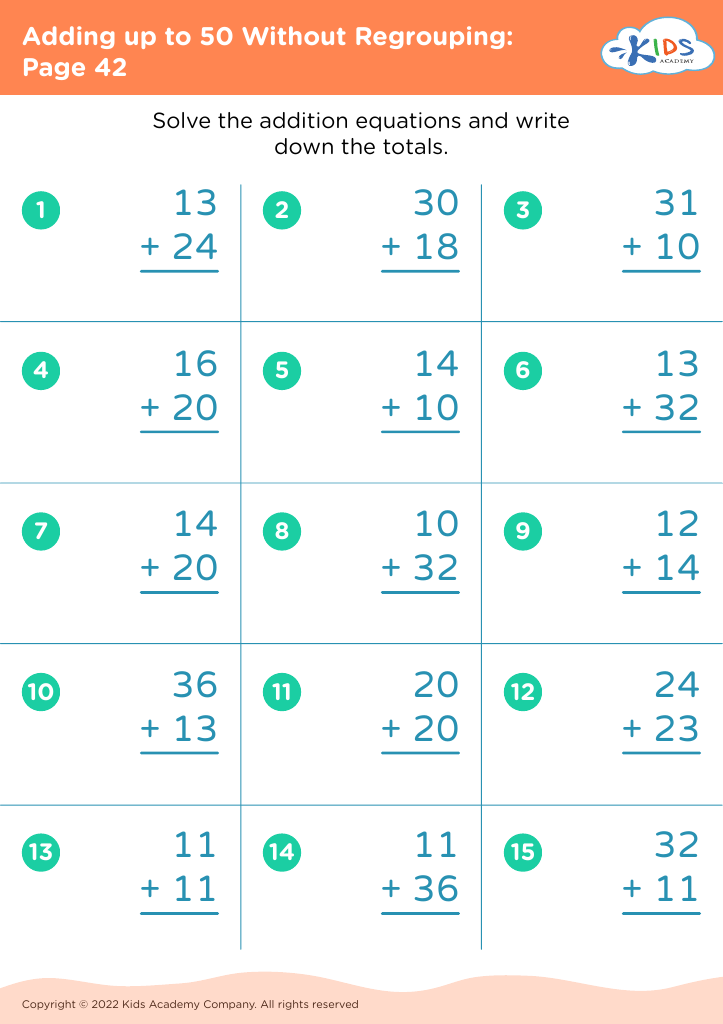
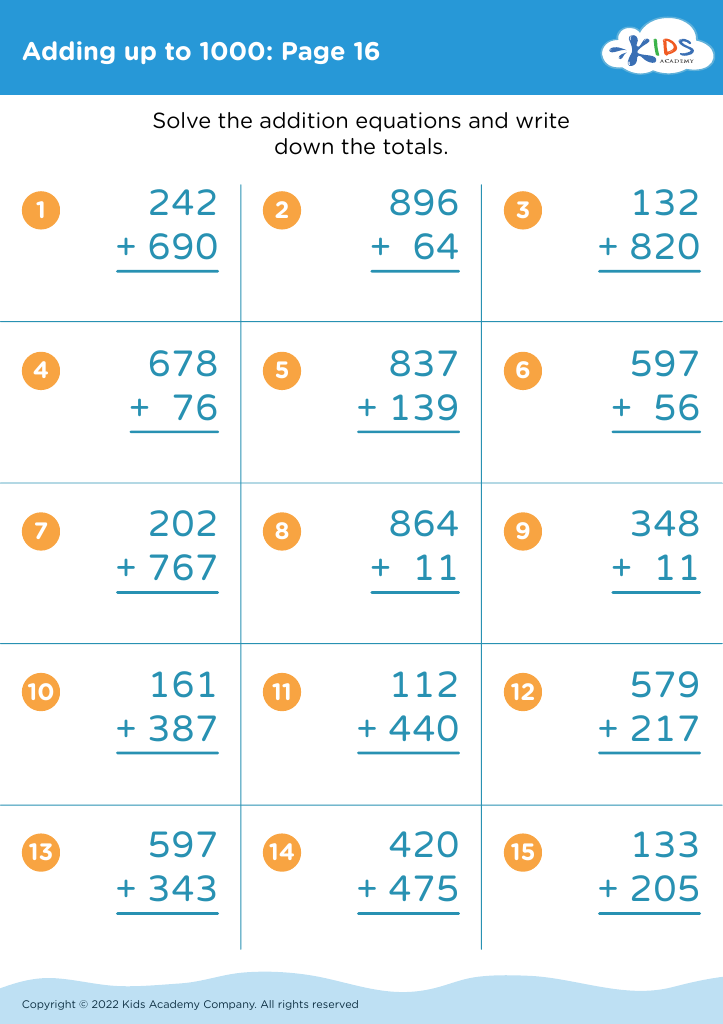
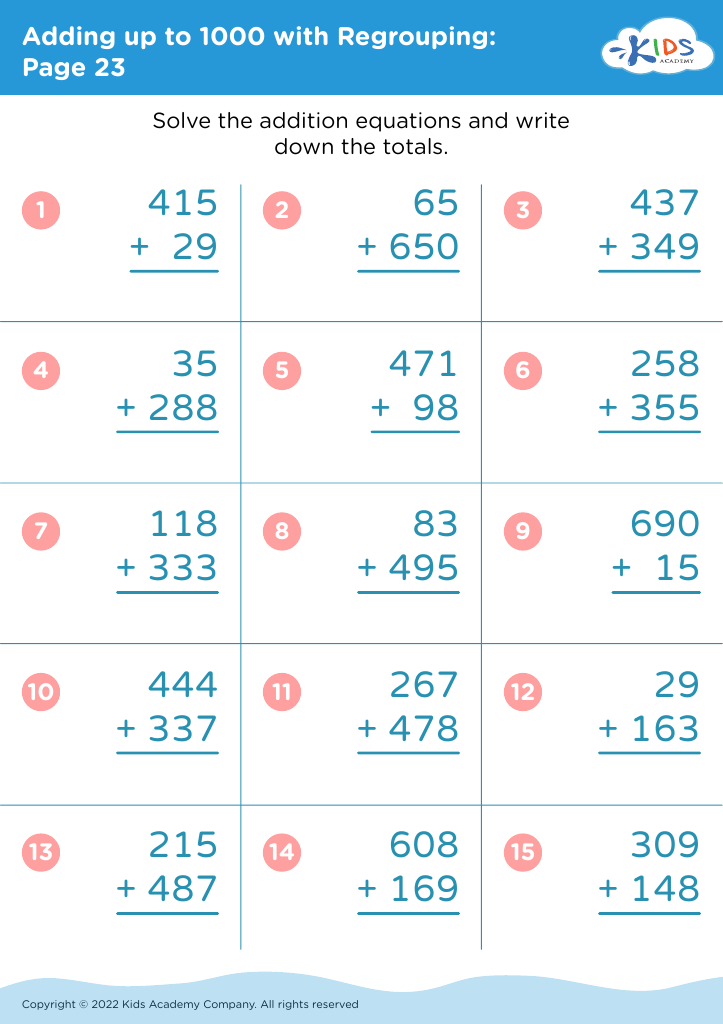
Explore our engaging "Recognize Patterns Addition & Subtraction Worksheets" designed specifically for ages 5-7. These worksheets offer young learners an enjoyable way to enhance their math skills by identifying and creating patterns in basic addition and subtraction problems. With vibrant visuals and interactive exercises, children can practice their counting, develop critical thinking, and solidify foundational math concepts. Perfect for classroom use or extra practice at home, these worksheets align with educational standards, making math fun and accessible. Help your child build confidence and mathematical proficiency with our expertly crafted resources. Visit Kids Academy for more details!








Parents and teachers should care about recognizing patterns in addition and subtraction for ages 5-7 because these skills are foundational for mathematical understanding. At this critical developmental stage, children are still developing cognitive abilities that include problem-solving, logical reasoning, and analytical thinking. Recognizing patterns helps them grasp these concepts more naturally.
Patterns lay the groundwork for learning basic operations like addition and subtraction. For instance, understanding that adding one more object to a set results in a set that’s just one larger helps children make sense of the concept of addition. Similarly, seeing that subtraction removes items helps children understand what it means to take away. When young learners identify and predict patterns, they develop strategies that make learning these operations easier and less intimidating.
These patterns are not only essential for arithmetic but also for understanding higher-level math concepts in the future, such as multiplication tables, number sequences, and algebraic expressions. Beyond math, pattern recognition enhances observational skills and helps in subjects like reading and science. So, early emphasis on these skills creates a smoother path for academic success and helps foster a lifelong love of learning. By focusing on these areas, parents and teachers can ensure children build a strong foundation that supports future educational growth.








