Welcome to our engaging "Understand Fractions Addition & Subtraction Worksheets" for children aged 5-7! These educational resources are designed to build a strong foundation in fractions through fun and interactive activities. Our worksheets will help young learners master the concept of adding and subtracting fractions with ease. Each worksheet is crafted to enhance critical thinking and problem-solving skills while keeping learning enjoyable. Perfect for classroom use or at-home practice, these resources aim to boost confidence and comprehension in young mathematicians. Explore our collection and watch your child develop a love for fractions as they sharpen their math skills!
Check out this FREE Trial Lesson on Addition & Subtraction for age 5-7!

P

Favorites
With answer key
Interactive
  • 5-7
  • Understand fractions
  • Addition & Subtraction
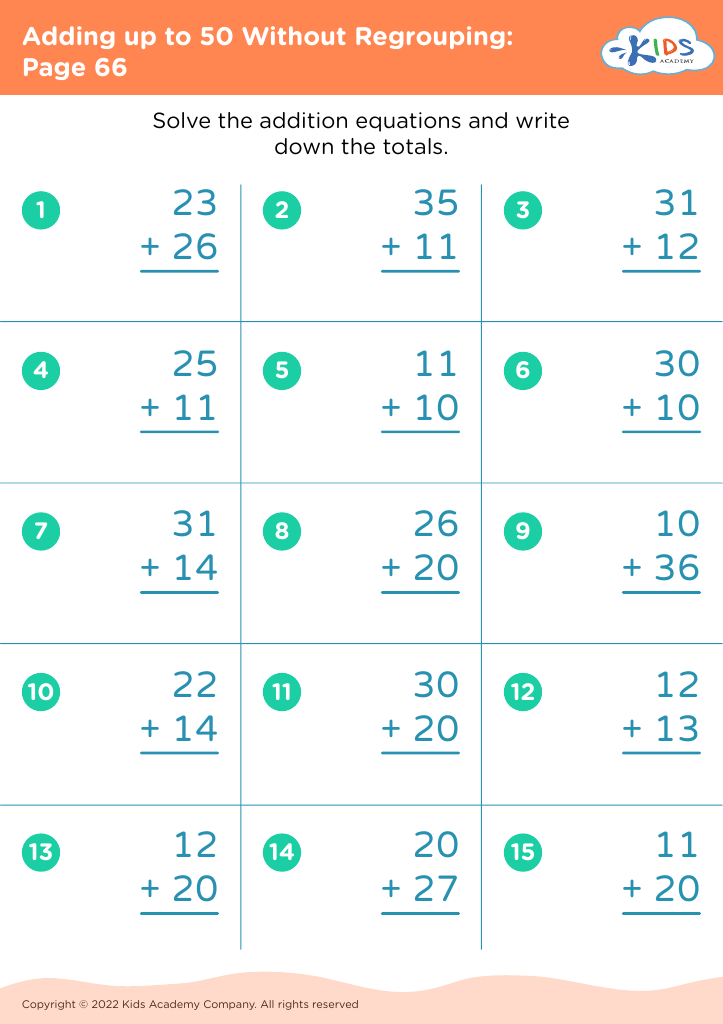
Adding up to 50 Without Regrouping: Page 66
Worksheet
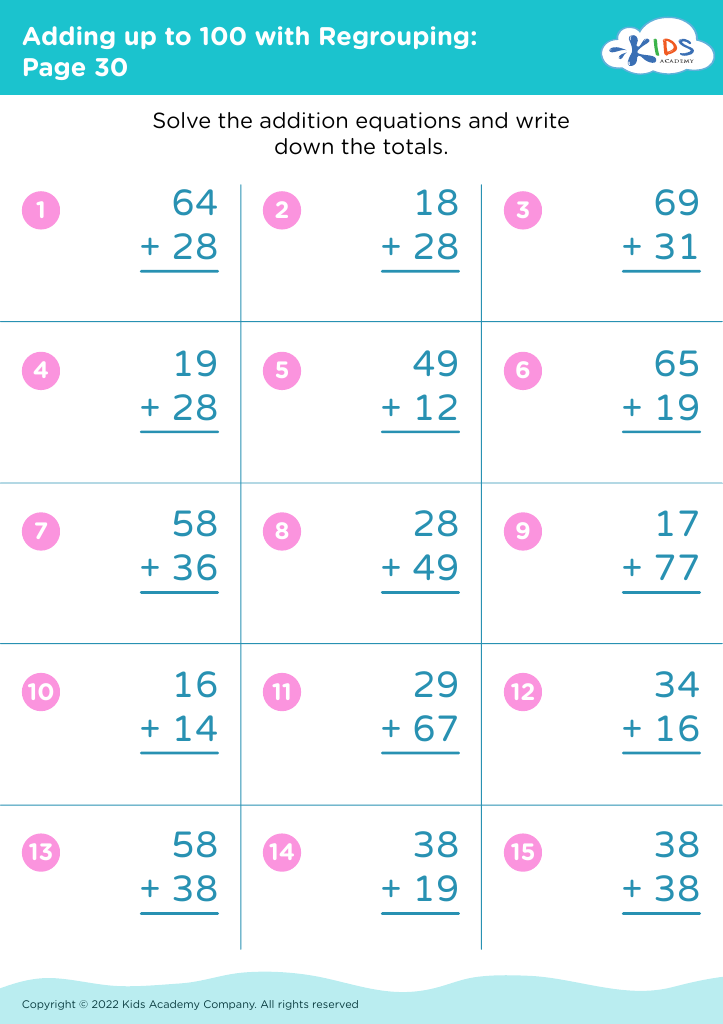
Adding up to 100 with Regrouping: Page 30
Worksheet
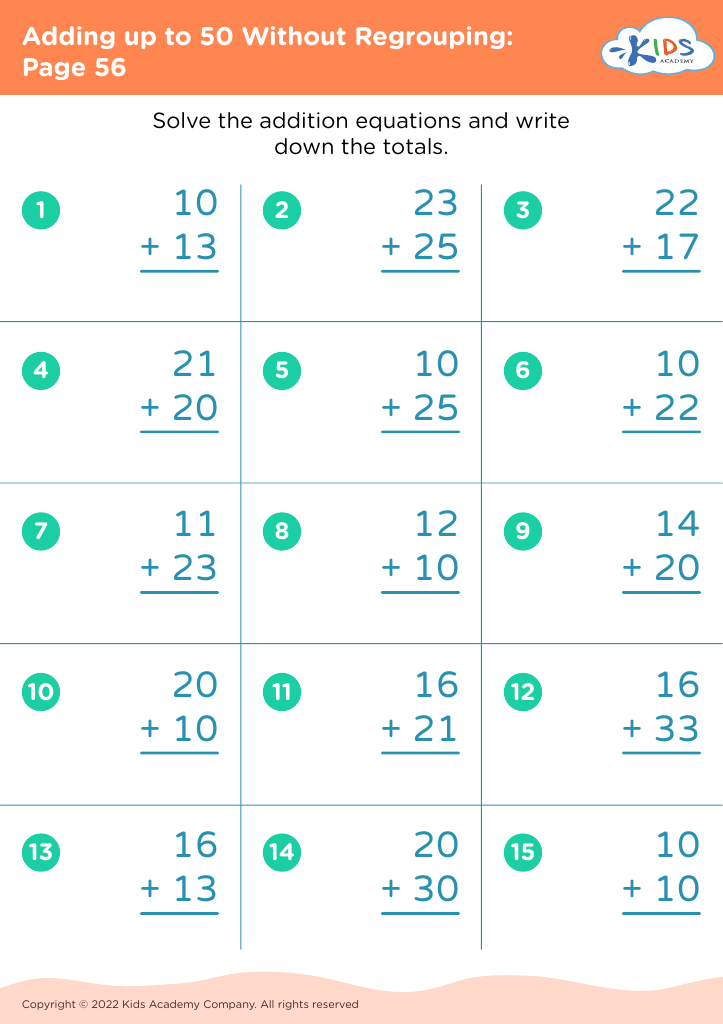
Adding up to 50 Without Regrouping: Page 56
Worksheet
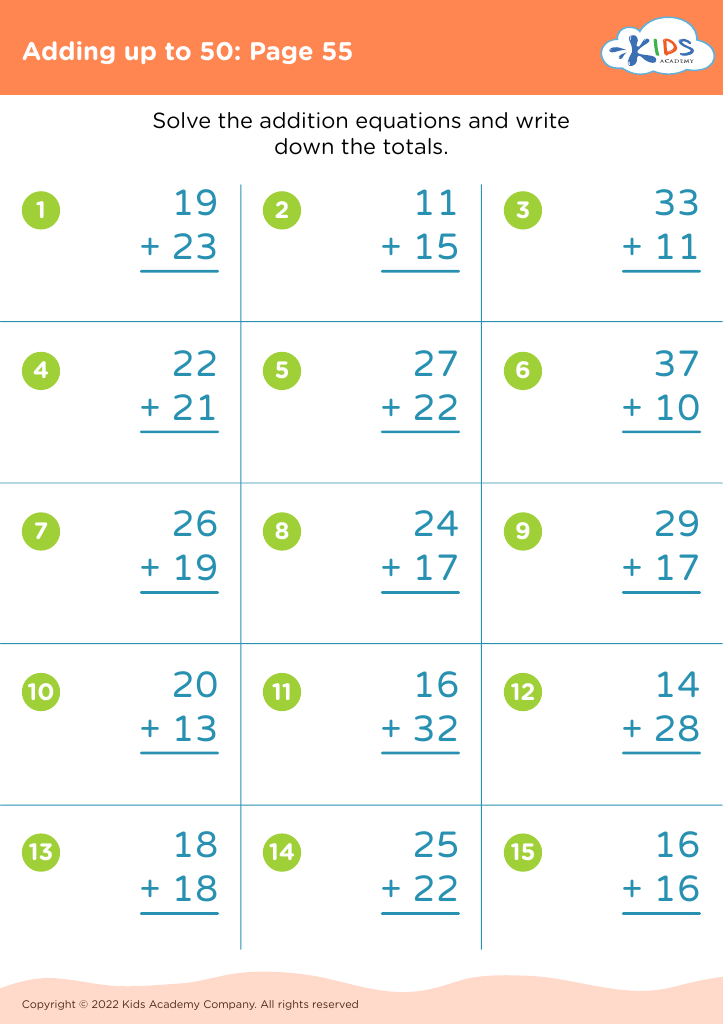
Adding up to 50: Page 55

Adding up to 50: Page 55

Adding up to 50: Page 55
Worksheet
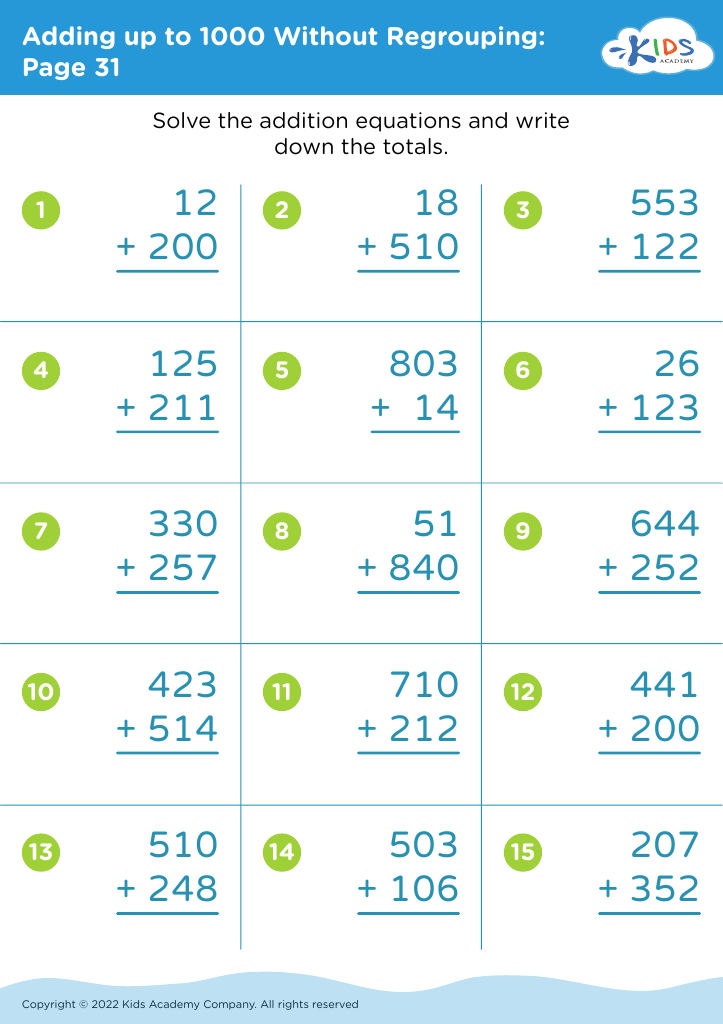
Adding up to 1000 Without Regrouping: Page 31
Worksheet
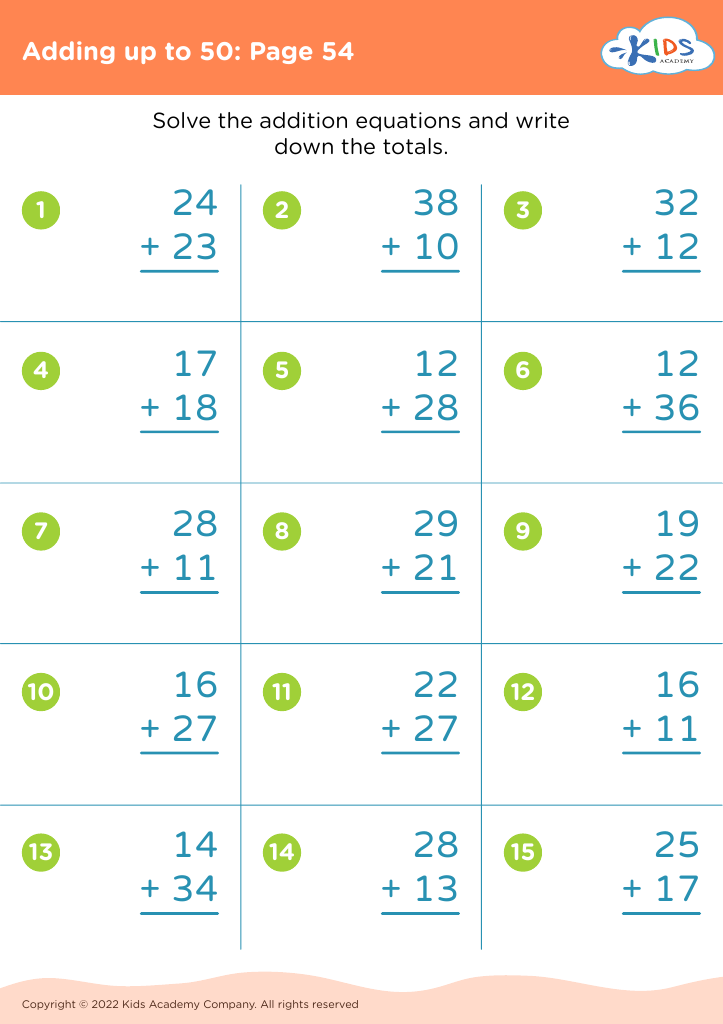
Adding up to 50: Page 54

Adding up to 50: Page 54

Adding up to 50: Page 54
Worksheet
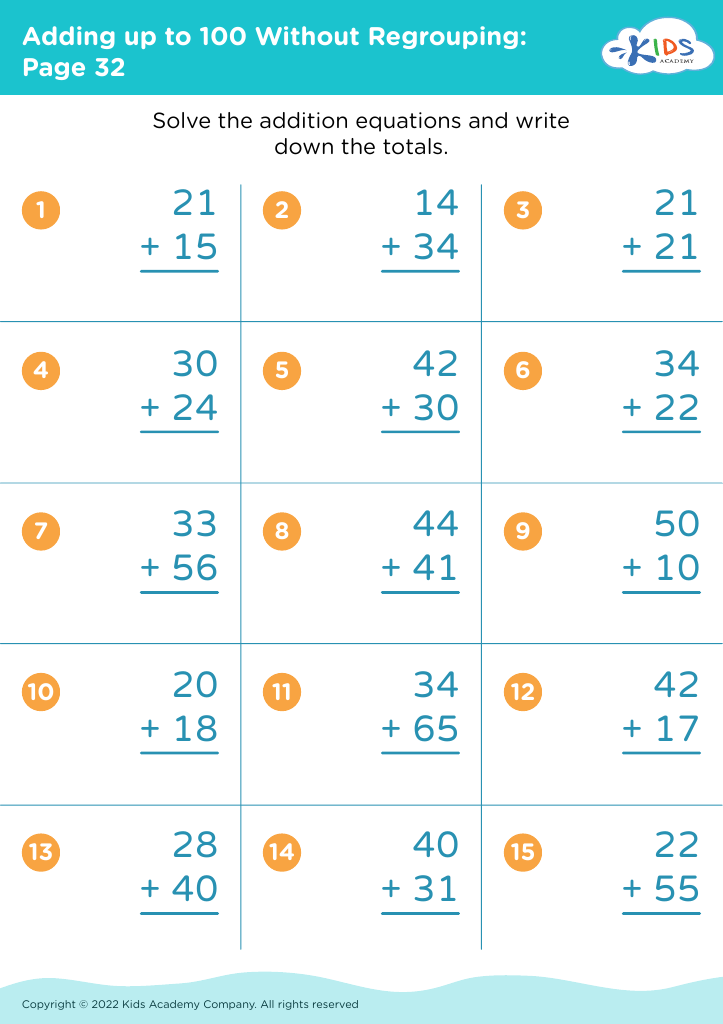
Adding up to 100 Without Regrouping: Page 32
Worksheet
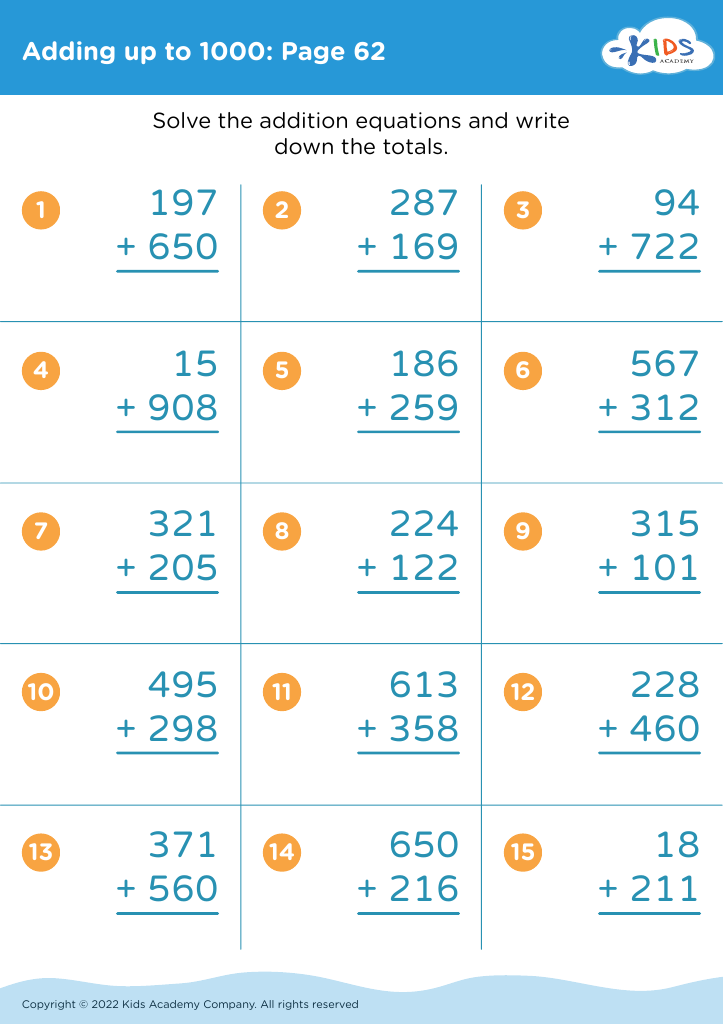
Adding up to 1000: Page 62

Adding up to 1000: Page 62

Adding up to 1000: Page 62
Worksheet
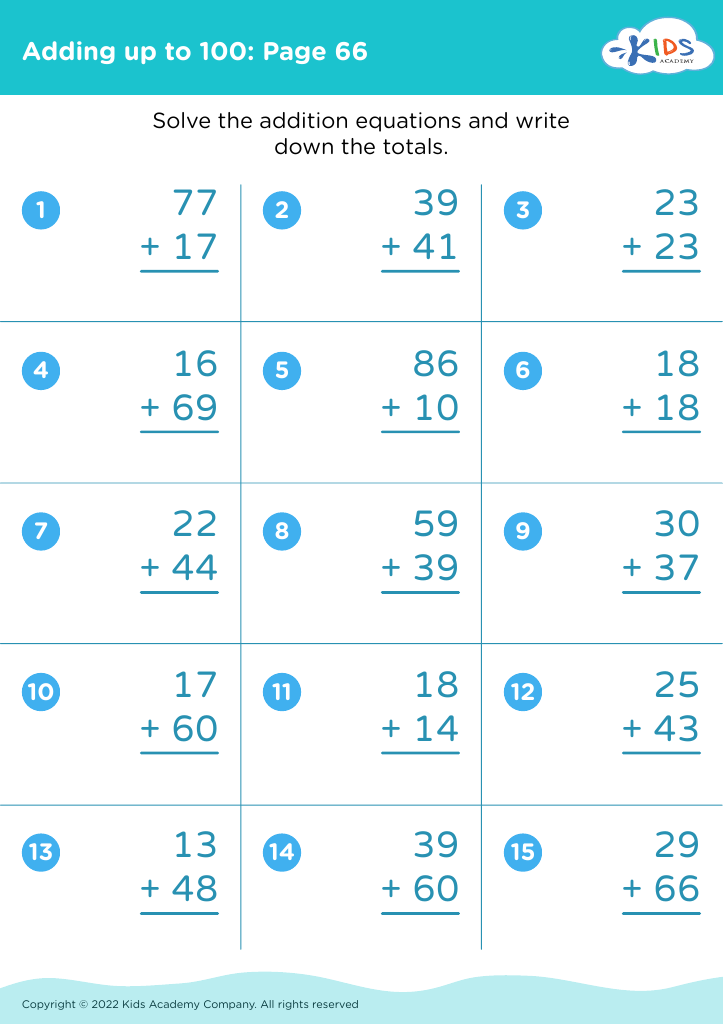
Adding up to 100: Page 66

Adding up to 100: Page 66

Adding up to 100: Page 66
Worksheet
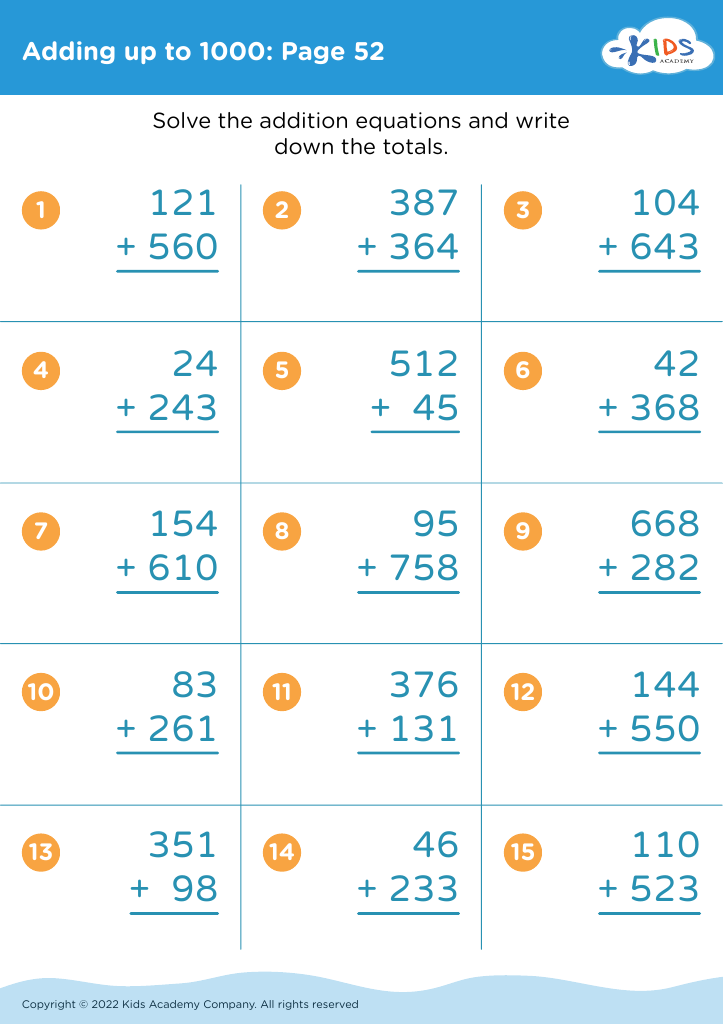
Adding up to 1000: Page 52

Adding up to 1000: Page 52

Adding up to 1000: Page 52
Worksheet
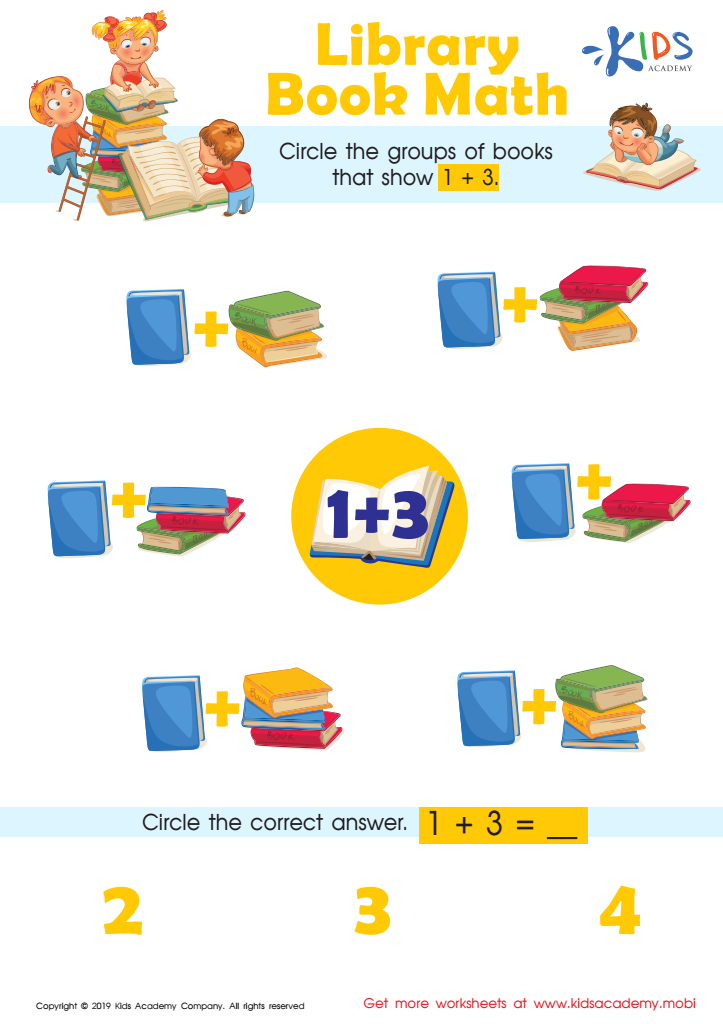
Library Book Math Worksheet

Library Book Math Worksheet

=4. It's essential for your child's growth to know how to count and add. Help them by giving simple tasks and encouraging them. This worksheet is a great tool to use. Ask your kids to name the objects in the picture and help them circle the groups of books that show 1+3=4.
Library Book Math Worksheet
Worksheet
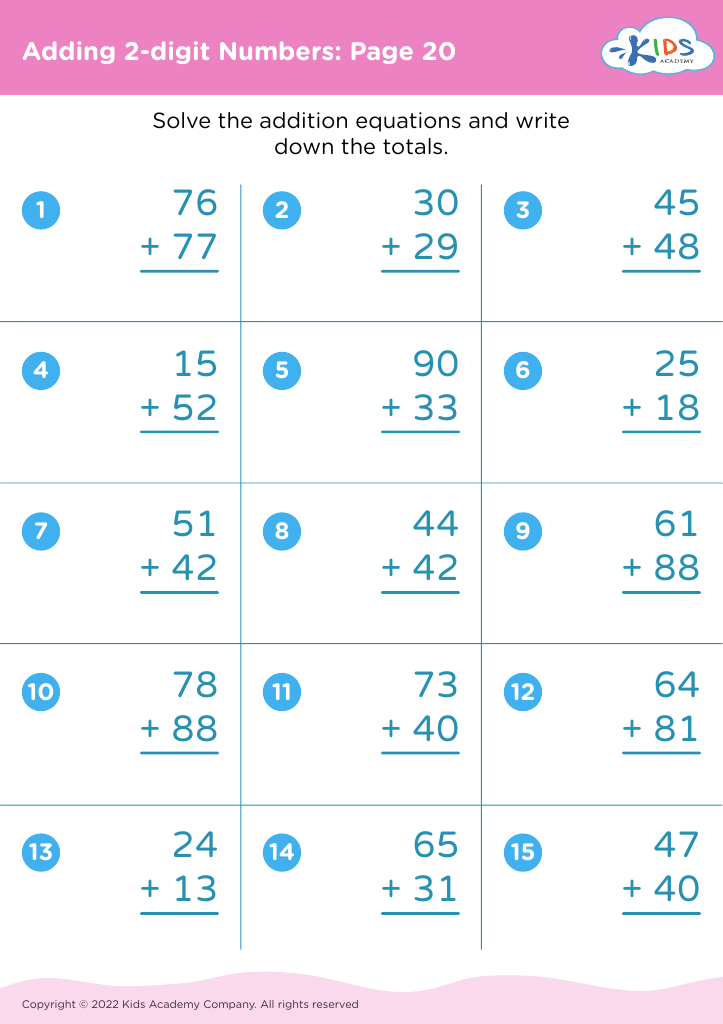
Adding 2-digit Numbers: Page 20

Adding 2-digit Numbers: Page 20

Adding 2-digit Numbers: Page 20
Worksheet
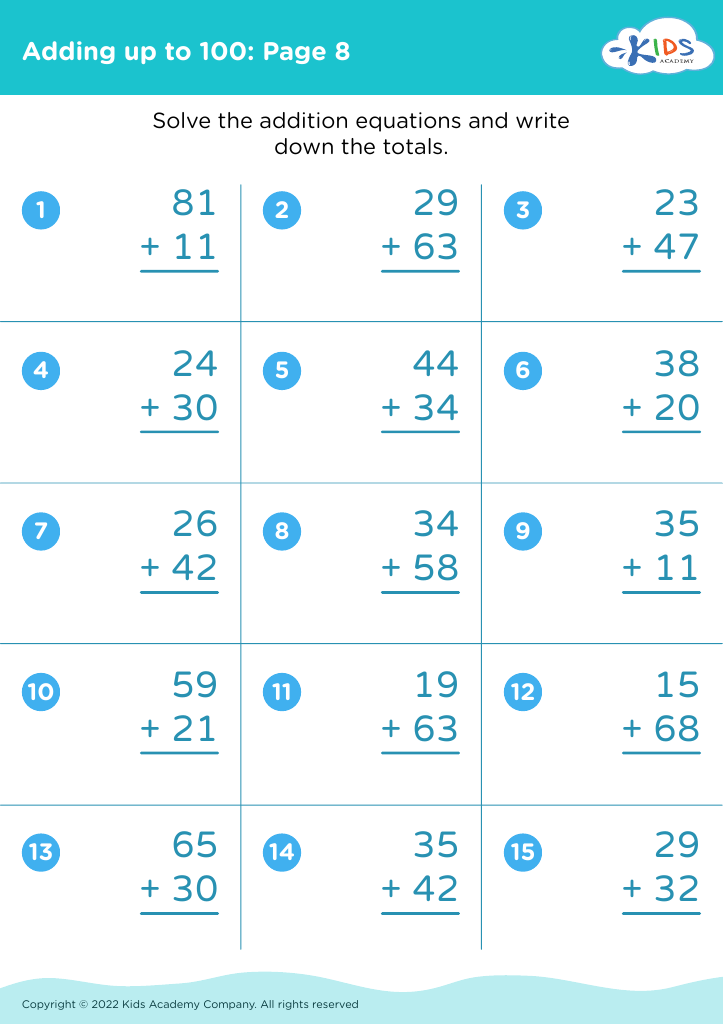
Adding up to 100: Page 8

Adding up to 100: Page 8

Adding up to 100: Page 8
Worksheet
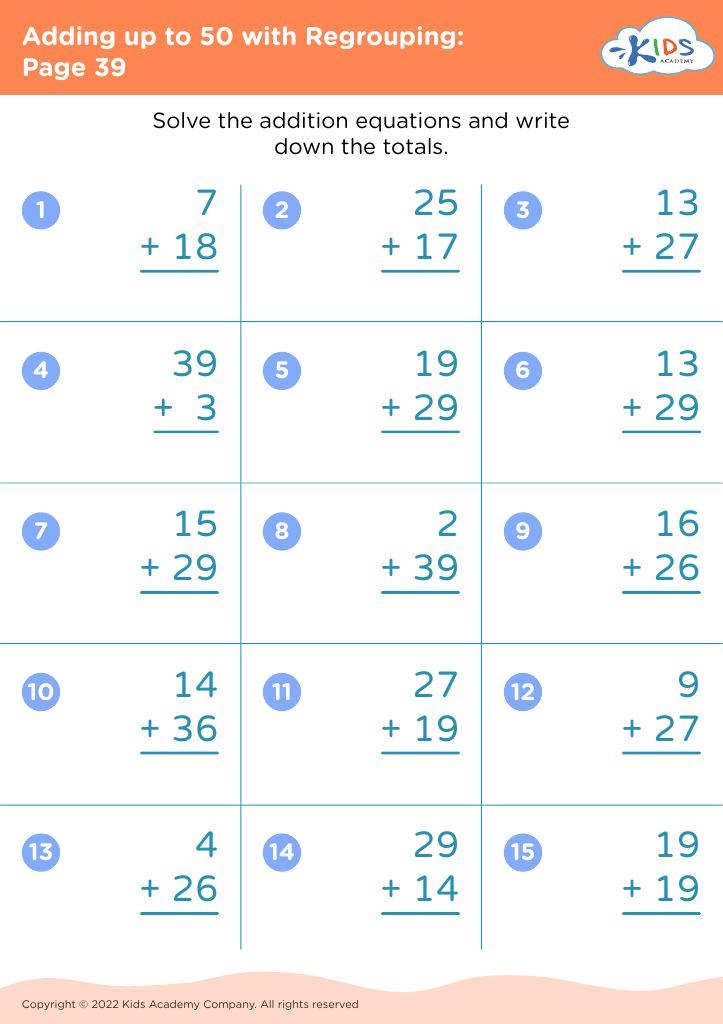
Adding up to 50 with Regrouping: Page 39
Worksheet
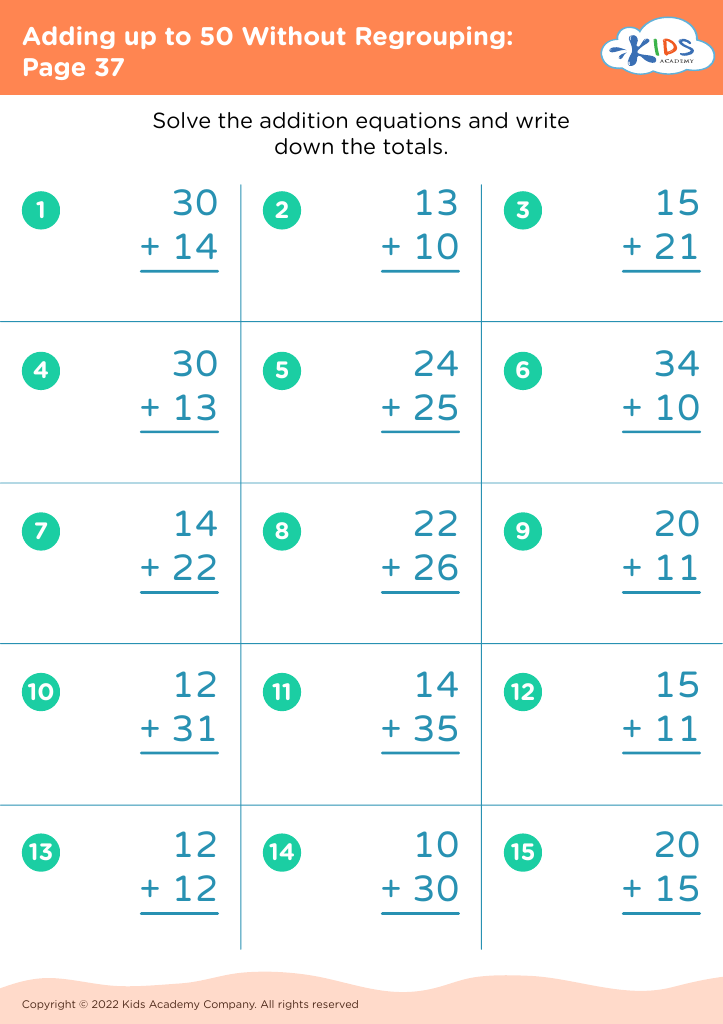
Adding up to 50 Without Regrouping: Page 37
Worksheet
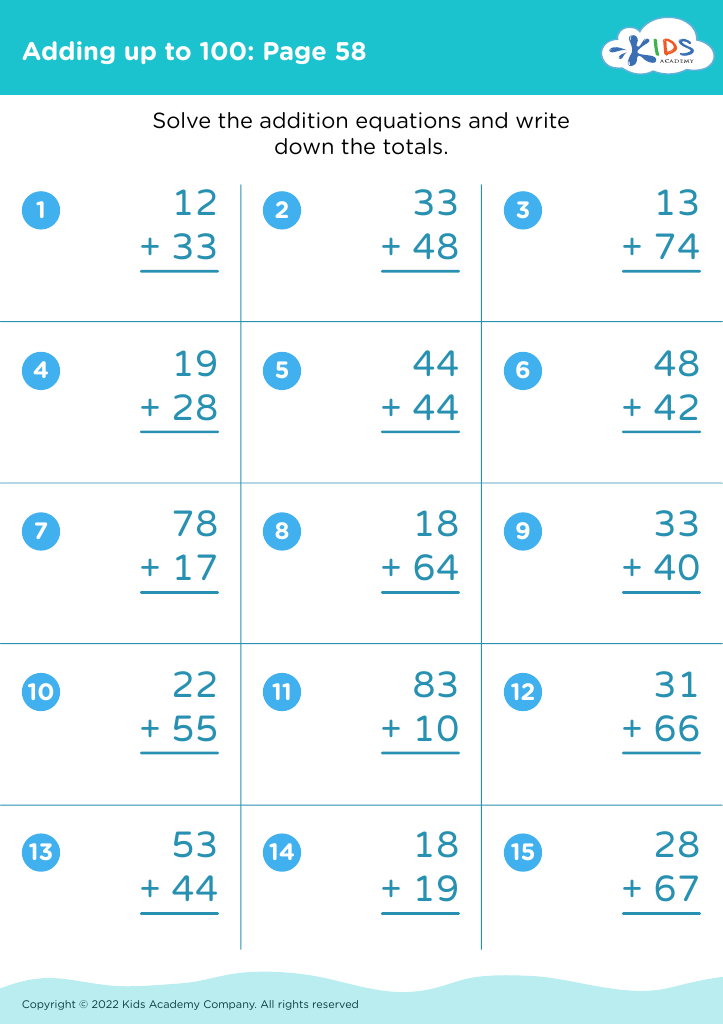
Adding up to 100: Page 58

Adding up to 100: Page 58

Adding up to 100: Page 58
Worksheet
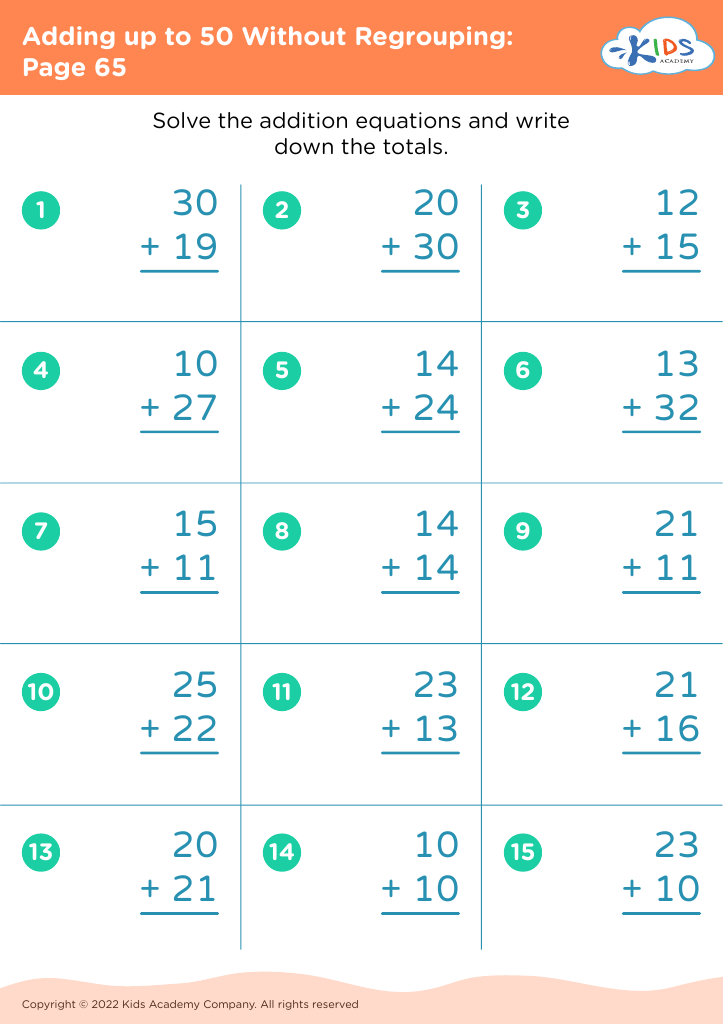
Adding up to 50 Without Regrouping: Page 65
Worksheet
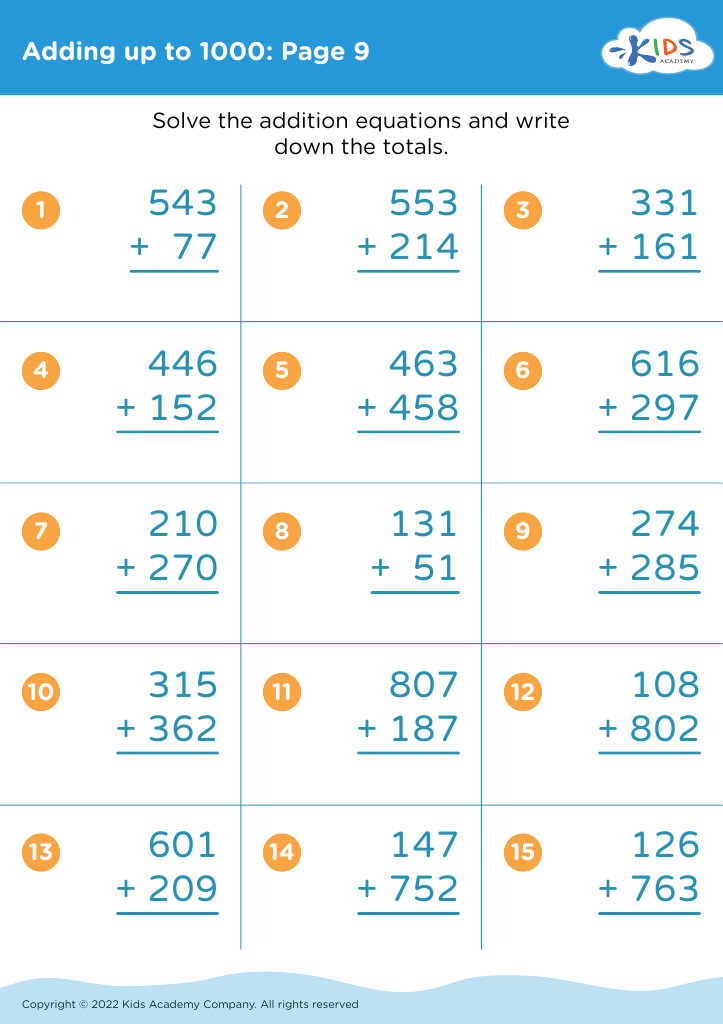
Adding up to 1000: Page 9

Adding up to 1000: Page 9

Adding up to 1000: Page 9
Worksheet
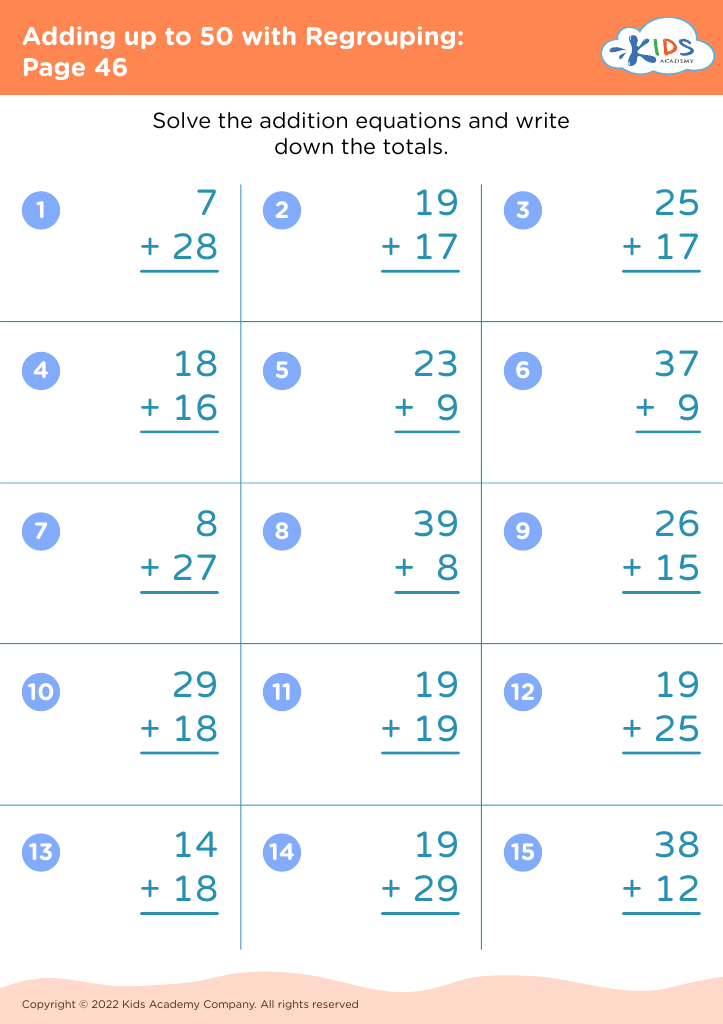
Adding up to 50 with Regrouping: Page 46
Worksheet
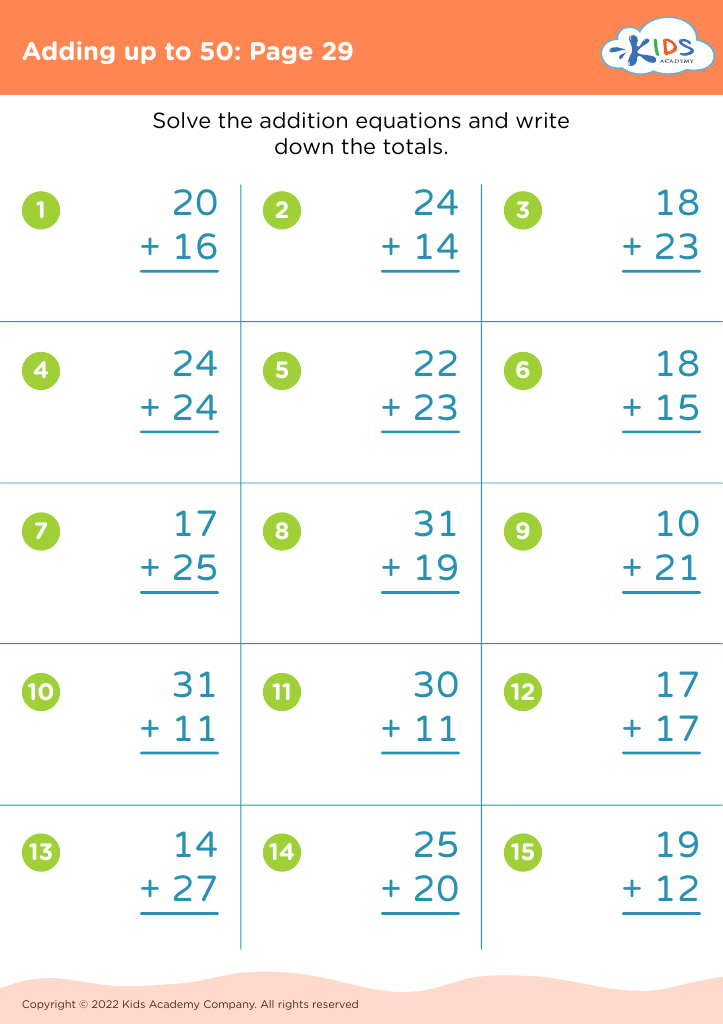
Adding up to 50: Page 29

Adding up to 50: Page 29

Adding up to 50: Page 29
Worksheet


Understanding fractions, addition, and subtraction is crucial for children aged 5 to 7 as it lays the foundation for their future mathematical skills. At this early age, children develop their number sense, which is essential for all higher-level math concepts.

Addressing these topics helps young learners grasp the idea of parts and wholes through visual and practical experiences. For example, when children learn fractions, they can see how two halves make a whole by using divided shapes or sharing food. This concrete representation introduces them to the concepts of division and proportionality early on.

Additionally, mastering addition and subtraction enhances critical thinking and problem-solving skills. These operations are used in everyday life; when children understand them, they can apply this knowledge outside the classroom, such as when managing money or measuring ingredients in a recipe.

Parents and teachers who prioritize these foundational skills foster resilience and confidence in students. A strong grasp of fractions, addition, and subtraction also provides a vital stepping stone for more complex math topics in later years. By investing time in these areas, caregivers can help nurture a positive attitude towards learning and problem-solving that will benefit children throughout their educational journey.