Understanding number relationships Addition & Subtraction Worksheets for Ages 5-7
8 filtered results
-
From - To
Explore our "Understanding Number Relationships: Addition & Subtraction Worksheets" designed for children ages 5-7. These engaging resources help young learners grasp the foundational concepts of addition and subtraction by visualizing number relationships. Each worksheet encourages critical thinking and problem-solving through fun exercises and illustrations, making math enjoyable. Reinforcing skills in counting, number recognition, and basic operations, our worksheets prepare children for more complex mathematical concepts. Perfect for at-home learning or classroom use, these activities support early math skill development in a captivating and interactive way. Equip your child with a solid mathematical foundation while having fun!
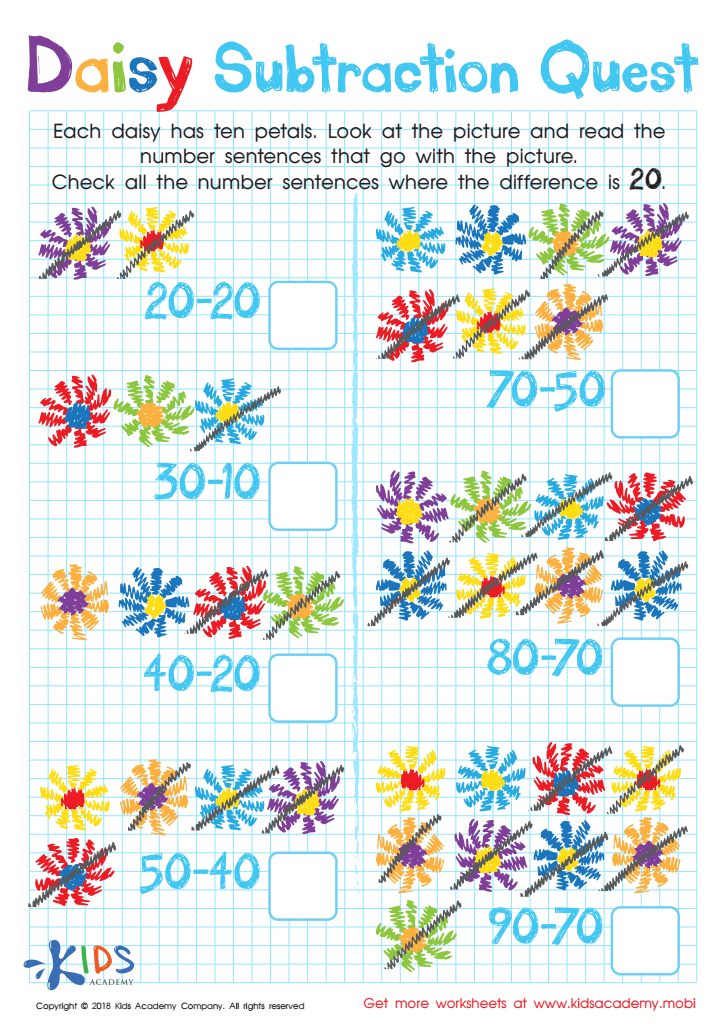
Daisy Subtraction Quest Worksheet
 Assign to My Students
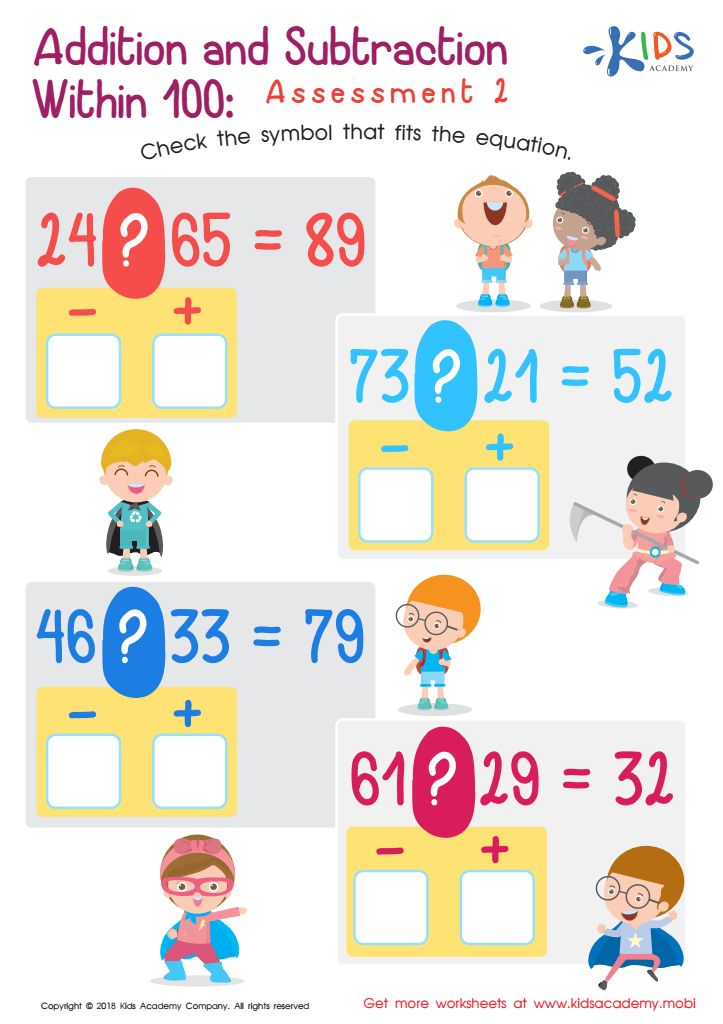
Addition and Subtraction Within 1: Assessment 2 Worksheet
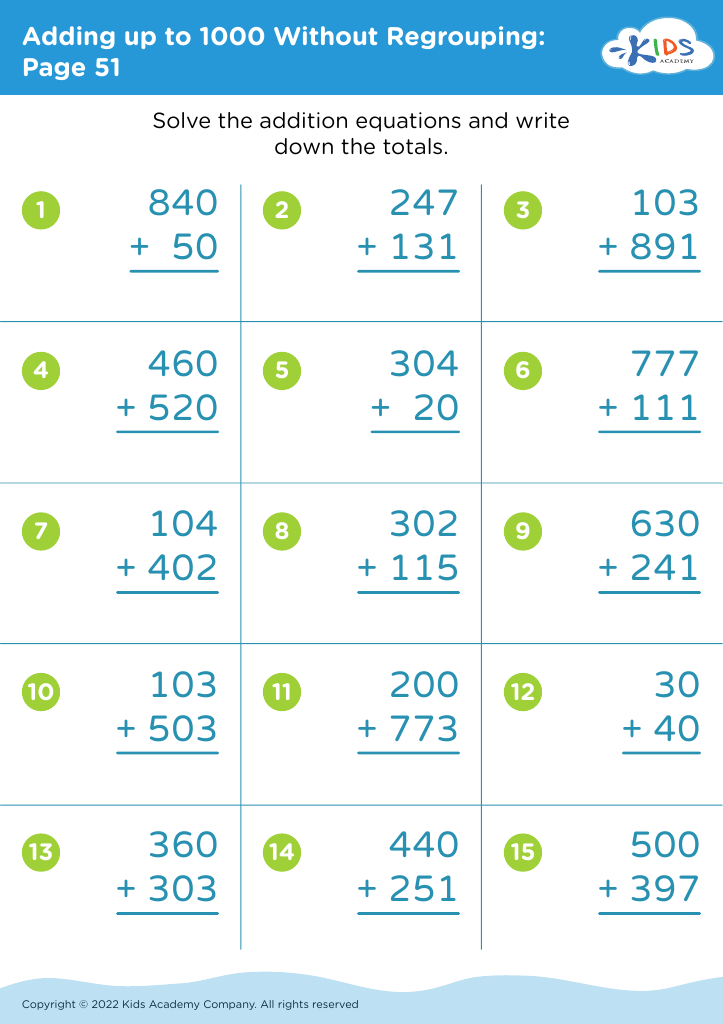
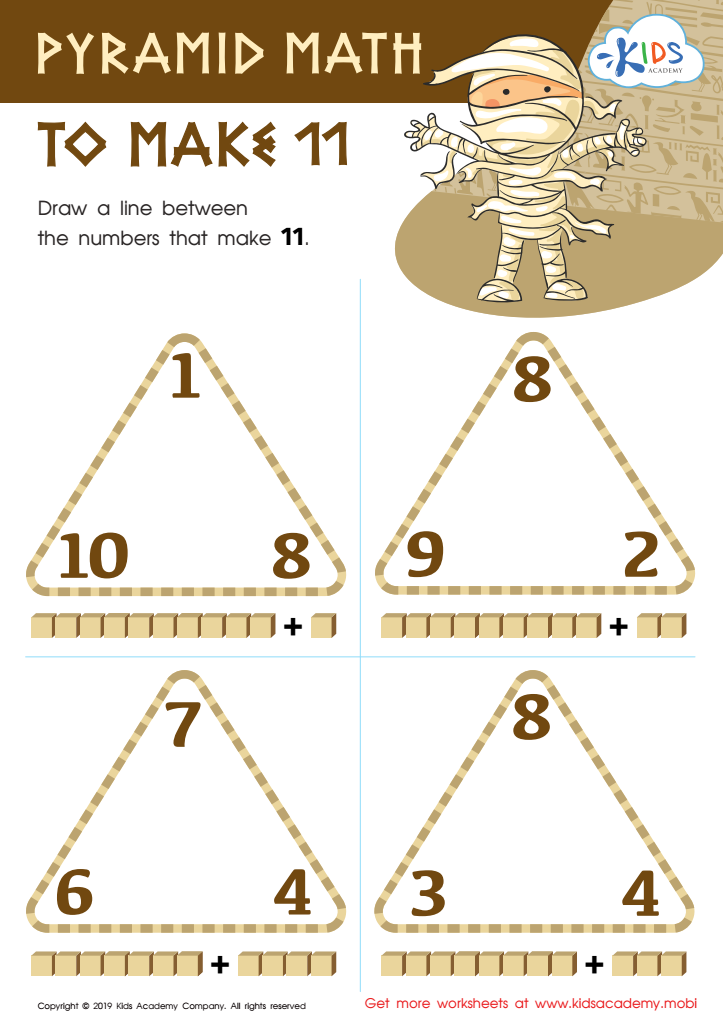
Pyramid Math to Make 11 Worksheet








Understanding number relationships, particularly in addition and subtraction, is crucial for children aged 5-7 as it lays the foundation for their future mathematical competence. At this stage, children transition from concrete counting to abstract reasoning, and grasping the relationships between numbers helps them make sense of mathematical concepts. When children explore addition and subtraction in relation to each other, they begin to understand how problems can be solved in multiple ways, fostering flexibility in thinking.
Moreover, a strong grasp of these relationships enhances problem-solving skills. Children who can decompose numbers, recognize patterns, and connect addition with subtraction are better equipped to tackle more complex mathematical operations in later grades. This foundational understanding also supports overall cognitive development and academic confidence, minimizing math anxiety as children progress.
For parents and teachers, nurturing this comprehension is vital, as it encourages not only mathematical skills but also critical thinking and perseverance. Engaging children through games, stories, and relatable examples makes learning enjoyable and impactful. Ultimately, by caring about these number relationships, adults play an integral role in shaping confident, capable learners who can navigate numerical challenges throughout their educational journey.








