Understanding number sequence Addition & Subtraction Worksheets for Ages 5-7
4 filtered results
-
From - To
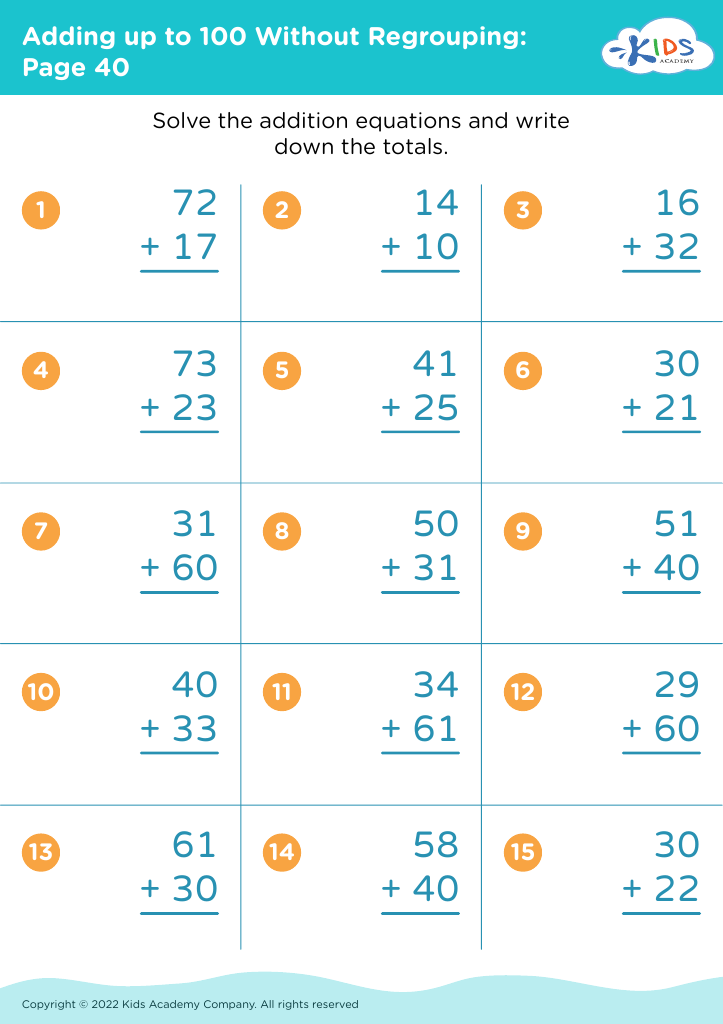
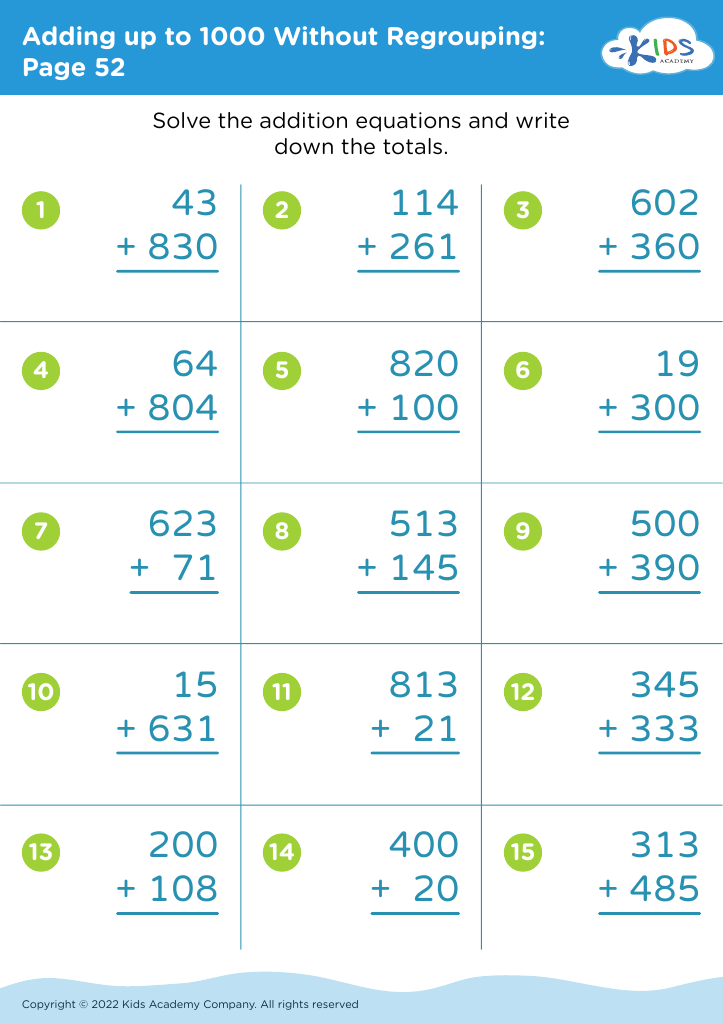
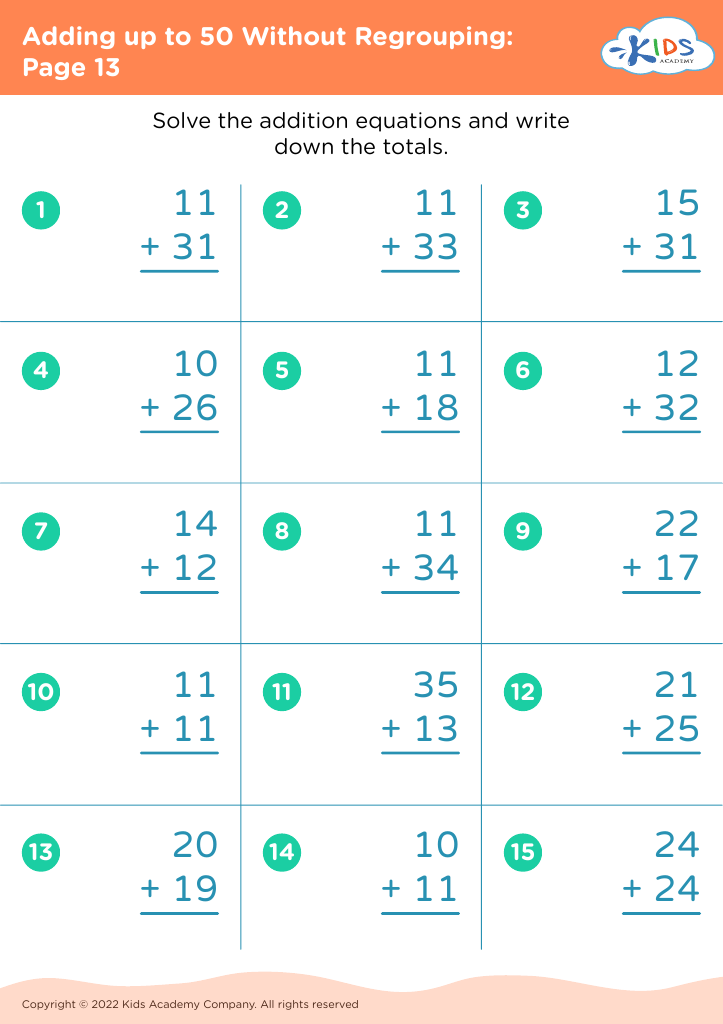
Explore our "Understanding Number Sequence Addition & Subtraction Worksheets" tailored for children aged 5-7! These engaging worksheets help young learners develop essential math skills by focusing on number sequences in addition and subtraction. With colorful visuals and interactive exercises, kids will reinforce their understanding of patterns, enhance their counting skills, and build confidence in math. Ideal for home or classroom use, our resources encourage active participation and make learning fun. Dive into a variety of exercises designed to foster critical thinking and problem-solving abilities in young minds. Discover the joy of numbers and help your child succeed in their math journey!
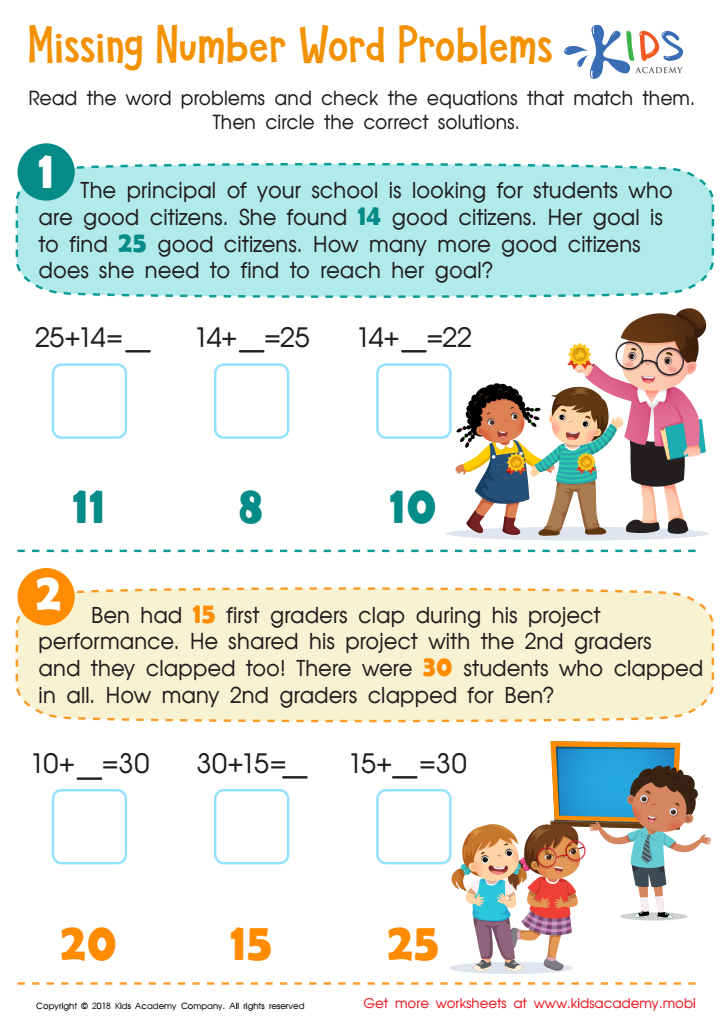
Missing Number Word Problems Worksheet
 Assign to My Students








Understanding number sequences, as well as addition and subtraction, is fundamental for children aged 5-7 as it lays a vital foundation for their future mathematical skills. At this stage, children are developing their number sense, which helps them understand quantity, comparison, and basic arithmetic operations. Learning number sequences—such as counting forwards and backwards—introduces youngsters to patterns and relationships between numbers.
When children grasp these concepts, they develop critical problem-solving and reasoning skills that are essential in everyday life. Addition and subtraction, as primary operations, enable students to manipulate numbers, understand the concept of 'more' and 'less', and manage simple word problems. This early exposure fosters confidence and prepares them for more complex math concepts, paving the way for success in future mathematics education.
Moreover, engaging parents and teachers in these learning processes supports a child’s motivation and interest in mathematics. Continuous practice in these areas promotes cognitive development and helps children apply math to real-world scenarios. A solid grasp of number sequences and basic operations sets the stage for lifelong learning and can significantly influence a child's attitude toward science, technology, engineering, and mathematics (STEM) fields in later years.








