Understanding sequencing Addition & Subtraction Worksheets for Ages 5-7
7 filtered results
-
From - To
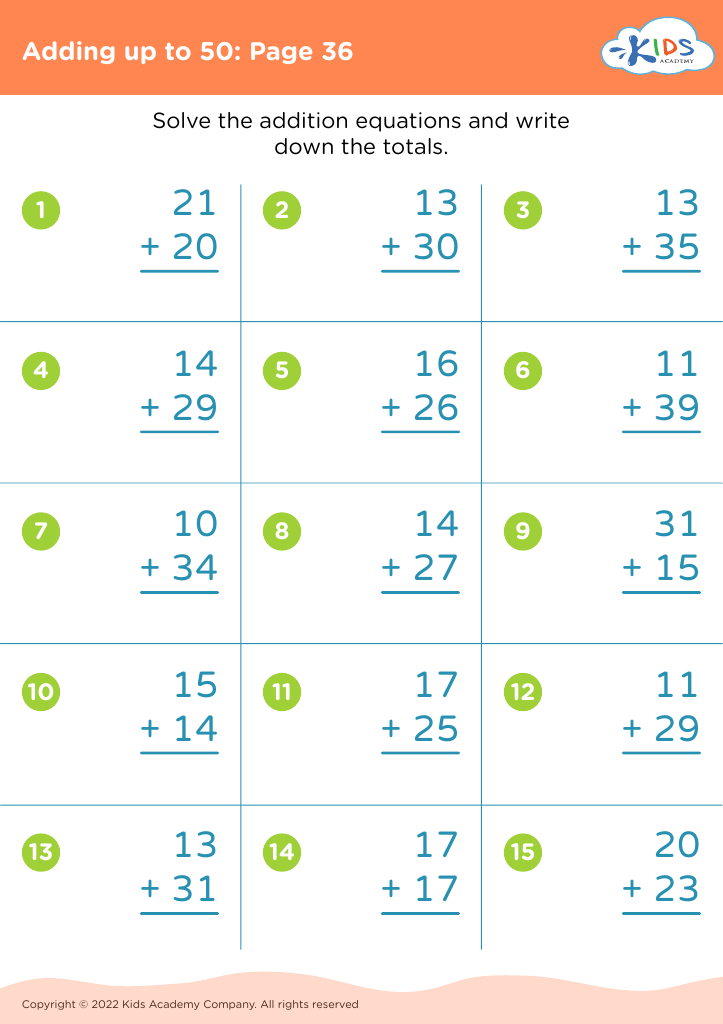
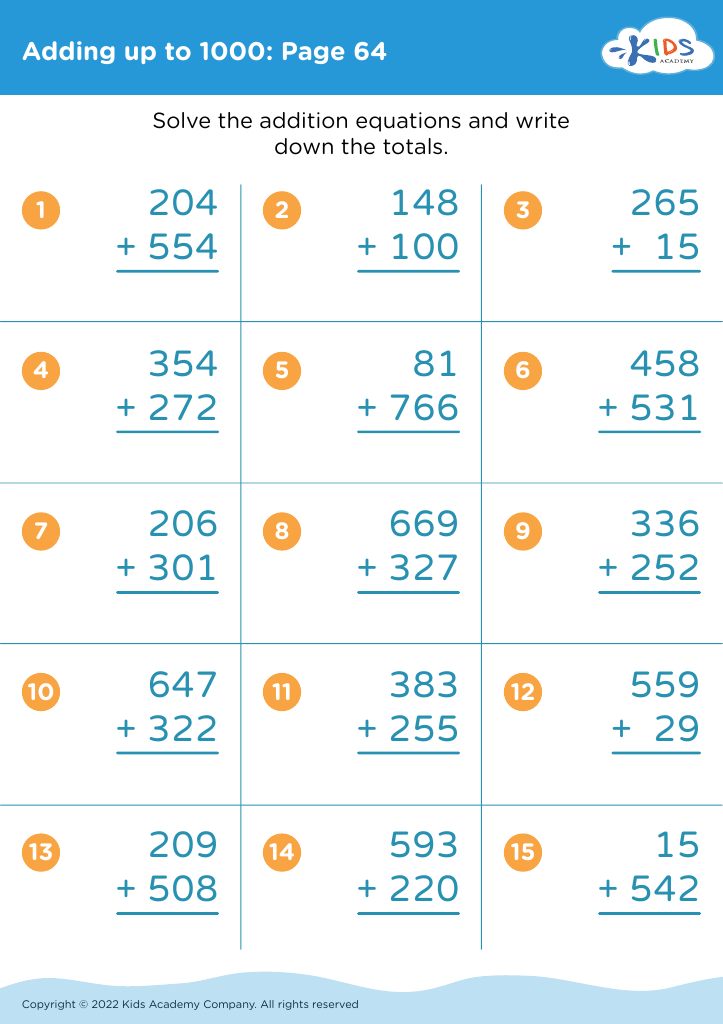
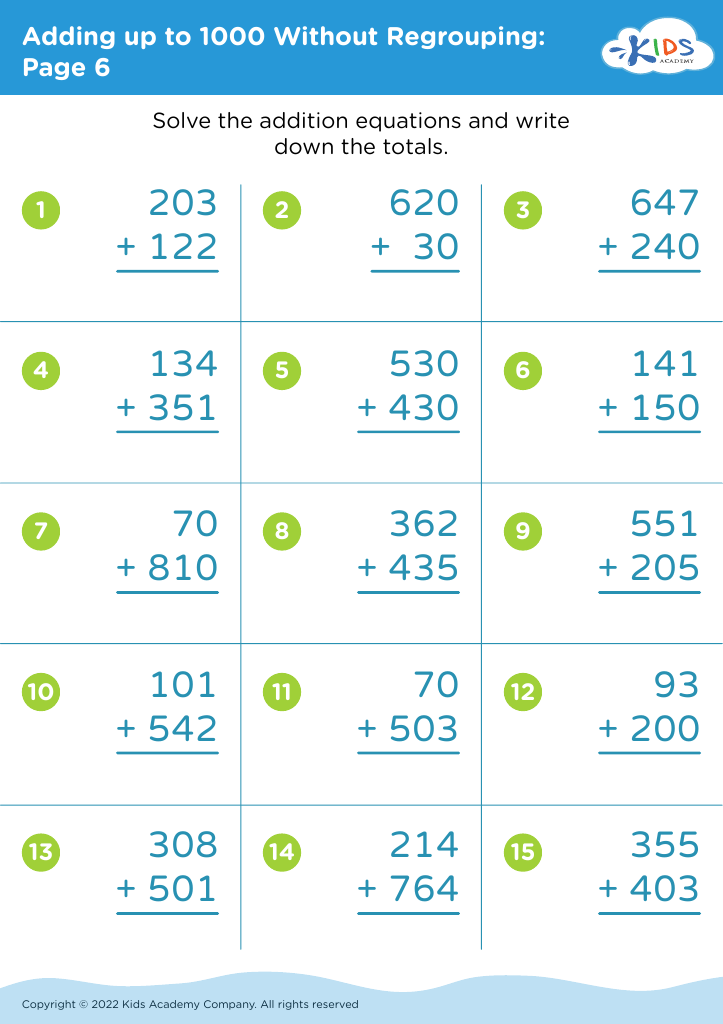
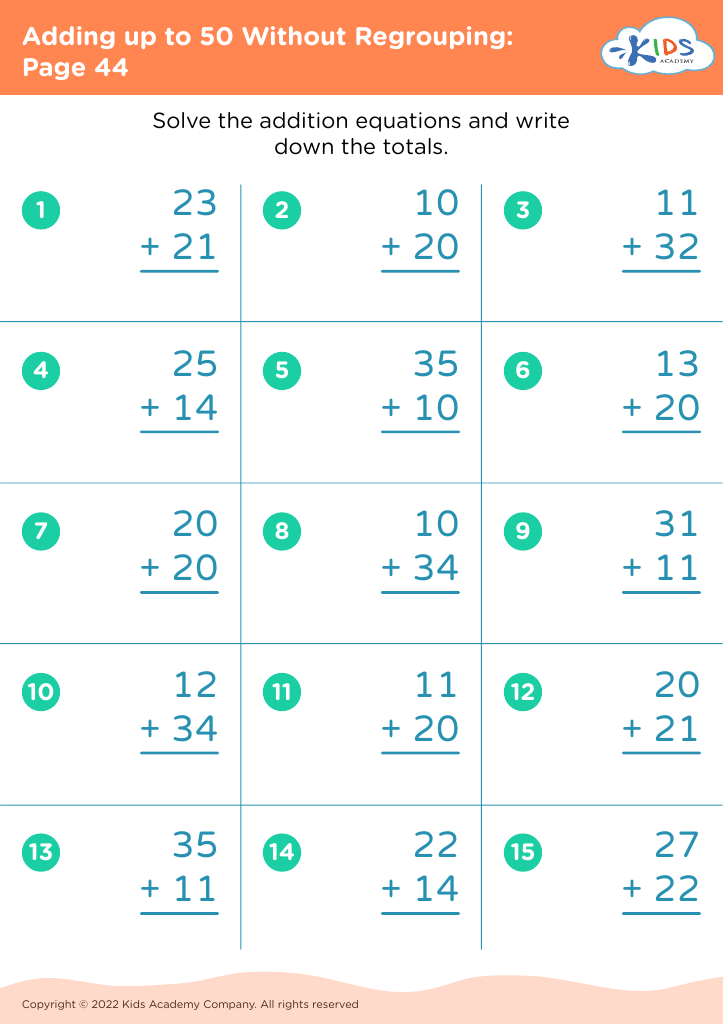
Discover the essential skill of sequencing with our engaging Addition & Subtraction worksheets, specifically designed for children aged 5 to 7. These fun and interactive activities help young learners develop problem-solving strategies, enabling them to understand the order of numbers in addition and subtraction operations. By practicing sequencing, kids gain confidence in tackling math challenges and improve their overall arithmetic skills. Our thoughtfully crafted worksheets promote critical thinking and provide a clear foundation for future mathematical concepts. Ideal for home or classroom use, our resources make math learning enjoyable and effective. Unlock your child's potential today with these essential worksheets!
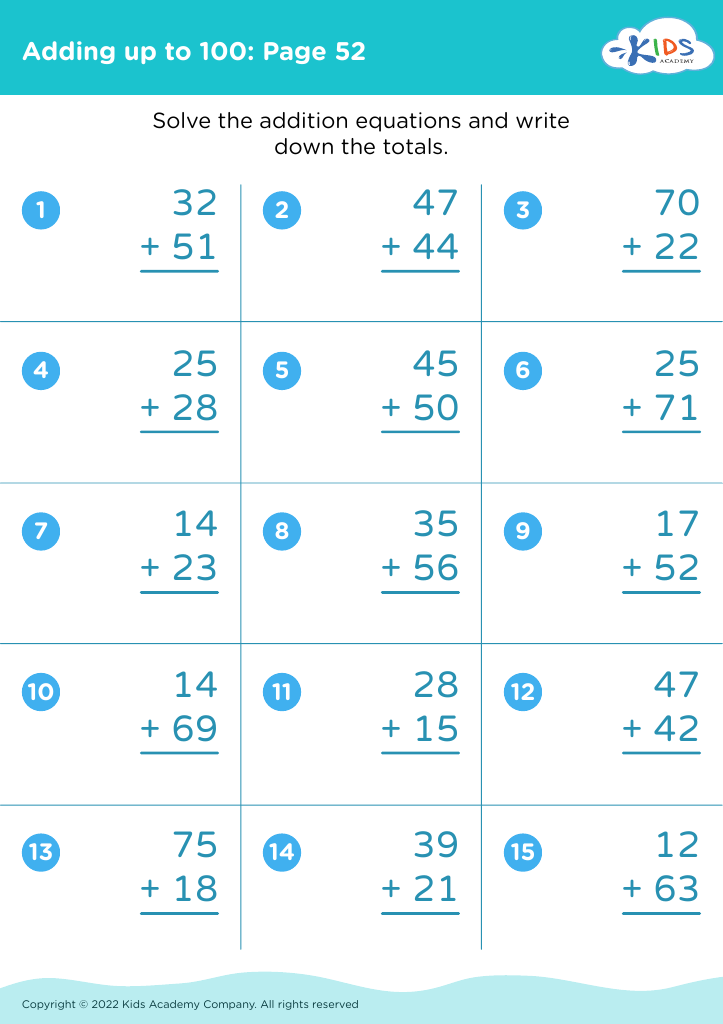
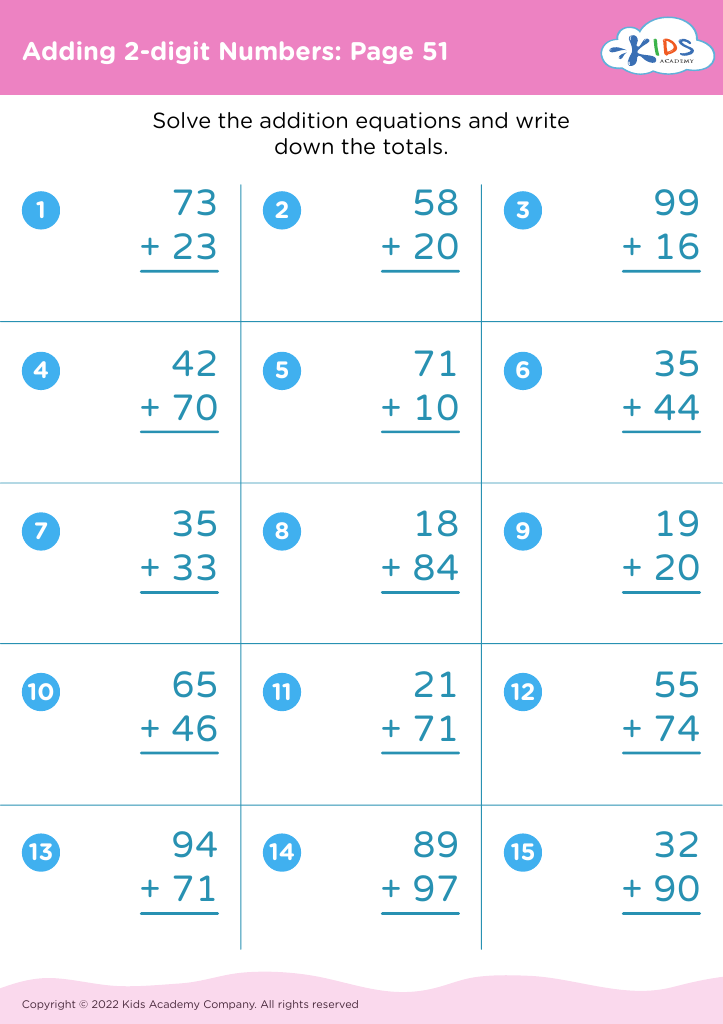
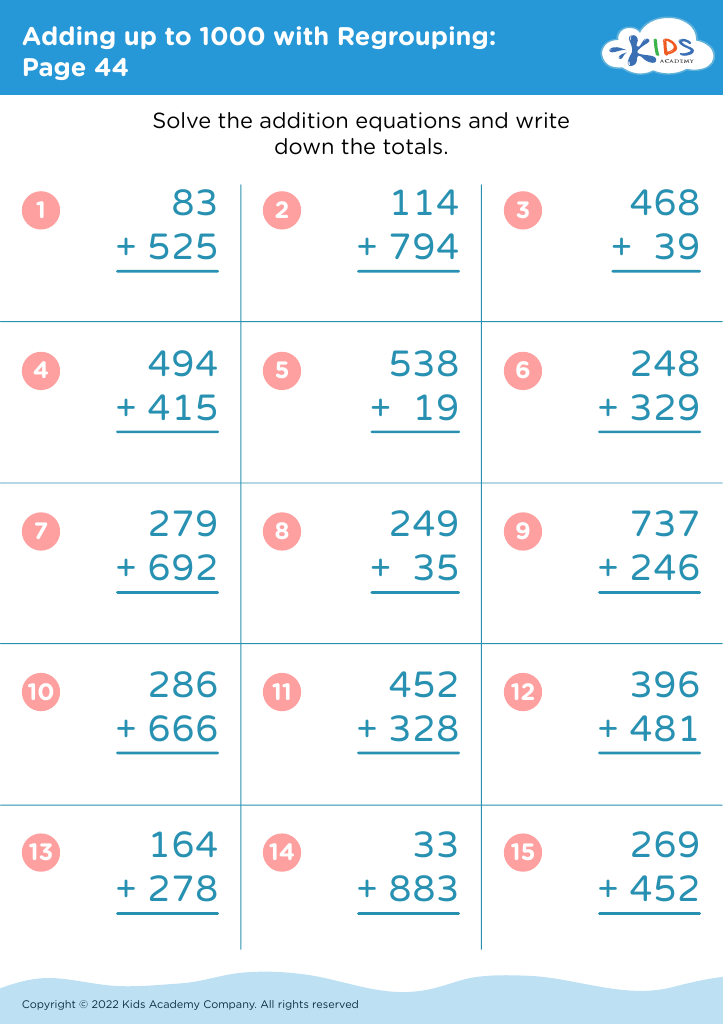








Understanding sequencing in addition and subtraction is crucial for children aged 5-7 because it lays the foundation for effective mathematical thinking. At this age, children engage in basic arithmetic that forms the backbone of their future math skills. When parents and teachers emphasize the concept of sequencing—understanding the order in which numbers and operations are applied—children become more proficient in problem-solving.
For instance, grasping how to sequence numbers helps children comprehend word problems, where the order of events significantly affects outcomes. Additionally, awareness of the sequential nature of addition and subtraction promotes better mental math abilities. Instead of relying solely on rote memorization of facts, they learn to strategize and reason through calculations, aiding long-term retention.
Parents and teachers can also foster critical thinking by using real-life examples, such as sharing or taking away, reinforcing the sequence's importance. By nurturing these skills early, educators and parents set children on a path toward confidence and success in mathematics, paving the way for more complex concepts in their educational journey. Ultimately, understanding sequencing in addition and subtraction not only enhances math fluency but also builds the essential analytical skills children will rely on throughout their academic lives.








