Animal identification Addition Worksheets for Ages 5-7 - Page 2
27 filtered results
-
From - To







.jpg)
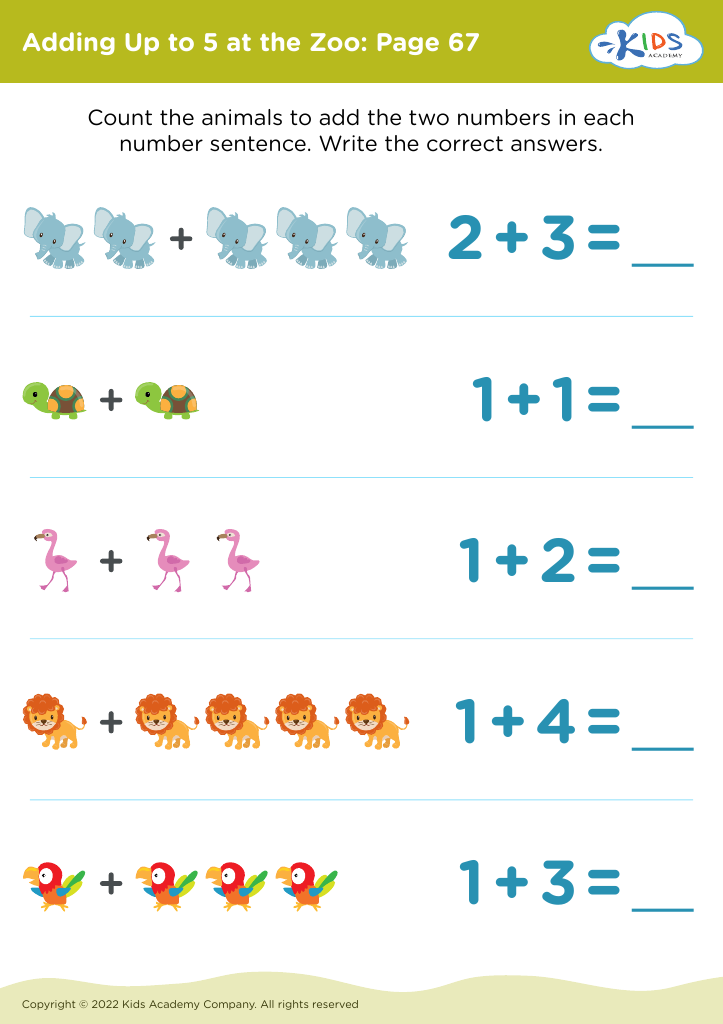
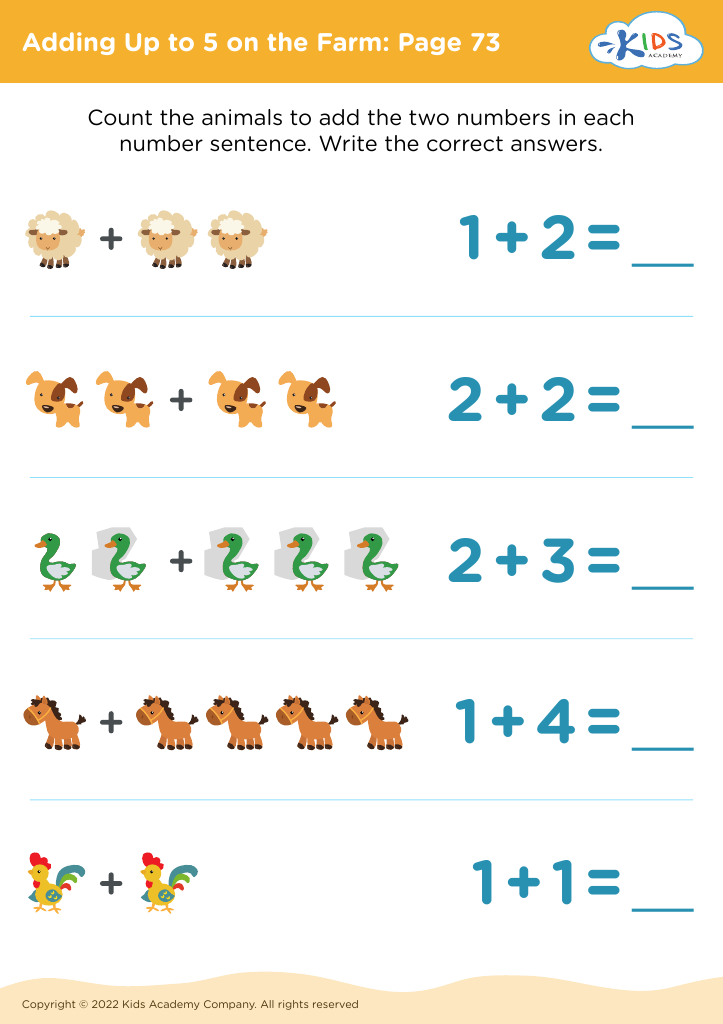
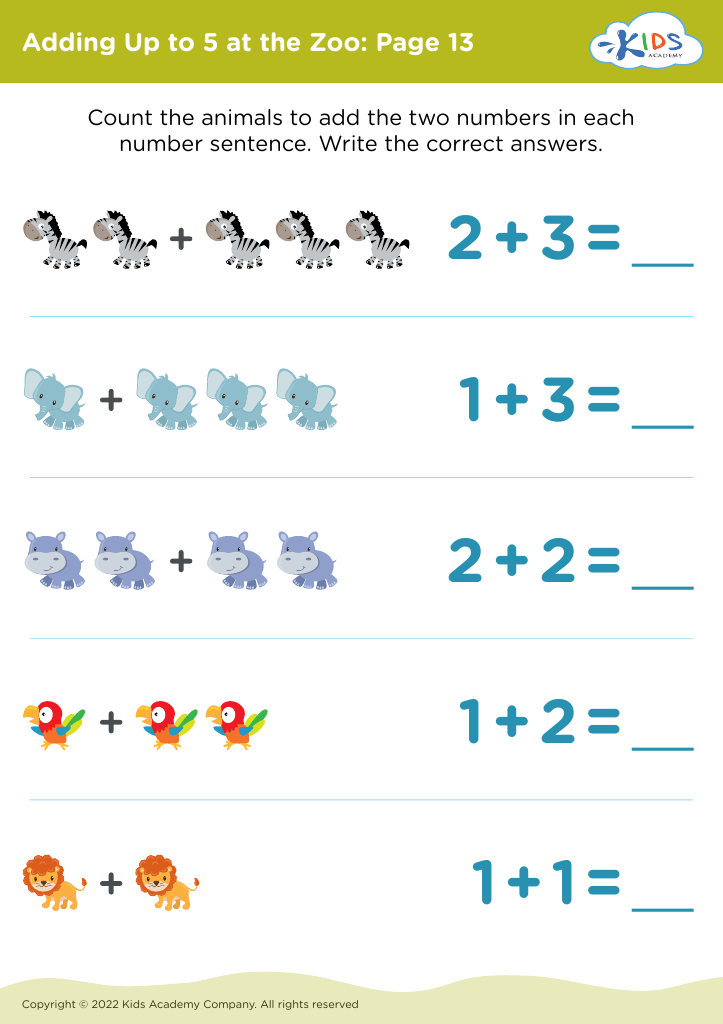
Animal identification activities are essential for children aged 5-7 for several reasons. Firstly, they serve as a fun and engaging way to introduce young learners to the world of animals. At this age, children's natural curiosity drives their learning, and incorporating animals into educational activities captures their interest.
This type of activity promotes cognitive development. By identifying animals, children enhance their observational skills, learn to categorize, and develop essential vocabulary. It also reinforces math concepts through activities such as sorting and counting animals, which help bridge literacy and numeracy skills effectively.
Moreover, animal identification fosters empathy and respect for living creatures. It instills a sense of responsibility and care for the environment, shaping future stewardship. Schools and parents that encourage outdoor exploration and animal studies contribute to well-rounded development, integrating social studies and science in everyday learning.
Additionally, collaborative activities involving animal identification can enhance social skills through teamwork and communication. Therefore, integrating animal identification into early education positively influences children's intellectual, emotional, and social growth, making it an important focus for parents and teachers alike.








