Filters

95 filtered results

Clear all filters
Favorites
With answer key
Interactive

95 filtered results

Difficulty Level

Grade


Check out this FREE Trial Lesson on Addition for age 5-7!

P

Favorites
With answer key
Interactive
  • 5-7
  • Animal recognition
  • Addition
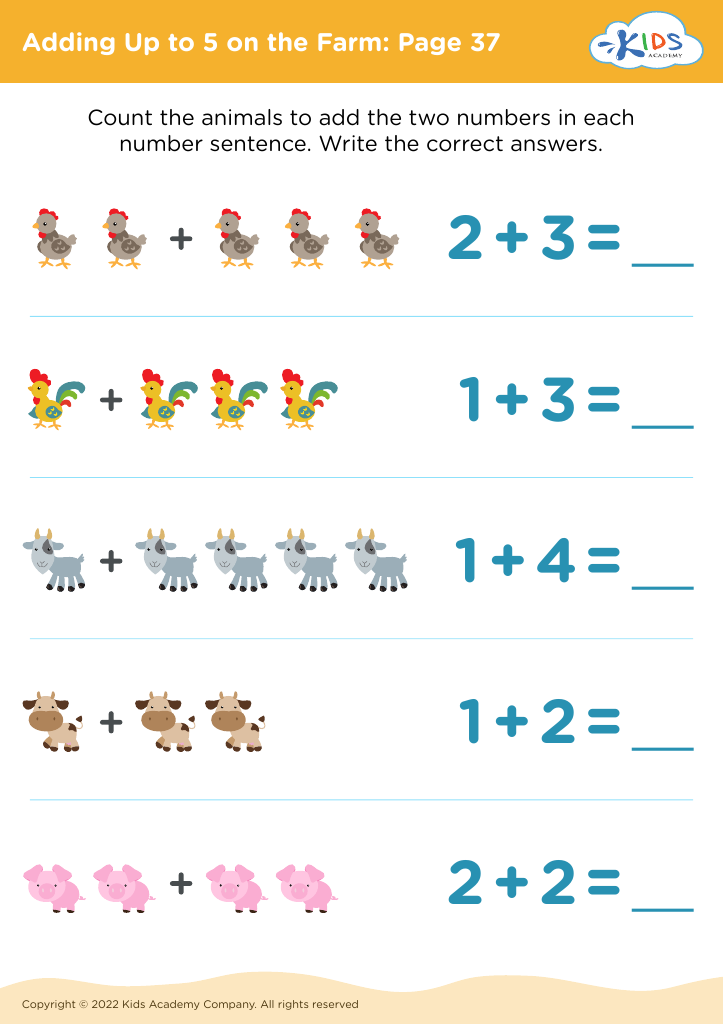
Adding Up to 5 on the Farm: Page 37
Worksheet
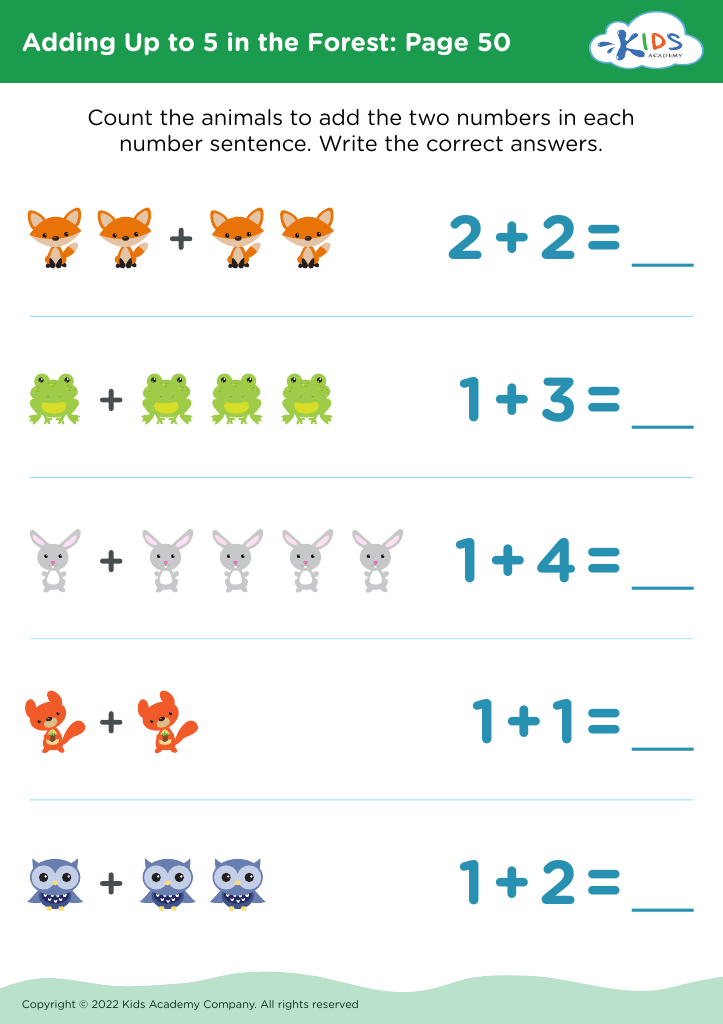
Adding Up to 5 in the Forest: Page 50
Worksheet
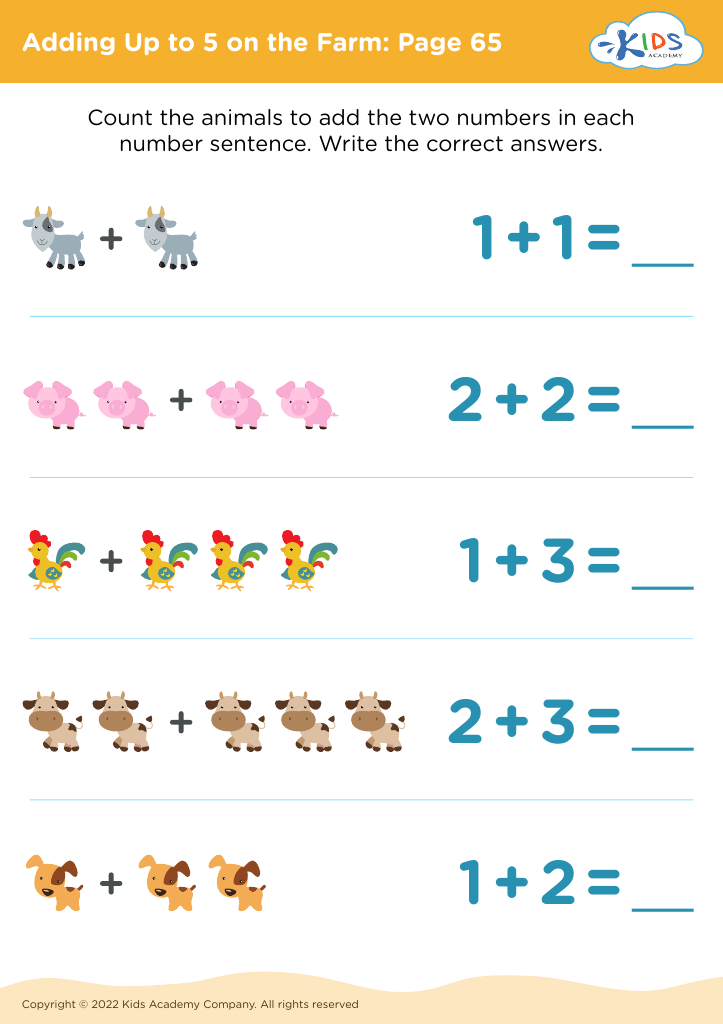
Adding Up to 5 on the Farm: Page 65
Worksheet
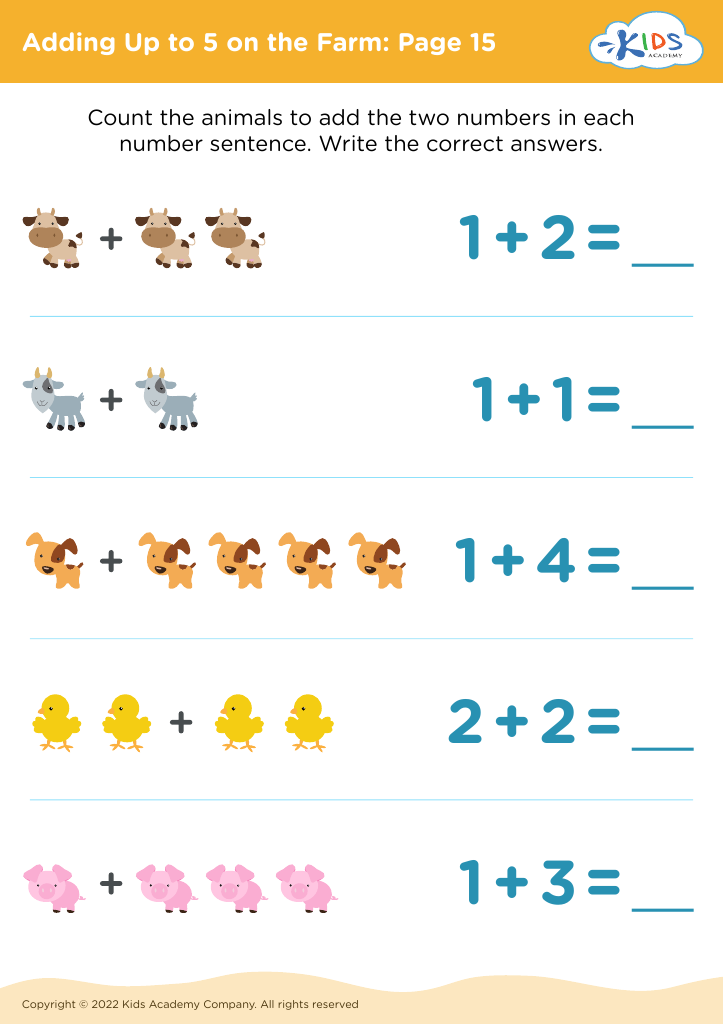
Adding Up to 5 on the Farm: Page 15
Worksheet
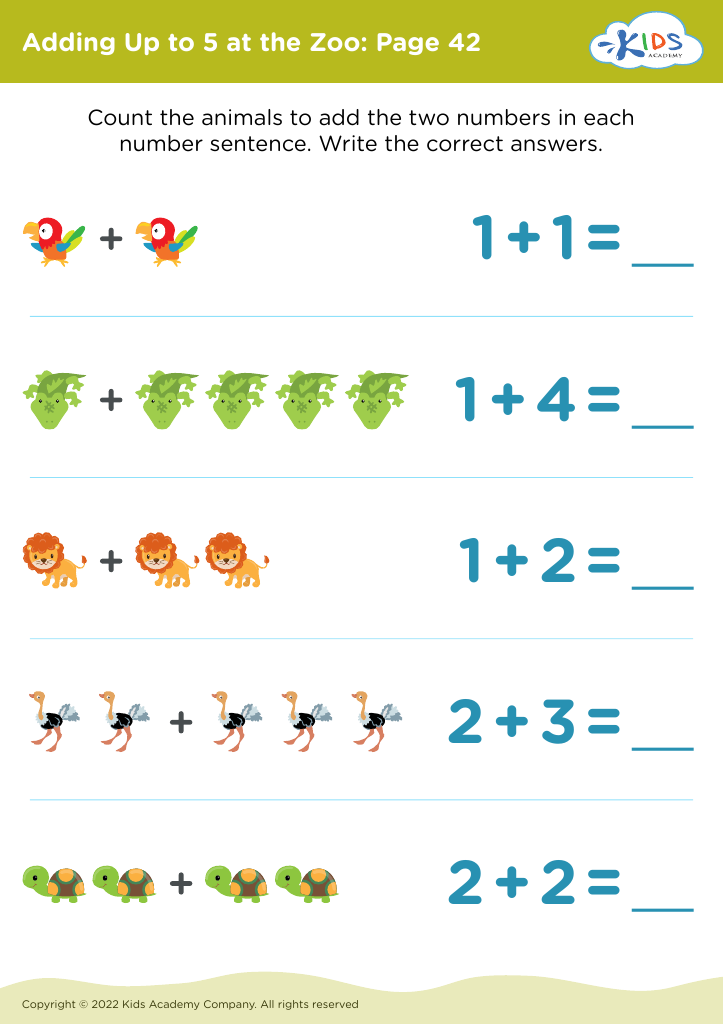
Adding Up to 5 at the Zoo: Page 42
Worksheet
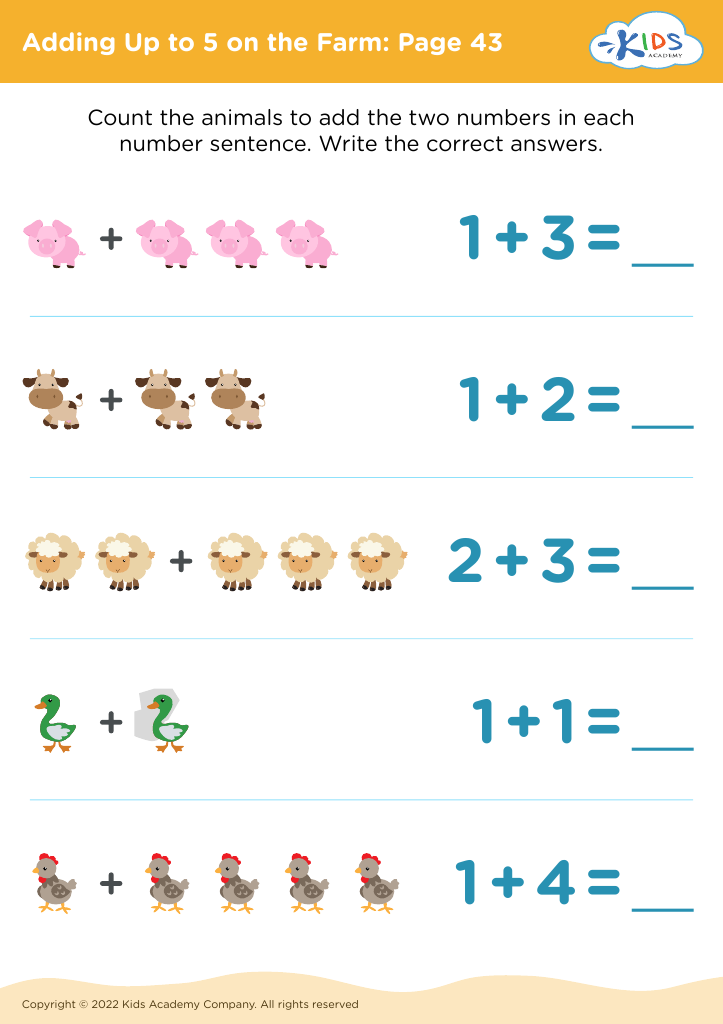
Adding Up to 5 on the Farm: Page 43
Worksheet
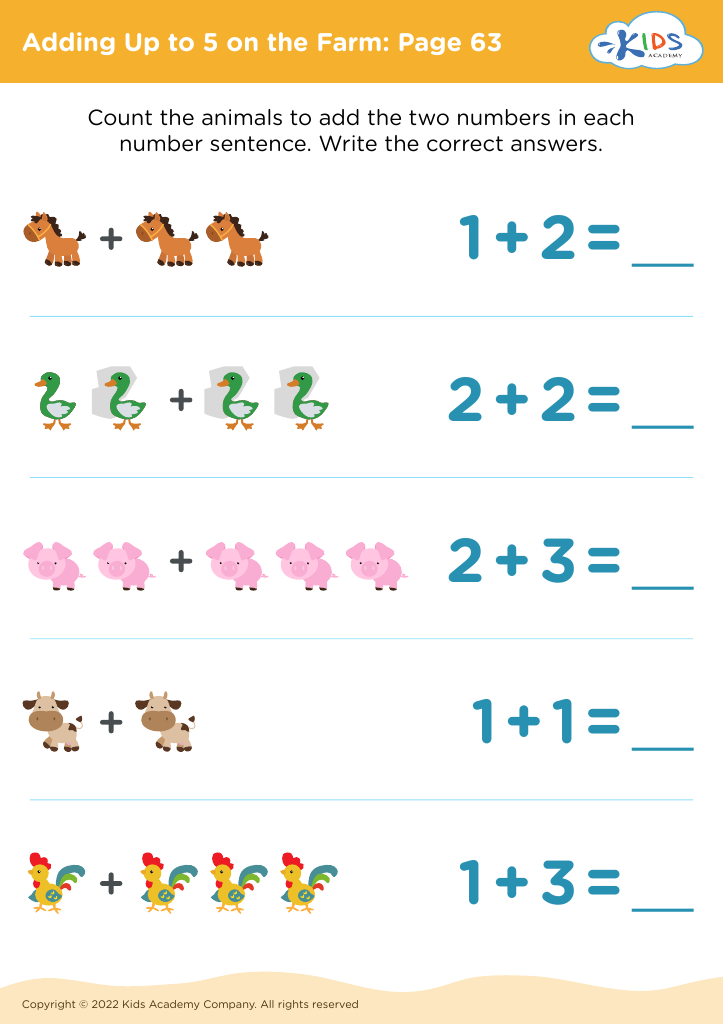
Adding Up to 5 on the Farm: Page 63
Worksheet
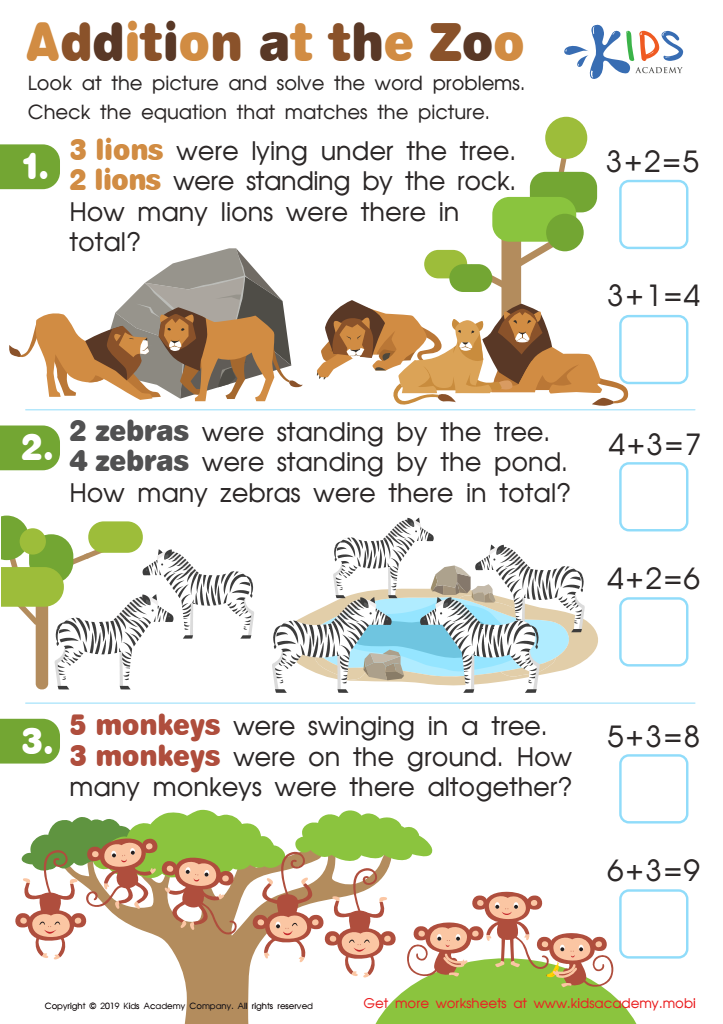
Addition at the Zoo Worksheet

Addition at the Zoo Worksheet

Visit the zoo with your kids and point out all the different animals. Ask them to name their favorites and identify animals on a worksheet. Challenge them to solve word problems related to the pictures. Ask them for the equation that fits the picture and check the answer.
Addition at the Zoo Worksheet
Worksheet
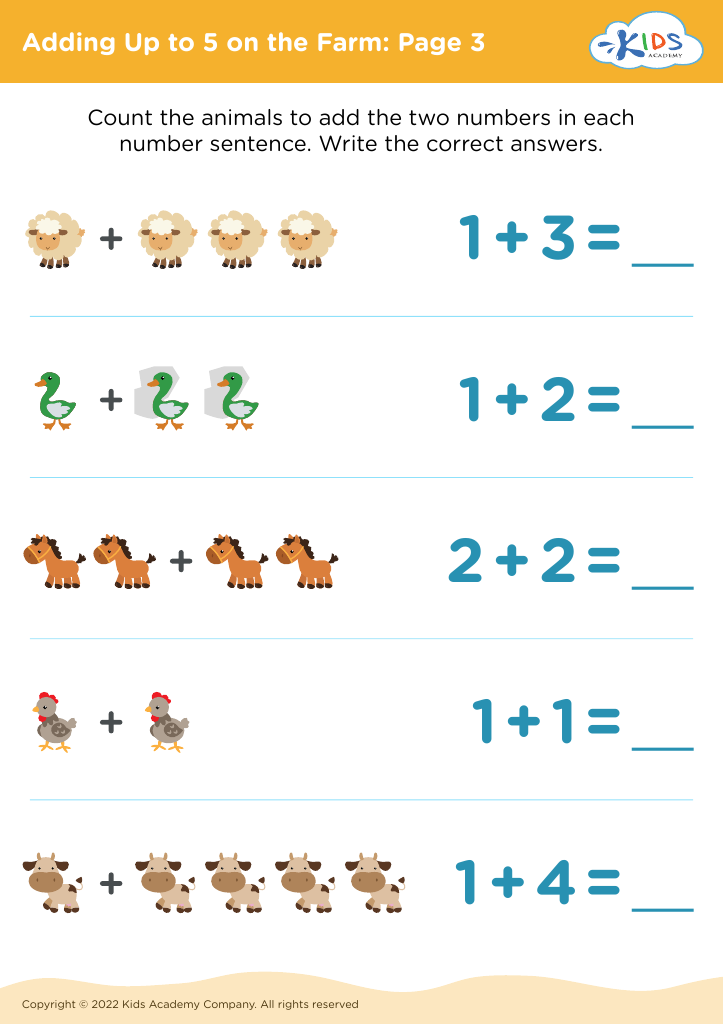
Adding Up to 5 on the Farm: Page 3
Worksheet
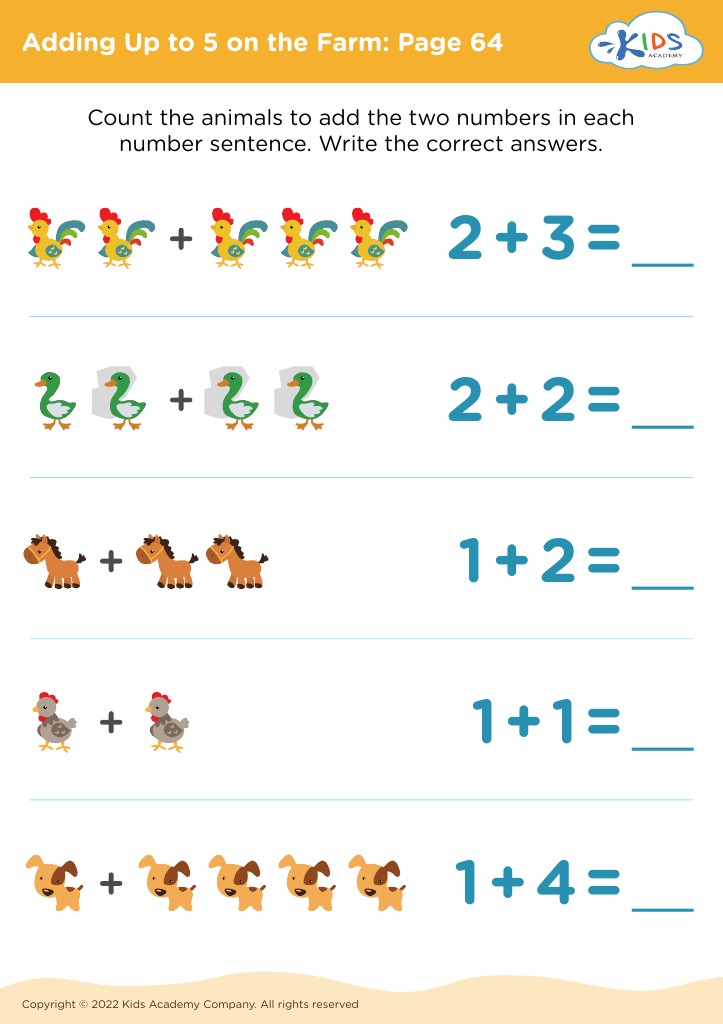
Adding Up to 5 on the Farm: Page 64
Worksheet
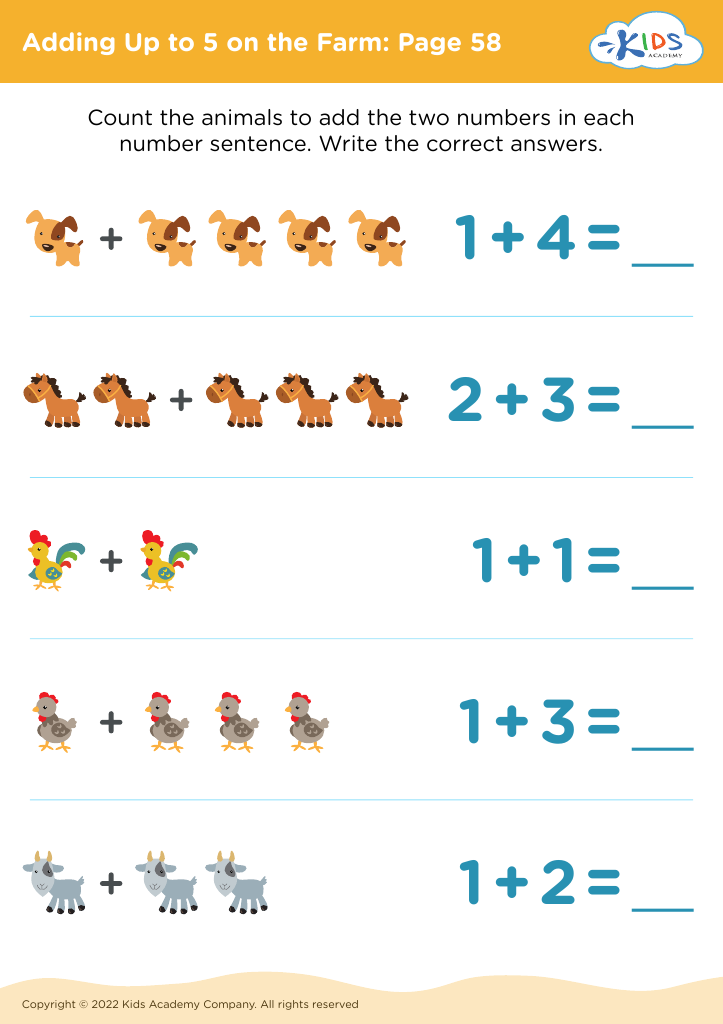
Adding Up to 5 on the Farm: Page 58
Worksheet
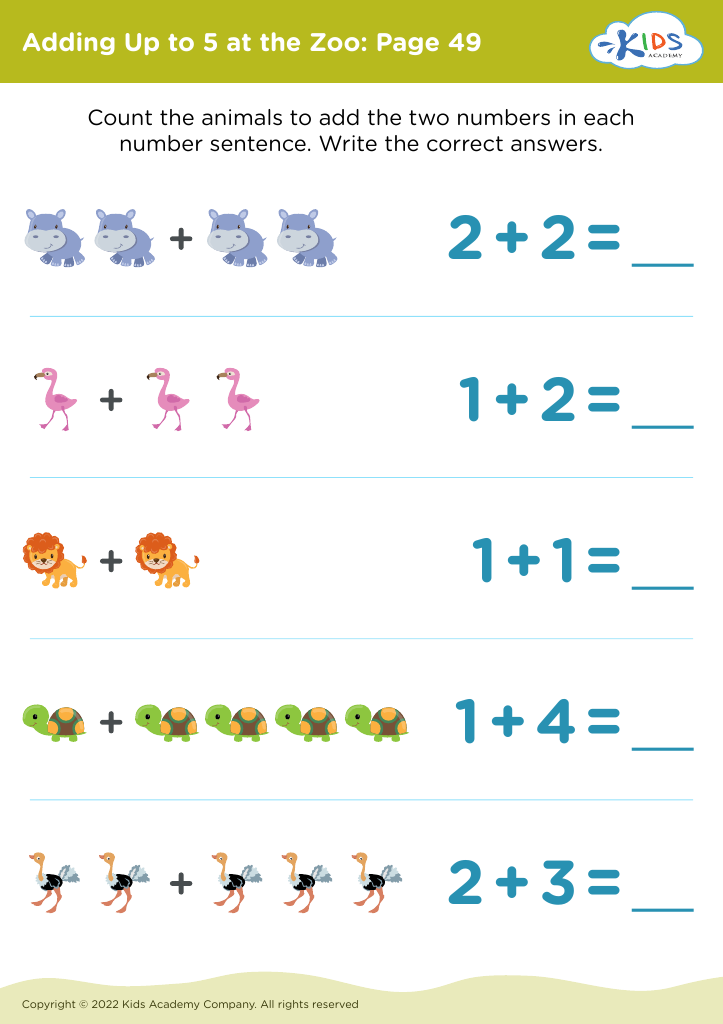
Adding Up to 5 at the Zoo: Page 49
Worksheet
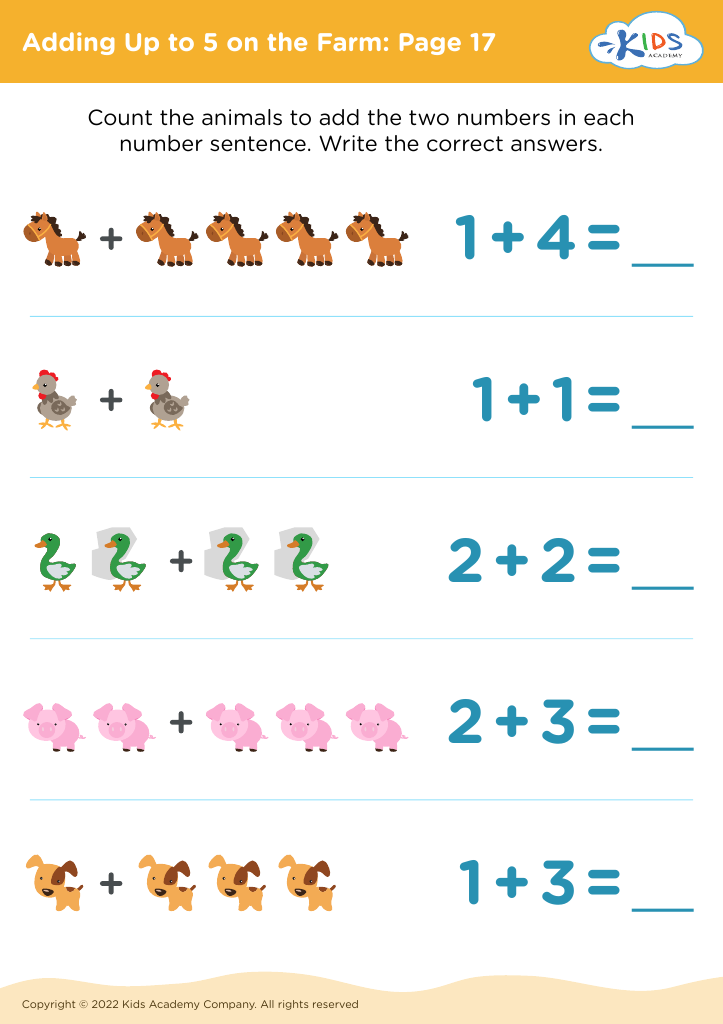
Adding Up to 5 on the Farm: Page 17
Worksheet
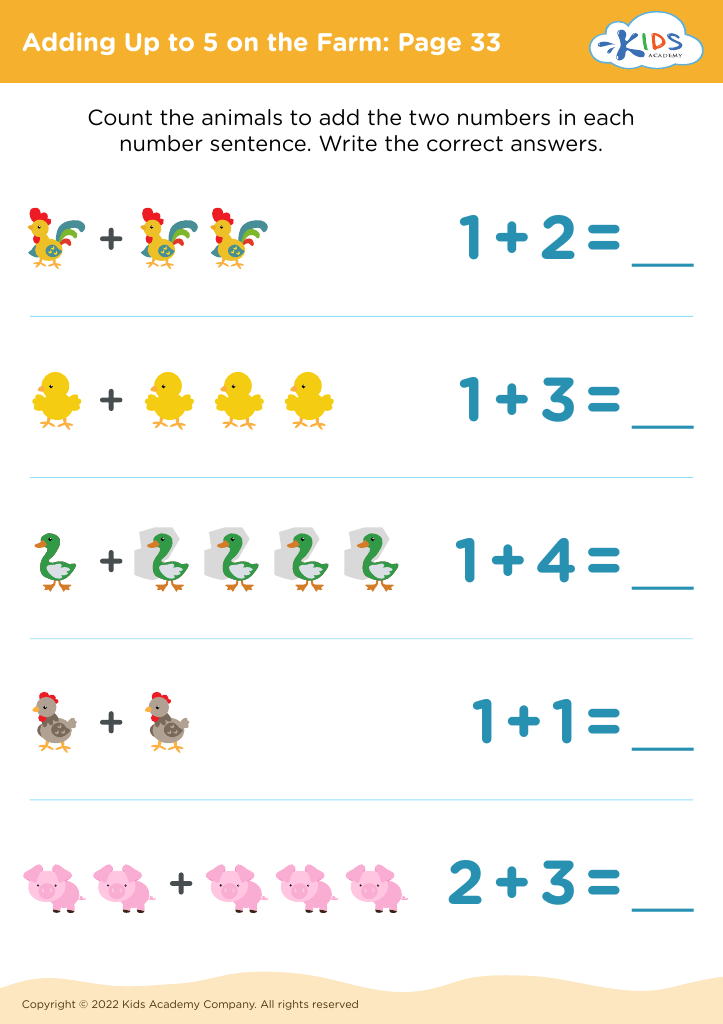
Adding Up to 5 on the Farm: Page 33
Worksheet
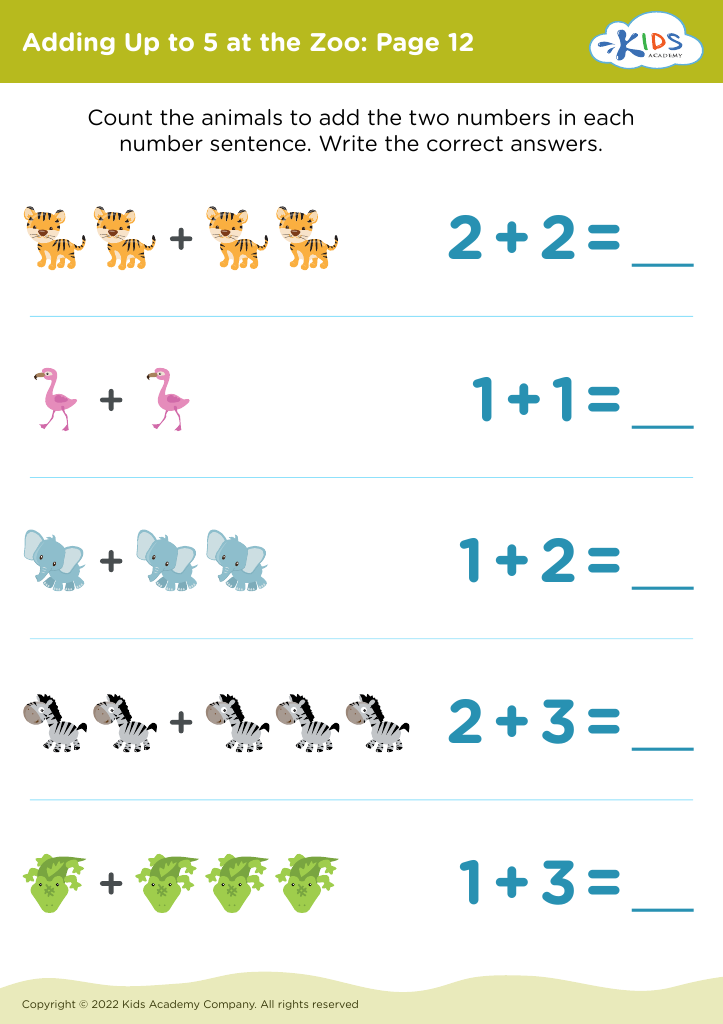
Adding Up to 5 at the Zoo: Page 12
Worksheet
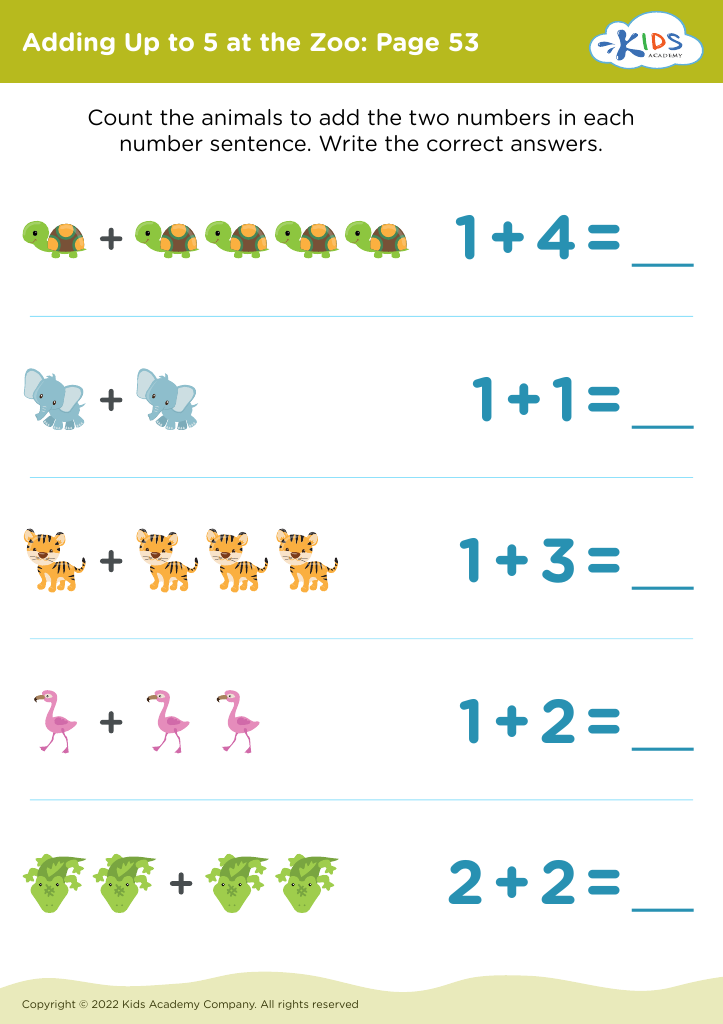
Adding Up to 5 at the Zoo: Page 53
Worksheet
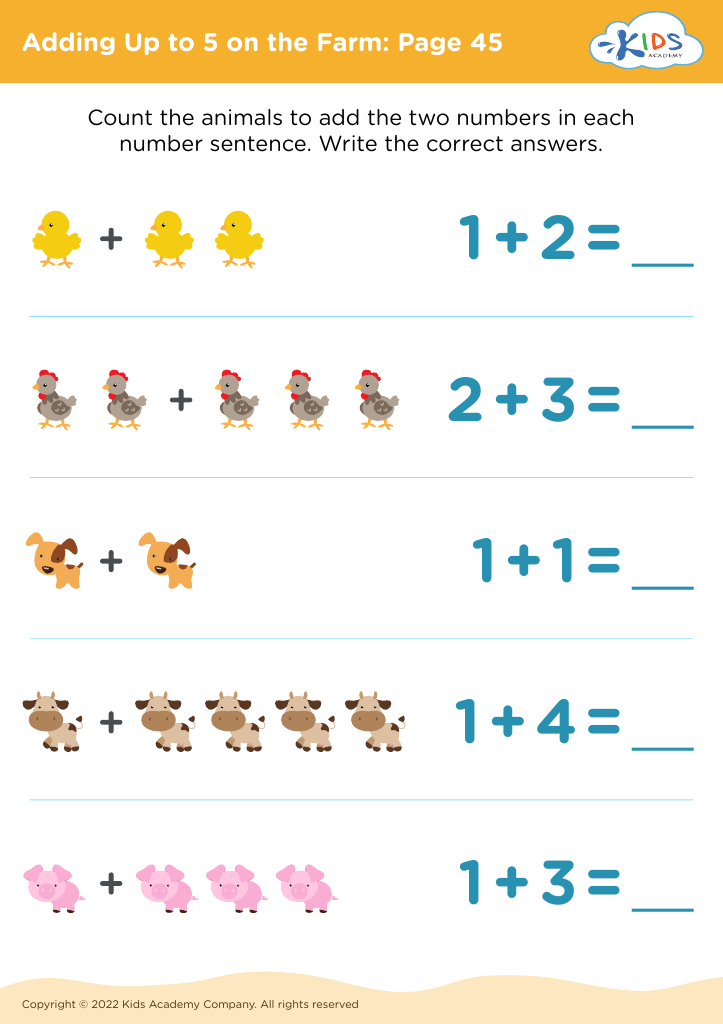
Adding Up to 5 on the Farm: Page 45
Worksheet
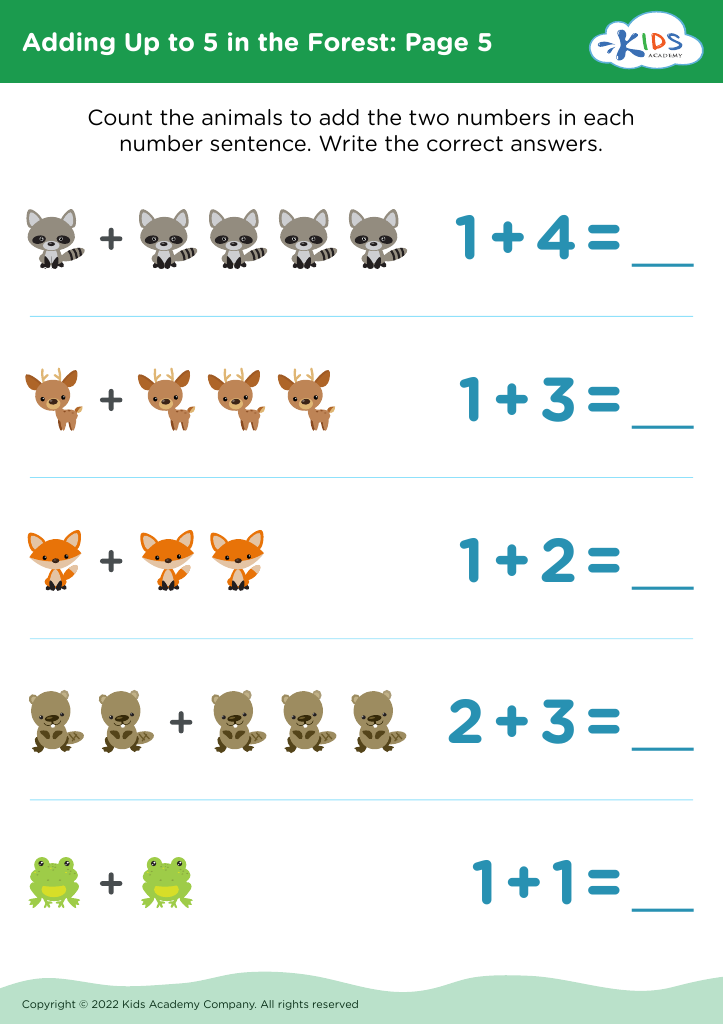
Adding Up to 5 in the Forest: Page 5
Worksheet
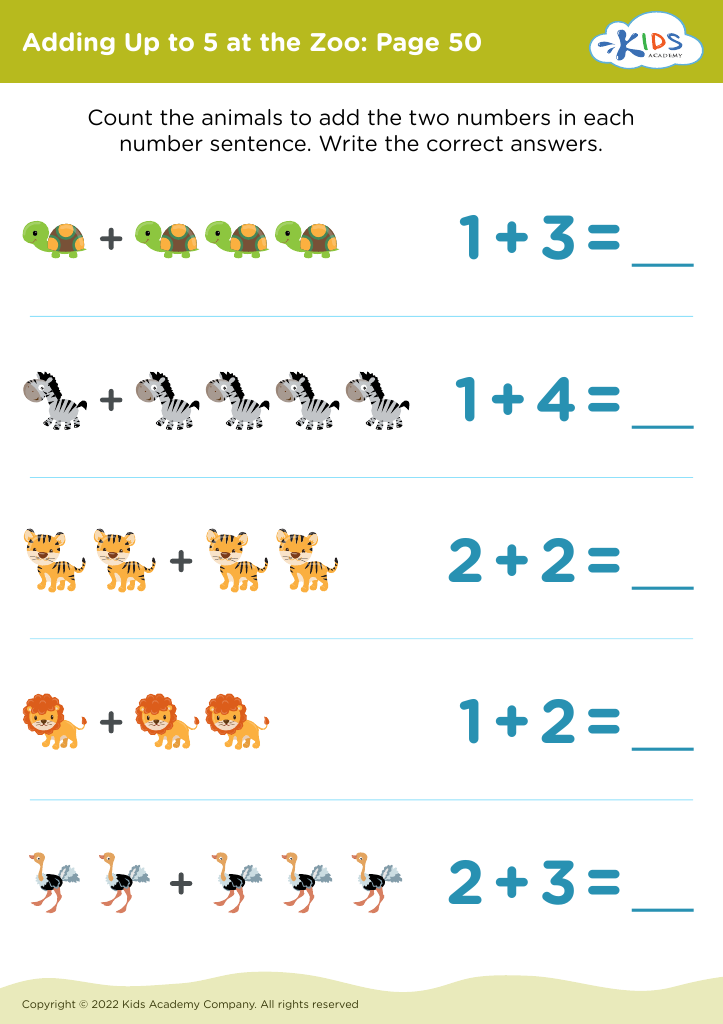
Adding Up to 5 at the Zoo: Page 50
Worksheet
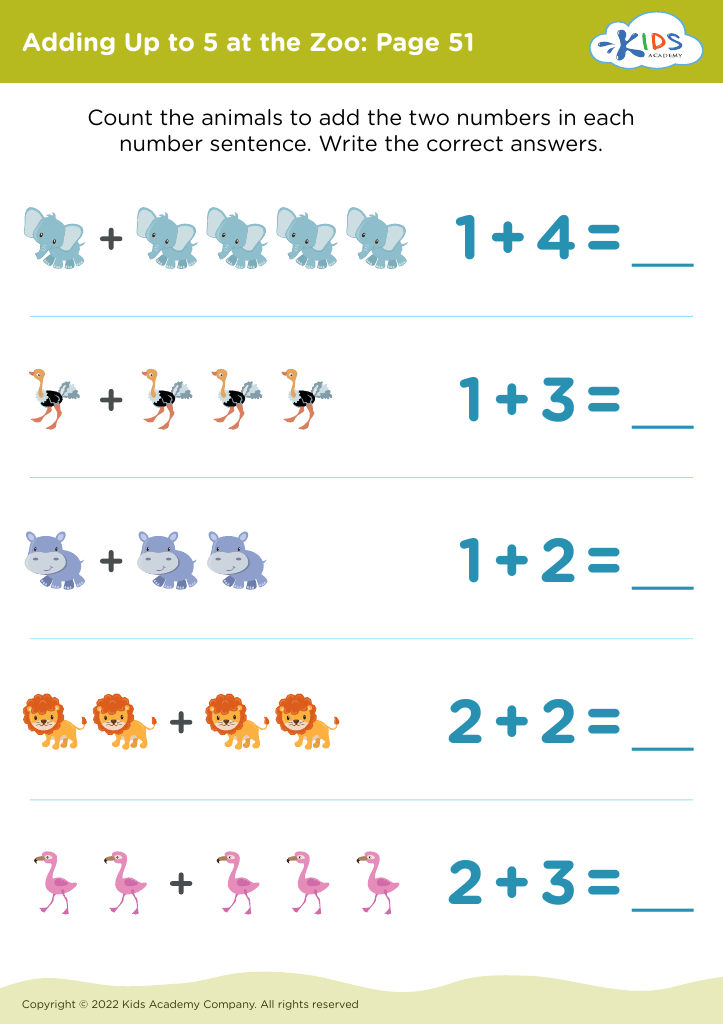
Adding Up to 5 at the Zoo: Page 51
Worksheet
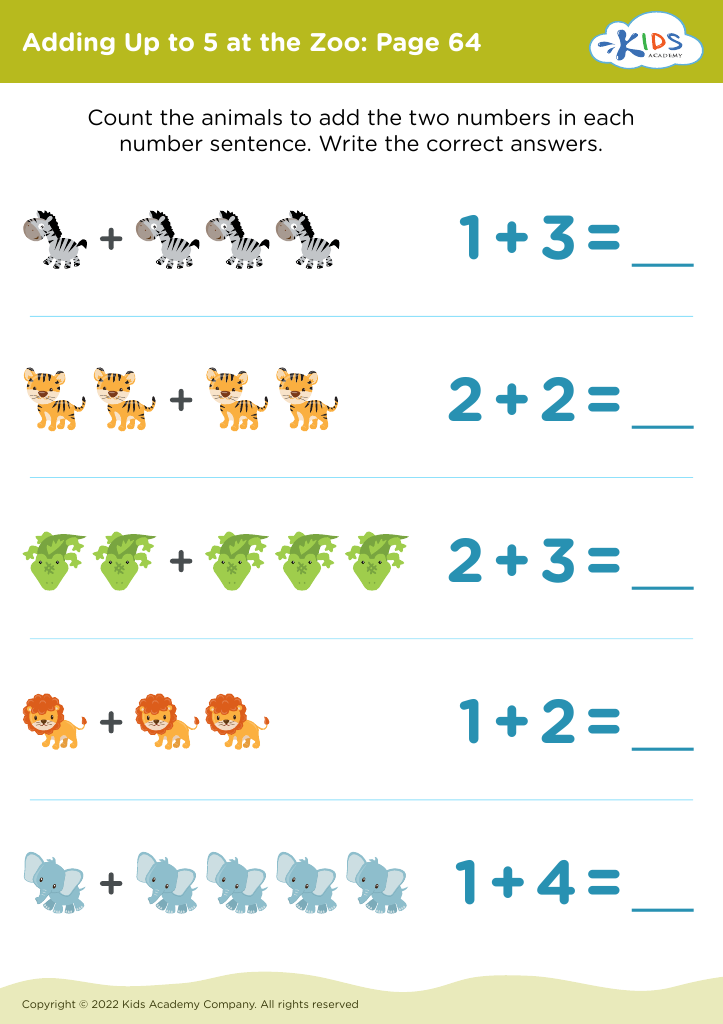
Adding Up to 5 at the Zoo: Page 64
Worksheet
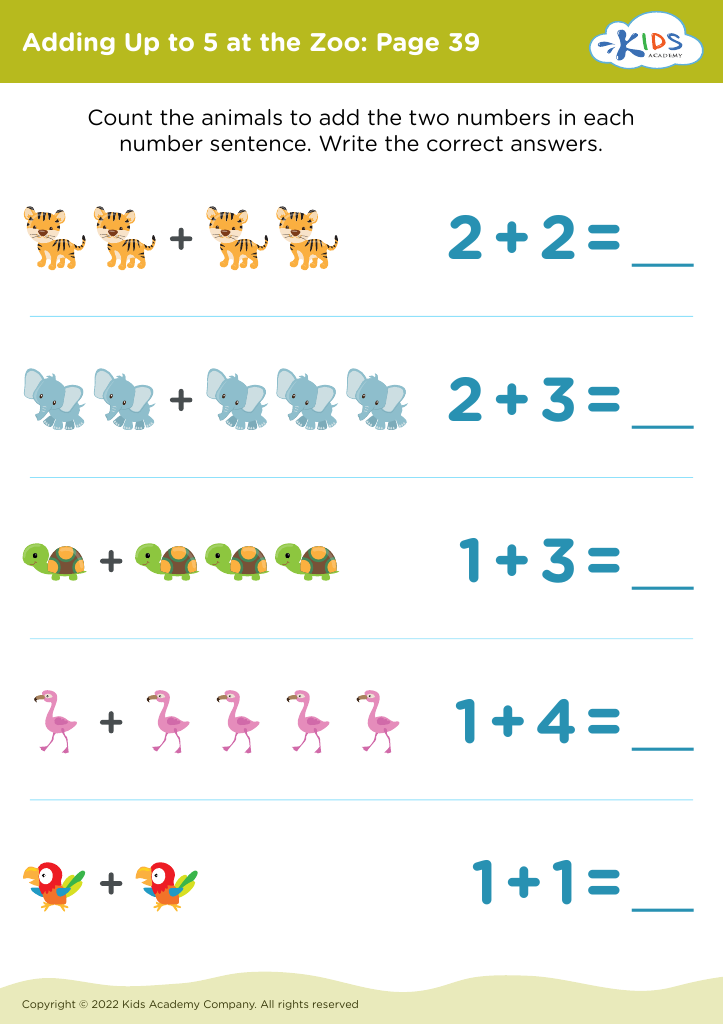
Adding Up to 5 at the Zoo: Page 39
Worksheet
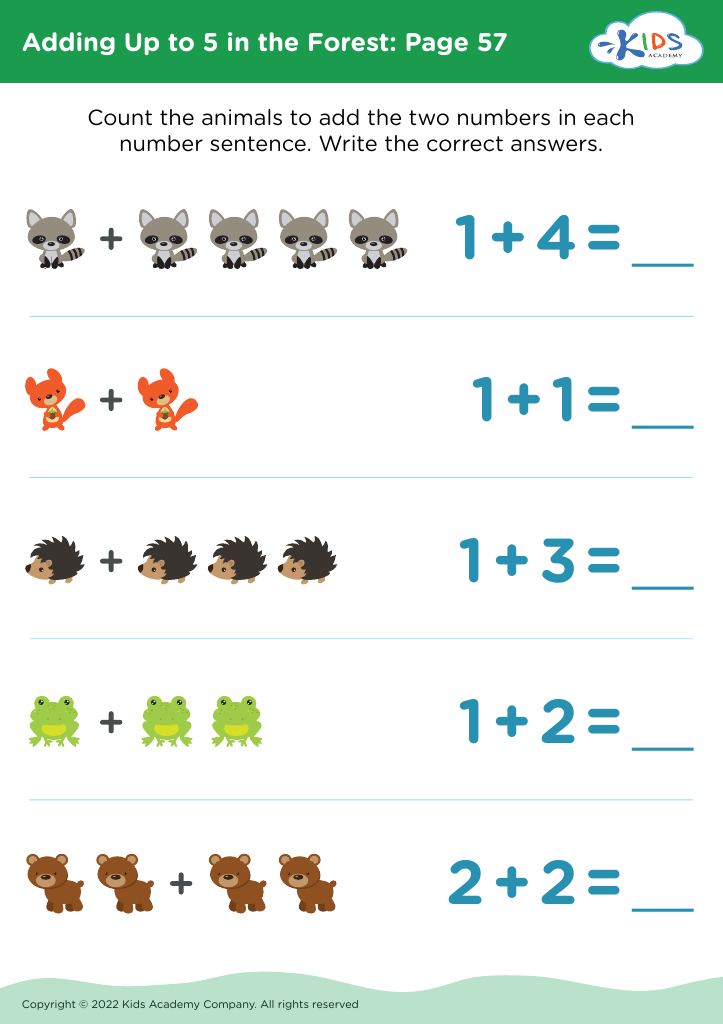
Adding Up to 5 in the Forest: Page 57
Worksheet


... 3 4

Animal recognition addition is a crucial educational tool for children ages 5-7, blending two engaging concepts: math and nature. At this developmental stage, children are building foundational skills in both numeracy and literacy, and incorporating animals into their learning fosters curiosity and engagement. Recognizing animals while solving addition problems can enhance cognitive development, as it helps to create mental associations between numbers and real-world concepts.

For parents and teachers, promoting this method offers numerous benefits. First, it supports diversified learning styles; visual learners may find animal characters more memorable than abstract numbers. Second, it can cultivate emotional intelligence as children explore various animal characteristics, fostering empathy and a connection to the natural world.

Additionally, this approach encourages collaborative learning opportunities, where students can work together on problems, discuss animal traits, and apply their knowledge in interactive ways. Understanding addition through relatable, fun contexts leads to improved retention and a positive attitude toward math. As parents and teachers guide children through these fun activities, they plant the seeds for a lifelong love of learning, helping children not just excel academically, but also appreciate the world around them.