Filters

16 filtered results

Clear all filters
Favorites
With answer key
Interactive

16 filtered results

Difficulty Level

Grade


Welcome to our collection of Basic Addition Worksheets for Ages 5-7! Designed to make learning fun, these printable resources support young learners as they build essential math skills. Our engaging worksheets feature colorful illustrations and interactive exercises to help children grasp the concepts of addition in a playful, stress-free way. Each worksheet is tailored to meet the developmental needs of early learners, providing practice with basic sums, number recognition, and problem-solving. Perfect for classroom use or home practice, these worksheets will boost confidence and foster a love for math. Explore our library today and watch your child's math skills flourish!
Check out this FREE Trial Lesson on Addition for age 5-7!

Short and Long Vowel Sort

Favorites
With answer key
Interactive
  • 5-7
  • Basic Addition
  • Addition
Adding 2-digit Numbers: Page 23

Adding 2-digit Numbers: Page 23

Adding 2-digit Numbers: Page 23
Worksheet
Adding up to 1000: Page 8

Adding up to 1000: Page 8

Adding up to 1000: Page 8
Worksheet
Adding up to 100: Page 4

Adding up to 100: Page 4

Adding up to 100: Page 4
Worksheet
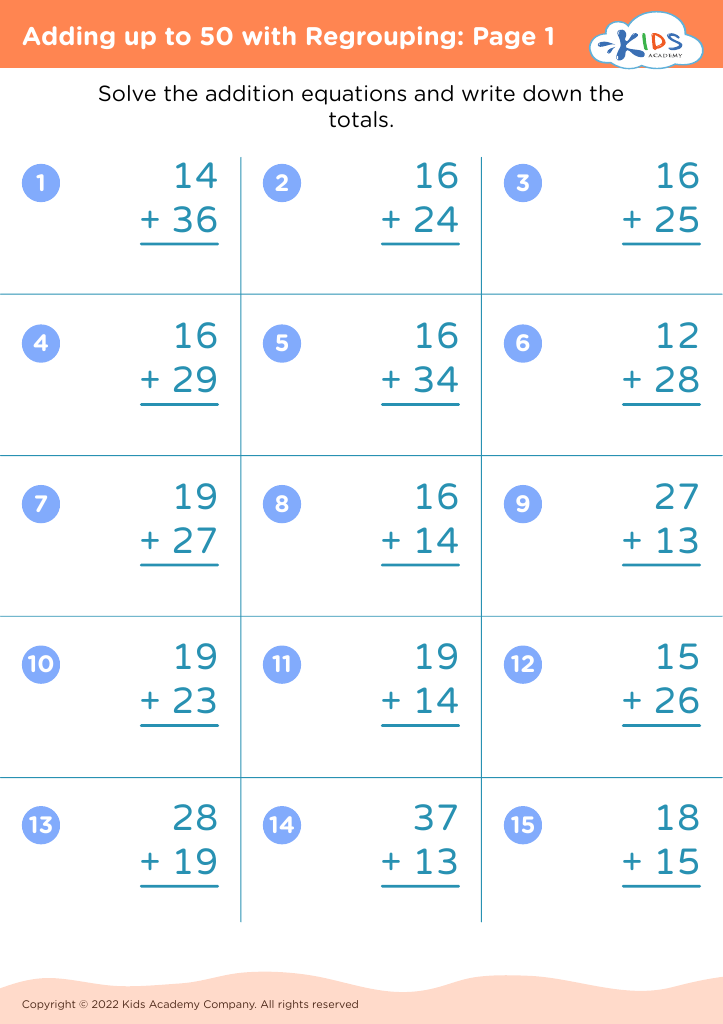
Adding up to 50 with Regrouping: Page 1
Worksheet
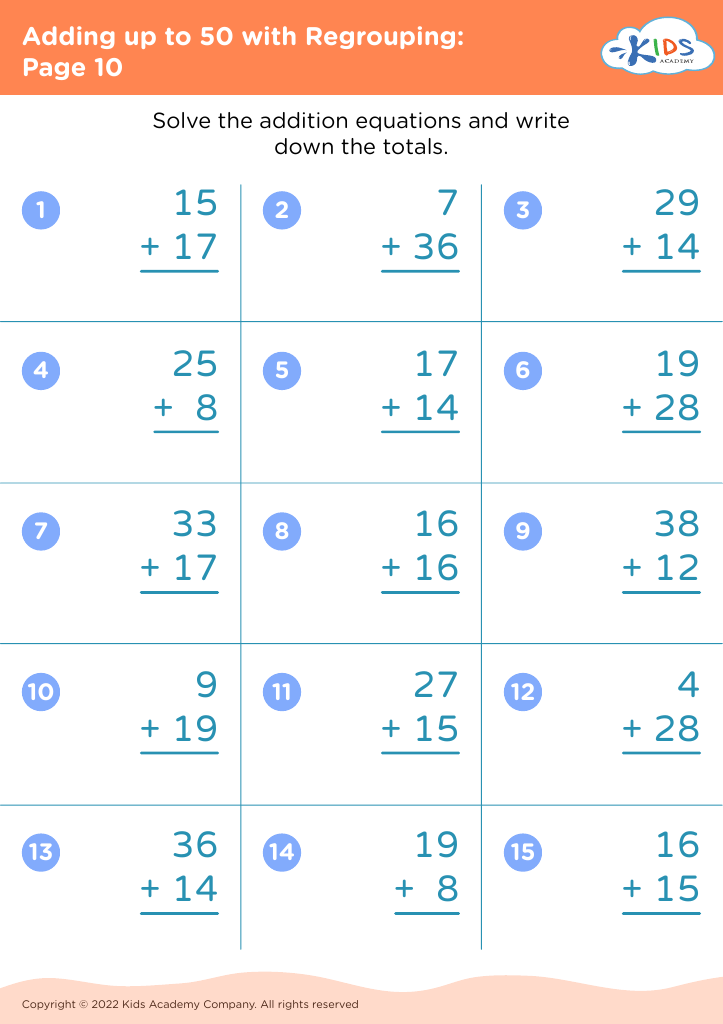
Adding up to 50 with Regrouping: Page 10
Worksheet
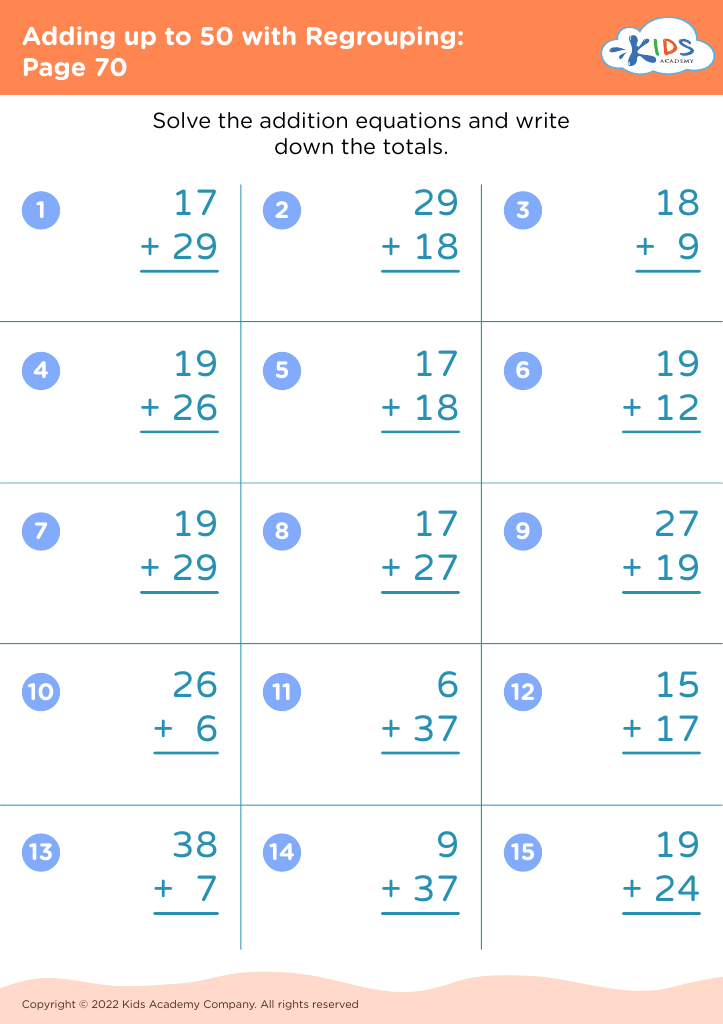
Adding up to 50 with Regrouping: Page 70
Worksheet
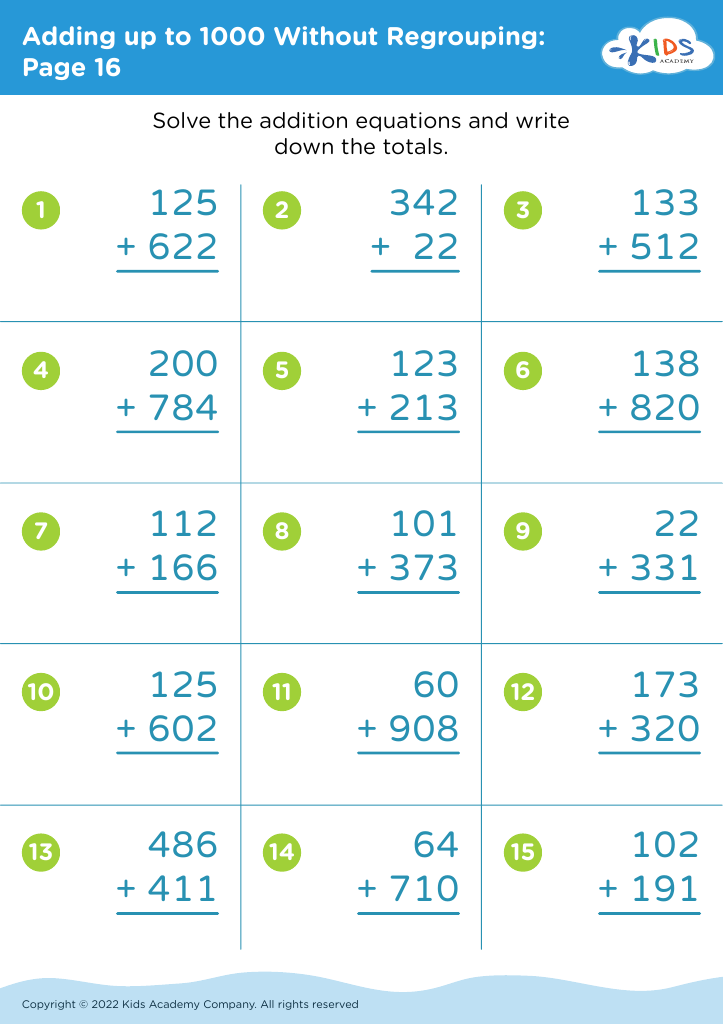
Adding up to 1000 Without Regrouping: Page 16
Worksheet
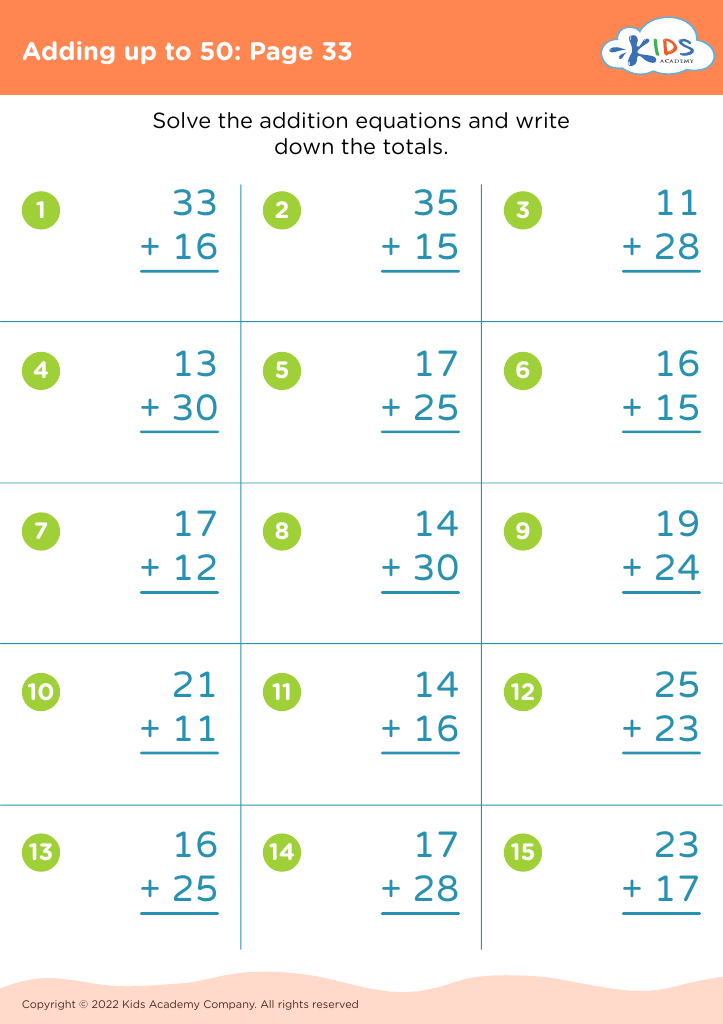
Adding up to 50: Page 33

Adding up to 50: Page 33

Adding up to 50: Page 33
Worksheet
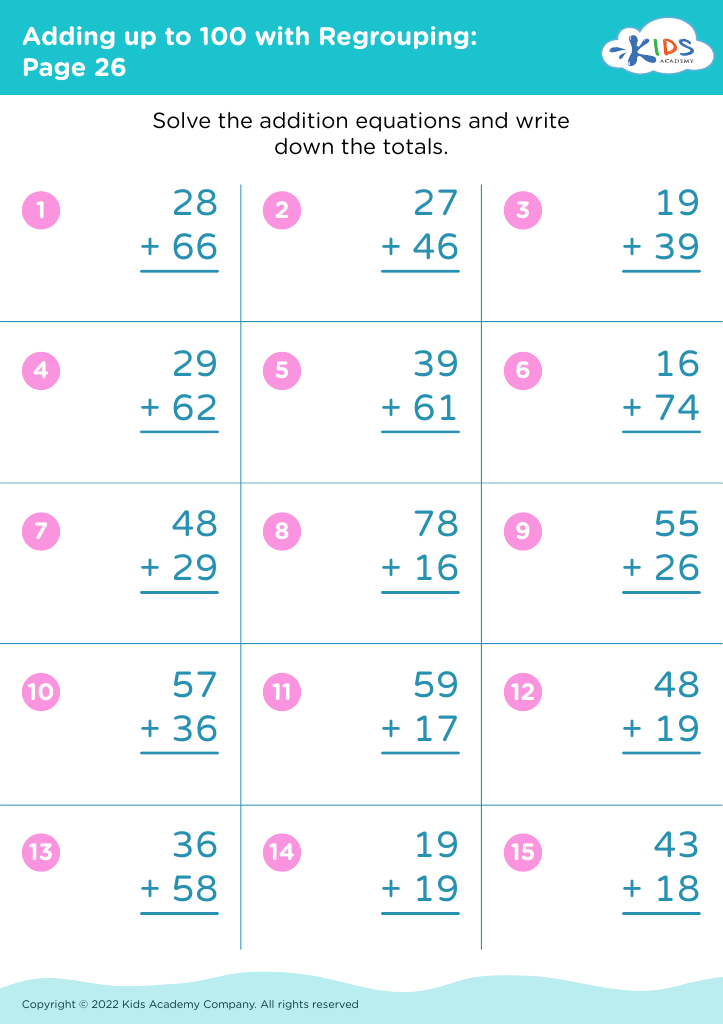
Adding up to 100 with Regrouping: Page 26
Worksheet
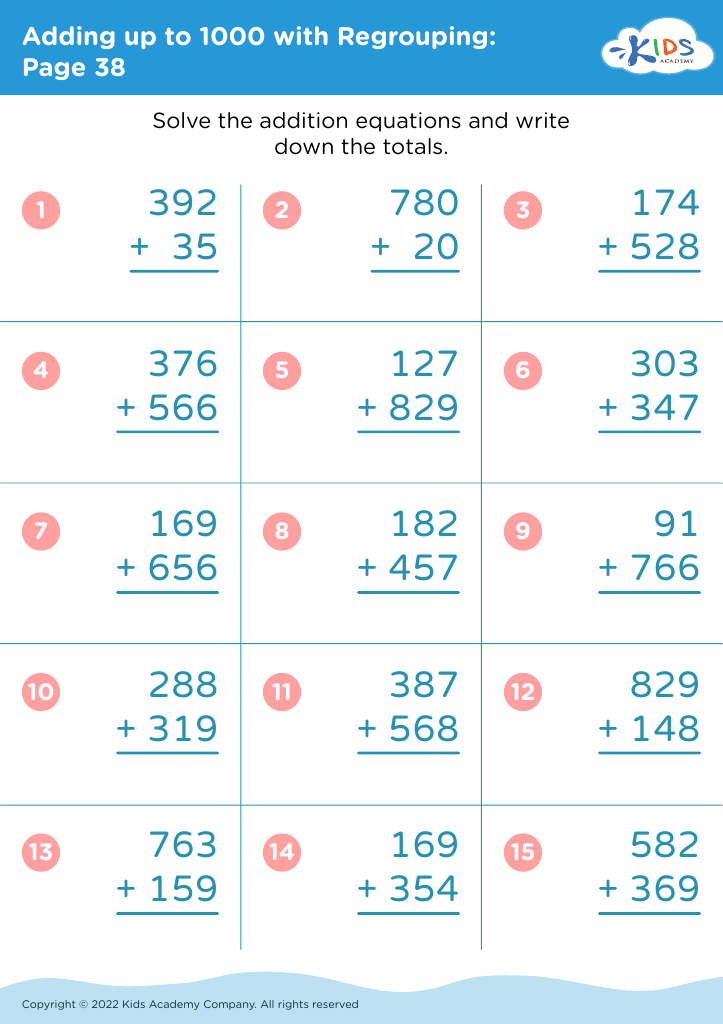
Adding up to 1000 with Regrouping: Page 38
Worksheet
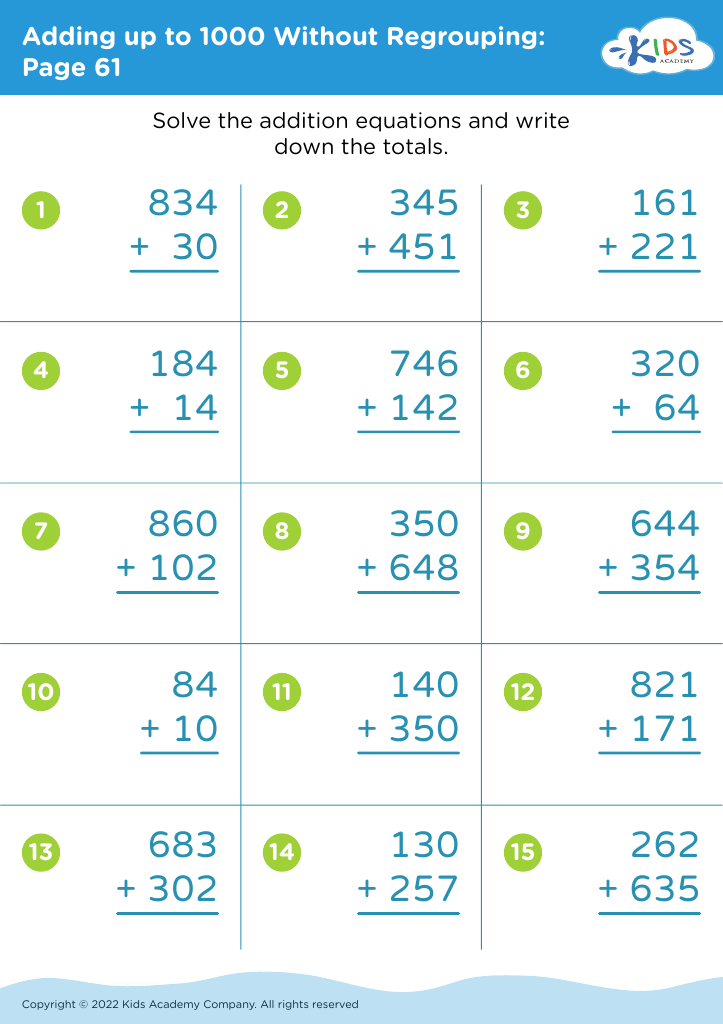
Adding up to 1000 Without Regrouping: Page 61
Worksheet
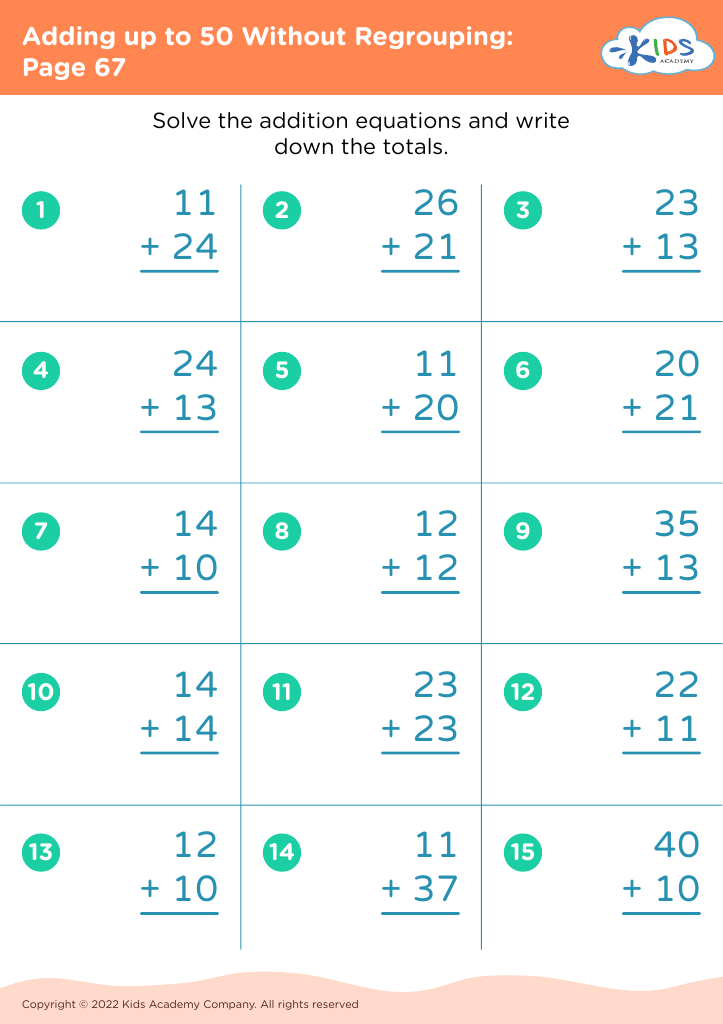
Adding up to 50 Without Regrouping: Page 67
Worksheet
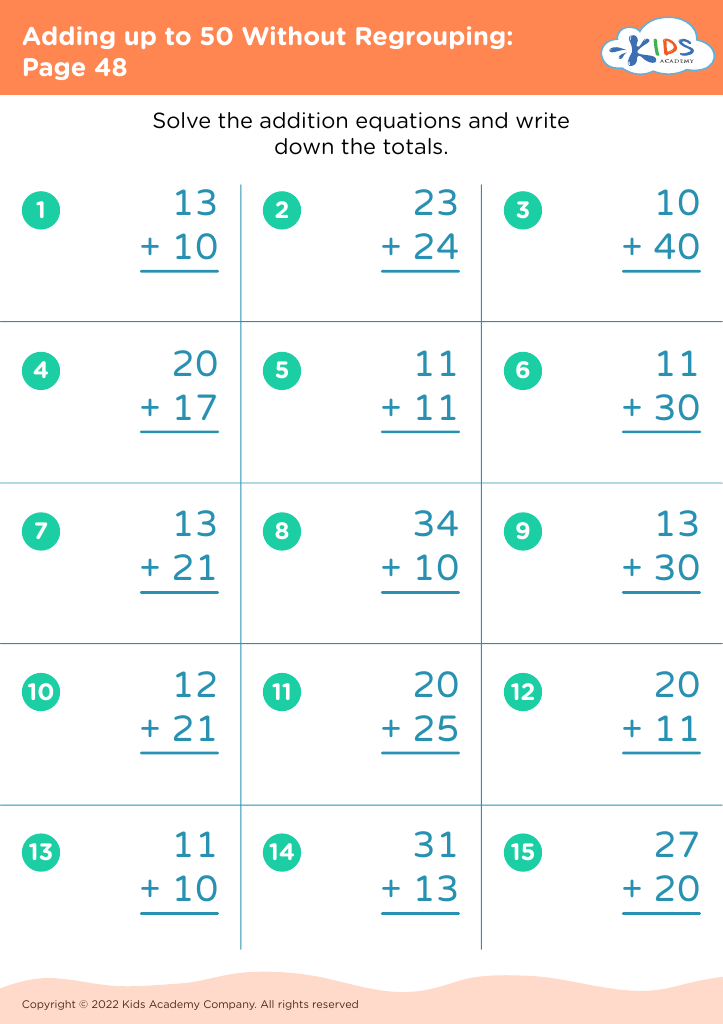
Adding up to 50 Without Regrouping: Page 48
Worksheet
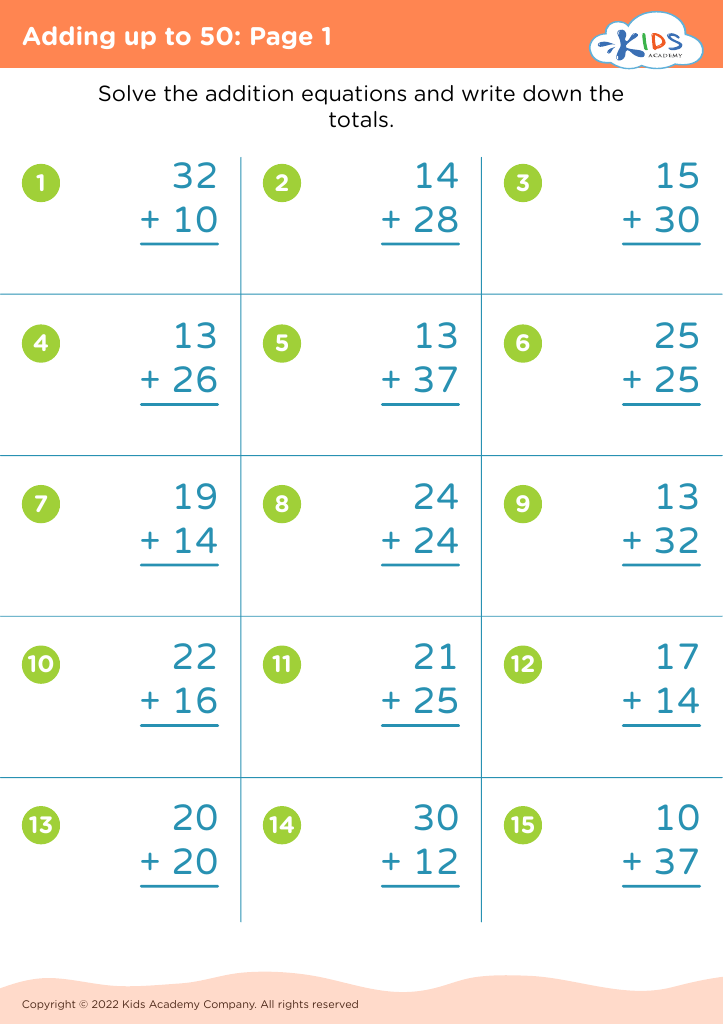
Adding up to 50: Page 1

Adding up to 50: Page 1

Adding up to 50: Page 1
Worksheet
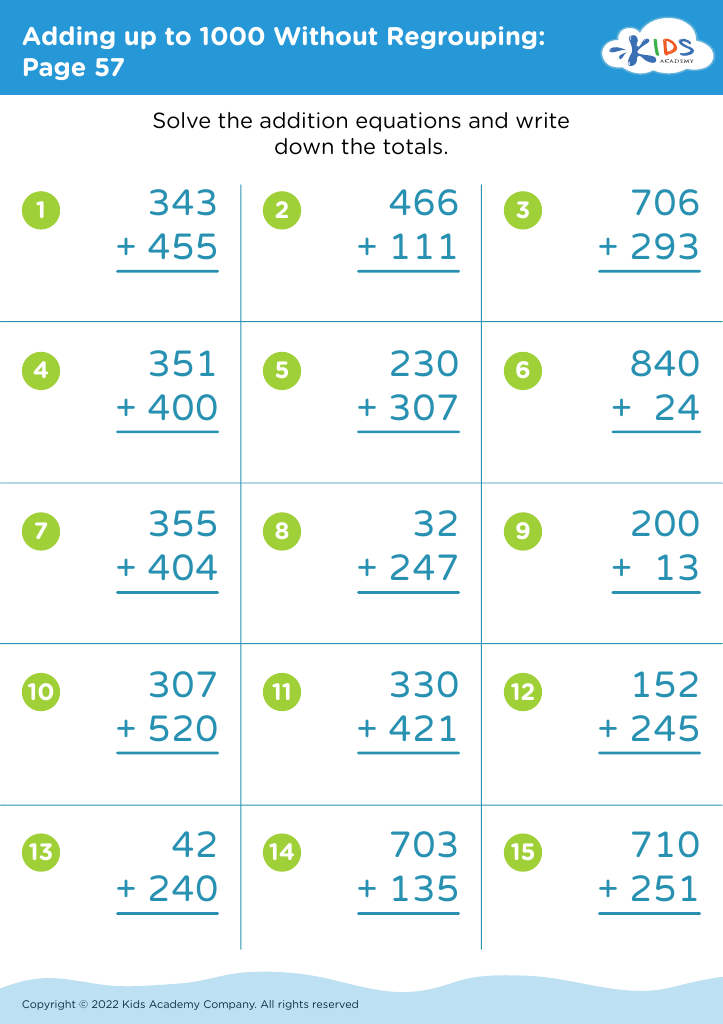
Adding up to 1000 Without Regrouping: Page 57
Worksheet
Adding up to 1000 Without Regrouping: Page 70
Worksheet


Basic addition is a fundamental skill that serves as the cornerstone for future math learning. For children aged 5 to 7, mastering addition is crucial for several reasons. First, this developmental stage is characterized by heightened cognitive abilities; children are eager to explore numbers and their relationships. Understanding basic addition enhances their problem-solving skills and logical reasoning.

Moreover, proficiency in addition builds confidence in young learners. When children succeed in mastering addition tasks, they develop a positive mindset toward math, which can last a lifetime. It also fosters independence, as they become more capable of handling everyday situations that require counting and basic calculations, such as shopping or sharing snacks.

For parents and teachers, supporting children in learning basic addition is essential to laying a strong foundation for their education. Engaging them in fun, interactive activities makes learning enjoyable, facilitating retention and comprehension. Additionally, children who grasp these skills early are more likely to excel in future mathematical concepts, ensuring they keep pace with their peers. Ultimately, investing time and effort into teaching basic addition can have lasting benefits, empowering children with vital skills they will use throughout their lives.