Filters

18 filtered results

Clear all filters
Favorites
With answer key
Interactive

18 filtered results

Difficulty Level

Grade


Introduce young learners to the fun world of math with our Basic Addition Practice worksheets designed especially for ages 5-7. These engaging and printable worksheets from Kids Academy make mastering addition both enjoyable and educational. With colorful illustrations and simple exercises, children will strengthen their math skills and build a solid foundation in arithmetic. Our worksheets cover fundamental addition concepts, providing ample practice to boost confidence and proficiency. Perfect for at-home learning or classroom use, these worksheets turn learning into a delightful adventure. Help your child develop a love for math with our expert-designed Basic Addition Practice worksheets!
Check out this FREE Trial Lesson on Addition for age 5-7!

D

Favorites
With answer key
Interactive
  • 5-7
  • Basic addition practice
  • Addition
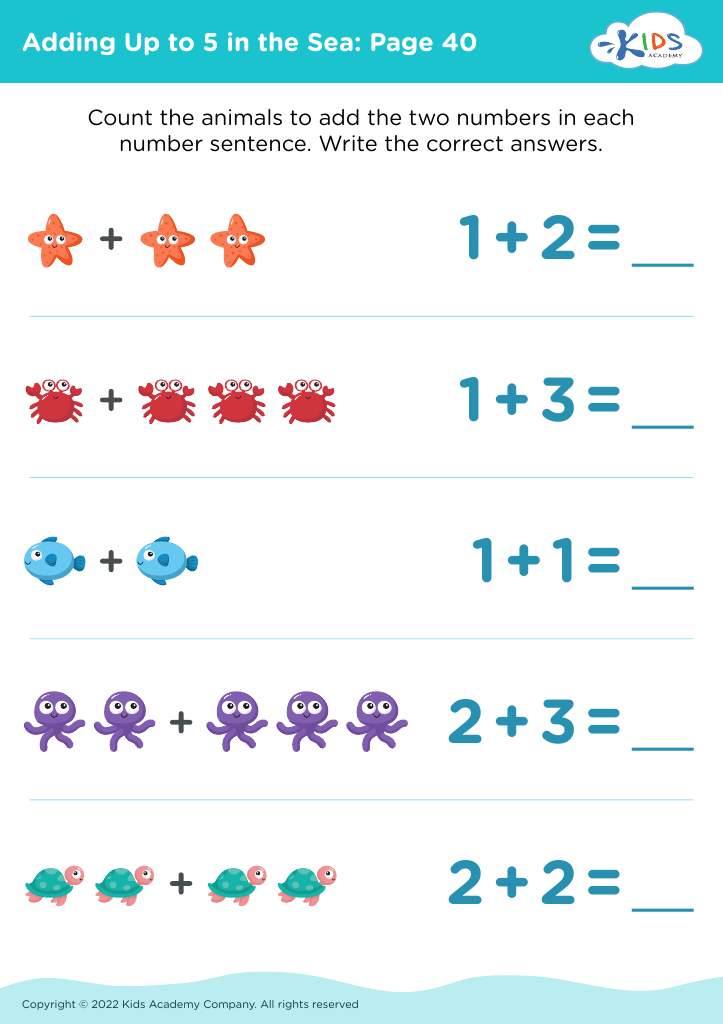
Adding Up to 5 in the Sea: Page 40
Worksheet
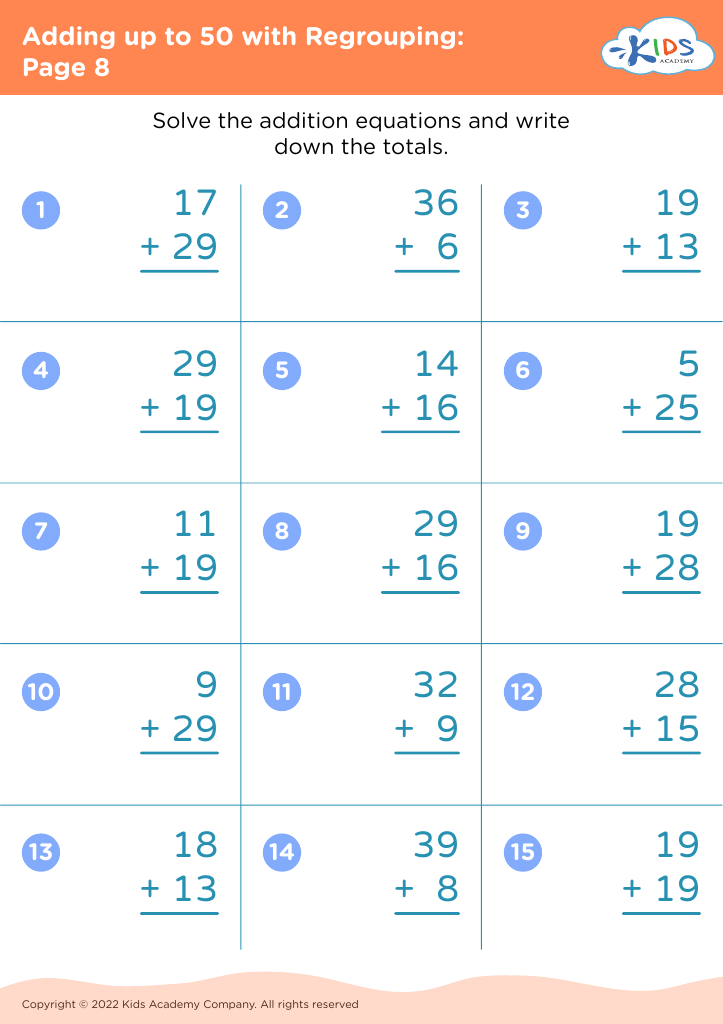
Adding up to 50 with Regrouping: Page 8
Worksheet
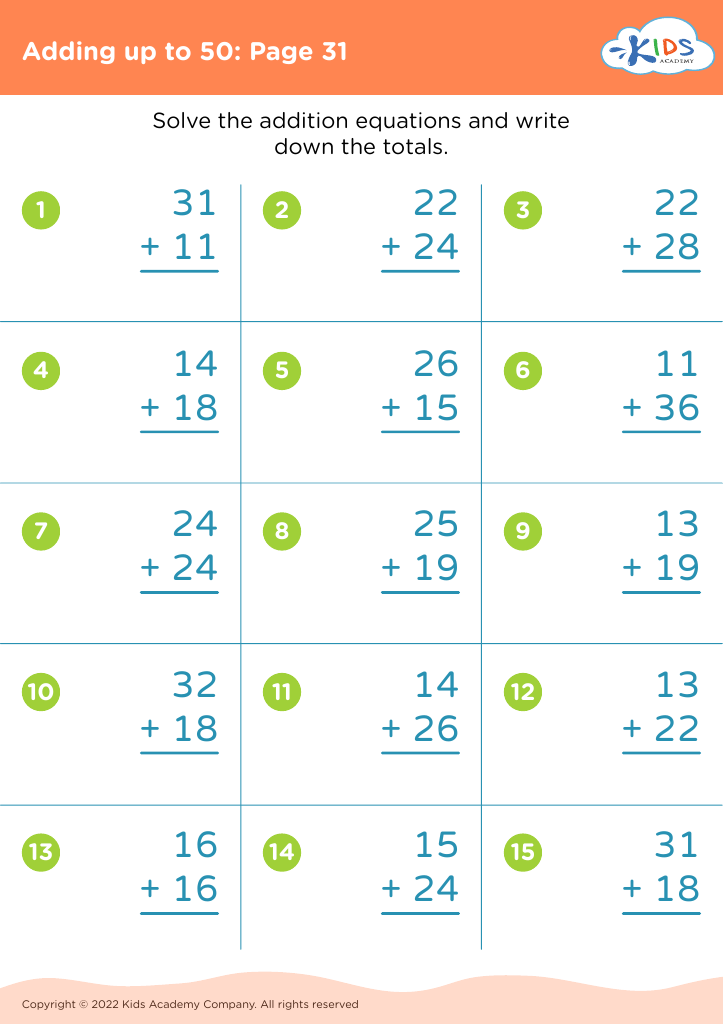
Adding up to 50: Page 31

Adding up to 50: Page 31

Adding up to 50: Page 31
Worksheet
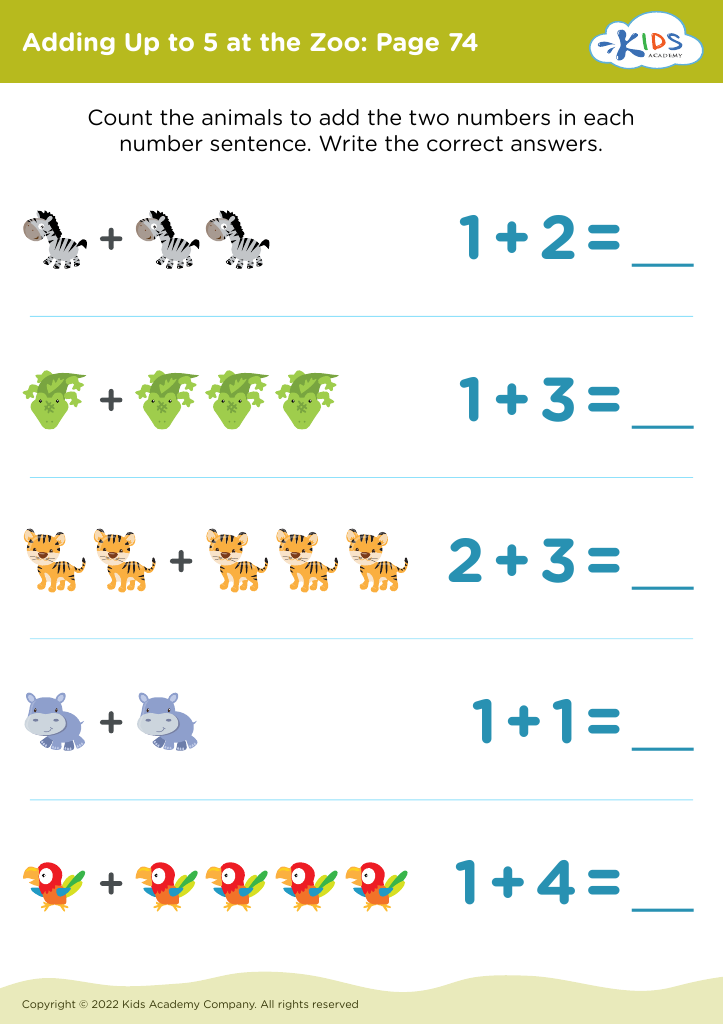
Adding Up to 5 at the Zoo: Page 74
Worksheet
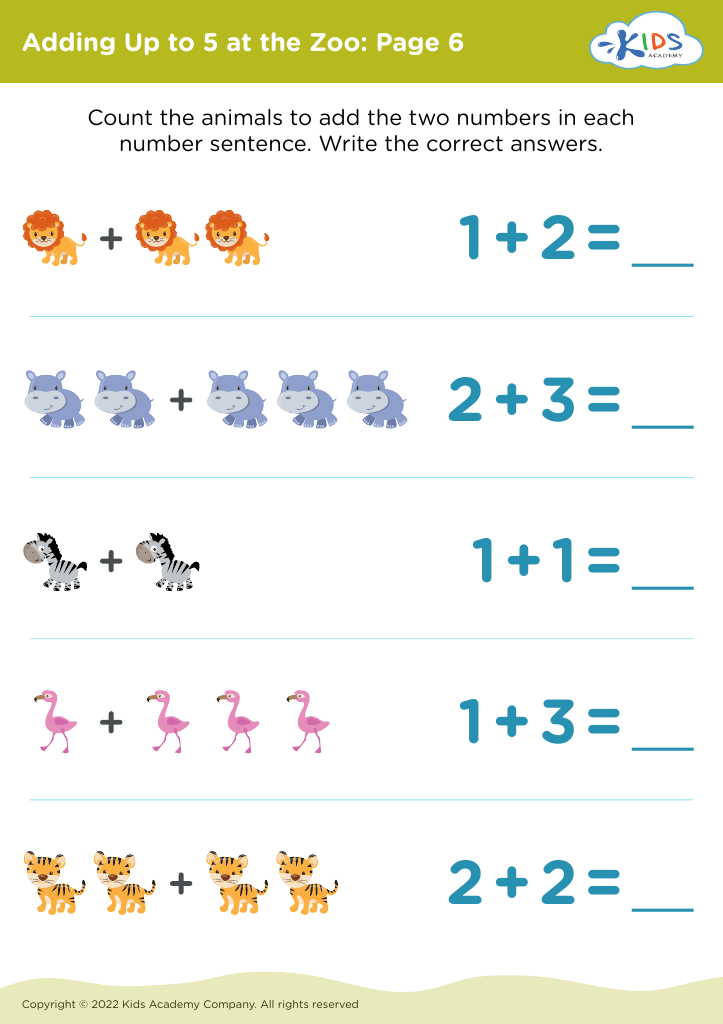
Adding Up to 5 at the Zoo: Page 6

Adding Up to 5 at the Zoo: Page 6

Adding Up to 5 at the Zoo: Page 6
Worksheet
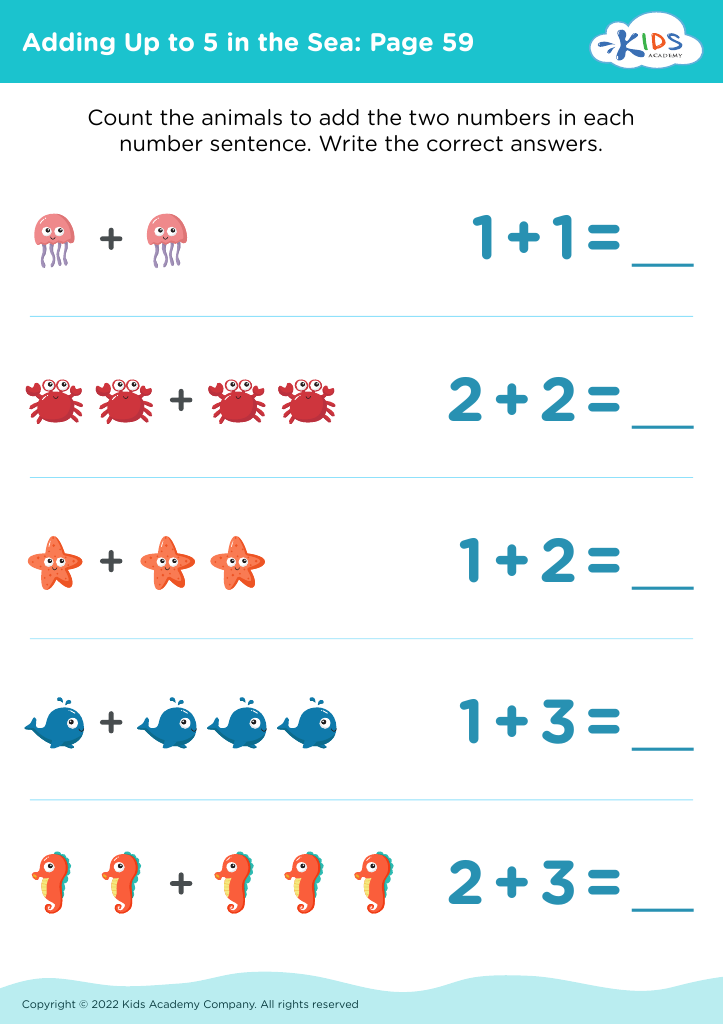
Adding Up to 5 in the Sea: Page 59
Worksheet
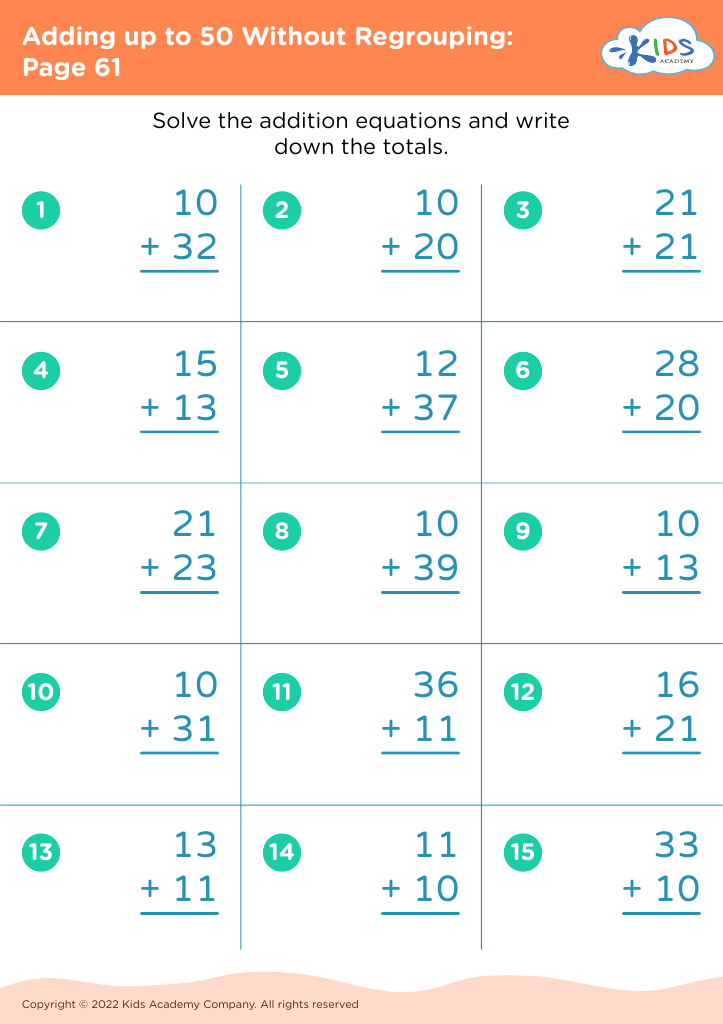
Adding up to 50 Without Regrouping: Page 61
Worksheet
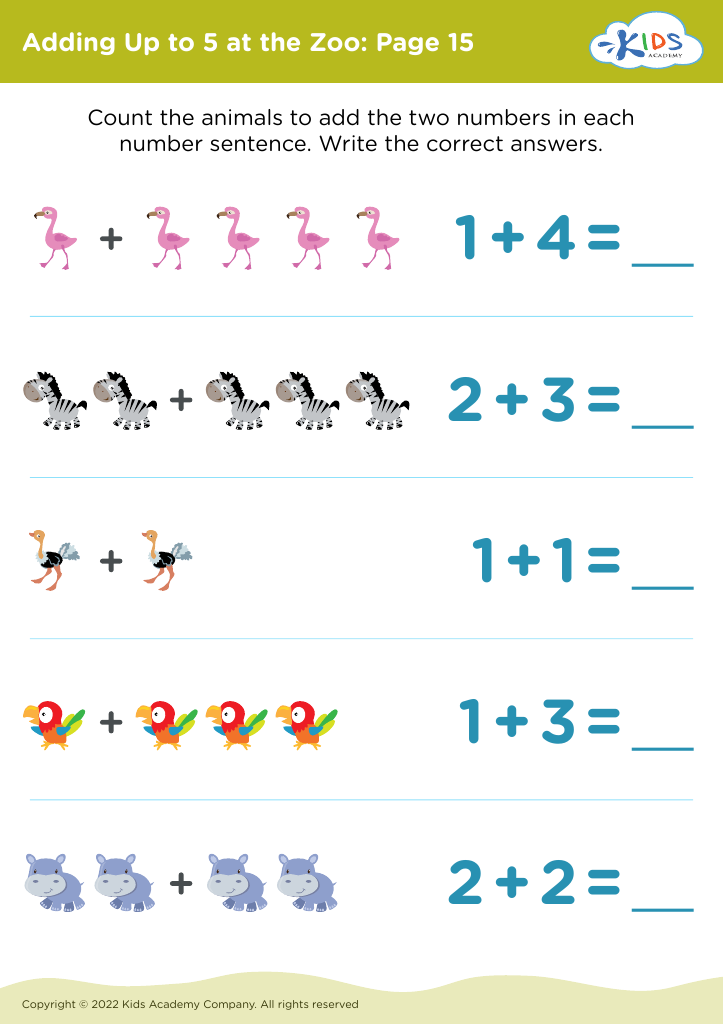
Adding Up to 5 at the Zoo: Page 15
Worksheet
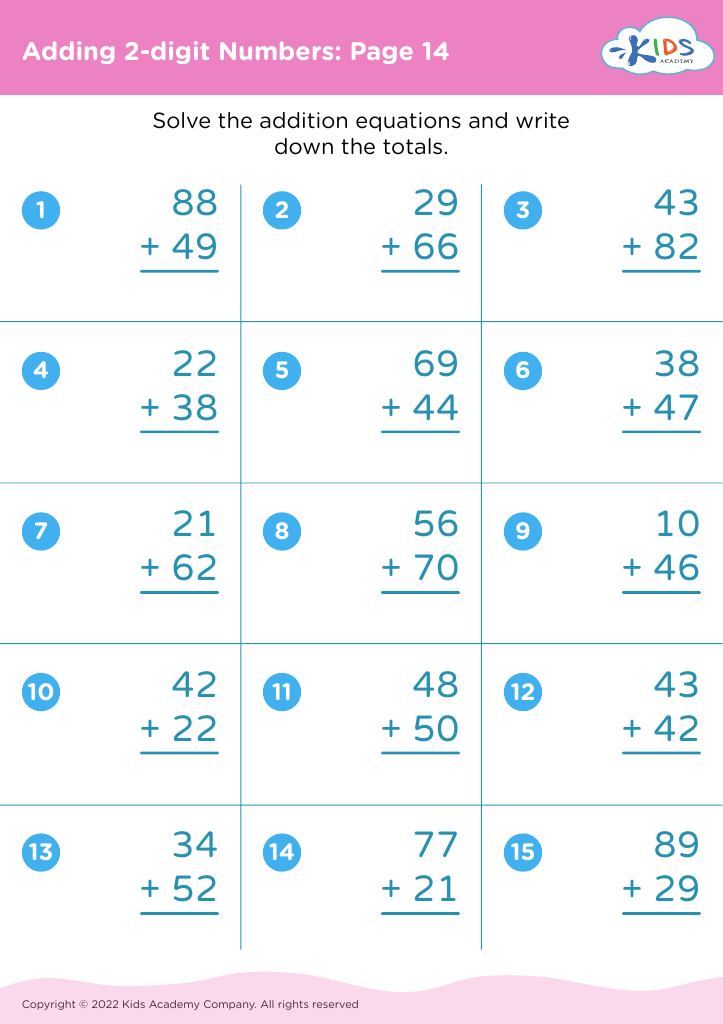
Adding 2-digit Numbers: Page 14

Adding 2-digit Numbers: Page 14

Adding 2-digit Numbers: Page 14
Worksheet
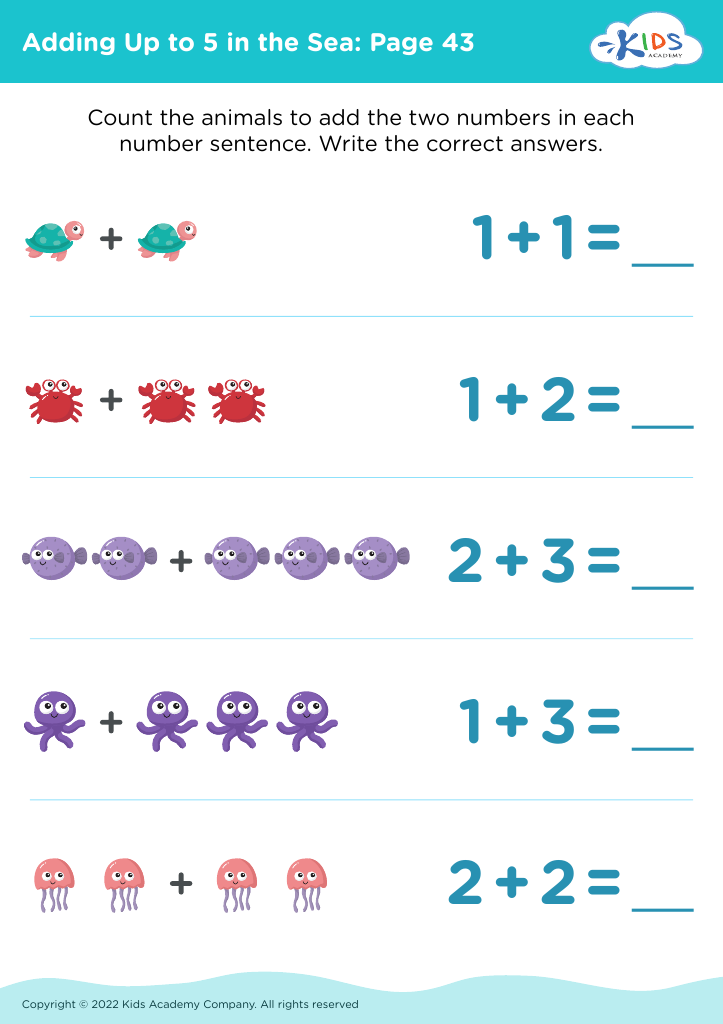
Adding Up to 5 in the Sea: Page 43
Worksheet
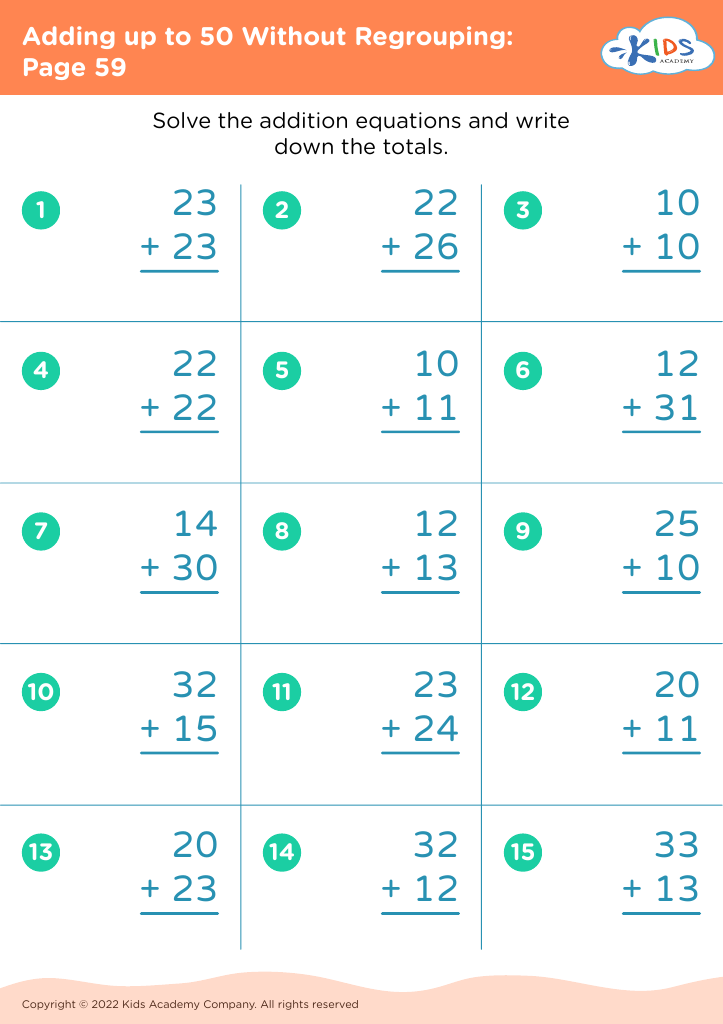
Adding up to 50 Without Regrouping: Page 59
Worksheet
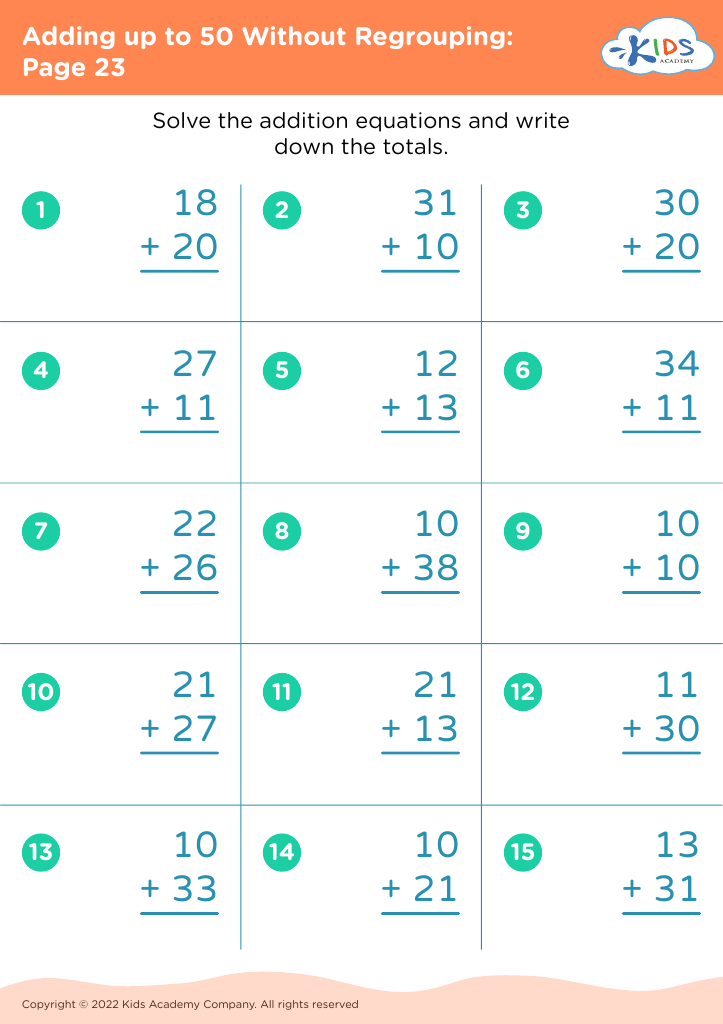
Adding up to 50 Without Regrouping: Page 23
Worksheet
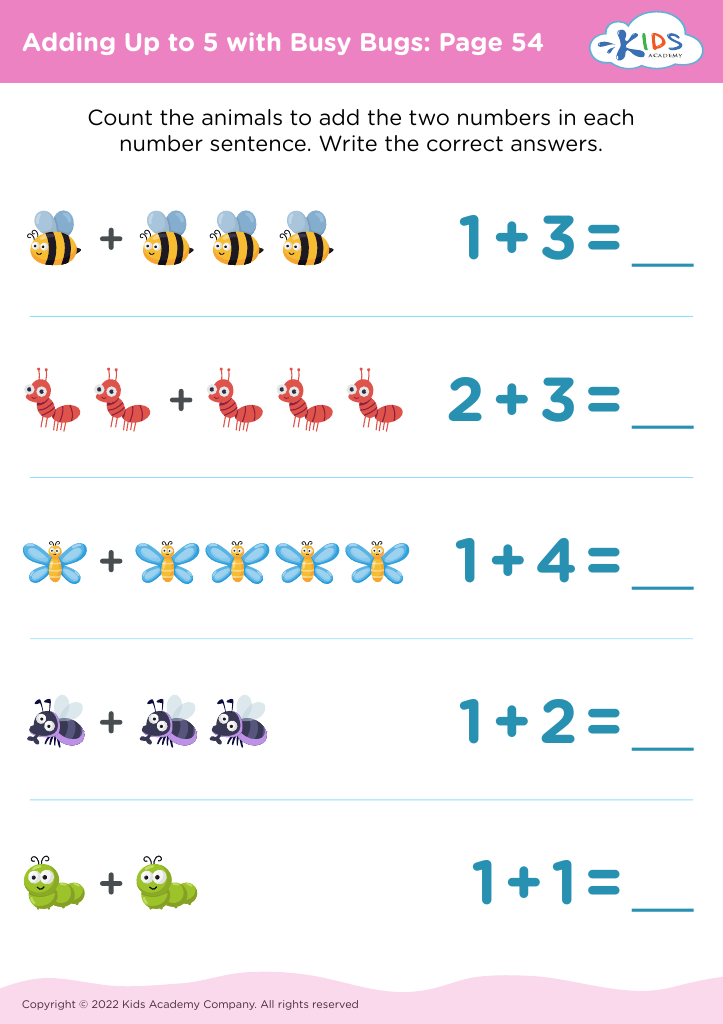
Adding Up to 5 with Busy Bugs: Page 54
Worksheet
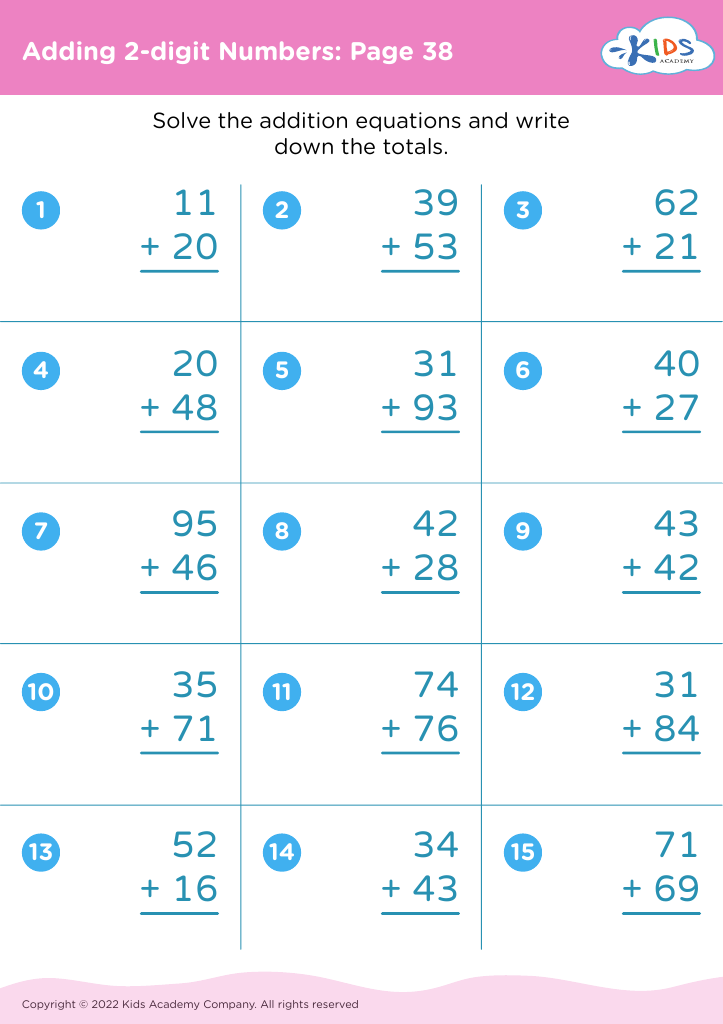
Adding 2-digit Numbers: Page 38

Adding 2-digit Numbers: Page 38

Adding 2-digit Numbers: Page 38
Worksheet
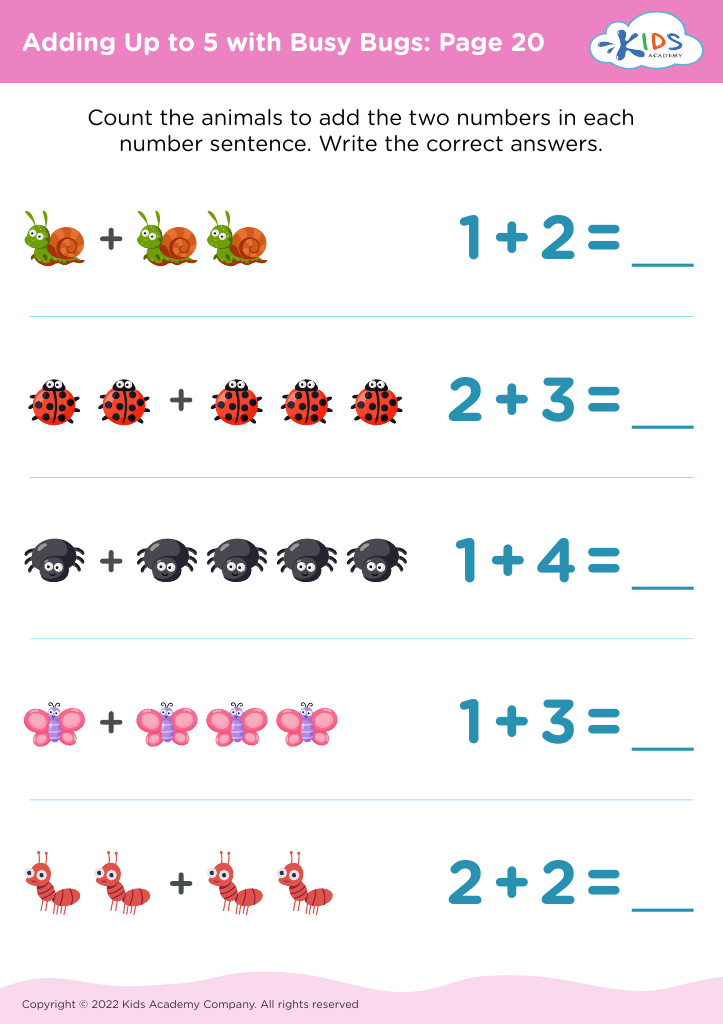
Adding Up to 5 with Busy Bugs: Page 20
Worksheet
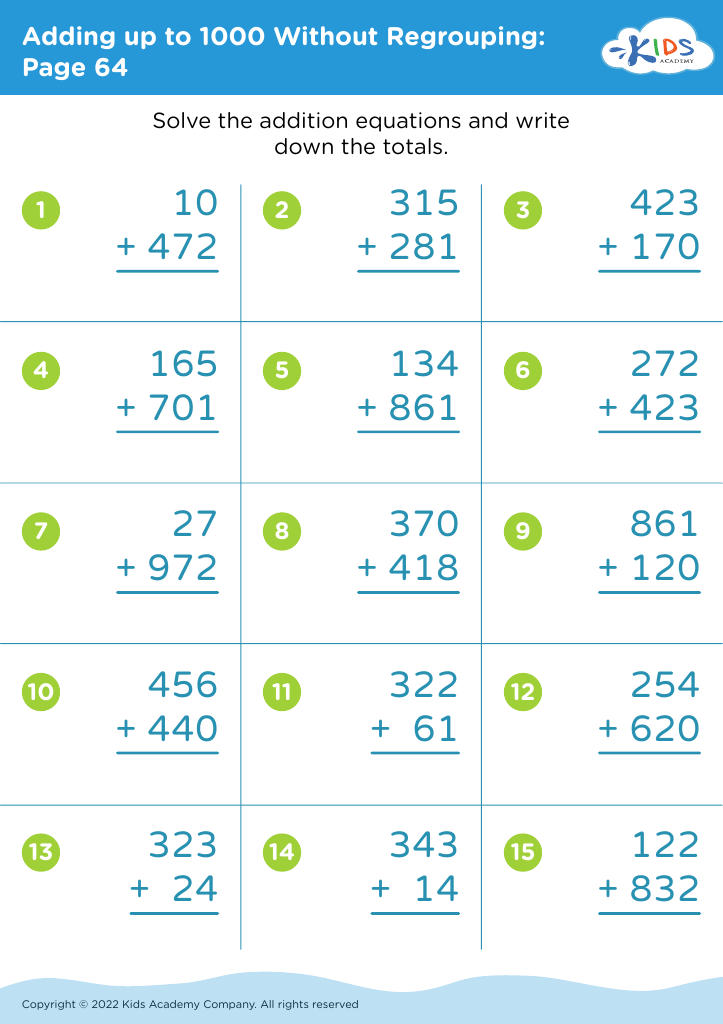
Adding up to 1000 Without Regrouping: Page 64
Worksheet
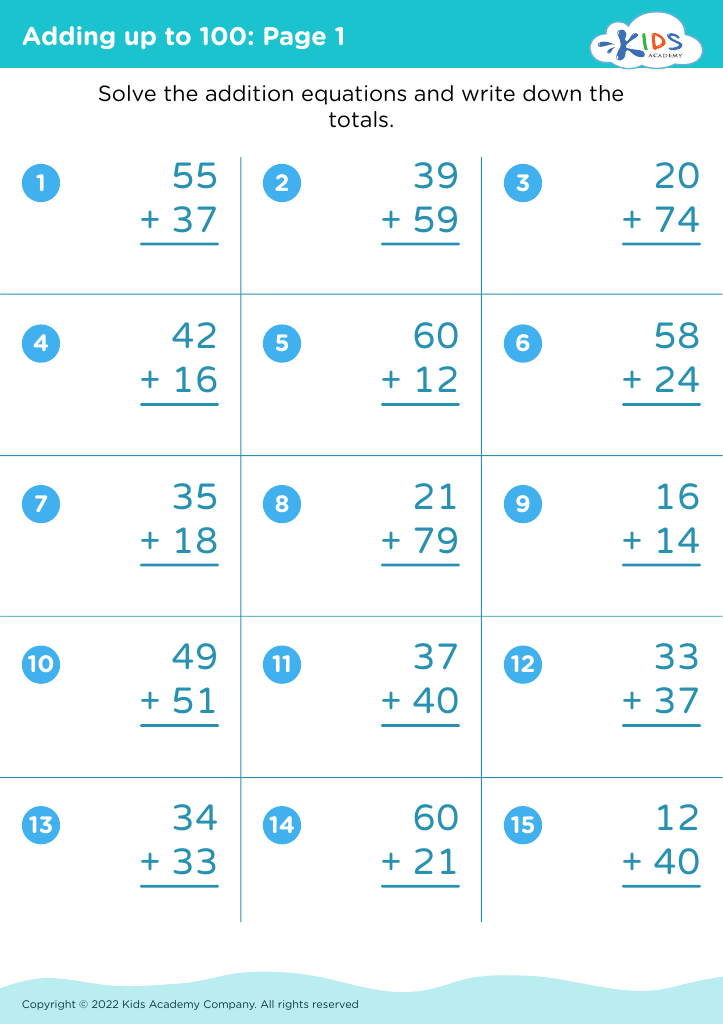
Adding up to 100: Page 1

Adding up to 100: Page 1

Adding up to 100: Page 1
Worksheet
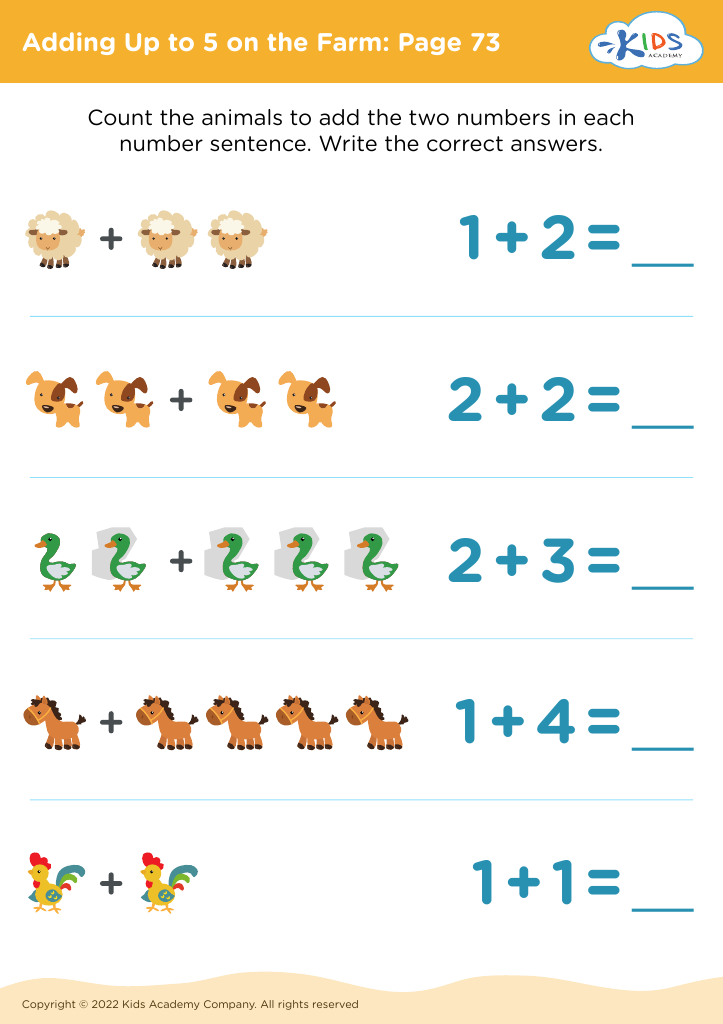
Adding Up to 5 on the Farm: Page 73
Worksheet


Basic addition practice for ages 5-7 is foundational for young learners as it sets the stage for future academic success and everyday problem-solving skills. During this developmental window, children are especially receptive to new information, making it an ideal time to reinforce fundamental mathematical concepts. By mastering addition early, kids develop confidence and a sense of achievement that can foster a positive attitude towards learning as a whole.

Parents and teachers should care about basic addition practice because it enhances essential cognitive skills such as memory, focus, and logical thinking. This form of early math education also introduces children to structured thinking and the ability to derive patterns and results, which are critical skills not only in advanced mathematics but in all areas of learning.

Furthermore, as mathematics is a cumulative subject where each concept builds upon the previous one, a strong grasp of basic addition ensures a smooth transition to more complex mathematical operations like subtraction, multiplication, and division. It also equips children with problem-solving skills they'll need in everyday scenarios involving numbers, such as sharing items, telling time, and counting money.

In sum, focusing on basic addition for ages 5-7 lays a robust educational foundation, empowering children both academically and in their daily lives, and thus deserves significant attention from both parents and teachers.