
Basic math learning Addition Worksheets for Ages 5-7
3 filtered results
Difficulty Level
Grade
Age
-
From - To
Subject
Activity
Standards
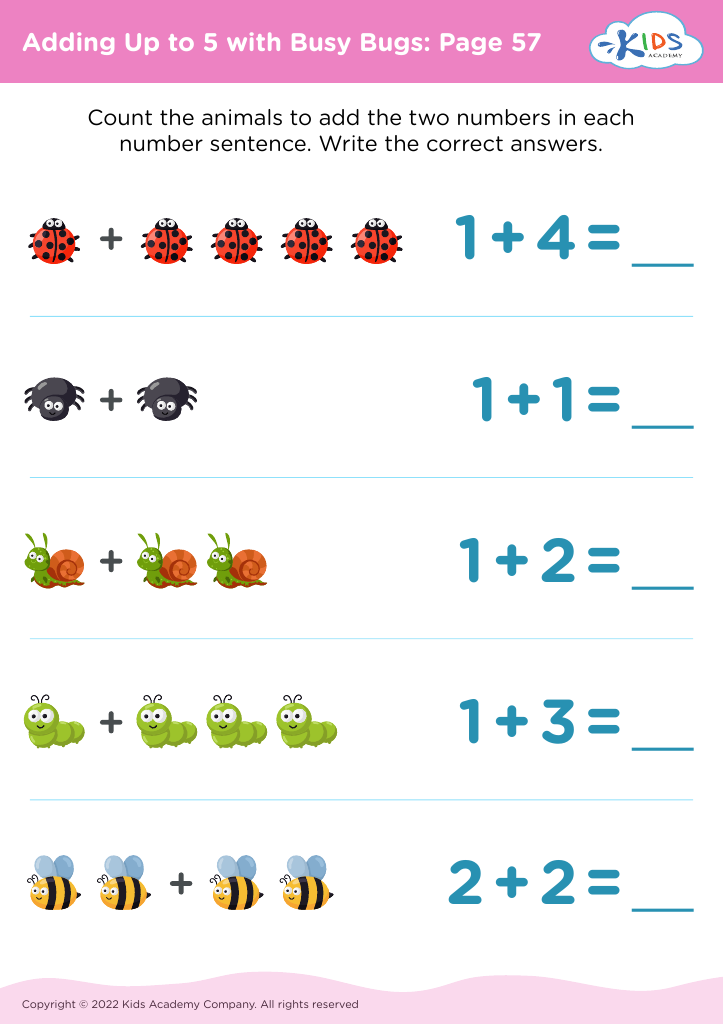
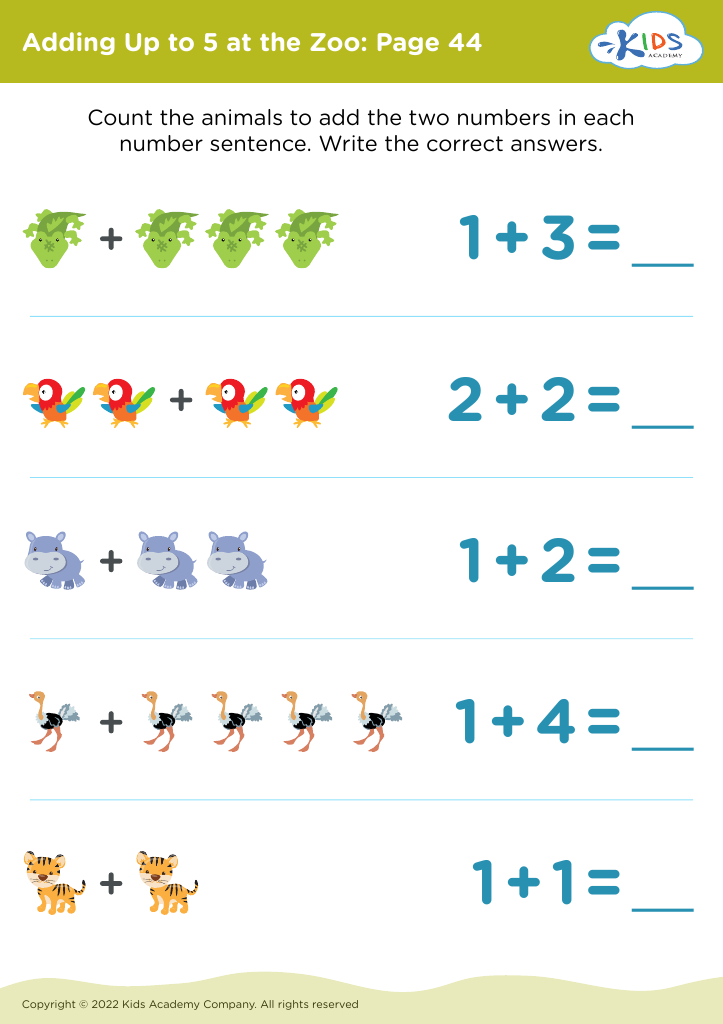
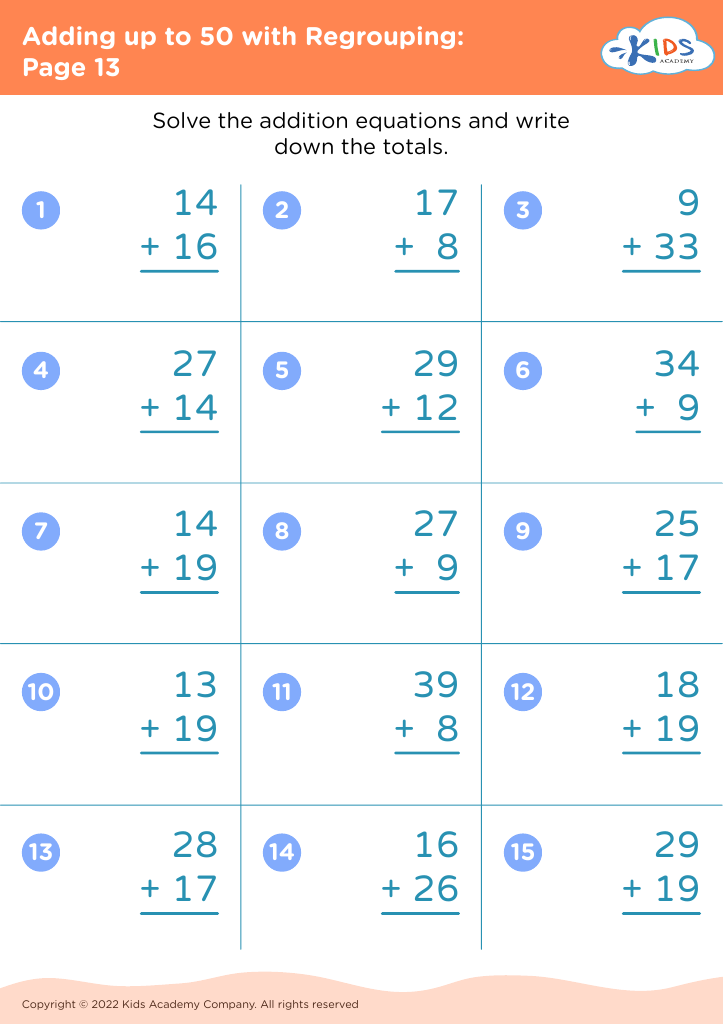
Discover our engaging Basic Math Learning Addition Worksheets, specially designed for children ages 5-7! These worksheets provide a fun and interactive way for young learners to master essential addition skills. With a variety of exercises that include colorful visuals and relatable themes, kids will enjoy practicing addition in various formats such as pictures, missing numbers, and simple equations. These resources foster a solid understanding of the fundamental concept of addition, enhancing math fluency while building confidence. Perfect for home or classroom use, our worksheets ensure a nurturing learning environment where children can thrive. Start their math journey today!
Favorites
With answer key
Interactive
Join Kids Academy for Free
Who is primarily going to use this learning content?








Basic math learning, particularly addition, is crucial for children aged 5-7 as it lays the foundation for their future academic success and everyday problem-solving skills. At this stage, children are not only developing their cognitive abilities but are also learning to navigate the world around them. Understanding addition helps them make sense of quantities, compare sizes, and engage in building their logical reasoning.
Addition introduces essential concepts such as number sense, which grows their confidence and encourages a positive attitude towards math. This early proficiency can foster a lifelong appreciation for mathematics and its applications in real life, from counting items at the grocery store to budgeting money for small purchases.
Furthermore, when parents and teachers emphasize addition through engaging activities—like games, songs, or hands-on exercises—they can create a supportive learning environment that nurtures curiosity and collaboration. This approach helps children develop social skills as they work in groups, share ideas, and support each other's learning journeys.
Incorporating addition into everyday activities reinforces the relevance of math in daily life, ensuring that kids see the real-world significance in what they learn, translating to greater academic engagement and success down the line.








