
Basic Math Skills Addition Worksheets for Ages 5-7
73 filtered results
Difficulty Level
Grade
Age
-
From - To
Subject
Activity
Standards
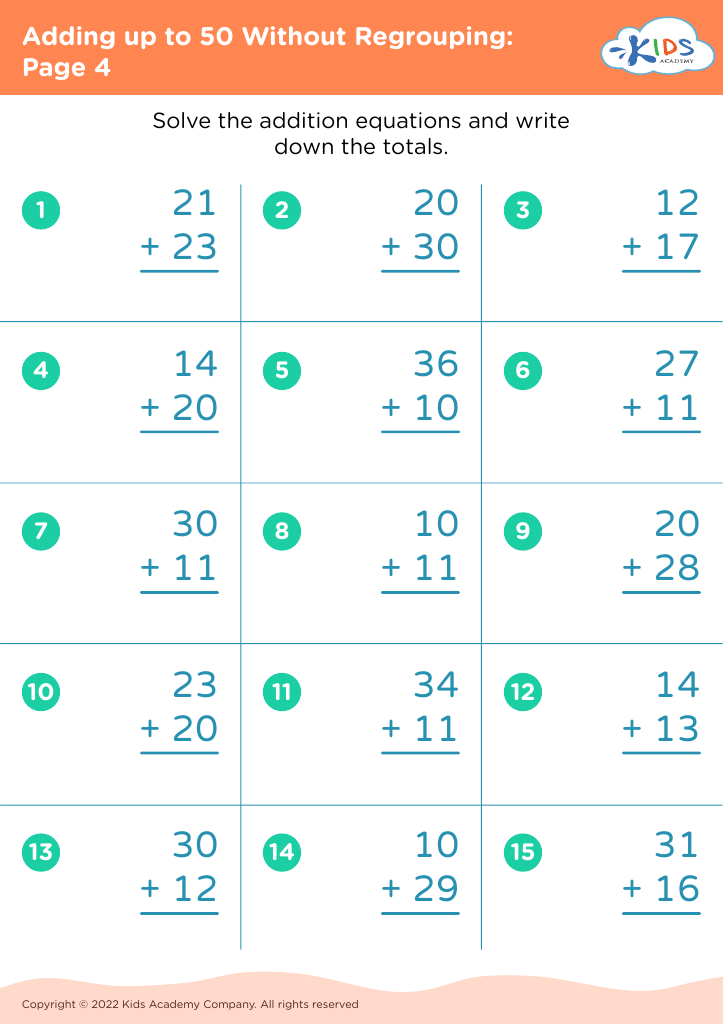
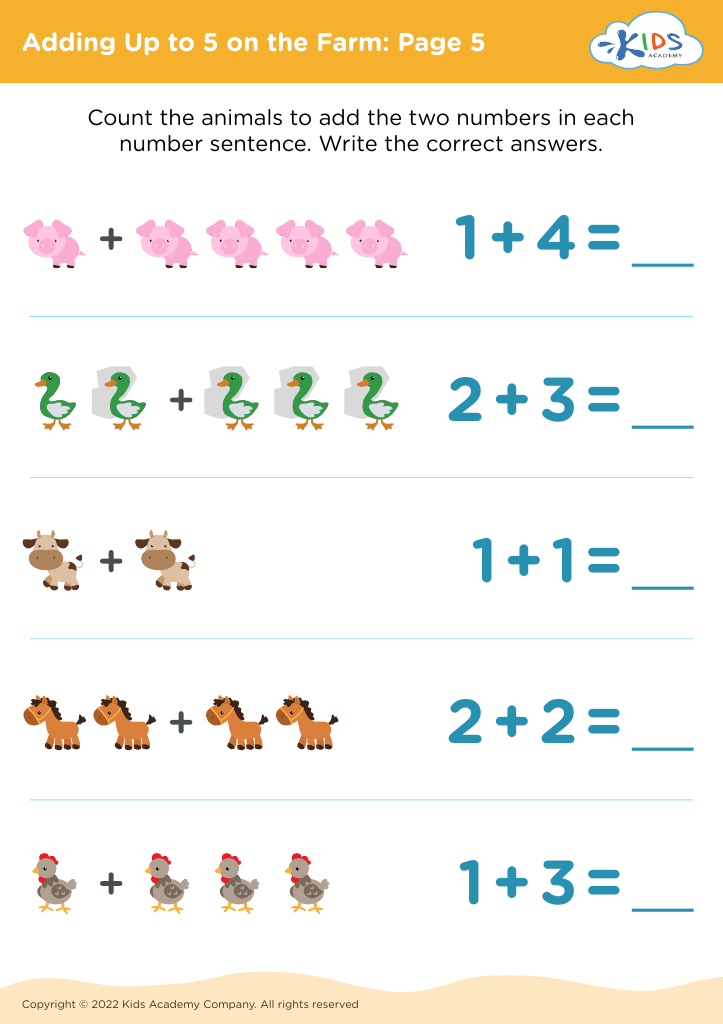
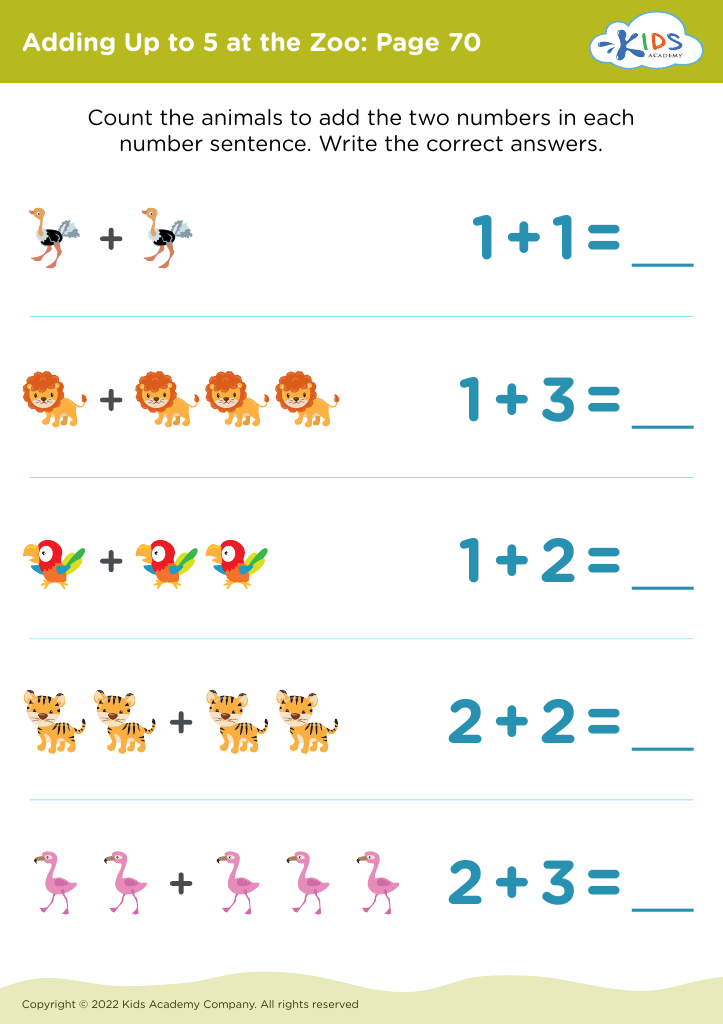
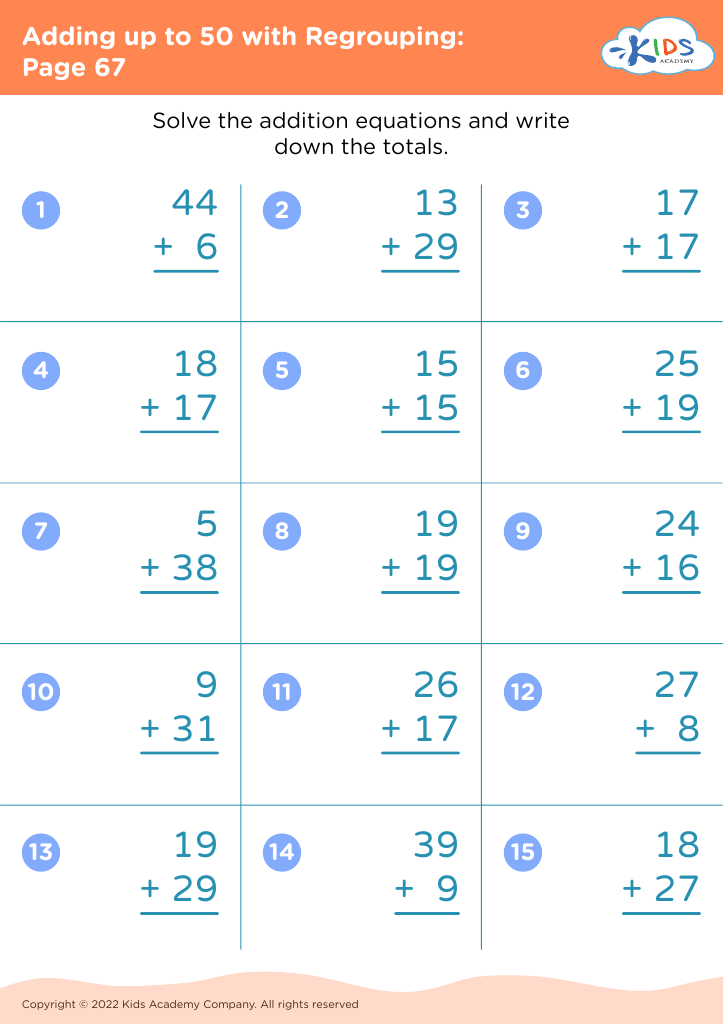
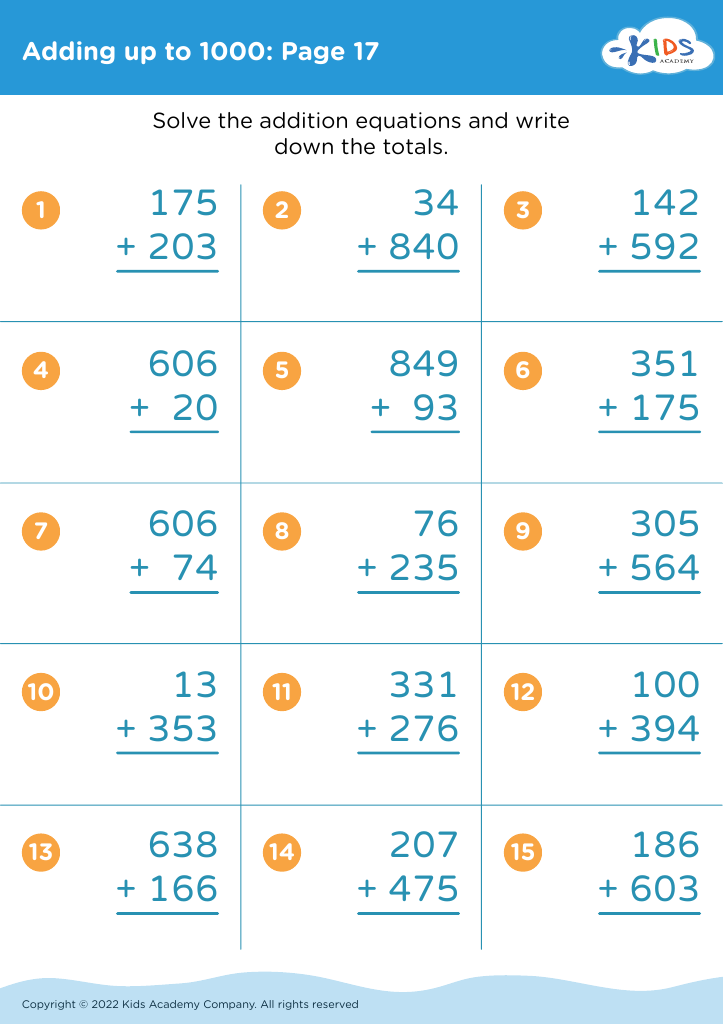
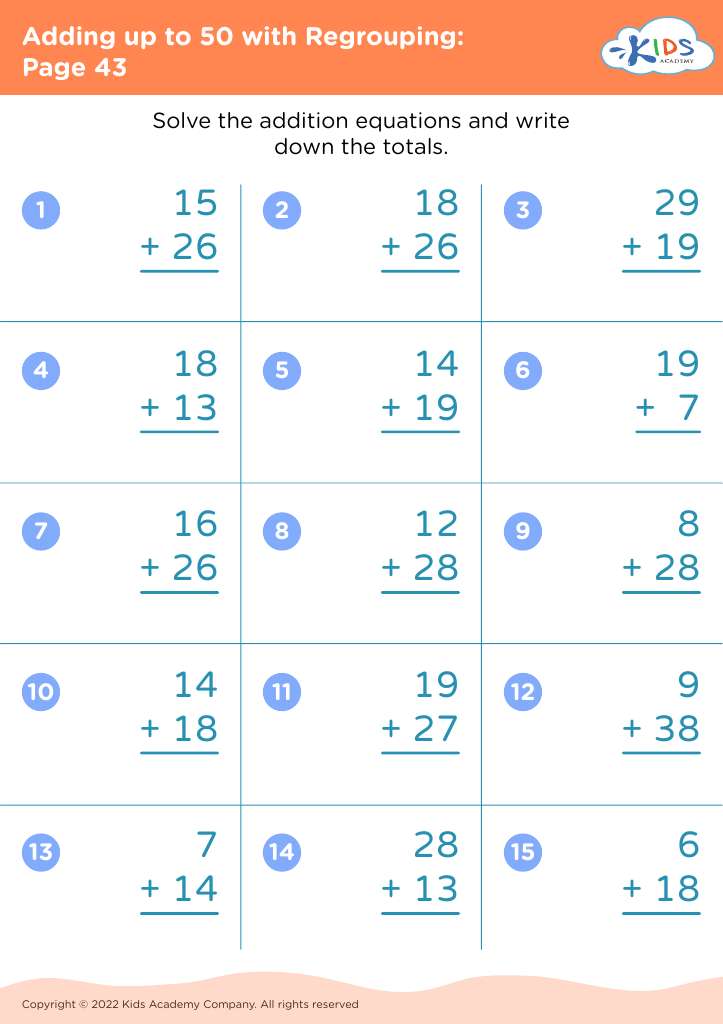
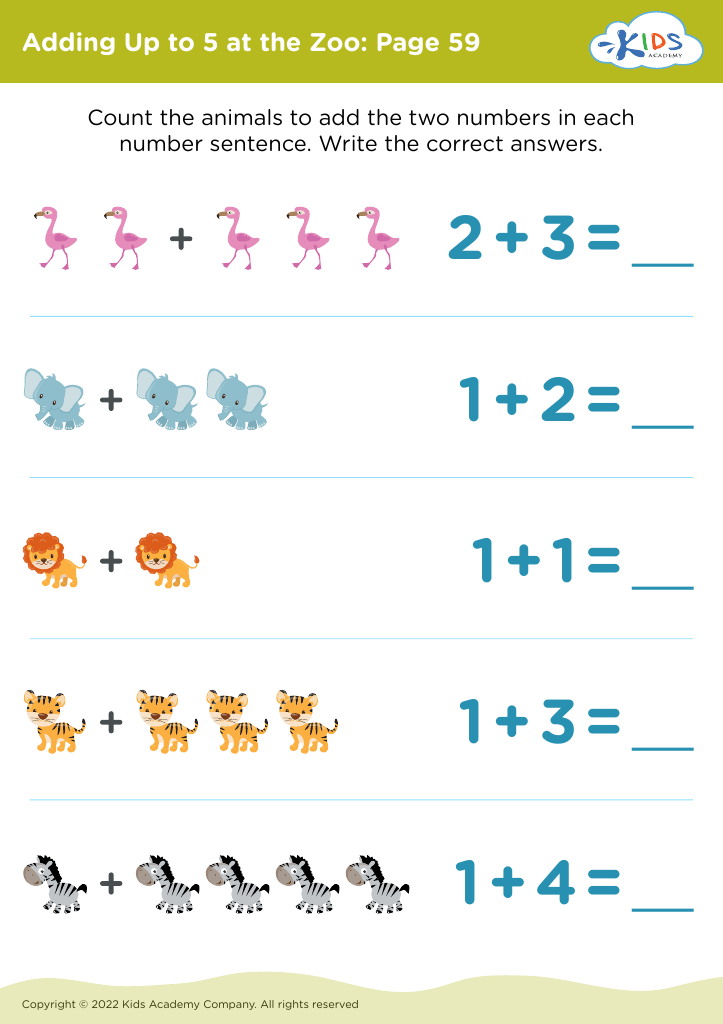
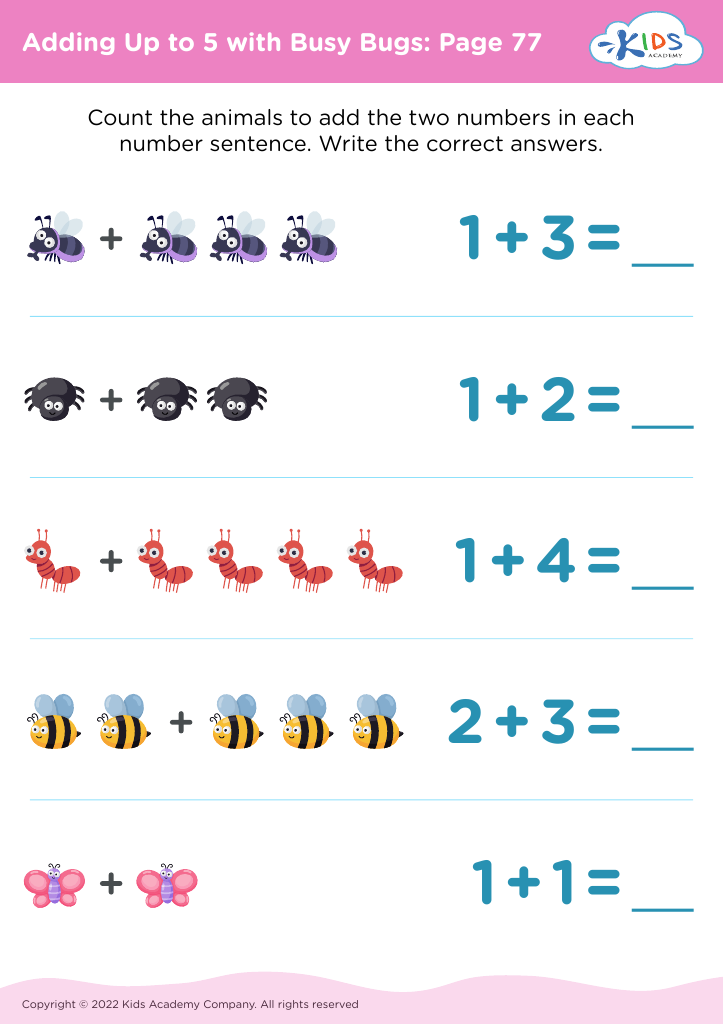
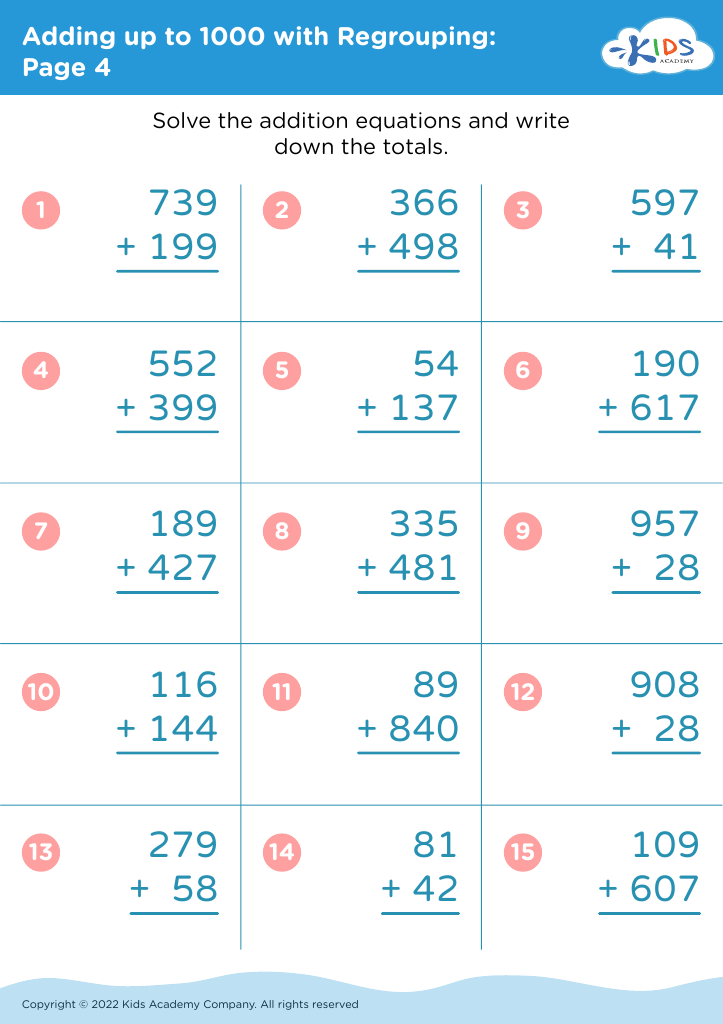
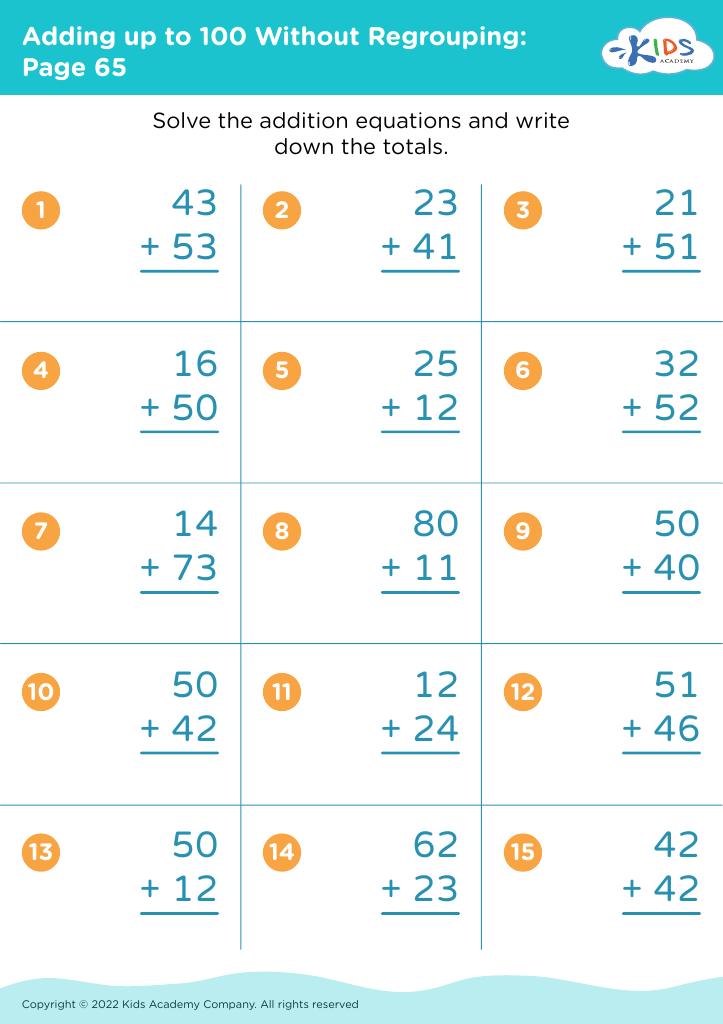
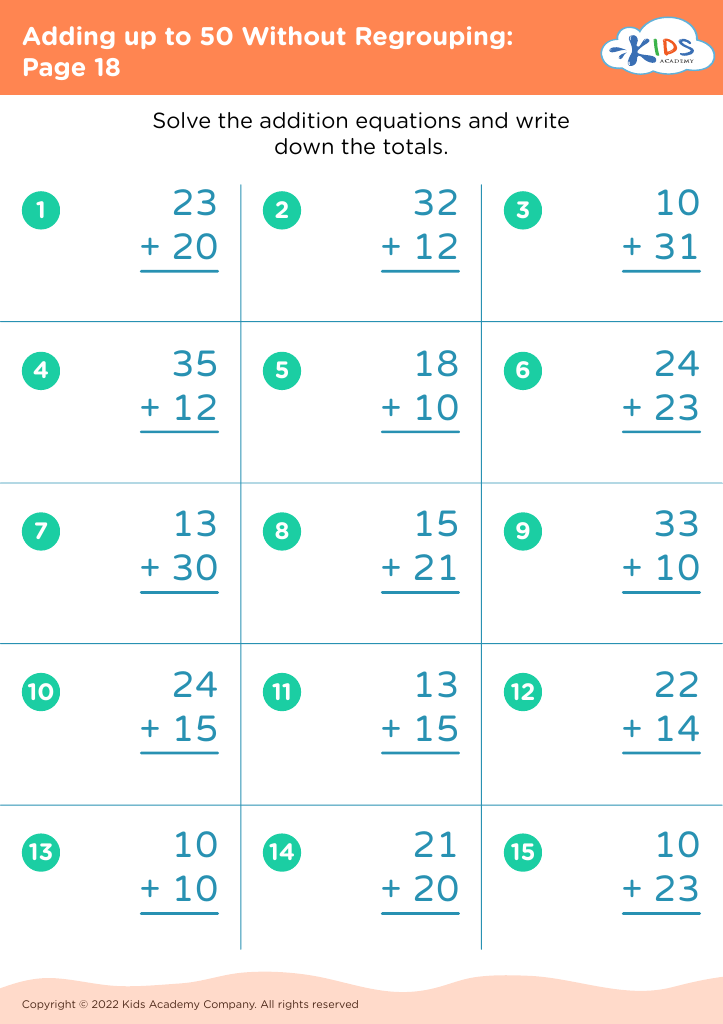
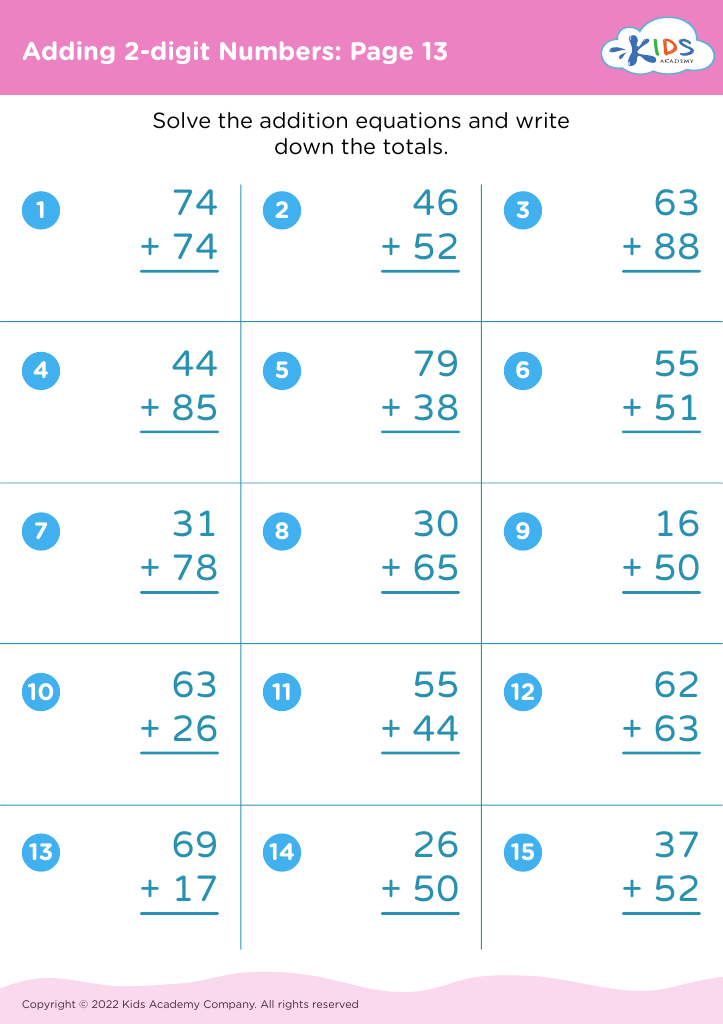
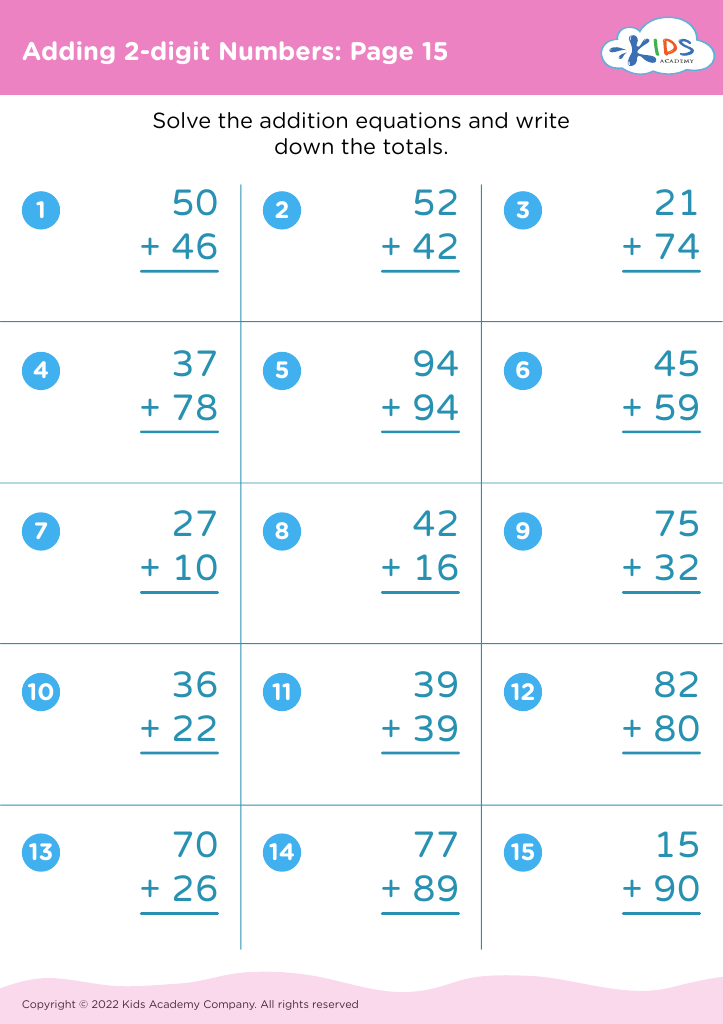
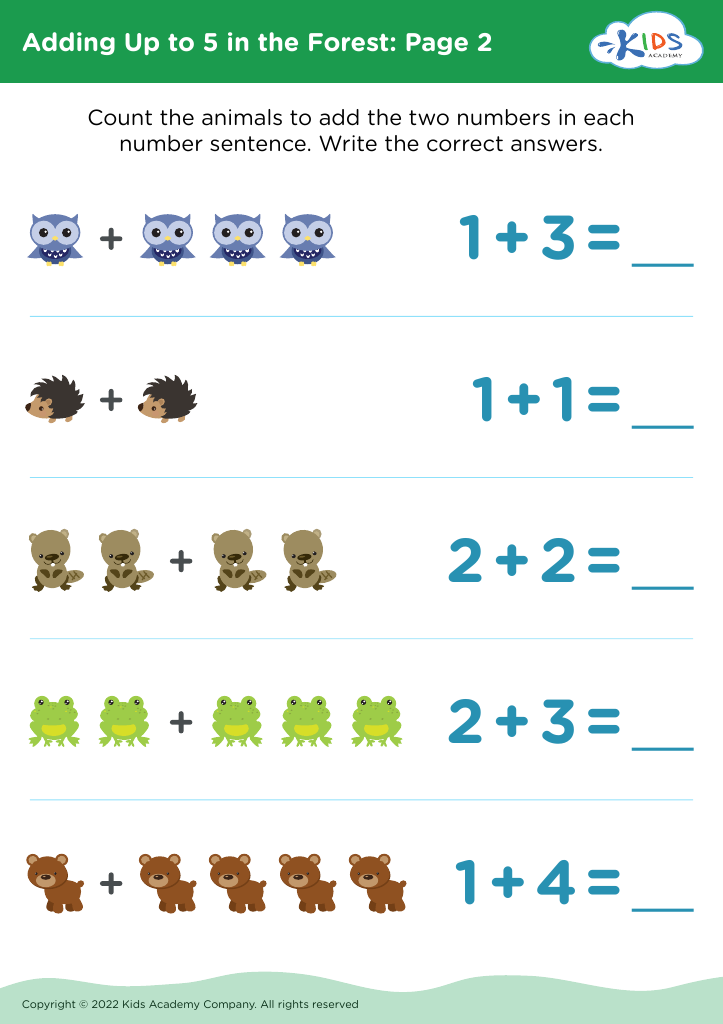
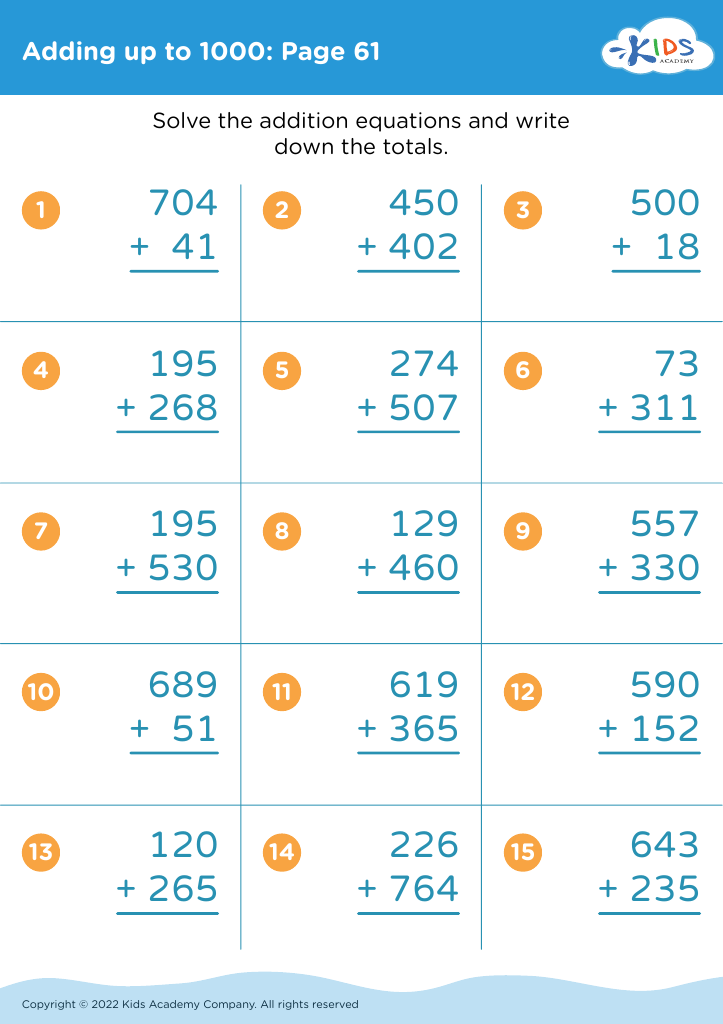
Explore our comprehensive collection of Basic Math Skills Addition Worksheets designed specifically for children aged 5-7. These engaging worksheets help young learners build a strong foundation in addition through colorful illustrations and fun activities. Each worksheet is tailored to enhance number recognition, reinforce counting skills, and provide practice in solving simple addition problems. Whether at home or in the classroom, our resources are perfect for reinforcing key concepts in a delightful way. Help your child develop confidence in their math abilities while fostering a love for learning. Download your favorite worksheets today and watch their skills grow!
Favorites
With answer key
Interactive
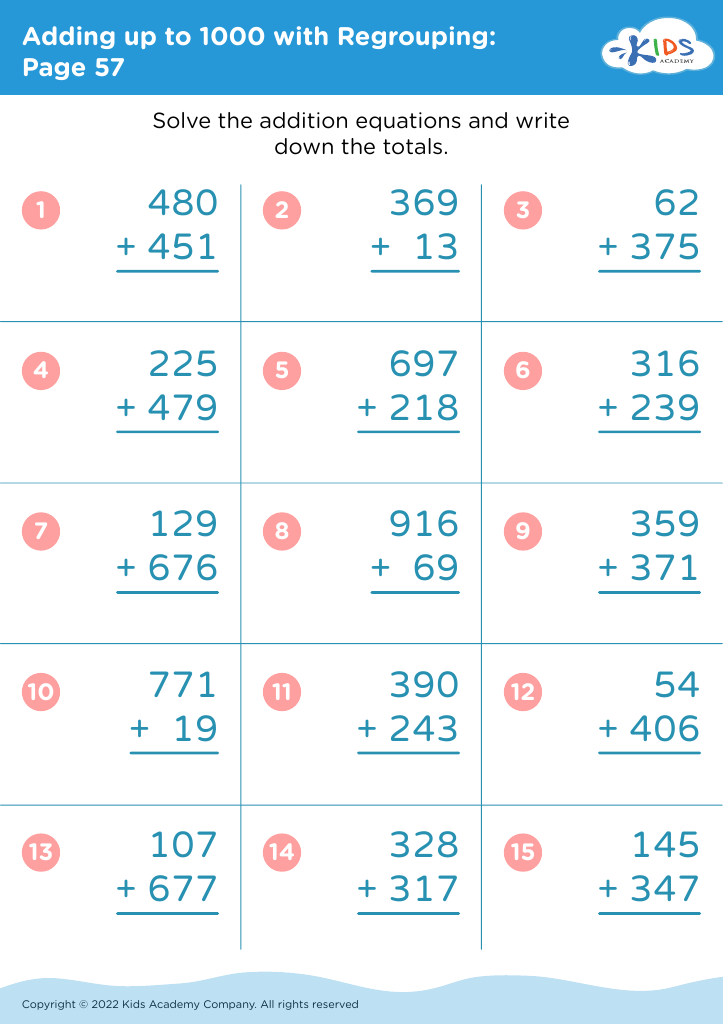
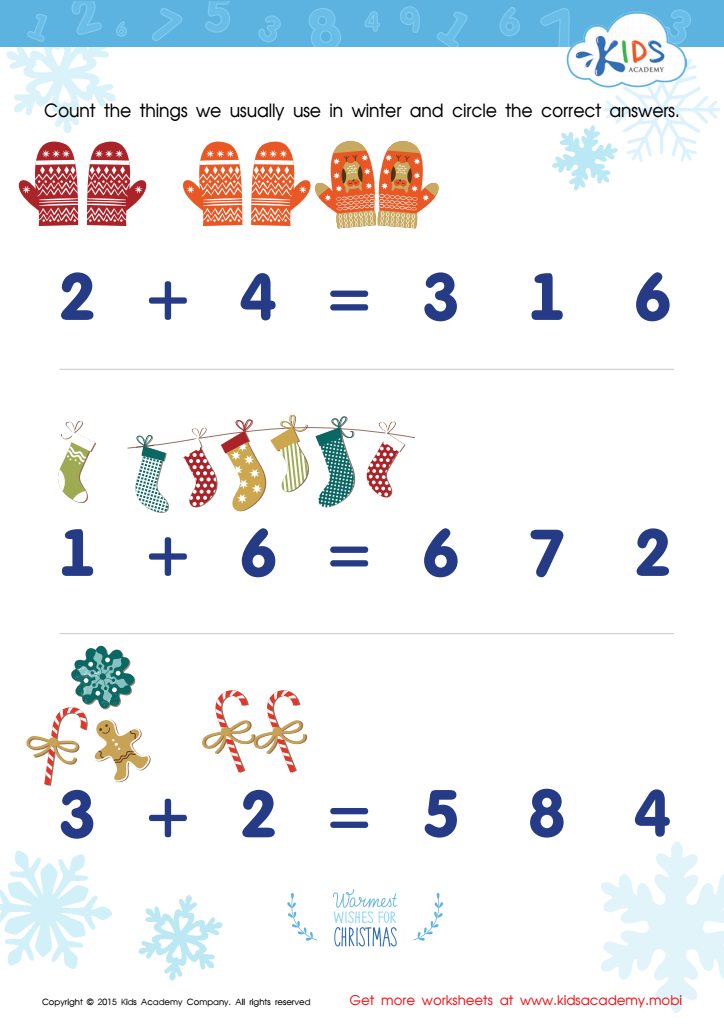
Count Winter Things Worksheet
This chilly winter afternoon, help your kid warm up with Kids Academy's free math worksheet - full of bright pictures and addition practice. Let them count the things and write in the numbers for a great brain training and math head start. Get more free math worksheets here. (80 words)
 Assign to My Students
Count Winter Things Worksheet
Worksheet
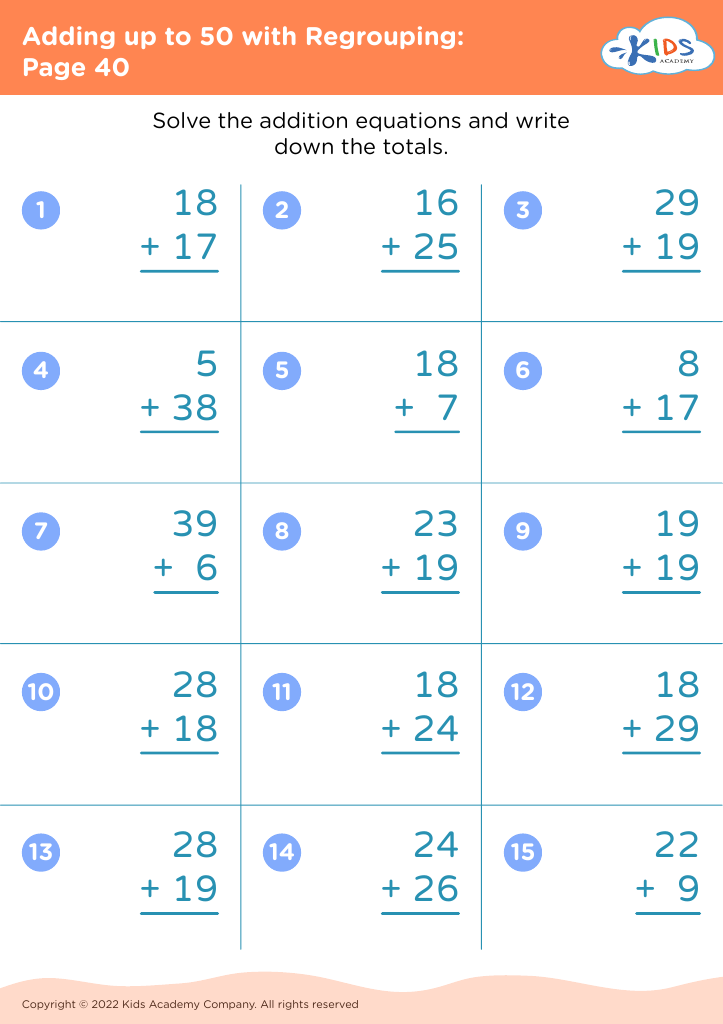
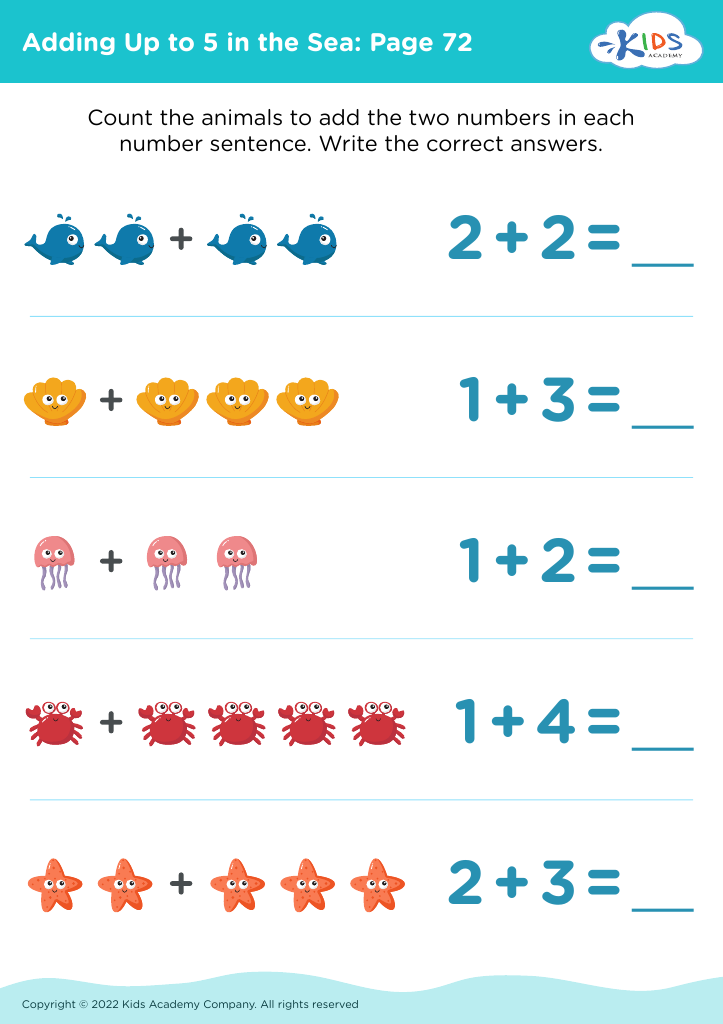
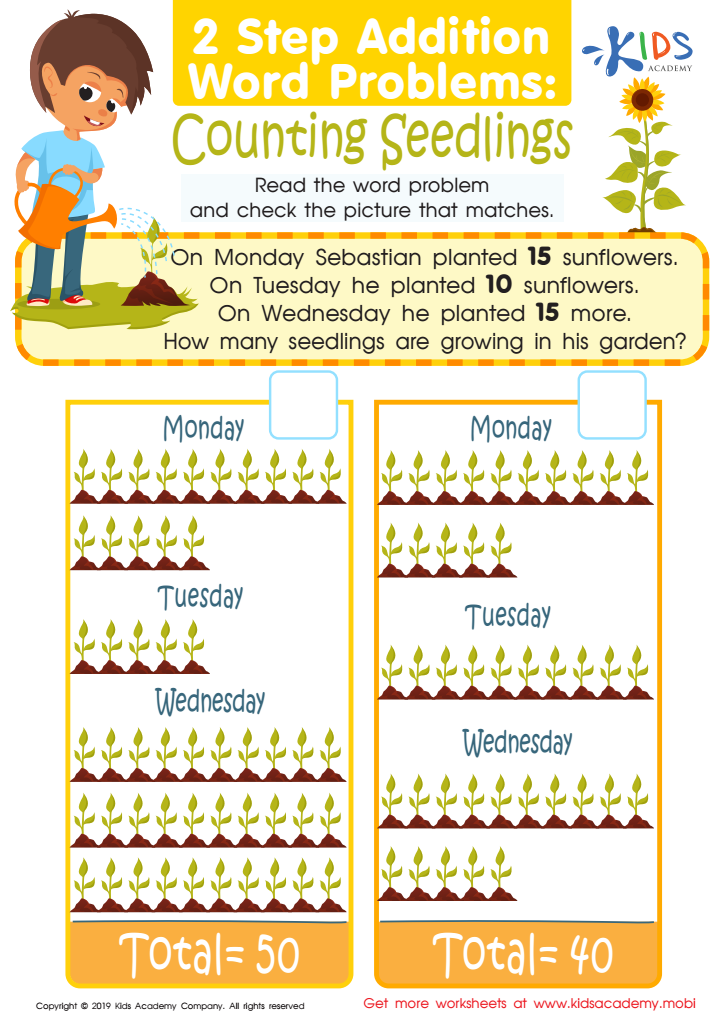
Counting Seedlings Worksheet
Understanding math word problems is key. Multiple steps can prove challenging - this free worksheet provides one-to-one picture representation to help kids solve multi-step addition word problems. Strengthen addition skills by choosing the matching picture to the answer.
Counting Seedlings Worksheet
Worksheet
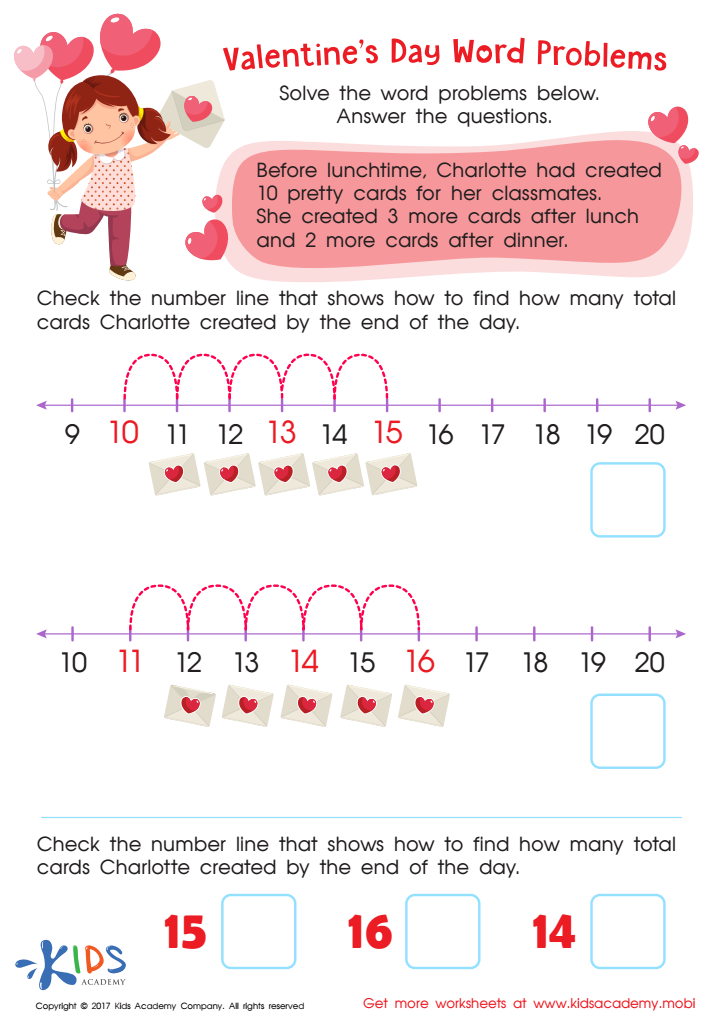
Valentines Day Word Problem Worksheet
This Valentine's Day worksheet will help your child practice using a number line to solve an addition problem. It's a great way to boost confidence and make solving word problems a breeze.
Valentines Day Word Problem Worksheet
Worksheet
Join Kids Academy for Free
Who is primarily going to use this learning content?





.jpg)


Basic math skills, particularly addition, are crucial for children aged 5-7 as they serve as a foundation for future learning. During these formative years, children begin to develop essential cognitive skills, and mastering addition boosts their confidence and self-esteem. Understanding addition not only helps children solve everyday problems—such as counting objects and sharing equally—but also prepares them for more complex concepts in mathematics later on.
Parents and teachers should prioritize this skill because it fosters logical thinking and enhances problem-solving abilities. Engaging children in fun activities like counting games, rewards for solving simple problems, or using visual aids can make learning addition enjoyable, turning it into a positive experience. These strategies also strengthen the parent-child or teacher-student bond, as they encourage collaborative learning.
Moreover, basic math skills are crucial for academic success. Children who struggle with foundational concepts may face difficulties in later grades, affecting their overall performance. Therefore, by emphasizing addition in early education, we lay the groundwork for a lifelong interest in mathematics and empower children to navigate an increasingly complex world with confidence and competence. Investing time and effort into developing these skills now can lead to significant benefits in the long run.








