Filters

73 filtered results

Clear all filters
Favorites
With answer key
Interactive

73 filtered results

Difficulty Level

Grade


Check out this FREE Trial Lesson on Addition for age 5-7!

H

Favorites
With answer key
Interactive
  • 5-7
  • Basic Math Skills
  • Addition
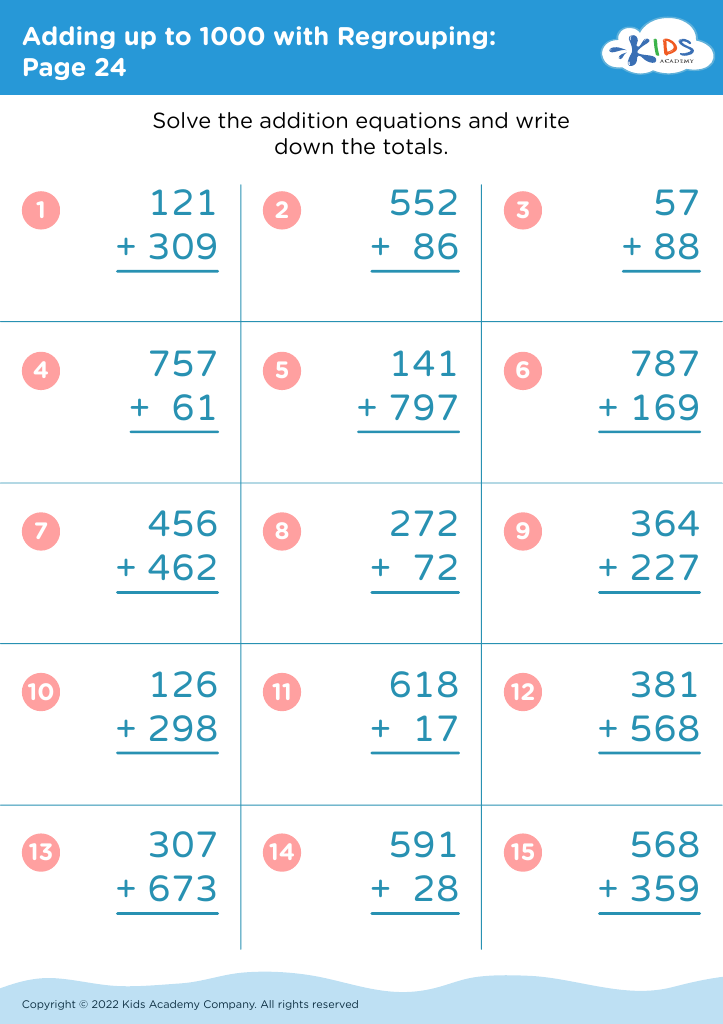
Adding up to 1000 with Regrouping: Page 24
Worksheet
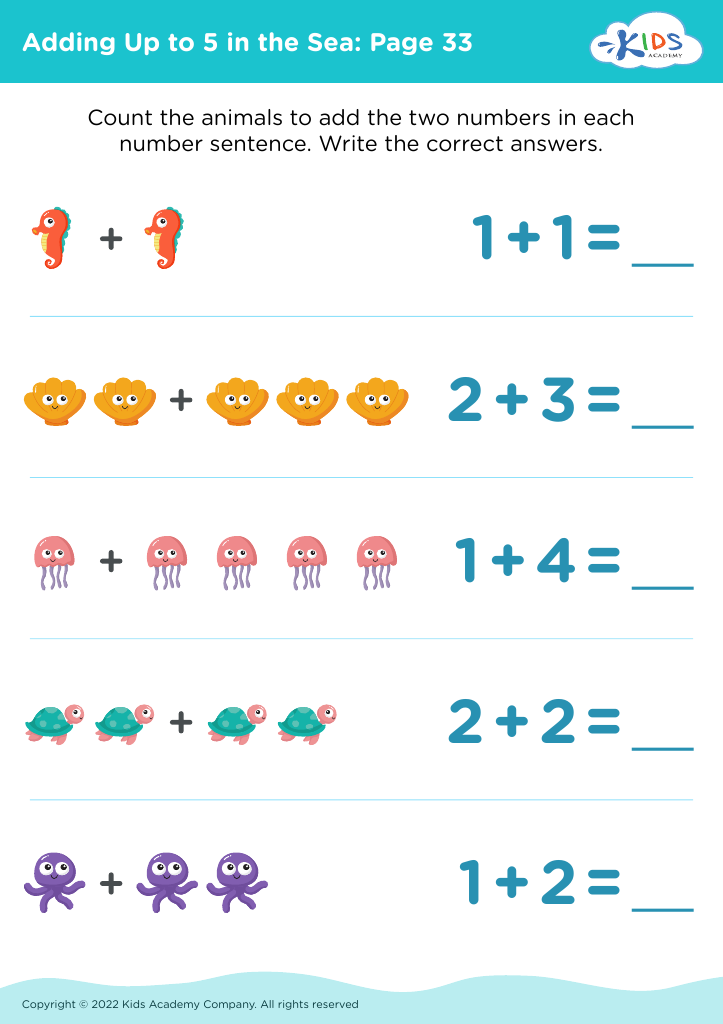
Adding Up to 5 in the Sea: Page 33
Worksheet
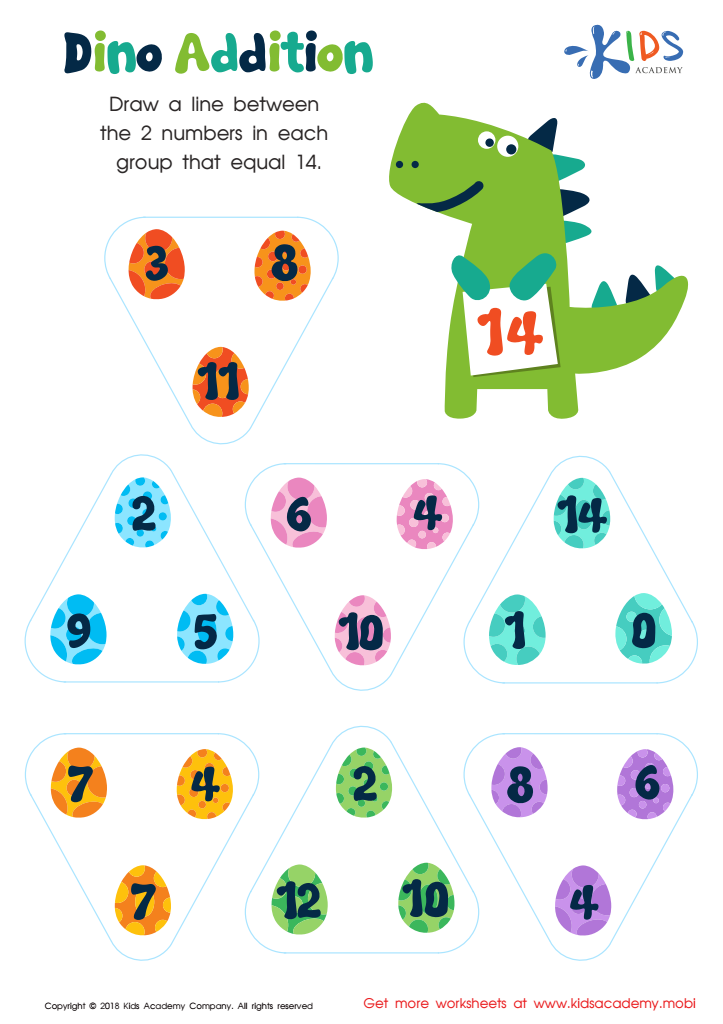
Dino Addition Worksheet

Dino Addition Worksheet

Kids can have fun with math with this cute PDF worksheet! Each triangle contains three eggs; by adding pairs of eggs together, kids can find the right combination that equals 14 and draw a line linking them. The goal is to help our playful dinosaur find the right eggs to make 14! It's a great way to practice addition and have a motivating purpose.
Dino Addition Worksheet
Worksheet
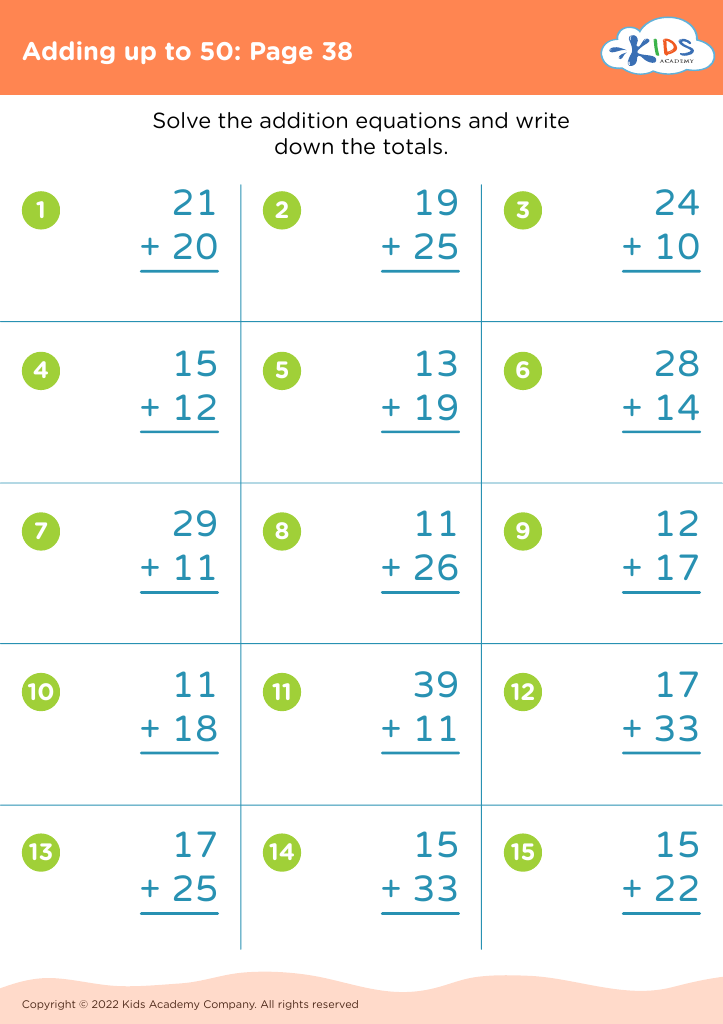
Adding up to 50: Page 38

Adding up to 50: Page 38

Adding up to 50: Page 38
Worksheet
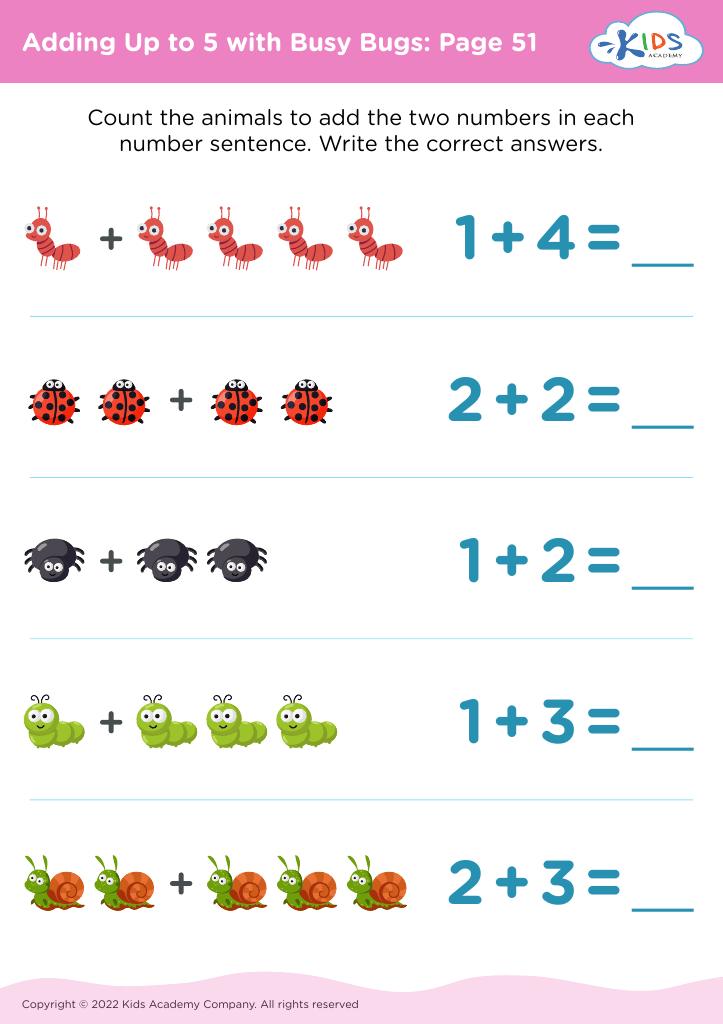
Adding Up to 5 with Busy Bugs: Page 51
Worksheet
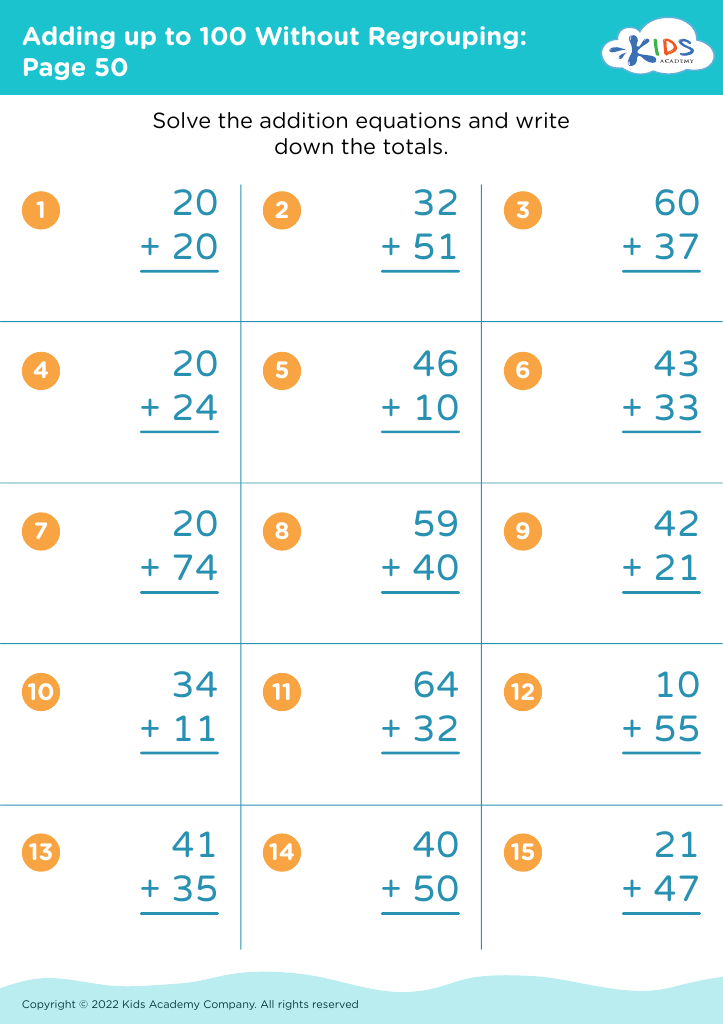
Adding up to 100 Without Regrouping: Page 50
Worksheet
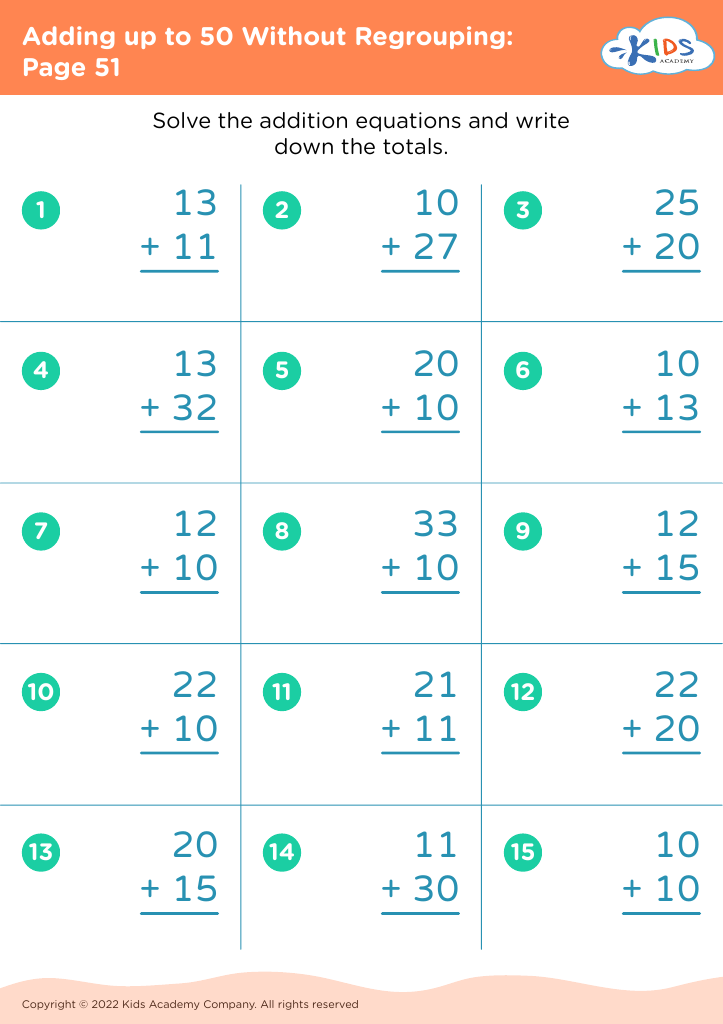
Adding up to 50 Without Regrouping: Page 51
Worksheet
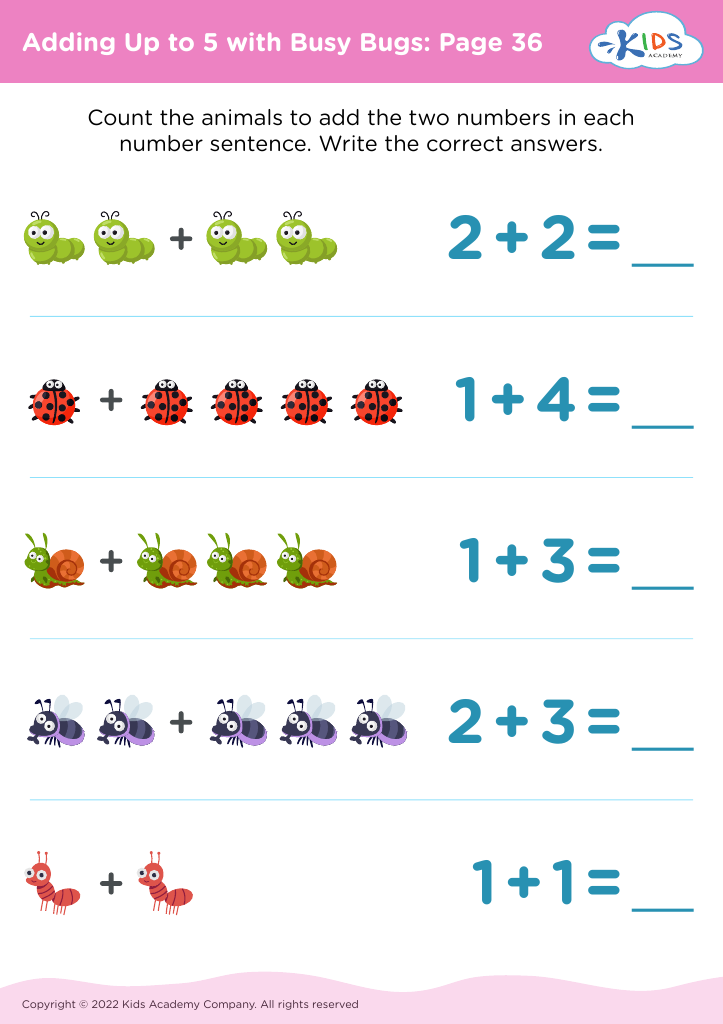
Adding Up to 5 with Busy Bugs: Page 36
Worksheet
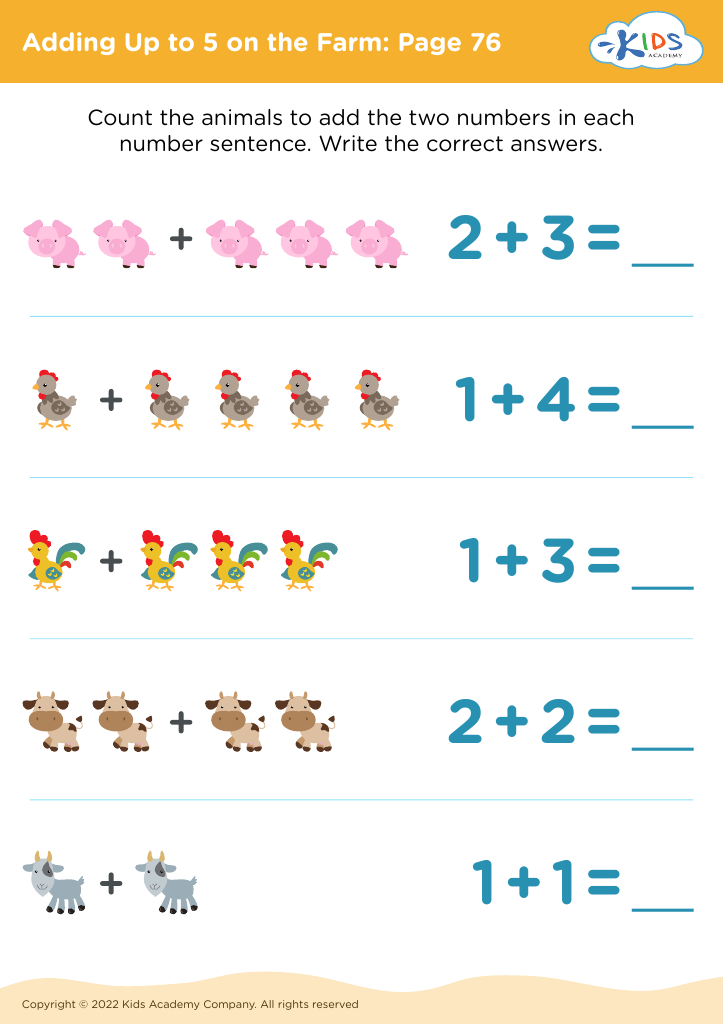
Adding Up to 5 on the Farm: Page 76
Worksheet
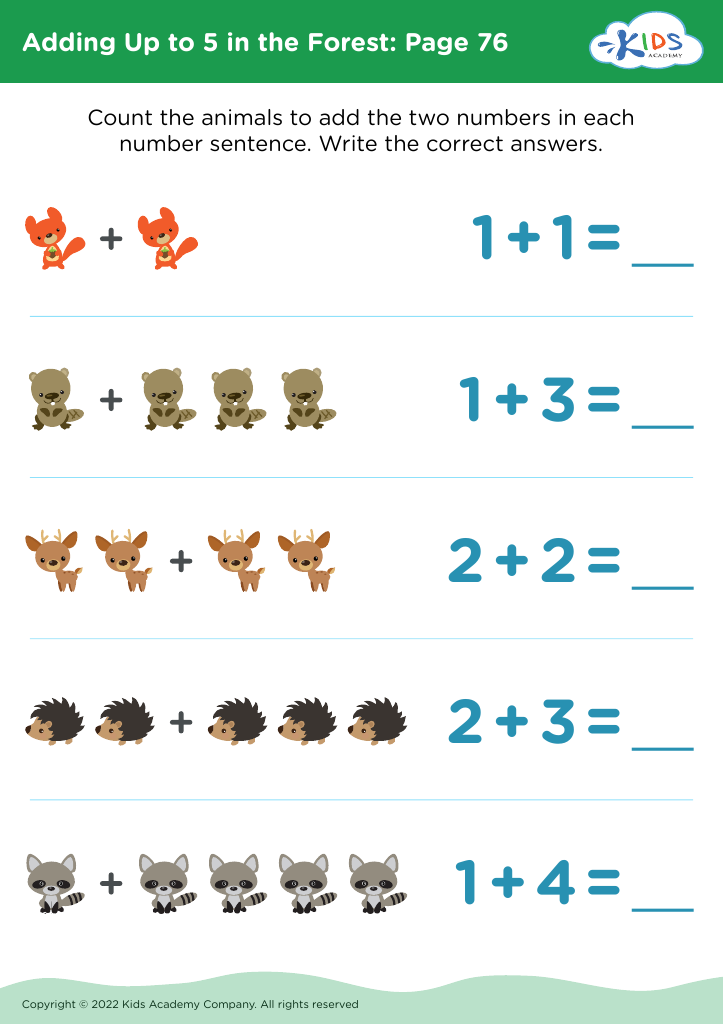
Adding Up to 5 in the Forest: Page 76
Worksheet
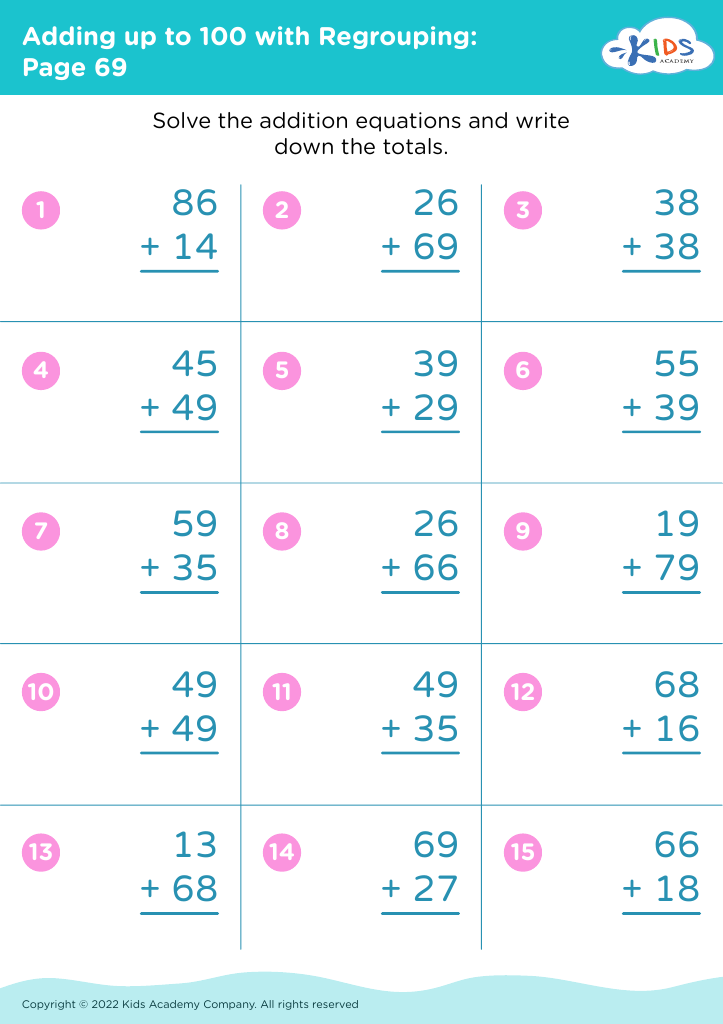
Adding up to 100 with Regrouping: Page 69
Worksheet
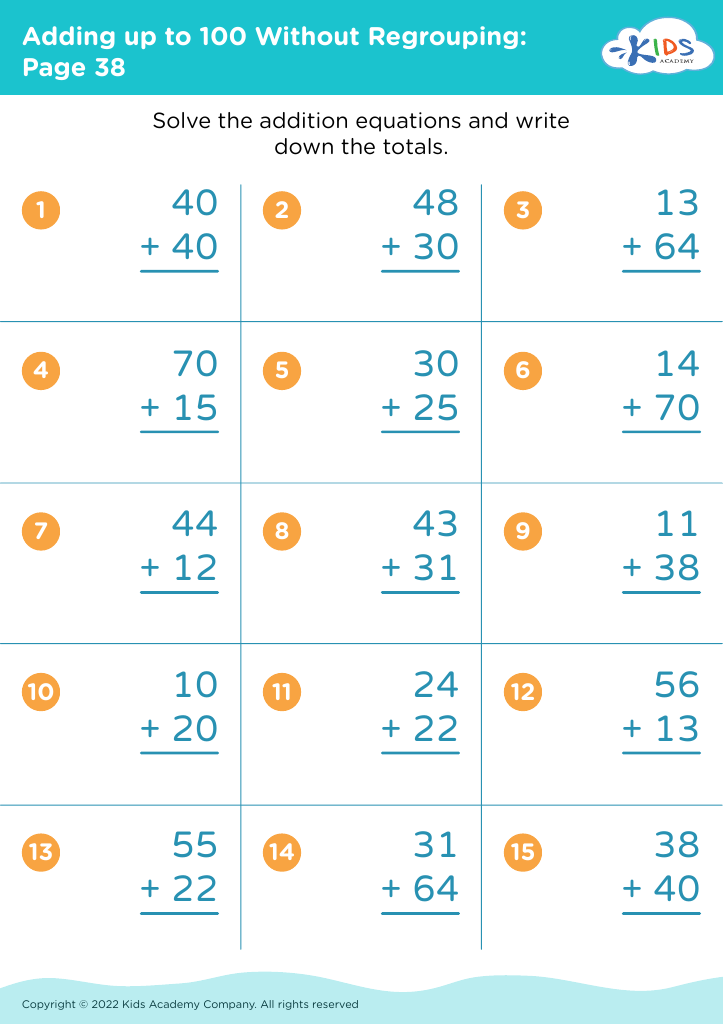
Adding up to 100 Without Regrouping: Page 38
Worksheet
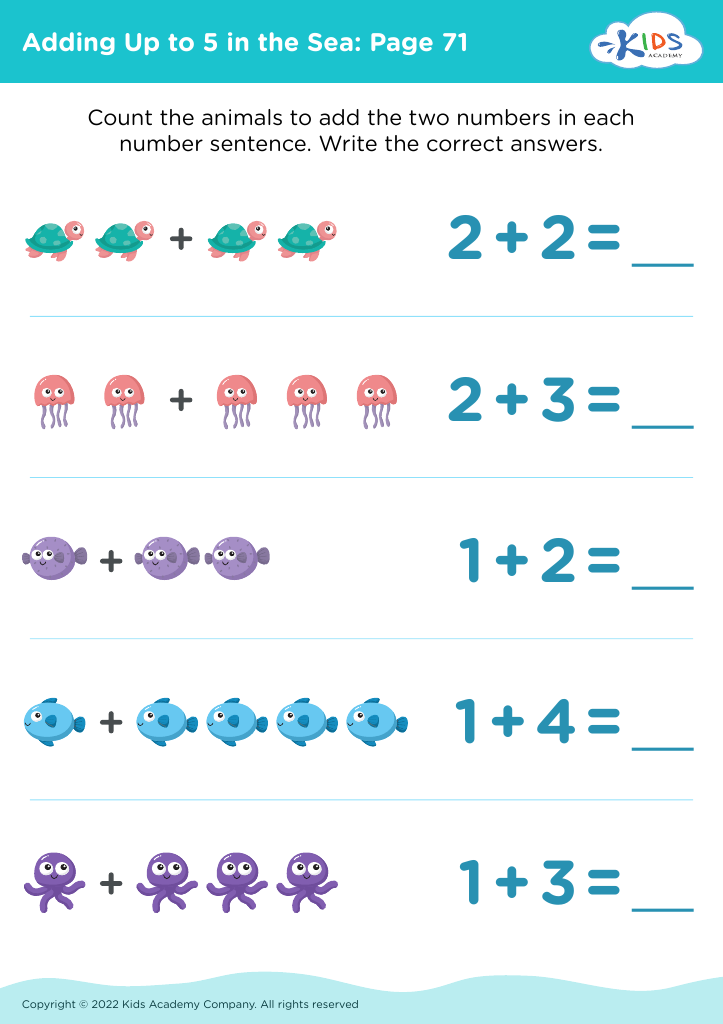
Adding Up to 5 in the Sea: Page 71
Worksheet
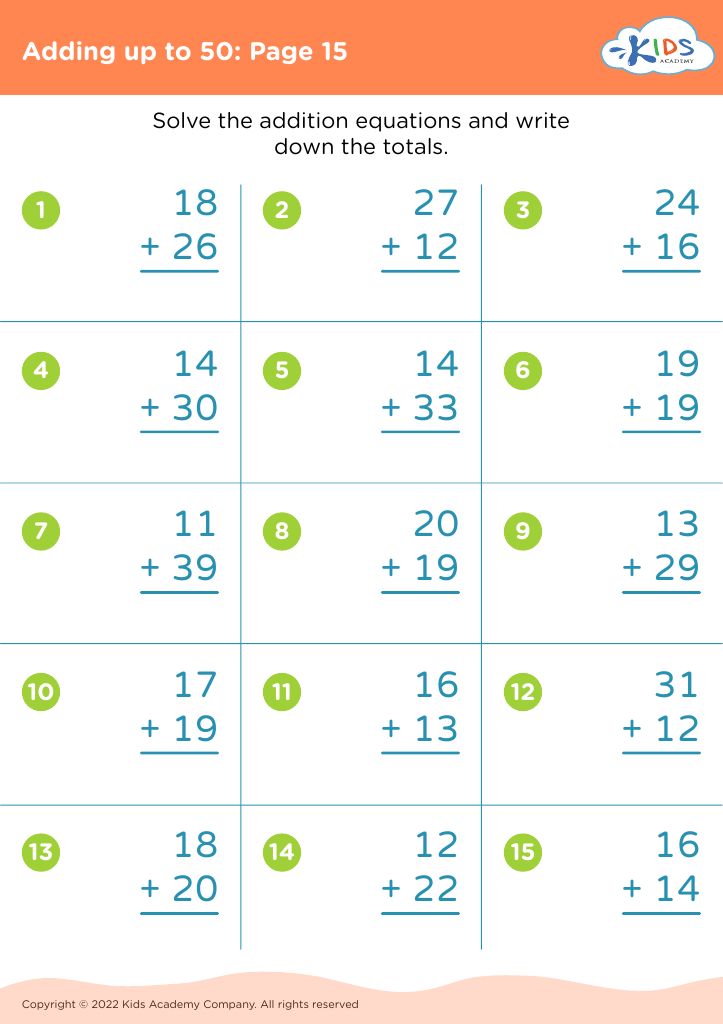
Adding up to 50: Page 15

Adding up to 50: Page 15

Adding up to 50: Page 15
Worksheet
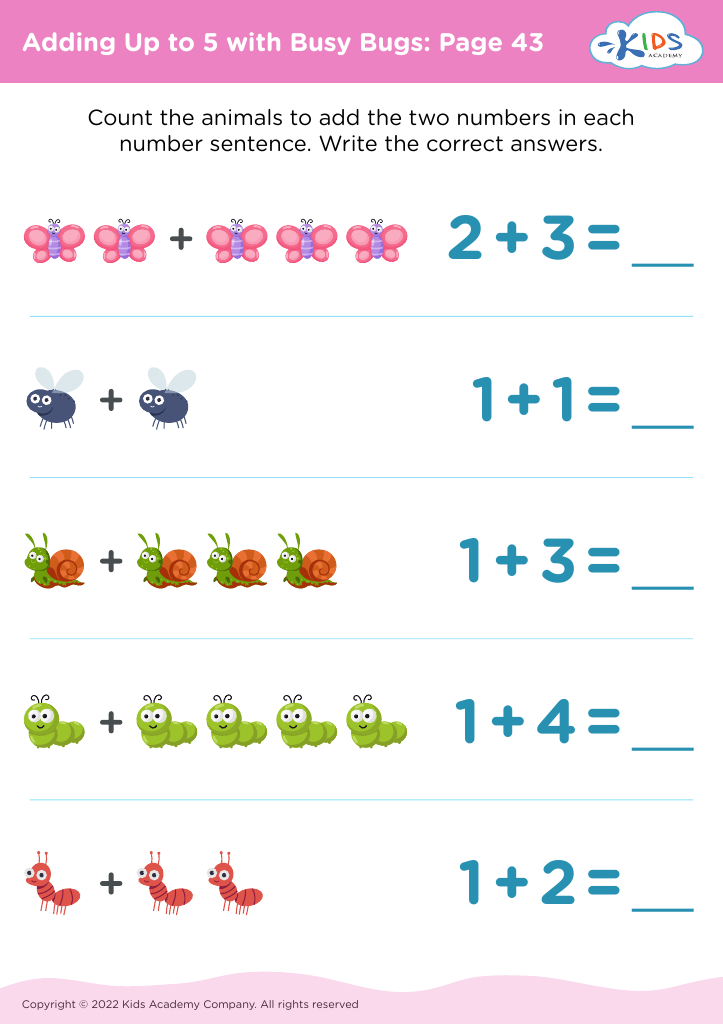
Adding Up to 5 with Busy Bugs: Page 43
Worksheet
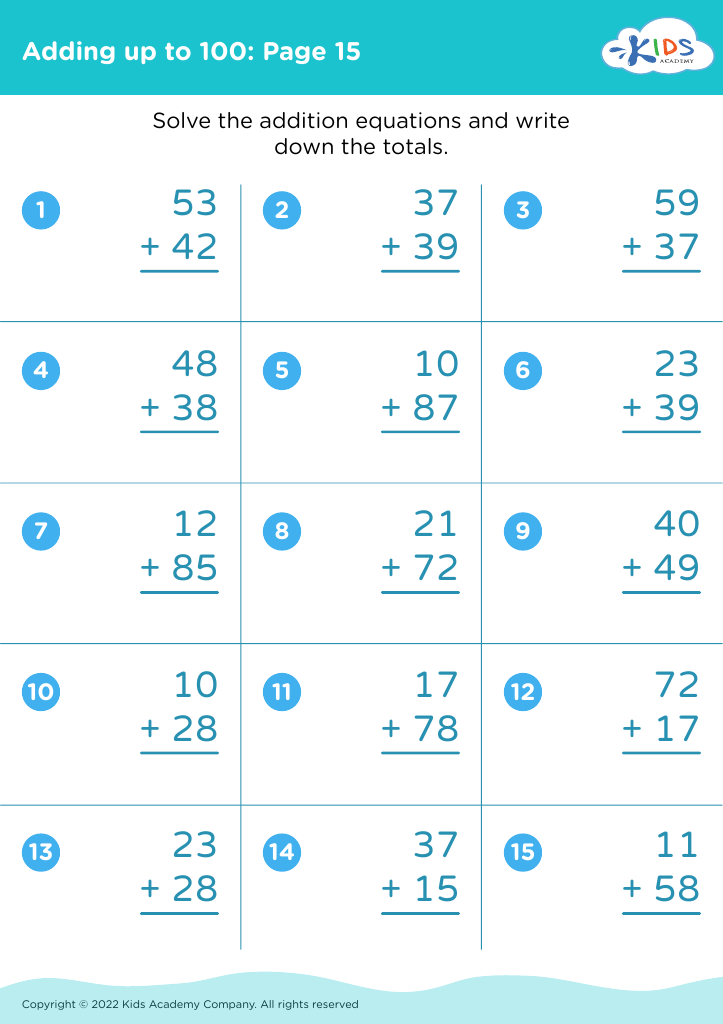
Adding up to 100: Page 15

Adding up to 100: Page 15

Adding up to 100: Page 15
Worksheet
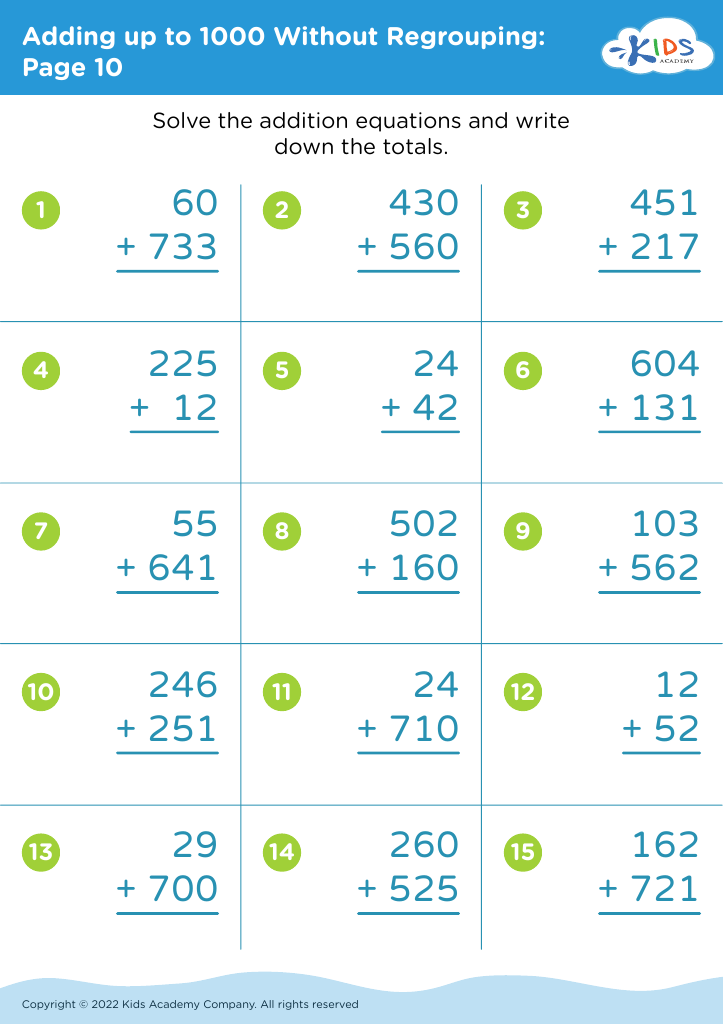
Adding up to 1000 Without Regrouping: Page 10
Worksheet
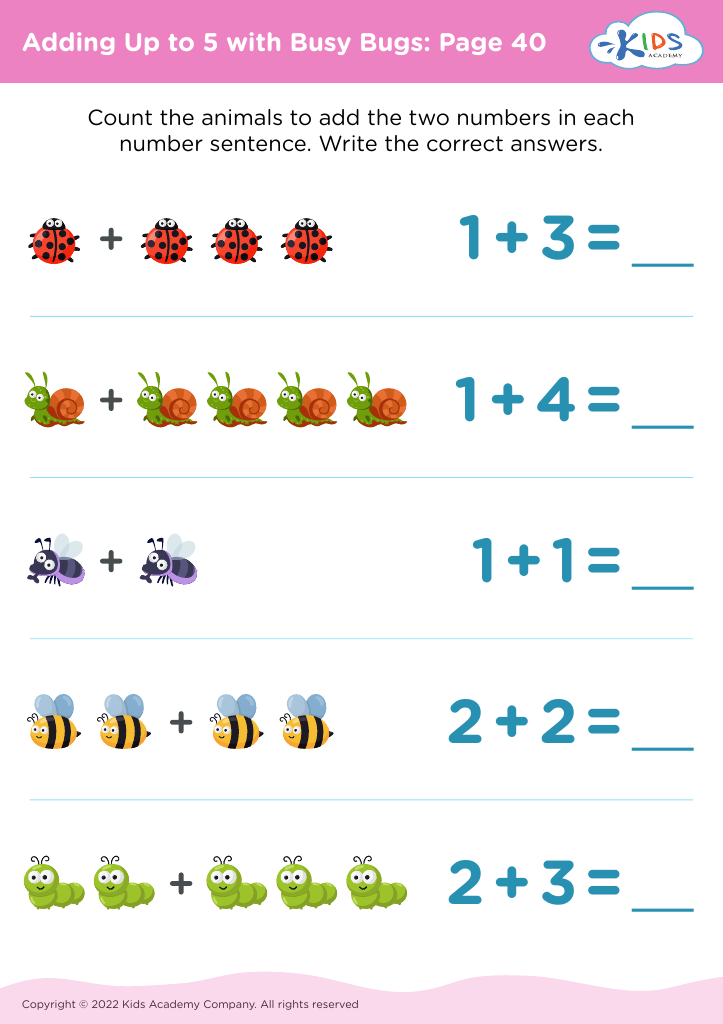
Adding Up to 5 with Busy Bugs: Page 40
Worksheet
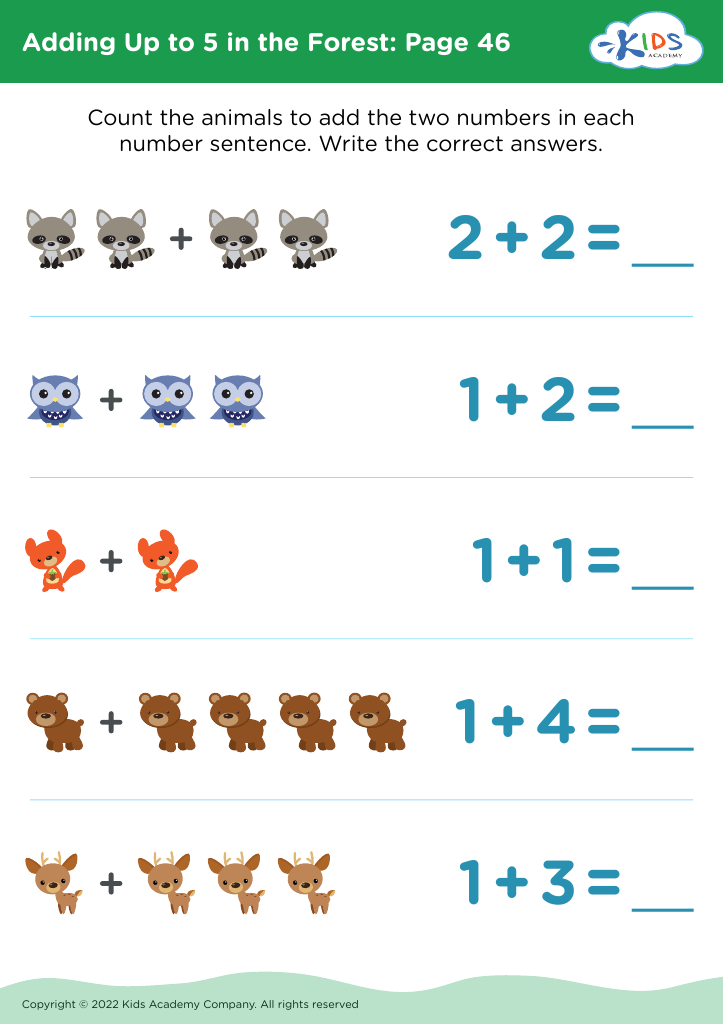
Adding Up to 5 in the Forest: Page 46
Worksheet
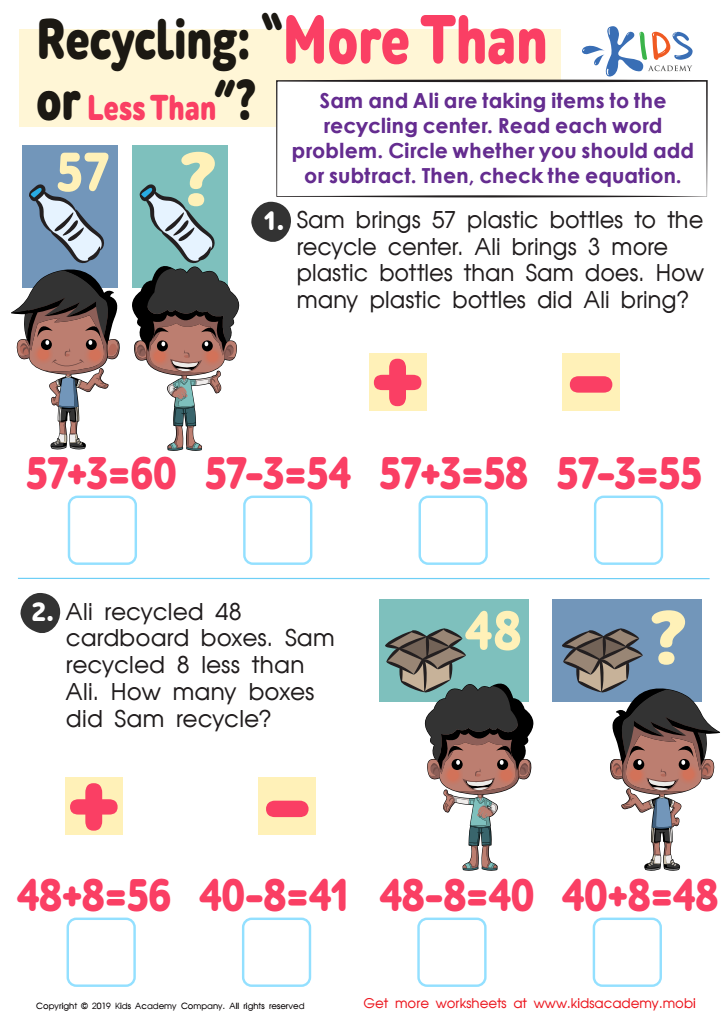
Recycling - More or Less Worksheet
Recycling - More or Less Worksheet
Your child can compare numbers and solve word problems with this free worksheet. Help them understand what's being asked as Sam and Ali take items to the recycling center. They can choose the correct equation to match the word problem and apply their skills in reading and pulling out the appropriate information.
Recycling - More or Less Worksheet
Worksheet
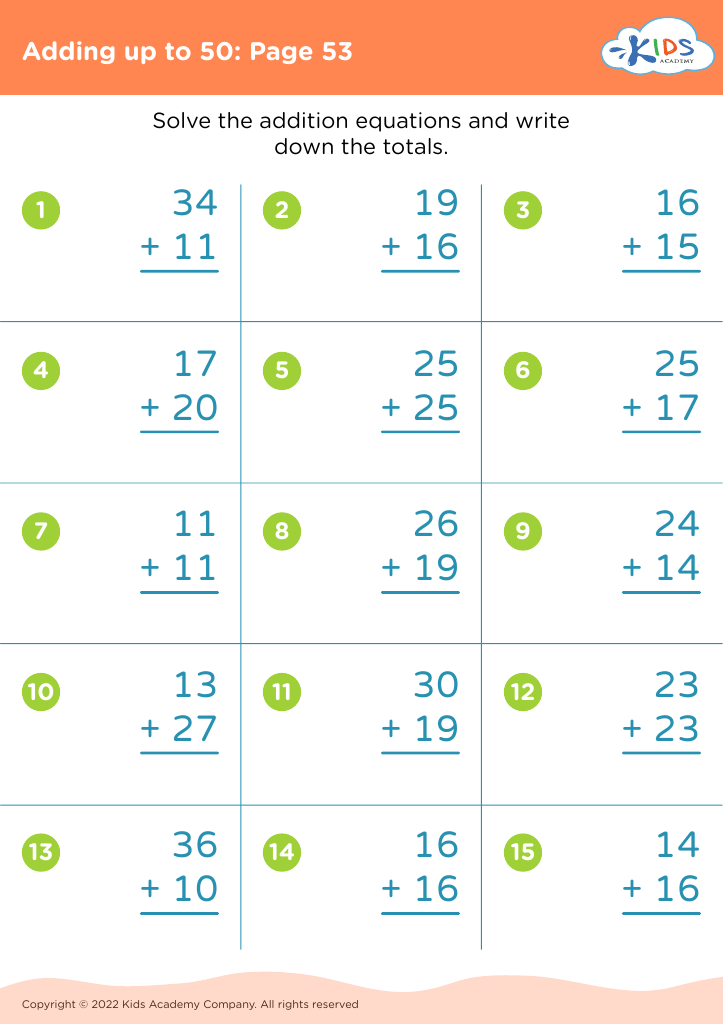
Adding up to 50: Page 53

Adding up to 50: Page 53

Adding up to 50: Page 53
Worksheet
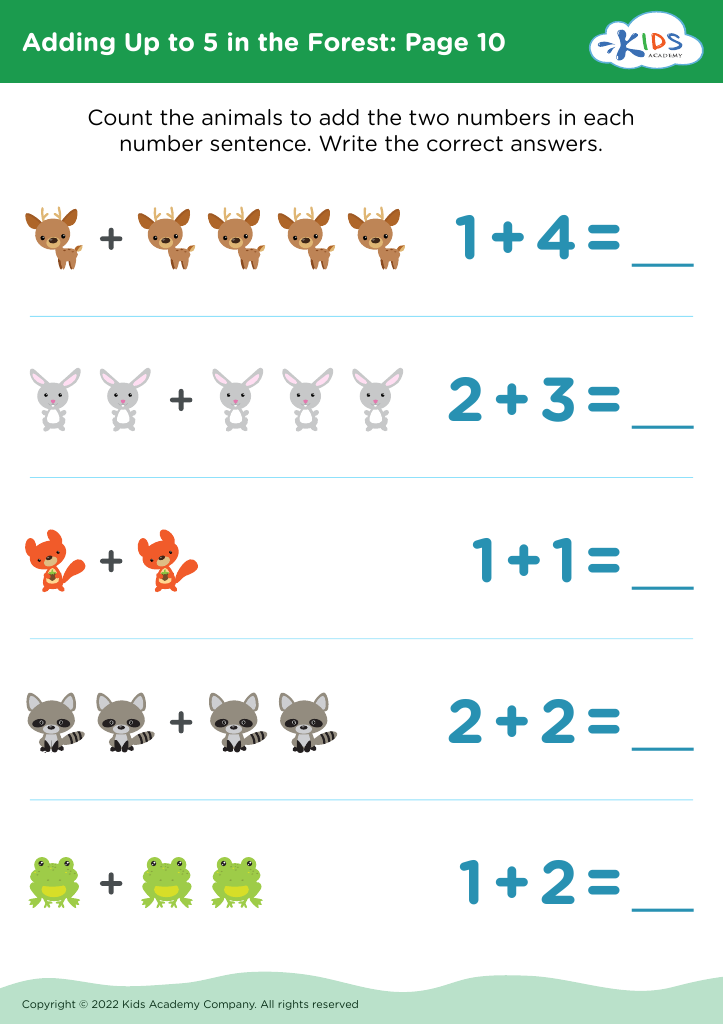
Adding Up to 5 in the Forest: Page 10
Worksheet
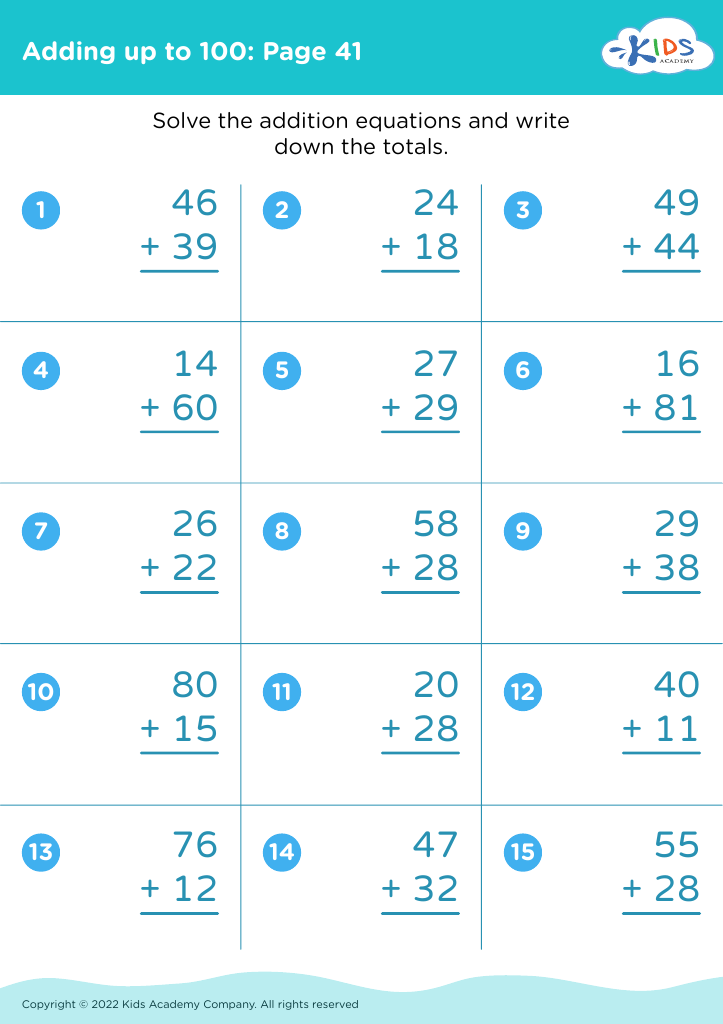
Adding up to 100: Page 41

Adding up to 100: Page 41

Adding up to 100: Page 41
Worksheet
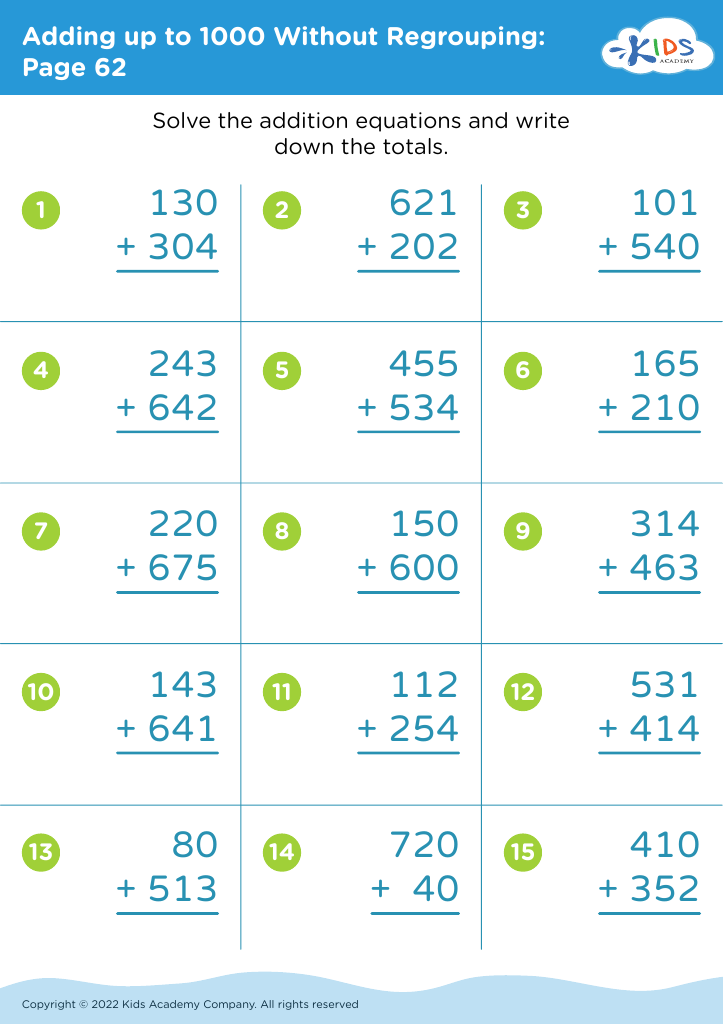
Adding up to 1000 Without Regrouping: Page 62
Worksheet


Basic math skills, particularly addition, are crucial for children aged 5-7 as they serve as a foundation for future learning. During these formative years, children begin to develop essential cognitive skills, and mastering addition boosts their confidence and self-esteem. Understanding addition not only helps children solve everyday problems—such as counting objects and sharing equally—but also prepares them for more complex concepts in mathematics later on.

Parents and teachers should prioritize this skill because it fosters logical thinking and enhances problem-solving abilities. Engaging children in fun activities like counting games, rewards for solving simple problems, or using visual aids can make learning addition enjoyable, turning it into a positive experience. These strategies also strengthen the parent-child or teacher-student bond, as they encourage collaborative learning.

Moreover, basic math skills are crucial for academic success. Children who struggle with foundational concepts may face difficulties in later grades, affecting their overall performance. Therefore, by emphasizing addition in early education, we lay the groundwork for a lifelong interest in mathematics and empower children to navigate an increasingly complex world with confidence and competence. Investing time and effort into developing these skills now can lead to significant benefits in the long run.