Develop critical thinking Addition Worksheets for Ages 5-7
11 filtered results
-
From - To
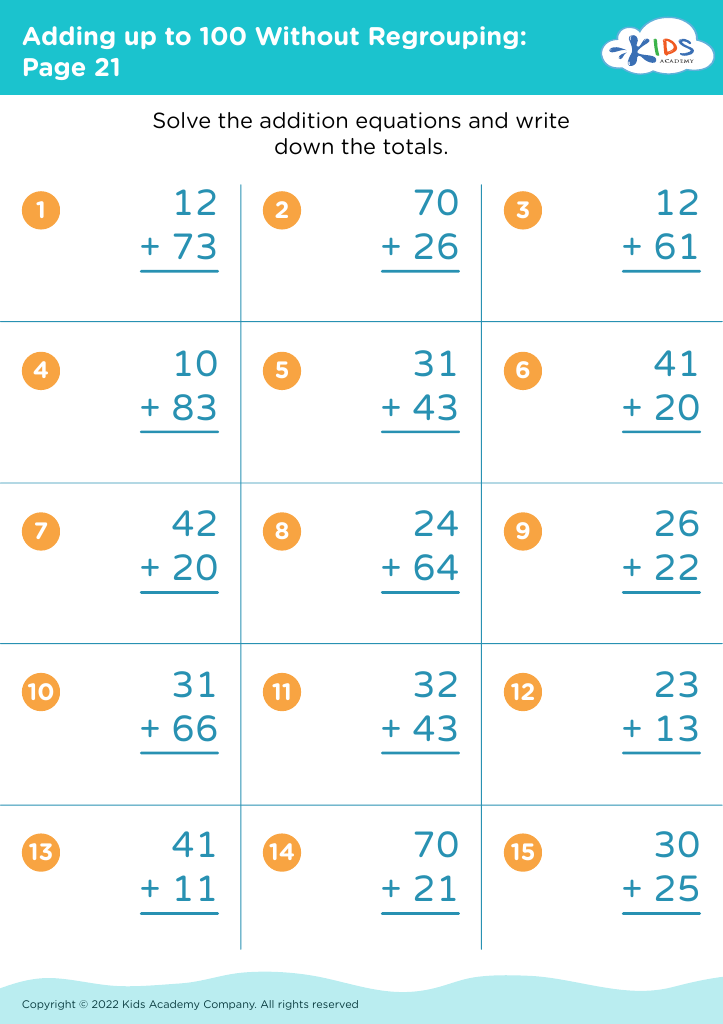
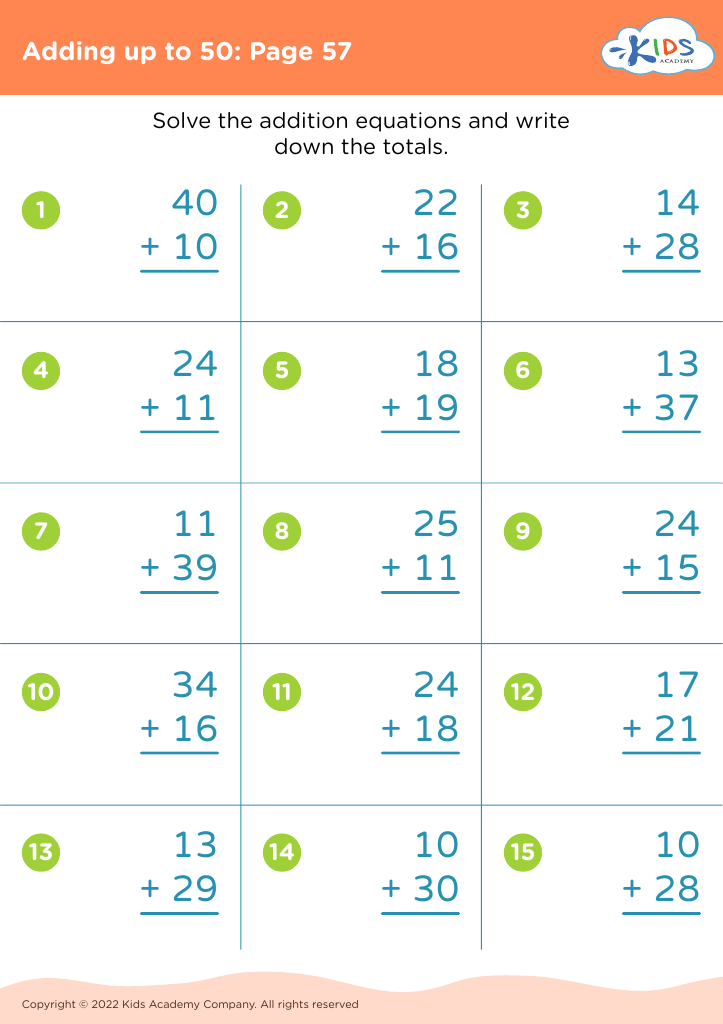
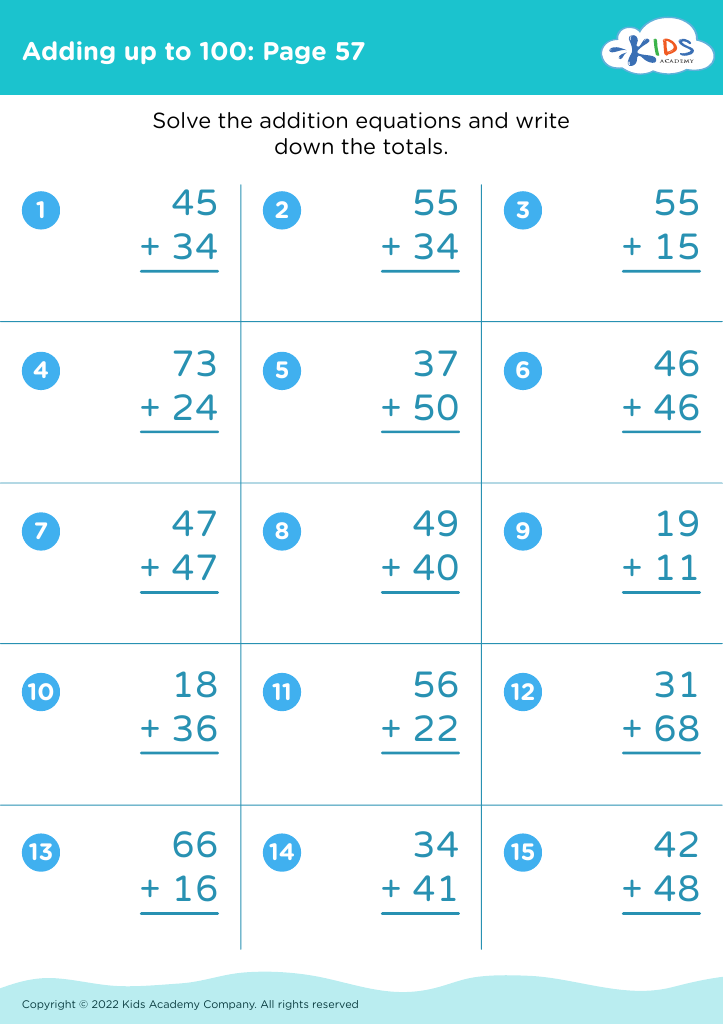
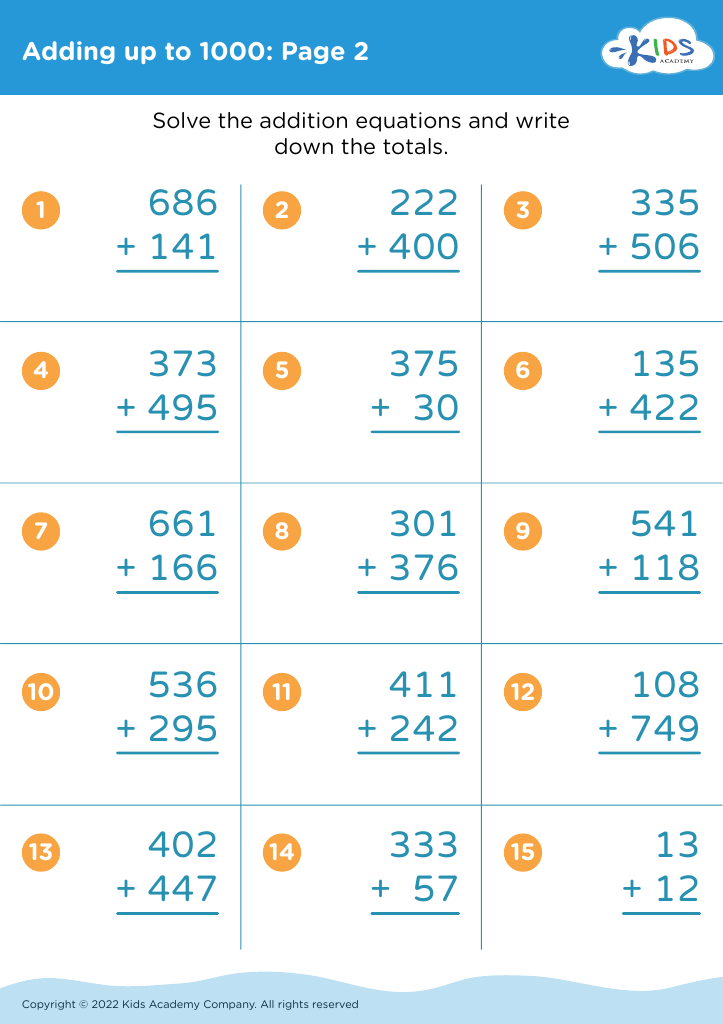
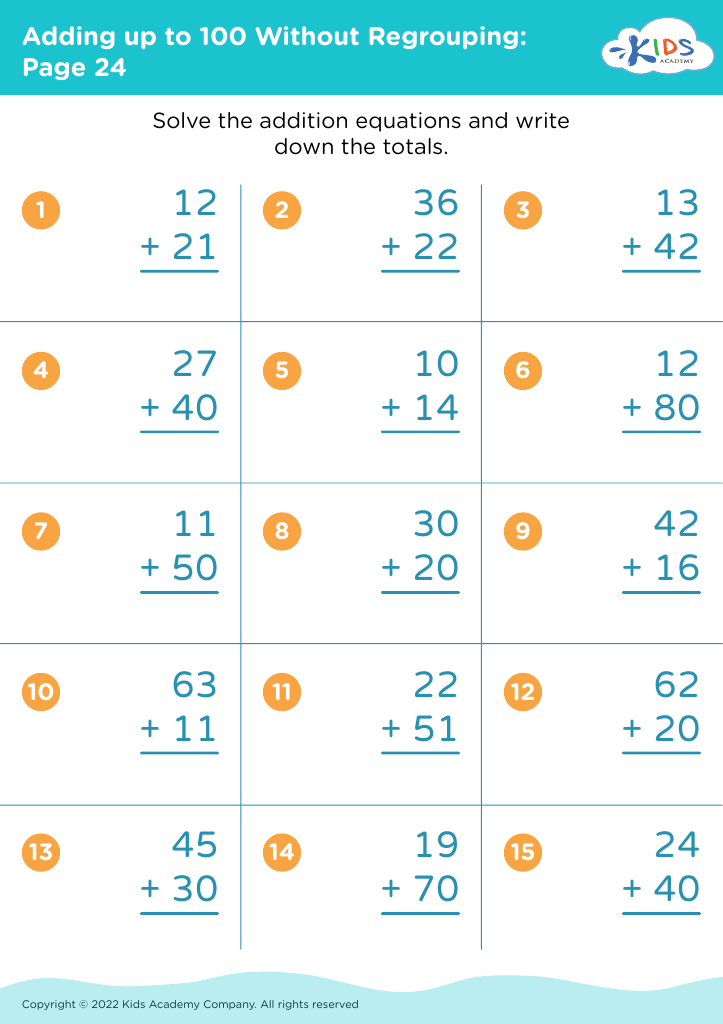
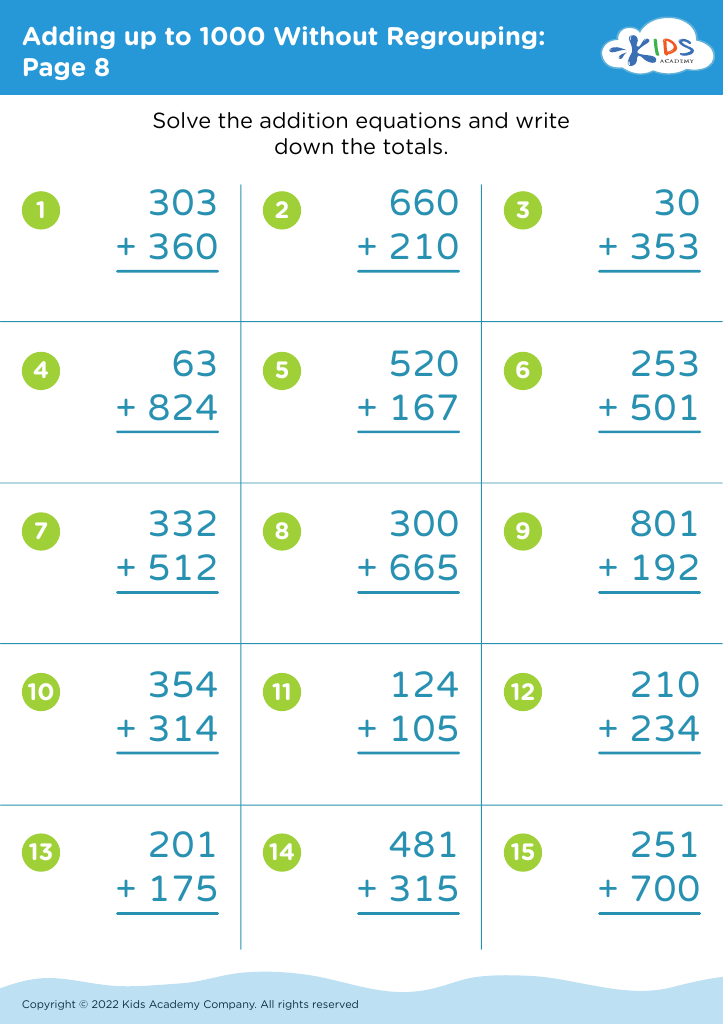
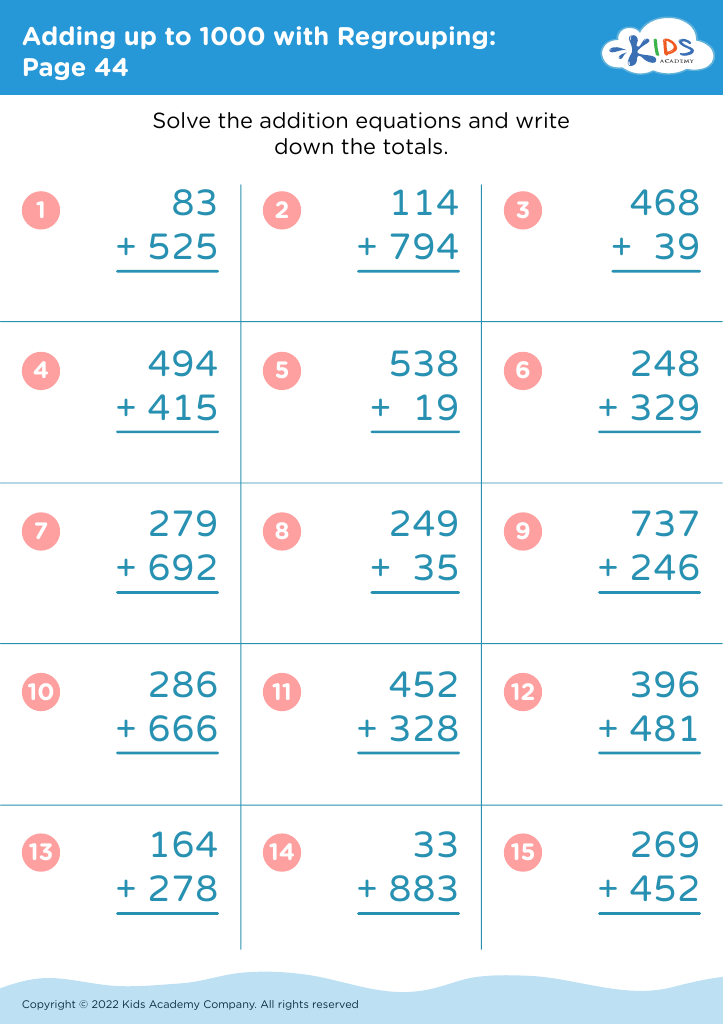
Elevate your child's math skills with our engaging "Develop Critical Thinking Addition Worksheets" designed for ages 5-7. These printable worksheets promote more than just basic addition; they encourage creative problem-solving and critical thinking. As children tackle exciting and age-appropriate math challenges, they'll enhance their analytical skills while gaining a deep understanding of mathematical concepts. Our resources are carefully curated to make learning fun and interactive, ensuring your little mathematicians remain motivated. Perfect for home or classroom use, these worksheets aim to foster a love for learning while laying a robust foundation for future success in math. Download now to inspire young minds!
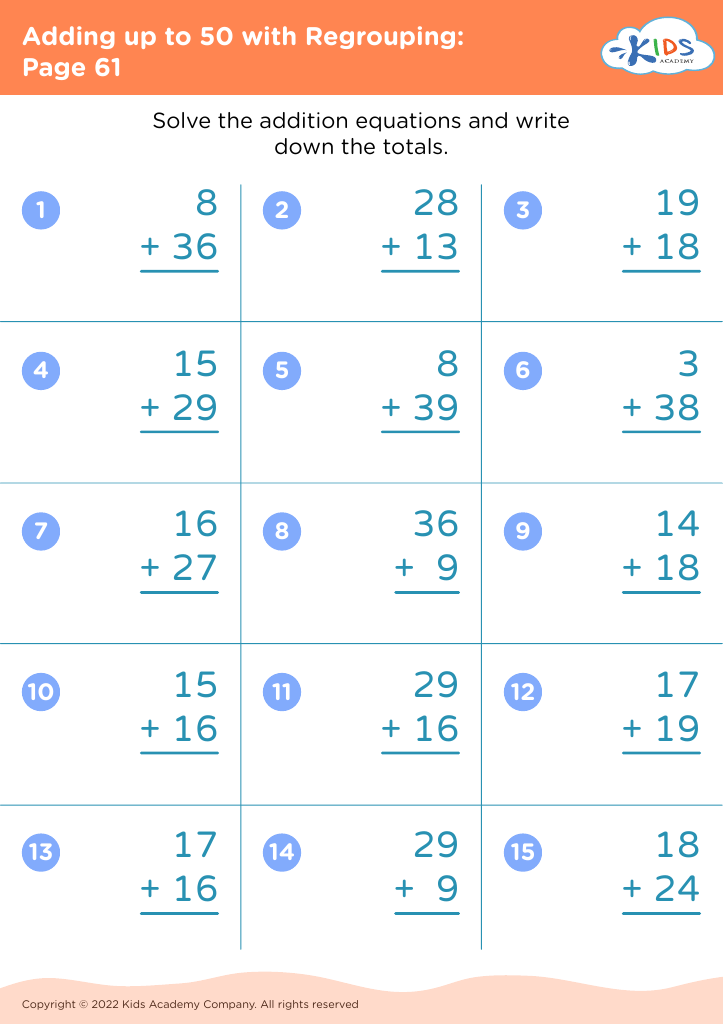
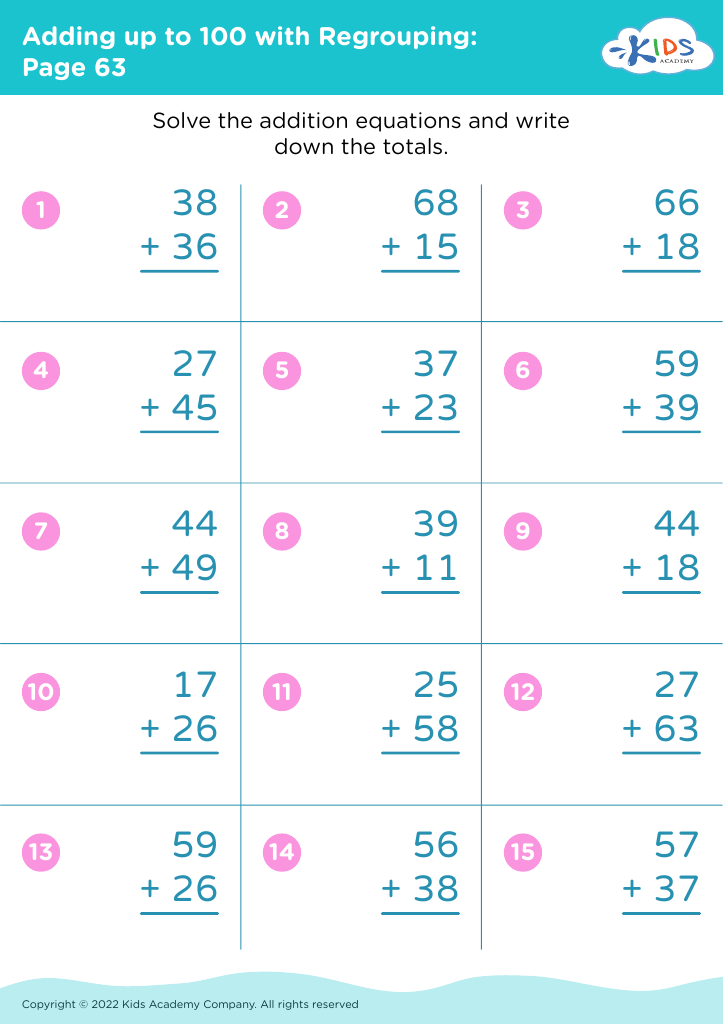
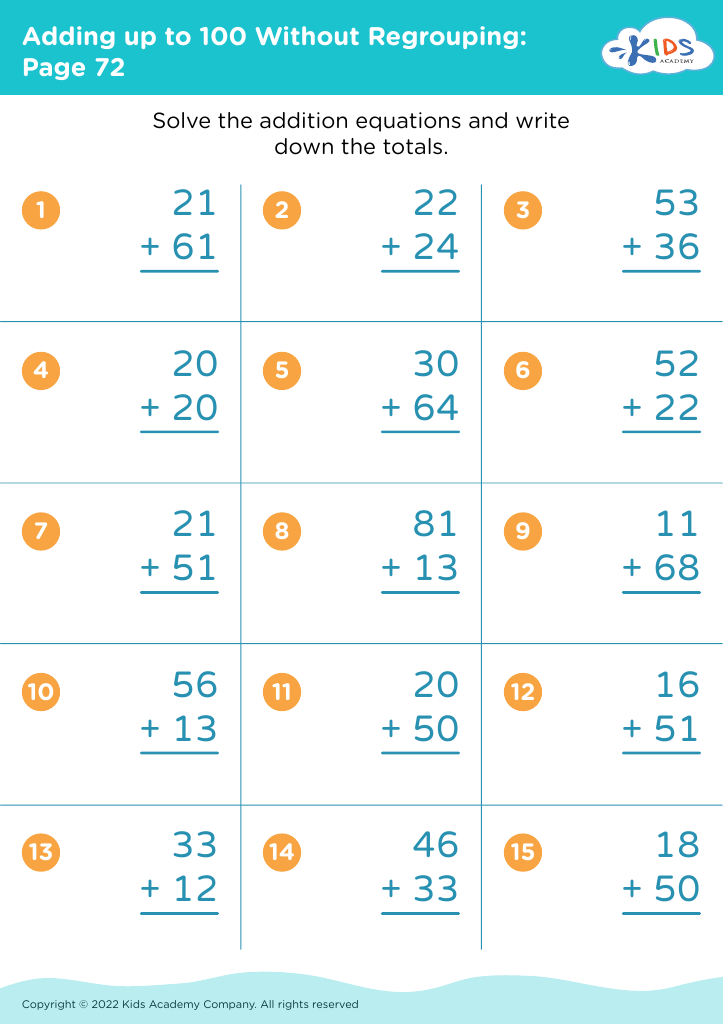
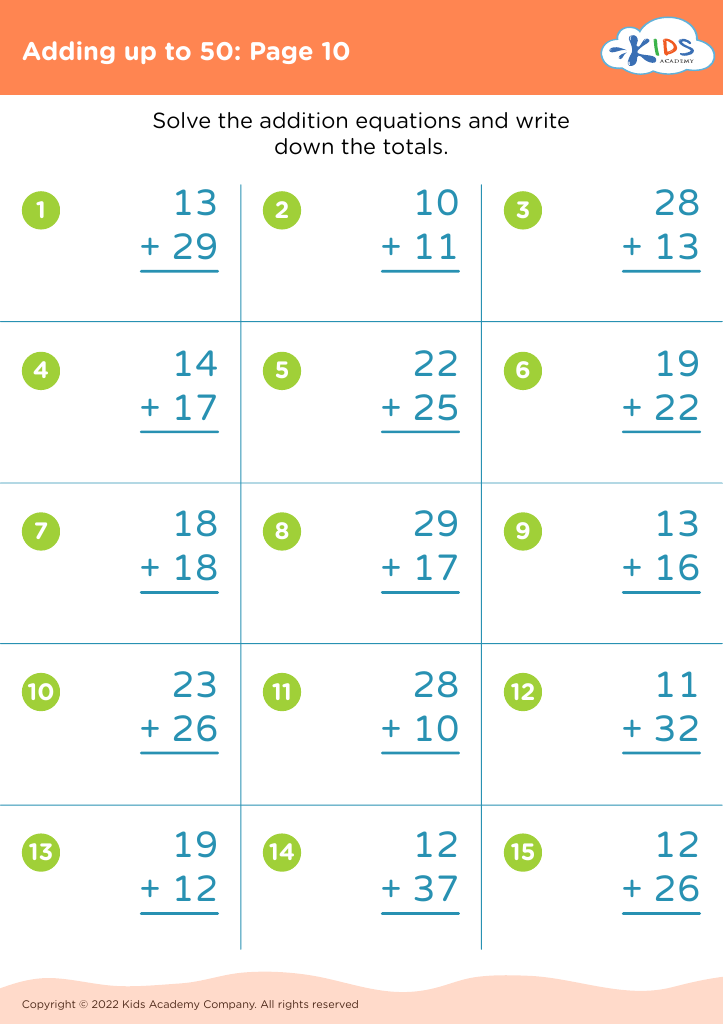








Developing critical thinking skills in young children, particularly in the context of addition, is vital for their overall cognitive growth and future academic success. For parents and teachers, nurturing these skills helps children learn to analyze information, solve problems, and make informed decisions. At ages 5-7, children are naturally curious and eager to explore concepts such as numbers and patterns. By encouraging critical thinking during addition activities, educators can guide them to go beyond rote memorization and foster a deeper understanding of mathematical relationships.
Engaging children in questions that promote reasoning—such as asking why a particular answer makes sense or how they arrived at their solution—contrasts with simple calculation. This stimulates their ability to evaluate different approaches and encourages creativity. When children can articulate their thought processes, they build communication skills, which are essential for teamwork and dialogue in future learning environments.
Moreover, fostering critical thinking lays the groundwork for lifelong learning habits. It prepares children to tackle more complex concepts and reasoning challenges later on in their academic careers. Parents and teachers play a crucial role in guiding this development, ensuring that children gain confidence as problem solvers and become enthusiastic learners eager to explore the world around them.








