Develop problem-solving skills Addition Worksheets for Ages 5-7
7 filtered results
-
From - To
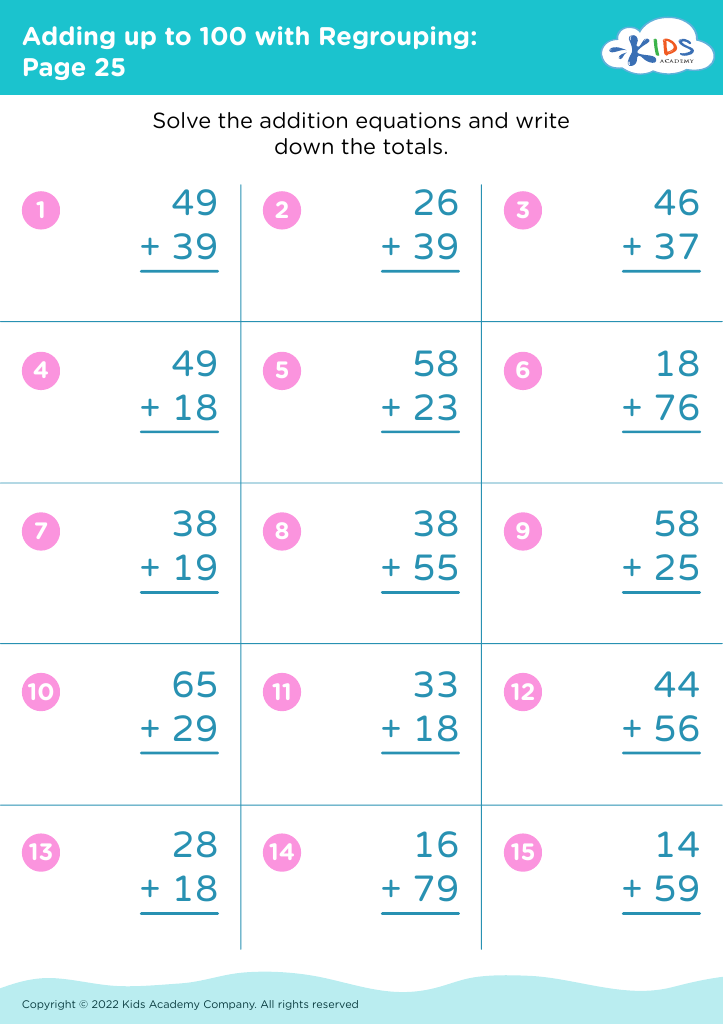
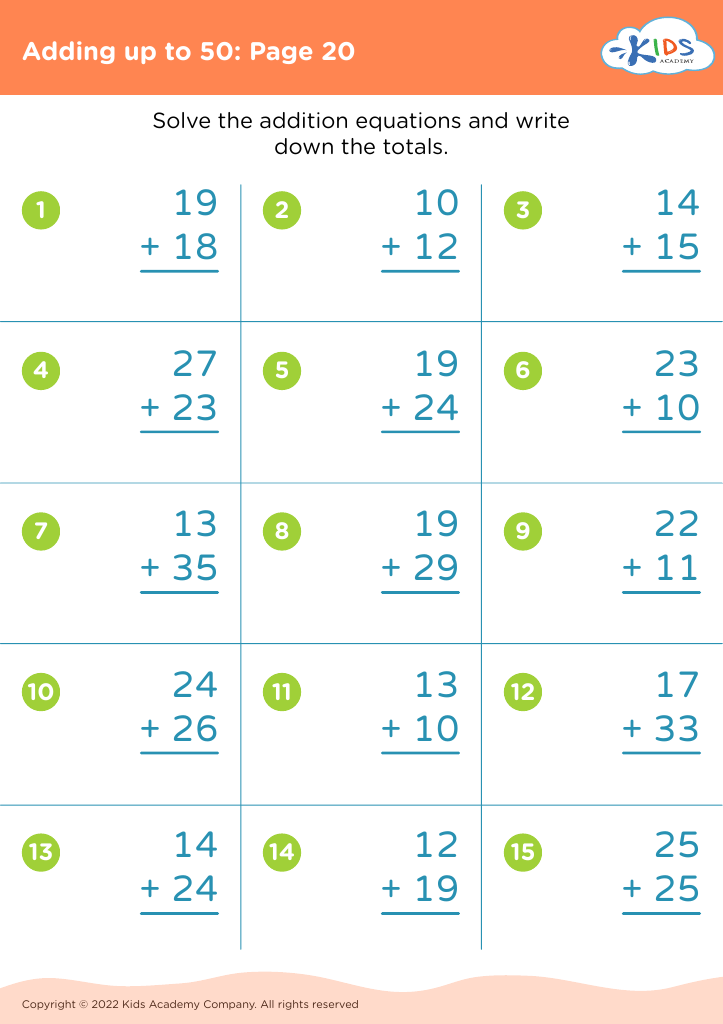
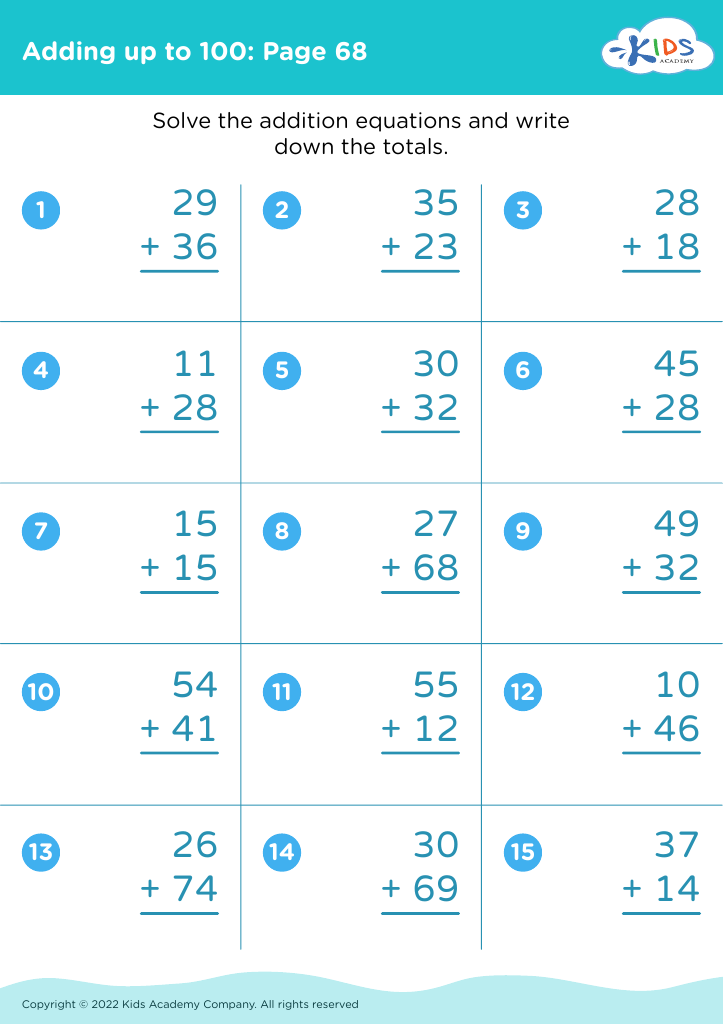
Enhance your child's problem-solving skills with our Addition Worksheets for ages 5-7. Designed specifically for young learners, these engaging worksheets make mastering addition simple and fun. The activities are crafted to boost critical thinking and analytical abilities, setting a strong foundation for future math success. By offering diverse and interactive exercises, our worksheets help children develop confidence in their mathematical abilities. Perfect for use at home or in the classroom, these worksheets provide an effective way to practice and reinforce essential math skills. Turn learning into an enjoyable journey with our expertly designed addition resources.
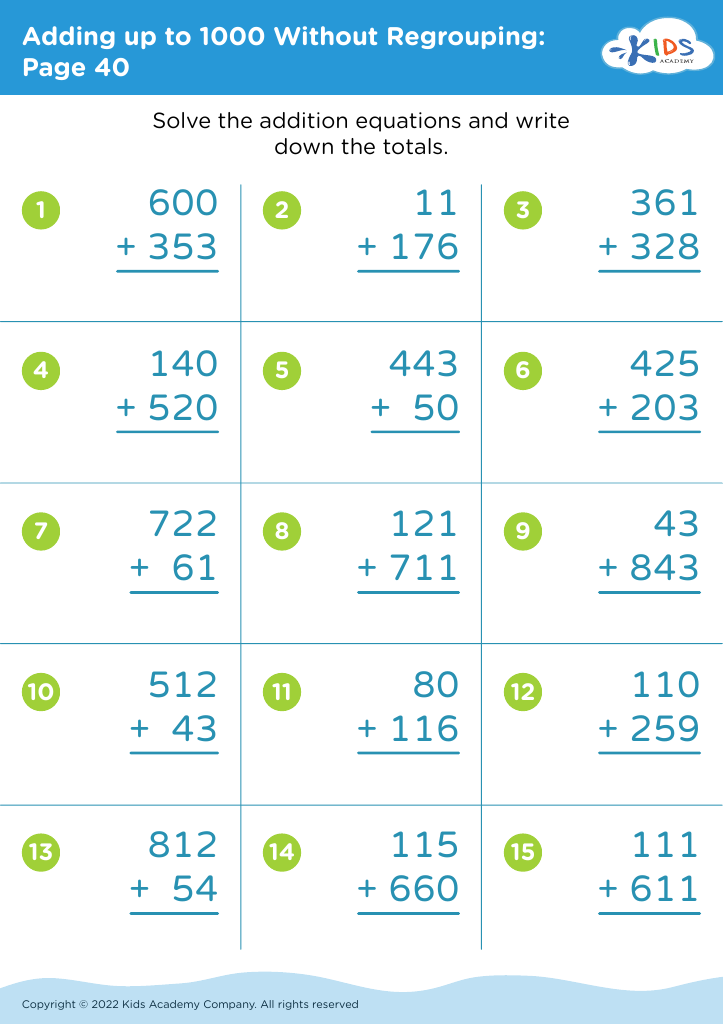
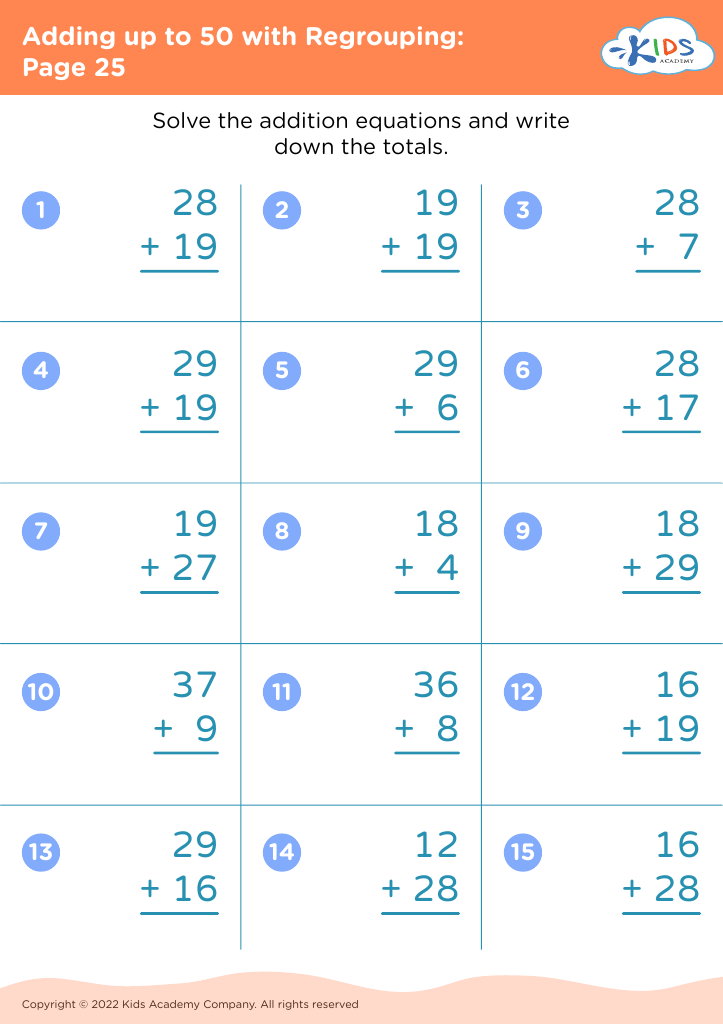
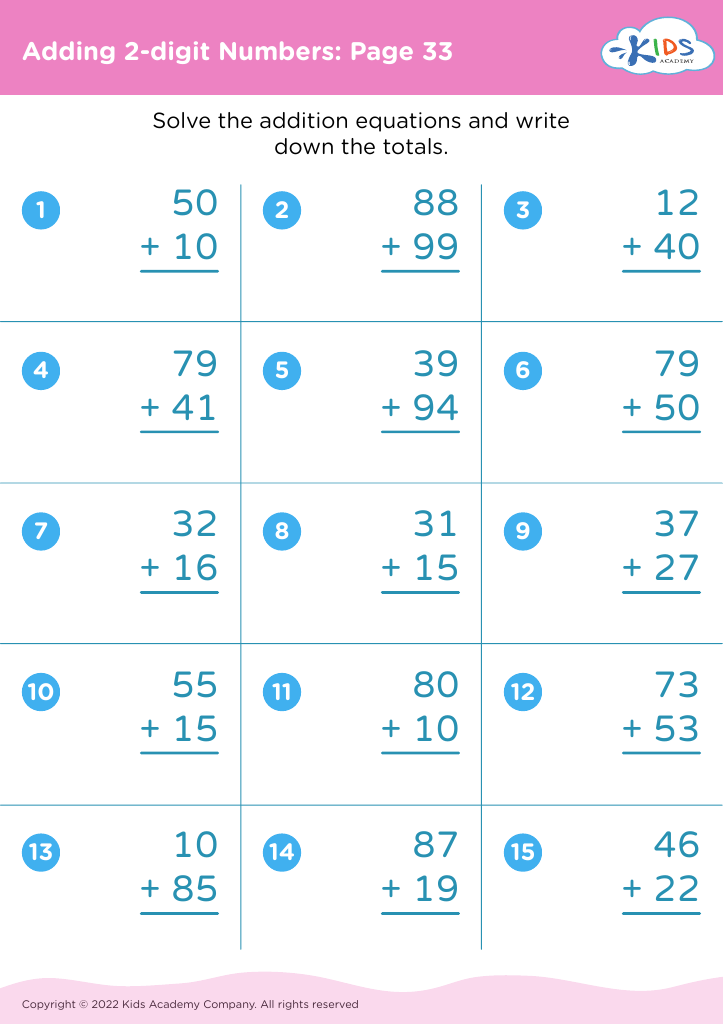
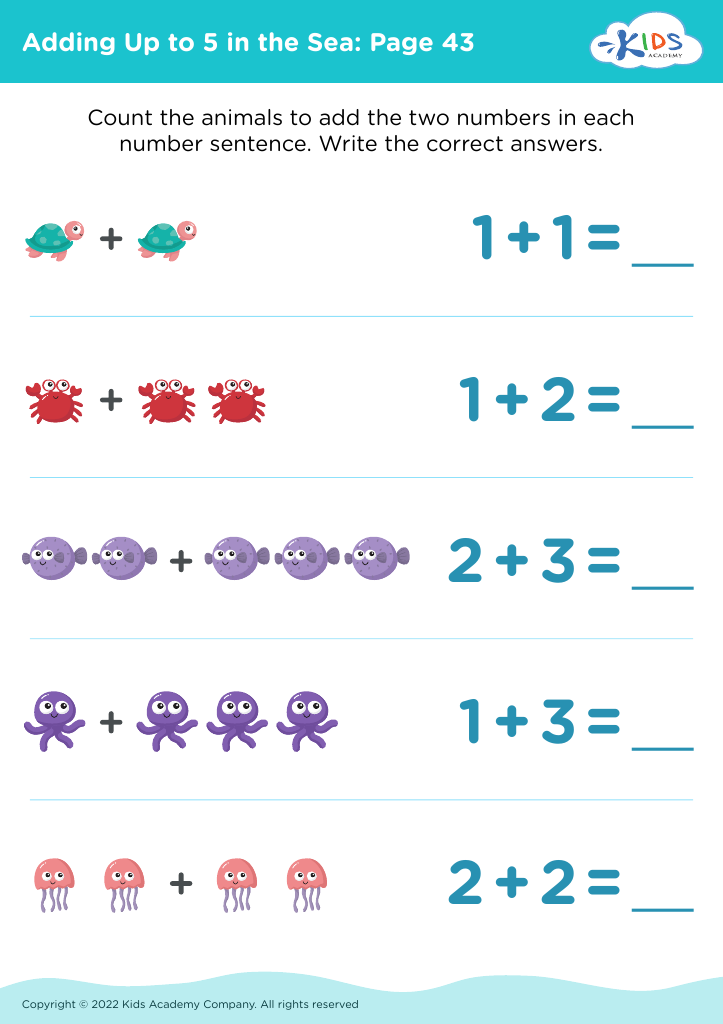








Developing problem-solving skills through addition for children aged 5-7 is crucial for several reasons. Firstly, it builds a strong mathematical foundation. By mastering addition early, children develop confidence and competence in math, setting them up for future academic success. Addition also introduces critical thinking and logical reasoning. As children work through sums, they learn to identify patterns, make predictions, and understand the concepts of quantity and change, all of which are essential cognitive skills that transfer to other subjects and real-life scenarios.
Secondly, problem-solving in math encourages persistence and resilience. When children encounter challenging problems, they learn to approach them methodically, try different strategies, and not give up easily. This develops a growth mindset, where children understand that effort leads to improvement.
Moreover, engaging with addition games and activities can be fun and interactive, fostering a love for learning in young children. When parents and teachers support children in these endeavors, they also strengthen their relationships, providing a sense of security and encouragement.
In summary, focusing on problem-solving skills through addition helps children academically, enhances cognitive abilities, instills important life skills, and promotes a positive attitude towards learning. Hence, it is imperative for parents and teachers to prioritize this aspect of early education.








