Enhance counting skills Addition Worksheets for Ages 5-7
13 filtered results
-
From - To
Boost your child's math proficiency with our "Enhance Counting Skills Addition Worksheets" designed specifically for ages 5-7. These engaging and interactive worksheets focus on reinforcing essential counting and addition skills through fun exercises and vibrant illustrations. By integrating counting with basic addition, kids will strengthen their understanding of numerical concepts while enjoying learning. Our comprehensive resources cater to various learning styles, ensuring that each child can progress at their own pace. Perfect for both classroom and home use, these worksheets serve as essential tools for early math educators and parents alike, helping young learners build a strong foundation in mathematics. Explore now!
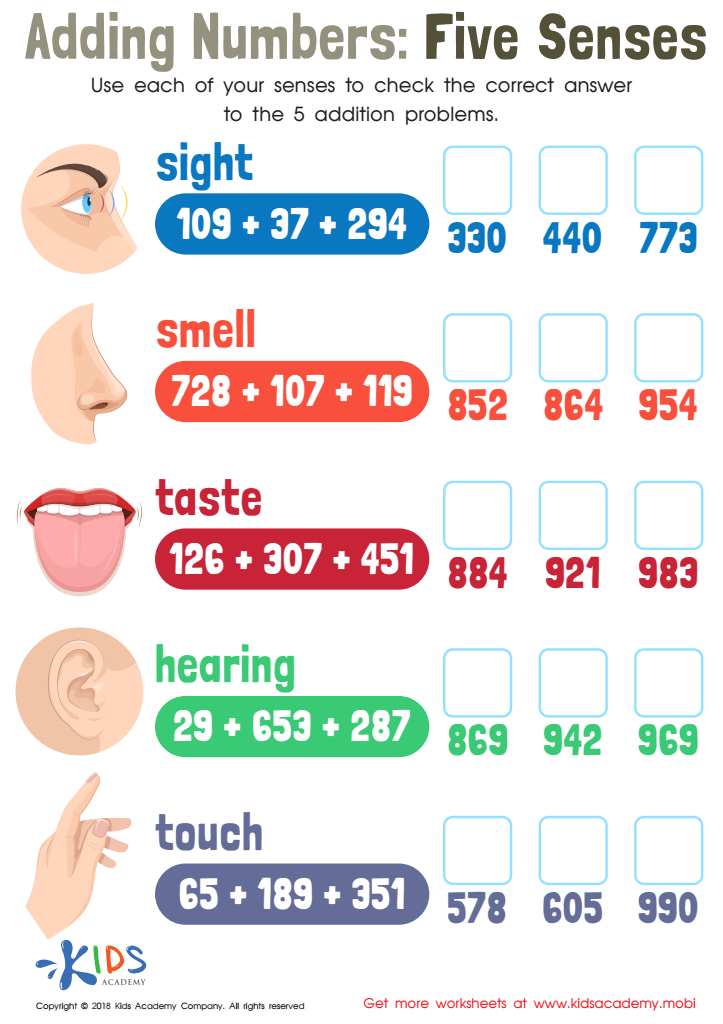
Adding Numbers: Five Senses Worksheet
 Assign to My Students
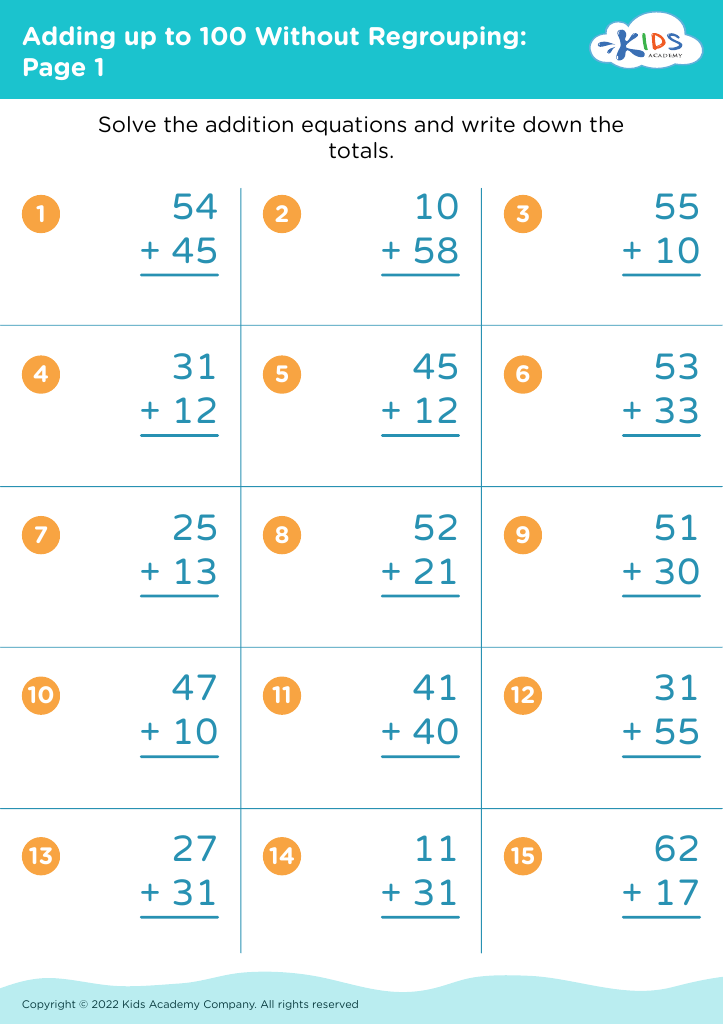
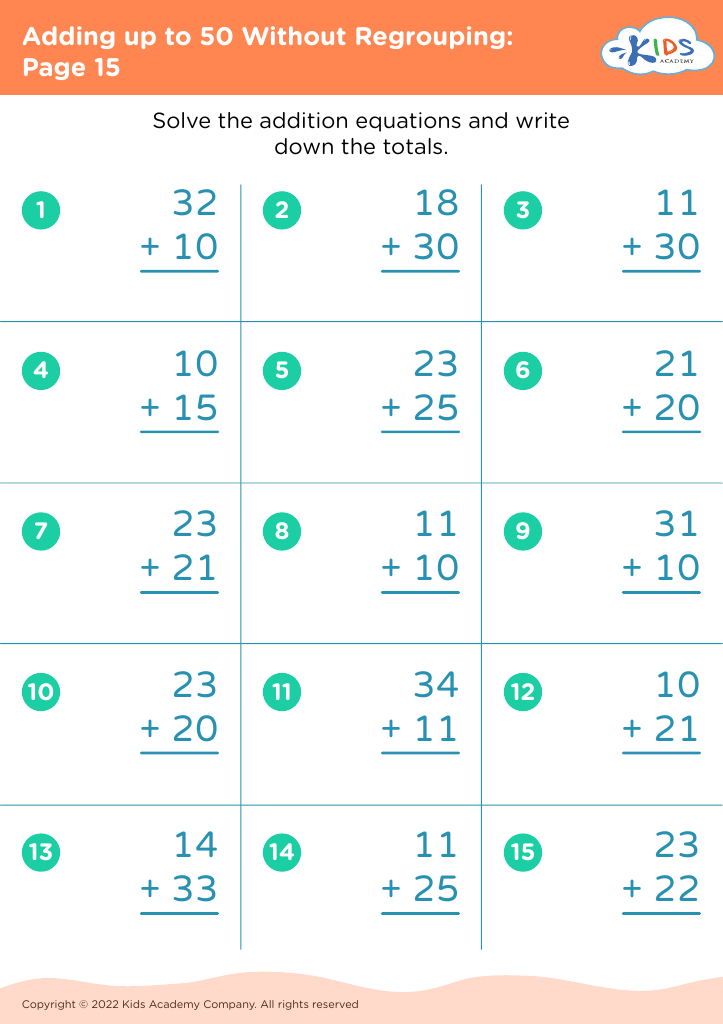
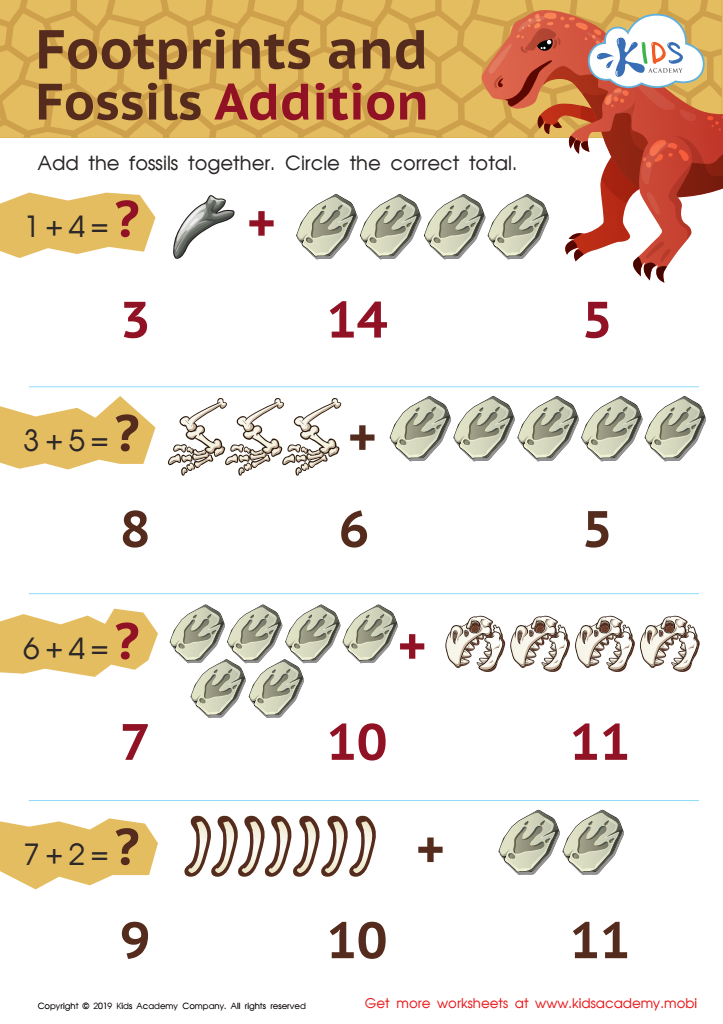
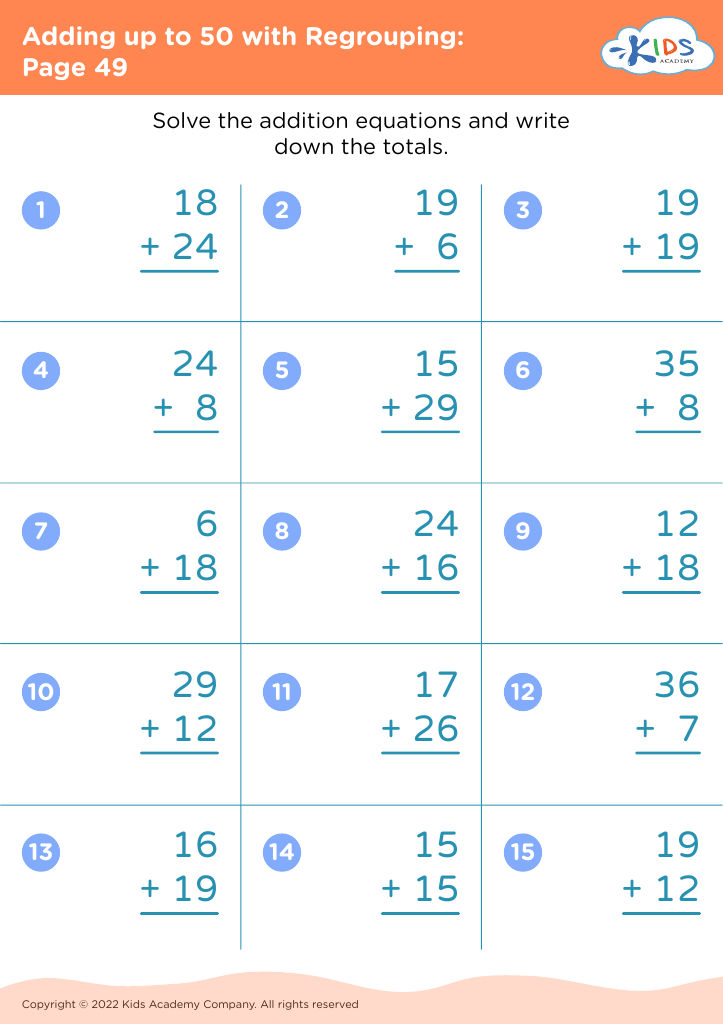
Footprints and Fossils Addition Worksheet



.jpg)


.jpg)

Enhancing counting skills and addition for children aged 5-7 is crucial for their overall mathematical development and confidence. At this early stage, children build the foundation for more advanced math concepts. By mastering counting, students develop the ability to understand quantities, sequences, and basic operations, which are essential for daily life and academic success.
Strong counting skills also foster critical thinking and problem-solving abilities. As children learn to add, they begin to grasp concepts like number relationships, patterns, and the idea of combining sets. This lays the groundwork for more complex math, such as subtraction, multiplication, and division in later years.
Moreover, when children experience success in addition, it boosts their self-esteem and motivates them to engage more in learning. Teachers and parents play a vital role in providing opportunities for practice through games, activities, and sharing real-life scenarios where addition is applicable. This engagement creates a rich learning environment that reinforces a positive attitude towards math.
Fostering these skills in young learners ensures they develop a solid mathematical foundation, setting them up for long-term success in both academic and practical contexts. Thus, it is vital for parents and teachers to prioritize and support enhancement in these skills.








