Enhance number recognition Addition Worksheets for Ages 5-7
17 filtered results
-
From - To
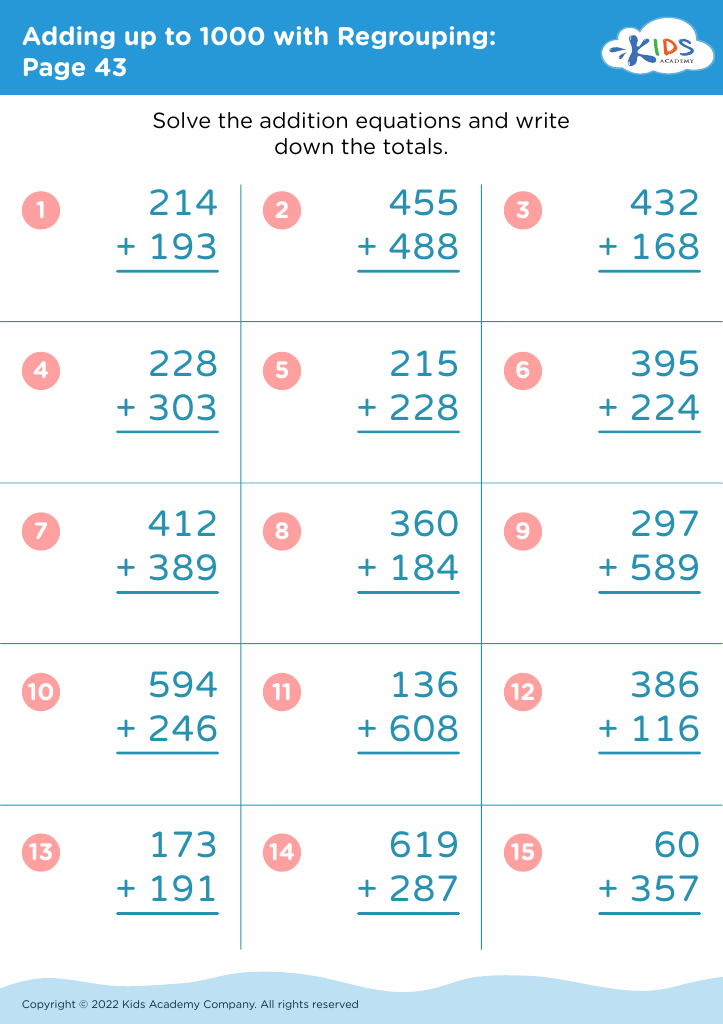
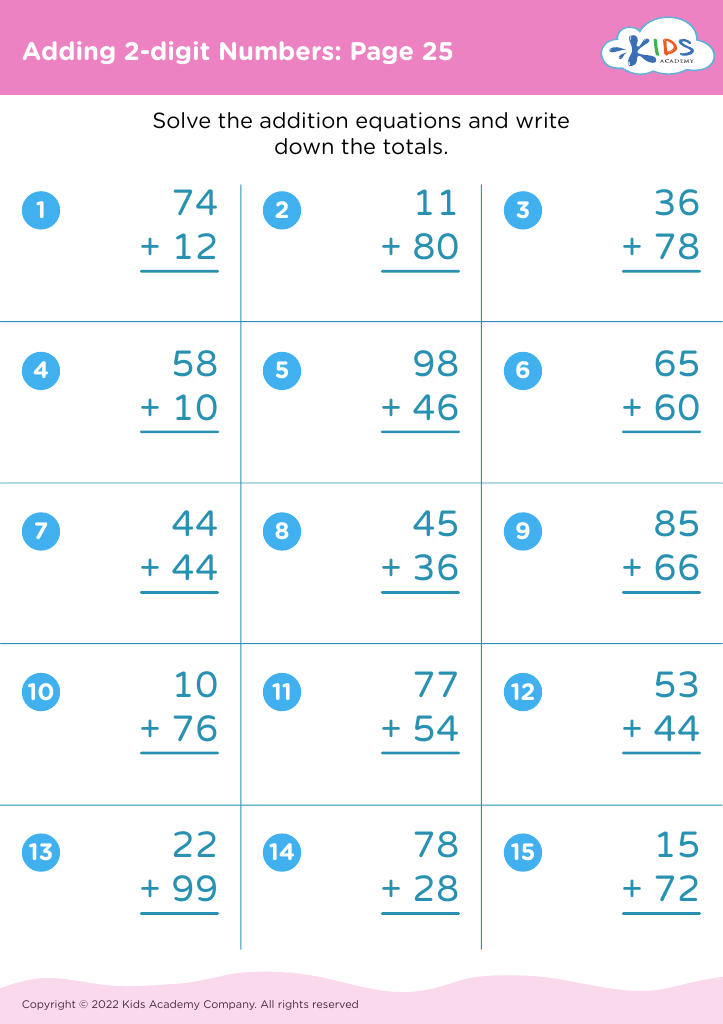
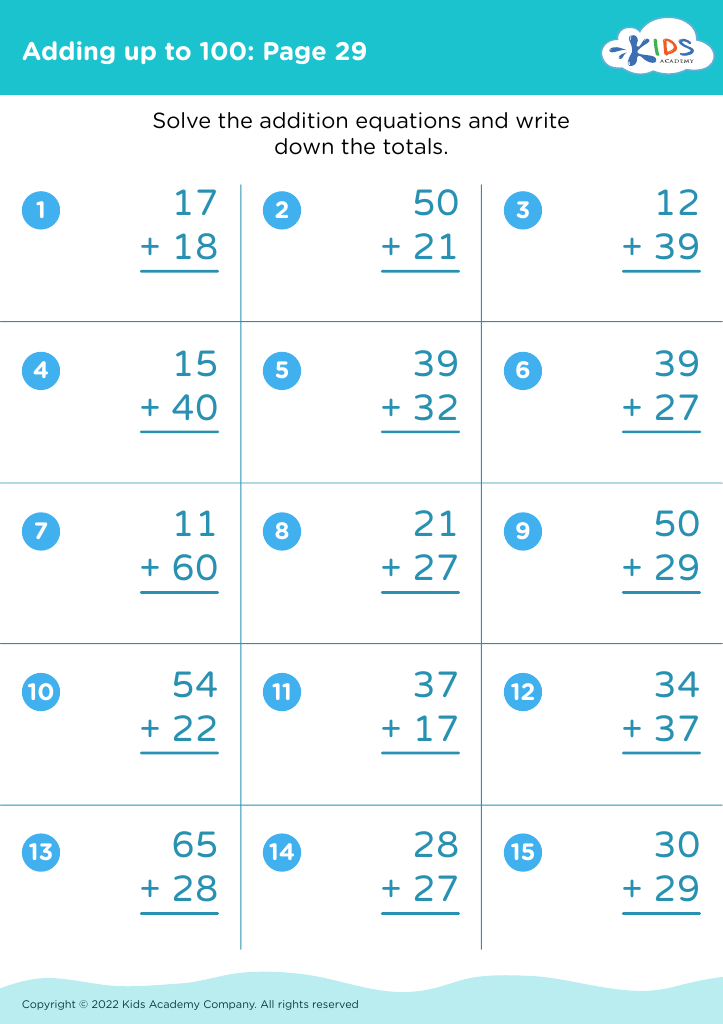
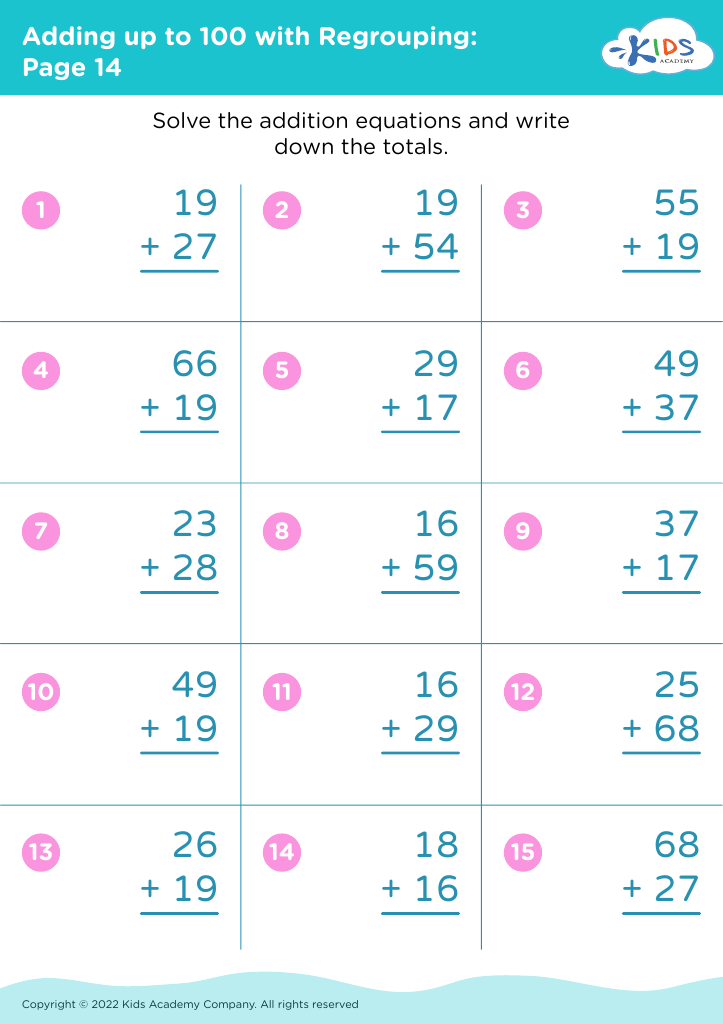
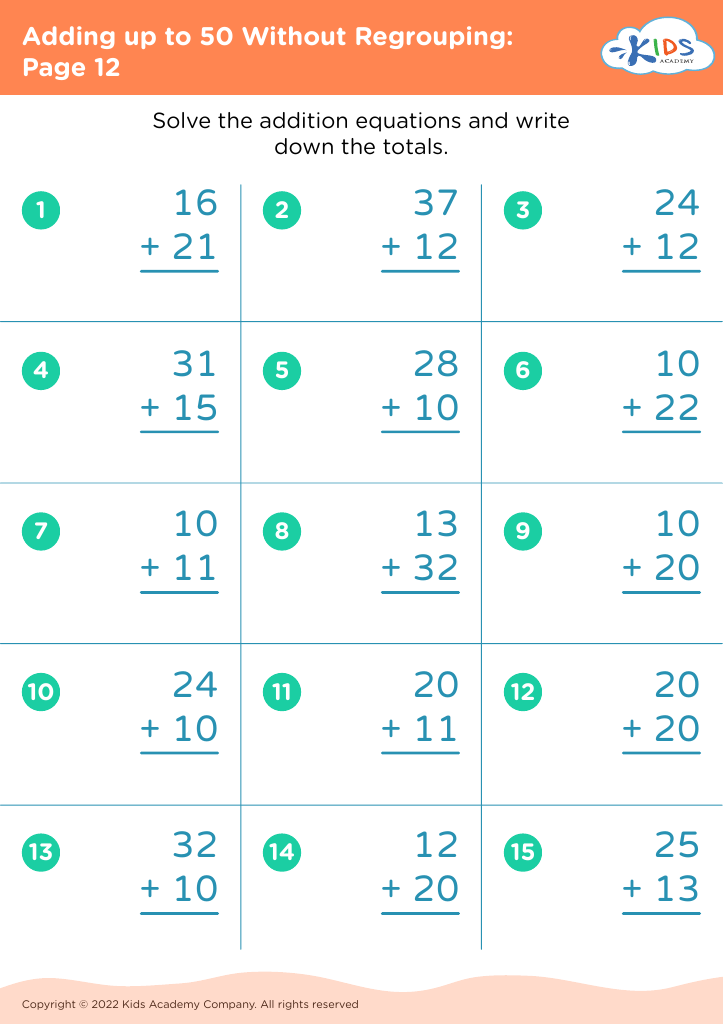
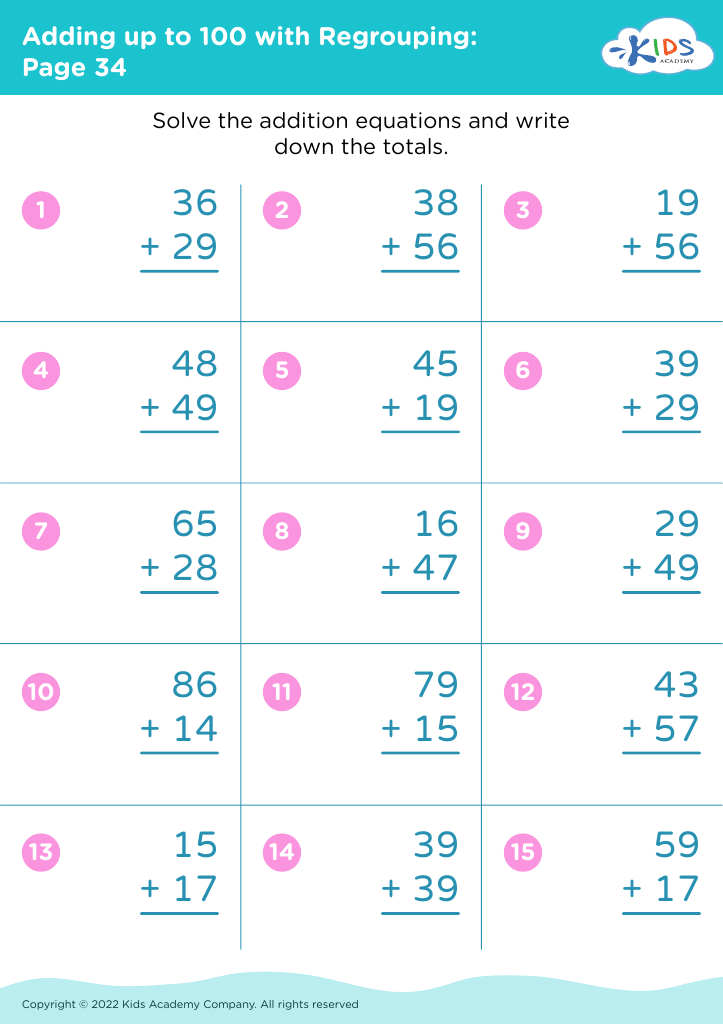
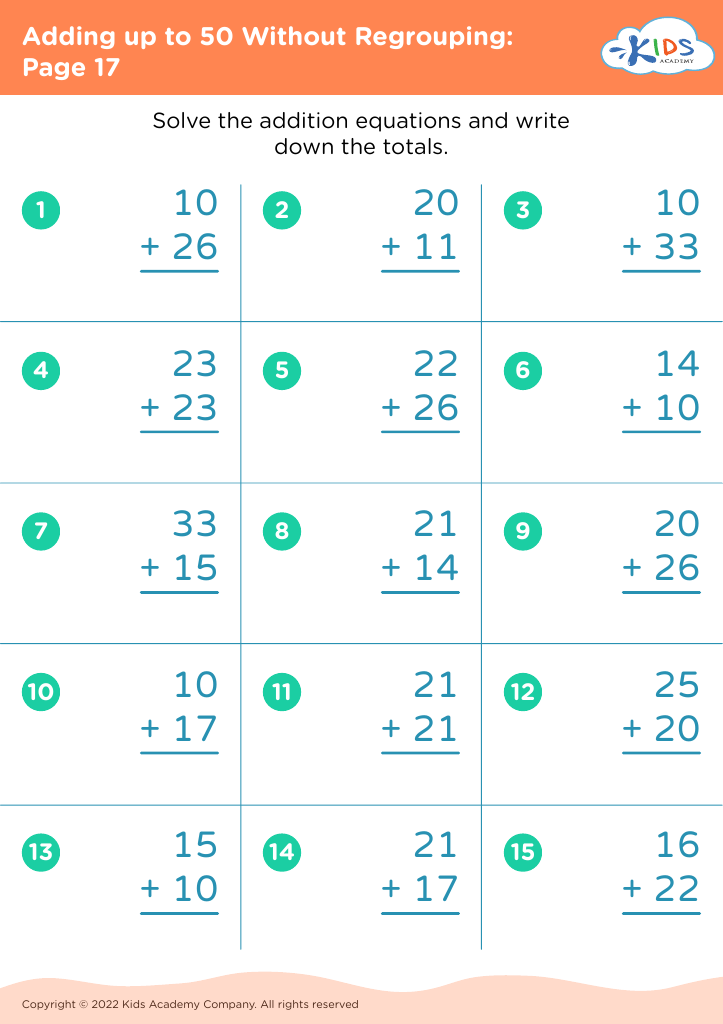
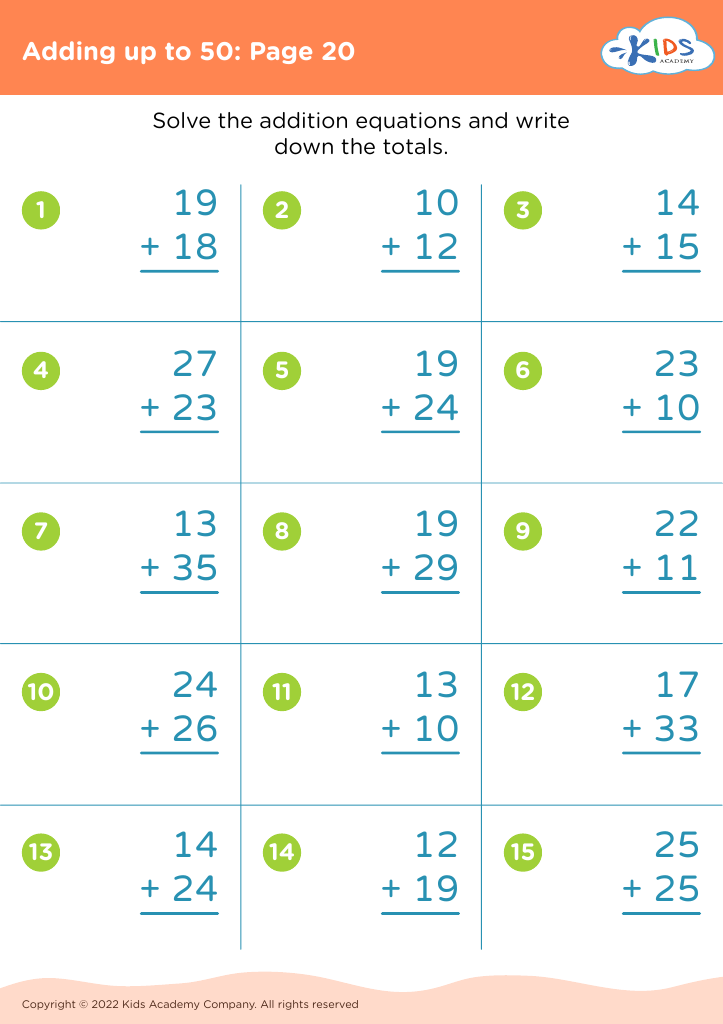
Spark your child's numerical journey with our "Enhance Number Recognition Addition Worksheets for Ages 5-7". Designed to build foundational math skills, these engaging worksheets combine number recognition and basic addition in a fun, interactive format. Each sheet offers colorful, kid-friendly illustrations to capture young learners' interest, making math practice an enjoyable experience. Tailored for budding mathematicians, our worksheets help enhance counting, problem-solving, and critical thinking while ensuring your child becomes confident in their number sense. Partner with Kids Academy to transform early math education into an adventure that inspires a lifelong love of learning.
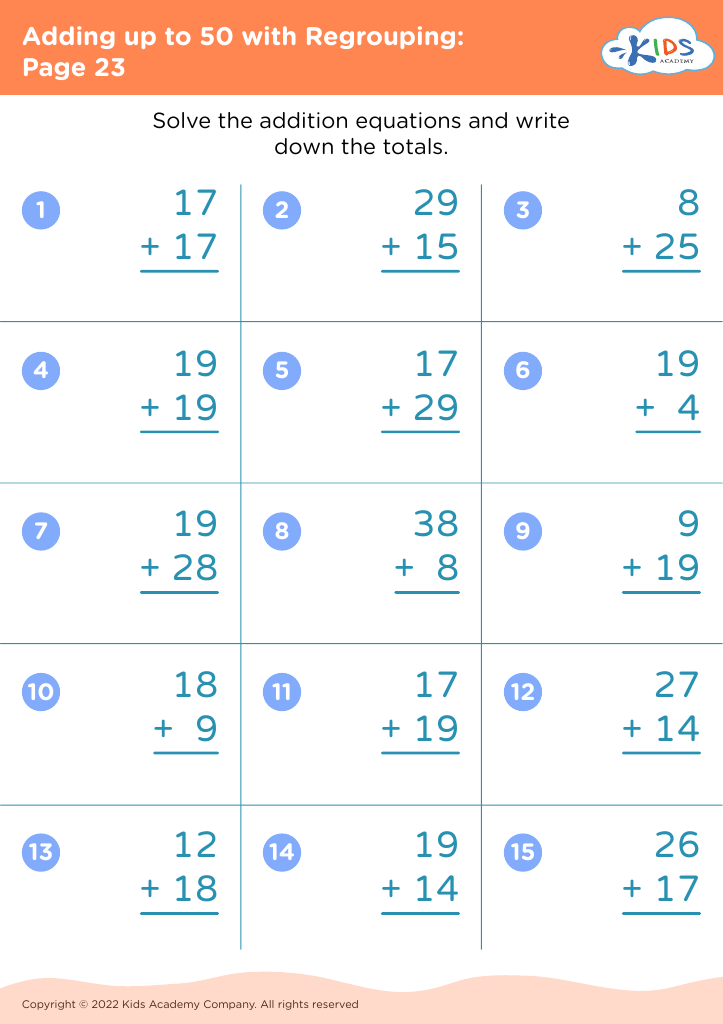
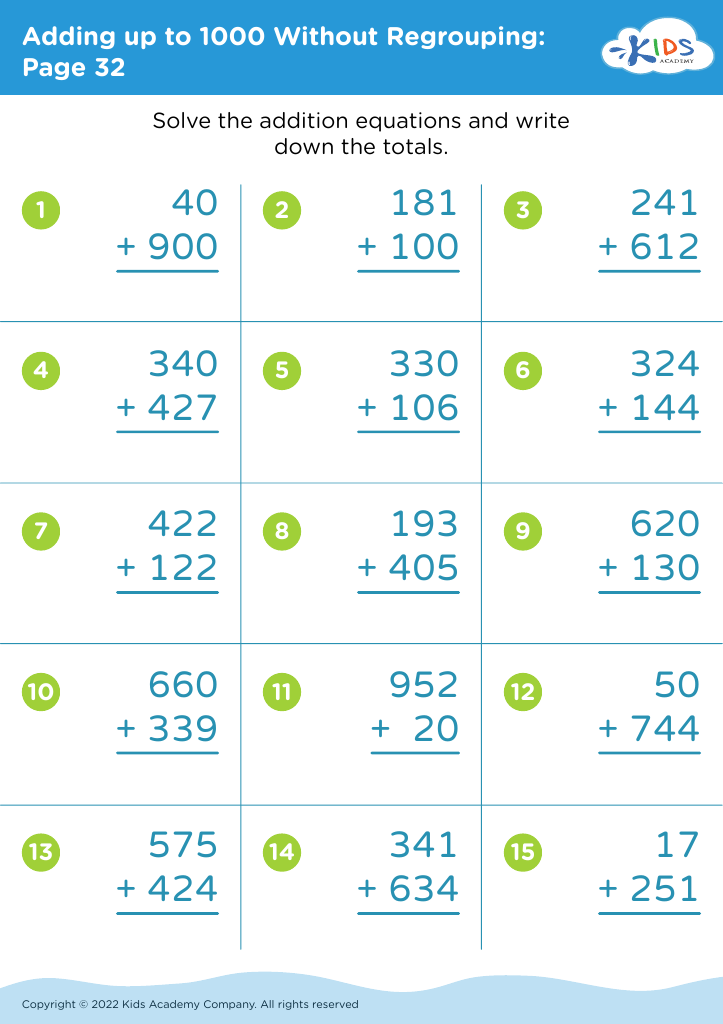
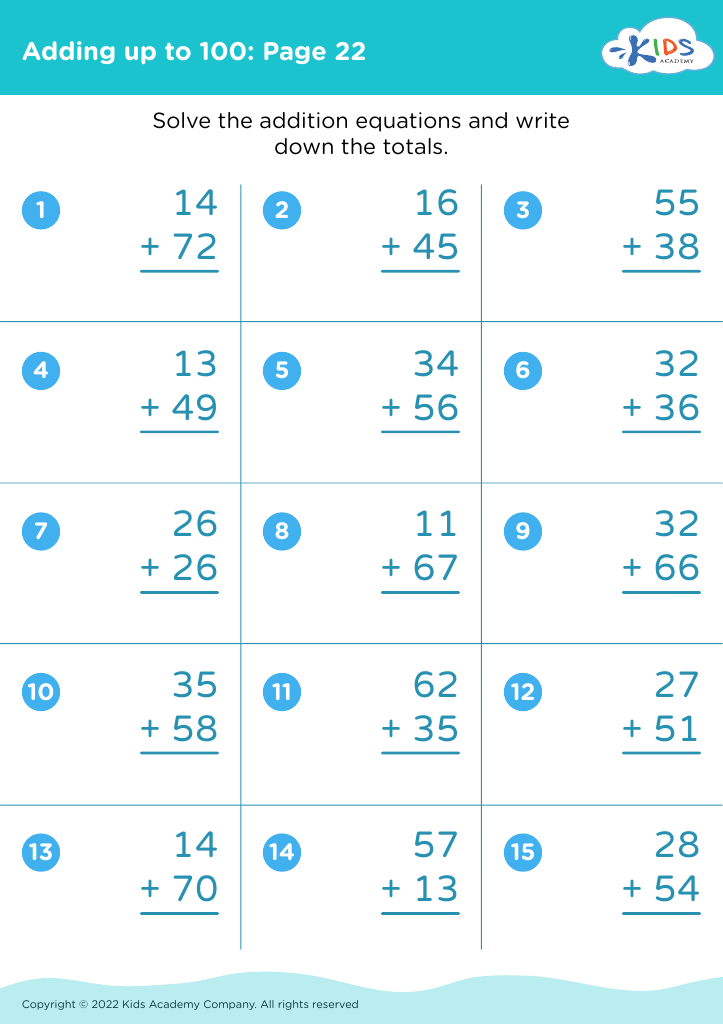
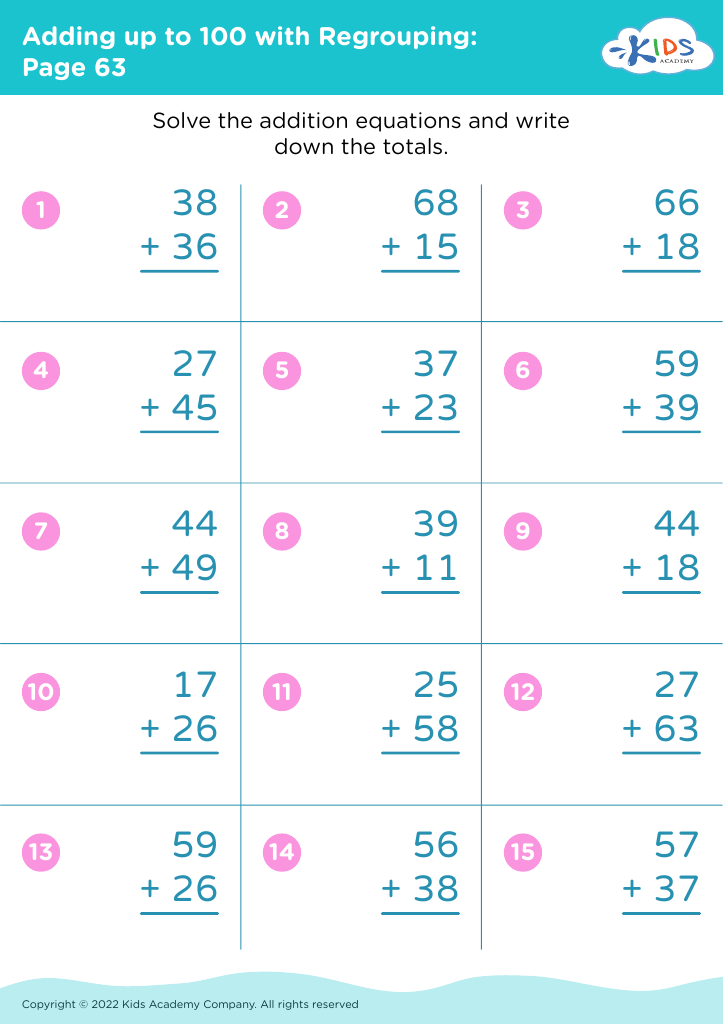
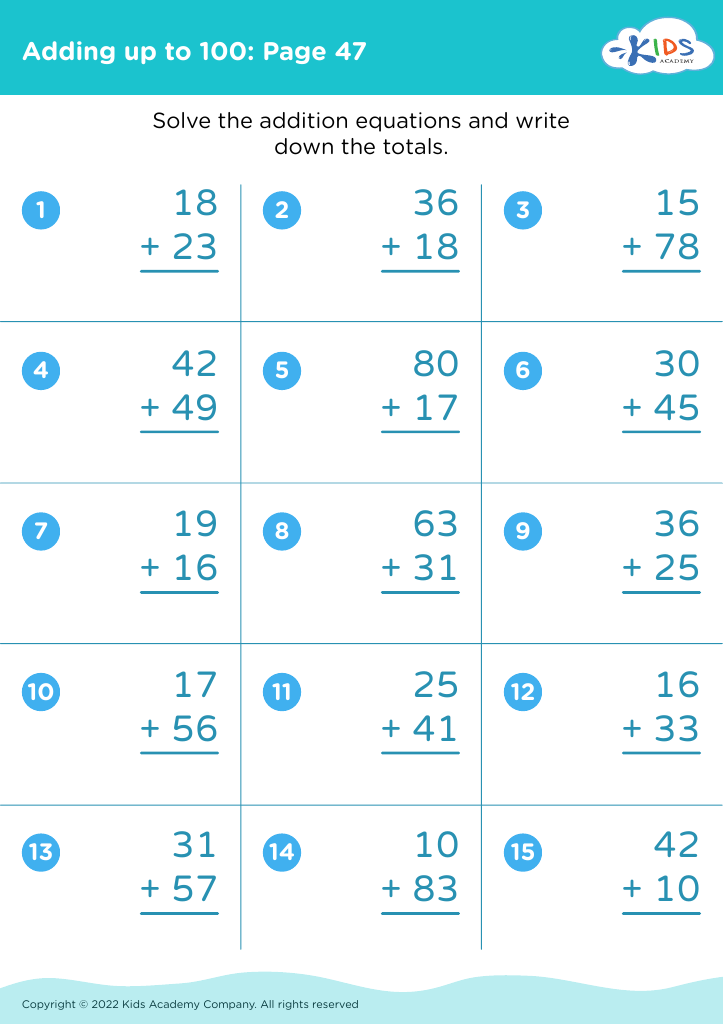
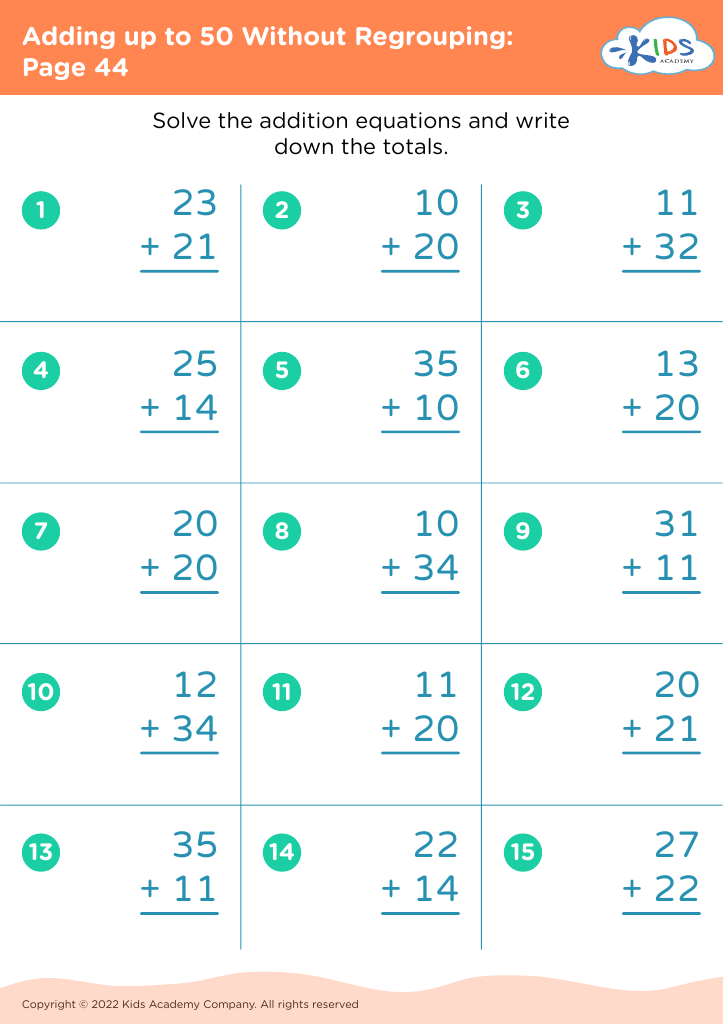
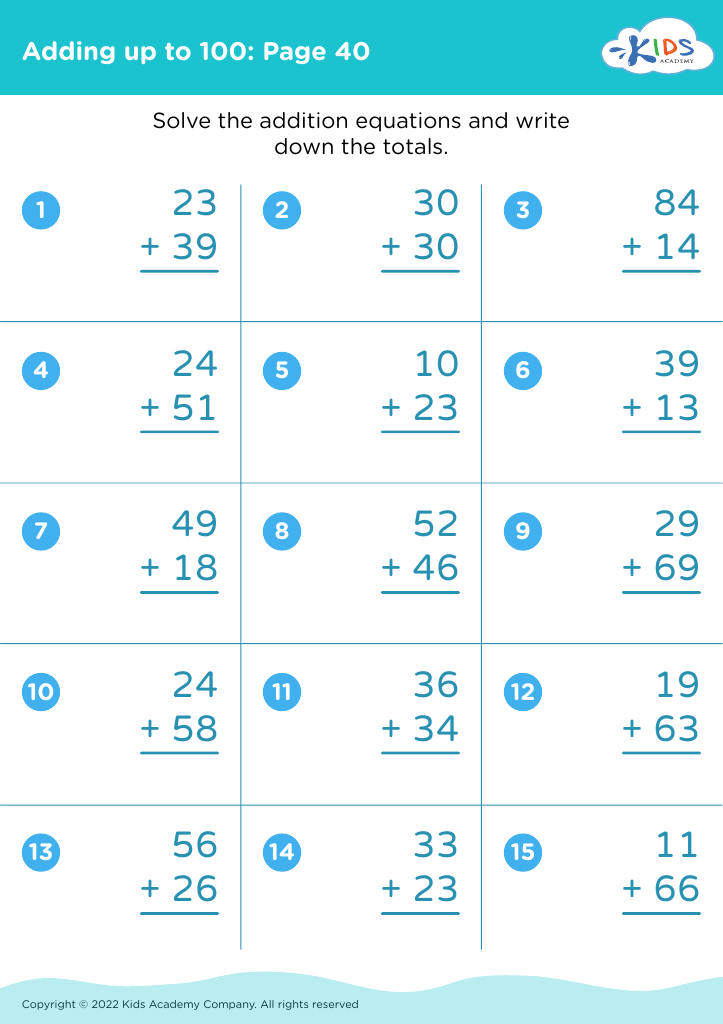
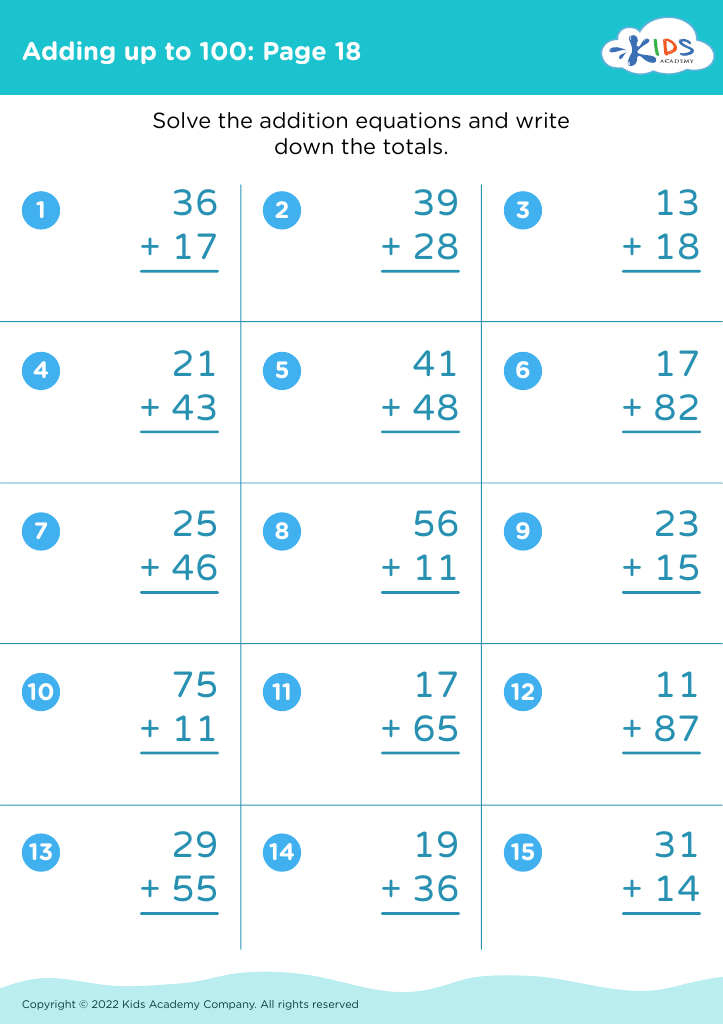
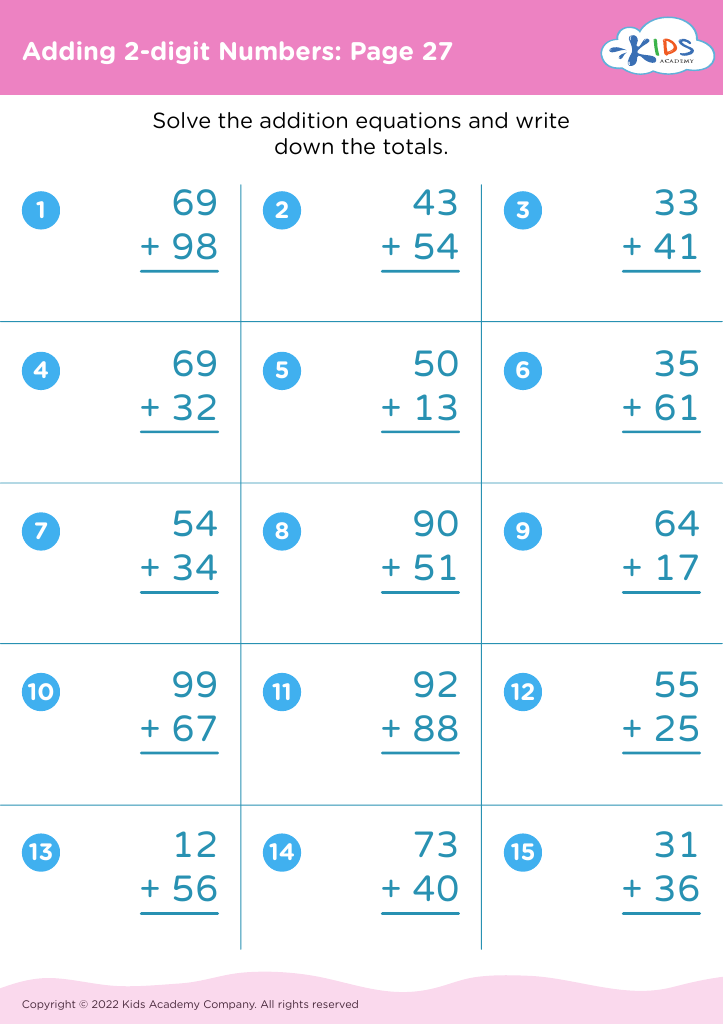








Enhanced number recognition and addition skills are critical for children ages 5-7 as they form the foundation for later mathematical learning and cognitive development. At this young age, children are highly receptive and keen to explore new concepts. Mastery of basic number recognition allows them to identify and understand numerical symbols and their corresponding quantities, an essential skill for all further arithmetic operations.
Incorporating number recognition and addition into early education supports cognitive skills such as logical reasoning, problem-solving, memory, and the ability to make connections between abstract concepts and real-world applications. When students grasp these skills early, they build confidence in their mathematical abilities, making them more likely to engage positively with math in future academic years.
For parents and teachers, fostering effective number recognition and addition through engaging activities can create a stimulating learning environment. Activities like counting games, visual aids, and interactive number-based stories make learning enjoyable and stress-free, which is particularly important in early childhood education. Additionally, robust number sense and basic addition competency are benchmark indicators of early fluency in numeracy, preventing future learning difficulties. Therefore, prioritizing these skills facilitates well-rounded intellectual development and sets children on a path toward academic success and analytical prowess.








