Enhance Vocabulary Addition Worksheets for Ages 5-7
4 filtered results
-
From - To
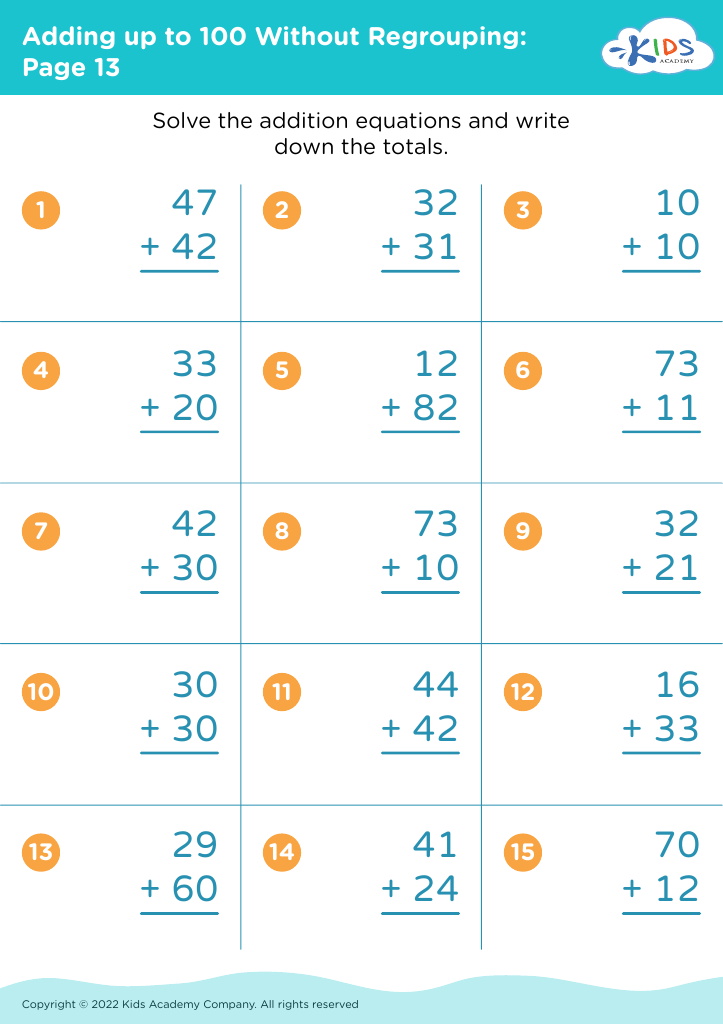
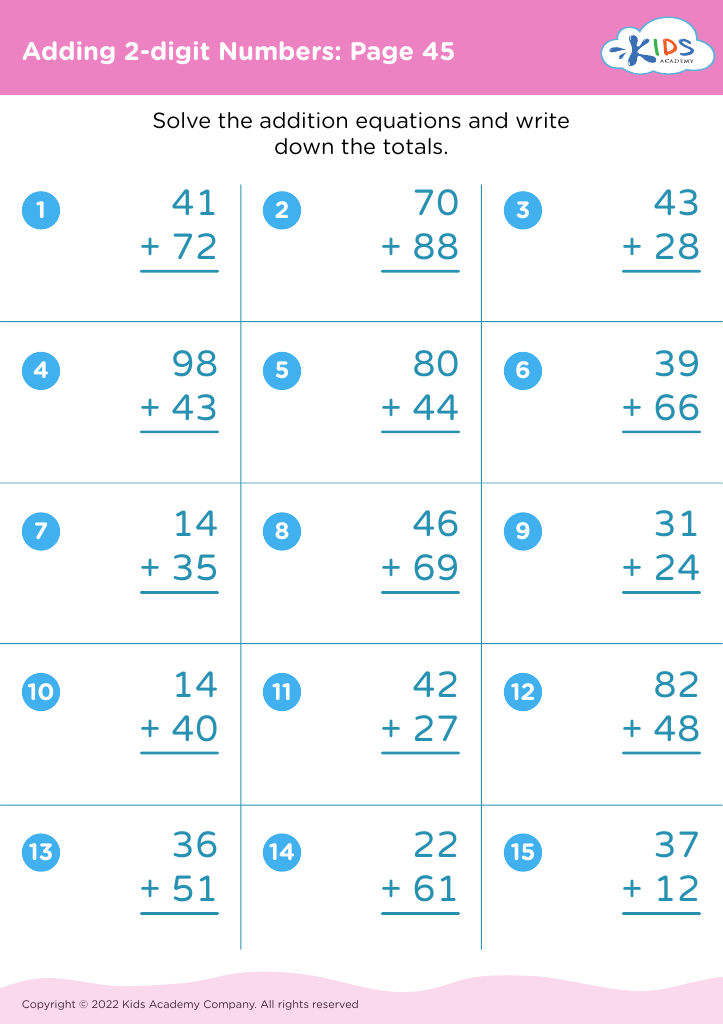
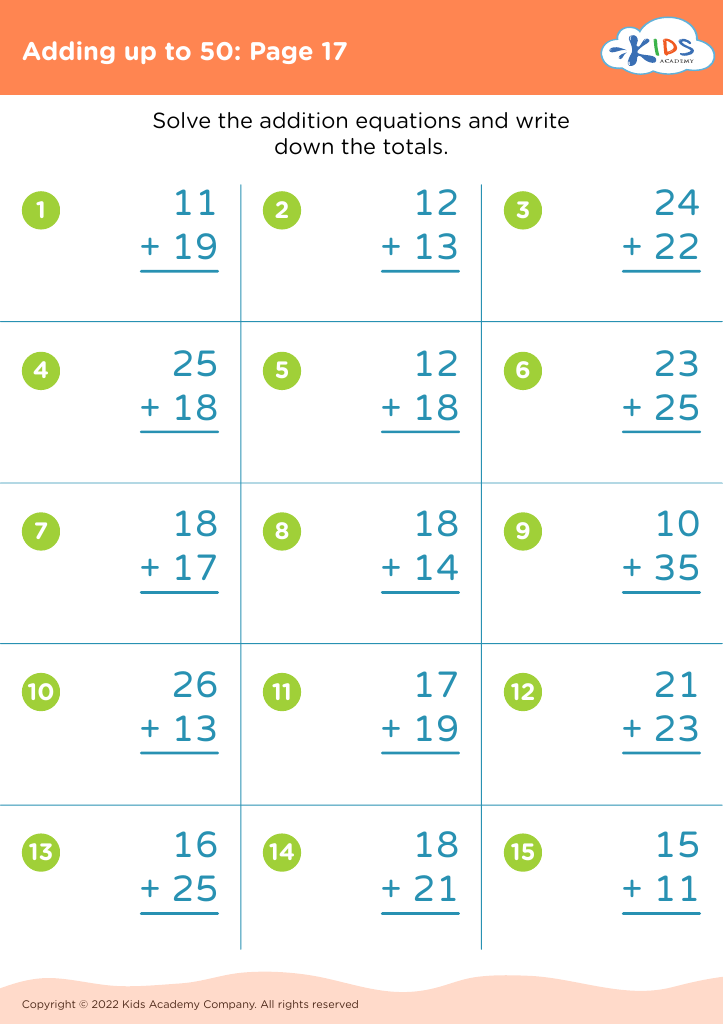
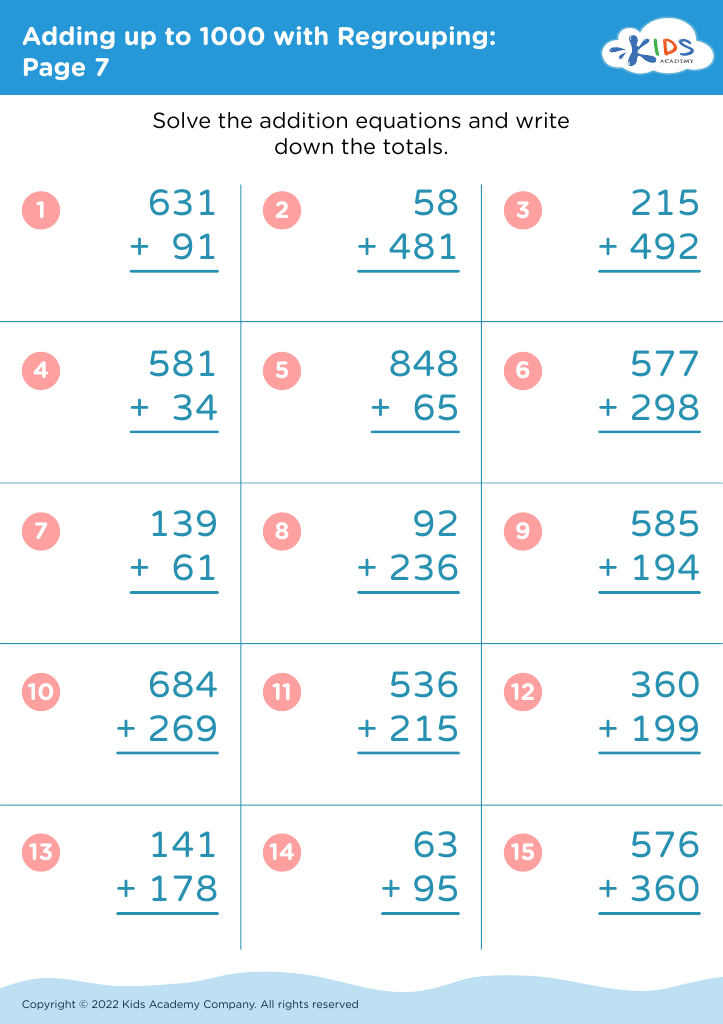
Introduce young learners to the world of numbers with our "Enhance Vocabulary Addition Worksheets for Ages 5-7". Designed to make math exciting and accessible, these engaging worksheets blend essential addition skills with vocabulary building. Children will explore numbers while expanding their word knowledge through fun themes, illustrations, and activities crafted by education experts. Perfect for classroom and home use, our worksheets help boost confidence and foster a love for learning in a nurturing environment. Set your child on the path to academic success with our thoughtfully curated addition worksheets for early grade students. Get started today!








Enhancing vocabulary for children ages 5-7 is crucial for their academic and social development. At this formative stage, children's brains are highly receptive to new information, making it an optimal time to expand their vocabulary. A robust vocabulary enables children to better understand instructions, engage in meaningful conversations, and express their thoughts more clearly and accurately.
For parents and teachers, focusing on vocabulary addition sets a strong foundation for future learning. Children with a rich vocabulary are more likely to excel in reading comprehension, as they can easily decode and understand new words, fostering a love for reading and learning. This, in turn, bolsters their confidence and academic performance across all subjects, not just language arts.
Moreover, enhanced vocabulary skills contribute to improved social interactions. Children with a wider range of words can better articulate their feelings and ideas, leading to more effective communication with peers and adults. This can help reduce frustration and misunderstandings, promoting positive relationships and emotional well-being.
Investing time and effort into vocabulary development through reading, interactive activities, and engaging conversations pays long-term dividends. It equips children with essential tools for critical thinking, problem-solving, and navigating a complex world, ultimately supporting their overall growth and success.








