Fraction simplification Addition Worksheets for Ages 5-7 - Page 3
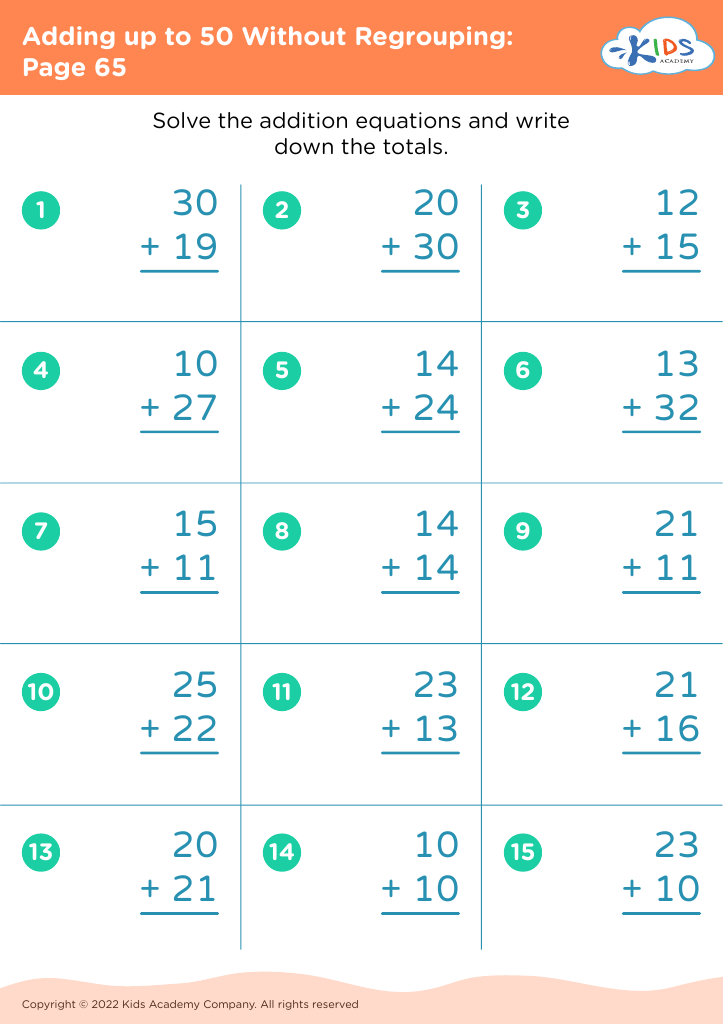
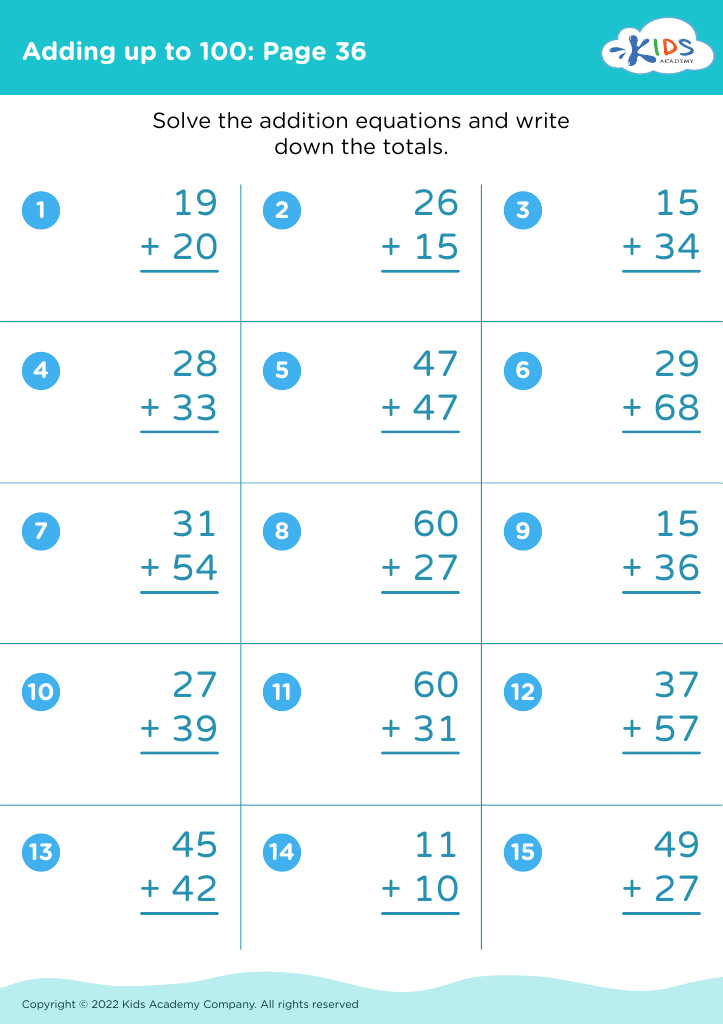
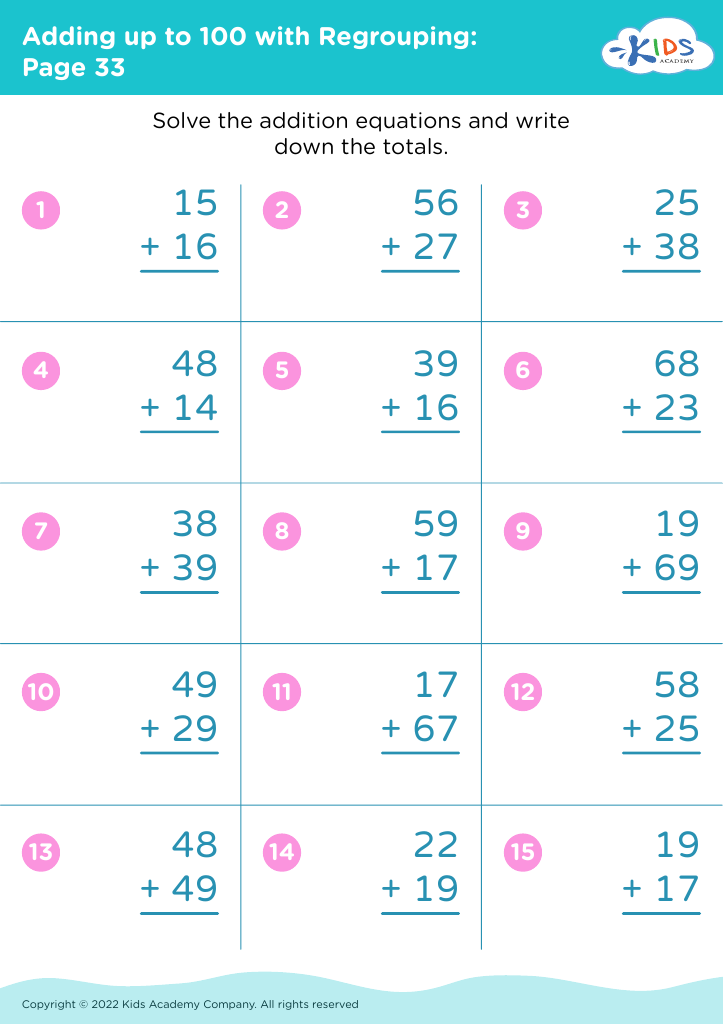
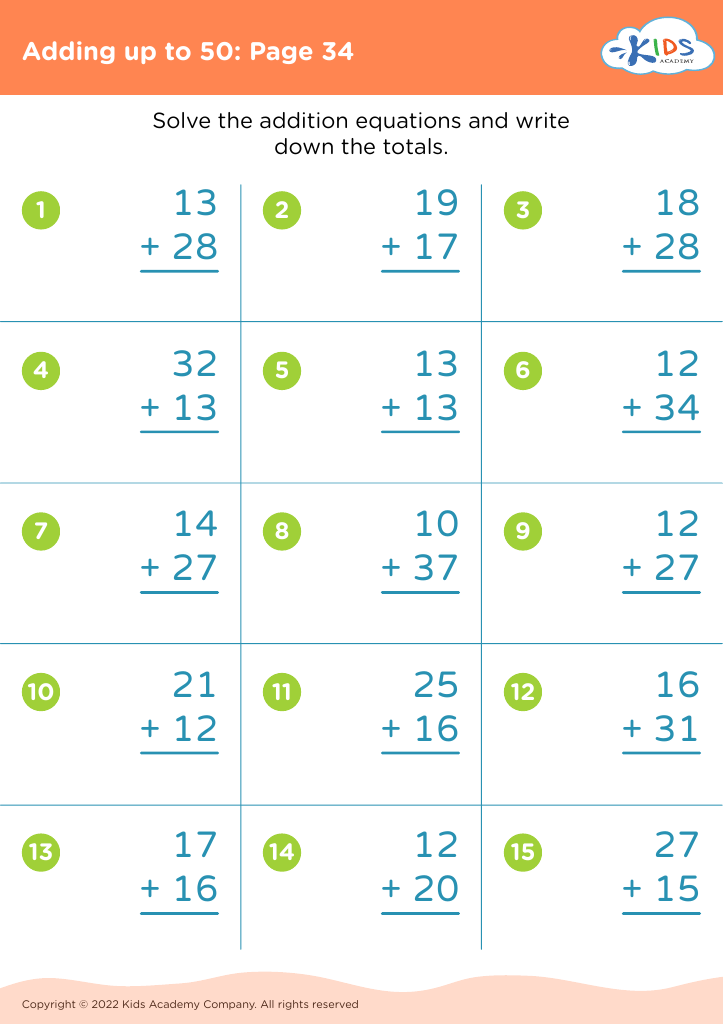








Understanding fraction simplification and addition is crucial for children aged 5-7 for several reasons, forming a vital foundation in their mathematical development. First, grasping these concepts enhances number sense and reinforces the idea of parts making up a whole, which is fundamental in real-world contexts like sharing, cooking, or dividing objects.
Early mastery of fraction simplification aids in cognitive development by promoting critical thinking and problem-solving skills. By learning to reduce fractions, children develop an ability to recognize patterns, a crucial skill in math and daily life. Simplification also helps in understanding that different fractions can represent the same value, laying the groundwork for more advanced mathematical concepts.
Fraction addition teaches kids about combining parts to make a whole, which is essential for future complex operations such as algebra, geometry, and calculus. When children practice adding fractions, they learn to find common denominators and develop precision in their calculations, a necessary skill for higher-level mathematics.
Furthermore, early exposure to these concepts boosts confidence in math. When children successfully handle fraction problems, they gain a sense of achievement, building a positive attitude toward math learning. Therefore, parents and teachers investing time in teaching fraction simplification and addition are nurturing a child's overall academic growth and problem-solving abilities.








