Handwriting improvement Addition Worksheets for Ages 5-7
4 filtered results
-
From - To
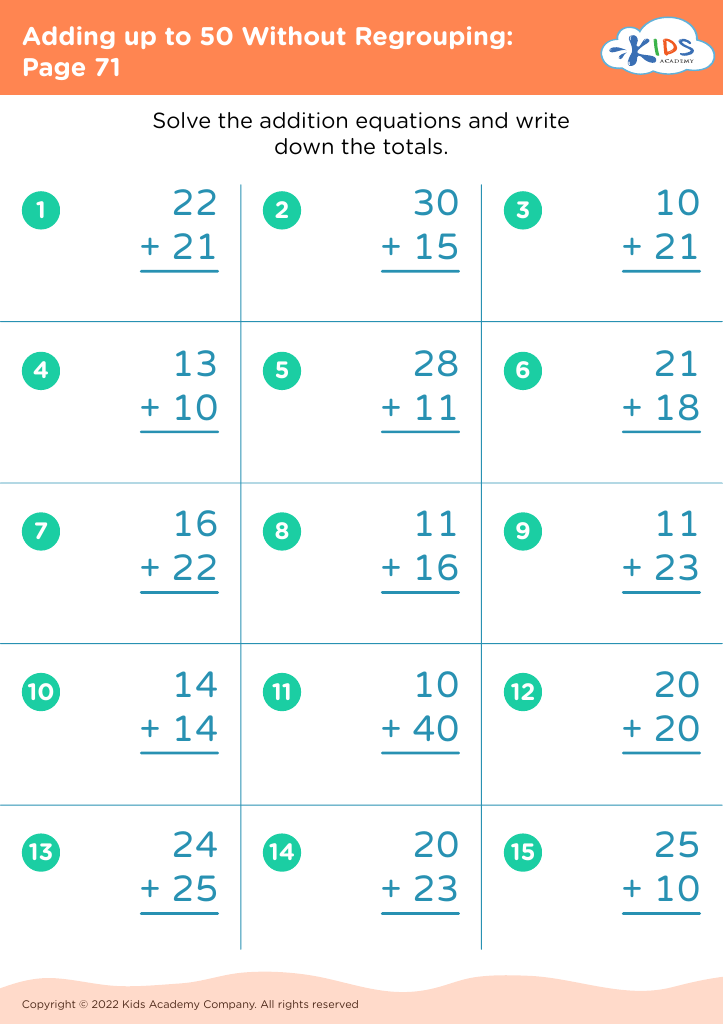
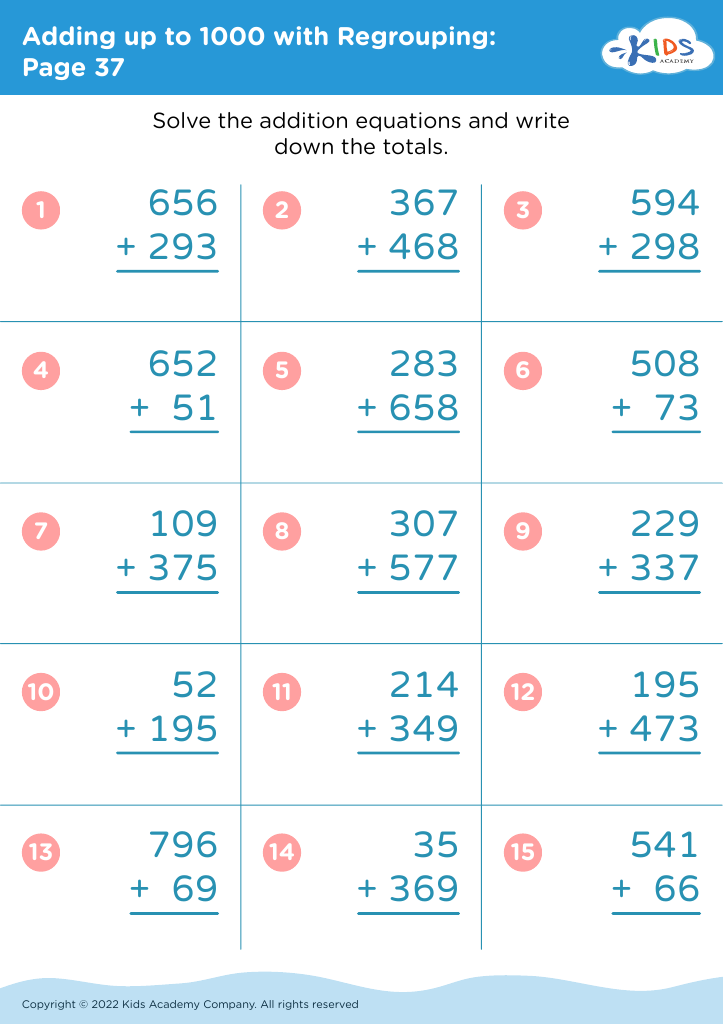
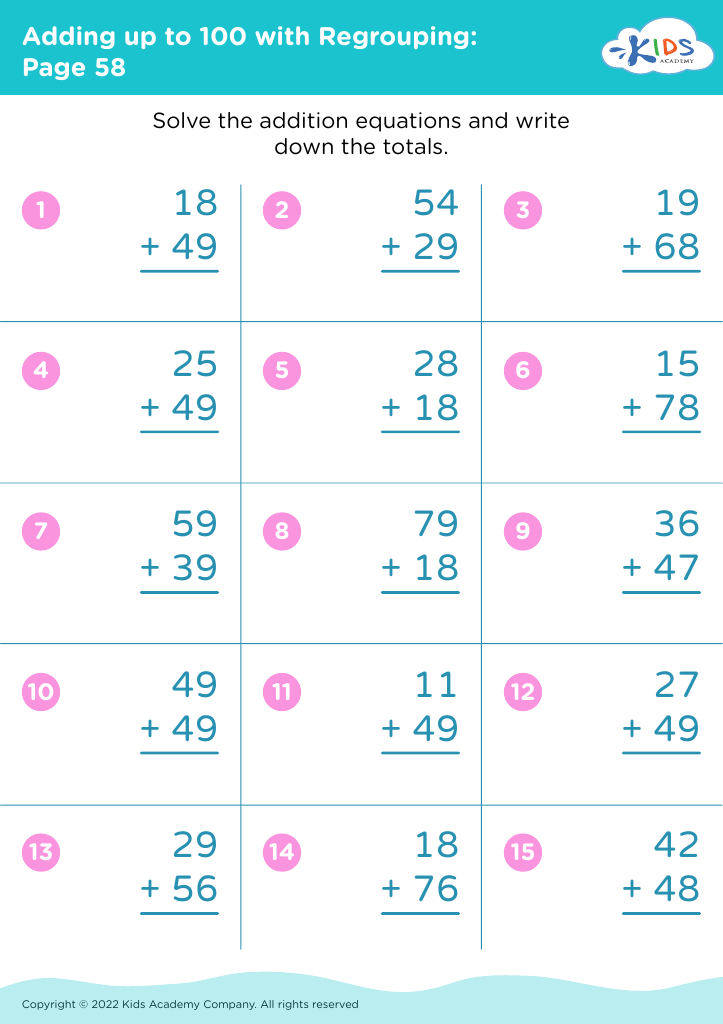
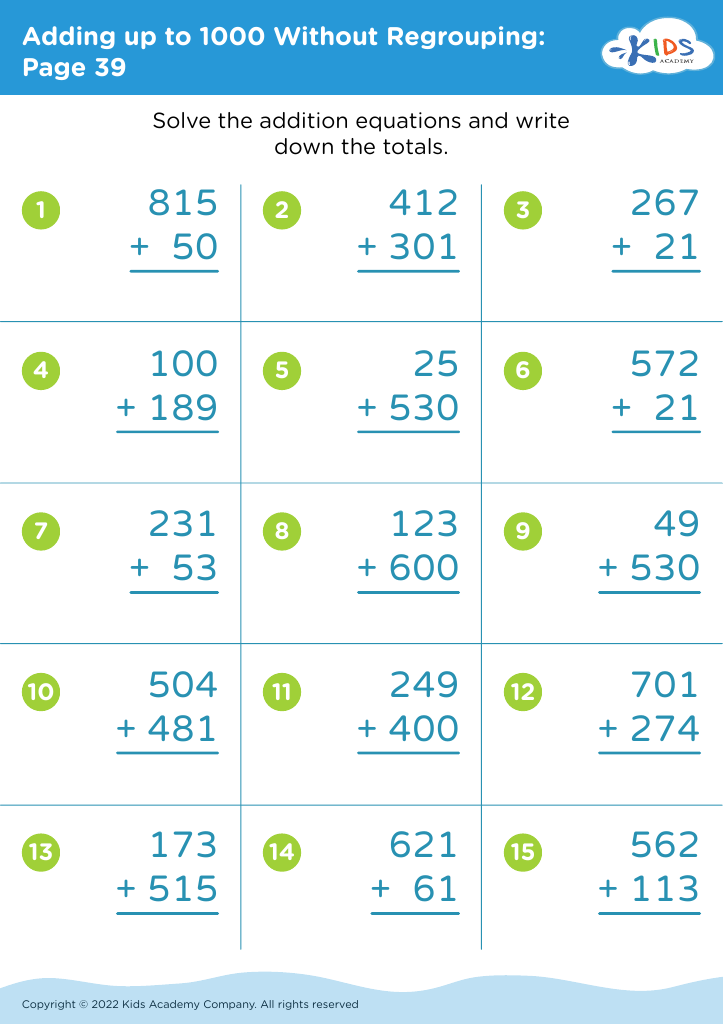
Enhance your child's handwriting skills while solidifying their understanding of addition with our Handwriting Improvement Addition Worksheets for Ages 5-7. These engaging worksheets are designed to make learning fun as young learners practice both math and writing. Each worksheet integrates addition problems alongside handwriting exercises, enabling kids to refine their penmanship while building their math confidence. Ideal for home or classroom use, our printable resources cater to varying skill levels, ensuring your child receives the right support as they progress. Boost their excitement for learning with these interactive worksheets that transform math practice into a creative and enjoyable experience!








Handwriting improvement for children aged 5-7 is crucial for several reasons. First and foremost, this stage of development is critical for establishing foundational fine motor skills, which are essential not only for writing but also for everyday tasks such as buttoning clothes, using utensils, and playing instruments. Effective handwriting contributes to clearer communication; as children learn to express their thoughts and ideas on paper, legible handwriting ensures that their messages are understood.
Moreover, mastering handwriting can boost children’s confidence. When a child becomes proficient in writing, they're more likely to engage in classroom activities, participate in writing assignments, and express themselves freely. Additionally, improved handwriting correlates with academic performance; studies have shown that children with better writing skills often achieve higher grades.
Teachers and parents play a vital role in supporting handwriting improvement through practice, encouragement, and resources. They can create fun activities and provide positive feedback, fostering a growth mindset. Lastly, in an increasingly digital world, maintaining handwriting skills remains invaluable, allowing children to easily transition between written and typed communications as they grow. In short, caring about handwriting development lays the groundwork for various life skills, enhances academic success, and nurtures a child’s self-esteem.








