Identifying equivalent fractions Addition Worksheets for Ages 5-7
7 filtered results
-
From - To
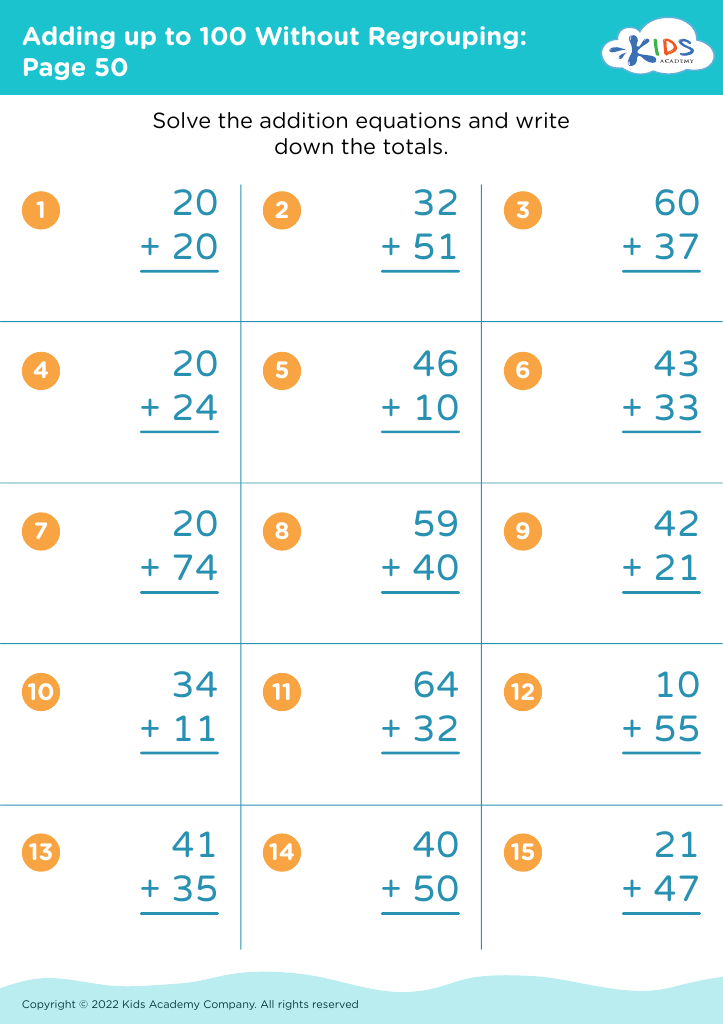
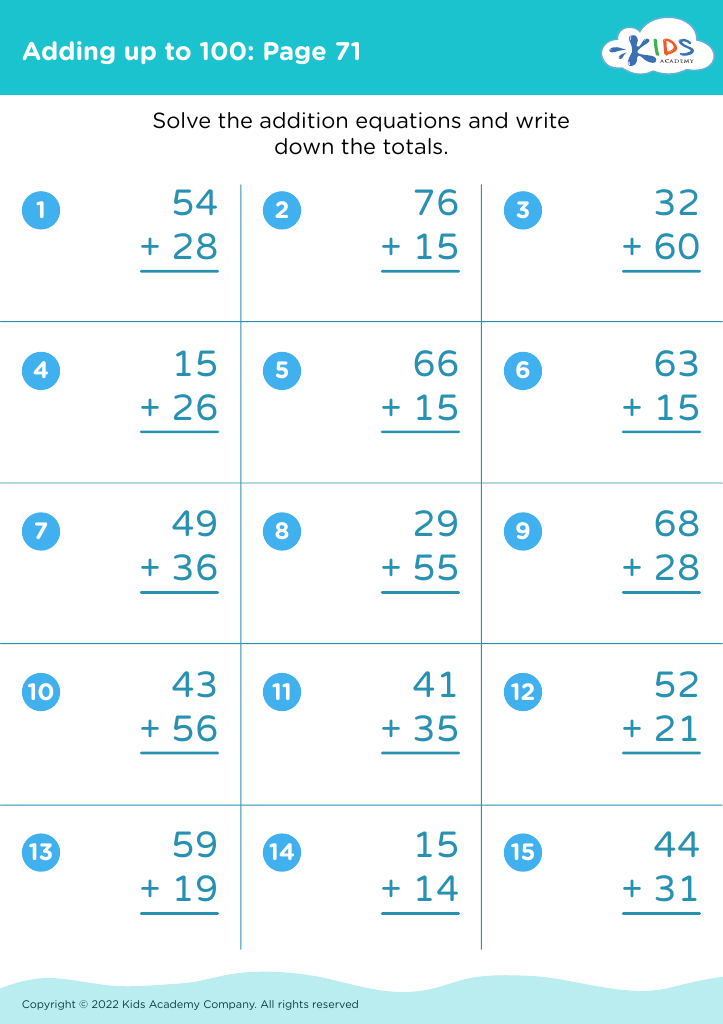
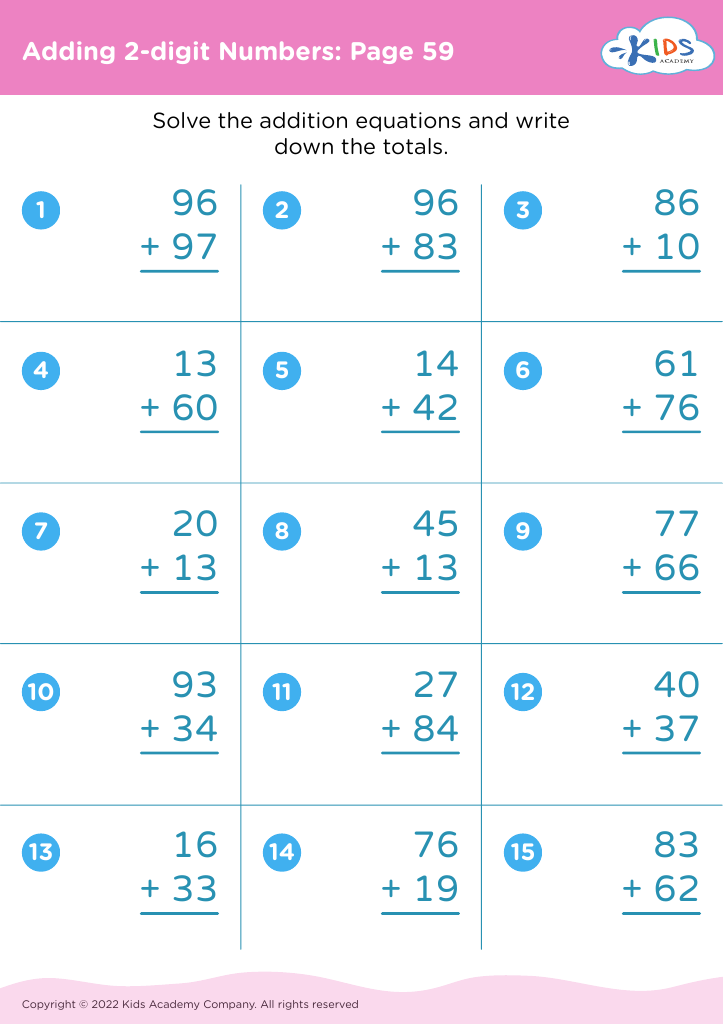
Discover our engaging Identifying Equivalent Fractions Addition Worksheets, designed specifically for children aged 5-7. These interactive worksheets help young learners grasp the concept of equivalent fractions in a fun and approachable way. Through colorful visuals and simple equations, students practice adding fractions by recognizing values that represent the same amount. Perfect for enhancing math skills at home or in the classroom, our worksheets provide a solid foundation for future mathematical concepts. Encourage your child’s love for learning with these fun exercises that promote critical thinking, problem-solving, and numerical understanding. Start their math journey off right with our tailored resources!
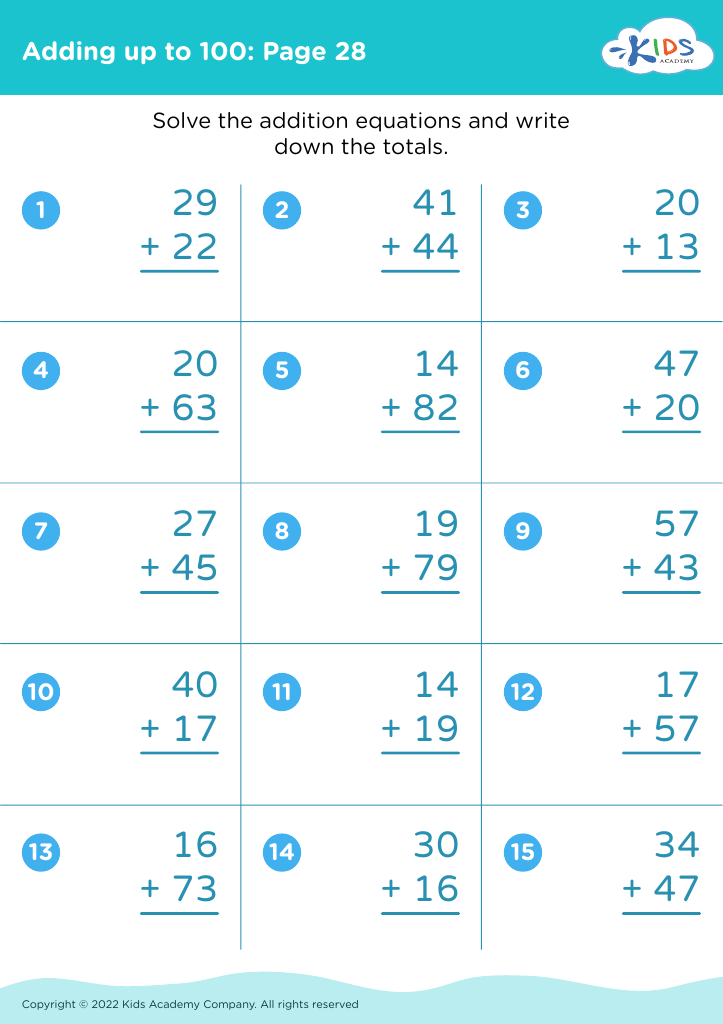
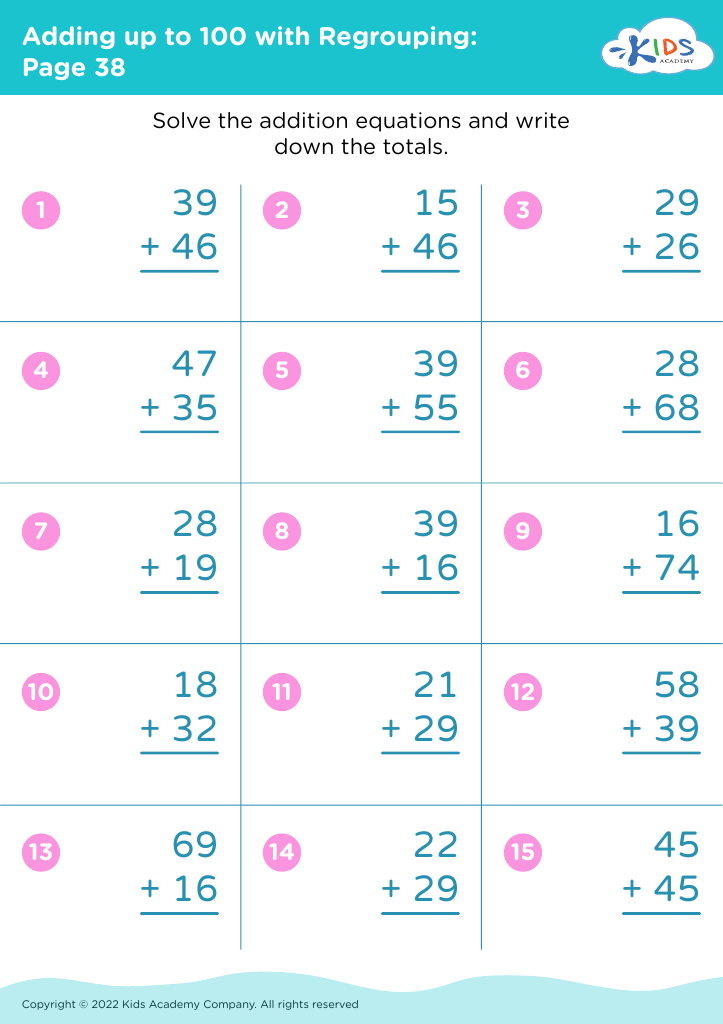
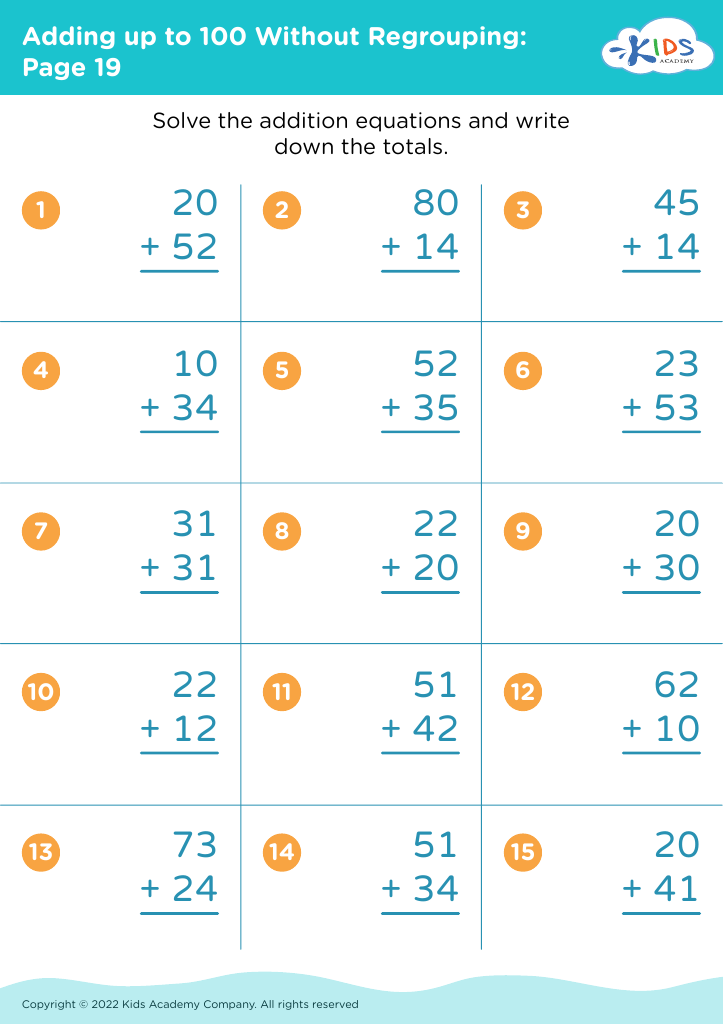
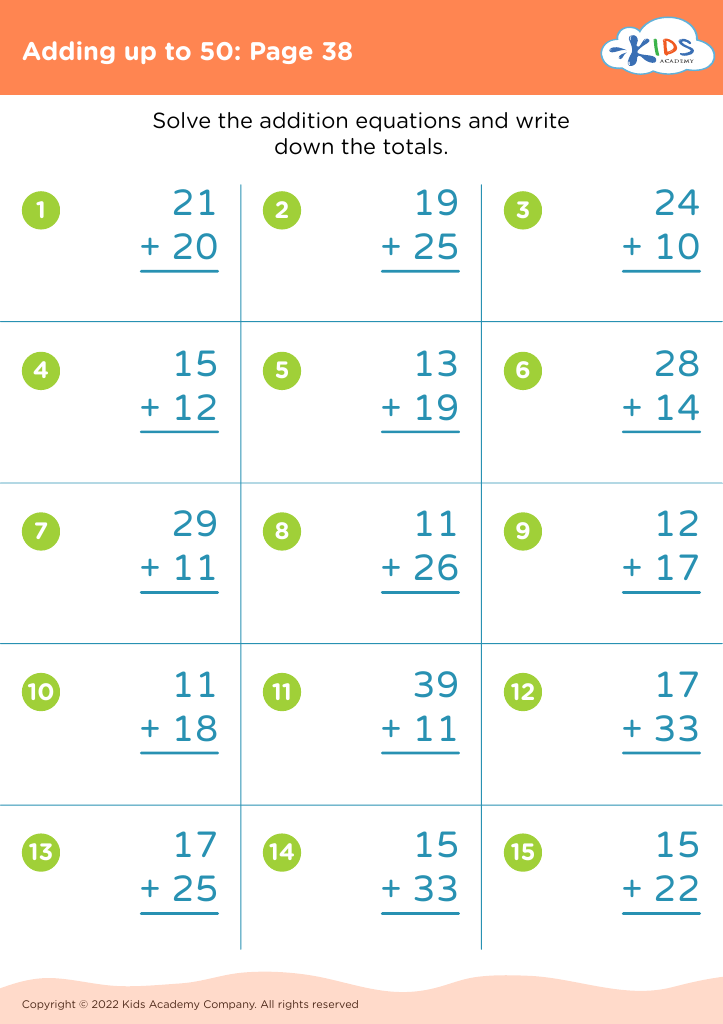








Understanding equivalent fractions and their addition is crucial for young learners, as it lays a foundation for future math skills. For children ages 5-7, this learning bolsters not only their numerical acuity but also their critical thinking abilities. When parents and teachers focus on identifying equivalent fractions, they help children grasp the concept that different expressions can represent the same amount, fostering flexibility in math that aids problem-solving.
For instance, recognizing that 1/2 is equivalent to 2/4 allows students to effectively navigate basic addition and comparison tasks. Mastering this skill early on ensures they are well-prepared for more complex fraction work in later grades, creating a smoother educational trajectory. Moreover, engaging with equivalent fractions through visual aids or hands-on activities cultivates a positive attitude toward math, reducing anxiety often associated with the subject.
Additionally, this learning empowers children to connect math to real life—illustrating how recipes or sharing resources can depend on fractions, nurturing practical life skills. By emphasizing equivalent fractions now, parents and teachers not only enhance mathematical understanding but also build a child’s confidence and interest in mathematics, encouraging lifelong learning.








