Improves number recognition Addition Worksheets for Ages 5-7
3 filtered results
-
From - To
Enhance your child’s number recognition skills with our engaging Addition Worksheets for ages 5-7! Designed specifically for young learners, these worksheets provide a fun and interactive way to strengthen their foundational math skills while mastering addition. Each worksheet features colorful illustrations, captivating activities, and step-by-step guidance to help children easily recognize and understand numbers. By practicing with our carefully crafted exercises, your child will gain confidence in their math abilities and improve their problem-solving skills. Get started today and watch your child excel in their mathematical journey while enjoying the process of learning! Perfect for parents and teachers alike!
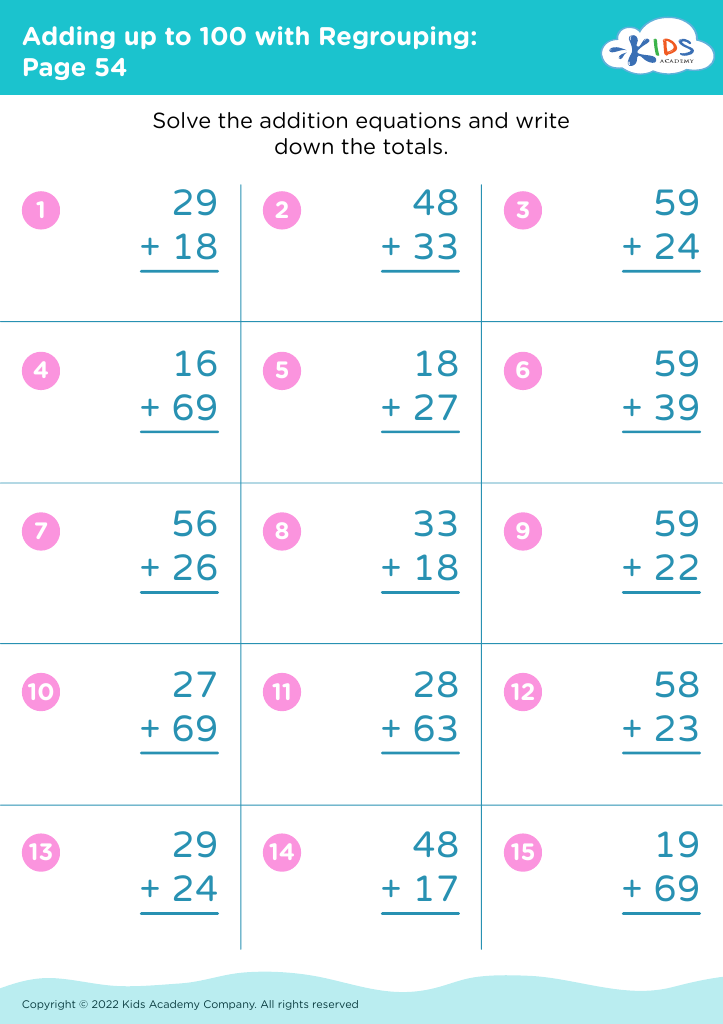
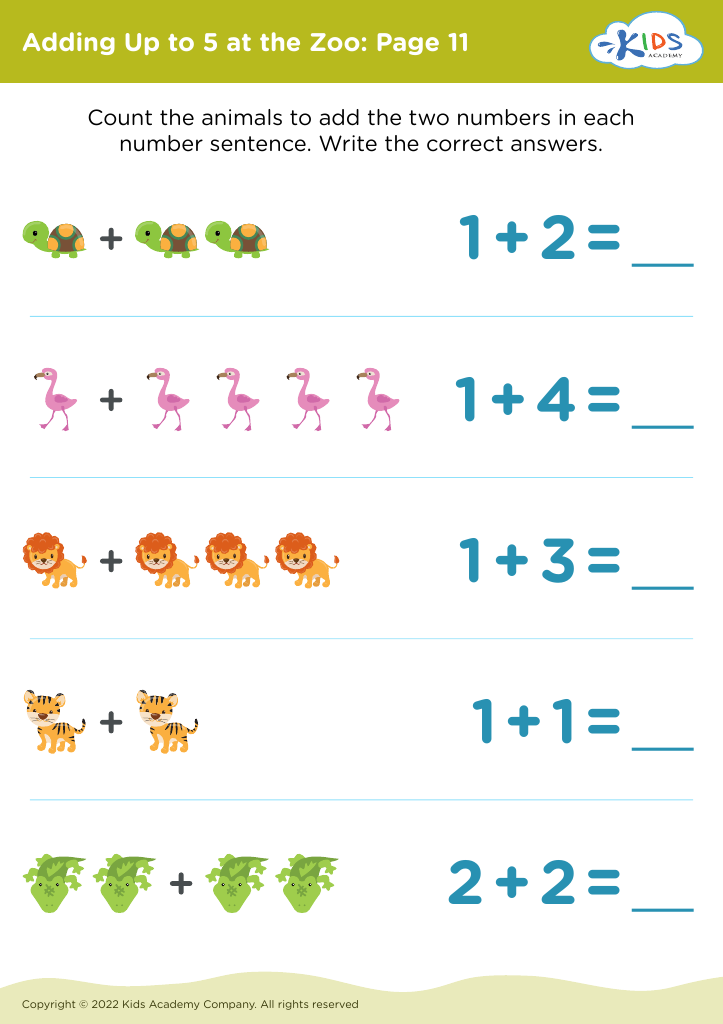
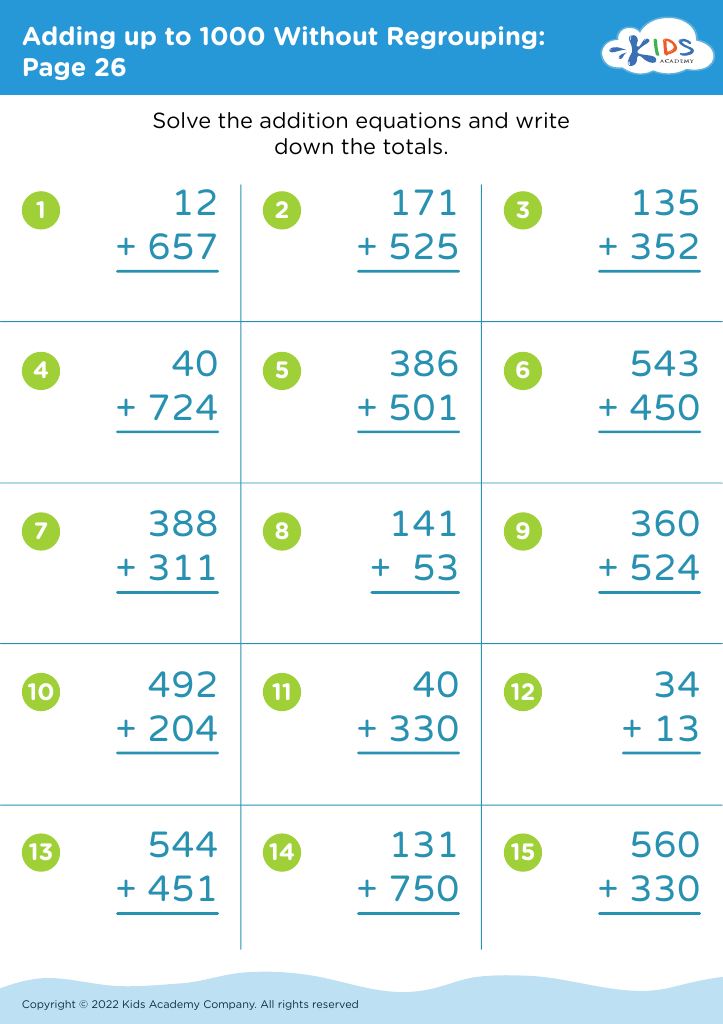








Improving number recognition and addition skills in children aged 5-7 is crucial for their early mathematical development and overall cognitive growth. During this stage, children are highly receptive to learning, making it a prime time to establish a strong foundation in numeracy. Number recognition—the ability to identify and understand numbers—is foundational for many future math skills, including counting, writing numbers, and basic operations like addition.
By focusing on addition skills, parents and teachers can foster critical thinking and problem-solving abilities in young learners. Mastery of simple addition enhances a child's confidence and encourages a positive attitude towards math, which can greatly influence their future academic performance. Moreover, these skills are not just abstract; they apply to everyday life, enhancing children's ability to manage money, understand time, and solve practical problems in their environment.
Additionally, engaging in number recognition and addition promotes collaboration and communication skills when children work with peers or adults to solve math problems. Both parents and teachers play a vital role in guiding children through interactive and enjoyable activities, making the learning process fun and meaningful. Ultimately, caring about these skills means sponsoring their growth, self-esteem, and readiness for more complex math concepts later on.








