Numerical problem solving Addition Worksheets for Ages 5-7
3 filtered results
-
From - To
Unlock the world of numbers with our engaging Numerical Problem Solving Addition Worksheets designed for children aged 5-7! These interactive worksheets promote early math skills through fun and challenging addition problems. Tailored to enhance critical thinking, our activities encourage young learners to apply their addition knowledge in real-life scenarios. Perfect for classrooms and home practice, our worksheets help boost confidence and foster a love for math. Each sheet features colorful illustrations and relatable contexts to captivate young minds. Help your child master addition and develop essential problem-solving skills with our comprehensive collection of worksheets! Start their math journey today!
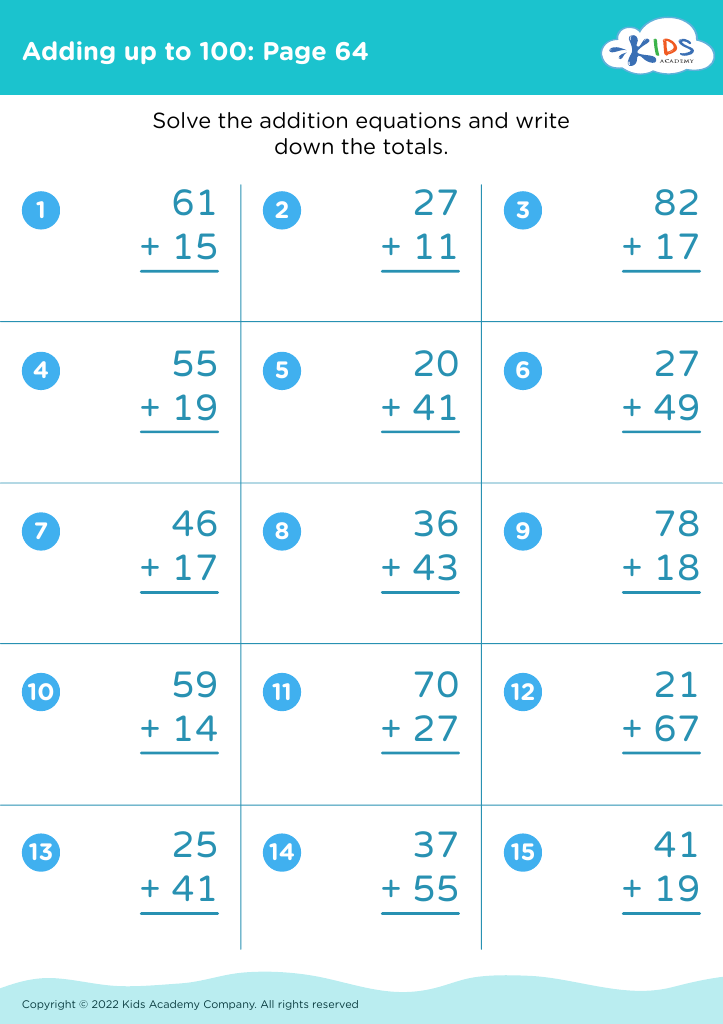
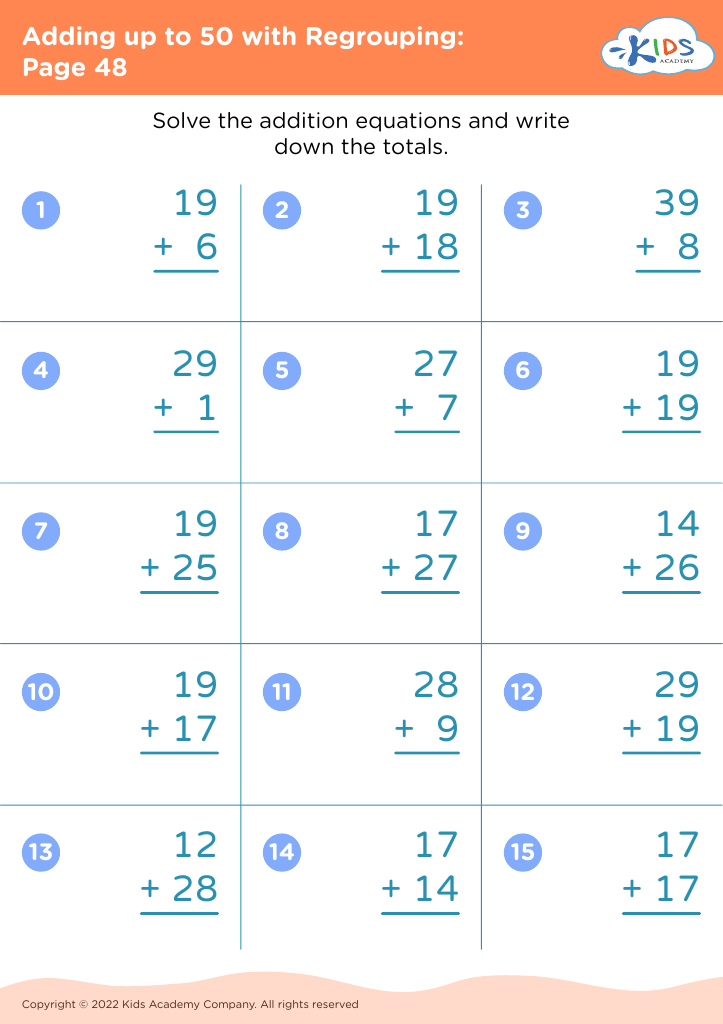
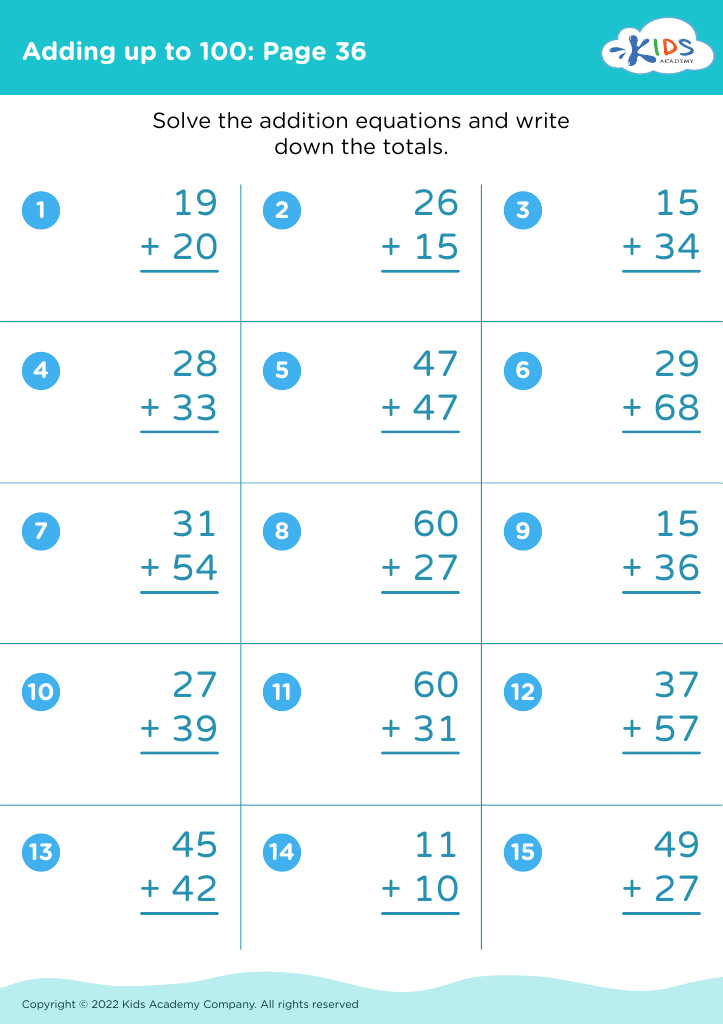





.jpg)


Numerical problem solving, particularly addition, is a foundational skill vital for children aged 5-7 as it sets the stage for future mathematical understanding and reasoning. Parents and teachers should prioritize this skill because early mastery of addition not only enhances a child's ability to work with numbers but also fosters critical thinking and problem-solving abilities.
At this age, children are particularly receptive to learning. Engaging them in numerical problem solving encourages cognitive development and builds confidence in their mathematical abilities. Mastering addition helps children understand the basic principles of mathematics, which will be essential as they progress to more complex concepts like subtraction, multiplication, and division.
Additionally, strong addition skills tie directly into real-world applications. When children can add successfully, they can make sense of everyday situations, like counting their toys or understanding money, which enhances their overall social and emotional development.
Involving parents and teachers in facilitating fun, interactive activities around addition can create a positive learning environment, promoting teamwork and collaboration. Overall, nurturing these early math skills helps children develop not just academic competence, but also essential life skills, paving the way for lifelong learning and success.








