
Observational skills Addition Worksheets for Ages 5-7
5 filtered results
Difficulty Level
Grade
Age
-
From - To
Subject
Activity
Standards
Enhance your child's mathematical abilities with our Observational Skills Addition Worksheets designed specifically for ages 5-7. These engaging worksheets help young learners develop crucial observational skills while practicing addition. By identifying patterns and understanding numerical relationships, children build a strong foundation for future math concepts. Our thoughtfully crafted exercises encourage critical thinking and boost confidence as they solve problems independently. Suitable for both classroom and home use, these worksheets provide a fun way for kids to practice math while honing their observation abilities. Explore the world of numbers through interactive learning and watch your child's skills blossom!
Favorites
With answer key
Interactive
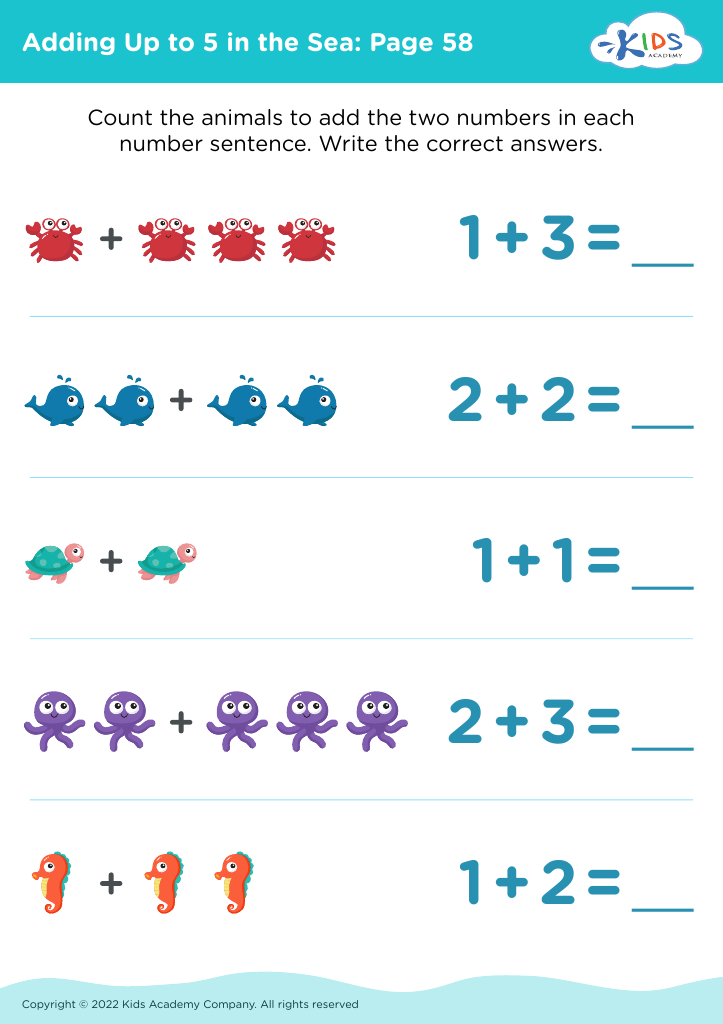
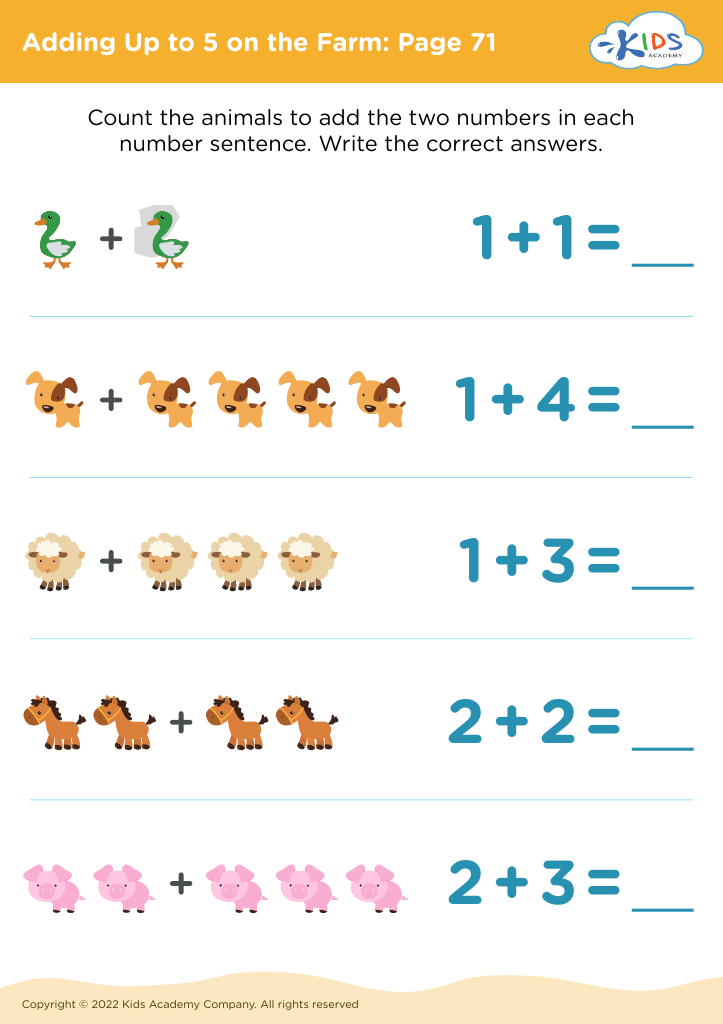
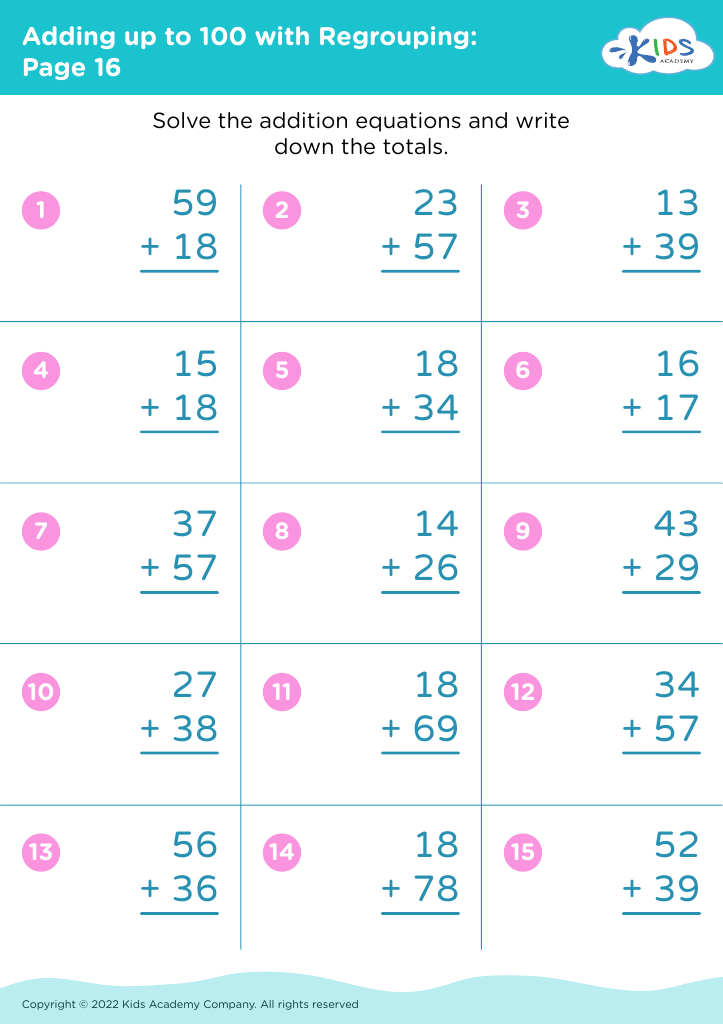
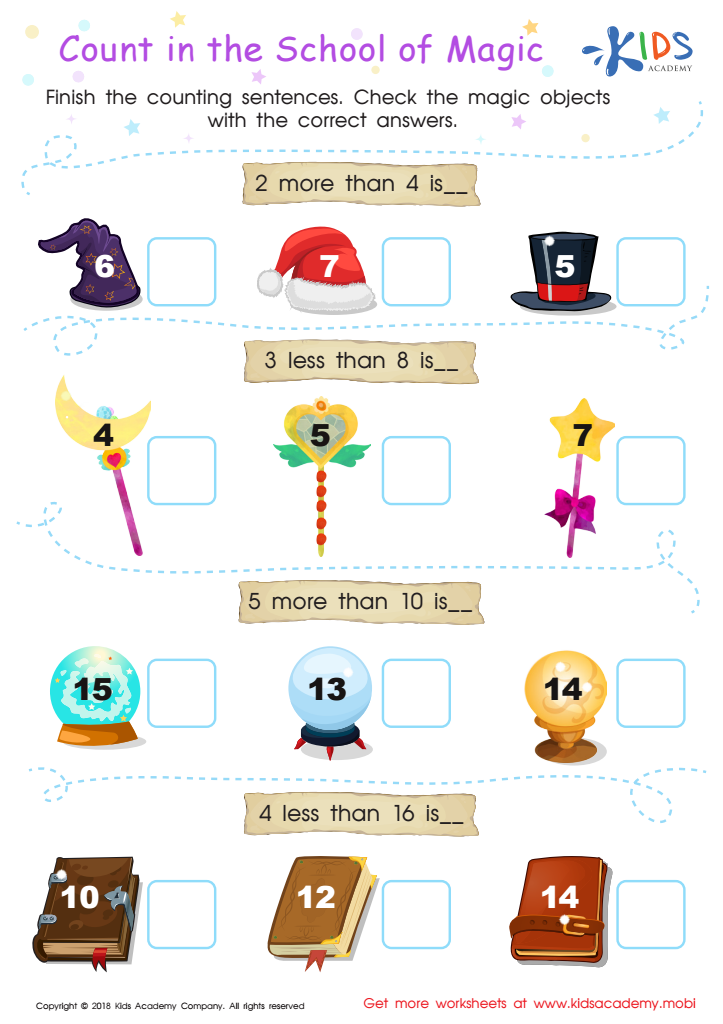
Count in the School of Magic Worksheet
Your math learners can explore the School of Magic with this worksheet. They'll read equations with addition and subtraction numbers under 20, count back and forth to find the answer, then complete the counting sentences. Fun pictures and easy accuracy make it an enjoyable and successful learning experience.
 Assign to My Students
Count in the School of Magic Worksheet
Worksheet
Join Kids Academy for Free
Who is primarily going to use this learning content?








Observational skills are crucial for children aged 5 to 7, especially in learning addition. These skills involve the ability to notice details, patterns, and relationships, which are foundational for mathematical concepts. When parents and teachers focus on enhancing these observational skills, they enable children to understand addition beyond rote memorization of facts.
Firstly, developing observational skills allows children to recognize quantities in their surroundings, such as counting apples in a basket or noticing how many blocks are in a tower. This real-world connection makes addition more relatable and easier to grasp. Secondly, strong observational skills help children to identify patterns—such as seeing that adding two to a number repeatedly makes a predictable sequence—fostering critical thinking.
Moreover, these skills can promote engagement and curiosity about math. When children learn through observation, they are more likely to experiment, take risks, and discover solutions themselves, enhancing their confidence. Lastly, these abilities prepare them for advanced concepts later in mathematics and in everyday problem-solving situations. By prioritizing observational skills in early education, parents and teachers set a solid foundation that promotes a positive, enriching approach to learning addition and beyond.








