Problem-solving abilities Addition Worksheets for Ages 5-7 - Page 2
29 filtered results
-
From - To
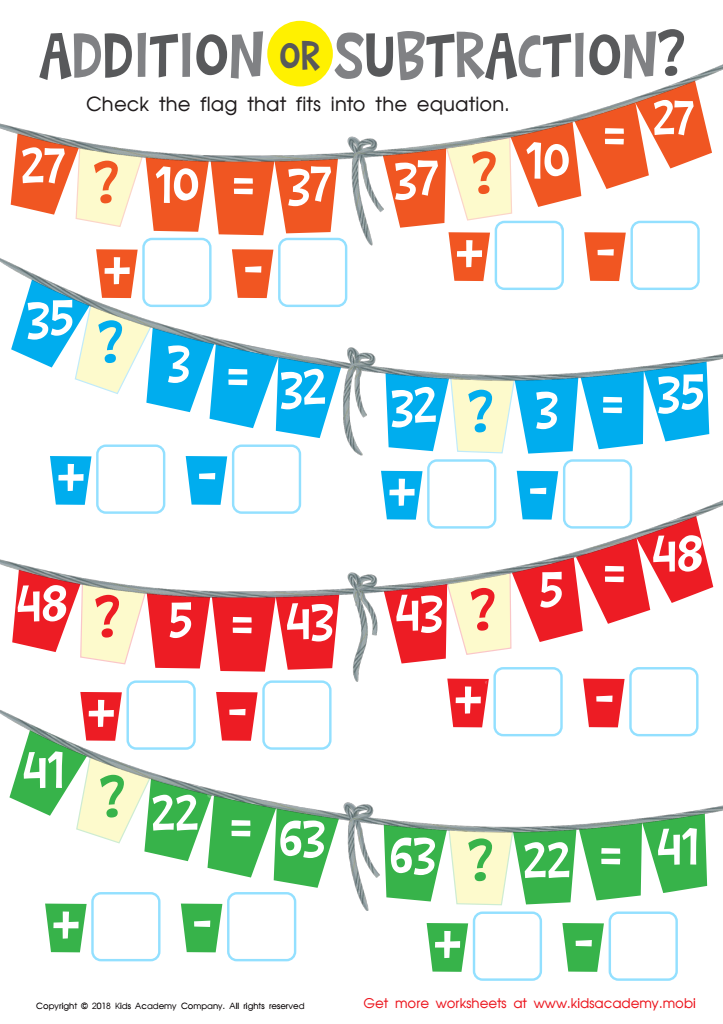
Addition or Subtraction? Worksheet
 Assign to My Students
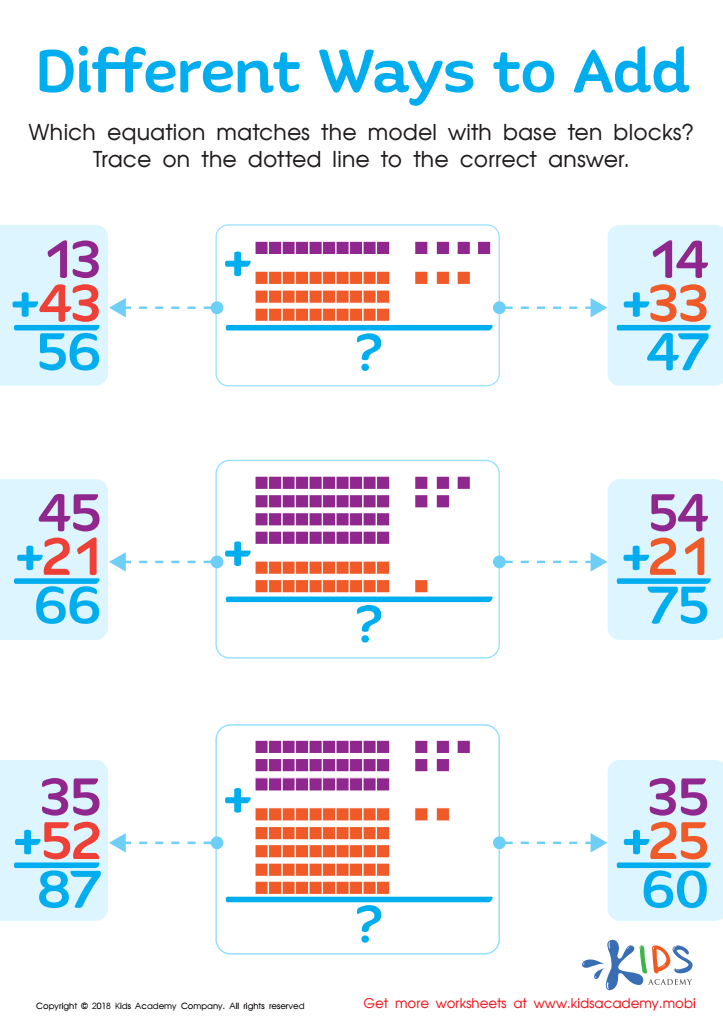
Different Ways to Add Worksheet
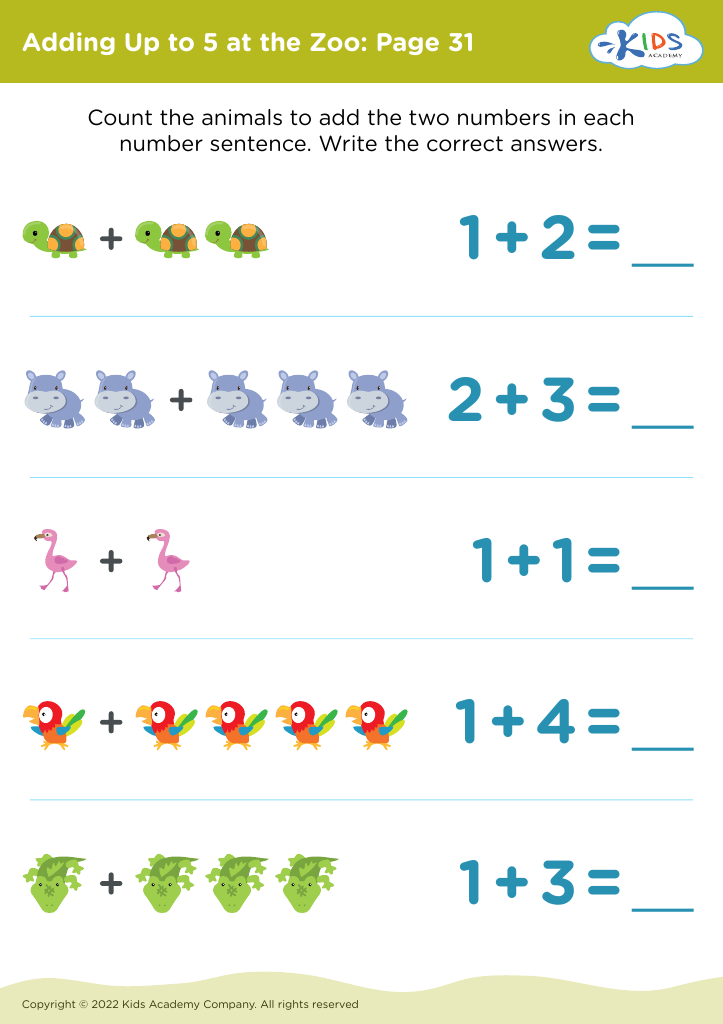
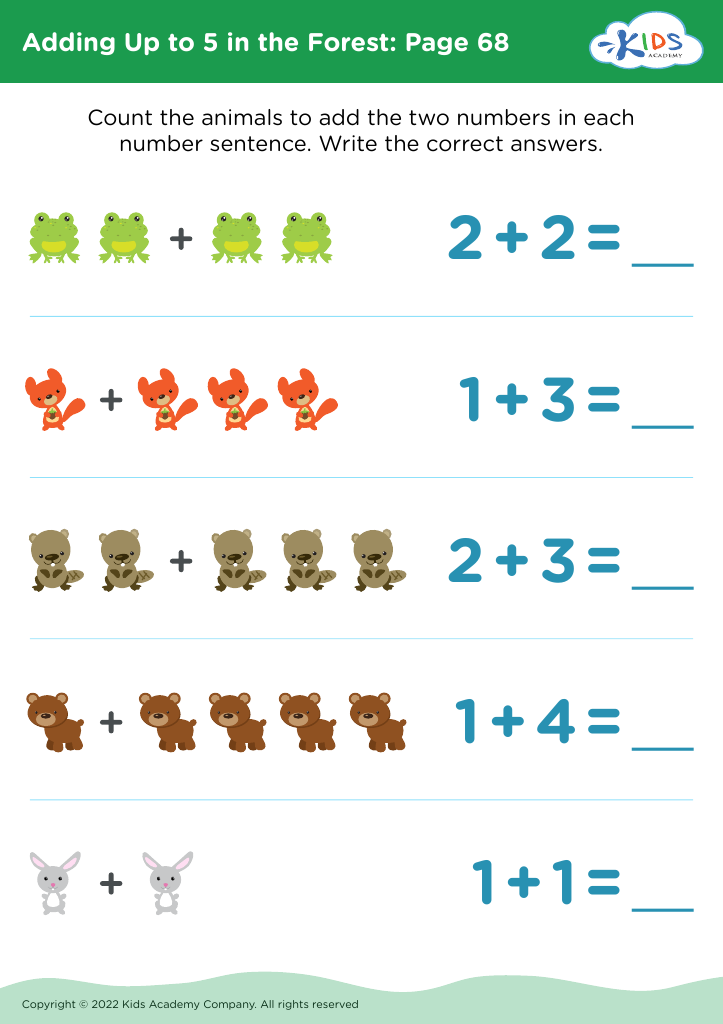
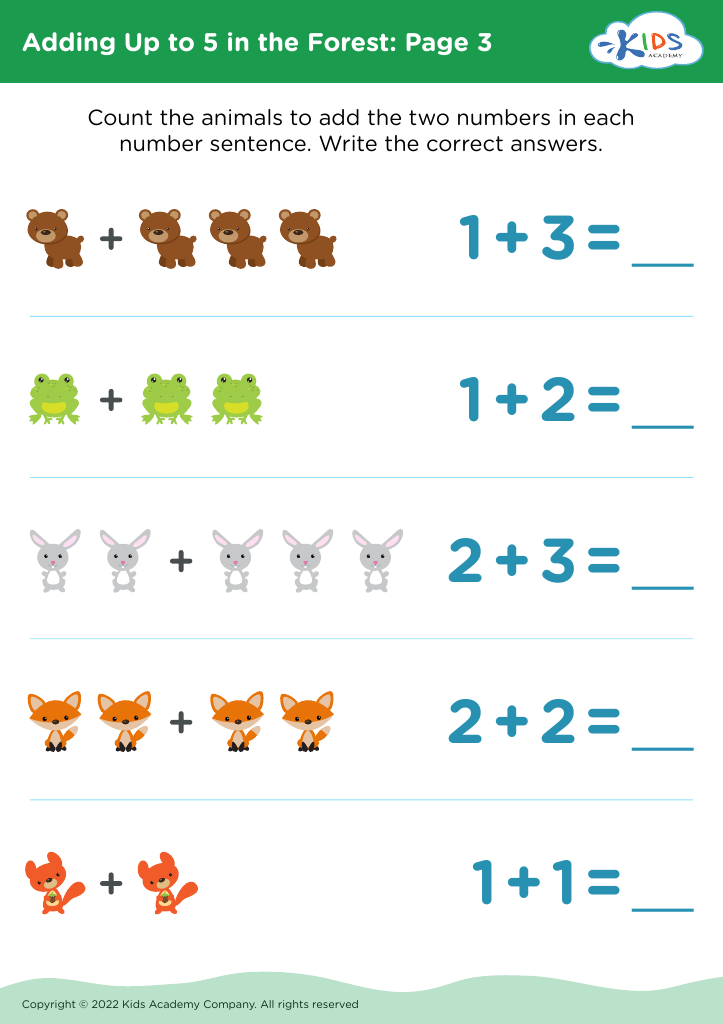








Problem-solving abilities in addition for children aged 5-7 are crucial for several reasons. At this developmental stage, children are forming foundational mathematical skills that will influence their future academic success. Engaging in problem-solving not only strengthens their understanding of addition but also enhances critical thinking skills. When children learn to approach math problems, they develop perseverance and resilience—traits that are essential for tackling challenges both in and out of the classroom.
Furthermore, honing problem-solving abilities in addition promotes independence. As children work through mathematical problems, they learn to ask questions, seek out multiple solutions, and evaluate their answers. This self-directed learning method fosters confidence in their skills and encourages a growth mindset, which empowers them to tackle more complex concepts as they progress in their education.
Additionally, parents and teachers play vital roles in creating engaging, meaningful math experiences. By prioritizing problem-solving within addition, they help children see mathematics as a fun and relevant part of everyday life. This approach not only ignites a lasting interest in math but also readily prepares youngsters for future academic challenges. Overall, fostering problem-solving skills in early math education benefits children's intellectual and emotional development, creating a well-rounded learner.








