Discover our engaging Simplifying Fractions Addition Worksheets designed specifically for children ages 5-7! These interactive resources provide young learners with a fun and effective way to master the basics of adding fractions. Each worksheet features vibrant illustrations and age-appropriate exercises, making complex concepts easier to understand. As kids work through these activities, they develop critical thinking and problem-solving skills while building a strong foundation in mathematics. Perfect for classroom use or at-home learning, our worksheets encourage independent practice and enjoyment in learning. Start your child's journey to math mastery today with our Simplifying Fractions Addition Worksheets!
Check out this FREE Trial Lesson on Addition for age 5-7!

L

Favorites
With answer key
Interactive
  • 5-7
  • Simplifying Fractions
  • Addition
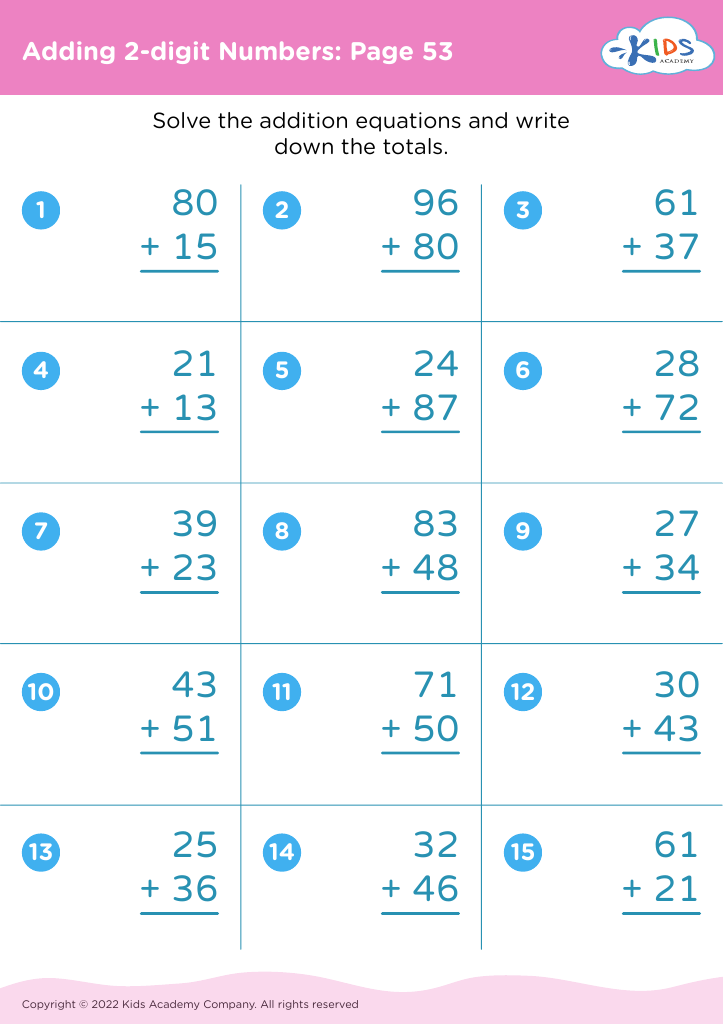
Adding 2-digit Numbers: Page 53

Adding 2-digit Numbers: Page 53

Adding 2-digit Numbers: Page 53
Worksheet
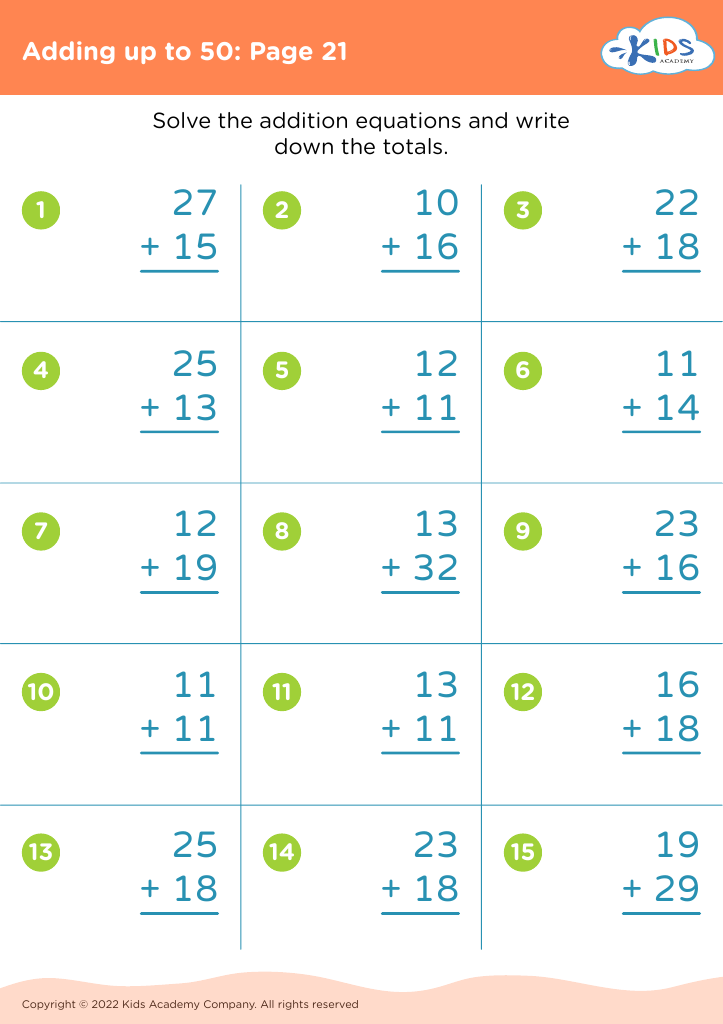
Adding up to 50: Page 21

Adding up to 50: Page 21

Adding up to 50: Page 21
Worksheet
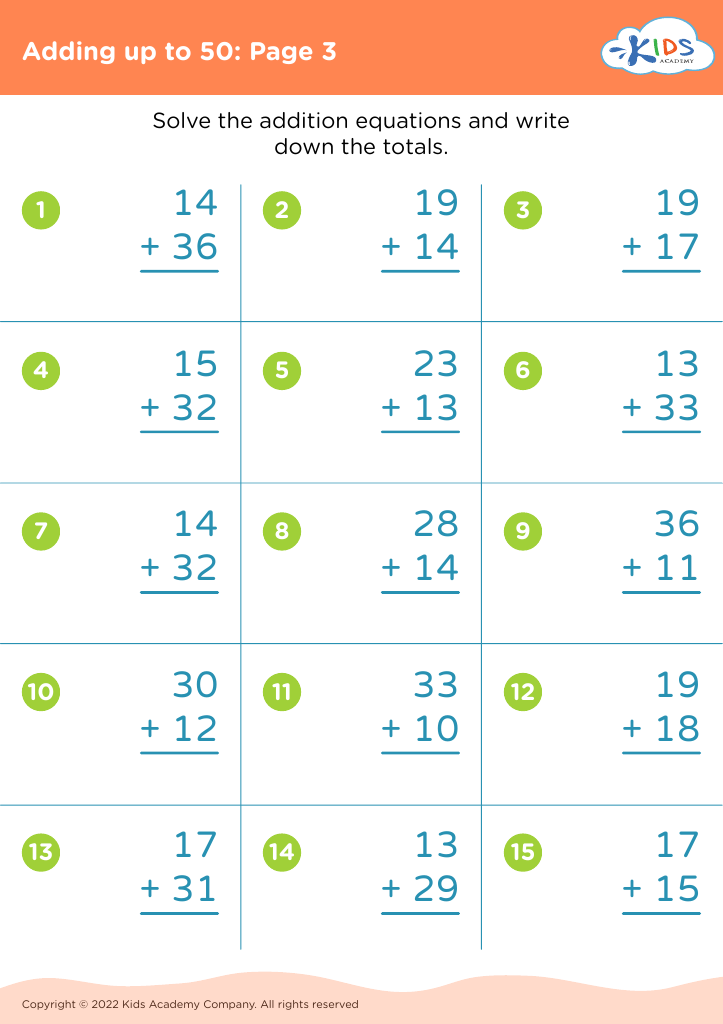
Adding up to 50: Page 3

Adding up to 50: Page 3

Adding up to 50: Page 3
Worksheet
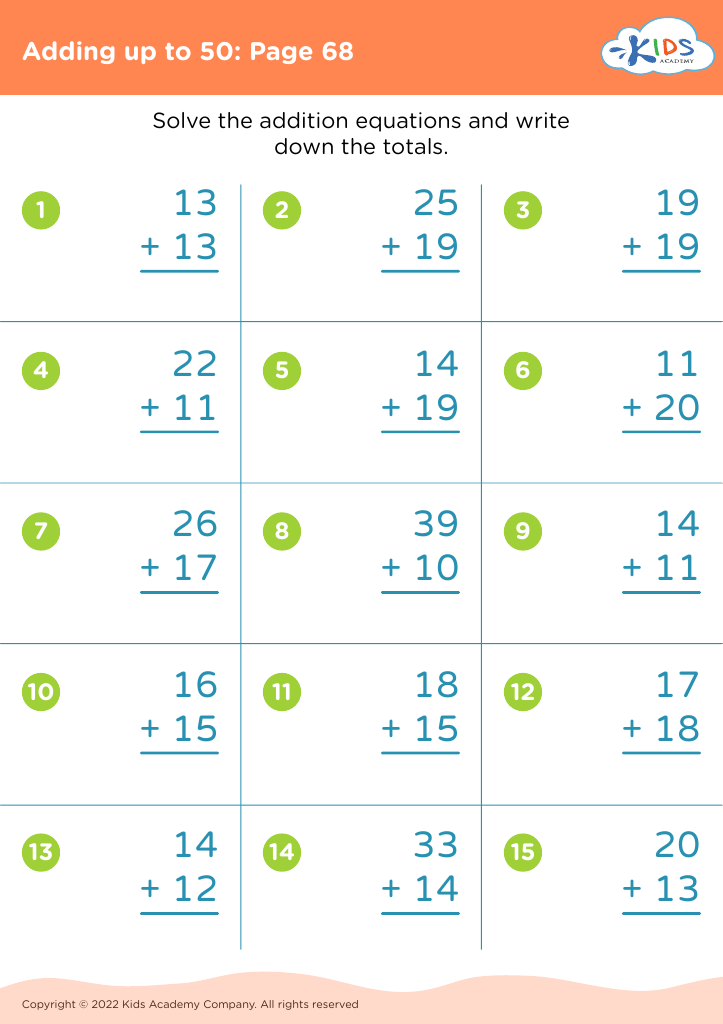
Adding up to 50: Page 68

Adding up to 50: Page 68

Adding up to 50: Page 68
Worksheet
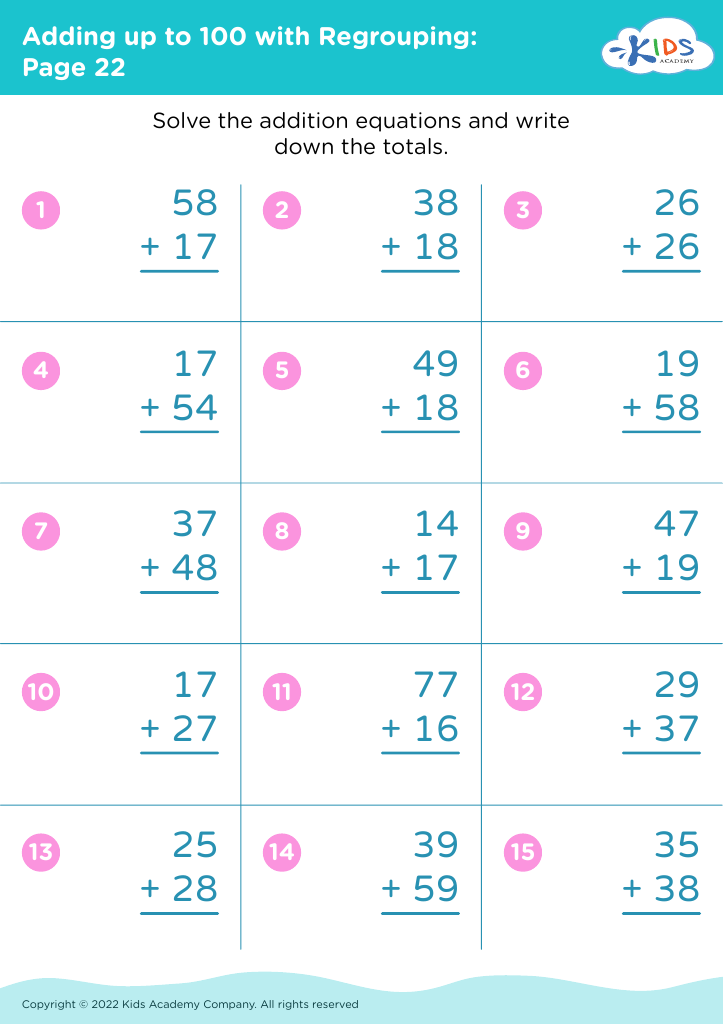
Adding up to 100 with Regrouping: Page 22
Worksheet
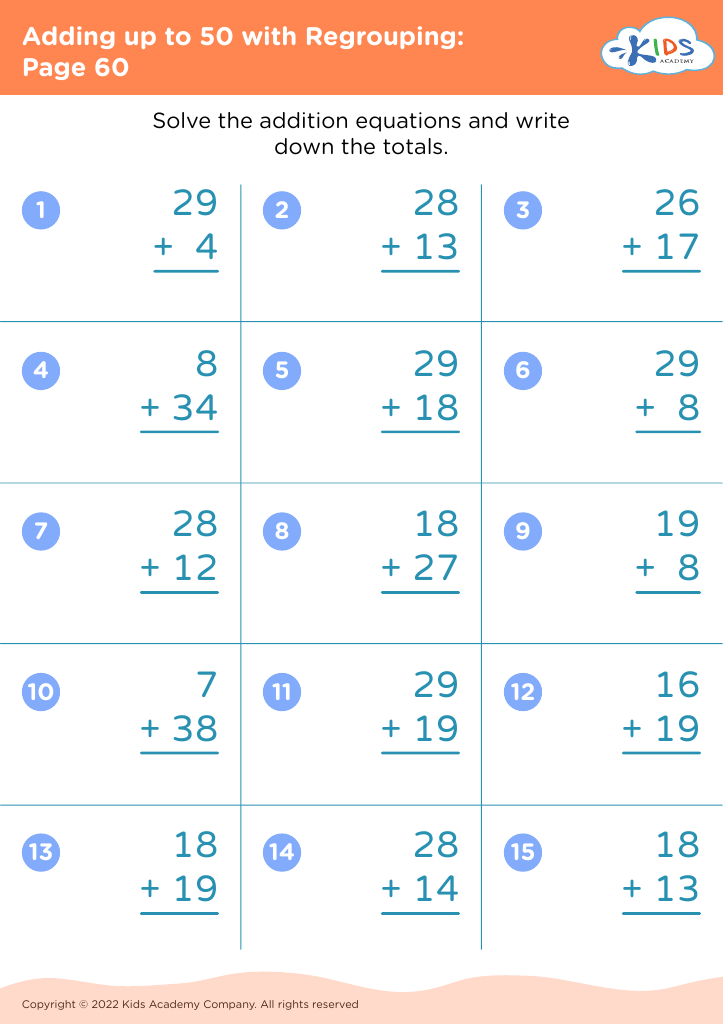
Adding up to 50 with Regrouping: Page 60
Worksheet
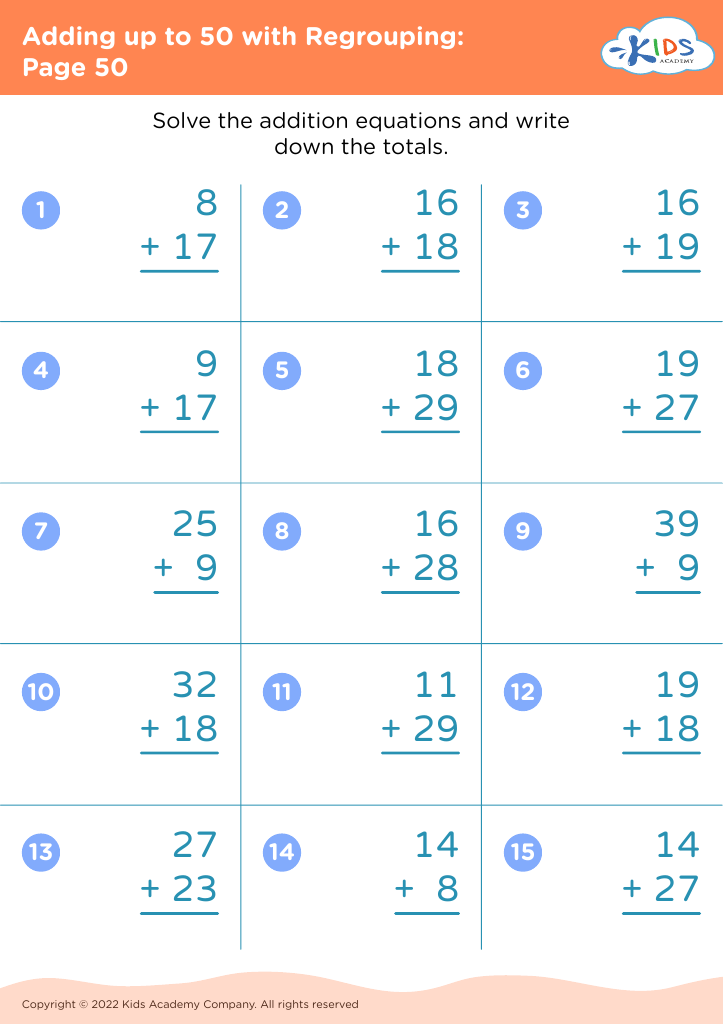
Adding up to 50 with Regrouping: Page 50
Worksheet
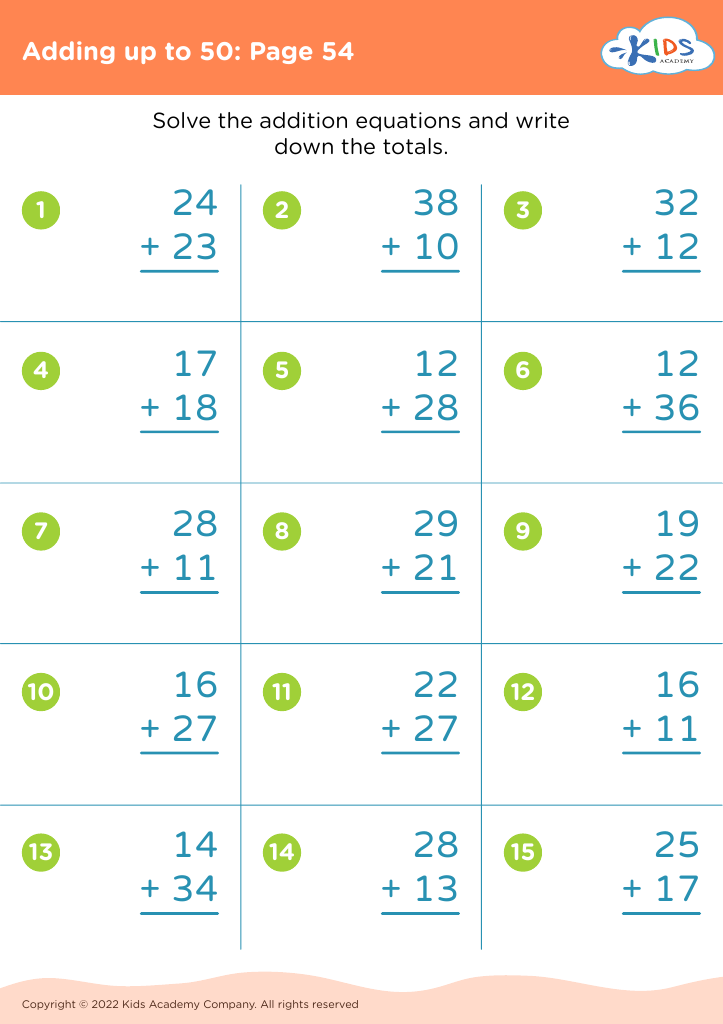
Adding up to 50: Page 54

Adding up to 50: Page 54

Adding up to 50: Page 54
Worksheet
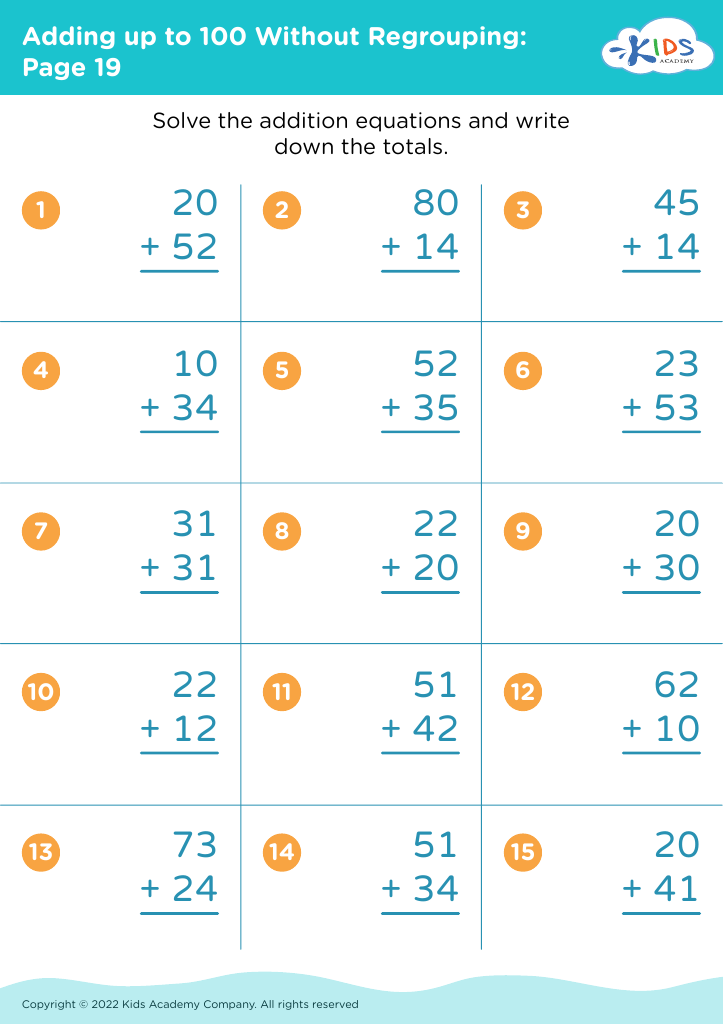
Adding up to 100 Without Regrouping: Page 19
Worksheet
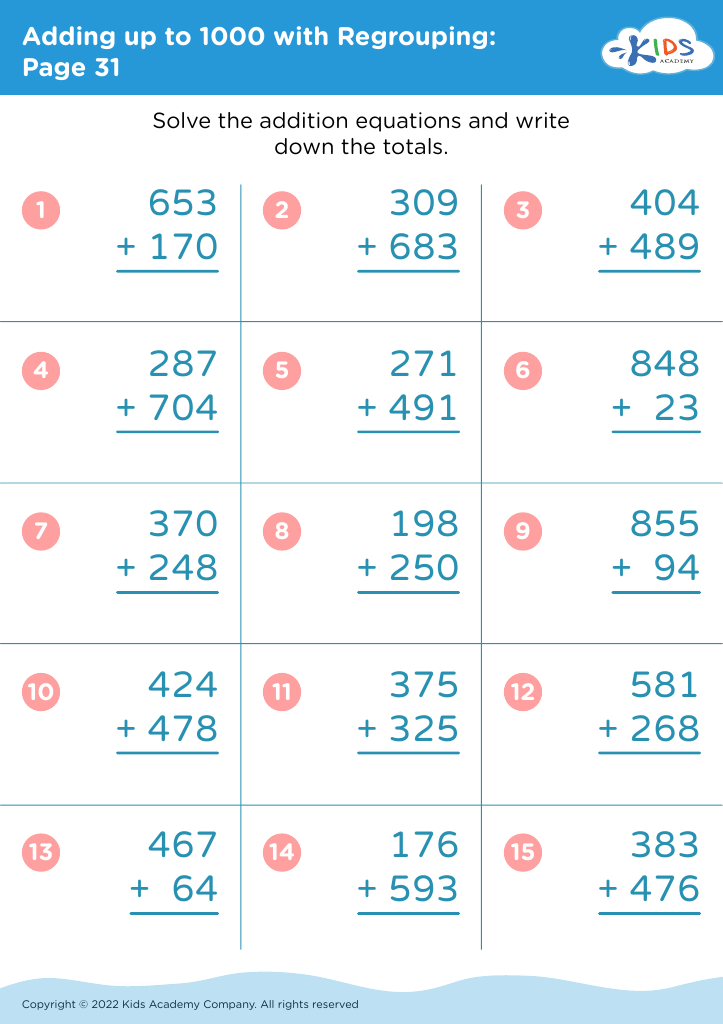
Adding up to 1000 with Regrouping: Page 31
Worksheet
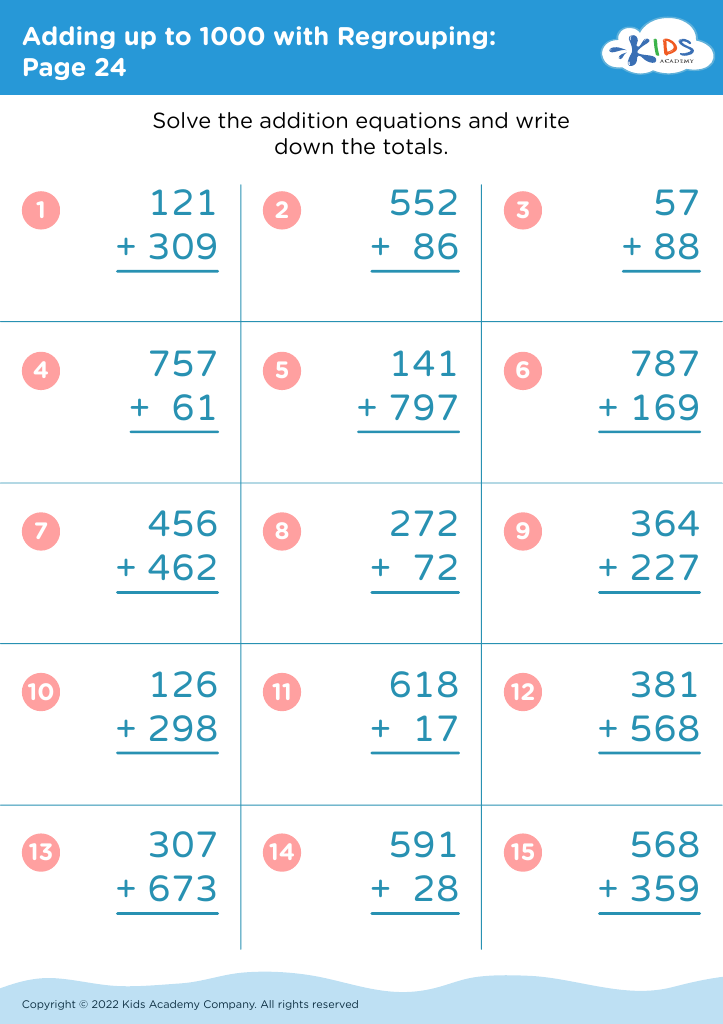
Adding up to 1000 with Regrouping: Page 24
Worksheet
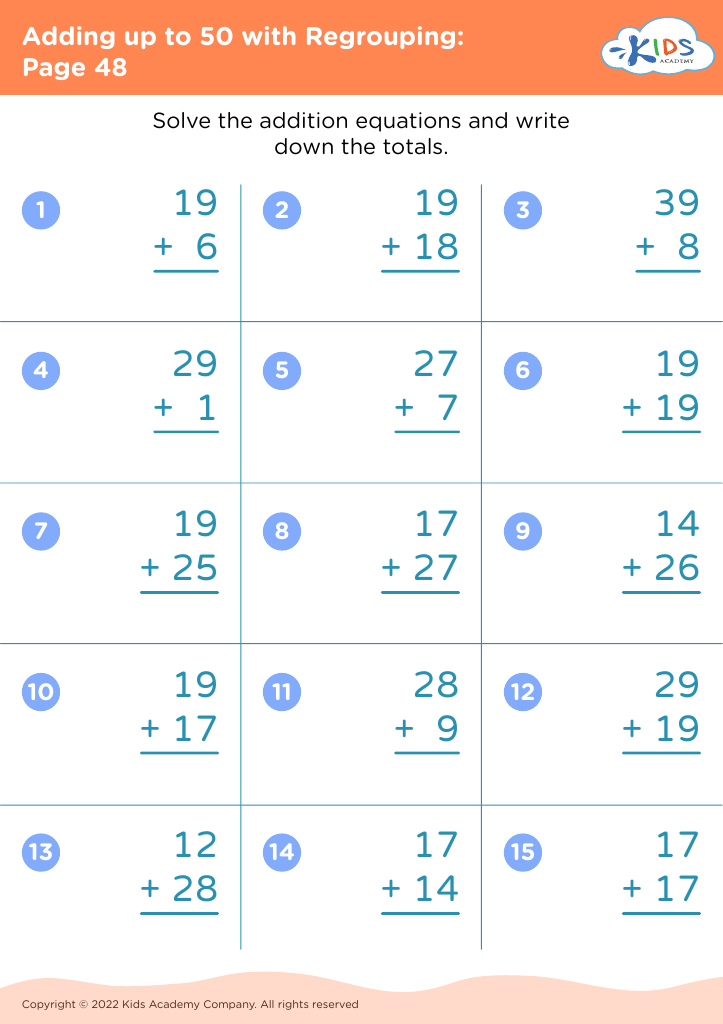
Adding up to 50 with Regrouping: Page 48
Worksheet
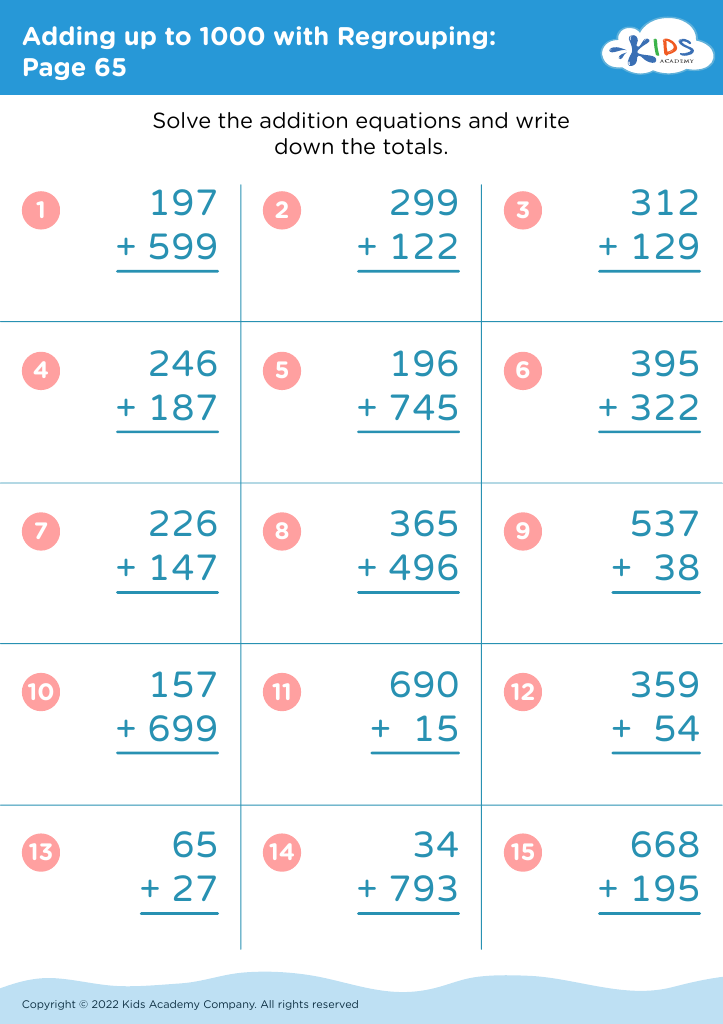
Adding up to 1000 with Regrouping: Page 65
Worksheet
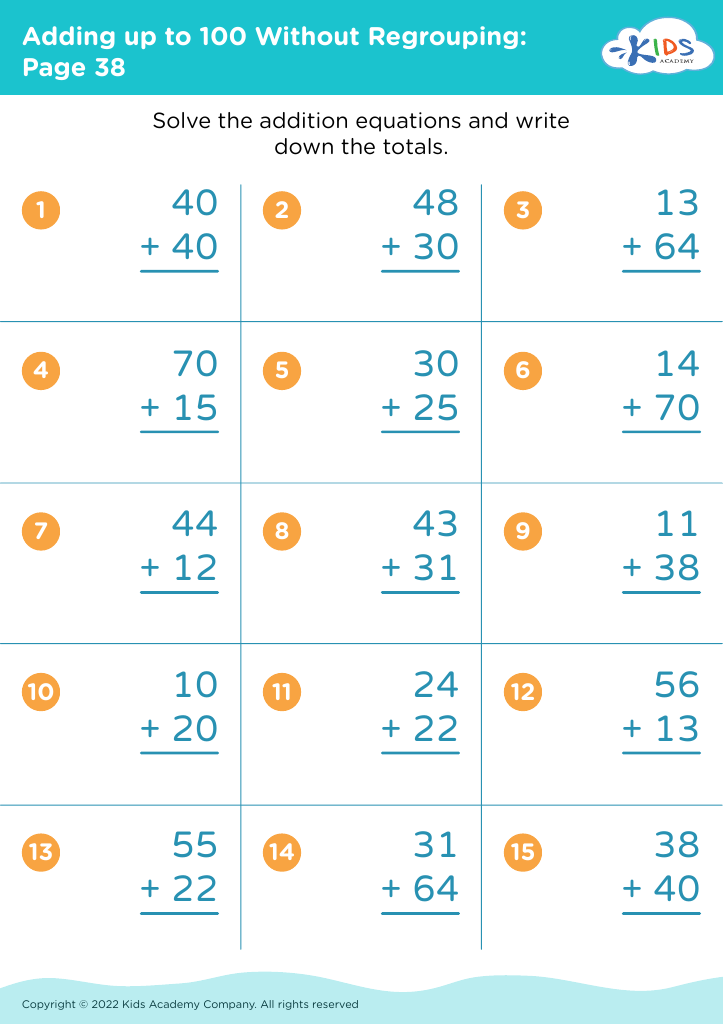
Adding up to 100 Without Regrouping: Page 38
Worksheet
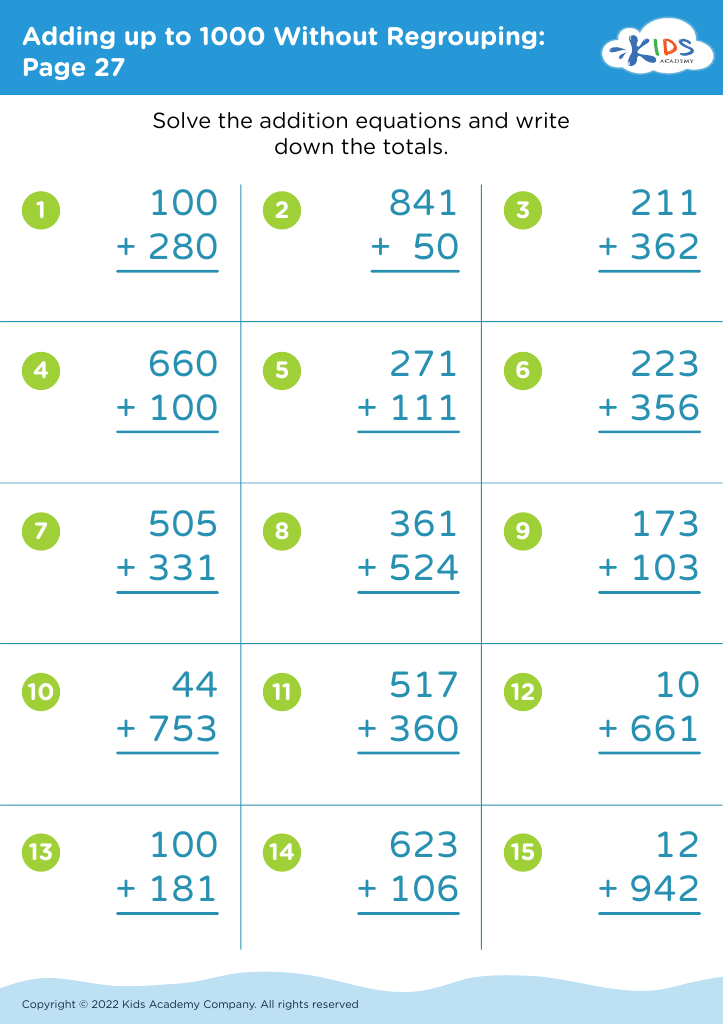
Adding up to 1000 Without Regrouping: Page 27
Worksheet
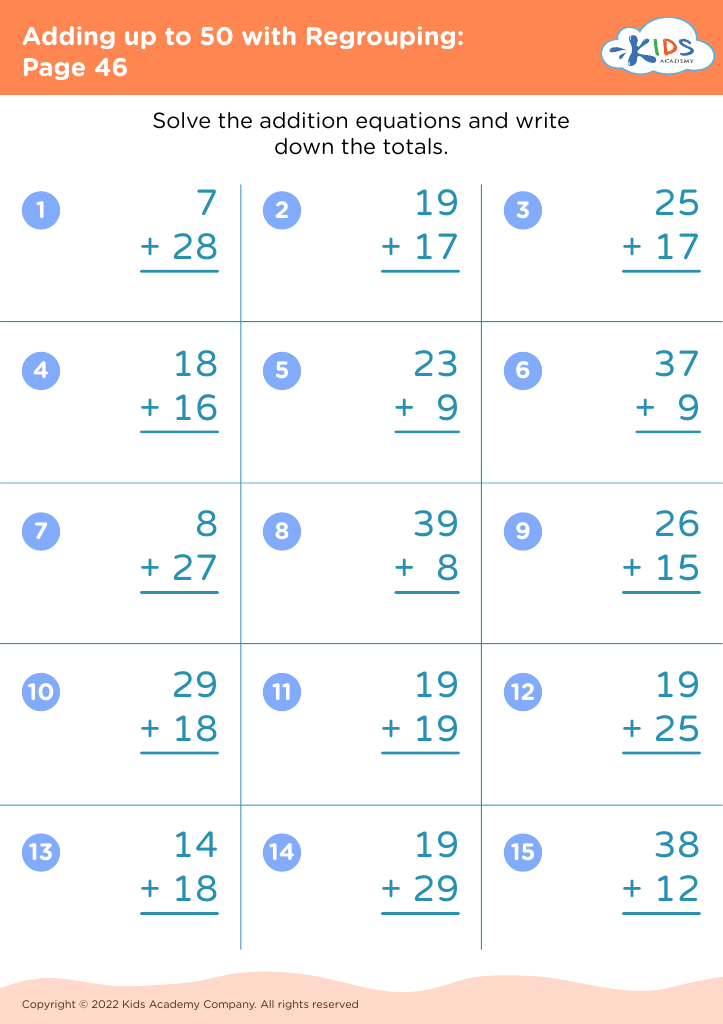
Adding up to 50 with Regrouping: Page 46
Worksheet
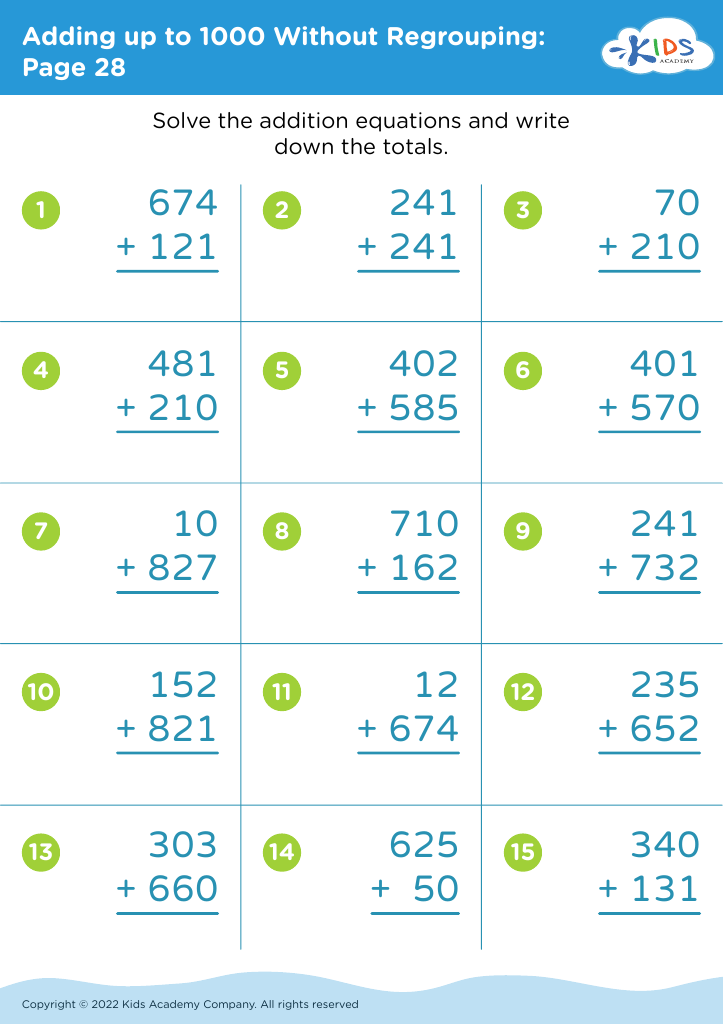
Adding up to 1000 Without Regrouping: Page 28
Worksheet
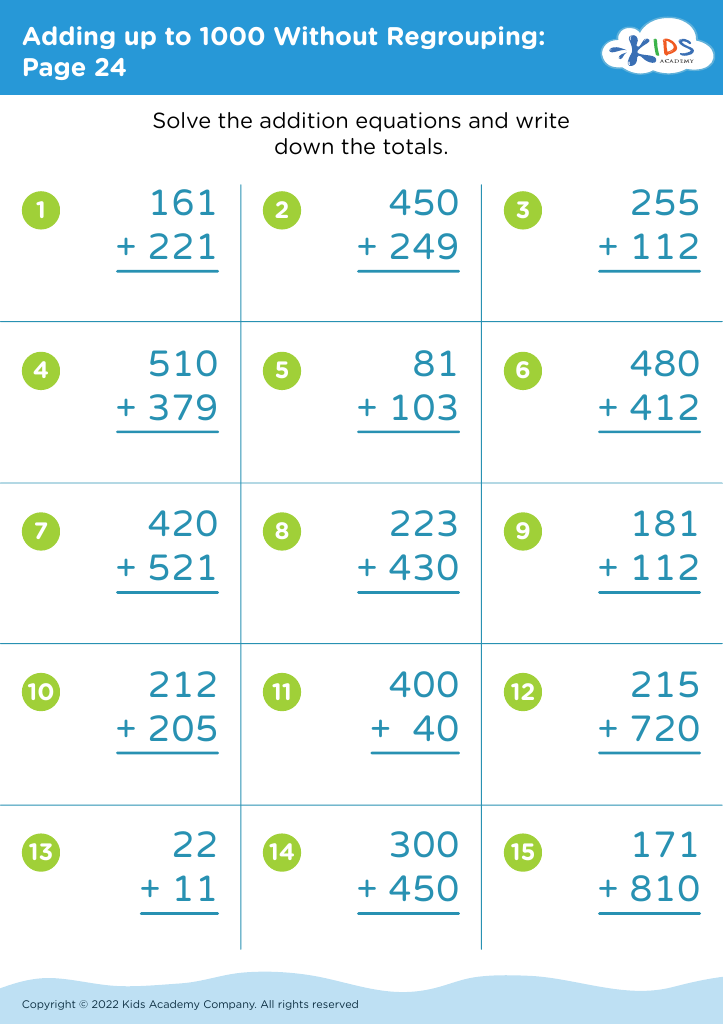
Adding up to 1000 Without Regrouping: Page 24
Worksheet


Simplifying fractions addition is an essential mathematical skill that parents and teachers should prioritize for children aged 5-7. At this developmental stage, children are beginning to build a strong foundational understanding of numbers and relationships, and introducing them to simplified fractions fosters critical thinking and problem-solving abilities.

When children grasp the concept of adding fractions with like denominators, they learn about proportional relationships, enhancing their overall numerical literacy. Simplifying fractions helps reinforce their understanding of equivalency, which is pivotal as they progress in math. Moreover, working with fractions introduces them to the concept of parts of a whole, thereby nurturing skills in measurement and sharing, which are common in real-life situations.

Additionally, encouraging students to simplify fractions from an early age promotes perseverance, as they learn to tackle complex problems and develop confidence in their math abilities. This mindset is crucial for fostering a love for learning and resilience in future mathematical challenges. Lastly, by working on these skills together, parents and teachers can strengthen their communication about math, making the learning process enjoyable and collaborative. Overall, simplification of fractions serves as a stepping stone to deeper mathematical understanding and application in everyday life.