Understanding equality Addition Worksheets for Ages 5-7
3 filtered results
-
From - To
Explore our "Understanding Equality Addition Worksheets for Ages 5-7" designed to build strong foundational math skills through interactive, fun exercises. These worksheets introduce young learners to the concept of equality using colorful visuals and engaging activities. Perfect for kindergarten and first-grade students, each sheet helps kids grasp the idea that addition means combining numbers to get equal sums. By practicing with these worksheets, children will improve their problem-solving abilities and boost their confidence in math. Ideal for both classroom and home use, make math learning enjoyable and effective with our expertly-crafted, age-appropriate printables.
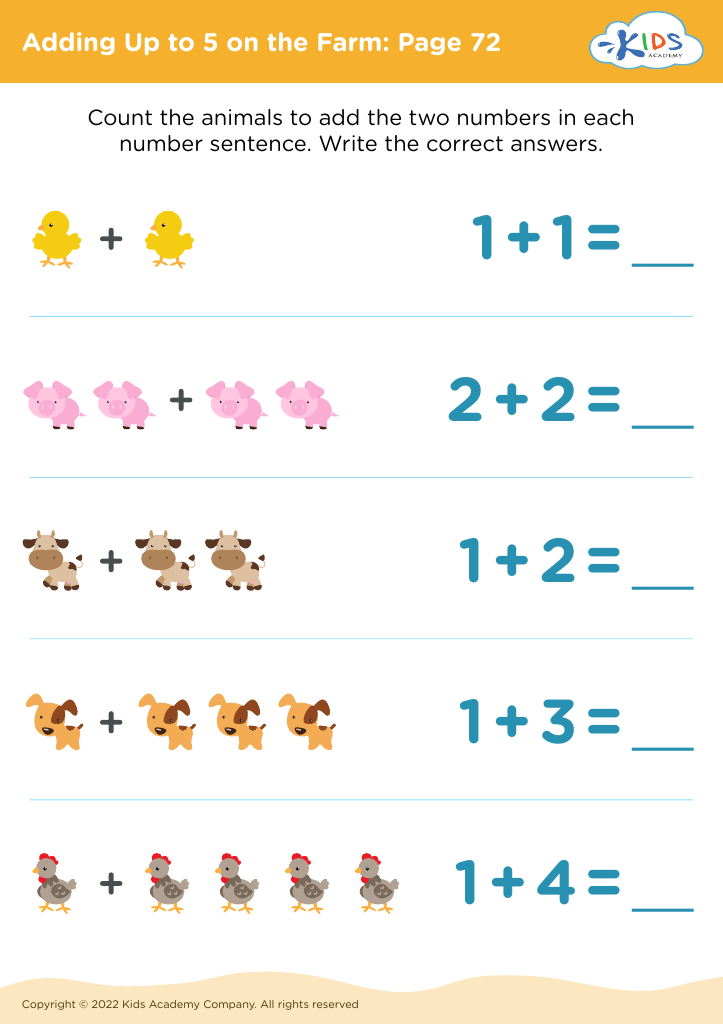
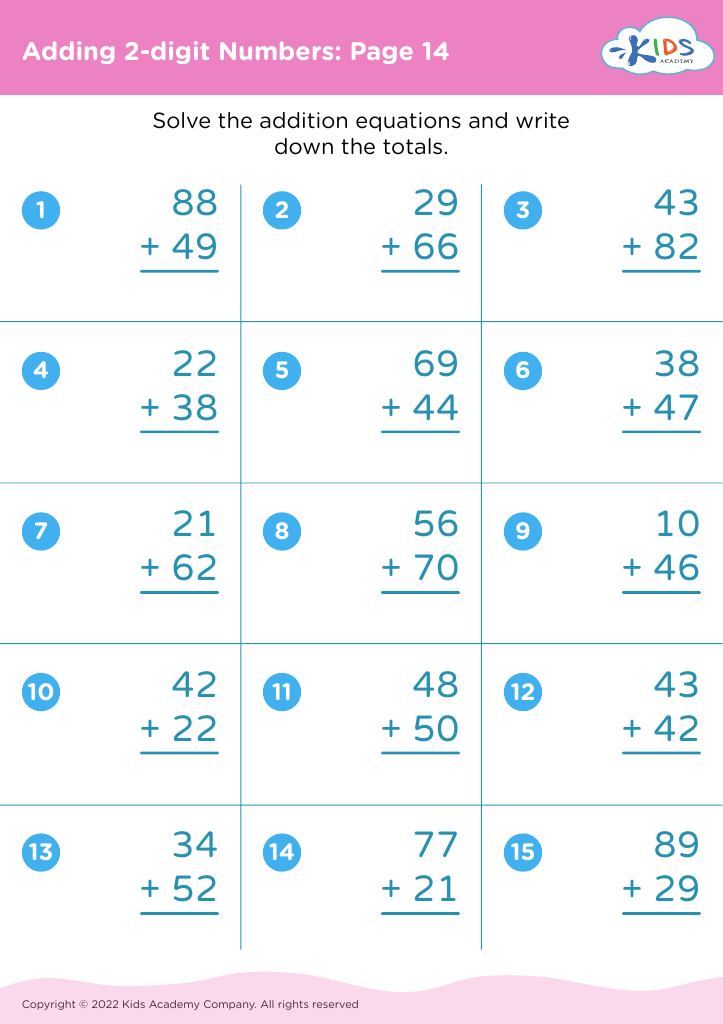
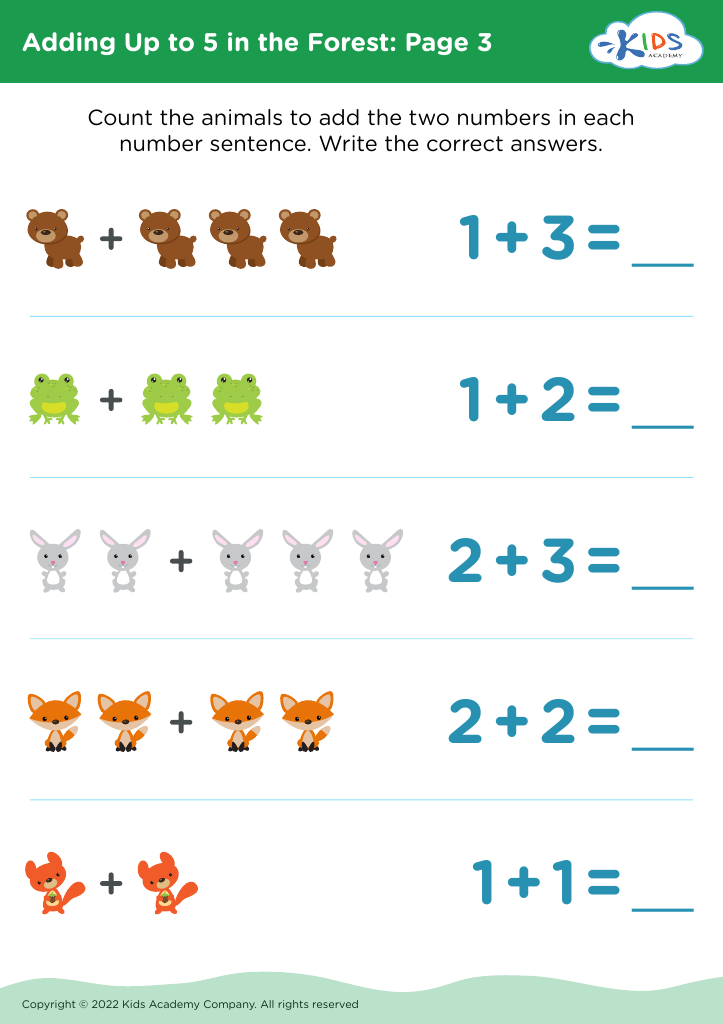







Ensuring that children comprehend equality in addition during the ages of 5-7 forms the cornerstone for their future mathematics success. At this early stage, developing a robust understanding of equality instills foundational cognitive skills essential for more complex arithmetic and problem-solving tasks. When children grasp that both sides of an equation must balance, they start appreciating the very essence of mathematics – a logical and structured way of thinking.
Moreover, equality in addition fosters a child’s number sense, which is the intuitive understanding of numbers, their magnitude, relationships, and how they are affected by operations. For young learners, this can turn abstract concepts into more tangible and comprehensible ideas. For example, knowing that 3 + 4 is equal to 7 helps them recognize patterns, establish benchmarks, and build mental arithmetic strategies.
The reassurance that answers can be checked by reversing operations (e.g., if 5 + 2 = 7, then 7 - 2 = 5), empowers children with self-verification skills and boosts their confidence in solving mathematical problems independently. Lastly, understanding equality in addition cultivates critical thinking and nurtures learners’ problem-solving attitudes, setting a solid base not just for mathematics, but for tackling logical issues they will encounter in everyday life and future academic pursuits.








