Underwater animal identification Addition Worksheets for Ages 5-7
3 filtered results
-
From - To
Dive into learning with our Underwater Animal Identification Addition Worksheets for Ages 5-7! These engaging worksheets seamlessly blend math skills with fun, helping children identify various aquatic creatures while practicing addition. Designed for young learners, each activity encourages critical thinking and promotes vocabulary development through colorful illustrations and relatable underwater themes. As kids explore different animals, they will solve addition problems that reinforce their math fluency. Perfect for homeschooling or classroom use, these worksheets make learning enjoyable and effective. Encourage your child to explore the wonders of the ocean while building a strong foundation in math!
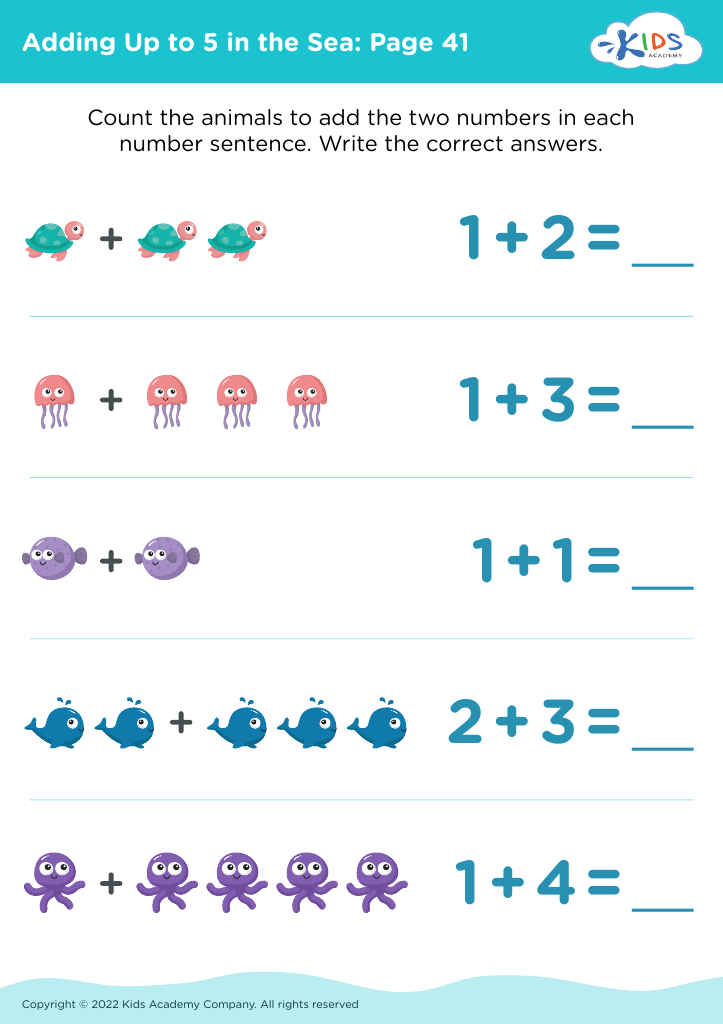
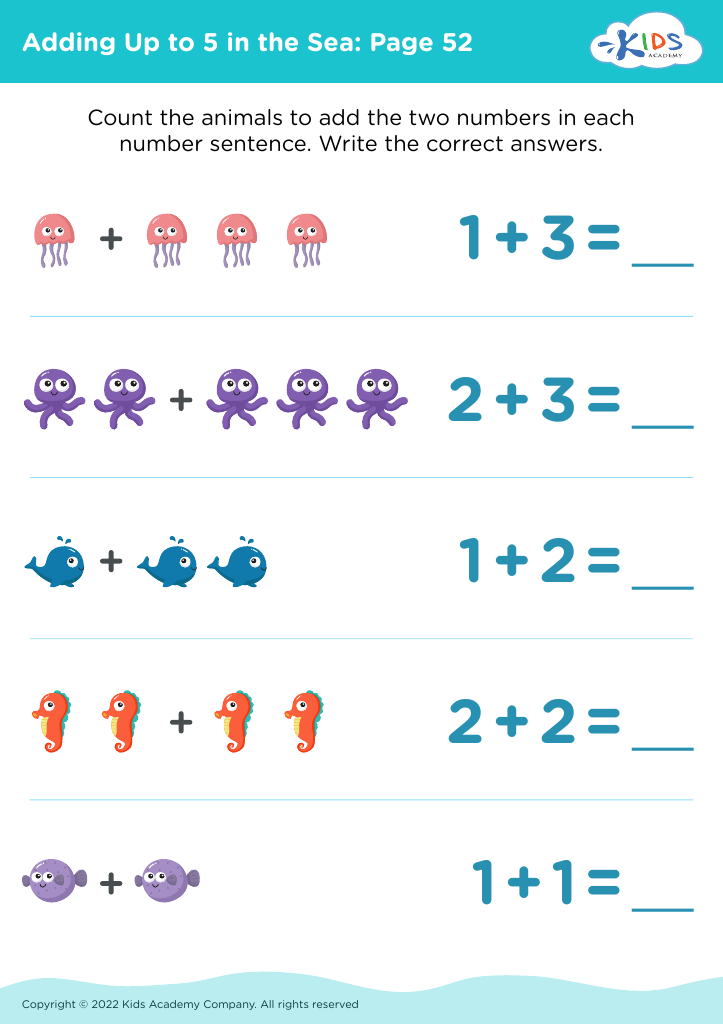
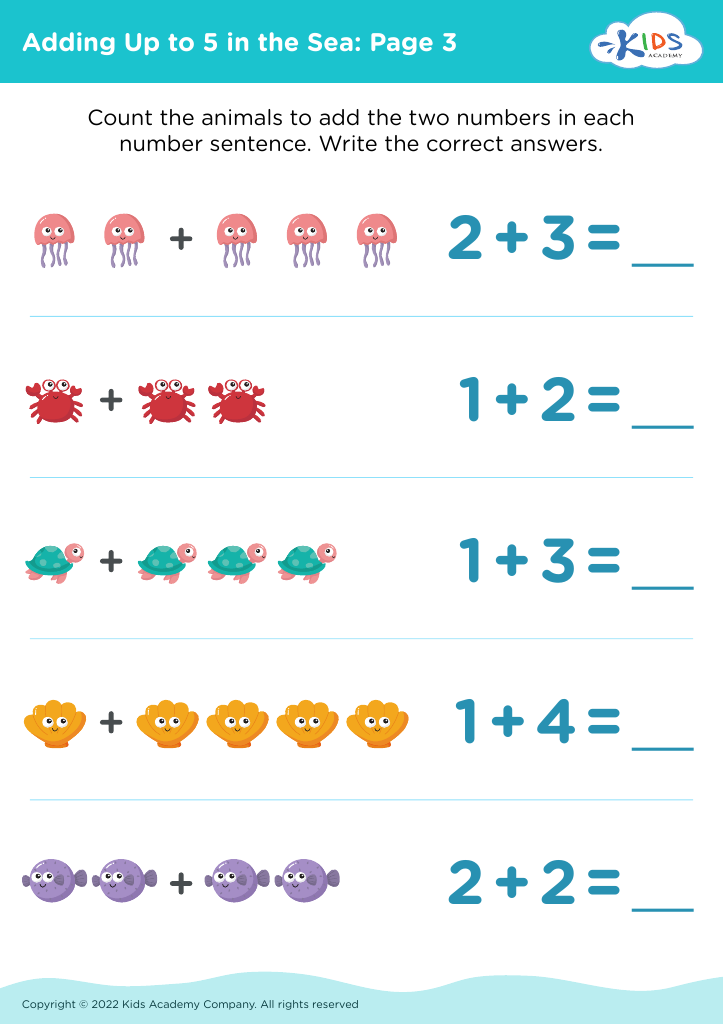








Parents and teachers should care about underwater animal identification activities for children ages 5-7 because these experiences foster essential developmental skills. At this age, children are naturally curious about the world around them, and underwater animals provide a captivating context for exploration and learning. Engaging kids in identifying these creatures encourages observation skills, sharpens memory retention, and enhances vocabulary as they learn specific terms related to marine life.
Moreover, underwater animal identification introduces young learners to concepts of biodiversity and ecosystems, promoting environmental awareness from an early age. Through playful activities, such as matching games or interactive apps, children develop critical thinking and classification skills. These activities often involve collaboration, which encourages teamwork and social skills, crucial for their emotional development.
Additionally, exposure to diverse life forms cultivates empathy and a sense of responsibility towards the environment. As kids learn about the significance of marine habitats, they gain insight into conservation efforts. By integrating fun and educational underwater animal identification activities, parents and teachers can spark a lifelong passion for science and nature, laying the groundwork for informed and environmentally-conscious citizens. Thus, these educational tools not only benefit the child's learning but also contribute positively to society as a whole.








